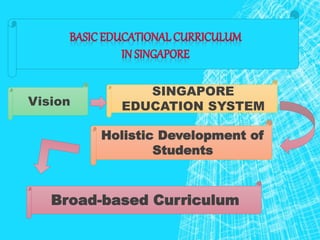
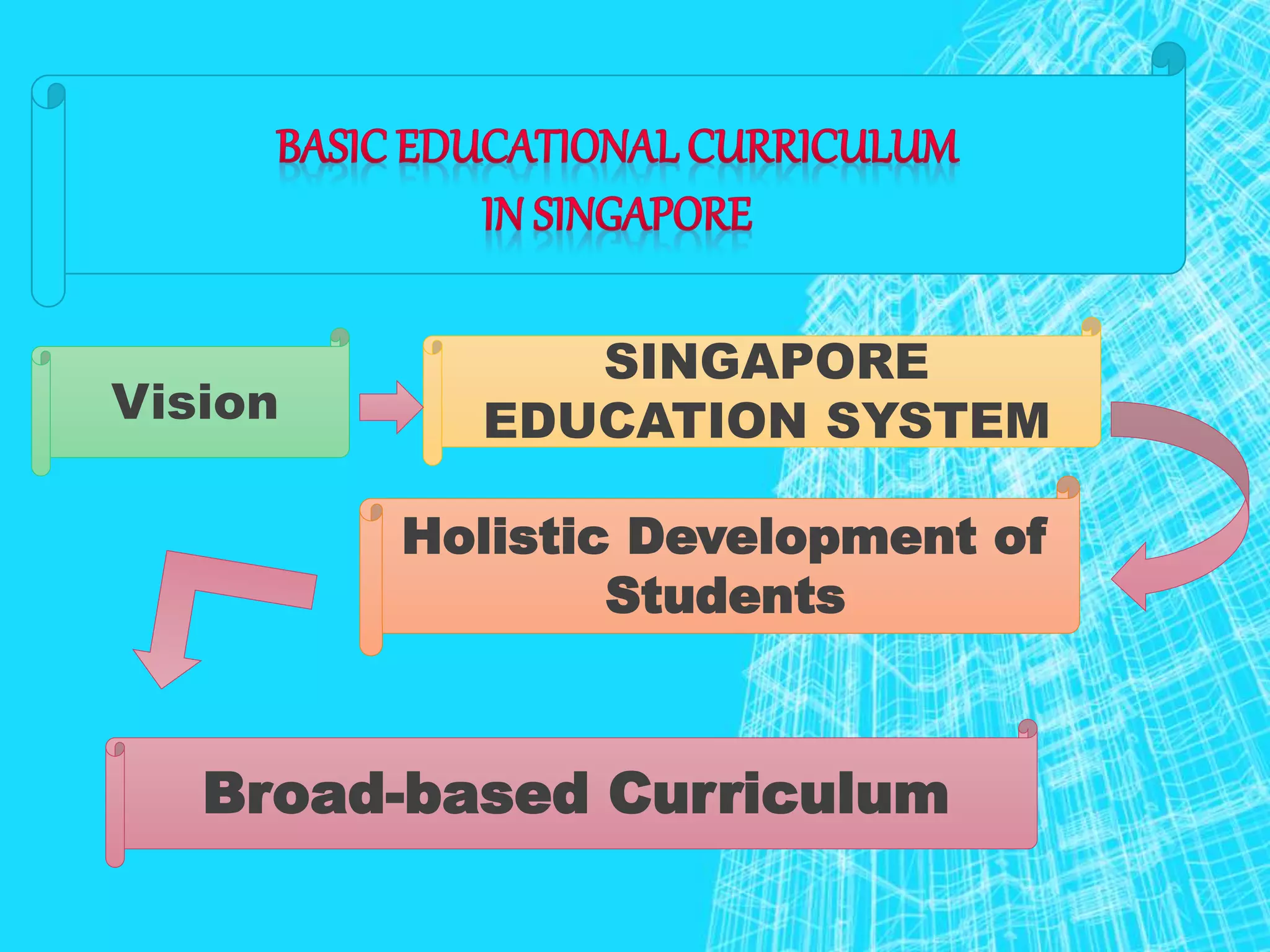
Vision 
SINGAPORE 
EDUCATION SYSTEM 
Holistic Development of 
Students 
Broad-based Curriculum
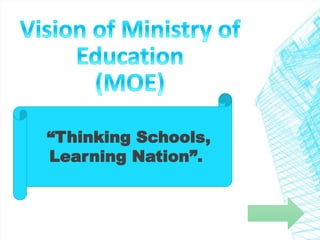
“Thinking Schools, 
Learning Nation”.
To prepare a generation of 
thinking and committed citizens 
who are capable of contributing 
towards Singapore’s continued 
growth and prosperity, the 
Ministry is constantly revisiting 
its curriculum to ensure that the 
skills and knowledge taught in 
schools meet the challenges of the 
21st century.
The Singapore education system aims to 
provide students with a holistic and 
broad-based education. 
 Given the multi-cultural and multi-racial 
characteristics of Singapore, the 
bilingual policy is a key feature of the 
Singapore education system. 
Under the bilingual policy, every 
student learns English which is the 
common working language. 
Students also learn their mother tongue 
language (Chinese, Malay or Tamil), to 
help them retain their ethnic identity, 
culture, heritage and values.
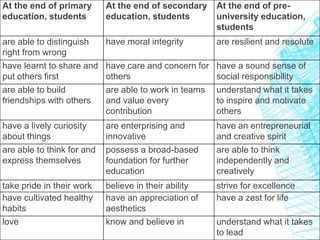
The Desired Outcomes of Education 
(DOE) articulates the importance of 
holistically nurturing students to 
become well-rounded persons - 
morally, intellectually, physically, 
socially and aesthetically through a 
set of eight core skills and values. 
The Eight Core 
Skills And Values
THE EIGHT CORE SKILLS 
AND VALUES 
1.Character Development 
2. Self Management Skills 
3. Social and Cooperative Skills 
4. Literacy and Numeracy 
5.Communication Skills 
6.Information Skills 
7.Thinking Skills and Creativity 
8.Knowledge Application Skills
IT IS ENVISIONED THAT 
STUDENTS AT THE END OF 
PRIMARY EDUCATION, 
SECONDARY EDUCATION 
AND PRE-UNIVERSITY 
WOULD HAVE ACQUIRED 
THESE EIGHT CORE 
SKILLS AND VALUES.
Singapore’s national curriculum aims 
to nurture each child to his full 
potential, to discover his talents and to 
develop in him a passion for life-long 
learning. 
Students go through a broad range of 
experiences to develop the skills and 
values that they will need for life. 
The broad-based curriculum imparts 
literacy, numeracy, bilingualism, the 
sciences, humanities, aesthetics, 
physical education, civics and moral 
education and National Education.
Over the years, the curriculum has 
been reviewed to address the need for a 
common set of values, knowledge and 
competencies and at the same time, 
allow differentiation to meet the needs 
of students with different talents and 
abilities. 
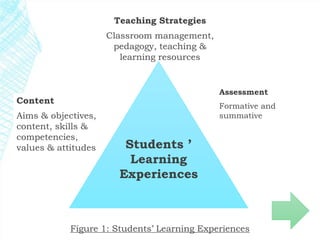
To enable students to achieve the 
learning outcomes of each specific 
subject and the DOE, three broad 
areas are considered, namely, the 
curriculum, teaching strategies and 
assessment.
Teaching Strategies 
Classroom management, 
pedagogy, teaching & 
learning resources 
Students ’ 
Learning 
Experiences 
Content 
Aims & objectives, 
content, skills & 
competencies, 
values & attitudes 
Assessment 
Formative and 
summative 
Figure 1: Students’ Learning Experiences
The content states the aims and 
objectives, the content, the skills and 
competencies required for the syllabi and 
the values and attitudes that the syllabi 
hope to impart to the students. 
Appropriate teaching strategies are 
designed for successful classroom 
delivery of the syllabi, using effective 
teaching and learning materials. 
To evaluate if students have learned 
what has been taught, students are 
tested through formative and summative 
assessments.
Desired 
Outcomes 
of 
Education
At the end of primary 
education, students 
At the end of secondary 
education, students 
At the end of pre-university 
education, 
students 
are able to distinguish 
right from wrong 
have moral integrity are resilient and resolute 
have learnt to share and 
put others first 
have care and concern for 
others 
have a sound sense of 
social responsibility 
are able to build 
friendships with others 
are able to work in teams 
and value every 
contribution 
understand what it takes 
to inspire and motivate 
others 
have a lively curiosity 
about things 
are enterprising and 
innovative 
have an entrepreneurial 
and creative spirit 
are able to think for and 
express themselves 
possess a broad-based 
foundation for further 
education 
are able to think 
independently and 
creatively 
take pride in their work believe in their ability strive for excellence 
have cultivated healthy 
have an appreciation of 
have a zest for life 
habits 
aesthetics 
love know and believe in understand what it takes 
to lead

Basic Educational Curriculum in Singapore

  • 1.
    Vision SINGAPORE EDUCATIONSYSTEM Holistic Development of Students Broad-based Curriculum
  • 2.
  • 3.
    To prepare ageneration of thinking and committed citizens who are capable of contributing towards Singapore’s continued growth and prosperity, the Ministry is constantly revisiting its curriculum to ensure that the skills and knowledge taught in schools meet the challenges of the 21st century.
  • 4.
    The Singapore educationsystem aims to provide students with a holistic and broad-based education.  Given the multi-cultural and multi-racial characteristics of Singapore, the bilingual policy is a key feature of the Singapore education system. Under the bilingual policy, every student learns English which is the common working language. Students also learn their mother tongue language (Chinese, Malay or Tamil), to help them retain their ethnic identity, culture, heritage and values.
  • 5.
    The Desired Outcomesof Education (DOE) articulates the importance of holistically nurturing students to become well-rounded persons - morally, intellectually, physically, socially and aesthetically through a set of eight core skills and values. The Eight Core Skills And Values
  • 6.
    THE EIGHT CORESKILLS AND VALUES 1.Character Development 2. Self Management Skills 3. Social and Cooperative Skills 4. Literacy and Numeracy 5.Communication Skills 6.Information Skills 7.Thinking Skills and Creativity 8.Knowledge Application Skills
  • 7.
    IT IS ENVISIONEDTHAT STUDENTS AT THE END OF PRIMARY EDUCATION, SECONDARY EDUCATION AND PRE-UNIVERSITY WOULD HAVE ACQUIRED THESE EIGHT CORE SKILLS AND VALUES.
  • 8.
    Singapore’s national curriculumaims to nurture each child to his full potential, to discover his talents and to develop in him a passion for life-long learning. Students go through a broad range of experiences to develop the skills and values that they will need for life. The broad-based curriculum imparts literacy, numeracy, bilingualism, the sciences, humanities, aesthetics, physical education, civics and moral education and National Education.
  • 9.
    Over the years,the curriculum has been reviewed to address the need for a common set of values, knowledge and competencies and at the same time, allow differentiation to meet the needs of students with different talents and abilities. To enable students to achieve the learning outcomes of each specific subject and the DOE, three broad areas are considered, namely, the curriculum, teaching strategies and assessment.
  • 10.
    Teaching Strategies Classroommanagement, pedagogy, teaching & learning resources Students ’ Learning Experiences Content Aims & objectives, content, skills & competencies, values & attitudes Assessment Formative and summative Figure 1: Students’ Learning Experiences
  • 11.
    The content statesthe aims and objectives, the content, the skills and competencies required for the syllabi and the values and attitudes that the syllabi hope to impart to the students. Appropriate teaching strategies are designed for successful classroom delivery of the syllabi, using effective teaching and learning materials. To evaluate if students have learned what has been taught, students are tested through formative and summative assessments.
  • 12.
  • 13.
    At the endof primary education, students At the end of secondary education, students At the end of pre-university education, students are able to distinguish right from wrong have moral integrity are resilient and resolute have learnt to share and put others first have care and concern for others have a sound sense of social responsibility are able to build friendships with others are able to work in teams and value every contribution understand what it takes to inspire and motivate others have a lively curiosity about things are enterprising and innovative have an entrepreneurial and creative spirit are able to think for and express themselves possess a broad-based foundation for further education are able to think independently and creatively take pride in their work believe in their ability strive for excellence have cultivated healthy have an appreciation of have a zest for life habits aesthetics love know and believe in understand what it takes to lead