



Background
The idea of the three Keynote Y.A.B. prime minister the General Assembly 2006

Demanded that the country's education system to emphasis on:

   •    Human capital development

   •    Production students insight

   •    Governing the formation of citizen knowledge, skills and information

   •    Program to develop intelligence people in producing Ulul al-bab people.

The second thrust of the PIPP

BASIS

Develop human capital with knowledge and skills and to appreciate the values

THE GOAL

To ensure the Malaysian children spirit to acquire knowledge, skills, competencies and moral
values.


The national curriculum should be reviewed to ensure that the curriculum holistic and be
relevant for a balanced human capital that can handle current and future challenges.


Primary School Curriculum

1983 – Kurikulum Baru Sekolah Rendah (KBSR)

1993 – Kurikulum Bersepadu Sekolah Rendah (KBSR)

2003 – KBSR (Semakan)

2011 – Kurikulum Standard Sekolah Rendah (KSSR)
CURRICULUM TRANSFORMATION

The process of doing a form of holistic change existing school curriculum that
involves change in shape, organization, content, pedagogy, time allocation, assessment
methods, materials and management of the school curriculum.

CORE CURRICULUM DEVELOPMENT

   •   National Philosophy of Education

   •   National Education Policy

   •   Vision 2020

   •   Outline Perspective Plan

   •   Challenges of the 21st Century

   •   New Economic Model (NEM)

   •   Learning Theory

   •   4 Pillars of Education (UNESCO)


Balanced In Terms Of Student Intellectual, Spiritual, Physical And Emotional


   •   The knowledge learned

   •   Competent

   •   Believe In God

   •   Moral honor

   •   confidence

   •   Independent people

Global Player

   •   Competitiveness
•   Resistance

   •   Communication skills

   •   Identity


Responsible Citizen


   • Being
   • United cubic
   • Patriotic
   • Fair
   • Caring
   • Doing good


   Knowledge Workers


   • Innovative
   • Creative
   • Thirst for Knowledge
   • Mastering Skills Information Technology communication
   • Creator of Technology
   • Lifelong Learning


CURRICULUM TRANSFORMATION

   KSSR

       •   Shape

       •   Organization

       •   contents

       •   allocation of time
•   pedagogy

     •   assessment

     •   curriculum management

     •   material


THE CONCEPT OF TRANSFORMATION OF PRIMARY SCHOOL CURRICULUM

  • Based on Philosophy of Education national

  • Based on the principle of KBSR:

     - Integrated approach

     - Overview of Individual Development

     - Opportunity and Equal Educational Quality for All Students

     - Lifetime Education


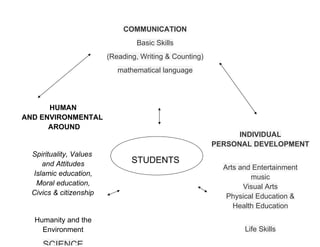
KBSR EXISTING FORM
COMMUNICATION
                                 Basic Skills
                         (Reading, Writing & Counting)
                            mathematical language


      HUMAN
AND ENVIRONMENTAL
      AROUND
                                                               INDIVIDUAL
                                                         PERSONAL DEVELOPMENT
  Spirituality, Values
     and Attitudes              STUDENTS
                                                           Arts and Entertainment
  Islamic education,                                               music
   Moral education,                                              Visual Arts
  Civics & citizenship                                      Physical Education &
                                                              Health Education
  Humanity and the
    Environment                                                  Life Skills
TRANSFORMATION OF CURRICULUM


CRITICAL THINKING AND CREATIVE INNOVATIVE


  •   Communication
      Oral language skills of integration and non-verbal when
      interacting
  •   Spirituality, Attitude & Values
      Appreciation of the religious practices, beliefs, attitudes and
      values
  •   Humanism
      Mastery of knowledge and practice of community and local
      environment, national and global.
      Appreciation of patriotism and unity.
  •   Personal skills
      Fostering leadership and personal
      development through curricular and extra-curricular activities
  •   Physical Development & Aesthetics
      Physical development and health for the well-being.
      Nurturing the imagination, creativity, talent and appreciation.
  •   Science & Technology
      Mastery of scientific knowledge, skills and scientific attitudes.
      Mastery of mathematical knowledge and skills.
      Mastery of technology-based knowledge and skills
ELEMENT OF ADDED VALUE
• Creativity and Innovation
• Entrepreneurship
• Information and Communication Technology


FOCUS ON CURRICULUM

Preschool
sosioemotional development, spiritual, physical,
cognitive, personality, school preparation and disclosure
of 3M and reasoning skills.
Level 1 of Primary School (Years 1-3)
3M and reasoning skills mastery, basic skills ICT, sosioemotional
 development, spiritual, physical, cognitive, attitudes, and values.
Level II Primary School (Years 4-6)
consolidation and application of 3M and reasoning, basic ICT skills,
sosioemotional development, spiritual, physical, attitudes and values.


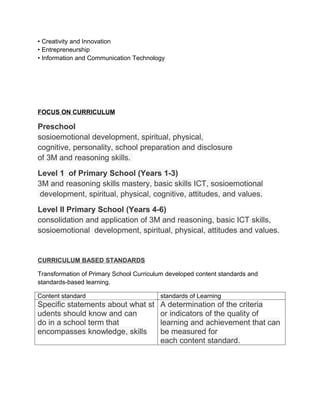
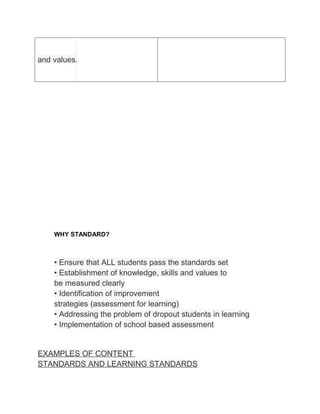
CURRICULUM BASED STANDARDS

Transformation of Primary School Curriculum developed content standards and
standards-based learning.

Content standard                         standards of Learning
Specific statements about what st        A determination of the criteria
udents should know and can               or indicators of the quality of
do in a school term that                 learning and achievement that can
encompasses knowledge, skills            be measured for
                                         each content standard.
and values.


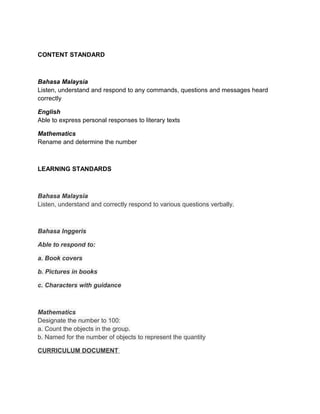
    WHY STANDARD?


    • Ensure that ALL students pass the standards set
    • Establishment of knowledge, skills and values to
    be measured clearly
    • Identification of improvement
    strategies (assessment for learning)
    • Addressing the problem of dropout students in learning
    • Implementation of school based assessment


EXAMPLES OF CONTENT
STANDARDS AND LEARNING STANDARDS
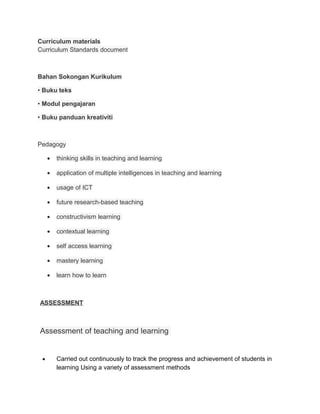
CONTENT STANDARD


Bahasa Malaysia
Listen, understand and respond to any commands, questions and messages heard
correctly

English
Able to express personal responses to literary texts

Mathematics
Rename and determine the number


LEARNING STANDARDS


Bahasa Malaysia
Listen, understand and correctly respond to various questions verbally.


Bahasa Inggeris

Able to respond to:

a. Book covers

b. Pictures in books

c. Characters with guidance


Mathematics
Designate the number to 100:
a. Count the objects in the group.
b. Named for the number of objects to represent the quantity

CURRICULUM DOCUMENT
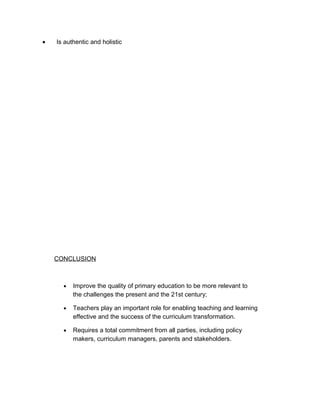
Curriculum materials
Curriculum Standards document


Bahan Sokongan Kurikulum

• Buku teks

• Modul pengajaran

• Buku panduan kreativiti


Pedagogy

     •   thinking skills in teaching and learning

     •   application of multiple intelligences in teaching and learning

     •   usage of ICT

     •   future research-based teaching

     •   constructivism learning

     •   contextual learning

     •   self access learning

     •   mastery learning

     •   learn how to learn


ASSESSMENT


Assessment of teaching and learning


 •       Carried out continuously to track the progress and achievement of students in
         learning Using a variety of assessment methods
•   Is authentic and holistic


    CONCLUSION


      •   Improve the quality of primary education to be more relevant to
          the challenges the present and the 21st century;

      •   Teachers play an important role for enabling teaching and learning
          effective and the success of the curriculum transformation.

      •   Requires a total commitment from all parties, including policy
          makers, curriculum managers, parents and stakeholders.
Background
Background

Background

  • 1.
    Background The idea ofthe three Keynote Y.A.B. prime minister the General Assembly 2006 Demanded that the country's education system to emphasis on: • Human capital development • Production students insight • Governing the formation of citizen knowledge, skills and information • Program to develop intelligence people in producing Ulul al-bab people. The second thrust of the PIPP BASIS Develop human capital with knowledge and skills and to appreciate the values THE GOAL To ensure the Malaysian children spirit to acquire knowledge, skills, competencies and moral values. The national curriculum should be reviewed to ensure that the curriculum holistic and be relevant for a balanced human capital that can handle current and future challenges. Primary School Curriculum 1983 – Kurikulum Baru Sekolah Rendah (KBSR) 1993 – Kurikulum Bersepadu Sekolah Rendah (KBSR) 2003 – KBSR (Semakan) 2011 – Kurikulum Standard Sekolah Rendah (KSSR)
  • 2.
    CURRICULUM TRANSFORMATION The processof doing a form of holistic change existing school curriculum that involves change in shape, organization, content, pedagogy, time allocation, assessment methods, materials and management of the school curriculum. CORE CURRICULUM DEVELOPMENT • National Philosophy of Education • National Education Policy • Vision 2020 • Outline Perspective Plan • Challenges of the 21st Century • New Economic Model (NEM) • Learning Theory • 4 Pillars of Education (UNESCO) Balanced In Terms Of Student Intellectual, Spiritual, Physical And Emotional • The knowledge learned • Competent • Believe In God • Moral honor • confidence • Independent people Global Player • Competitiveness
  • 3.
    Resistance • Communication skills • Identity Responsible Citizen • Being • United cubic • Patriotic • Fair • Caring • Doing good Knowledge Workers • Innovative • Creative • Thirst for Knowledge • Mastering Skills Information Technology communication • Creator of Technology • Lifelong Learning CURRICULUM TRANSFORMATION KSSR • Shape • Organization • contents • allocation of time
  • 4.
    pedagogy • assessment • curriculum management • material THE CONCEPT OF TRANSFORMATION OF PRIMARY SCHOOL CURRICULUM • Based on Philosophy of Education national • Based on the principle of KBSR: - Integrated approach - Overview of Individual Development - Opportunity and Equal Educational Quality for All Students - Lifetime Education KBSR EXISTING FORM
  • 5.
    COMMUNICATION Basic Skills (Reading, Writing & Counting) mathematical language HUMAN AND ENVIRONMENTAL AROUND INDIVIDUAL PERSONAL DEVELOPMENT Spirituality, Values and Attitudes STUDENTS Arts and Entertainment Islamic education, music Moral education, Visual Arts Civics & citizenship Physical Education & Health Education Humanity and the Environment Life Skills
  • 8.
    TRANSFORMATION OF CURRICULUM CRITICALTHINKING AND CREATIVE INNOVATIVE • Communication Oral language skills of integration and non-verbal when interacting • Spirituality, Attitude & Values Appreciation of the religious practices, beliefs, attitudes and values • Humanism Mastery of knowledge and practice of community and local environment, national and global. Appreciation of patriotism and unity. • Personal skills Fostering leadership and personal development through curricular and extra-curricular activities • Physical Development & Aesthetics Physical development and health for the well-being. Nurturing the imagination, creativity, talent and appreciation. • Science & Technology Mastery of scientific knowledge, skills and scientific attitudes. Mastery of mathematical knowledge and skills. Mastery of technology-based knowledge and skills ELEMENT OF ADDED VALUE
  • 9.
    • Creativity andInnovation • Entrepreneurship • Information and Communication Technology FOCUS ON CURRICULUM Preschool sosioemotional development, spiritual, physical, cognitive, personality, school preparation and disclosure of 3M and reasoning skills. Level 1 of Primary School (Years 1-3) 3M and reasoning skills mastery, basic skills ICT, sosioemotional development, spiritual, physical, cognitive, attitudes, and values. Level II Primary School (Years 4-6) consolidation and application of 3M and reasoning, basic ICT skills, sosioemotional development, spiritual, physical, attitudes and values. CURRICULUM BASED STANDARDS Transformation of Primary School Curriculum developed content standards and standards-based learning. Content standard standards of Learning Specific statements about what st A determination of the criteria udents should know and can or indicators of the quality of do in a school term that learning and achievement that can encompasses knowledge, skills be measured for each content standard.
  • 10.
    and values. WHY STANDARD? • Ensure that ALL students pass the standards set • Establishment of knowledge, skills and values to be measured clearly • Identification of improvement strategies (assessment for learning) • Addressing the problem of dropout students in learning • Implementation of school based assessment EXAMPLES OF CONTENT STANDARDS AND LEARNING STANDARDS
  • 11.
    CONTENT STANDARD Bahasa Malaysia Listen,understand and respond to any commands, questions and messages heard correctly English Able to express personal responses to literary texts Mathematics Rename and determine the number LEARNING STANDARDS Bahasa Malaysia Listen, understand and correctly respond to various questions verbally. Bahasa Inggeris Able to respond to: a. Book covers b. Pictures in books c. Characters with guidance Mathematics Designate the number to 100: a. Count the objects in the group. b. Named for the number of objects to represent the quantity CURRICULUM DOCUMENT
  • 12.
    Curriculum materials Curriculum Standardsdocument Bahan Sokongan Kurikulum • Buku teks • Modul pengajaran • Buku panduan kreativiti Pedagogy • thinking skills in teaching and learning • application of multiple intelligences in teaching and learning • usage of ICT • future research-based teaching • constructivism learning • contextual learning • self access learning • mastery learning • learn how to learn ASSESSMENT Assessment of teaching and learning • Carried out continuously to track the progress and achievement of students in learning Using a variety of assessment methods
  • 13.
    Is authentic and holistic CONCLUSION • Improve the quality of primary education to be more relevant to the challenges the present and the 21st century; • Teachers play an important role for enabling teaching and learning effective and the success of the curriculum transformation. • Requires a total commitment from all parties, including policy makers, curriculum managers, parents and stakeholders.