by Sarah Vallis


              The UK Education System
Types of Schools
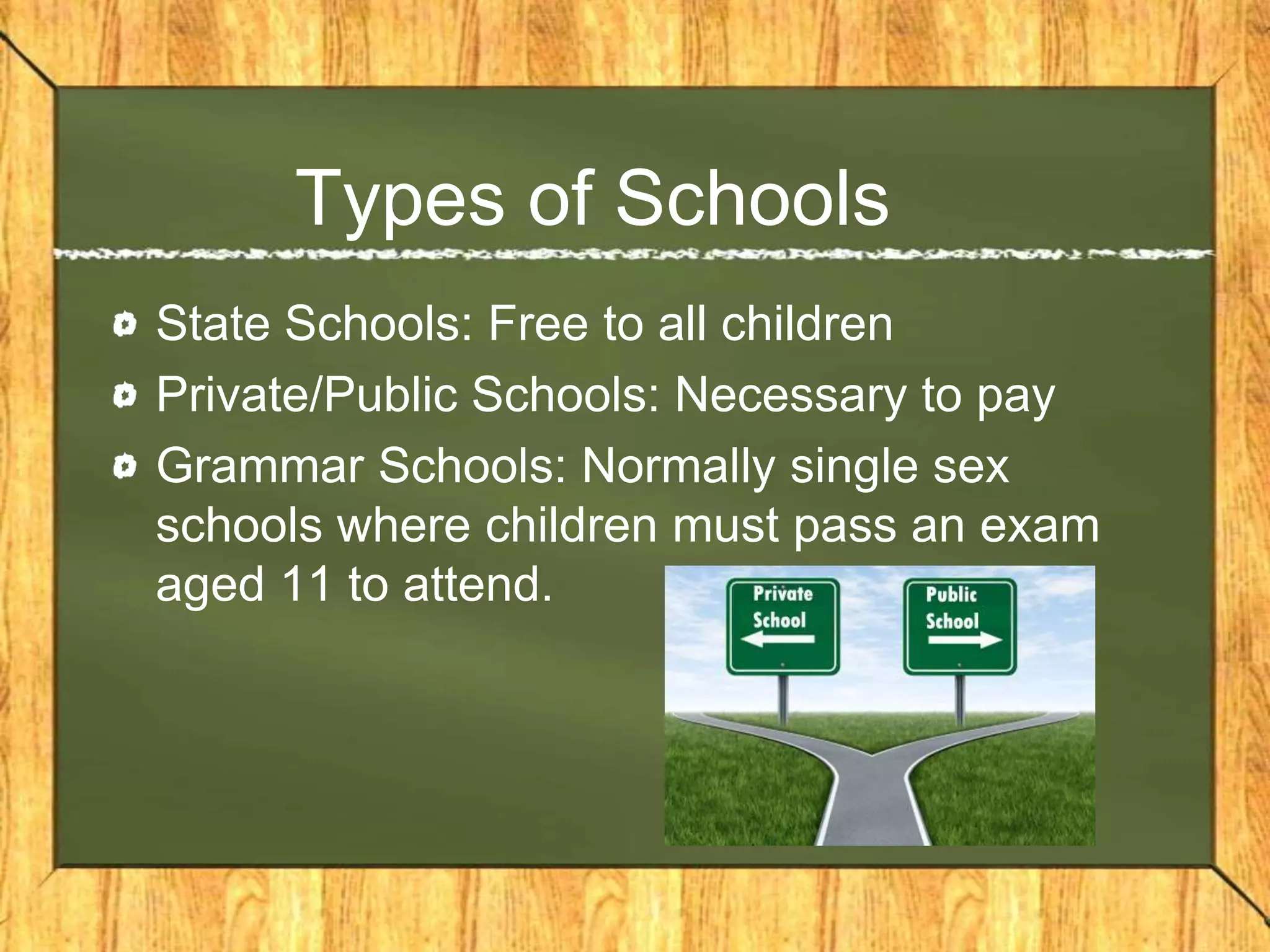
State Schools: Free to all children
Private/Public Schools: Necessary to pay
Grammar Schools: Normally single sex
schools where children must pass an exam
aged 11 to attend.
School Grades
Nursery (0-4)
Primary School (4-11: Reception – Year
6)
Secondary School (11-16: Year 7 – 11)
Sixth Form/College (16-18: Years 12
and 13)
Education is compulsory from the age of
4 to 16.
The School Year
The school year runs from September to July
and is 39 weeks long.
The school holidays are:
October – 1 week
Christmas – 2 weeks
February – 1 week
Easter – 2 weeks
May – 1 week
Summer – 6 weeks
Exams
Year 2: Key Stage 1 exams
Year 6: Key Stage 2 exams
Year 11: GCSE’s
Year 12: AS Levels
Year 13: A Levels
School Day
School lasts from 9am until
3.20pm.
Lessons are 1 hour and 15
minutes long.
There is a break in the
morning at 11.40am which
lasts 20 minutes.
At break time, students
usually eat a snack.
Lunch
Lunch is at 1.15 until 2 pm.
Students stay in school and
they either bring their own
lunch in a lunch box
OR they can buy lunch
from the school canteen.
Number of Pupils
In my primary school
there were 500 pupils.
In my secondary
school there were
1500 students.
There are on average
30 students in every
class.
The Classroom
Teachers have their own
classrooms and it is the students
that change rooms after every
lesson.
Depending on your level in a
subject you will be put in different
sets. For example, if you are
good at Spanish you will be in set
one, but if you are bad at English
you will be in set 5.
School Uniform
The school uniform varies from school
to school but most schools have one.
On certain days you can wear what you
want. For example, to raise money for
charity.
It stops children worrying about what to
wear, and teachers believe that it
makes students more disciplined.
Primary School
Secondary School


Shirt        Tie            Blazer


 Skirt        Trousers

The uk education system

  • 1.
    by Sarah Vallis The UK Education System
  • 2.
    Types of Schools StateSchools: Free to all children Private/Public Schools: Necessary to pay Grammar Schools: Normally single sex schools where children must pass an exam aged 11 to attend.
  • 3.
    School Grades Nursery (0-4) PrimarySchool (4-11: Reception – Year 6) Secondary School (11-16: Year 7 – 11) Sixth Form/College (16-18: Years 12 and 13) Education is compulsory from the age of 4 to 16.
  • 4.
    The School Year Theschool year runs from September to July and is 39 weeks long. The school holidays are: October – 1 week Christmas – 2 weeks February – 1 week Easter – 2 weeks May – 1 week Summer – 6 weeks
  • 5.
    Exams Year 2: KeyStage 1 exams Year 6: Key Stage 2 exams Year 11: GCSE’s Year 12: AS Levels Year 13: A Levels
  • 6.
    School Day School lastsfrom 9am until 3.20pm. Lessons are 1 hour and 15 minutes long. There is a break in the morning at 11.40am which lasts 20 minutes. At break time, students usually eat a snack.
  • 7.
    Lunch Lunch is at1.15 until 2 pm. Students stay in school and they either bring their own lunch in a lunch box OR they can buy lunch from the school canteen.
  • 8.
    Number of Pupils Inmy primary school there were 500 pupils. In my secondary school there were 1500 students. There are on average 30 students in every class.
  • 9.
    The Classroom Teachers havetheir own classrooms and it is the students that change rooms after every lesson. Depending on your level in a subject you will be put in different sets. For example, if you are good at Spanish you will be in set one, but if you are bad at English you will be in set 5.
  • 10.
    School Uniform The schooluniform varies from school to school but most schools have one. On certain days you can wear what you want. For example, to raise money for charity. It stops children worrying about what to wear, and teachers believe that it makes students more disciplined.
  • 11.
  • 12.
    Secondary School Shirt Tie Blazer Skirt Trousers