TIME CLAUSES
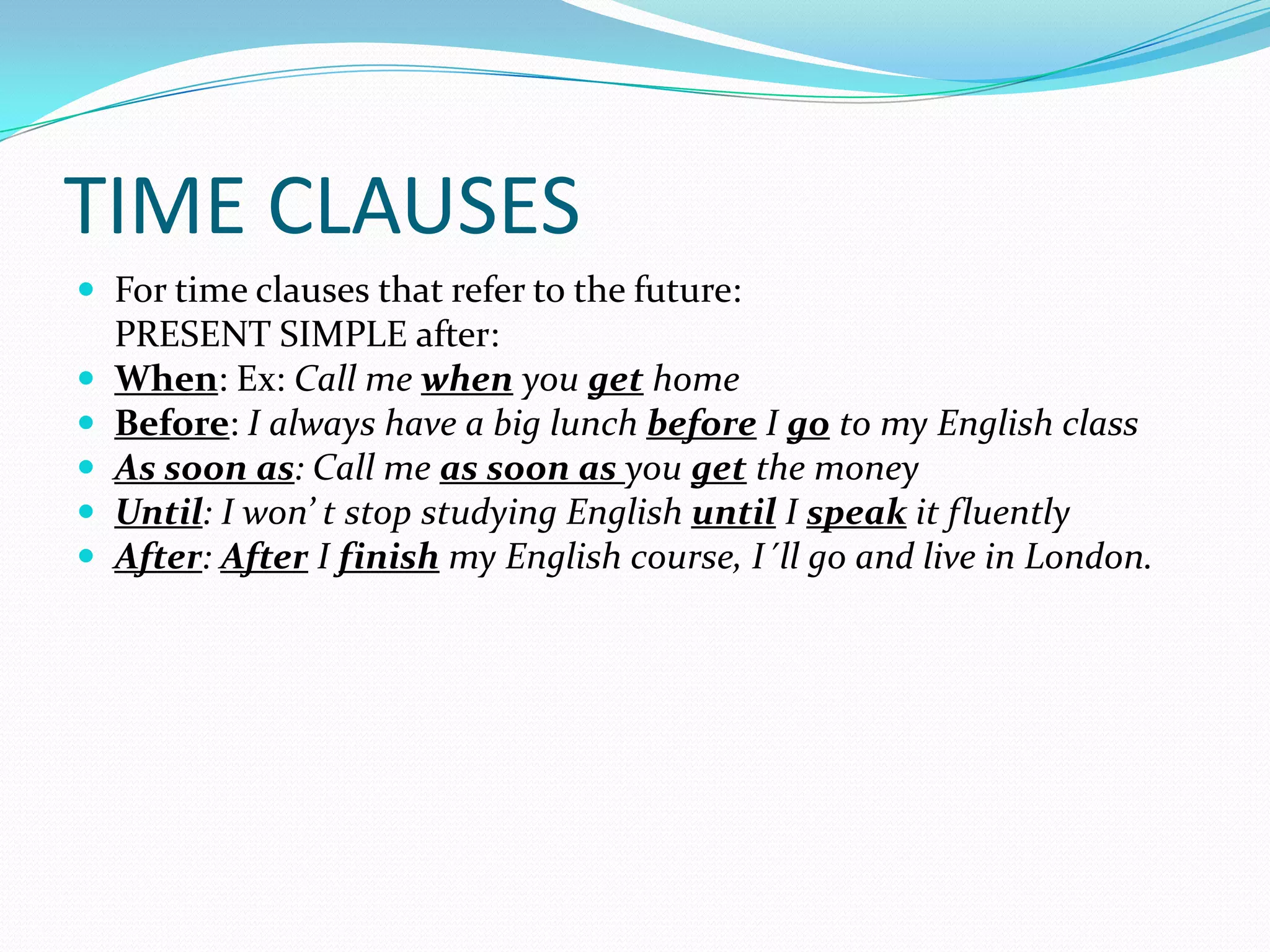
 For time clauses that refer to the future:
PRESENT SIMPLE after:
 When: Ex: Call me when you get home
 Before: I always have a big lunch before I go to my English class
 As soon as: Call me as soon as you get the money
 Until: I won’ t stop studying English until I speak it fluently
 After: After I finish my English course, I´ll go and live in London.
First conditional
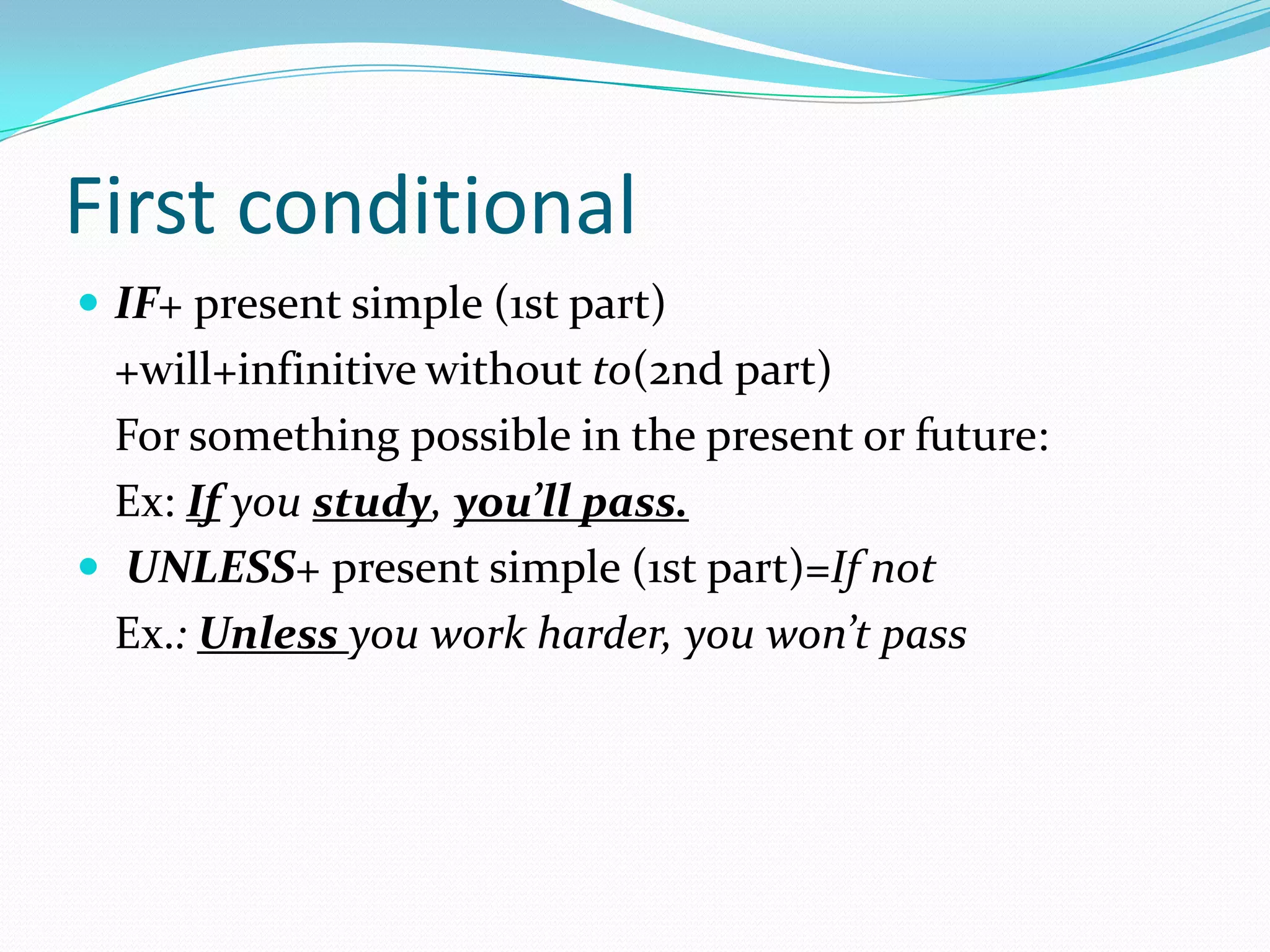
 IF+ present simple (1st part)
+will+infinitive without to(2nd part)
For something possible in the present or future:
Ex: If you study, you’ll pass.
 UNLESS+ present simple (1st part)=If not
Ex.: Unless you work harder, you won’t pass
Second conditional
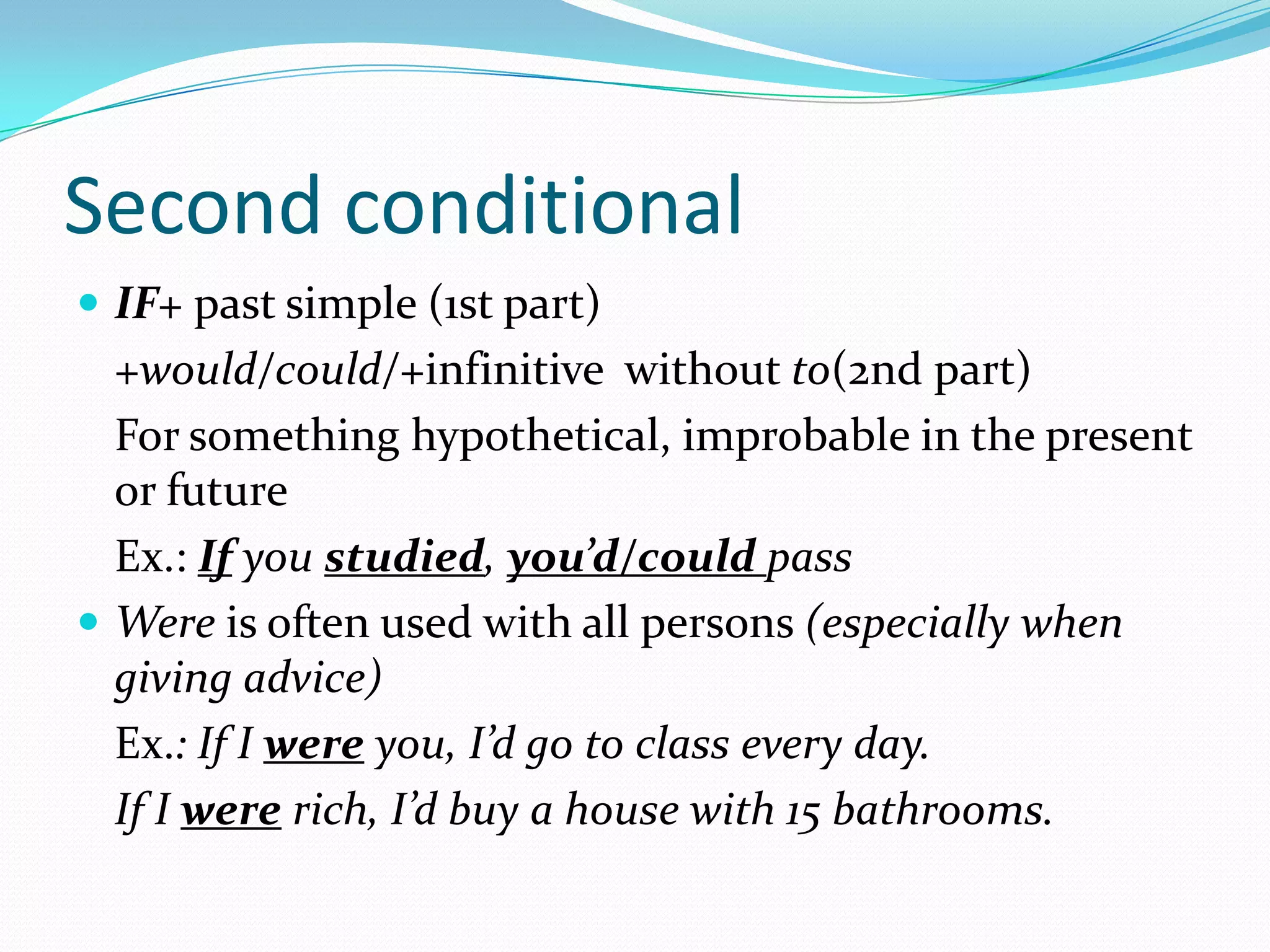
 IF+ past simple (1st part)
+would/could/+infinitive without to(2nd part)
For something hypothetical, improbable in the present
or future
Ex.: If you studied, you’d/could pass
 Were is often used with all persons (especially when
giving advice)
Ex.: If I were you, I’d go to class every day.
If I were rich, I’d buy a house with 15 bathrooms.
Third conditional
 IF+Past Perfect (1st part)+WOULD HAVE+past
participle: for something hypothetical about the past,
impossible to change now.
Ex.: If I had studied a little bit, I would have passed
the exam. (But I didn’t study, so I failed the exam).

Conditional sentences and time clauses

  • 2.
    TIME CLAUSES  Fortime clauses that refer to the future: PRESENT SIMPLE after:  When: Ex: Call me when you get home  Before: I always have a big lunch before I go to my English class  As soon as: Call me as soon as you get the money  Until: I won’ t stop studying English until I speak it fluently  After: After I finish my English course, I´ll go and live in London.
  • 3.
    First conditional  IF+present simple (1st part) +will+infinitive without to(2nd part) For something possible in the present or future: Ex: If you study, you’ll pass.  UNLESS+ present simple (1st part)=If not Ex.: Unless you work harder, you won’t pass
  • 4.
    Second conditional  IF+past simple (1st part) +would/could/+infinitive without to(2nd part) For something hypothetical, improbable in the present or future Ex.: If you studied, you’d/could pass  Were is often used with all persons (especially when giving advice) Ex.: If I were you, I’d go to class every day. If I were rich, I’d buy a house with 15 bathrooms.
  • 5.
    Third conditional  IF+PastPerfect (1st part)+WOULD HAVE+past participle: for something hypothetical about the past, impossible to change now. Ex.: If I had studied a little bit, I would have passed the exam. (But I didn’t study, so I failed the exam).