

School Name : Ramakrishna Mission Vidyalaya, 
Viveknagar, Tripura, West 
Affiliated to CBSE, New Delhi 
BASIC COMPUTER FUNDAMENTALS 
Digital eContent Submitted by: 
Name of the Teacher : Mr. Uday 
Pal(PGT) 
Year: 2014-15 
Target Group: Class VI
BASIC COMPUTER FUNDAMENTALS
WHAT IS A COMPUTER? 
 A computer is a programmable machine with 
two principal characteristics: 
• It responds to a specific set of instructions 
in a well-defined manner. 
It can execute a prerecorded list of 
instructions (a program).
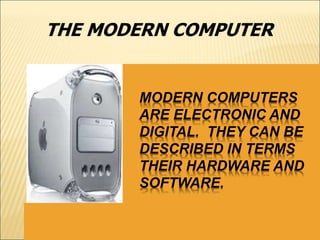
THE MODERN COMPUTER 
MODERN COMPUTERS 
ARE ELECTRONIC AND 
DIGITAL. THEY CAN BE 
DESCRIBED IN TERMS 
THEIR HARDWARE AND 
SOFTWARE.
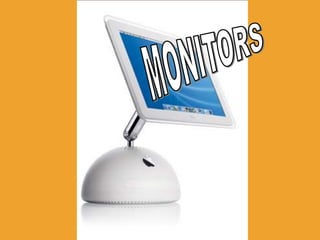
HARDWARE : 
Hardware refers to objects that you 
can actually touch, like disks, disk 
drives, display screens, keyboards, 
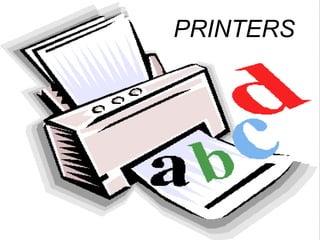
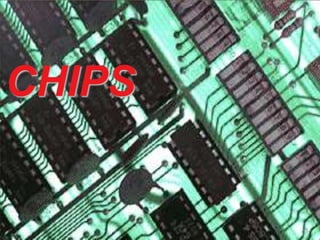
printers, boards, and chips.
K E 
Y 
B 
O 
S 
A 
R 
D
PRINTERS
CHIPS
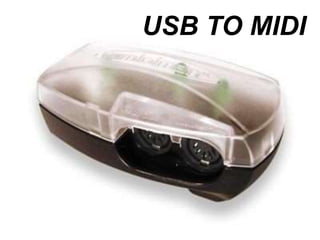
USB TO MIDI
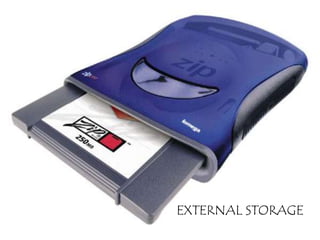
EXTERNAL STORAGE
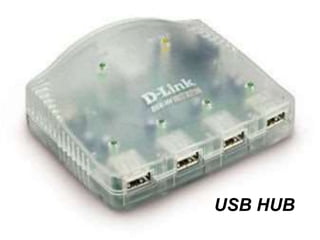
USB HUB
SOFTWARE 
Software exists as ideas, concepts, 
and symbols, but it has no substance.
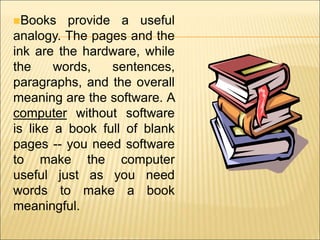
Books provide a useful 
analogy. The pages and the 
ink are the hardware, while 
the words, sentences, 
paragraphs, and the overall 
meaning are the software. A 
computer without software 
is like a book full of blank 
pages -- you need software 
to make the computer 
useful just as you need 
words to make a book 
meaningful.
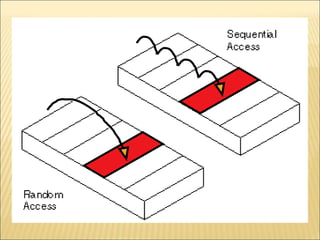
COMPUTERS USE RANDOM ACCESS 
TECHNOLOGY - DATA CAN BE 
ACCESSED IN ANY ORDER AT ANY 
TIME REGARDLESS OF STORAGE 
POSITION OR TIME OF CREATION.
THE LANGUAGE OF COMPUTERS 
 Binary: the digital language of computers. 
This language is composed of an alphabet 
containing only 2 “letters” known as bits. Any 
work done on a modern computer from word 
processing to digital audio is translated to 
this language.
DIGITAL LETTERS AND WORDS : 
 Bit: the smallest form of information in the 
language of computers. It is represented as a 
zero or a one. A bit can be considered a letter 
in the digital language of binary. 
 Byte: a “word” of information in binary. It is 
made of a number bits determined by the bit 
rate. 8 bits is usually = 1 byte on modern 
computers.
BIT RATE : 
 Bit rate: the number of “letters” or bits in a 
digital word or byte. An example of a 16 bit 
digital word in binary could be (01010101 
10101010).
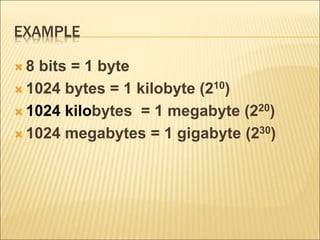
EXAMPLE 
 8 bits = 1 byte 
 1024 bytes = 1 kilobyte (210) 
 1024 kilobytes = 1 megabyte (220) 
 1024 megabytes = 1 gigabyte (230)
IMPORTANT HARDWARE : 
 CPU - abbreviation of central processing 
unit, the CPU is the brains of the computer. 
Sometimes referred to simply as the 
processor or central processor, the CPU is 
where most calculations take place. In terms 
of computing power, the CPU is the most 
important element of a computer system.
CLOCK SPEED : 
 Clock speed - also called clock rate, the 
speed at which a microprocessor executes 
instructions. Every computer contains an 
internal clock that regulates the rate at which 
instructions are executed and synchronizes 
all the various computer components. The 
faster the clock, the more instructions the 
CPU can execute per second.
BUS: 
 A bus is a collection of wires through which data is 
transmitted from one part of a computer to another. 
You can think of a bus as a highway on which data 
travels within a computer. There are various types 
of busses, both internal and external, that connect 
the hardware, inside and outside, the computer. 
 Like the CPU, busses have a clock speed. A fast 
bus allows data to be transferred faster, which 
makes applications run faster.
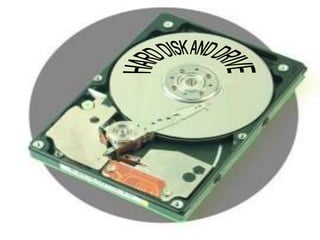
HARD DISK (STORAGE DEVICE): 
 The hard disk is a magnetic disk on which 
you can store computer data. The term hard 
is used to distinguish it from a soft, or floppy, 
disk. Hard disks hold more data and are 
faster than floppy disks. A hard disk, for 
example, can store anywhere from 10 to 
more than 100 gigabytes, whereas most 
floppies have a maximum storage capacity of 
1.4 megabytes.
RAM VS. ROM (MEMORY): 
 Is an acronym for random access memory, a 
type of computer memory that can be 
accessed randomly; That is, any byte of 
memory can be accessed without touching 
the preceding bytes. RAM is the most 
common type of memory found in computers 
and other devices, such as printers.
RAM VS. ROM: 
 In common usage, the term RAM is synonymous 
with main memory, the memory available to 
programs. For example, a computer with 300M 
RAM has approximately 2400 million bytes of 
memory that programs can use. In contrast, ROM 
(read-only memory) refers to special memory used 
to store programs that boot the computer and 
perform diagnostics. In fact, both types of memory 
(ROM and RAM) allow random access. To be 
precise, therefore, RAM should be referred to as 
read/write RAM and ROM as read-only RAM.
IMPORTANT SOFTWARE : 
 The operating system software is the most 
important program that runs on a computer. 
Every general-purpose computer must have 
an operating system to run other programs.
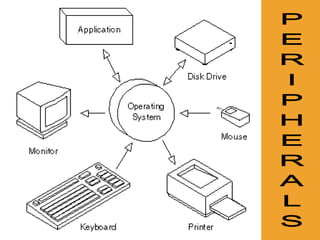
PERIPHERALS: 
 Operating systems perform basic tasks, such 
as recognizing input from the keyboard, 
sending output to the display screen, keeping 
track of files and directories on the disk, and 
controlling peripheral devices.
APPLICATIONS: 
 Operating systems provide a software 
platform on top of which other programs, 
called application programs, can run. The 
application programs must be written to run 
on top of a particular operating system. Your 
choice of operating system, therefore, 
determines to a great extent the applications 
you can run.
CONNECTIVITY: 
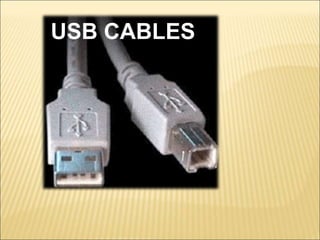
 USB 
Short for universal serial bus, is an 
external bus standard that supports 
data transfer rates of 12 mbps 
(megabits per second). A single USB 
port can be used to connect up to 127 
peripheral devices, such as mice, 
modems, and keyboards.
USB CABLES
PLUG AND PLAY: 
 USB also supports Plug-and-Play installation and 
hot plugging. Also referred to as Hi-Speed USB, 
USB 2.0 is an external bus that supports data rates 
up to 480 Mbps. USB 2.0 is an extension of USB 
1.1. USB 2.0 is fully compatible with USB 1.1 and 
uses the same cables and connectors. (Two of the 
contacts carry data — one for each direction; the 
other two supply 5 VDC and a ground. Standard 
MIDI cables carry information in only one direction 
on a single data wire.)
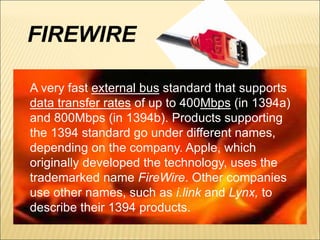
FIREWIRE 
A very fast external bus standard that supports 
data transfer rates of up to 400Mbps (in 1394a) 
and 800Mbps (in 1394b). Products supporting 
the 1394 standard go under different names, 
depending on the company. Apple, which 
originally developed the technology, uses the 
trademarked name FireWire. Other companies 
use other names, such as i.link and Lynx, to 
describe their 1394 products.
MORE FIRE: 
 A single 1394 port can be used to connect up 63 
external devices. In addition to its high speed, 1394 
also supports isochronous data -- delivering data at 
a guaranteed rate. This makes it ideal for devices 
that need to transfer high levels of data in real-time, 
such as video devices. Like USB, 1394 supports 
both plug-and-play and hot plugging, and also 
provides power to peripheral devices.
EVEN MORE: 
 Like USB, FireWire lets you hook things up to a 
computer. Unlike USB, however, FireWire will run 
quite happily without a computer. That makes it 
ideal for situations in which a computer would be 
unnecessary, such as in permanent audio 
installations like theaters or churches. It also gives 
FireWire another advantage, because devices can 
talk directly to each other without having to go 
through a computer's operating system.
THE MAC LAB: COMPUTER AND PERIPHERALS 
 Digidesign Mbox 
 Korg X5D 
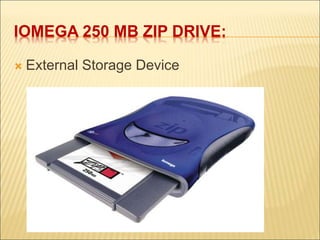
 Iomega 250 Mb zip drive 
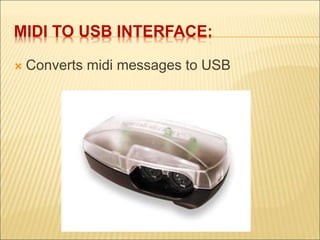
 Midi to USB interface 
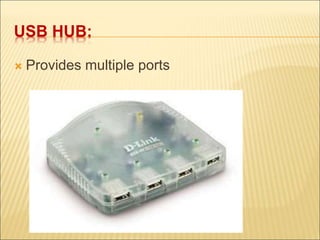
 USB hub 
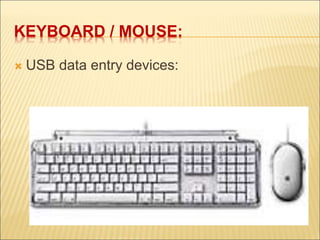
 Keyboard / mouse
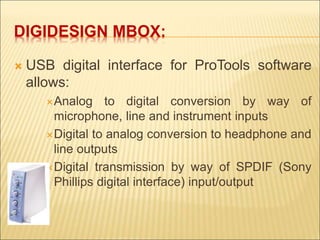
DIGIDESIGN MBOX: 
 USB digital interface for ProTools software 
allows: 
Analog to digital conversion by way of 
microphone, line and instrument inputs 
Digital to analog conversion to headphone and 
line outputs 
Digital transmission by way of SPDIF (Sony 
Phillips digital interface) input/output
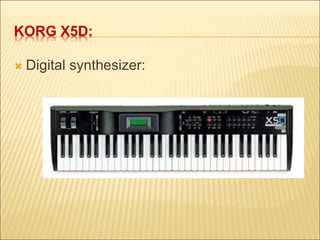
KORG X5D: 
 Digital synthesizer:
IOMEGA 250 MB ZIP DRIVE: 
 External Storage Device
MIDI TO USB INTERFACE: 
 Converts midi messages to USB
USB HUB: 
 Provides multiple ports
KEYBOARD / MOUSE: 
 USB data entry devices:
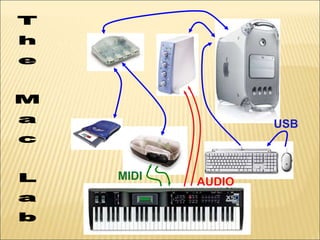
THE MAC LAB SET UP: 
 COLOR CODE for diagram: 
BLUE – USB 
GREEN – MIDI 
RED – AUDIO
USB 
AUDIO 
MIDI
Thank 
You!!!!

Basic computer fundamentals

  • 1.
    School Name :Ramakrishna Mission Vidyalaya, Viveknagar, Tripura, West Affiliated to CBSE, New Delhi BASIC COMPUTER FUNDAMENTALS Digital eContent Submitted by: Name of the Teacher : Mr. Uday Pal(PGT) Year: 2014-15 Target Group: Class VI
  • 2.
  • 3.
    WHAT IS ACOMPUTER?  A computer is a programmable machine with two principal characteristics: • It responds to a specific set of instructions in a well-defined manner. It can execute a prerecorded list of instructions (a program).
  • 4.
    THE MODERN COMPUTER MODERN COMPUTERS ARE ELECTRONIC AND DIGITAL. THEY CAN BE DESCRIBED IN TERMS THEIR HARDWARE AND SOFTWARE.
  • 5.
    HARDWARE : Hardwarerefers to objects that you can actually touch, like disks, disk drives, display screens, keyboards, printers, boards, and chips.
  • 8.
    K E Y B O S A R D
  • 9.
  • 10.
  • 11.
  • 12.
  • 13.
  • 14.
    SOFTWARE Software existsas ideas, concepts, and symbols, but it has no substance.
  • 15.
    Books provide auseful analogy. The pages and the ink are the hardware, while the words, sentences, paragraphs, and the overall meaning are the software. A computer without software is like a book full of blank pages -- you need software to make the computer useful just as you need words to make a book meaningful.
  • 16.
    COMPUTERS USE RANDOMACCESS TECHNOLOGY - DATA CAN BE ACCESSED IN ANY ORDER AT ANY TIME REGARDLESS OF STORAGE POSITION OR TIME OF CREATION.
  • 18.
    THE LANGUAGE OFCOMPUTERS  Binary: the digital language of computers. This language is composed of an alphabet containing only 2 “letters” known as bits. Any work done on a modern computer from word processing to digital audio is translated to this language.
  • 19.
    DIGITAL LETTERS ANDWORDS :  Bit: the smallest form of information in the language of computers. It is represented as a zero or a one. A bit can be considered a letter in the digital language of binary.  Byte: a “word” of information in binary. It is made of a number bits determined by the bit rate. 8 bits is usually = 1 byte on modern computers.
  • 20.
    BIT RATE :  Bit rate: the number of “letters” or bits in a digital word or byte. An example of a 16 bit digital word in binary could be (01010101 10101010).
  • 21.
    EXAMPLE  8bits = 1 byte  1024 bytes = 1 kilobyte (210)  1024 kilobytes = 1 megabyte (220)  1024 megabytes = 1 gigabyte (230)
  • 22.
    IMPORTANT HARDWARE :  CPU - abbreviation of central processing unit, the CPU is the brains of the computer. Sometimes referred to simply as the processor or central processor, the CPU is where most calculations take place. In terms of computing power, the CPU is the most important element of a computer system.
  • 23.
    CLOCK SPEED :  Clock speed - also called clock rate, the speed at which a microprocessor executes instructions. Every computer contains an internal clock that regulates the rate at which instructions are executed and synchronizes all the various computer components. The faster the clock, the more instructions the CPU can execute per second.
  • 24.
    BUS:  Abus is a collection of wires through which data is transmitted from one part of a computer to another. You can think of a bus as a highway on which data travels within a computer. There are various types of busses, both internal and external, that connect the hardware, inside and outside, the computer.  Like the CPU, busses have a clock speed. A fast bus allows data to be transferred faster, which makes applications run faster.
  • 25.
    HARD DISK (STORAGEDEVICE):  The hard disk is a magnetic disk on which you can store computer data. The term hard is used to distinguish it from a soft, or floppy, disk. Hard disks hold more data and are faster than floppy disks. A hard disk, for example, can store anywhere from 10 to more than 100 gigabytes, whereas most floppies have a maximum storage capacity of 1.4 megabytes.
  • 26.
    RAM VS. ROM(MEMORY):  Is an acronym for random access memory, a type of computer memory that can be accessed randomly; That is, any byte of memory can be accessed without touching the preceding bytes. RAM is the most common type of memory found in computers and other devices, such as printers.
  • 27.
    RAM VS. ROM:  In common usage, the term RAM is synonymous with main memory, the memory available to programs. For example, a computer with 300M RAM has approximately 2400 million bytes of memory that programs can use. In contrast, ROM (read-only memory) refers to special memory used to store programs that boot the computer and perform diagnostics. In fact, both types of memory (ROM and RAM) allow random access. To be precise, therefore, RAM should be referred to as read/write RAM and ROM as read-only RAM.
  • 28.
    IMPORTANT SOFTWARE :  The operating system software is the most important program that runs on a computer. Every general-purpose computer must have an operating system to run other programs.
  • 29.
    PERIPHERALS:  Operatingsystems perform basic tasks, such as recognizing input from the keyboard, sending output to the display screen, keeping track of files and directories on the disk, and controlling peripheral devices.
  • 31.
    APPLICATIONS:  Operatingsystems provide a software platform on top of which other programs, called application programs, can run. The application programs must be written to run on top of a particular operating system. Your choice of operating system, therefore, determines to a great extent the applications you can run.
  • 32.
    CONNECTIVITY:  USB Short for universal serial bus, is an external bus standard that supports data transfer rates of 12 mbps (megabits per second). A single USB port can be used to connect up to 127 peripheral devices, such as mice, modems, and keyboards.
  • 33.
  • 34.
    PLUG AND PLAY:  USB also supports Plug-and-Play installation and hot plugging. Also referred to as Hi-Speed USB, USB 2.0 is an external bus that supports data rates up to 480 Mbps. USB 2.0 is an extension of USB 1.1. USB 2.0 is fully compatible with USB 1.1 and uses the same cables and connectors. (Two of the contacts carry data — one for each direction; the other two supply 5 VDC and a ground. Standard MIDI cables carry information in only one direction on a single data wire.)
  • 35.
    FIREWIRE A veryfast external bus standard that supports data transfer rates of up to 400Mbps (in 1394a) and 800Mbps (in 1394b). Products supporting the 1394 standard go under different names, depending on the company. Apple, which originally developed the technology, uses the trademarked name FireWire. Other companies use other names, such as i.link and Lynx, to describe their 1394 products.
  • 36.
    MORE FIRE: A single 1394 port can be used to connect up 63 external devices. In addition to its high speed, 1394 also supports isochronous data -- delivering data at a guaranteed rate. This makes it ideal for devices that need to transfer high levels of data in real-time, such as video devices. Like USB, 1394 supports both plug-and-play and hot plugging, and also provides power to peripheral devices.
  • 37.
    EVEN MORE: Like USB, FireWire lets you hook things up to a computer. Unlike USB, however, FireWire will run quite happily without a computer. That makes it ideal for situations in which a computer would be unnecessary, such as in permanent audio installations like theaters or churches. It also gives FireWire another advantage, because devices can talk directly to each other without having to go through a computer's operating system.
  • 38.
    THE MAC LAB:COMPUTER AND PERIPHERALS  Digidesign Mbox  Korg X5D  Iomega 250 Mb zip drive  Midi to USB interface  USB hub  Keyboard / mouse
  • 39.
    DIGIDESIGN MBOX: USB digital interface for ProTools software allows: Analog to digital conversion by way of microphone, line and instrument inputs Digital to analog conversion to headphone and line outputs Digital transmission by way of SPDIF (Sony Phillips digital interface) input/output
  • 40.
    KORG X5D: Digital synthesizer:
  • 41.
    IOMEGA 250 MBZIP DRIVE:  External Storage Device
  • 42.
    MIDI TO USBINTERFACE:  Converts midi messages to USB
  • 43.
    USB HUB: Provides multiple ports
  • 44.
    KEYBOARD / MOUSE:  USB data entry devices:
  • 45.
    THE MAC LABSET UP:  COLOR CODE for diagram: BLUE – USB GREEN – MIDI RED – AUDIO
  • 46.
  • 47.