Basic Computer
Fundamentals

Name :

atheendrh
:atheendrh@gmail.com

:

atheendrh kakkoth

:

atheendrh kakkoth

:

+919633734876
What Is a Computer?


A computer is a programmable machine
with two principal characteristics:
• It responds to a specific set of instructions in a
well-defined manner.
• It can execute a prerecorded list of
instructions (a program).
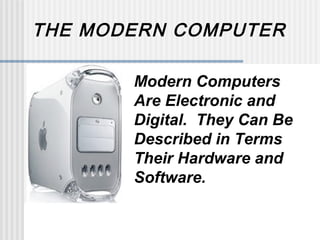
THE MODERN COMPUTER
Modern Computers
Are Electronic and
Digital. They Can Be
Described in Terms
Their Hardware and
Software.
Hardware
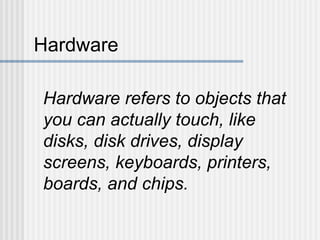
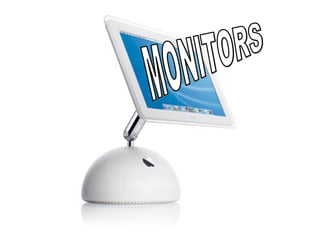
Hardware refers to objects that
you can actually touch, like
disks, disk drives, display
screens, keyboards, printers,
boards, and chips.
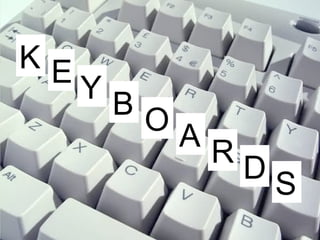
KE
YB
OA
RD
S
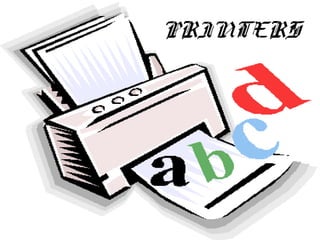
PRINTERS
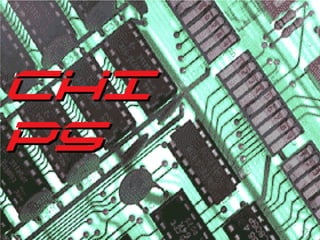
CHI
PS
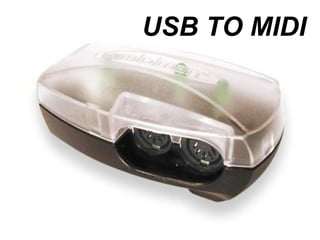
USB TO MIDI
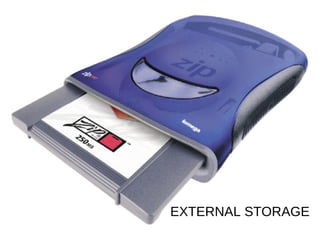
EXTERNAL STORAGE
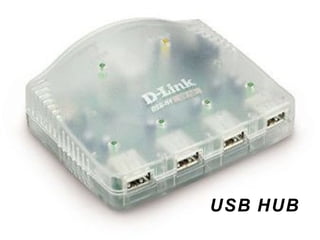
USB HUB
Software
Software exists as ideas, concepts,
and symbols, but it has no substance.
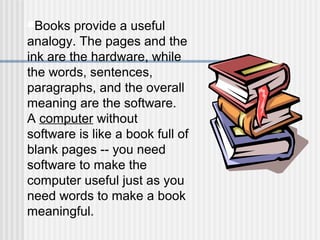
Books

provide a useful
analogy. The pages and the
ink are the hardware, while
the words, sentences,
paragraphs, and the overall
meaning are the software.
A computer without
software is like a book full of
blank pages -- you need
software to make the
computer useful just as you
need words to make a book
meaningful.
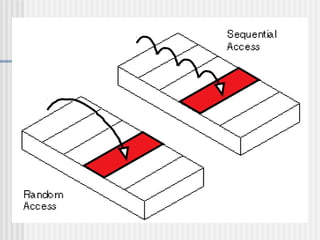
Computers Use Random Access
Technology - Data Can Be
Accessed in Any Order at Any
Time Regardless of Storage
Position or Time of Creation.
The Language of Computers


Binary: the digital language of
computers. This language is composed
of an alphabet containing only 2 “letters”
known as bits. Any work done on a
modern computer from word processing
to digital audio is translated to this
language.
Digital Letters and Words




Bit: the smallest form of information in the
language of computers. It is represented as
a zero or a one. A bit can be considered a
letter in the digital language of binary.
Byte: a “word” of information in binary. It is
made of a number bits determined by the bit
rate. 8 bits is usually = 1 byte on modern
computers.
Bit Rate


Bit rate: the number of “letters” or bits in
a digital word or byte. An example of a 16
bit digital word in binary could be
(01010101 10101010).
Example
8

bits = 1 byte
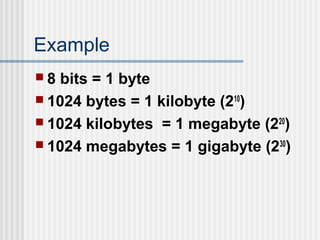
 1024 bytes = 1 kilobyte (210)
 1024 kilobytes = 1 megabyte (220)
 1024 megabytes = 1 gigabyte (230)
Important Hardware


CPU - abbreviation of central processing
unit, the CPU is the brains of the
computer. Sometimes referred to simply
as the processor or central processor, the
CPU is where most calculations take
place. In terms of computing power, the
CPU is the most important element of a
computer system.
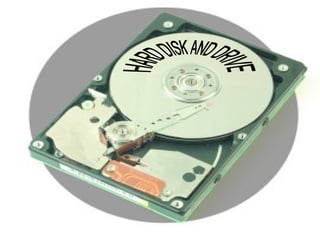
HARD DISK (Storage Device)


The hard disk is a magnetic disk on which
you can store computer data. The term
hard is used to distinguish it from a soft,
or floppy, disk. Hard disks hold more data
and are faster than floppy disks. A hard
disk, for example, can store anywhere
from 10 to more than 100 gigabytes,
whereas most floppies have a maximum
storage capacity of 1.4 megabytes.
RAM Vs. ROM (Memory)


Is an acronym for random access
memory, a type of computer memory that
can be accessed randomly; That is, any
byte of memory can be accessed without
touching the preceding bytes. RAM is the
most common type of memory found in
computers and other devices, such as
printers.
Important Software


The operating system software is the
most important program that runs on a
computer. Every general-purpose
computer must have an operating system
to run other programs.
Applications


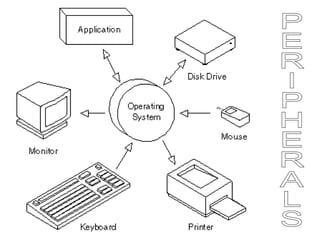
Operating systems provide a software
platform on top of which other programs,
called application programs, can run. The
application programs must be written to
run on top of a particular operating
system. Your choice of operating system,
therefore, determines to a great extent
the applications you can run.
Connectivity


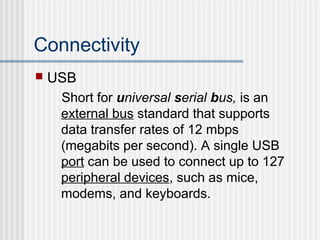
USB
Short for universal serial bus, is an
external bus standard that supports
data transfer rates of 12 mbps
(megabits per second). A single USB
port can be used to connect up to 127
peripheral devices, such as mice,
modems, and keyboards.
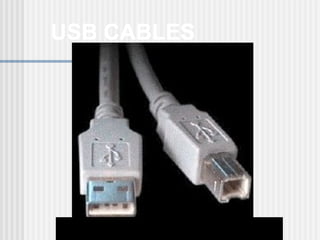
USB CABLES
The end

Basic computer fundamentals

  • 1.
  • 2.
    What Is aComputer?  A computer is a programmable machine with two principal characteristics: • It responds to a specific set of instructions in a well-defined manner. • It can execute a prerecorded list of instructions (a program).
  • 3.
    THE MODERN COMPUTER ModernComputers Are Electronic and Digital. They Can Be Described in Terms Their Hardware and Software.
  • 4.
    Hardware Hardware refers toobjects that you can actually touch, like disks, disk drives, display screens, keyboards, printers, boards, and chips.
  • 7.
  • 8.
  • 9.
  • 10.
  • 11.
  • 12.
  • 13.
    Software Software exists asideas, concepts, and symbols, but it has no substance.
  • 14.
    Books provide a useful analogy.The pages and the ink are the hardware, while the words, sentences, paragraphs, and the overall meaning are the software. A computer without software is like a book full of blank pages -- you need software to make the computer useful just as you need words to make a book meaningful.
  • 15.
    Computers Use RandomAccess Technology - Data Can Be Accessed in Any Order at Any Time Regardless of Storage Position or Time of Creation.
  • 17.
    The Language ofComputers  Binary: the digital language of computers. This language is composed of an alphabet containing only 2 “letters” known as bits. Any work done on a modern computer from word processing to digital audio is translated to this language.
  • 18.
    Digital Letters andWords   Bit: the smallest form of information in the language of computers. It is represented as a zero or a one. A bit can be considered a letter in the digital language of binary. Byte: a “word” of information in binary. It is made of a number bits determined by the bit rate. 8 bits is usually = 1 byte on modern computers.
  • 19.
    Bit Rate  Bit rate:the number of “letters” or bits in a digital word or byte. An example of a 16 bit digital word in binary could be (01010101 10101010).
  • 20.
    Example 8 bits = 1byte  1024 bytes = 1 kilobyte (210)  1024 kilobytes = 1 megabyte (220)  1024 megabytes = 1 gigabyte (230)
  • 21.
    Important Hardware  CPU -abbreviation of central processing unit, the CPU is the brains of the computer. Sometimes referred to simply as the processor or central processor, the CPU is where most calculations take place. In terms of computing power, the CPU is the most important element of a computer system.
  • 22.
    HARD DISK (StorageDevice)  The hard disk is a magnetic disk on which you can store computer data. The term hard is used to distinguish it from a soft, or floppy, disk. Hard disks hold more data and are faster than floppy disks. A hard disk, for example, can store anywhere from 10 to more than 100 gigabytes, whereas most floppies have a maximum storage capacity of 1.4 megabytes.
  • 24.
    RAM Vs. ROM(Memory)  Is an acronym for random access memory, a type of computer memory that can be accessed randomly; That is, any byte of memory can be accessed without touching the preceding bytes. RAM is the most common type of memory found in computers and other devices, such as printers.
  • 25.
    Important Software  The operatingsystem software is the most important program that runs on a computer. Every general-purpose computer must have an operating system to run other programs.
  • 27.
    Applications  Operating systems providea software platform on top of which other programs, called application programs, can run. The application programs must be written to run on top of a particular operating system. Your choice of operating system, therefore, determines to a great extent the applications you can run.
  • 28.
    Connectivity  USB Short for universalserial bus, is an external bus standard that supports data transfer rates of 12 mbps (megabits per second). A single USB port can be used to connect up to 127 peripheral devices, such as mice, modems, and keyboards.
  • 29.
  • 30.