dr sumer yadav
What is Obesity?
Obesity means excess accumulation of fat in the body
Once it develops it is difficult to ‘cure’ and usually persists
throughout life
Obesity is usually diagnosed on the basis of calculation of
 Body mass index
 Measurement of waist-hip ratio
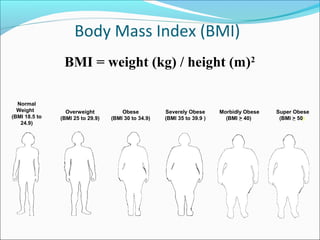
Normal
Weight
(BMI 18.5 to
24.9)
Overweight
(BMI 25 to 29.9)
Obese
(BMI 30 to 34.9)
Severely Obese
(BMI 35 to 39.9 )
Morbidly Obese
(BMI > 40)
Body Mass Index (BMI)
Super Obese
(BMI > 50)
BMI = weight (kg) / height (m)2
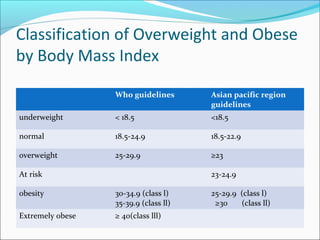
Classification of Overweight and Obese
by Body Mass Index
Who guidelines Asian pacific region
guidelines
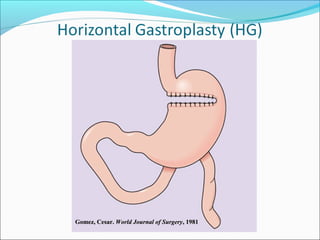
underweight < 18.5 <18.5
normal 18.5-24.9 18.5-22.9
overweight 25-29.9 ≥23
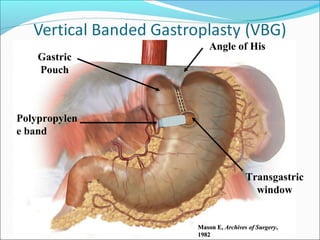
At risk 23-24.9
obesity 30-34.9 (class l)
35-39.9 (class ll)
25-29.9 (class l)
≥30 (class ll)
Extremely obese ≥ 40(class lll)
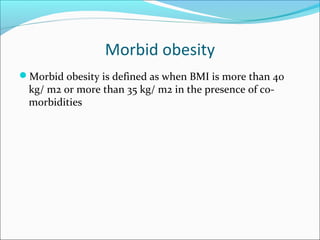
Morbid obesity
Morbid obesity is defined as when BMI is more than 40
kg/ m2 or more than 35 kg/ m2 in the presence of co-
morbidities
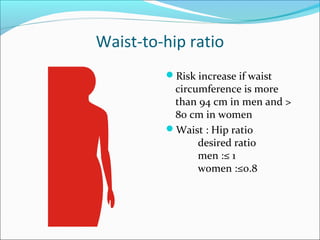
Waist-to-hip ratio
Risk increase if waist
circumference is more
than 94 cm in men and >
80 cm in women
Waist : Hip ratio
desired ratio
men :≤ 1
women :≤0.8
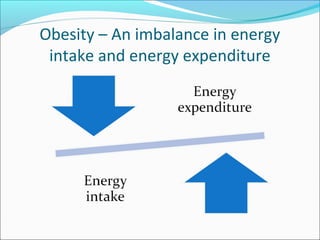
Obesity – An imbalance in energy
intake and energy expenditure
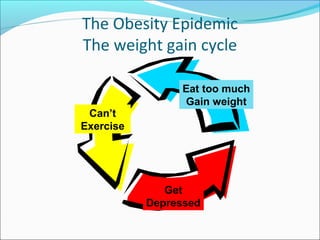
The Obesity Epidemic
The weight gain cycle
Eat too much
Gain weight
Can’t
Exercise
Get
Depressed
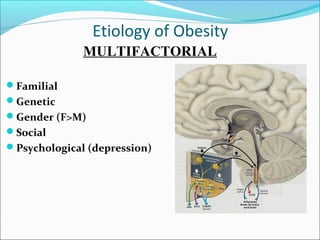
Etiology of Obesity
Familial
Genetic
Gender (F>M)
Social
Psychological (depression)
MULTIFACTORIAL
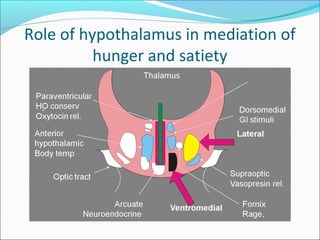
Role of hypothalamus in mediation of
hunger and satiety
 2nd
only to smoking as the leading cause of preventable death
in the United States.†
 > 110,000 deaths/year in the US are associated with obesity*
Life Expectancy
* Flegal KM et al. JAMA. 2005 Apr 20;293(15):1861-7.
†† CDCCDC
Classification of obesity as per fat
distribution
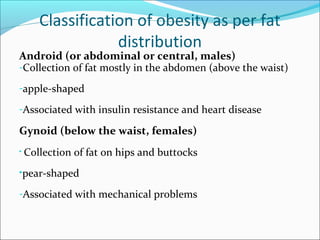
Android (or abdominal or central, males)
-Collection of fat mostly in the abdomen (above the waist)
-apple-shaped
-Associated with insulin resistance and heart disease
Gynoid (below the waist, females)
• Collection of fat on hips and buttocks
•pear-shaped
-Associated with mechanical problems
Co-morbidities
Endocrine
Diabetes
Cardiovascular
Hypertension
Hyperlipidemia
Hypertriglyceridemia
Coronary and cerebral
vascular disease
Venous stasis
Gynecology
Infertility
Menstrual
irregularities
Orthopedic
DJD
Arthralgia
Low back pain
Dermatology
Fungal infection
Co-morbidities
Pulmonary
Sleep apnea
Asthma
Hypoventilation
Pulmonary hypertension
Gastrointestinal
Cholelithiasis
GERD
Fatty liver /dysfunction
Socio-economic
Discrimination
Psychological
Depression
h/o abuse
Cancer
Endometrial
Ovarian
breast
Why do we treat obesity??
• Co-morbidities
• Quality of life
• Survival – Life Expectancy
Advantages of weight loss
Weight loss of 0.5-9 kg (n=43,457) associated with 53%
reduction in cancer-deaths, 44% reduction in diabetes-
associated mortality and 20% reduction in total mortality
Survival increased 3-4 months for every kilogram of weight
loss
Reduced hyperlipidemia, hypertension and insulin resistance
Improvement in severity of diseases
Person feels ‘fit’ and mentally more active
Treatment goals
Prevention of further weight gain
Weight loss to achieve a realistic, target BMI
Long-term maintenance of a lower body-weight
How much weight loss is significant?
A 5-10% reduction in weight (within 6 months) and
weight maintenance should be stressed in any weight
loss program and contributes significantly to
decreased morbidity
Medical Treatment
Medications
Dietary Changes
Exercise
Behavioral Therapy
Psychotherapy
Hypnosis
Jaw-wiring
UNSUCCESSFUL AT SIGNIFICANT
OR SUSTAINED WEIGHT LOSS!
Drug therapy
Appetite suppressants
1. Adrenergic agents (e.g. amphetamine, methamphetamine,
phenylpropanol amine, phentermine)
2. Serotonergic agents (e.g. fenfluramine, dexfenfluramine,
SSRIs like sertraline, fluoxetine)
Thermogenic agents
1. ephedrine,
2. caffeine
New ones
1. Sibutramine
2. Orlistat
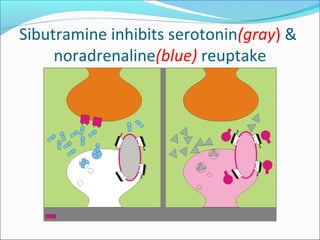
Sibutramine inhibits serotonin(gray) &
noradrenaline(blue) reuptake
22
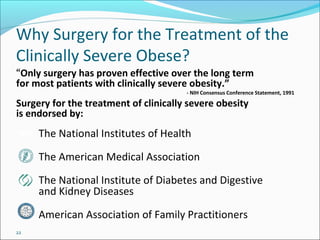
Why Surgery for the Treatment of the
Clinically Severe Obese?
“Only surgery has proven effective over the long term
for most patients with clinically severe obesity.”
- NIH Consensus Conference Statement, 1991
Surgery for the treatment of clinically severe obesity
is endorsed by:
The National Institutes of Health
The American Medical Association
The National Institute of Diabetes and Digestive
and Kidney Diseases
American Association of Family Practitioners
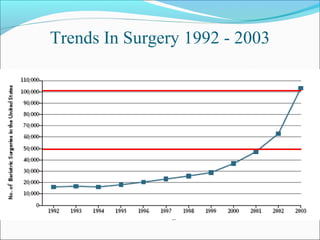
Trends In Surgery 1992 - 2003
Rationale for Surgery
Long Term Outcome Data
Sustained Weight Loss
Improvement or Resolution of Co-morbidities
Improved long term survival
Minimally Invasive Surgery
Public Awareness
Obesity as a disease
Celebrities
Indications for Surgery
BMI >40 kg/m2
, or >35 kg/m2
with significant co-morbid illnesses
Multiple failed weight loss attempts
Acceptable surgical risk
Age 18-60
Demonstrates commitment and understanding of weight loss
following bariatric surgery
26
Ineligible Patients
Exclusion Criteria:
Obesity related to a metabolic or endocrine disorder
History of substance abuse or untreated major psychiatric
disease
Surgery contraindicated or high risk
Women who want to become pregnant within the next 18
months
Preoperative Evaluation/Education
Staff evaluation
Internist
Dietitian
Psychologist
Nurse
Surgeon
Support group
•Laboratory evaluation
• Blood
• ECG, CXR
• Stress Test
• Sleep study
• EGD
• PFTs
Consider an IVC filter for any patient with prior history of DVT/PE.
Surgical Treatment
Restrictive
Malabsorptive
•Horizontal gastroplasty
•Vertical banded gastroplasty
(VBG)
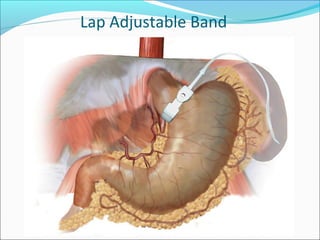
•Adjustable gastric band
•Sleeve gastrectomy
•Roux-en-Y gastric bypass
•Jejunoilial bypass
•Biliopancreatic diversion (Scopinaro)
•Biliopancreatic diversion w/ duodenal switch
29
Restrictive Surgery
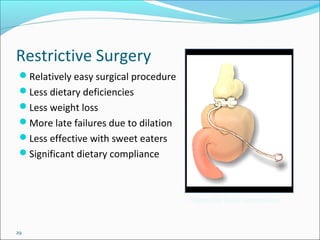
Relatively easy surgical procedure
Less dietary deficiencies
Less weight loss
More late failures due to dilation
Less effective with sweet eaters
Significant dietary compliance
Adjustable Band Gastroplasty
Gomez, Cesar.Gomez, Cesar. World Journal of SurgeryWorld Journal of Surgery, 1981, 1981
Mason E,Mason E, Archives of SurgeryArchives of Surgery,,
19821982
Polypropylen
e band
Transgastric
window
Angle of His
Gastric
Pouch
Lap Adjustable Band
• Port displacement/tube break 7%
• Wound infection 4%
• Stoma obstruction 2%
• Slippage 2%
• Elective removal 2%
• Erosion <1%
• Conversion to open <1%
• Hemorrhage <1%
• Death <0.05%
Complications:
Adjustable Gastric Banding
Sleeve gastrectomy
Sleeve gastrectomy
It is a surgical weight-loss procedure in which the stomach is
reduced to about 15% of its original size, by surgical removal
of a large portion of the stomach, following the major curve
The open edges are then attached together (often with
surgical staples) to form a sleeve or tube with a banana shape.
The procedure permanently reduces the size of the stomach.
The procedure is performed laparoscopically and is not
reversible.
35
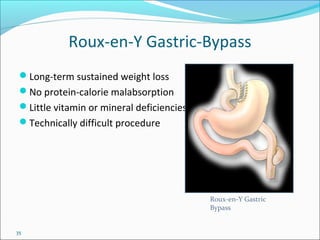
Roux-en-Y Gastric-Bypass
Long-term sustained weight loss
No protein-calorie malabsorption
Little vitamin or mineral deficiencies
Technically difficult procedure
Roux-en-Y Gastric
Bypass
36
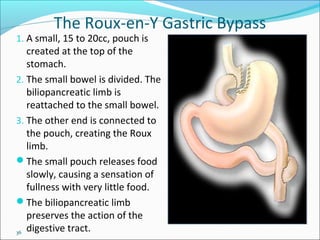
The Roux-en-Y Gastric Bypass
1. A small, 15 to 20cc, pouch is
created at the top of the
stomach.
2. The small bowel is divided. The
biliopancreatic limb is
reattached to the small bowel.
3. The other end is connected to
the pouch, creating the Roux
limb.
The small pouch releases food
slowly, causing a sensation of
fullness with very little food.
The biliopancreatic limb
preserves the action of the
digestive tract.
Roux-en-Y Gastric
Bypass
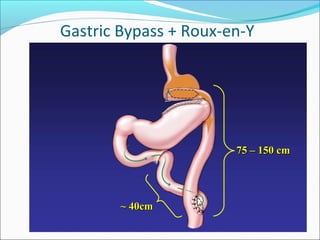
Gastric Bypass + Roux-en-Y
75 – 150 cm75 – 150 cm
~ 40cm~ 40cm
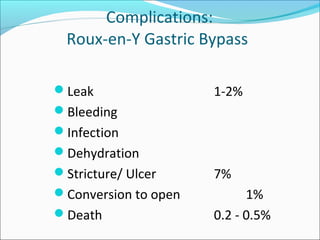
Complications:
Roux-en-Y Gastric Bypass
Leak 1-2%
Bleeding
Infection
Dehydration
Stricture/ Ulcer 7%
Conversion to open 1%
Death 0.2 - 0.5%
39
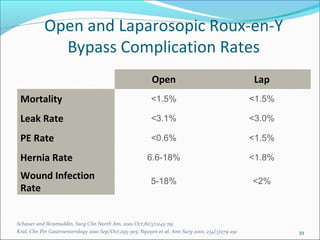
Open and Laparosopic Roux-en-Y
Bypass Complication Rates
Schauer and Ikramuddin, Surg Clin North Am, 2001 Oct;81(5):1145-79;
Kral, Clin Per Gastroenterology 2001 Sep/Oct:295-305; Nguyen et al. Ann Surg 2001; 234(3)279-291
Open Lap
Mortality <1.5% <1.5%
Leak Rate <3.1% <3.0%
PE Rate <0.6% <1.5%
Hernia Rate 6.6-18% <1.8%
Wound Infection
Rate
5-18% <2%
40
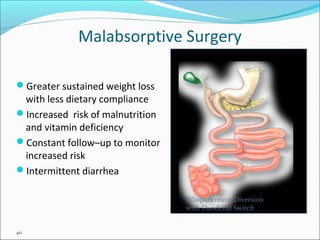
Malabsorptive Surgery
Greater sustained weight loss
with less dietary compliance
Increased risk of malnutrition
and vitamin deficiency
Constant follow–up to monitor
increased risk
Intermittent diarrhea
Biliopancreatic Diversion
with Duodenal Switch
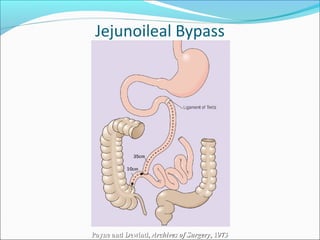
Jejunoileal Bypass
Payne and Dewind,Payne and Dewind, Archives of SurgeryArchives of Surgery, 1973, 1973
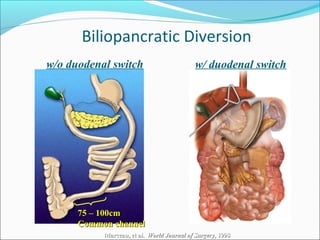
Biliopancratic Diversion
Marceau, et al.Marceau, et al. World Journal of SurgeryWorld Journal of Surgery, 1998, 1998
w/ duodenal switchw/o duodenal switch
75 – 100cm75 – 100cm
Common channelCommon channel
Complications:
BPD with Duodenal Switch
Leak 1-2%
Bleeding
Infection
Dehydration
Malnutrition 5%
Conversion to open 1%
Death 0.5 – 1.1%
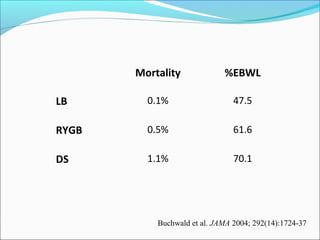
Mortality %EBWL
LB 0.1% 47.5
RYGB 0.5% 61.6
DS 1.1% 70.1
Buchwald et al. JAMA 2004; 292(14):1724-37
45
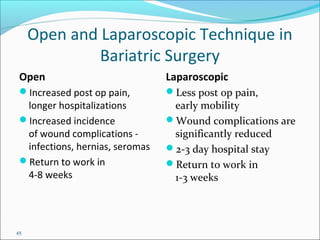
Open and Laparoscopic Technique in
Bariatric Surgery
Open
Increased post op pain,
longer hospitalizations
Increased incidence
of wound complications -
infections, hernias, seromas
Return to work in
4-8 weeks
Laparoscopic
Less post op pain,
early mobility
Wound complications are
significantly reduced
2-3 day hospital stay
Return to work in
1-3 weeks
46
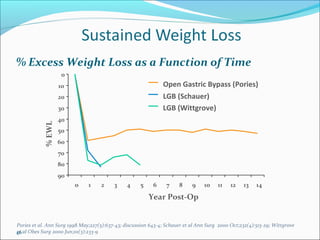
% Excess Weight Loss as a Function of Time
Pories et al. Ann Surg 1998 May;227(5):637-43; discussion 643-4; Schauer et al Ann Surg 2000 Oct;232(4):515-29; Wittgrove
et al Obes Surg 2000 Jun;10(3):233-9
0
10
20
30
40
50
60
70
80
90
0 1 2 3 4 5 6 7 8 9 10 11 12 13 14
Year Post-Op
%EWL
Open Gastric Bypass (Pories)
LGB (Schauer)
LGB (Wittgrove)
47
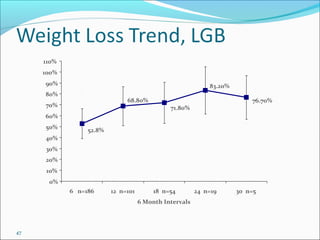
76.70%
83.20%
71.80%
68.80%
52.8%
0%
10%
20%
30%
40%
50%
60%
70%
80%
90%
100%
110%
6 n=186 12 n=101 18 n=54 24 n=19 30 n=5
6 Month Intervals
48Schauer, et al, Ann Surg 2000 Oct;232(4):515-29
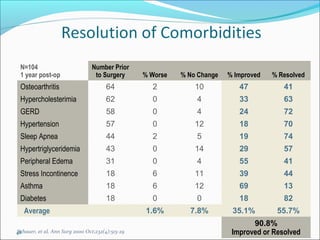
N=104
1 year post-op
Number Prior
to Surgery % Worse % No Change % Improved % Resolved
Osteoarthritis 64 2 10 47 41
Hypercholesterimia 62 0 4 33 63
GERD 58 0 4 24 72
Hypertension 57 0 12 18 70
Sleep Apnea 44 2 5 19 74
Hypertriglyceridemia 43 0 14 29 57
Peripheral Edema 31 0 4 55 41
Stress Incontinence 18 6 11 39 44
Asthma 18 6 12 69 13
Diabetes 18 0 0 18 82
Average 1.6% 7.8% 35.1% 55.7%
90.8%
Improved or Resolved
49
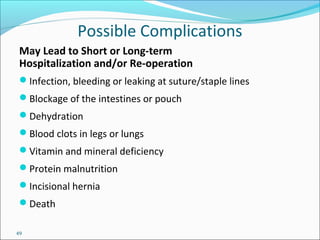
Possible Complications
May Lead to Short or Long-term
Hospitalization and/or Re-operation
Infection, bleeding or leaking at suture/staple lines
Blockage of the intestines or pouch
Dehydration
Blood clots in legs or lungs
Vitamin and mineral deficiency
Protein malnutrition
Incisional hernia
Death
50
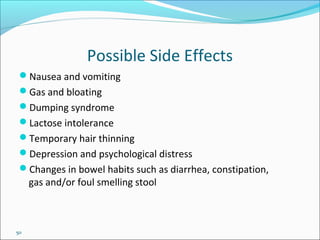
Possible Side Effects
Nausea and vomiting
Gas and bloating
Dumping syndrome
Lactose intolerance
Temporary hair thinning
Depression and psychological distress
Changes in bowel habits such as diarrhea, constipation,
gas and/or foul smelling stool
51
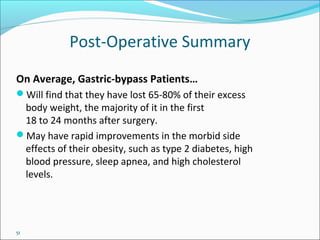
Post-Operative Summary
On Average, Gastric-bypass Patients…
Will find that they have lost 65-80% of their excess
body weight, the majority of it in the first
18 to 24 months after surgery.
May have rapid improvements in the morbid side
effects of their obesity, such as type 2 diabetes, high
blood pressure, sleep apnea, and high cholesterol
levels.
52
53
Bariatric Surgery as a Tool
Bariatric Surgery Will Not Work Alone.
Commitment to Diet, Exercise and Support are
Intricate Parts of Your Weight Loss Success.
54
Pathway to Bariatric Surgery
Patient Responsibilities
Honesty, Responsibility, Cooperation
Bariatric Program Responsibilities
Honesty, Responsibility, Cooperation
55
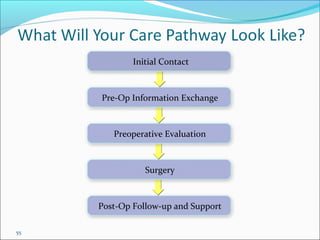
Post-Op Follow-up and Support
Surgery
Preoperative Evaluation
Pre-Op Information Exchange
Initial Contact
56
Who is My Dedicated Team?
Surgeon
Registered Nurse Coordinator
Registered Dietitian
Psychologist/Social Worker
Exercise Specialist
Insurance Coordinator
Administrative Assistant
57
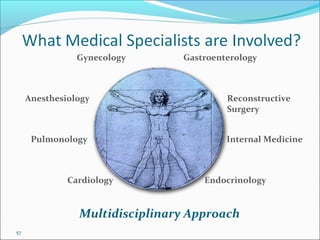
Gynecology
Internal Medicine
Anesthesiology
Gastroenterology
Reconstructive
Surgery
Pulmonology
Cardiology Endocrinology
Multidisciplinary Approach
58
59
Support Groups –
The Heart of the Program
Create fellowship through a common bond
Provide a source of up-to-date information about
surgery and latest developments
Educate in nutrition, exercise, and post-op needs
Promote networking
Increase bariatric surgery success
Support life-style changes
60
61
Pre-operative Diet Goals
Begin Creating Healthy Nutritional Patterns:
Multivitamin and mineral intake
Adequate fluid intake
Quality versus quantity
Avoiding the last supper syndrome
62
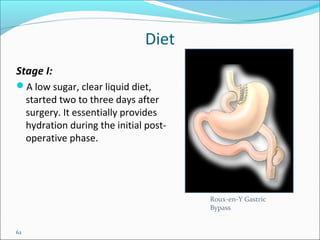
Diet
Stage I:
A low sugar, clear liquid diet,
started two to three days after
surgery. It essentially provides
hydration during the initial post-
operative phase.
Roux-en-Y Gastric
Bypass
63
Diet (cont’d)
Stage II:
A full liquid diet providing all the essential requirements
for the first post-operative month. Patients go home
from the hospital on the stage II diet.
Stage III:
A modified solid diet. The surgeon instructs the patient when
to advance to this diet. Introducing semi-solid
food or solid diet too early may lead to obstruction and
vomiting. It may also unduly stress the anastomosis.
64
Difficult Foods
Bread products
Cow milk products
Pasta products
Fatty foods and
fried foods
Candy, chocolate,
any sugary foods
and beverages
Bran cereal and other
bran products
Corn, whole beans,
and peas
Dried fruits and skins
of fresh fruit
Coconut
Carbonated beverages
65
Fluids
Recommended fluid intake: min. 2 Liters/day
Non-carbonated
Non-calorie
Not during meals
Continually sip water throughout the day to
ensure adequate hydration
Avoid caffeinated beverages
Avoid straws
66
Vitamins, Minerals and Supplements
Liquid protein supplements required to reach
75 grams of protein per day
Multivitamin with Iron morning and evening
1000 mg of folate/day
B-12 supplementations
500 mg of Calcium Citrate three times per day
Other supplements on an individual need basis
Periodic blood levels must be taken to ensure
adequate nutrition
67
Dumping Syndrome
Dumping Syndrome
Early: immediately associated with food intake
(GI symptoms)
Late: delayed onset, usually 1½ to 2 hours after
food intake (neurological symptoms)
Some patients never experience Dumping Syndrome
Some surgeons consider dumping syndrome to be
a beneficial effect of Gastric Bypass surgery.
It provides a quick and reliable negative feedback
for intake in the “wrong” foods.
68
Long-term Diet Goals
Avoid concentrated sweets due to high calorie
content and the possibility of dumping
Low fat, heart healthy diet
Maintain adequate water intake
69
70
Your Role Before Surgery
Commit to improving your health
(diet, exercise, mental readiness)
Discuss your health history with your surgeon
Ask questions and vocalize concerns that you
may have about surgery or your care
Commit to following all instructions on nutrition,
activity and other care after surgery
71
Your Commitment
Adhere to diet
Exercise daily
Commit to lifelong follow-up
Attend at least 2 support group meetings pre-op
and participate regularly post-op
Buy and take in vitamin and mineral supplements
for the rest of your life
Avoid tobacco products lifelong and alcohol for
at least 1 year post-op
bariatric surgery

bariatric surgery

  • 1.
  • 2.
    What is Obesity? Obesitymeans excess accumulation of fat in the body Once it develops it is difficult to ‘cure’ and usually persists throughout life Obesity is usually diagnosed on the basis of calculation of  Body mass index  Measurement of waist-hip ratio
  • 3.
    Normal Weight (BMI 18.5 to 24.9) Overweight (BMI25 to 29.9) Obese (BMI 30 to 34.9) Severely Obese (BMI 35 to 39.9 ) Morbidly Obese (BMI > 40) Body Mass Index (BMI) Super Obese (BMI > 50) BMI = weight (kg) / height (m)2
  • 4.
    Classification of Overweightand Obese by Body Mass Index Who guidelines Asian pacific region guidelines underweight < 18.5 <18.5 normal 18.5-24.9 18.5-22.9 overweight 25-29.9 ≥23 At risk 23-24.9 obesity 30-34.9 (class l) 35-39.9 (class ll) 25-29.9 (class l) ≥30 (class ll) Extremely obese ≥ 40(class lll)
  • 5.
    Morbid obesity Morbid obesityis defined as when BMI is more than 40 kg/ m2 or more than 35 kg/ m2 in the presence of co- morbidities
  • 6.
    Waist-to-hip ratio Risk increaseif waist circumference is more than 94 cm in men and > 80 cm in women Waist : Hip ratio desired ratio men :≤ 1 women :≤0.8
  • 7.
    Obesity – Animbalance in energy intake and energy expenditure
  • 8.
    The Obesity Epidemic Theweight gain cycle Eat too much Gain weight Can’t Exercise Get Depressed
  • 9.
    Etiology of Obesity Familial Genetic Gender(F>M) Social Psychological (depression) MULTIFACTORIAL
  • 10.
    Role of hypothalamusin mediation of hunger and satiety
  • 11.
     2nd only tosmoking as the leading cause of preventable death in the United States.†  > 110,000 deaths/year in the US are associated with obesity* Life Expectancy * Flegal KM et al. JAMA. 2005 Apr 20;293(15):1861-7. †† CDCCDC
  • 12.
    Classification of obesityas per fat distribution Android (or abdominal or central, males) -Collection of fat mostly in the abdomen (above the waist) -apple-shaped -Associated with insulin resistance and heart disease Gynoid (below the waist, females) • Collection of fat on hips and buttocks •pear-shaped -Associated with mechanical problems
  • 13.
    Co-morbidities Endocrine Diabetes Cardiovascular Hypertension Hyperlipidemia Hypertriglyceridemia Coronary and cerebral vasculardisease Venous stasis Gynecology Infertility Menstrual irregularities Orthopedic DJD Arthralgia Low back pain Dermatology Fungal infection
  • 14.
    Co-morbidities Pulmonary Sleep apnea Asthma Hypoventilation Pulmonary hypertension Gastrointestinal Cholelithiasis GERD Fattyliver /dysfunction Socio-economic Discrimination Psychological Depression h/o abuse Cancer Endometrial Ovarian breast
  • 15.
    Why do wetreat obesity?? • Co-morbidities • Quality of life • Survival – Life Expectancy
  • 16.
    Advantages of weightloss Weight loss of 0.5-9 kg (n=43,457) associated with 53% reduction in cancer-deaths, 44% reduction in diabetes- associated mortality and 20% reduction in total mortality Survival increased 3-4 months for every kilogram of weight loss Reduced hyperlipidemia, hypertension and insulin resistance Improvement in severity of diseases Person feels ‘fit’ and mentally more active
  • 17.
    Treatment goals Prevention offurther weight gain Weight loss to achieve a realistic, target BMI Long-term maintenance of a lower body-weight
  • 18.
    How much weightloss is significant? A 5-10% reduction in weight (within 6 months) and weight maintenance should be stressed in any weight loss program and contributes significantly to decreased morbidity
  • 19.
    Medical Treatment Medications Dietary Changes Exercise BehavioralTherapy Psychotherapy Hypnosis Jaw-wiring UNSUCCESSFUL AT SIGNIFICANT OR SUSTAINED WEIGHT LOSS!
  • 20.
    Drug therapy Appetite suppressants 1.Adrenergic agents (e.g. amphetamine, methamphetamine, phenylpropanol amine, phentermine) 2. Serotonergic agents (e.g. fenfluramine, dexfenfluramine, SSRIs like sertraline, fluoxetine) Thermogenic agents 1. ephedrine, 2. caffeine New ones 1. Sibutramine 2. Orlistat
  • 21.
    Sibutramine inhibits serotonin(gray)& noradrenaline(blue) reuptake
  • 22.
    22 Why Surgery forthe Treatment of the Clinically Severe Obese? “Only surgery has proven effective over the long term for most patients with clinically severe obesity.” - NIH Consensus Conference Statement, 1991 Surgery for the treatment of clinically severe obesity is endorsed by: The National Institutes of Health The American Medical Association The National Institute of Diabetes and Digestive and Kidney Diseases American Association of Family Practitioners
  • 23.
    Trends In Surgery1992 - 2003
  • 24.
    Rationale for Surgery LongTerm Outcome Data Sustained Weight Loss Improvement or Resolution of Co-morbidities Improved long term survival Minimally Invasive Surgery Public Awareness Obesity as a disease Celebrities
  • 25.
    Indications for Surgery BMI>40 kg/m2 , or >35 kg/m2 with significant co-morbid illnesses Multiple failed weight loss attempts Acceptable surgical risk Age 18-60 Demonstrates commitment and understanding of weight loss following bariatric surgery
  • 26.
    26 Ineligible Patients Exclusion Criteria: Obesityrelated to a metabolic or endocrine disorder History of substance abuse or untreated major psychiatric disease Surgery contraindicated or high risk Women who want to become pregnant within the next 18 months
  • 27.
    Preoperative Evaluation/Education Staff evaluation Internist Dietitian Psychologist Nurse Surgeon Supportgroup •Laboratory evaluation • Blood • ECG, CXR • Stress Test • Sleep study • EGD • PFTs Consider an IVC filter for any patient with prior history of DVT/PE.
  • 28.
    Surgical Treatment Restrictive Malabsorptive •Horizontal gastroplasty •Verticalbanded gastroplasty (VBG) •Adjustable gastric band •Sleeve gastrectomy •Roux-en-Y gastric bypass •Jejunoilial bypass •Biliopancreatic diversion (Scopinaro) •Biliopancreatic diversion w/ duodenal switch
  • 29.
    29 Restrictive Surgery Relatively easysurgical procedure Less dietary deficiencies Less weight loss More late failures due to dilation Less effective with sweet eaters Significant dietary compliance Adjustable Band Gastroplasty
  • 30.
    Gomez, Cesar.Gomez, Cesar.World Journal of SurgeryWorld Journal of Surgery, 1981, 1981
  • 31.
    Mason E,Mason E,Archives of SurgeryArchives of Surgery,, 19821982 Polypropylen e band Transgastric window Angle of His Gastric Pouch
  • 32.
  • 33.
    • Port displacement/tubebreak 7% • Wound infection 4% • Stoma obstruction 2% • Slippage 2% • Elective removal 2% • Erosion <1% • Conversion to open <1% • Hemorrhage <1% • Death <0.05% Complications: Adjustable Gastric Banding
  • 34.
    Sleeve gastrectomy Sleeve gastrectomy Itis a surgical weight-loss procedure in which the stomach is reduced to about 15% of its original size, by surgical removal of a large portion of the stomach, following the major curve The open edges are then attached together (often with surgical staples) to form a sleeve or tube with a banana shape. The procedure permanently reduces the size of the stomach. The procedure is performed laparoscopically and is not reversible.
  • 35.
    35 Roux-en-Y Gastric-Bypass Long-term sustainedweight loss No protein-calorie malabsorption Little vitamin or mineral deficiencies Technically difficult procedure Roux-en-Y Gastric Bypass
  • 36.
    36 The Roux-en-Y GastricBypass 1. A small, 15 to 20cc, pouch is created at the top of the stomach. 2. The small bowel is divided. The biliopancreatic limb is reattached to the small bowel. 3. The other end is connected to the pouch, creating the Roux limb. The small pouch releases food slowly, causing a sensation of fullness with very little food. The biliopancreatic limb preserves the action of the digestive tract. Roux-en-Y Gastric Bypass
  • 37.
    Gastric Bypass +Roux-en-Y 75 – 150 cm75 – 150 cm ~ 40cm~ 40cm
  • 38.
    Complications: Roux-en-Y Gastric Bypass Leak1-2% Bleeding Infection Dehydration Stricture/ Ulcer 7% Conversion to open 1% Death 0.2 - 0.5%
  • 39.
    39 Open and LaparosopicRoux-en-Y Bypass Complication Rates Schauer and Ikramuddin, Surg Clin North Am, 2001 Oct;81(5):1145-79; Kral, Clin Per Gastroenterology 2001 Sep/Oct:295-305; Nguyen et al. Ann Surg 2001; 234(3)279-291 Open Lap Mortality <1.5% <1.5% Leak Rate <3.1% <3.0% PE Rate <0.6% <1.5% Hernia Rate 6.6-18% <1.8% Wound Infection Rate 5-18% <2%
  • 40.
    40 Malabsorptive Surgery Greater sustainedweight loss with less dietary compliance Increased risk of malnutrition and vitamin deficiency Constant follow–up to monitor increased risk Intermittent diarrhea Biliopancreatic Diversion with Duodenal Switch
  • 41.
    Jejunoileal Bypass Payne andDewind,Payne and Dewind, Archives of SurgeryArchives of Surgery, 1973, 1973
  • 42.
    Biliopancratic Diversion Marceau, etal.Marceau, et al. World Journal of SurgeryWorld Journal of Surgery, 1998, 1998 w/ duodenal switchw/o duodenal switch 75 – 100cm75 – 100cm Common channelCommon channel
  • 43.
    Complications: BPD with DuodenalSwitch Leak 1-2% Bleeding Infection Dehydration Malnutrition 5% Conversion to open 1% Death 0.5 – 1.1%
  • 44.
    Mortality %EBWL LB 0.1%47.5 RYGB 0.5% 61.6 DS 1.1% 70.1 Buchwald et al. JAMA 2004; 292(14):1724-37
  • 45.
    45 Open and LaparoscopicTechnique in Bariatric Surgery Open Increased post op pain, longer hospitalizations Increased incidence of wound complications - infections, hernias, seromas Return to work in 4-8 weeks Laparoscopic Less post op pain, early mobility Wound complications are significantly reduced 2-3 day hospital stay Return to work in 1-3 weeks
  • 46.
    46 % Excess WeightLoss as a Function of Time Pories et al. Ann Surg 1998 May;227(5):637-43; discussion 643-4; Schauer et al Ann Surg 2000 Oct;232(4):515-29; Wittgrove et al Obes Surg 2000 Jun;10(3):233-9 0 10 20 30 40 50 60 70 80 90 0 1 2 3 4 5 6 7 8 9 10 11 12 13 14 Year Post-Op %EWL Open Gastric Bypass (Pories) LGB (Schauer) LGB (Wittgrove)
  • 47.
  • 48.
    48Schauer, et al,Ann Surg 2000 Oct;232(4):515-29 N=104 1 year post-op Number Prior to Surgery % Worse % No Change % Improved % Resolved Osteoarthritis 64 2 10 47 41 Hypercholesterimia 62 0 4 33 63 GERD 58 0 4 24 72 Hypertension 57 0 12 18 70 Sleep Apnea 44 2 5 19 74 Hypertriglyceridemia 43 0 14 29 57 Peripheral Edema 31 0 4 55 41 Stress Incontinence 18 6 11 39 44 Asthma 18 6 12 69 13 Diabetes 18 0 0 18 82 Average 1.6% 7.8% 35.1% 55.7% 90.8% Improved or Resolved
  • 49.
    49 Possible Complications May Leadto Short or Long-term Hospitalization and/or Re-operation Infection, bleeding or leaking at suture/staple lines Blockage of the intestines or pouch Dehydration Blood clots in legs or lungs Vitamin and mineral deficiency Protein malnutrition Incisional hernia Death
  • 50.
    50 Possible Side Effects Nauseaand vomiting Gas and bloating Dumping syndrome Lactose intolerance Temporary hair thinning Depression and psychological distress Changes in bowel habits such as diarrhea, constipation, gas and/or foul smelling stool
  • 51.
    51 Post-Operative Summary On Average,Gastric-bypass Patients… Will find that they have lost 65-80% of their excess body weight, the majority of it in the first 18 to 24 months after surgery. May have rapid improvements in the morbid side effects of their obesity, such as type 2 diabetes, high blood pressure, sleep apnea, and high cholesterol levels.
  • 52.
  • 53.
    53 Bariatric Surgery asa Tool Bariatric Surgery Will Not Work Alone. Commitment to Diet, Exercise and Support are Intricate Parts of Your Weight Loss Success.
  • 54.
    54 Pathway to BariatricSurgery Patient Responsibilities Honesty, Responsibility, Cooperation Bariatric Program Responsibilities Honesty, Responsibility, Cooperation
  • 55.
    55 Post-Op Follow-up andSupport Surgery Preoperative Evaluation Pre-Op Information Exchange Initial Contact
  • 56.
    56 Who is MyDedicated Team? Surgeon Registered Nurse Coordinator Registered Dietitian Psychologist/Social Worker Exercise Specialist Insurance Coordinator Administrative Assistant
  • 57.
  • 58.
  • 59.
    59 Support Groups – TheHeart of the Program Create fellowship through a common bond Provide a source of up-to-date information about surgery and latest developments Educate in nutrition, exercise, and post-op needs Promote networking Increase bariatric surgery success Support life-style changes
  • 60.
  • 61.
    61 Pre-operative Diet Goals BeginCreating Healthy Nutritional Patterns: Multivitamin and mineral intake Adequate fluid intake Quality versus quantity Avoiding the last supper syndrome
  • 62.
    62 Diet Stage I: A lowsugar, clear liquid diet, started two to three days after surgery. It essentially provides hydration during the initial post- operative phase. Roux-en-Y Gastric Bypass
  • 63.
    63 Diet (cont’d) Stage II: Afull liquid diet providing all the essential requirements for the first post-operative month. Patients go home from the hospital on the stage II diet. Stage III: A modified solid diet. The surgeon instructs the patient when to advance to this diet. Introducing semi-solid food or solid diet too early may lead to obstruction and vomiting. It may also unduly stress the anastomosis.
  • 64.
    64 Difficult Foods Bread products Cowmilk products Pasta products Fatty foods and fried foods Candy, chocolate, any sugary foods and beverages Bran cereal and other bran products Corn, whole beans, and peas Dried fruits and skins of fresh fruit Coconut Carbonated beverages
  • 65.
    65 Fluids Recommended fluid intake:min. 2 Liters/day Non-carbonated Non-calorie Not during meals Continually sip water throughout the day to ensure adequate hydration Avoid caffeinated beverages Avoid straws
  • 66.
    66 Vitamins, Minerals andSupplements Liquid protein supplements required to reach 75 grams of protein per day Multivitamin with Iron morning and evening 1000 mg of folate/day B-12 supplementations 500 mg of Calcium Citrate three times per day Other supplements on an individual need basis Periodic blood levels must be taken to ensure adequate nutrition
  • 67.
    67 Dumping Syndrome Dumping Syndrome Early:immediately associated with food intake (GI symptoms) Late: delayed onset, usually 1½ to 2 hours after food intake (neurological symptoms) Some patients never experience Dumping Syndrome Some surgeons consider dumping syndrome to be a beneficial effect of Gastric Bypass surgery. It provides a quick and reliable negative feedback for intake in the “wrong” foods.
  • 68.
    68 Long-term Diet Goals Avoidconcentrated sweets due to high calorie content and the possibility of dumping Low fat, heart healthy diet Maintain adequate water intake
  • 69.
  • 70.
    70 Your Role BeforeSurgery Commit to improving your health (diet, exercise, mental readiness) Discuss your health history with your surgeon Ask questions and vocalize concerns that you may have about surgery or your care Commit to following all instructions on nutrition, activity and other care after surgery
  • 71.
    71 Your Commitment Adhere todiet Exercise daily Commit to lifelong follow-up Attend at least 2 support group meetings pre-op and participate regularly post-op Buy and take in vitamin and mineral supplements for the rest of your life Avoid tobacco products lifelong and alcohol for at least 1 year post-op

Editor's Notes

  • #4 Slide 5. The ideal BMI ranges from 19 to 25. If your BMI is between 25 and 29.9, you are thought to be overweight. If it is between 30 and 39.9, you are obese. If your BMI is 40 or more, you are said to have morbid obesity. The term “morbid” obesity is used because this degree of excess weight may considerably reduce life expectancy and is associated with an increased risk of developing conditions or diseases such as diabetes, high blood pressure, joint problems, gallstones, stroke, heart disease, and psychosocial problems.
  • #12 Slide 6. According to the Surgeon General’s “recent call to action,” overweight and obesity have reached nationwide epidemic proportions.* In 1999, an estimated 61% of U.S. adults were overweight, along with 13% of children and adolescents. Obesity among adults has doubled since 1980, while overweight among adolescents has tripled.
  • #16 Slide 11. When you have a weight problem, it’s common to have a negative self-image. Your environment can make this worse. Obese children, for example, may be teased at school or have few friends. If you are severely obese, you may find yourself socially isolated. When you find it difficult to buy clothes that look good, you may avoid social functions. And you may be left out of events that require exercise. Many obese people report that they have had trouble when trying to get a job. Some people may make judgments about your character based on your appearance. For example, they may see your obesity as a sign of weakness, laziness, or lack of willpower.
  • #23 So, why is surgery becoming such an important part of treating obesity? In 1991 an NIH consensus conference stated that “Only surgery has proven effective over the long-term for most patients with clinically severe obesity.” And surgery for clinically severe obesity has been endorsed by several leading medical organizations: The National Institutes of Health The American Medical Association The National Institute of Diabetes and Digestive and Kidney Diseases American Association of Family Practitioners
  • #29 Slide 15. The two most common obesity surgeries in the United States have been the Gastric Bypass (GBP) and the Vertical Banded Gastroplasty (VBG). The Gastric Bypass is both a restrictive and malabsorptive operation. With this procedure, the stomach is stapled to make a smaller pouch, then a part of the intestines is attached to it. The result is that you cannot eat as much, and you absorb fewer nutrients and calories from your food. The changes in your stomach and intestine are permanent. Vertical Banded Gastroplasty is a restrictive procedure. The surgeon uses staples to make a small stomach pouch. This reduces how much food the stomach can hold. You feel full sooner and eat less. What you eat is digested by the stomach in the normal way. There is another way to reduce how much food the stomach can hold. It is called the BioEnterics LAP-BAND System. Today, Vertical Banded Gastroplasty is being performed less frequently than in the past and is essentially being replaced with the LAP-BAND System because of its adjustability and more gentle approach.
  • #30 Approved by the FDA in June 2001, the BioEnterics® LAP-BAND® Adjustable Gastric Banding System is the newest and the only adjustable surgical treatment for morbid obesity in the United States. It induces weight loss by reducing the capacity of the stomach, which restricts the amount of food that can be consumed. Since there is no cutting, stapling or stomach rerouting involved in the LAP-BAND System procedure, it is considered the least traumatic of all weight loss surgeries. The laparoscopic approach to the surgery also offers the advantages of reduced post-operative pain, shortened hospital stay and quicker recovery. If for any reason the LAP-BAND System needs to be removed, the stomach generally returns to its original form. The most frequently occurring complications associated with the LAP-BAND (INAMED Health, Santa Barbara, CA) include gastric prolapse, stoma obstruction, esophageal and gastric pouch dilatation, erosion, and access port problems.
  • #31 question was “why did it need to drain into the jejunum” -First used in 1971 by Mason; the first operation was the upper pouch was separated but in contnuity with the lower pouch; the pouches were separated by a un-reinforced stoma;the fundus was then more distensible and the operation failed This was re-popularized by Gomez in 1977 by reinforcing stoma on the greater curvature of the stomach. The pouch was 50cc, and the stoma was 12mm Good weight loss early on --&amp;gt; Gomez reported on his success in 1981 with 200 pts, but the follow up was only 18-24 months,--&amp;gt;there was 19% incidence of complications - including leaks, stenoses[2%], disruptions[7%], splenectomy, etc; 12% of these patients had to be revised; ---&amp;gt;reported %EBWL was 63% at one year and then stayed at 64% for the next two years-----&amp;gt; everyone started doing it, then long termdata showed it did not work No safer – same amount of wound infections, etc Remember that the fundus is the most distensible portion of the stomach
  • #32 First used in 1980 Relatively easy, fast Physiologic; the duodenum is intact so the absorption of calcium and iron is maintained; Outlet reinforced with polypropylene mesh Avoid anastomosis No ulcers Access to stomach Reversible
  • #36 The complications of gastric bypass are much less severe than those of Intestinal Bypass, and most large series report complications in two phases, those which occur shortly after surgery, and those which take a longer time to develop. The most serious acute complications include leaks at the junction of stomach and small intestine. This dangerous complication usually requires that the patient be returned to surgery on an urgent basis, as does the rare acute gastric dilatation, which may arise spontaneously or secondary to a blockage occurring at the Y-shaped anastomosis (jejunojejunostomy). Then there are the complications to which any obese patient having surgery is prone, these including degrees of lung collapse (atelectasis) which occur because it is hard for the patient to breathe deeply when in pain. In consequence a great deal of attention is paid in the postoperative period to encouraging deep breathing and patient activity to try to minimize the problem. Blood clots affecting the legs are more common in overweight patients and carry the risk of breaking off and being carried to the lungs as a pulmonary embolus. This is the reason obese patients are usually anticoagulated before surgery with a low dose of Heparin or other anticoagulant. Complications which occur later on after the incision is all healed, include narrowing of the stoma (the junction between stomach pouch and intestine), which results from scar tissue development. Recall that this opening is made about 10 mm in diameter, not much wider than dime. With an opening this small, a very little scarring will squeeze the opening down to a degree that affects the patients eating. Vomiting which comes on between the 4th and 12th week may well be due to this cause. The problem can be very simply dealt with by stretching the opening to the correct size, by endoscopic balloon dilatation, which usually involves a single procedure on a day stay basis to correct the problem. Wound hernias occur in 5-10% and intestinal obstruction in 2% of patients an incidence similar to that following any general surgical abdominal procedure. Another late problem which is fairly common, especially in menstruating women, after gastric bypass is anemia. Since the stomach is involved in iron and Vitamin B12 absorption, these may not be absorbed adequately following bypass. As a result anemia may develop. The patient feels tired and listless, and blood tests show low levels of hematocrit, hemoglobin, iron, Vitamin B12. The condition can be prevented and treated, if necessary, by taking extra iron and B12. Since the food stream bypasses the duodenum, the primary site of calcium absorption, the possibility of calcium deficiency exists, and all patients should take supplemental calcium to forestall this. Dumping is often mentioned as a complication of gastric bypass, but it really is a side effect of the procedure caused by the way the intestine is hooked up. Dumping occurs when the patient eats refined sugar following gastric bypass, this causes symptoms of rapid heart beat, nausea, tremor and faint feeling, sometimes followed by diarrhea. Of course no one likes these feelings, especially patients who love sweets! The upshot is, of course, that sweet lovers avoid sweets after gastric bypass and this is a real help to them in their efforts to lose weight.It should be noted that a few surgeons, expert at endoscopic/laparoscopic surgery, are performing Gastric Bypass using laparoscopic techniques.Listing of complications following gastric bypass: Early: Leak Acute gastric dilatation Roux-Y obstruction Atelectasis Wound Infection/seroma Late: Stomal Stenosis Anemia Vitamin B-12 deficiency Calcium deficiency/osteoporosis
  • #37 In the United States today, the Roux-en-Y gastric bypass is the gold standard for weight loss surgery. When performing the procedure, 1. A small, 15 to 20 cc, pouch is created at the top of the stomach. 2. The small bowel is divided. The biliopancreatic limb is re-attached to the small bowel. 3. The other end is connected to the pouch, creating the Roux limb The small pouch releases food slowly into the Roux limb, causing a sensation of fullness with very little food. The biliopancreatic limb preserves the action of the digestive tract.
  • #38 University of Kentucky, First reported Randomized, prospective study of RYGB vs JI Bypass 32 pts in the GBP, 27 in the JI Bypass GBP associated with more EARLY complications, indicating that it is more technically demanding, yet there were more late complications with the JI bypass 56% had diarrhea and most of these pts needed anti-diarrheal meds . . . All patients had fatty livers to begin with by biopsy; Liver biopsies were done at 1 year in half of each group; the GBP group all showed no change or improvement, while 12/15 pts in the JI group got worse Also note that 10/27 required rehospitalization, 10/27 required reoperations in the JI group; the gastric bypass group had 4/32 rehospitalizations and no re-operations It was in this study(after the 7th GBP patient that the GBP evolved from the loop --&amp;gt; to the Roux configuration; stimulated by the bilious vomiting .. . The JI Bypass was done in the way advocated by Scott et al, the jejunum was transected 30cm distal to the ligament of Treitz and anastomosed to 25cm proximal to the cecum NO DIFFERENCE IN WEIGHT LOSS
  • #40 However, as with any major gastro-intestinal surgery, Gastric Bypass surgery carries inherent risks Presented here are the major complication rates for both open and laparoscopic gastric bypass surgery. When comparing the two techniques, there is little difference in the death, leak and pulmonary embolism rates between open and laparoscopic bypass. However, there is a significant difference in herniation and wound infection rates when comparing the open and laparoscopic procedures.
  • #41 The immediate result of the surgery is a restriction of food intake due to the smaller stomach size; this assists the initial weight loss. Within 18 months the stomach pouch will gradually stretch to hold a normal-size meal. Weight loss will taper off and stabilize. An added benefit of stomach size reduction is decreased stomach acid production, thereby reducing the chances of ulcer formation. Additionally, fewer calories are absorbed in the abbreviated 30-inch section of small bowel where food and digestive juices combine. This results in continued weight loss due to malabsorption. In the first 18 months after surgery, fats are incompletely absorbed, proteins are somewhat more absorbed, and simple sugars are completely absorbed. As the bowel naturally accommodates the surgery, fats will continue to be incompletely absorbed, but both protein and carbohydrate absorption generally increase over time. WEIGHT LOSS RESULTS: Drs. Robert Rabkin and John Rabkin have performed over 900 duodenal switch surgeries through August 2002 (including open and laparoscopic procedures). The initial results for all laparoscopic patients are as follows: Average excess weight loss at 3 months is 29%. Average excess weight loss at 6 months is 51%. Average excess weight loss at 24 months is 91%.
  • #42 First series in 1969 of 80 patients; now a series of 153 JI bypasses reported 1973 Jejunum to ileum [note that this is end-to-side] 80 patients, with 5 deaths - one was from liver failure, 2 had PE, 2 had MI “14-4”; this was to replace the IC bypass; 16 year follow up; 153 JI bypasses done; 9% total mortality[6% blamed on bypass] noted that there was significant fatty change of the liver at the initial operation - this worsened w/ rapid weight loss. . . This was modified by Scott et al. in 1974; Note that the anastomosis is now end to end and the defunctionalized limb of distal ileum is drained into the transverse colon; note that the proximal jejunum sutured to the mesentery
  • #43 Quebec, Canada Modification of classic Scopinaro’s BPD from 1990; now a sleeve resection of the stomach, a switch of the duodenum (to ileum) , and a common channel of 100 cm TENANTS OF OPERATION are that the antropyloric pump is preserved, the vagi are undisturbed; the sleeve resection decreases the volume of the gastric reservoir and diminished the parietal cell mass to minimize the ulcerogenicity of the duodeno-ileal switch; the last modification is the ileo-ileo anastomosis is 100cm from the ileocecal valve(not 50cm[so the common channel is doubled but the alimentary tract is still 250cm] Weight loss is not based on food limitation or intolerance, dietary compliance is easier, and there is no dumping Study to compare the side effects b/n BPD-DG and BPD-DS; was questionnaire comparison of 252 pts who underwent a BPD-DG, and 465 pts who underwent a BPD-DS;
  • #46 Traditional Surgery: Once the only method used for surgical procedures, traditional open surgery involves making a 10- to 12-inch incision to access the stomach and intestines. Then the surgeon performs a restriction or gastric bypass operation. Minimally Invasive or Laparoscopic Surgery In minimally invasive, or laparoscopic, surgery, the surgeon uses five or six small incisions (each 1/4 and 1/2 inch long) to access the stomach and intestines. The laparoscope is a probe-like tool with a video camera attached. The surgeon inserts the laparoscope through the incisions and gets a magnified view of the patient&amp;apos;s organs on a television monitor. The entire operation is performed inside the abdomen after gas has been inserted to expand the abdomen. Surgeons continually find ways to use ever-smaller incisions, lower operative risk, reduce postoperative pain, and shorten hospital stays. Minimally invasive surgery techniques have cut recovery times for many operations from weeks to days.
  • #47 There are many reasons why obesity surgery is so widely endorsed. The most obvious is sustained, long-term weight loss for patients who undergo both Open and Laparoscopic Roux-en-Y Gastric- Bypass procedures. The graph here shows the long-term follow-up results from 3 prominent surgeons performing gastric bypass surgery. %EWL = percentage of excess weight loss. Excess weight is the weight that a patient carries over their ideal body weight. Typically there is a 80–60% Excess Weight Loss at 2 years Post-op. [If needed site the following example - A person who weighs 300lbs and has a suggested ideal weight of 175lbs. has excess weight of 125lbs. If this patient loses 100 lbs. after gastric bypass, they have lost 80% of their excess weight, i.e.. “80% EWL”.]
  • #49 Studies have also shown that there is an almost complete resolution of a patient’s obesity related comorbidities following gastric bypass surgery. Shown here are the results from a single institution: Philip Schauer, MD, University of Pittsburgh Medical Center Focus on presenting a few of the key comorbidities and point out the % of the patients that either improved or completely resolved their obesity related health problems In particular serious conditions, such as - GERD - Hypertension - Sleep Apnea and Diabetes are all improved or resolved after surgery [columns on the right] [moving the slide forward (with mouse click) highlights the “improved” and “resolved” areas of the slide] Then point out that overall, 90.8% of patients had improved or resolved their obesity related comorbidities.
  • #56 The first step is to determine what your patient care pathway will look like? Here is a typical patient care path way: The initial patient contact is very important - who will be involved in the initial patient contact process, where, and how will the process be organized - surgeon vs. hospital, telephone, internet, patient symposium, etc. The initial patient contact leads to extensive information exchange between the patient and the bariatric center - the patient sends information (insurance, cormobidities) to the center, and information about gastric bypass surgery (evaluation criteria, nutrition, support groups, etc.) are shared with the patient. Preoperative evaluation includes psychological, pulmonary, and cardiac, and perhaps other patient assessments. Time between first contact and surgery can be anywhere from 1-6 months, depending on patient demand and surgical case load expectations. Extensive post operative follow-up is critical to avoid serious complications - leaks and blockages, but also to ensure positive patient outcomes, including nutritional as well as psychological patient needs. Follow up often includes scheduled clinical visits as well as regular support group meetings.
  • #57 The Registered Nurse Coordinator is a program director responsible for patients as they progress through the Bariatric evaluation and surgery process. The Dietitian educates and consults patients in dietary needs before and after surgery A key member of the team is psychologist/psychiatrist to identify patients who are not appropriate psychologically for Bariatric surgery and to help patient for the change of life that can accompany extensive weight loss. The Administrative Assistants are key to an efficiently run program, from answering patient phone calls, to sending out information, to obtaining insurance preauthorization, to billing and coding.
  • #58 Caring for the severely obese bariatric surgery patient requires a true multidisciplinary approach. As most severely obese patients have many comorbidities, several medical professionals will be involved in the assessment and/or the treatment of the severely obese patient: [Read from list on slide]
  • #60 Support groups give the Dietician the opportunity to teach, assess and learn from LGB patients
  • #63 The diet after surgery progresses from a liquid diet to a pureed diet to a soft diet and then a modified regular diet. The diet progression is designed to allow the body to heal. Initially, it will help meet protein and liquid requirements, and later, assist in meeting nutritional needs. It is imperative that the patient follows the diet’s progression and adheres to this regimen to maximize healing and minimize the risk for unnecessary complications.
  • #64 The size of the pouch is about one ounce or one to two tablespoons. At first, the capacity will be somewhat limited. Two to three teaspoons of food fills many patients up. This is not unusual and is okay. You may also find that patients may be able to eat more of one type of food than another. That is okay, too. Over time, the pouch will stretch. By six months after surgery, it may stretch to eight ounces or one cup. Long term, the size of the pouch is likely to be eight to twelve ounces or 1 to 1 ½ cups. This will limit the amount of food the patient can eat at one time. The primary source of nutrition should be protein. 70 to 75% of all calories consumed should be protein based. Carbohydrates should make up only 10 to 20%, and fats only 5 to 15% of the calories that the patient consumes. A diet consisting of 600 to 800 calories and 75 grams of protein should be the goal for the first 6 months.
  • #66 All simple sugars in concentrated form should be avoided. Juice is very hyperosmolar and has a higher concentration of sugar than soft drinks, and therefore should be eliminated.
  • #67 There is a significant decrease in the quantity of micronutrients; a supplement should bring up to the RDA levels.
  • #68 Under normal physiologic conditions, the stomach and pylorus (the opening of the stomach into the small intestine) control the rate at which the gastric contents leave the stomach. That is, the stomach, pancreas and liver work together to prepare nutrients (or sugar) before they reach the small intestine for absorption. The stomach serves as a reservoir that releases food downstream only at a controlled rate, avoiding sudden large influxes of sugar. The released food is also mixed with stomach acid, bile, and pancreatic juice to control the chemical makeup of the stuff that goes downstream and avoid the “dumping syndrome.” Dumping syndrome is usually divided into early and late phases. The two phases have separate physiologic causes and will be described separately. In practical fact, a patient usually experiences a combination of these events and there is no clear-cut division between them. Rapid gastric emptying, or early dumping syndrome, happens when the lower end of the small intestine (jejunum) fills too quickly with undigested food from the stomach. After the RNY gastric bypass, patients can develop abdominal bloating, pain, vomiting, and vasomotor symptoms (flushing, sweating, rapid heart rate, light headedness). Finally, some patients have diarrhea. Since with the RNY Gastric bypass the stomach is not being used (hence the name) and a new, small pouch that directly connects to the small intestine is created, there may be dumping. Early dumping syndrome is due to the now rapid gastric emptying causing bowel distension plus movement of fluid from the blood to the intestine to dilute the intestinal contents. These symptoms usually occur 30 to 60 minutes after eating and are called the early dumping syndrome. Late dumping has to do with the blood sugar level. The small bowel is very effective in absorbing sugar, so that the rapid absorption of a relatively small amount of sugar can cause the glucose level in the blood to rise rapidly. The pancreas responds to this glucose challenge by increasing the insulin output. Unfortunately, the sugar that started the whole cycle was such a small amount that it does not sustain the increase in blood glucose, which tends to fall back down at about the time the insulin surge really gets going. These factors combine to produce hypoglycemia (low blood sugar) which causes the individual to feel weak, sleepy and profoundly fatigued. Restricting simple carbohydrates (rice, pasta, potatoes and other sweet tasting foods), eating more protein and not drinking liquids during a meal can reduce the symptoms of dumping. Further, avoid foods that are very hot or very cold. These can trigger symptoms. Obviously, surgeons consider dumping syndrome to be a beneficial effect of Gastric Bypass surgery. It provides a quick and reliable negative feedback for intake in the “wrong” foods. In practice, most patients do not experience full-blown symptoms of dumping more that once or twice. Most simply say that they have lost their taste for sweets. Warning: Late dumping is the mechanism by which sugar intake can create low blood sugar, and it is also a way for patients to get into a vicious cycle of eating. If the patient takes in sugar or a food that is closely related to sugar (simple carbohydrates like rice, pasta, potatoes) they will experience some degree of hypoglycemia in the hour or two after eating. The hypoglycemia stimulates appetite, and it’s easy to see where that is going…
  • #69 To maintain a healthy weight and to prevent weight gain, patients must develop and keep healthy eating habits. Patients need to be aware of the volume of food that they can tolerate at one time and make healthy food choices to ensure maximum nutrition in minimum volume. A remarkable effect of Bariatric surgery is the progressive change in attitudes towards eating. Patients begin to eat to live – they no longer live to eat.