Bariatric surgery
Who, why and how?
Learning objectives
• On completion of this workshop, you should be able to:
– Understand surgical procedures available for patients who are
morbidly obese or severely obese with serious comorbidities
– Identify patients in your practice that may be appropriate for
bariatric surgery
– Confidently communicate risk versus benefit of bariatric
surgery options to patients
– Understand the importance of multidisciplinary care for
patients who are morbidly obese or severely obese with
serious comorbidities
Why consider surgery for patients
who are morbidly obese or severely
obese with serious comorbidities?
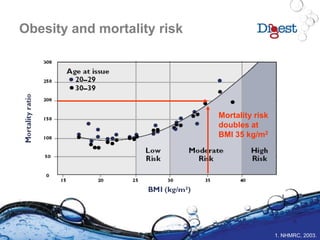
Obesity and mortality risk
1. NHMRC, 2003.
Mortality risk
doubles at
BMI 35 kg/m2
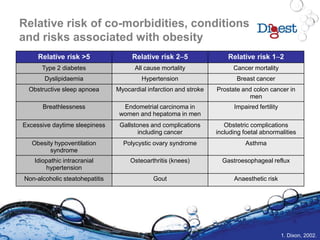
Relative risk of co-morbidities, conditions
and risks associated with obesity
Relative risk >5 Relative risk 25 Relative risk 12
Type 2 diabetes All cause mortality Cancer mortality
Dyslipidaemia Hypertension Breast cancer
Obstructive sleep apnoea Myocardial infarction and stroke Prostate and colon cancer in
men
Breathlessness Endometrial carcinoma in
women and hepatoma in men
Impaired fertility
Excessive daytime sleepiness Gallstones and complications
including cancer
Obstetric complications
including foetal abnormalities
Obesity hypoventilation
syndrome
Polycystic ovary syndrome Asthma
Idiopathic intracranial
hypertension
Osteoarthritis (knees) Gastroesophageal reflux
Non-alcoholic steatohepatitis Gout Anaesthetic risk
1. Dixon, 2002.
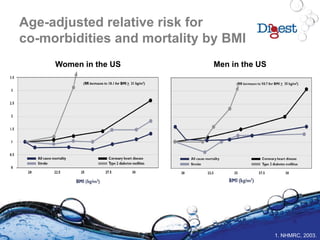
Age-adjusted relative risk for
co-morbidities and mortality by BMI
Women in the US Men in the US
1. NHMRC, 2003.
Burden of obesity on patients
and the healthcare system
• The net cost of lost
well-being due to obesity:1
– $21.0 billion in 2005
– $58.2 billion in 2008
1. Access Economics, 2008.
2. Access Economics, 2006.
DWL=deadweight loss.
Financial costs of obesity in 20052
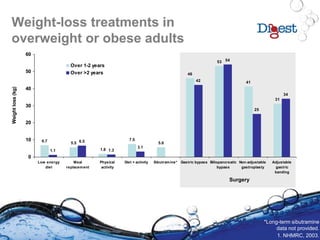
Weight-loss treatments in
overweight or obese adults
6.7
5.5
1.8
7.5
5.6
46
53
41
31
1.1
6.5
1.3
3.1
42
54
25
34
0
10
20
30
40
50
60
Low energy
diet
Meal
replacement
Physical
activity
Diet + activity Sibutramine* Gastric bypass Biliopancreatic
bypass
Non-adjustable
gastroplasty
Adjustable
gastric
banding
Weightloss(kg)
Over 1-2 years
Over >2 years
1. NHMRC, 2003.
*Long-term sibutramine
data not provided.
Surgery
NHMRC recommendations:
surgery
• Evidence-based statement
– Surgical procedures in motivated, morbidly obese patients can
result in weight losses of from 1643% (varying between 2263
kg) that are reasonably well maintained over 38 years
• Recommendation: level B
– Surgery is the most effective treatment for morbid obesity: for
most procedures and most patients, good weight maintenance
has been observed 38 years after surgery
1. NHMRC, 2003.
Bariatric surgery: risk vs benefits
• Previously, surgical procedures for obesity had
unacceptably high morbidity and mortality rates.
The resulting stigma still persists to some degree1
• Advances in the type of procedures available have
decreased the risks of bariatric surgery2
• Risks of surgery are usually lower than the risks of
remaining obese3
1. NHMRC, 2003.
2. Pories, 2008.
3. US National Institutes of Health, 1998.
Medical comorbidities resolved
after bariatric surgery
1. Wittgrove & Clark, 2000.
Type 2 diabetes
98%
Hypertension
92%
Triglycerides
99%
Arthritis
90%
Sleep apnoea
98%
Reflux
disease
98%
Stress
incontinence
97%
Cholesterol
97%
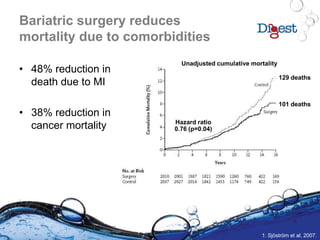
Bariatric surgery reduces
mortality due to comorbidities
• 48% reduction in
death due to MI
• 38% reduction in
cancer mortality
1. Sjöström et al, 2007.
129 deaths
101 deaths
Hazard ratio
0.76 (p=0.04)
Unadjusted cumulative mortality
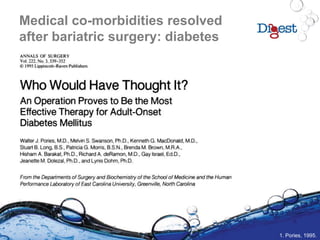
Medical co-morbidities resolved
after bariatric surgery: diabetes
1. Pories, 1995.
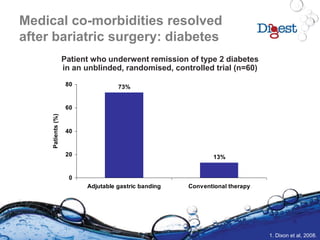
Medical co-morbidities resolved
after bariatric surgery: diabetes
1. Dixon et al, 2008.
13%
73%
0
20
40
60
80
Adjutable gastric banding Conventional therapy
Patients(%)
Patient who underwent remission of type 2 diabetes
in an unblinded, randomised, controlled trial (n=60)
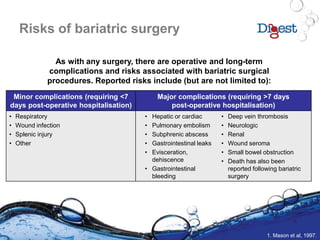
Risks of bariatric surgery
Minor complications (requiring <7
days post-operative hospitalisation)
Major complications (requiring >7 days
post-operative hospitalisation)
• Respiratory
• Wound infection
• Splenic injury
• Other
• Hepatic or cardiac
• Pulmonary embolism
• Subphrenic abscess
• Gastrointestinal leaks
• Evisceration,
dehiscence
• Gastrointestinal
bleeding
• Deep vein thrombosis
• Neurologic
• Renal
• Wound seroma
• Small bowel obstruction
• Death has also been
reported following bariatric
surgery
As with any surgery, there are operative and long-term
complications and risks associated with bariatric surgical
procedures. Reported risks include (but are not limited to):
1. Mason et al, 1997.
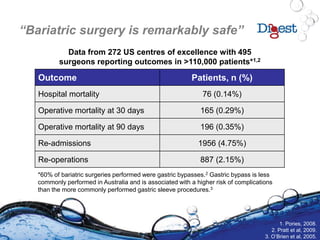
“Bariatric surgery is remarkably safe”
Outcome Patients, n (%)
Hospital mortality 76 (0.14%)
Operative mortality at 30 days 165 (0.29%)
Operative mortality at 90 days 196 (0.35%)
Re-admissions 1956 (4.75%)
Re-operations 887 (2.15%)
Data from 272 US centres of excellence with 495
surgeons reporting outcomes in >110,000 patients*1,2
1. Pories, 2008.
2. Pratt et al, 2009.
3. O’Brien et al, 2005.
*60% of bariatric surgeries performed were gastric bypasses.2 Gastric bypass is less
commonly performed in Australia and is associated with a higher risk of complications
than the more commonly performed gastric sleeve procedures.3
Which of your patients are
suitable for bariatric surgery?
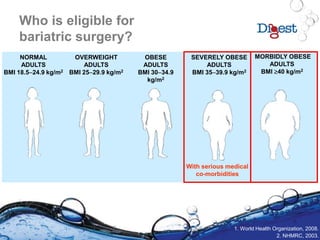
Who is eligible for
bariatric surgery?
NORMAL
ADULTS
BMI 18.524.9 kg/m2
OVERWEIGHT
ADULTS
BMI 2529.9 kg/m2
OBESE
ADULTS
BMI 3034.9
kg/m2
SEVERELY OBESE
ADULTS
BMI 3539.9 kg/m2
MORBIDLY OBESE
ADULTS
BMI 40 kg/m2
1. World Health Organization, 2008.
2. NHMRC, 2003.
With serious medical
co-morbidities
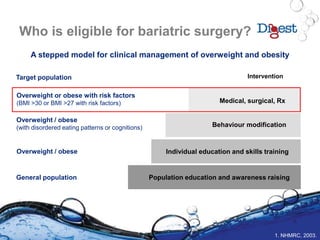
Who is eligible for bariatric surgery?
1. NHMRC, 2003.
Population education and awareness raising
Individual education and skills training
Behaviour modification
Medical, surgical, Rx
Intervention
A stepped model for clinical management of overweight and obesity
General population
Overweight / obese
(with disordered eating patterns or cognitions)
Target population
Overweight or obese with risk factors
(BMI >30 or BMI >27 with risk factors)
Overweight / obese
Who is eligible for
bariatric surgery?
• Bariatric surgery should be considered only for
well-informed, motivated adult patients with acceptable
operative risks
• Candidates for surgical procedures should be selected
after careful evaluation by a multi-disciplinary team with
medical, surgical, psychiatric and nutritional expertise
1. US National Institutes of Health, 1998.
Discussion
What systems do you have in
place in your practice to ensure
obesity is addressed?
Communicating bariatric surgery
benefits and risks to your patients
• Patients frequently make decisions about the risks of
medical treatments, but without a completely objective
understanding of such risks
• Risk perception is affected not only by individual factors,
such as the patient's sex, prior beliefs, and past
experience, but also by how risk information is presented
• A mix of techniques accommodating varying preferences
and abilities of different patients should be used
1. Sabin et al, 2005.
What should the patient
understand before proceeding?
• Surgery should not be considered until all other options have been
evaluated
• Surgery is in no way to be considered as cosmetic. It does not involve
the removal of adipose tissue by suction or excision
• A decision to elect surgical treatment requires an assessment of the risk
and benefit to the patient and the meticulous performance of the
appropriate surgical procedure
• The suggested weight loss surgical procedure may not be reversible
• The success of surgery is dependent on long-term lifestyle changes in
diet and exercise
• Problems may arise after surgery that may require reoperations
What procedures are
currently available?
Procedures available in Australia
• Restrictive procedures: produce weight loss by
limiting intake
– Laparoscopic adjustable gastric banding (LAGB)
– Laparoscopic sleeve gastrectomy (LSG)
• Malabsorptive procedures: induce weight loss by
interfering with digestion and absorption
– Gastric bypass roux-en-Y (RYGBP)
– Biliopancreatic diversion (BPD; rarely performed in Australia)
1. Pories, 2008.
Annual number of bariatric procedures
performed in Australia, 19942008
1. Medicare Australia, 2009.
0
2000
4000
6000
8000
10000
12000
1994/1995
1995/1996
1996/1997
1997/1998
1998/1999
1999/2000
2000/2001
2001/2002
2002/2003
2003/2004
2004/2005
2005/2006
2006/2007
2007/2008
Numberofprocedures
LAGB + LSG
Gastric bypass
LAGB=laparoscopic adjustable gastric band
LSG=laparoscopic sleeve gastrectomy
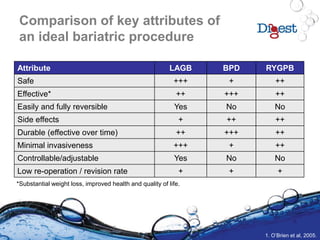
Comparison of key attributes of
an ideal bariatric procedure
Attribute LAGB BPD RYGPB
Safe +++ + ++
Effective* ++ +++ ++
Easily and fully reversible Yes No No
Side effects + ++ ++
Durable (effective over time) ++ +++ ++
Minimal invasiveness +++ + ++
Controllable/adjustable Yes No No
Low re-operation / revision rate + + +
1. O’Brien et al, 2005.
*Substantial weight loss, improved health and quality of life.
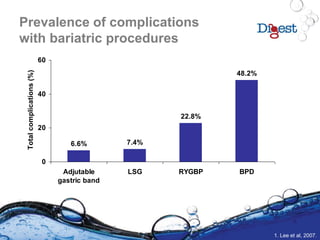
Prevalence of complications
with bariatric procedures
48.2%
22.8%
7.4%6.6%
0
20
40
60
Adjutable
gastric band
LSG RYGBP BPD
Totalcomplications(%)
1. Lee et al, 2007.
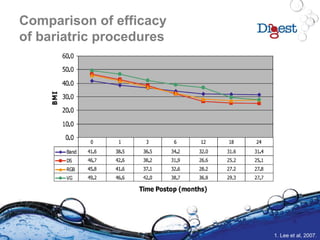
Comparison of efficacy
of bariatric procedures
1. Lee et al, 2007.
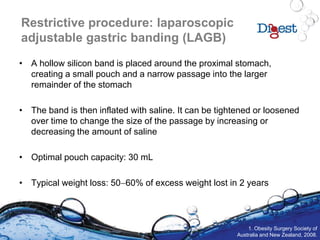
Restrictive procedure: laparoscopic
adjustable gastric banding (LAGB)
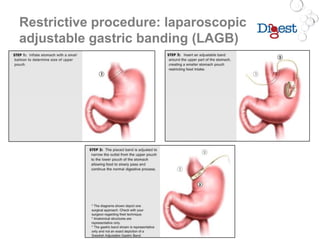
• A hollow silicon band is placed around the proximal stomach,
creating a small pouch and a narrow passage into the larger
remainder of the stomach
• The band is then inflated with saline. It can be tightened or loosened
over time to change the size of the passage by increasing or
decreasing the amount of saline
• Optimal pouch capacity: 30 mL
• Typical weight loss: 5060% of excess weight lost in 2 years
1. Obesity Surgery Society of
Australia and New Zealand, 2008.
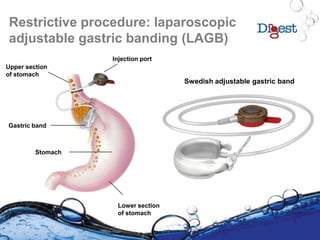
Restrictive procedure: laparoscopic
adjustable gastric banding (LAGB)
Lower section
of stomach
Upper section
of stomach
Gastric band
Stomach
Injection port
Swedish adjustable gastric band
Restrictive procedure: laparoscopic
adjustable gastric banding (LAGB)
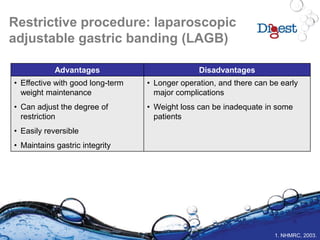
Advantages Disadvantages
• Effective with good long-term
weight maintenance
• Can adjust the degree of
restriction
• Easily reversible
• Maintains gastric integrity
• Longer operation, and there can be early
major complications
• Weight loss can be inadequate in some
patients
1. NHMRC, 2003.
Restrictive procedure: laparoscopic
adjustable gastric banding (LAGB)
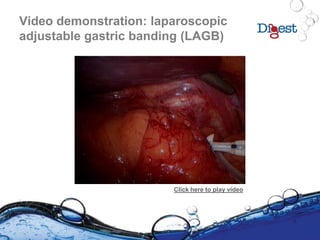
Video demonstration: laparoscopic
adjustable gastric banding (LAGB)
Click here to play video
Restrictive procedure: laparoscopic
sleeve gastrectomy (LSG)
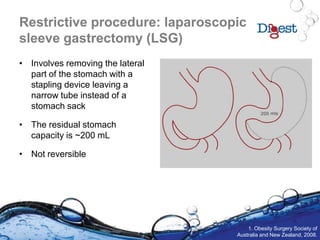
• Involves removing the lateral
part of the stomach with a
stapling device leaving a
narrow tube instead of a
stomach sack
• The residual stomach
capacity is ~200 mL
• Not reversible
1. Obesity Surgery Society of
Australia and New Zealand, 2008.
Restrictive procedure: laparoscopic
sleeve gastrectomy (LSG)
• Stomach tube may stretch over time leading to late weight regain
(extent currently unknown)
• The amount of weight reduction is in the region of 4060% of excess
weight lost over the first 12 years
• Requires little post-operative follow up or nutritional supplements
(therefore, a good option for people living in remote areas)
• If weight is regained, gastric bypass roux-en-Y or a duodenal swicth
can be performed
1. Obesity Surgery Society of
Australia and New Zealand, 2008.
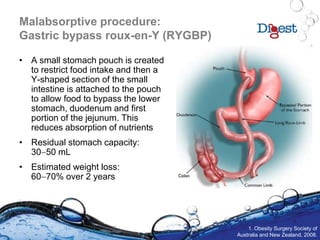
Malabsorptive procedure:
Gastric bypass roux-en-Y (RYGBP)
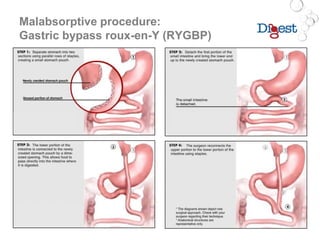
• A small stomach pouch is created
to restrict food intake and then a
Y-shaped section of the small
intestine is attached to the pouch
to allow food to bypass the lower
stomach, duodenum and first
portion of the jejunum. This
reduces absorption of nutrients
• Residual stomach capacity:
3050 mL
• Estimated weight loss:
6070% over 2 years
1. Obesity Surgery Society of
Australia and New Zealand, 2008.
Malabsorptive procedure:
Gastric bypass roux-en-Y (RYGBP)
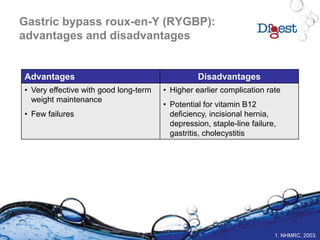
Gastric bypass roux-en-Y (RYGBP):
advantages and disadvantages
Advantages Disadvantages
• Very effective with good long-term
weight maintenance
• Few failures
• Higher earlier complication rate
• Potential for vitamin B12
deficiency, incisional hernia,
depression, staple-line failure,
gastritis, cholecystitis
1. NHMRC, 2003.
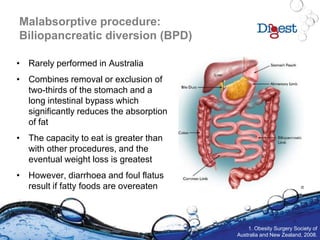
Malabsorptive procedure:
Biliopancreatic diversion (BPD)
• Rarely performed in Australia
• Combines removal or exclusion of
two-thirds of the stomach and a
long intestinal bypass which
significantly reduces the absorption
of fat
• The capacity to eat is greater than
with other procedures, and the
eventual weight loss is greatest
• However, diarrhoea and foul flatus
result if fatty foods are overeaten
1. Obesity Surgery Society of
Australia and New Zealand, 2008.
Malabsorptive procedure:
Biliopancreatic diversion (BPD)
Advantages Disadvantages
• Very effective with good long-term
weight maintenance
• High success rate and low revision
rate
• Potential for mineral and vitamin
malabsorption
• Potential for diarrhoea
• Relatively invasive
• Early major complications
1. NHMRC, 2003.
Demonstration of
surgical procedure
Questions?
Post-surgery follow-up care:
what the GP needs to know
Some of the complications that may
present in general practice after LABG
• Port sepsis
– Complication of port access for
adjustment
– Typical erythema, tenderness,
cellulitis
– Requires urgent intervention to
avoid band related sepsis
• Overly restrictive band
– Patient unable to manage
unprocessed solids
– Resort to fluids = uncontrollable
– Frequent vomiting ± reflux
– Needs elective withdrawal of fluid
• Band Slip
– Vomiting
– Dysphagia to fluids
– No response to evacuation of the band
– Stomach viability threatened - LUQ pain
– Requires urgent surgical attention
• Erosion
– Failure of weight loss, despite adequate
band filling
– Low grade sepsis
– May be managed electively
Note: this list is not exhaustive. 1. Chapman et al, 2002.
Other potential problems
after surgery
• Reflux symptoms
• Nutritional deficiencies
• Weight gain
• Loose skin
• Gallstones
1. Chapman et al, 2002.
Post-surgery diet
• Patients can be encouraged to see a registered dietitian
both before and after surgery
• If the patient is not seeing a registered dietitian or other
counsellor post-surgery, GPs may wish to advise patients
to keep a food and exercise diary that can be reviewed
during office visits
1. US National Institute of Health, 2000.
Example LABG post-surgery diet
• Weeks 1 & 2: fluid diet plan
– Day 1 after surgery: clear fluids
– Day 2 to Day 14: full fluids
• Weeks 3, 4 & 5: pureed diet plan
• Week 6 onwards: introduction of solids
– Emphasise the need to chew ALL foods to baby food consistency
– In the long term, patients should try to eat as normally as possible
but in smaller quantities
Exercise
• It is important following obesity surgery to not only alter
eating habits, but also level of physical activity
• The bariatric surgeon will advise the patient on an
individual exercise program appropriate to their
individual circumstances
• Patients are generally recommended to start exercising
slowly. As weight loss is achieved, physical activities will
gradually become easier
Weight loss surgery
support groups
• Support groups can provide weight loss surgery patients
an excellent opportunity to discuss their various personal
and professional issues
• Bariatric surgeons can advise patients of support groups
to assist with short- and long-term questions and needs
Going back to work
• The ability to resume pre-surgery levels of activity will
vary according to physical condition, the nature of the
activity and the type of weight loss surgery performed
• Many patients return to full pre-surgery levels of activity
within 6 weeks of their morbid obesity procedure
• Patients who have had a minimally invasive laparoscopic
procedure may be able to return to these activities within
a few weeks
Pregnancy
• It is important to inform women that fertility may be increased
post-surgery1
• Although pregnancy after bariatric surgery appears to be safe,
extra care should be taken to properly monitor post-operative
pregnant patients for appropriate weight gain and nourishment2
• In patient who have undergone LAGB, the band can be deflated
during pregnancy to reduce the incidence of reflux and to ensure
adequate nutrition particularly if hyperemesis is present2
• Women do not appear to be at increased risk for poor perinatal
outcomes post-surgery, and their risks for many obesity-related
gestational complications are reduced2
1. Beard et al, 2008.
2. Karmon & Sheiner, 2008.
Long-term follow-up
• US NIH follow-up recommendation: lifelong medical surveillance after surgical
therapy is essential
• Routine monitoring (performed by a bariatric surgeon):
– Patients should be seen within 24 weeks of surgery to monitor efficacy and side effects
– Visits every ~4 weeks are adequate during the first 3 months if the patient has a
favourable weight loss and few side effects; more frequent visits may be required,
particularly if the patient has complications
– Blood pressure, pulse and weight should be monitored each visit, with waist
circumference measured intermittently
– Less frequent follow-up is required after the first 6 months
– Patients who do not maintain an adequate intake of vitamins and minerals may develop
deficiencies of vitamin B12 and iron with anaemia. Thus, indices of inadequate nutrition
should be monitored
1. US National Institute of Health, 2000.
Summary
• Surgery is the most effective treatment for morbid obesity (NHMRC)
• Candidates for surgical procedures should be selected after careful
evaluation by a multi-disciplinary team with medical, surgical,
psychiatric and nutritional expertise
• Risks of surgery are usually lower than the risks of remaining obese
• Procedures currently available in Australia are:
– Laparoscopic adjustable gastric banding (LAGB)
– Laparoscopic sleeve gastrectomy (LSG)
– Gastric bypass roux-en-Y (RYGBP)
– Biliopancreatic diversion (BPD)
Learning objectives
• You should now be able to:
– Understand surgical procedures available for patients who are
morbidly obese or severely obese with serious comorbidities
– Identify patients in your practice that may be appropriate for
bariatric surgery
– Confidently communicate risk versus benefit of bariatric surgery
options to patients
– Understand the importance of multidisciplinary care for patients
who are morbidly obese or severely obese with serious
comorbidities
Questions?
References
1. Access Economics, 2008. The growing cost of obesity in 2008: three years on. Available at:
http://www.accesseconomics.com.au/publicationsreports/getreport.php?report=102&id=139. Accessed January 2009.
2. Access Economics, 2006. The economic costs of obesity. Available at:
http://www.accesseconomics.com.au/publicationsreports/getreport.php?report=102&id=139. Accessed January 2009.
3. Chapman A et al. Systematic review of laparoscopic adjustable gastric banding for the treatment of obesity : Update and re-
appraisal. ASERNIP-S Report No. 31, Second Edition. Adelaide, South Australia: ASERNIP-S, June 2002.
4. Dixon JB et al. JAMA 2008;299:316-23.
5. Dixon JB. Obes Surg 2008 Nov 13. [Epub ahead of print].
6. Lee CM, Cirangle PT, Jossart GH. Surg Endosc 2007;21:1810-6.
7. Mason EE et al. Obes Surg 1997;7:189-97.
8. Medicare Australia. Available at: https://www.medicareaustralia.gov.au/statistics/mbs_item.shtml. Accessed February 2009.
9. National Health and Medical Research Council (NHMRC), 2003. Clinical practice guidelines for the management of overweight
and obesity in adults. Available at: http://www.health.gov.au/internet/main/publishing.nsf/Content/obesityguidelines-guidelines-
adults.htm. Accessed January 2009.
10. O’Brien PE, Brown WA, Dixon JB. Med J Aust 2005;183:310–4.
11. Obesity Surgery Society of Australia and New Zealand, 2008. Available at: http://www.ossanz.com.au/lapband.asp. Accessed
January 2009.
12. Pories WJ. Ann Surg 1995;222:339-50.
13. Pories WJ. J Clin Endocrinol Metab 2008;95:S89-S96.
14. Pratt GM et al. Surg Endosc 2009 Jan 30. [Epub ahead of print].
15. Sabin J et al. Obes Res 2005;13:250-3.
16. Sjöström L et al. N Engl J Med 2007;357:741-52.
17. US National Institutes of Health. Clinical Guidelines on the Identification, Evaluation, and Treatment of Obesity in Adults: The
Evidence Report. NHLBI Obesity Education Initiative. Expert Panel on the Identification, Evaluation, and Treatment of Obesity in
Adults. Washington, DC: U.S. Department of Health and Human Services, 1998. Available at:
http://www.nhlbi.nih.gov/guidelines/obesity/ob_gdlns.pdf. Accessed February 2009.
18. US National Institutes of Health. Expert Panel on the Identification, Evaluation, and Treatment of Overweight in Adults. Am J Clin
Nutr 1998;68:899–917.
19. Wittgrove AC, Clark GW. Obes Surg 2000;10:233-9.
20. World Health Organization, Global database on Body Mass Index. Available at: http://www.who.int/bmi/index.jsp. Accessed
January 2009.

Developments In Gastrointestinal Therapies

  • 2.
  • 3.
    Learning objectives • Oncompletion of this workshop, you should be able to: – Understand surgical procedures available for patients who are morbidly obese or severely obese with serious comorbidities – Identify patients in your practice that may be appropriate for bariatric surgery – Confidently communicate risk versus benefit of bariatric surgery options to patients – Understand the importance of multidisciplinary care for patients who are morbidly obese or severely obese with serious comorbidities
  • 4.
    Why consider surgeryfor patients who are morbidly obese or severely obese with serious comorbidities?
  • 5.
    Obesity and mortalityrisk 1. NHMRC, 2003. Mortality risk doubles at BMI 35 kg/m2
  • 6.
    Relative risk ofco-morbidities, conditions and risks associated with obesity Relative risk >5 Relative risk 25 Relative risk 12 Type 2 diabetes All cause mortality Cancer mortality Dyslipidaemia Hypertension Breast cancer Obstructive sleep apnoea Myocardial infarction and stroke Prostate and colon cancer in men Breathlessness Endometrial carcinoma in women and hepatoma in men Impaired fertility Excessive daytime sleepiness Gallstones and complications including cancer Obstetric complications including foetal abnormalities Obesity hypoventilation syndrome Polycystic ovary syndrome Asthma Idiopathic intracranial hypertension Osteoarthritis (knees) Gastroesophageal reflux Non-alcoholic steatohepatitis Gout Anaesthetic risk 1. Dixon, 2002.
  • 7.
    Age-adjusted relative riskfor co-morbidities and mortality by BMI Women in the US Men in the US 1. NHMRC, 2003.
  • 8.
    Burden of obesityon patients and the healthcare system • The net cost of lost well-being due to obesity:1 – $21.0 billion in 2005 – $58.2 billion in 2008 1. Access Economics, 2008. 2. Access Economics, 2006. DWL=deadweight loss. Financial costs of obesity in 20052
  • 9.
    Weight-loss treatments in overweightor obese adults 6.7 5.5 1.8 7.5 5.6 46 53 41 31 1.1 6.5 1.3 3.1 42 54 25 34 0 10 20 30 40 50 60 Low energy diet Meal replacement Physical activity Diet + activity Sibutramine* Gastric bypass Biliopancreatic bypass Non-adjustable gastroplasty Adjustable gastric banding Weightloss(kg) Over 1-2 years Over >2 years 1. NHMRC, 2003. *Long-term sibutramine data not provided. Surgery
  • 10.
    NHMRC recommendations: surgery • Evidence-basedstatement – Surgical procedures in motivated, morbidly obese patients can result in weight losses of from 1643% (varying between 2263 kg) that are reasonably well maintained over 38 years • Recommendation: level B – Surgery is the most effective treatment for morbid obesity: for most procedures and most patients, good weight maintenance has been observed 38 years after surgery 1. NHMRC, 2003.
  • 11.
    Bariatric surgery: riskvs benefits • Previously, surgical procedures for obesity had unacceptably high morbidity and mortality rates. The resulting stigma still persists to some degree1 • Advances in the type of procedures available have decreased the risks of bariatric surgery2 • Risks of surgery are usually lower than the risks of remaining obese3 1. NHMRC, 2003. 2. Pories, 2008. 3. US National Institutes of Health, 1998.
  • 12.
    Medical comorbidities resolved afterbariatric surgery 1. Wittgrove & Clark, 2000. Type 2 diabetes 98% Hypertension 92% Triglycerides 99% Arthritis 90% Sleep apnoea 98% Reflux disease 98% Stress incontinence 97% Cholesterol 97%
  • 13.
    Bariatric surgery reduces mortalitydue to comorbidities • 48% reduction in death due to MI • 38% reduction in cancer mortality 1. Sjöström et al, 2007. 129 deaths 101 deaths Hazard ratio 0.76 (p=0.04) Unadjusted cumulative mortality
  • 14.
    Medical co-morbidities resolved afterbariatric surgery: diabetes 1. Pories, 1995.
  • 15.
    Medical co-morbidities resolved afterbariatric surgery: diabetes 1. Dixon et al, 2008. 13% 73% 0 20 40 60 80 Adjutable gastric banding Conventional therapy Patients(%) Patient who underwent remission of type 2 diabetes in an unblinded, randomised, controlled trial (n=60)
  • 16.
    Risks of bariatricsurgery Minor complications (requiring <7 days post-operative hospitalisation) Major complications (requiring >7 days post-operative hospitalisation) • Respiratory • Wound infection • Splenic injury • Other • Hepatic or cardiac • Pulmonary embolism • Subphrenic abscess • Gastrointestinal leaks • Evisceration, dehiscence • Gastrointestinal bleeding • Deep vein thrombosis • Neurologic • Renal • Wound seroma • Small bowel obstruction • Death has also been reported following bariatric surgery As with any surgery, there are operative and long-term complications and risks associated with bariatric surgical procedures. Reported risks include (but are not limited to): 1. Mason et al, 1997.
  • 17.
    “Bariatric surgery isremarkably safe” Outcome Patients, n (%) Hospital mortality 76 (0.14%) Operative mortality at 30 days 165 (0.29%) Operative mortality at 90 days 196 (0.35%) Re-admissions 1956 (4.75%) Re-operations 887 (2.15%) Data from 272 US centres of excellence with 495 surgeons reporting outcomes in >110,000 patients*1,2 1. Pories, 2008. 2. Pratt et al, 2009. 3. O’Brien et al, 2005. *60% of bariatric surgeries performed were gastric bypasses.2 Gastric bypass is less commonly performed in Australia and is associated with a higher risk of complications than the more commonly performed gastric sleeve procedures.3
  • 18.
    Which of yourpatients are suitable for bariatric surgery?
  • 19.
    Who is eligiblefor bariatric surgery? NORMAL ADULTS BMI 18.524.9 kg/m2 OVERWEIGHT ADULTS BMI 2529.9 kg/m2 OBESE ADULTS BMI 3034.9 kg/m2 SEVERELY OBESE ADULTS BMI 3539.9 kg/m2 MORBIDLY OBESE ADULTS BMI 40 kg/m2 1. World Health Organization, 2008. 2. NHMRC, 2003. With serious medical co-morbidities
  • 20.
    Who is eligiblefor bariatric surgery? 1. NHMRC, 2003. Population education and awareness raising Individual education and skills training Behaviour modification Medical, surgical, Rx Intervention A stepped model for clinical management of overweight and obesity General population Overweight / obese (with disordered eating patterns or cognitions) Target population Overweight or obese with risk factors (BMI >30 or BMI >27 with risk factors) Overweight / obese
  • 21.
    Who is eligiblefor bariatric surgery? • Bariatric surgery should be considered only for well-informed, motivated adult patients with acceptable operative risks • Candidates for surgical procedures should be selected after careful evaluation by a multi-disciplinary team with medical, surgical, psychiatric and nutritional expertise 1. US National Institutes of Health, 1998.
  • 22.
    Discussion What systems doyou have in place in your practice to ensure obesity is addressed?
  • 23.
    Communicating bariatric surgery benefitsand risks to your patients • Patients frequently make decisions about the risks of medical treatments, but without a completely objective understanding of such risks • Risk perception is affected not only by individual factors, such as the patient's sex, prior beliefs, and past experience, but also by how risk information is presented • A mix of techniques accommodating varying preferences and abilities of different patients should be used 1. Sabin et al, 2005.
  • 24.
    What should thepatient understand before proceeding? • Surgery should not be considered until all other options have been evaluated • Surgery is in no way to be considered as cosmetic. It does not involve the removal of adipose tissue by suction or excision • A decision to elect surgical treatment requires an assessment of the risk and benefit to the patient and the meticulous performance of the appropriate surgical procedure • The suggested weight loss surgical procedure may not be reversible • The success of surgery is dependent on long-term lifestyle changes in diet and exercise • Problems may arise after surgery that may require reoperations
  • 25.
  • 26.
    Procedures available inAustralia • Restrictive procedures: produce weight loss by limiting intake – Laparoscopic adjustable gastric banding (LAGB) – Laparoscopic sleeve gastrectomy (LSG) • Malabsorptive procedures: induce weight loss by interfering with digestion and absorption – Gastric bypass roux-en-Y (RYGBP) – Biliopancreatic diversion (BPD; rarely performed in Australia) 1. Pories, 2008.
  • 27.
    Annual number ofbariatric procedures performed in Australia, 19942008 1. Medicare Australia, 2009. 0 2000 4000 6000 8000 10000 12000 1994/1995 1995/1996 1996/1997 1997/1998 1998/1999 1999/2000 2000/2001 2001/2002 2002/2003 2003/2004 2004/2005 2005/2006 2006/2007 2007/2008 Numberofprocedures LAGB + LSG Gastric bypass LAGB=laparoscopic adjustable gastric band LSG=laparoscopic sleeve gastrectomy
  • 28.
    Comparison of keyattributes of an ideal bariatric procedure Attribute LAGB BPD RYGPB Safe +++ + ++ Effective* ++ +++ ++ Easily and fully reversible Yes No No Side effects + ++ ++ Durable (effective over time) ++ +++ ++ Minimal invasiveness +++ + ++ Controllable/adjustable Yes No No Low re-operation / revision rate + + + 1. O’Brien et al, 2005. *Substantial weight loss, improved health and quality of life.
  • 29.
    Prevalence of complications withbariatric procedures 48.2% 22.8% 7.4%6.6% 0 20 40 60 Adjutable gastric band LSG RYGBP BPD Totalcomplications(%) 1. Lee et al, 2007.
  • 30.
    Comparison of efficacy ofbariatric procedures 1. Lee et al, 2007.
  • 31.
    Restrictive procedure: laparoscopic adjustablegastric banding (LAGB) • A hollow silicon band is placed around the proximal stomach, creating a small pouch and a narrow passage into the larger remainder of the stomach • The band is then inflated with saline. It can be tightened or loosened over time to change the size of the passage by increasing or decreasing the amount of saline • Optimal pouch capacity: 30 mL • Typical weight loss: 5060% of excess weight lost in 2 years 1. Obesity Surgery Society of Australia and New Zealand, 2008.
  • 32.
    Restrictive procedure: laparoscopic adjustablegastric banding (LAGB) Lower section of stomach Upper section of stomach Gastric band Stomach Injection port Swedish adjustable gastric band
  • 33.
    Restrictive procedure: laparoscopic adjustablegastric banding (LAGB) Advantages Disadvantages • Effective with good long-term weight maintenance • Can adjust the degree of restriction • Easily reversible • Maintains gastric integrity • Longer operation, and there can be early major complications • Weight loss can be inadequate in some patients 1. NHMRC, 2003.
  • 34.
  • 35.
    Video demonstration: laparoscopic adjustablegastric banding (LAGB) Click here to play video
  • 36.
    Restrictive procedure: laparoscopic sleevegastrectomy (LSG) • Involves removing the lateral part of the stomach with a stapling device leaving a narrow tube instead of a stomach sack • The residual stomach capacity is ~200 mL • Not reversible 1. Obesity Surgery Society of Australia and New Zealand, 2008.
  • 37.
    Restrictive procedure: laparoscopic sleevegastrectomy (LSG) • Stomach tube may stretch over time leading to late weight regain (extent currently unknown) • The amount of weight reduction is in the region of 4060% of excess weight lost over the first 12 years • Requires little post-operative follow up or nutritional supplements (therefore, a good option for people living in remote areas) • If weight is regained, gastric bypass roux-en-Y or a duodenal swicth can be performed 1. Obesity Surgery Society of Australia and New Zealand, 2008.
  • 38.
    Malabsorptive procedure: Gastric bypassroux-en-Y (RYGBP) • A small stomach pouch is created to restrict food intake and then a Y-shaped section of the small intestine is attached to the pouch to allow food to bypass the lower stomach, duodenum and first portion of the jejunum. This reduces absorption of nutrients • Residual stomach capacity: 3050 mL • Estimated weight loss: 6070% over 2 years 1. Obesity Surgery Society of Australia and New Zealand, 2008.
  • 39.
  • 40.
    Gastric bypass roux-en-Y(RYGBP): advantages and disadvantages Advantages Disadvantages • Very effective with good long-term weight maintenance • Few failures • Higher earlier complication rate • Potential for vitamin B12 deficiency, incisional hernia, depression, staple-line failure, gastritis, cholecystitis 1. NHMRC, 2003.
  • 41.
    Malabsorptive procedure: Biliopancreatic diversion(BPD) • Rarely performed in Australia • Combines removal or exclusion of two-thirds of the stomach and a long intestinal bypass which significantly reduces the absorption of fat • The capacity to eat is greater than with other procedures, and the eventual weight loss is greatest • However, diarrhoea and foul flatus result if fatty foods are overeaten 1. Obesity Surgery Society of Australia and New Zealand, 2008.
  • 42.
    Malabsorptive procedure: Biliopancreatic diversion(BPD) Advantages Disadvantages • Very effective with good long-term weight maintenance • High success rate and low revision rate • Potential for mineral and vitamin malabsorption • Potential for diarrhoea • Relatively invasive • Early major complications 1. NHMRC, 2003.
  • 43.
  • 44.
  • 45.
  • 46.
    Some of thecomplications that may present in general practice after LABG • Port sepsis – Complication of port access for adjustment – Typical erythema, tenderness, cellulitis – Requires urgent intervention to avoid band related sepsis • Overly restrictive band – Patient unable to manage unprocessed solids – Resort to fluids = uncontrollable – Frequent vomiting ± reflux – Needs elective withdrawal of fluid • Band Slip – Vomiting – Dysphagia to fluids – No response to evacuation of the band – Stomach viability threatened - LUQ pain – Requires urgent surgical attention • Erosion – Failure of weight loss, despite adequate band filling – Low grade sepsis – May be managed electively Note: this list is not exhaustive. 1. Chapman et al, 2002.
  • 47.
    Other potential problems aftersurgery • Reflux symptoms • Nutritional deficiencies • Weight gain • Loose skin • Gallstones 1. Chapman et al, 2002.
  • 48.
    Post-surgery diet • Patientscan be encouraged to see a registered dietitian both before and after surgery • If the patient is not seeing a registered dietitian or other counsellor post-surgery, GPs may wish to advise patients to keep a food and exercise diary that can be reviewed during office visits 1. US National Institute of Health, 2000.
  • 49.
    Example LABG post-surgerydiet • Weeks 1 & 2: fluid diet plan – Day 1 after surgery: clear fluids – Day 2 to Day 14: full fluids • Weeks 3, 4 & 5: pureed diet plan • Week 6 onwards: introduction of solids – Emphasise the need to chew ALL foods to baby food consistency – In the long term, patients should try to eat as normally as possible but in smaller quantities
  • 50.
    Exercise • It isimportant following obesity surgery to not only alter eating habits, but also level of physical activity • The bariatric surgeon will advise the patient on an individual exercise program appropriate to their individual circumstances • Patients are generally recommended to start exercising slowly. As weight loss is achieved, physical activities will gradually become easier
  • 51.
    Weight loss surgery supportgroups • Support groups can provide weight loss surgery patients an excellent opportunity to discuss their various personal and professional issues • Bariatric surgeons can advise patients of support groups to assist with short- and long-term questions and needs
  • 52.
    Going back towork • The ability to resume pre-surgery levels of activity will vary according to physical condition, the nature of the activity and the type of weight loss surgery performed • Many patients return to full pre-surgery levels of activity within 6 weeks of their morbid obesity procedure • Patients who have had a minimally invasive laparoscopic procedure may be able to return to these activities within a few weeks
  • 53.
    Pregnancy • It isimportant to inform women that fertility may be increased post-surgery1 • Although pregnancy after bariatric surgery appears to be safe, extra care should be taken to properly monitor post-operative pregnant patients for appropriate weight gain and nourishment2 • In patient who have undergone LAGB, the band can be deflated during pregnancy to reduce the incidence of reflux and to ensure adequate nutrition particularly if hyperemesis is present2 • Women do not appear to be at increased risk for poor perinatal outcomes post-surgery, and their risks for many obesity-related gestational complications are reduced2 1. Beard et al, 2008. 2. Karmon & Sheiner, 2008.
  • 54.
    Long-term follow-up • USNIH follow-up recommendation: lifelong medical surveillance after surgical therapy is essential • Routine monitoring (performed by a bariatric surgeon): – Patients should be seen within 24 weeks of surgery to monitor efficacy and side effects – Visits every ~4 weeks are adequate during the first 3 months if the patient has a favourable weight loss and few side effects; more frequent visits may be required, particularly if the patient has complications – Blood pressure, pulse and weight should be monitored each visit, with waist circumference measured intermittently – Less frequent follow-up is required after the first 6 months – Patients who do not maintain an adequate intake of vitamins and minerals may develop deficiencies of vitamin B12 and iron with anaemia. Thus, indices of inadequate nutrition should be monitored 1. US National Institute of Health, 2000.
  • 55.
    Summary • Surgery isthe most effective treatment for morbid obesity (NHMRC) • Candidates for surgical procedures should be selected after careful evaluation by a multi-disciplinary team with medical, surgical, psychiatric and nutritional expertise • Risks of surgery are usually lower than the risks of remaining obese • Procedures currently available in Australia are: – Laparoscopic adjustable gastric banding (LAGB) – Laparoscopic sleeve gastrectomy (LSG) – Gastric bypass roux-en-Y (RYGBP) – Biliopancreatic diversion (BPD)
  • 56.
    Learning objectives • Youshould now be able to: – Understand surgical procedures available for patients who are morbidly obese or severely obese with serious comorbidities – Identify patients in your practice that may be appropriate for bariatric surgery – Confidently communicate risk versus benefit of bariatric surgery options to patients – Understand the importance of multidisciplinary care for patients who are morbidly obese or severely obese with serious comorbidities
  • 57.
  • 59.
    References 1. Access Economics,2008. The growing cost of obesity in 2008: three years on. Available at: http://www.accesseconomics.com.au/publicationsreports/getreport.php?report=102&id=139. Accessed January 2009. 2. Access Economics, 2006. The economic costs of obesity. Available at: http://www.accesseconomics.com.au/publicationsreports/getreport.php?report=102&id=139. Accessed January 2009. 3. Chapman A et al. Systematic review of laparoscopic adjustable gastric banding for the treatment of obesity : Update and re- appraisal. ASERNIP-S Report No. 31, Second Edition. Adelaide, South Australia: ASERNIP-S, June 2002. 4. Dixon JB et al. JAMA 2008;299:316-23. 5. Dixon JB. Obes Surg 2008 Nov 13. [Epub ahead of print]. 6. Lee CM, Cirangle PT, Jossart GH. Surg Endosc 2007;21:1810-6. 7. Mason EE et al. Obes Surg 1997;7:189-97. 8. Medicare Australia. Available at: https://www.medicareaustralia.gov.au/statistics/mbs_item.shtml. Accessed February 2009. 9. National Health and Medical Research Council (NHMRC), 2003. Clinical practice guidelines for the management of overweight and obesity in adults. Available at: http://www.health.gov.au/internet/main/publishing.nsf/Content/obesityguidelines-guidelines- adults.htm. Accessed January 2009. 10. O’Brien PE, Brown WA, Dixon JB. Med J Aust 2005;183:310–4. 11. Obesity Surgery Society of Australia and New Zealand, 2008. Available at: http://www.ossanz.com.au/lapband.asp. Accessed January 2009. 12. Pories WJ. Ann Surg 1995;222:339-50. 13. Pories WJ. J Clin Endocrinol Metab 2008;95:S89-S96. 14. Pratt GM et al. Surg Endosc 2009 Jan 30. [Epub ahead of print]. 15. Sabin J et al. Obes Res 2005;13:250-3. 16. Sjöström L et al. N Engl J Med 2007;357:741-52. 17. US National Institutes of Health. Clinical Guidelines on the Identification, Evaluation, and Treatment of Obesity in Adults: The Evidence Report. NHLBI Obesity Education Initiative. Expert Panel on the Identification, Evaluation, and Treatment of Obesity in Adults. Washington, DC: U.S. Department of Health and Human Services, 1998. Available at: http://www.nhlbi.nih.gov/guidelines/obesity/ob_gdlns.pdf. Accessed February 2009. 18. US National Institutes of Health. Expert Panel on the Identification, Evaluation, and Treatment of Overweight in Adults. Am J Clin Nutr 1998;68:899–917. 19. Wittgrove AC, Clark GW. Obes Surg 2000;10:233-9. 20. World Health Organization, Global database on Body Mass Index. Available at: http://www.who.int/bmi/index.jsp. Accessed January 2009.