MoHaMeD.AL!

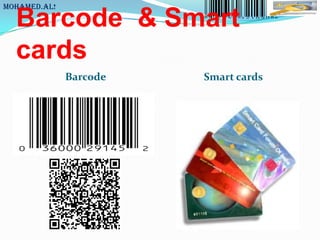
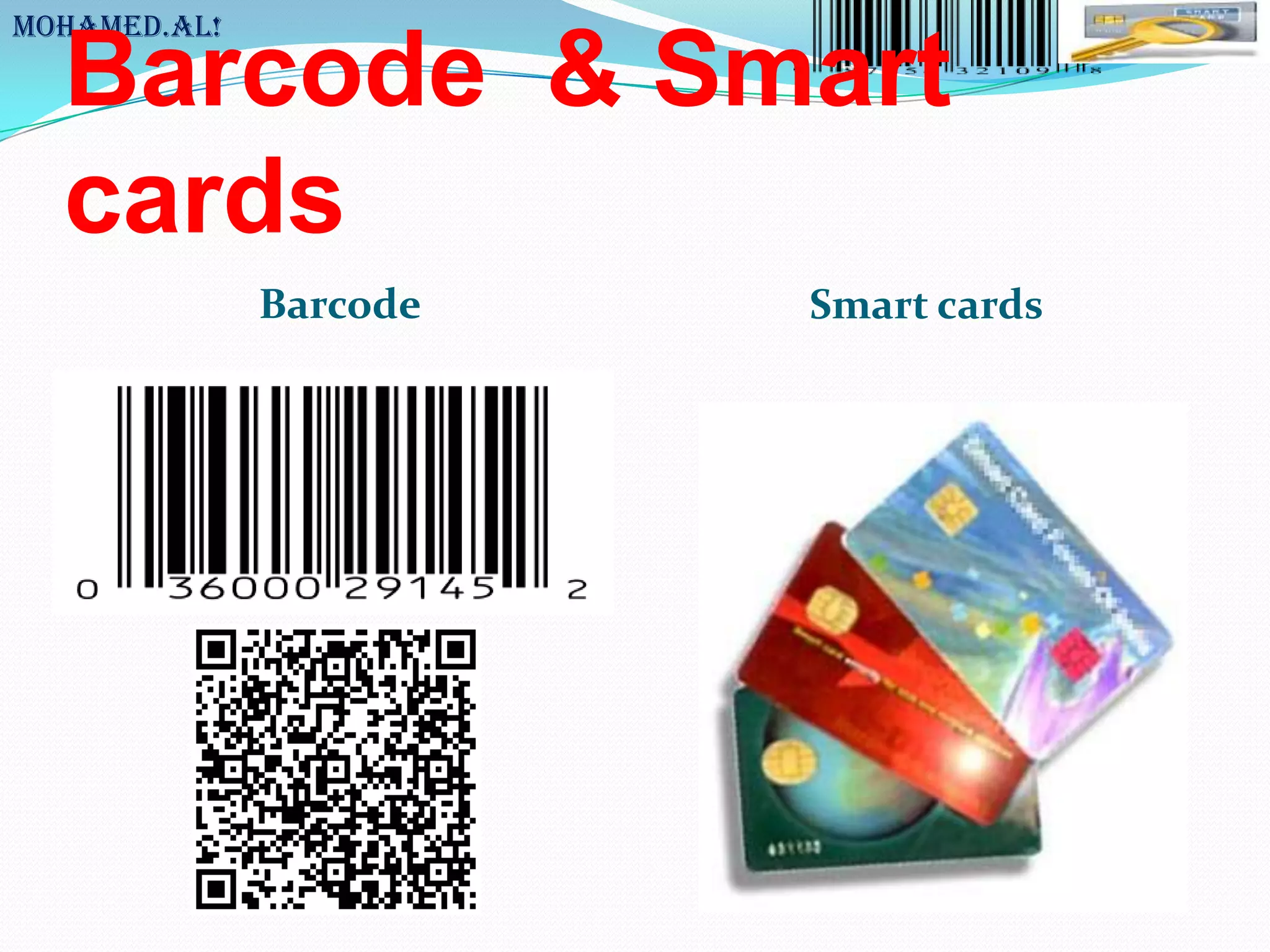
  Barcode & Smart
  cards
              Barcode   Smart cards
MoHaMeD.AL!


    Types :

    -One dimensional
    - Two dimensional
MoHaMeD.AL!


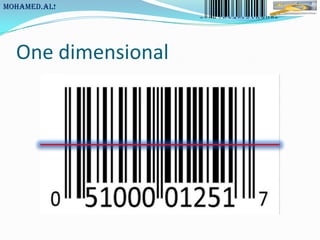
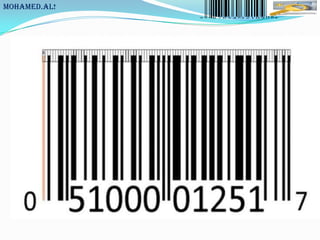
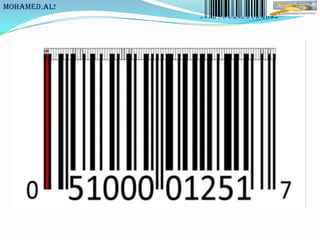
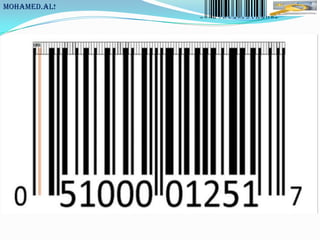
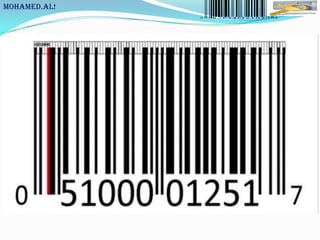
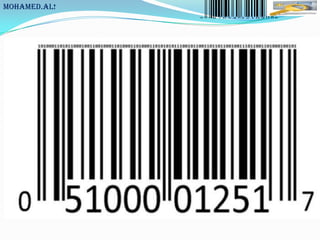
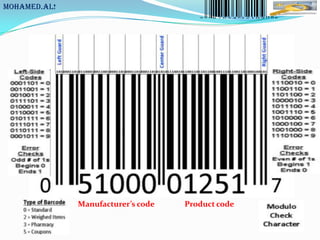
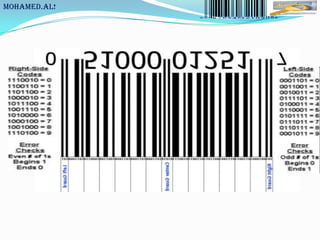
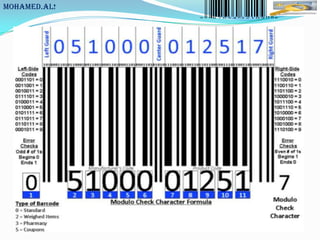
  One dimensional
MoHaMeD.AL!
MoHaMeD.AL!
MoHaMeD.AL!
MoHaMeD.AL!
MoHaMeD.AL!
MoHaMeD.AL!


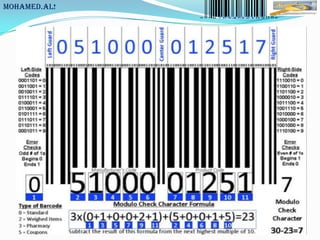
              Manufacturer’s code   Product code
MoHaMeD.AL!
MoHaMeD.AL!
MoHaMeD.AL!
MoHaMeD.AL!


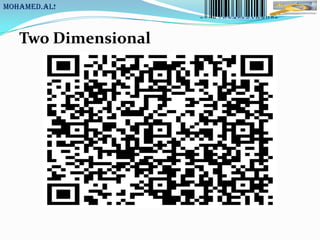
   Two Dimensional
MoHaMeD.AL!


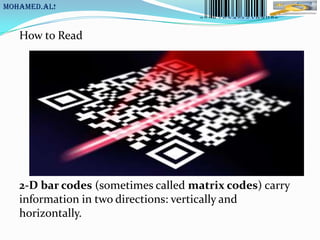
   How to Read


   2-D bar codes (sometimes called matrix codes) carry
   information in two directions: vertically and
   horizontally.
MoHaMeD.AL!


   2-D bar codes are capable of holding tens
   and even hundreds of times as much
   information as 1-D bar codes. For
   instance, one of the most popular 2-D
   bar code formats, Denso Wave's QR
   Code, can hold more than 7,000 digits or
   4,000 characters of text, whereas even
   the most complex 1-D codes top out
   around 20 characters. 2-D bar codes are
   also small and easy to scan.
MoHaMeD.AL!


   Advantages Of Barcode

   Fast and Reliable Data
    Collection.
   10,000 Times better Accuracy.
   Faster Access to Information.
MoHaMeD.AL!


   Disadvantages Of Barcode
    Require line of sight to be read.
    Can only be read individually.
    Cannot be read if damaged or dirty.
    Can only identify the type of item.
    Cannot be updated.
    Require manual tracking and
     therefore susceptible to human
     error.
MoHaMeD.AL!
MoHaMeD.AL!


   How Smart Cards Work
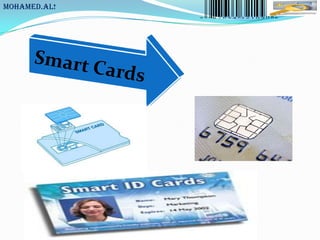
   A smart card contains more information than a magnetic
     stripe card and it can be programmed for different
     applications. Some cards can contain programming and
     data to support multiple applications and some can be
     updated to add new applications after they are issued.
     Smart cards can be designed to be inserted into a slot and
     read by a special reader or to be read at a distance, such as
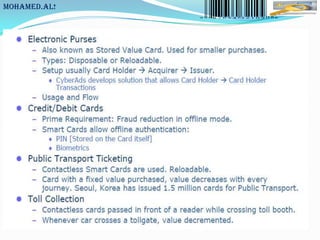
     at a toll booth. Cards can be disposable (as at a trade-show)
     or reloadable (for most applications). An industry standard
     interface between programming and PC hardware in a
     smart card has been defined by the PC/SC Working
     Group, representing
     Microsoft, IBM, Bull, Schlumberger, and other interested
     companies. Another standard is called OpenCard. There
     are two leading smart card operating systems: JavaCard and
     MULTOS.
MoHaMeD.AL!


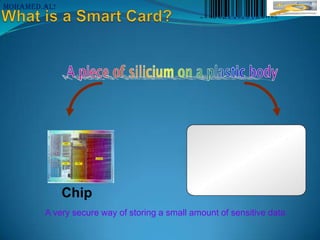
              Chip
        A very secure way of storing a small amount of sensitive data
MoHaMeD.AL!


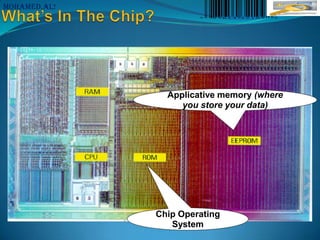
                Applicative memory (where
                   you store your data)


              Chip Operating
                 System
MoHaMeD.AL!


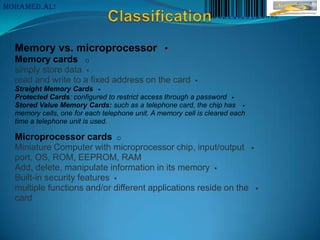
  Memory vs. microprocessor •
  Memory cards o
  simply store data 
  read and write to a fixed address on the card           
  Straight Memory Cards 
  Protected Cards: configured to restrict access through a password 
  Stored Value Memory Cards: such as a telephone card, the chip has 
  memory cells, one for each telephone unit. A memory cell is cleared each
  time a telephone unit is used.

  Microprocessor cards o
  Miniature Computer with microprocessor chip, input/output 
  port, OS, ROM, EEPROM, RAM
  Add, delete, manipulate information in its memory 
  Built-in security features 
  multiple functions and/or different applications reside on the 
  card
MoHaMeD.AL!


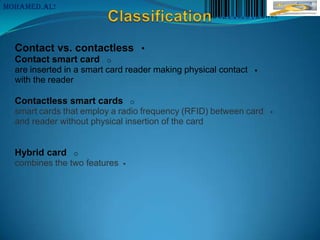
  Contact vs. contactless •
  Contact smart card o
  are inserted in a smart card reader making physical contact   
  with the reader

  Contactless smart cards o
  smart cards that employ a radio frequency (RFID) between card     
  and reader without physical insertion of the card


  Hybrid card o
  combines the two features   
MoHaMeD.AL!


   Advantages :
   More Secure.
   Safe to Transport.
   Double as an ID Card.
   Prevents Fraud.
MoHaMeD.AL!


   Possible Disadvantages:
   Easily Lost.
   Slow Adoption.
   Possible Risk of Identity Theft.
MoHaMeD.AL!


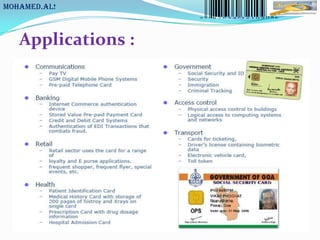
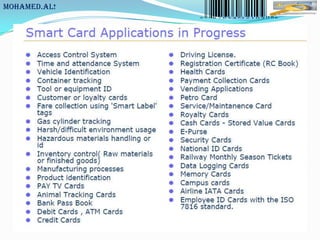
   Applications :
MoHaMeD.AL!
MoHaMeD.AL!
MoHaMeD.AL!


              THANK YOU
               MoHaMeD.AL!

Barcode & smart cards

  • 1.
    MoHaMeD.AL! Barcode& Smart cards Barcode Smart cards
  • 2.
    MoHaMeD.AL! Types : -One dimensional - Two dimensional
  • 3.
    MoHaMeD.AL! Onedimensional
  • 4.
  • 5.
  • 6.
  • 7.
  • 8.
  • 9.
    MoHaMeD.AL! Manufacturer’s code Product code
  • 10.
  • 11.
  • 12.
  • 13.
    MoHaMeD.AL! Two Dimensional
  • 14.
    MoHaMeD.AL! How to Read 2-D bar codes (sometimes called matrix codes) carry information in two directions: vertically and horizontally.
  • 15.
    MoHaMeD.AL! 2-D bar codes are capable of holding tens and even hundreds of times as much information as 1-D bar codes. For instance, one of the most popular 2-D bar code formats, Denso Wave's QR Code, can hold more than 7,000 digits or 4,000 characters of text, whereas even the most complex 1-D codes top out around 20 characters. 2-D bar codes are also small and easy to scan.
  • 16.
    MoHaMeD.AL! Advantages Of Barcode Fast and Reliable Data Collection. 10,000 Times better Accuracy. Faster Access to Information.
  • 17.
    MoHaMeD.AL! Disadvantages Of Barcode  Require line of sight to be read.  Can only be read individually.  Cannot be read if damaged or dirty.  Can only identify the type of item.  Cannot be updated.  Require manual tracking and therefore susceptible to human error.
  • 18.
  • 19.
    MoHaMeD.AL! How Smart Cards Work A smart card contains more information than a magnetic stripe card and it can be programmed for different applications. Some cards can contain programming and data to support multiple applications and some can be updated to add new applications after they are issued. Smart cards can be designed to be inserted into a slot and read by a special reader or to be read at a distance, such as at a toll booth. Cards can be disposable (as at a trade-show) or reloadable (for most applications). An industry standard interface between programming and PC hardware in a smart card has been defined by the PC/SC Working Group, representing Microsoft, IBM, Bull, Schlumberger, and other interested companies. Another standard is called OpenCard. There are two leading smart card operating systems: JavaCard and MULTOS.
  • 20.
    MoHaMeD.AL! Chip A very secure way of storing a small amount of sensitive data
  • 21.
    MoHaMeD.AL! Applicative memory (where you store your data) Chip Operating System
  • 22.
    MoHaMeD.AL! Memoryvs. microprocessor • Memory cards o simply store data  read and write to a fixed address on the card  Straight Memory Cards  Protected Cards: configured to restrict access through a password  Stored Value Memory Cards: such as a telephone card, the chip has  memory cells, one for each telephone unit. A memory cell is cleared each time a telephone unit is used. Microprocessor cards o Miniature Computer with microprocessor chip, input/output  port, OS, ROM, EEPROM, RAM Add, delete, manipulate information in its memory  Built-in security features  multiple functions and/or different applications reside on the  card
  • 23.
    MoHaMeD.AL! Contactvs. contactless • Contact smart card o are inserted in a smart card reader making physical contact  with the reader Contactless smart cards o smart cards that employ a radio frequency (RFID) between card  and reader without physical insertion of the card Hybrid card o combines the two features 
  • 24.
    MoHaMeD.AL! Advantages : More Secure. Safe to Transport. Double as an ID Card. Prevents Fraud.
  • 25.
    MoHaMeD.AL! Possible Disadvantages: Easily Lost. Slow Adoption. Possible Risk of Identity Theft.
  • 26.
    MoHaMeD.AL! Applications :
  • 27.
  • 28.
  • 29.
    MoHaMeD.AL! THANK YOU MoHaMeD.AL!