
BARBITURATES
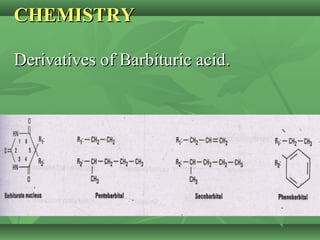
CHEMISTRY

Derivatives of Barbituric acid.
DISADVANTAGES
   Low Therapeutic Index
   Potent Enzyme Inducers : Drug Interactions
   Drug of Abuse
   Risk of Physical Dependence
   Svere withdrawal Syndrome
CLASSIFICATION OF BARBITURATES

According to duration of action
I.  Long acting barbiturates (DOA: 8-12hrs)
          Phenobarbitone
          Barbitone
          Methyl phenoborbitone
II. Intermediate acting (DOA: 4-8hrs)
          Amylobarbitone
          Butobarbitone
          Cyclobarbitone
          Pentobarbitone
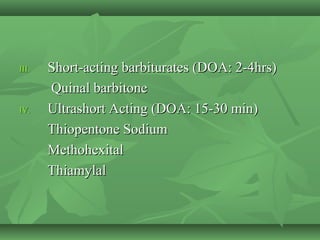
III.   Short-acting barbiturates (DOA: 2-4hrs)
       Quinal barbitone
IV.    Ultrashort Acting (DOA: 15-30 min)
       Thiopentone Sodium
       Methohexital
       Thiamylal
PHARMACOKINETICS
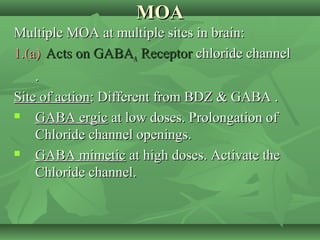
MOA
Multiple MOA at multiple sites in brain:
1.(a) Acts on GABAA Receptor chloride channel
    .
Site of action: Different from BDZ & GABA .
   GABA ergic at low doses. Prolongation of
    Chloride channel openings.
   GABA mimetic at high doses. Activate the
    Chloride channel.
2.Depress voltage activated Ca+ currents in isolated
  Hippocampal neurons.

3.Depress Glutamate induced depolarizations.

4. Inhibition of Na+ channel.--- at high conc. (GA)

5. Inhibition of K+ channel.--- at still higher conc. (GA)
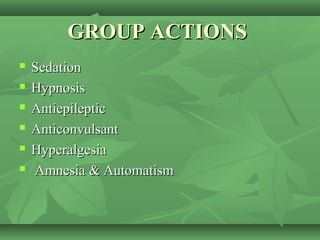
GROUP ACTIONS
   Sedation
   Hypnosis
   Antiepileptic
   Anticonvulsant
   Hyperalgesia
   Amnesia & Automatism
   Action on Respiratory System
   Action on Liver
   Action on GIT
   Action on CVS
   Action on Kidneys
   Action on ANS
   Dependence
THERAPEUTIC USES
   Hypnotic
   Sedatives
   GA
   Antiepileptic
   Anticonvulsant
   Potentiation of Anesthesia
   Neonatal jaundice & Kernictrus
   In narcoanalysis
ADVERSE EFFECTS
   Hangover
   Drug Automatism
   Skin rashes
   GIT disturbances
   Idiosyncracy---Excitation Restlessness
   Attacks of Ac. Porphyria,
   Enzyme Induction
   Megaloblastic anaemia
   Depression of fetal respiration
DIFFERENCE BETWEEN
      BZP&BARBITURATES
bENZODIAZEPINES                                 BARBITURATES

GABA ergic                                       GABAmimetic in large doses
                                                Blockade of Ca, Na ,K channels,ih
                                                NMDA rec
Commonly used sedative hypnotic                 Obsolete for such use

                                                Causes hyperalgesia
                                                More resp depression may be fata
                                                toxic doses
Safe in patients of porphyria                   CI in porphyria

No role in neonatal jaundice                    Ezyme inducer, used in neonatal
                                                jaundice
More commonly used for premedication            Ultra –short acting as i/v GA ,for
Midazolam for induction                         induction
Floppy baby syndrome ,if given prior to delivery Pronounced resp depression
Acute Poisoning:
 Symptoms
 General Treatment

 Specific Treatment

Drug Dependance :
CONTRAINDICATIONS
   Hepatic failure
   Severe pulmonary insufficiency.
   Porphyria
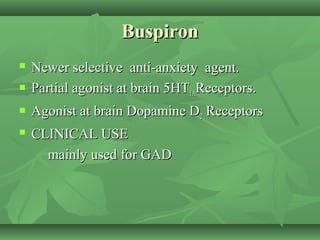
Buspiron
   Newer selective anti-anxiety agent.
   Partial agonist at brain 5HT1AReceptors.
   Agonist at brain Dopamine D2 Receptors
   CLINICAL USE
      mainly used for GAD
Differences from BDZ:

   OOA more than a week. Unsuitable for acute anxiety states.
   No marked Sedative, Euphoric & Hypnotic effect
   Less psychocntor impairment
   No Rebound anxiety.
   No withdrawal signs on abrupt discontinue
   Minimal abuse liability.
   No potentiation of other CNS depressants.
   Elderly patients are not more sensitive to its effects.
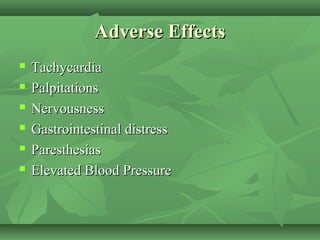
Adverse Effects
   Tachycardia
   Palpitations
   Nervousness
   Gastrointestinal distress
   Paresthesias
   Elevated Blood Pressure
ZOLPIDEM
Imidazopyridine. St. related to BDZ zaleflon.
MOA:- BZ1 – Omega subtype and facilitates
  GABA medidated neuronal inhibition
   Sedative anxiolytic, Hypnotic.
   Minimal muscle relaxing and anticonvulsant
    effects.
   Larger doses produce amnesia.
   Minor effects on sleep pattern.
   Suppress REM sleep at higher doeses.
   Rebound insomnia may occur on abrupt
    discontinuance.
   Resp. depression with larger doses.
   Actions are antagonised by flemazenil
   Less risk of dependence and tolerance.
ZALEPLON
   Binds to BZ1
   Facilitates inhibitory actions of GABA.
   Effect on Sleep:-
   Less risk of tolerance and withdrawal
    syndrome.
   Potentiate effects of Ethanol and other sedative
    Hypnotics.
PARALDEHYDE
   CYCLIC ETHER
   Colorless transparent
   Pungent smell
PHARMACOKINETICS
   Absorption

   Metabolism

   Excretion
CLINICAL USES
   Orally ___ hypnotic
   I/M ____
             Mania
             Alcohol withdrawal
             Anticonvulsant
                  Status epilepticus
                  Tetanus
                  Eclampsia
TOXICITY

1.   GIT upset on oral adm
2.   I/M adm – abscess formation
3.   Accidental I/V administration
       Violent coughing
       Pulmonary edema
       Coma & sudden death
4. Administration of expired drug
     (or drug exposed to sunlight)
           Acetic acid & Acetaldehyde is formed
           Hypotension
           Respiratory depression
           Coma
5. Tolerance & addiction
6. Over dosage toxicity
  1.   Acidosis
  2.   GIT Bleeding
  3.   Toxic hepatitis
  4.   Nephrosis
CONTRAINDICATION
   Hepatic & pulmonary impairment

   Never given to patients taking Disulfiram
     ( Aldehyde dehydrogenase inhibitor)

Barbiturates

  • 1.
  • 2.
  • 3.
    DISADVANTAGES  Low Therapeutic Index  Potent Enzyme Inducers : Drug Interactions  Drug of Abuse  Risk of Physical Dependence  Svere withdrawal Syndrome
  • 4.
    CLASSIFICATION OF BARBITURATES Accordingto duration of action I. Long acting barbiturates (DOA: 8-12hrs) Phenobarbitone Barbitone Methyl phenoborbitone II. Intermediate acting (DOA: 4-8hrs) Amylobarbitone Butobarbitone Cyclobarbitone Pentobarbitone
  • 5.
    III. Short-acting barbiturates (DOA: 2-4hrs) Quinal barbitone IV. Ultrashort Acting (DOA: 15-30 min) Thiopentone Sodium Methohexital Thiamylal
  • 6.
  • 7.
    MOA Multiple MOA atmultiple sites in brain: 1.(a) Acts on GABAA Receptor chloride channel . Site of action: Different from BDZ & GABA .  GABA ergic at low doses. Prolongation of Chloride channel openings.  GABA mimetic at high doses. Activate the Chloride channel.
  • 8.
    2.Depress voltage activatedCa+ currents in isolated Hippocampal neurons. 3.Depress Glutamate induced depolarizations. 4. Inhibition of Na+ channel.--- at high conc. (GA) 5. Inhibition of K+ channel.--- at still higher conc. (GA)
  • 9.
    GROUP ACTIONS  Sedation  Hypnosis  Antiepileptic  Anticonvulsant  Hyperalgesia  Amnesia & Automatism
  • 10.
    Action on Respiratory System  Action on Liver  Action on GIT  Action on CVS  Action on Kidneys  Action on ANS  Dependence
  • 11.
    THERAPEUTIC USES  Hypnotic  Sedatives  GA  Antiepileptic  Anticonvulsant  Potentiation of Anesthesia  Neonatal jaundice & Kernictrus  In narcoanalysis
  • 12.
    ADVERSE EFFECTS  Hangover  Drug Automatism  Skin rashes  GIT disturbances  Idiosyncracy---Excitation Restlessness  Attacks of Ac. Porphyria,  Enzyme Induction  Megaloblastic anaemia  Depression of fetal respiration
  • 13.
    DIFFERENCE BETWEEN BZP&BARBITURATES bENZODIAZEPINES BARBITURATES GABA ergic GABAmimetic in large doses Blockade of Ca, Na ,K channels,ih NMDA rec Commonly used sedative hypnotic Obsolete for such use Causes hyperalgesia More resp depression may be fata toxic doses Safe in patients of porphyria CI in porphyria No role in neonatal jaundice Ezyme inducer, used in neonatal jaundice More commonly used for premedication Ultra –short acting as i/v GA ,for Midazolam for induction induction Floppy baby syndrome ,if given prior to delivery Pronounced resp depression
  • 14.
    Acute Poisoning:  Symptoms General Treatment  Specific Treatment Drug Dependance :
  • 15.
    CONTRAINDICATIONS  Hepatic failure  Severe pulmonary insufficiency.  Porphyria
  • 16.
    Buspiron  Newer selective anti-anxiety agent.  Partial agonist at brain 5HT1AReceptors.  Agonist at brain Dopamine D2 Receptors  CLINICAL USE mainly used for GAD
  • 17.
    Differences from BDZ:  OOA more than a week. Unsuitable for acute anxiety states.  No marked Sedative, Euphoric & Hypnotic effect  Less psychocntor impairment  No Rebound anxiety.  No withdrawal signs on abrupt discontinue  Minimal abuse liability.  No potentiation of other CNS depressants.  Elderly patients are not more sensitive to its effects.
  • 18.
    Adverse Effects  Tachycardia  Palpitations  Nervousness  Gastrointestinal distress  Paresthesias  Elevated Blood Pressure
  • 19.
    ZOLPIDEM Imidazopyridine. St. relatedto BDZ zaleflon. MOA:- BZ1 – Omega subtype and facilitates GABA medidated neuronal inhibition
  • 20.
    Sedative anxiolytic, Hypnotic.  Minimal muscle relaxing and anticonvulsant effects.  Larger doses produce amnesia.  Minor effects on sleep pattern.  Suppress REM sleep at higher doeses.  Rebound insomnia may occur on abrupt discontinuance.  Resp. depression with larger doses.  Actions are antagonised by flemazenil  Less risk of dependence and tolerance.
  • 21.
    ZALEPLON  Binds to BZ1  Facilitates inhibitory actions of GABA.  Effect on Sleep:-  Less risk of tolerance and withdrawal syndrome.  Potentiate effects of Ethanol and other sedative Hypnotics.
  • 25.
    PARALDEHYDE  CYCLIC ETHER  Colorless transparent  Pungent smell
  • 26.
    PHARMACOKINETICS  Absorption  Metabolism  Excretion
  • 27.
    CLINICAL USES  Orally ___ hypnotic  I/M ____ Mania Alcohol withdrawal Anticonvulsant Status epilepticus Tetanus Eclampsia
  • 28.
    TOXICITY 1. GIT upset on oral adm 2. I/M adm – abscess formation 3. Accidental I/V administration Violent coughing Pulmonary edema Coma & sudden death
  • 29.
    4. Administration ofexpired drug (or drug exposed to sunlight) Acetic acid & Acetaldehyde is formed Hypotension Respiratory depression Coma 5. Tolerance & addiction 6. Over dosage toxicity 1. Acidosis 2. GIT Bleeding 3. Toxic hepatitis 4. Nephrosis
  • 30.
    CONTRAINDICATION  Hepatic & pulmonary impairment  Never given to patients taking Disulfiram ( Aldehyde dehydrogenase inhibitor)