T . T HIR UMAGAL
M. S C B I OTECHNOLOGY
B ON S E C OUR S C OLLEGE F OR
W OMEN
T HANJ AVUR .
BACTERIOCINS FROM
LACTIC ACID BACTERIA
WHAT IS BACTERIOCINS?
 Bacteriocins are ribosomally synthesized toxic
proteins produced by bacterial strains which are
not lethal to the producing bacterial strain.
 These are small peptide molecules range from
 <10 KD _ >10KD.
Bacteriocins
Produced by
Bacteria
Archea
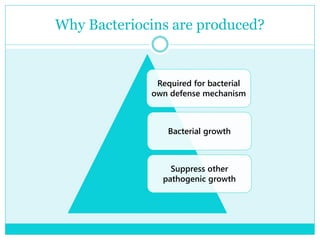
Why Bacteriocins are produced?
Required for bacterial
own defense mechanism
Bacterial growth
Suppress other
pathogenic growth
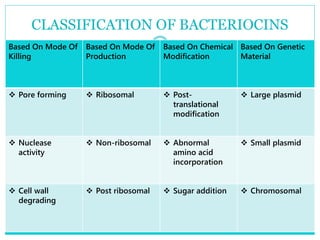
Based On Mode Of
Killing
Based On Mode Of
Production
Based On Chemical
Modification
Based On Genetic
Material
 Pore forming  Ribosomal  Post-
translational
modification
 Large plasmid
 Nuclease
activity
 Non-ribosomal  Abnormal
amino acid
incorporation
 Small plasmid
 Cell wall
degrading
 Post ribosomal  Sugar addition  Chromosomal
CLASSIFICATION OF BACTERIOCINS
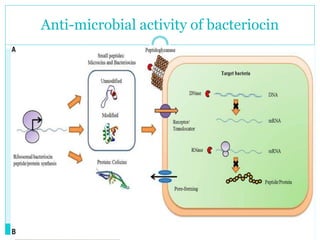
Anti-microbial activity of bacteriocin
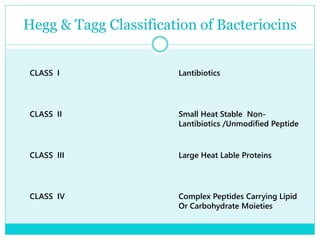
Hegg & Tagg Classification of Bacteriocins
CLASS I Lantibiotics
CLASS II Small Heat Stable Non-
Lantibiotics /Unmodified Peptide
CLASS III Large Heat Lable Proteins
CLASS IV Complex Peptides Carrying Lipid
Or Carbohydrate Moieties
Bacteriocins from lactic acid bacteria[LAB]
 Lactic acid bacteria are G+ve, low-GC, acid-tolerant,
generally non-sporing, either rod shaped or
spherical bacteria.
 Usually found in decomposing plants and milk
products, produce lactic acid as the major
metabolic end product of carbohydrate
fermentation.
 Proteinaceous substances [Bacteriocins] are
produced by several LAB strains and provide an
additional hurdle for spoilage and pathogenic
microorganisms.
LAB genera
producing
Bacteriocins
LactococcusLactobacillus
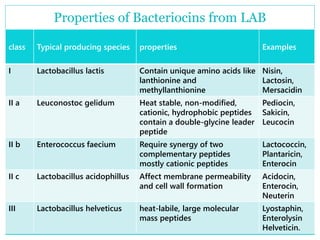
Properties of Bacteriocins from LAB
class Typical producing species properties Examples
I Lactobacillus lactis Contain unique amino acids like
lanthionine and
methyllanthionine
Nisin,
Lactosin,
Mersacidin
II a Leuconostoc gelidum Heat stable, non-modified,
cationic, hydrophobic peptides
contain a double-glycine leader
peptide
Pediocin,
Sakicin,
Leucocin
II b Enterococcus faecium Require synergy of two
complementary peptides
mostly cationic peptides
Lactococcin,
Plantaricin,
Enterocin
II c Lactobacillus acidophillus Affect membrane permeability
and cell wall formation
Acidocin,
Enterocin,
Neuterin
III Lactobacillus helveticus heat-labile, large molecular
mass peptides
Lyostaphin,
Enterolysin
Helveticin.
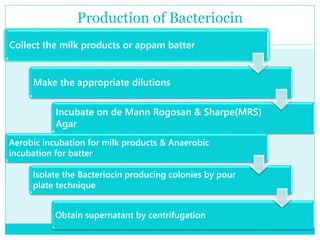
Production of Bacteriocin
Collect the milk products or appam batter
Make the appropriate dilutions
Incubate on de Mann Rogosan & Sharpe(MRS)
Agar
Aerobic incubation for milk products & Anaerobic
incubation for batter
Isolate the Bacteriocin producing colonies by pour
plate technique
Obtain supernatant by centrifugation
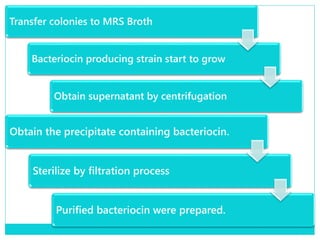
Transfer colonies to MRS Broth
Bacteriocin producing strain start to grow
Obtain supernatant by centrifugation
Obtain the precipitate containing bacteriocin.
Sterilize by filtration process
Purified bacteriocin were prepared.
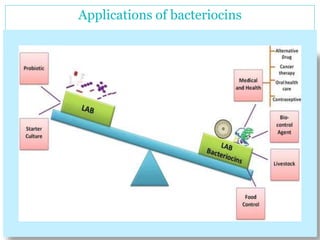
Applications of bacteriocins
THANKYOU

Bacteriocins from lactic acid bacteria

  • 1.
    T . THIR UMAGAL M. S C B I OTECHNOLOGY B ON S E C OUR S C OLLEGE F OR W OMEN T HANJ AVUR . BACTERIOCINS FROM LACTIC ACID BACTERIA
  • 2.
    WHAT IS BACTERIOCINS? Bacteriocins are ribosomally synthesized toxic proteins produced by bacterial strains which are not lethal to the producing bacterial strain.  These are small peptide molecules range from  <10 KD _ >10KD. Bacteriocins Produced by Bacteria Archea
  • 3.
    Why Bacteriocins areproduced? Required for bacterial own defense mechanism Bacterial growth Suppress other pathogenic growth
  • 4.
    Based On ModeOf Killing Based On Mode Of Production Based On Chemical Modification Based On Genetic Material  Pore forming  Ribosomal  Post- translational modification  Large plasmid  Nuclease activity  Non-ribosomal  Abnormal amino acid incorporation  Small plasmid  Cell wall degrading  Post ribosomal  Sugar addition  Chromosomal CLASSIFICATION OF BACTERIOCINS
  • 5.
  • 6.
    Hegg & TaggClassification of Bacteriocins CLASS I Lantibiotics CLASS II Small Heat Stable Non- Lantibiotics /Unmodified Peptide CLASS III Large Heat Lable Proteins CLASS IV Complex Peptides Carrying Lipid Or Carbohydrate Moieties
  • 7.
    Bacteriocins from lacticacid bacteria[LAB]  Lactic acid bacteria are G+ve, low-GC, acid-tolerant, generally non-sporing, either rod shaped or spherical bacteria.  Usually found in decomposing plants and milk products, produce lactic acid as the major metabolic end product of carbohydrate fermentation.  Proteinaceous substances [Bacteriocins] are produced by several LAB strains and provide an additional hurdle for spoilage and pathogenic microorganisms.
  • 8.
  • 9.
    Properties of Bacteriocinsfrom LAB class Typical producing species properties Examples I Lactobacillus lactis Contain unique amino acids like lanthionine and methyllanthionine Nisin, Lactosin, Mersacidin II a Leuconostoc gelidum Heat stable, non-modified, cationic, hydrophobic peptides contain a double-glycine leader peptide Pediocin, Sakicin, Leucocin II b Enterococcus faecium Require synergy of two complementary peptides mostly cationic peptides Lactococcin, Plantaricin, Enterocin II c Lactobacillus acidophillus Affect membrane permeability and cell wall formation Acidocin, Enterocin, Neuterin III Lactobacillus helveticus heat-labile, large molecular mass peptides Lyostaphin, Enterolysin Helveticin.
  • 10.
    Production of Bacteriocin Collectthe milk products or appam batter Make the appropriate dilutions Incubate on de Mann Rogosan & Sharpe(MRS) Agar Aerobic incubation for milk products & Anaerobic incubation for batter Isolate the Bacteriocin producing colonies by pour plate technique Obtain supernatant by centrifugation
  • 11.
    Transfer colonies toMRS Broth Bacteriocin producing strain start to grow Obtain supernatant by centrifugation Obtain the precipitate containing bacteriocin. Sterilize by filtration process Purified bacteriocin were prepared.
  • 12.
  • 13.