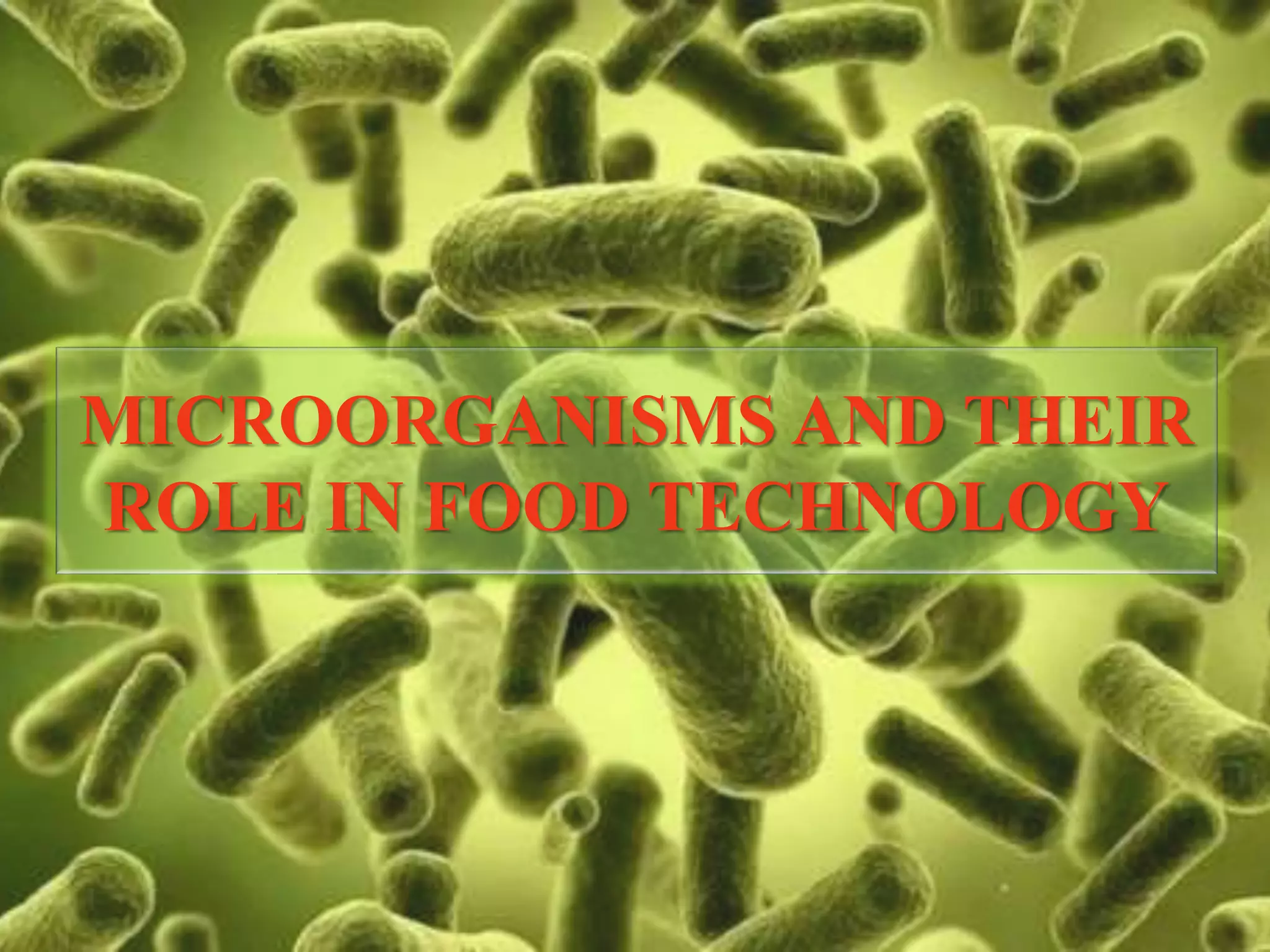
MICROORGANISMS AND THEIR
ROLE IN FOOD TECHNOLOGY
INTRODUCTION
• Nature uses microorganisms to carry out
fermentation processes, and for thousands of
years mankind has used yeasts, moulds and
bacteria to make food products such as bread,
beer, wine, vinegar, yoghurt and cheese, as well
as fermented fish, meat and vegetables.
• ( u can edit as u want)
ROLE OF MICROORGANISMS IN FOOD
 SPOILAGE, FERMENTATION, FOOD
PRODUCTION.
 MICROORGANISMS ARE USED IN
BREWING,WINE MAKING,BAKING, AND
OTHER FOOD MAKING PROCESSES.
 THEY ARE ALSO USED TO CONTROL THE
FERMENTATION PROCESS IN THE
PRODUCTION OF CULTURED DAIRY
PRODUCTS SUCH AS YOGURT AND CHEESE
 THE CULTURES ALSO PROVIDE FLAVOUR
AND AROMA, AND INHIBIT UNDESIRABLE
ORGANISMS
 Bacteria are used to make a wide range of food
products.
 The most important bacteria in food manufacturing
are Lactobacillus species, also referred to as lactic
bacteria.
 Bacteria can be responsible for the spoilage of food
also.
 Bacteria breaks down the food, acids and other waste
products are created in the process
 While the bacteria itself may or may not be harmful,
the waste products may be unpleasant to taste or
may even be harmful to one's health
LACTIC ACID BACTERIA
 Lactobacillales or lactic acid bacteria (LAB)
are a clade of Gram-positive, low-GC, acid-
tolerant, generally nonsporulating, no
respiring, either rod- or coccus-shaped
bacteria that share common metabolic and
physiological characteristics
 They are used in particular in fermented
milk products from all over the world,
including yoghurt, cheese, butter and
buttermilk.. Lactic acid bacteria refers to a
large group of beneficial bacteria that have
similar properties and all produce lactic
acid as an end product of the fermentation
process
ACETIC ACID BACTERIA
 Acetic acid bacteria (AAB) are a group of
Gram-negative bacteria which oxidize
sugars or ethanol and produce acetic acid
during fermentation. The acetic acid
bacteria consist of 10 genera in the family
Acetobacteraceae.
 They are important microorganisms in
food industry because of their ability to
oxidize many types of sugars and alcohols
to organic acids as end products during
fermentation process
 Yeasts are eukaryotic, single-celled microorganisms classified as
members of the fungus kingdom.
 The useful physiological properties of yeast have led to their use in the
field of biotechnology.
 Many types of yeasts are used for making many foods: baker's yeast in
bread production, brewer's yeast in beer fermentation, and yeast in
wine fermentation and for xylitol production
 Some species of yeast are opportunistic pathogens that can cause
infection in people with compromised immune systems.
 Cryptococcus neoformans and Cryptococcus gattii are significant
pathogens of immunocompromised people.
 Yeasts are able to grow in foods with a low pH (5.0 or lower) and in the
presence of sugars, organic acids, and other easily metabolized carbon
sources
 During their growth, yeasts metabolize some food components and
produce metabolic end products. This causes the physical, chemical, and
sensible properties of a food to change, and the food is spoiled
Saccharomyces cerevisiae
 Saccharomyces cerevisiae is a species
of yeast. It has been instrumental to
winemaking,baking,and brewing
since ancient times. It is believed to
have been originally isolated from
the skin of grapes
Brettanomyces
 Brettanomyces aka Botanical Mayces
is a non-spore forming genus of
yeast in the family
Saccharomycetaceae, and is often
colloquially referred to as "Brett".
 Brettanomyces is important to both
the brewing and wine industries due
to the sensory compounds it
produces.
A Mold is a fungus that grows in the
form of multicellular filaments called
hyphae.
Molds that have been used in food
production include:
Fusarium venenatum – quorn
Geotrichum candidum –
cheese
Neurospora sitophila –
oncom
 They are used to ferment a soybean
and wheat mixture to make soybean
paste and soy sauce
 Common genera of molds include
Acremonium, Fusarium, Alternaria,
Penicillium
 A virus is a small infectious agent that
replicates only inside the living cells of
other organisms.
 Viruses can infect all types of life forms,
from animals and plants to
microorganisms, including bacteria and
archaea.
 Hepatitis A is a viral liver disease that can
cause mild to severe illness. The hepatitis
A virus (HAV) is transmitted through
ingestion of contaminated food and water
or through direct contact with an
infectious person
 Rotavirus is the most common cause of
diarrhoeal disease among infants and
young children. It is a genus of double-
stranded RNA viruses in the family
Reoviridae
 Norwalk Virus known as small round
structured viruses or caliciviruses, are an
important cause of gastrointestinal illness.
Microorganisms and their role in food technology

Microorganisms and their role in food technology

  • 1.
  • 2.
    INTRODUCTION • Nature usesmicroorganisms to carry out fermentation processes, and for thousands of years mankind has used yeasts, moulds and bacteria to make food products such as bread, beer, wine, vinegar, yoghurt and cheese, as well as fermented fish, meat and vegetables. • ( u can edit as u want)
  • 3.
    ROLE OF MICROORGANISMSIN FOOD  SPOILAGE, FERMENTATION, FOOD PRODUCTION.  MICROORGANISMS ARE USED IN BREWING,WINE MAKING,BAKING, AND OTHER FOOD MAKING PROCESSES.  THEY ARE ALSO USED TO CONTROL THE FERMENTATION PROCESS IN THE PRODUCTION OF CULTURED DAIRY PRODUCTS SUCH AS YOGURT AND CHEESE  THE CULTURES ALSO PROVIDE FLAVOUR AND AROMA, AND INHIBIT UNDESIRABLE ORGANISMS
  • 4.
     Bacteria areused to make a wide range of food products.  The most important bacteria in food manufacturing are Lactobacillus species, also referred to as lactic bacteria.  Bacteria can be responsible for the spoilage of food also.  Bacteria breaks down the food, acids and other waste products are created in the process  While the bacteria itself may or may not be harmful, the waste products may be unpleasant to taste or may even be harmful to one's health
  • 5.
    LACTIC ACID BACTERIA Lactobacillales or lactic acid bacteria (LAB) are a clade of Gram-positive, low-GC, acid- tolerant, generally nonsporulating, no respiring, either rod- or coccus-shaped bacteria that share common metabolic and physiological characteristics  They are used in particular in fermented milk products from all over the world, including yoghurt, cheese, butter and buttermilk.. Lactic acid bacteria refers to a large group of beneficial bacteria that have similar properties and all produce lactic acid as an end product of the fermentation process ACETIC ACID BACTERIA  Acetic acid bacteria (AAB) are a group of Gram-negative bacteria which oxidize sugars or ethanol and produce acetic acid during fermentation. The acetic acid bacteria consist of 10 genera in the family Acetobacteraceae.  They are important microorganisms in food industry because of their ability to oxidize many types of sugars and alcohols to organic acids as end products during fermentation process
  • 6.
     Yeasts areeukaryotic, single-celled microorganisms classified as members of the fungus kingdom.  The useful physiological properties of yeast have led to their use in the field of biotechnology.  Many types of yeasts are used for making many foods: baker's yeast in bread production, brewer's yeast in beer fermentation, and yeast in wine fermentation and for xylitol production  Some species of yeast are opportunistic pathogens that can cause infection in people with compromised immune systems.  Cryptococcus neoformans and Cryptococcus gattii are significant pathogens of immunocompromised people.  Yeasts are able to grow in foods with a low pH (5.0 or lower) and in the presence of sugars, organic acids, and other easily metabolized carbon sources  During their growth, yeasts metabolize some food components and produce metabolic end products. This causes the physical, chemical, and sensible properties of a food to change, and the food is spoiled
  • 7.
    Saccharomyces cerevisiae  Saccharomycescerevisiae is a species of yeast. It has been instrumental to winemaking,baking,and brewing since ancient times. It is believed to have been originally isolated from the skin of grapes Brettanomyces  Brettanomyces aka Botanical Mayces is a non-spore forming genus of yeast in the family Saccharomycetaceae, and is often colloquially referred to as "Brett".  Brettanomyces is important to both the brewing and wine industries due to the sensory compounds it produces.
  • 8.
    A Mold isa fungus that grows in the form of multicellular filaments called hyphae. Molds that have been used in food production include: Fusarium venenatum – quorn Geotrichum candidum – cheese Neurospora sitophila – oncom  They are used to ferment a soybean and wheat mixture to make soybean paste and soy sauce  Common genera of molds include Acremonium, Fusarium, Alternaria, Penicillium
  • 9.
     A virusis a small infectious agent that replicates only inside the living cells of other organisms.  Viruses can infect all types of life forms, from animals and plants to microorganisms, including bacteria and archaea.  Hepatitis A is a viral liver disease that can cause mild to severe illness. The hepatitis A virus (HAV) is transmitted through ingestion of contaminated food and water or through direct contact with an infectious person  Rotavirus is the most common cause of diarrhoeal disease among infants and young children. It is a genus of double- stranded RNA viruses in the family Reoviridae  Norwalk Virus known as small round structured viruses or caliciviruses, are an important cause of gastrointestinal illness.