Fermented foods and
beverages, Food
ingredients and food
additives.
A. Mercy
M.sc Biotechnology
Bon Secours College for Women
CONTENT:
 Introduction
 Fermented Foods
 Microorganisms & metabolisms
 Cheese Making Process
 Beer fermentation
 Food Ingredients
 Food additives
 Conclusion
INTRODUCTION
It is estimated that about 20-30% of the
household budget is spent towards foods in
the developed countries.This may be a little
less in the developing nation's. Therefore
food and beverages Biotechnology occupies a
prominent place worldover. There are
records that man was making bread, wine,
curd et,..
FERMENTED FOODS:
• Fermented foods and beverages are one of
the first foods used by human beings.
• Tastes better and well conserved.
• It's important to regulate the growth and
activity of microorganisms.
• Microorganisms need to be standardized.
• The production of fermented food is
variable.
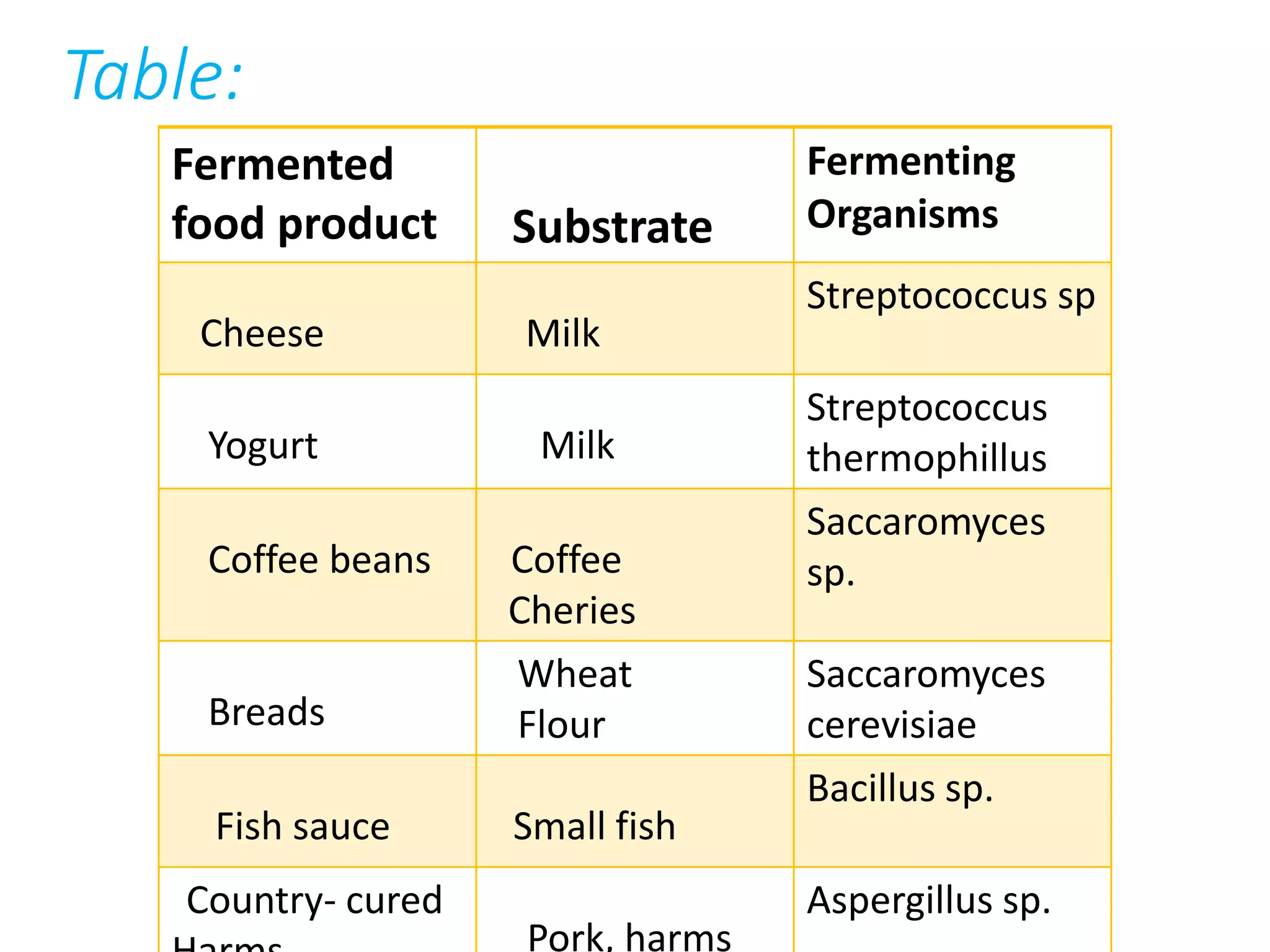
Table:
Fermented
food product Substrate
Fermenting
Organisms
Cheese Milk
Streptococcus sp
Yogurt Milk
Streptococcus
thermophillus
Coffee beans Coffee
Cheries
Saccaromyces
sp.
Breads
Wheat
Flour
Saccaromyces
cerevisiae
Fish sauce Small fish
Bacillus sp.
Country- cured
Pork, harms
Aspergillus sp.
MICROORGANISMS AND
METABOLISMS:
• Ethanol producing yeasts and bacteria producing
lactic acid are the most frequently used.
• Some organisms play voluntary role.
• Manufactured after the inoculation of soybeans
with rhizopus oligosporus.
• Contamination may occur due to presence of
vitamin B12 synthesizing bacteria.
CHEESE MAKING PROCESS:
Cheese production is the largest diary industry in
the world.There are around 1000 types of different
cheeses.
Two types:
1. Unripened cheese
2. Ripened cheese .
PRODUCTION PROCESS:
• Acidification of Milk
• Coagulum formation
• Separation of curd from whey
• Ripening of cheese
ACIDIFICATION OF MILK:
Lactic acid bacteria( lactobacillus) the sugar of milk
converted to lactic acid..
pH-- 4.6, and thus acidifiea milk.
COAGULUM FORMATION:
Acidified milk treated with rennet, casein gets coagulated.
Casein mainly consists of three components insoluble alpha,
and casein beta and a Kama casein. By the action of
chymosin , Kama casein, is degraded.
Alpha and beta caseins and the degraded products of
Kama casein combine to form a coagulum .
This process of coagulation is dependent on calcium ions.
SEPARATION OF CURD FROM
WHEY:
Temperature of the coagulum is raised to around
40°c . The coagulum and whey get separated.
The separated curd is cut into blocks , drained and
pressed into different shapes
RIPENING OF CHEESE:
• Ripening imparts flavour, besides making changes
in it's texture.
• The blocks of curd separated are subjected to
salting of protease and lipases.
• Eg) cheese , yogurt, sauekraut, bread,
• Kimchi, natto, buttermilk, vinegar
• Pickle olives, soy sauce and ect,.
BEER FERMENTATION:
• Beer is an undistilled alcoholic beverages with alcohol
content in the range of 4-8%.
• It's produced by fermentation of barley or other
cereals, by employing the yeasts saccaromyces
cerevisiae or s.carlsbergenesis.
• There are mainly four steps,
• Malting
• Mashing
• Fermentation
• Maturation
Barley
Malting. Cleaned ,soaked, germinated
And dried.
Malting
Mashing powder , add adjunct and mix
With water.
Mashing
Filtration
Wort
Fermentation inoculated with s.cerivisiae
Fermented for 10 days.
Beer
Maturation. Keep at 0°c for several weeks
Beer for consumption
FOOD INGREDIENTS:
• Food ingredients is a substances that forms part of
a mixture .
• Ex) In cooking recipes specify which ingredients
are used to prepare a specific dish.
• Artificial Ingredients:
1. Artificial flavours
2. Food additives and food coloring
3. Sugar substitute
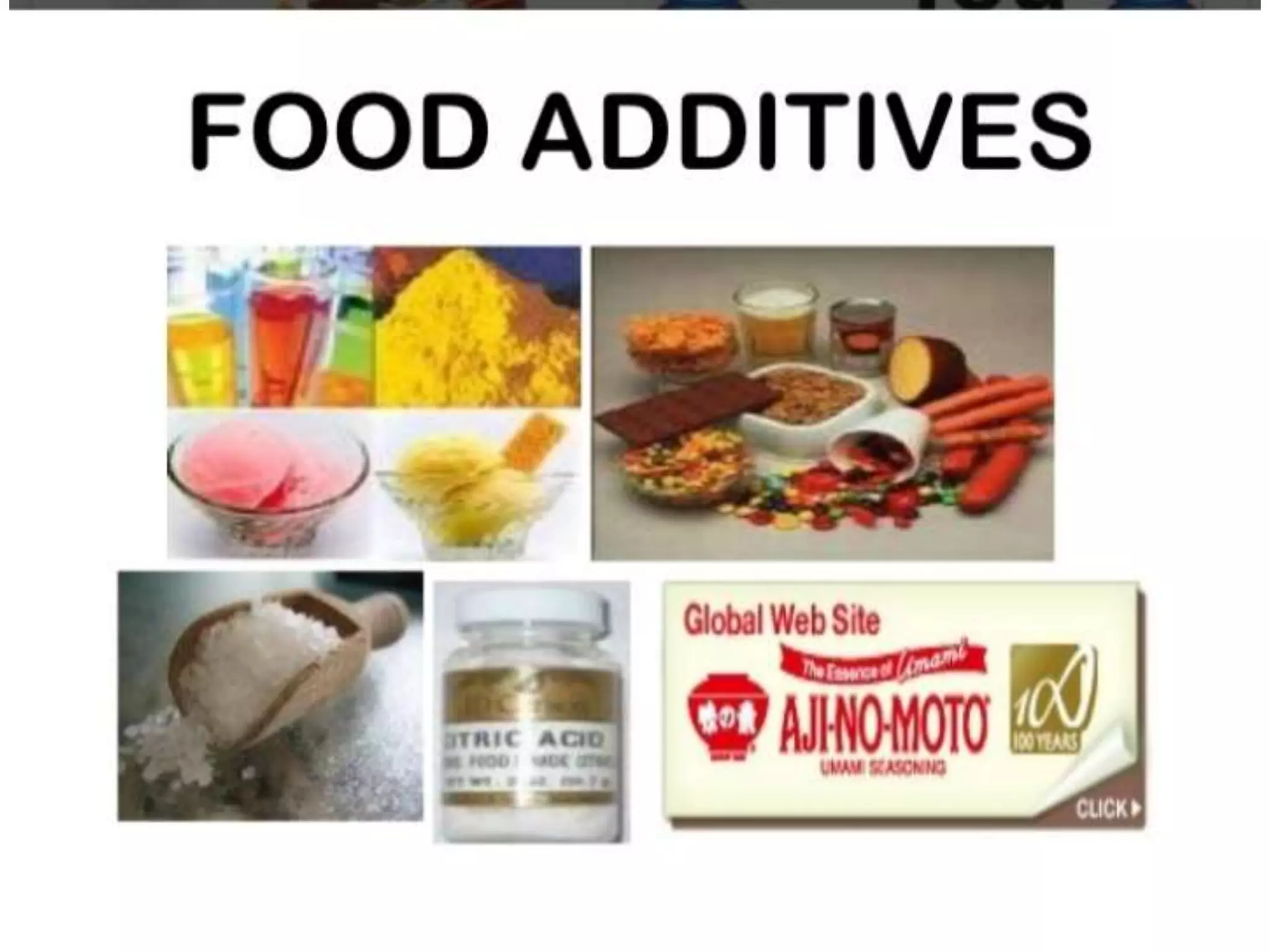
Food additives:
• There are those ingredients are chemicals which are added
to the food to preserve flavour or enhace it's taste,
appearance and other qualities.
• It's preserved by fermentation process.
• It's called fermented food additives.
• Ex) preservatives: ascorbic acid and calcium sorbate &
sodium nitrate
• Color additives: fruit , vegetables juice and yellow 5.
• Flavour enhancers: Monosodium glutamate and yeast.
• Emulsifiers: soy lecithin, mono& diglycerides
Additional substances
• Colors - E100 to E 199
• Preservatives & acidify regulatorE 2090 to E 299
• AntioxidantsE 300 to E 399
• Thickening , emulsifying,coating and bulking
substances E400 to E 499
• Other substances E500 and above
Why we use food additives?
• To support nutritional delivery.
• To extend shelf life of the food
• To maintain or improve safety and freshness
• To improve or maintain nutritional value
• To improve taste , texture and appearance To
improve keeping quality or stability
Conclusion:
Fermentation is a metabolic process in which
MICROORGANISMS such as bacteria, yeast and
fungi convert organic compound usually
carbohydrates such as starch into alcohol and ect...
For example fermenting ( curd forming , wine
fermented and pickling). Food additives ( some
foods are having a good quality of their taste and
texture)
Food ingredients ( it's a main source of the food).
HEALTHY FOOD!
HEALTHY LIFE!!
Fermented foods and beverages, food ingredients and food additives

Fermented foods and beverages, food ingredients and food additives

  • 1.
    Fermented foods and beverages,Food ingredients and food additives. A. Mercy M.sc Biotechnology Bon Secours College for Women
  • 3.
    CONTENT:  Introduction  FermentedFoods  Microorganisms & metabolisms  Cheese Making Process  Beer fermentation  Food Ingredients  Food additives  Conclusion
  • 4.
    INTRODUCTION It is estimatedthat about 20-30% of the household budget is spent towards foods in the developed countries.This may be a little less in the developing nation's. Therefore food and beverages Biotechnology occupies a prominent place worldover. There are records that man was making bread, wine, curd et,..
  • 5.
    FERMENTED FOODS: • Fermentedfoods and beverages are one of the first foods used by human beings. • Tastes better and well conserved. • It's important to regulate the growth and activity of microorganisms. • Microorganisms need to be standardized. • The production of fermented food is variable.
  • 6.
    Table: Fermented food product Substrate Fermenting Organisms CheeseMilk Streptococcus sp Yogurt Milk Streptococcus thermophillus Coffee beans Coffee Cheries Saccaromyces sp. Breads Wheat Flour Saccaromyces cerevisiae Fish sauce Small fish Bacillus sp. Country- cured Pork, harms Aspergillus sp.
  • 7.
    MICROORGANISMS AND METABOLISMS: • Ethanolproducing yeasts and bacteria producing lactic acid are the most frequently used. • Some organisms play voluntary role. • Manufactured after the inoculation of soybeans with rhizopus oligosporus. • Contamination may occur due to presence of vitamin B12 synthesizing bacteria.
  • 8.
    CHEESE MAKING PROCESS: Cheeseproduction is the largest diary industry in the world.There are around 1000 types of different cheeses. Two types: 1. Unripened cheese 2. Ripened cheese .
  • 10.
    PRODUCTION PROCESS: • Acidificationof Milk • Coagulum formation • Separation of curd from whey • Ripening of cheese
  • 11.
    ACIDIFICATION OF MILK: Lacticacid bacteria( lactobacillus) the sugar of milk converted to lactic acid.. pH-- 4.6, and thus acidifiea milk.
  • 12.
    COAGULUM FORMATION: Acidified milktreated with rennet, casein gets coagulated. Casein mainly consists of three components insoluble alpha, and casein beta and a Kama casein. By the action of chymosin , Kama casein, is degraded. Alpha and beta caseins and the degraded products of Kama casein combine to form a coagulum . This process of coagulation is dependent on calcium ions.
  • 13.
    SEPARATION OF CURDFROM WHEY: Temperature of the coagulum is raised to around 40°c . The coagulum and whey get separated. The separated curd is cut into blocks , drained and pressed into different shapes
  • 14.
    RIPENING OF CHEESE: •Ripening imparts flavour, besides making changes in it's texture. • The blocks of curd separated are subjected to salting of protease and lipases. • Eg) cheese , yogurt, sauekraut, bread, • Kimchi, natto, buttermilk, vinegar • Pickle olives, soy sauce and ect,.
  • 16.
    BEER FERMENTATION: • Beeris an undistilled alcoholic beverages with alcohol content in the range of 4-8%. • It's produced by fermentation of barley or other cereals, by employing the yeasts saccaromyces cerevisiae or s.carlsbergenesis. • There are mainly four steps, • Malting • Mashing • Fermentation • Maturation
  • 17.
    Barley Malting. Cleaned ,soaked,germinated And dried. Malting Mashing powder , add adjunct and mix With water. Mashing Filtration Wort Fermentation inoculated with s.cerivisiae Fermented for 10 days. Beer Maturation. Keep at 0°c for several weeks Beer for consumption
  • 19.
    FOOD INGREDIENTS: • Foodingredients is a substances that forms part of a mixture . • Ex) In cooking recipes specify which ingredients are used to prepare a specific dish. • Artificial Ingredients: 1. Artificial flavours 2. Food additives and food coloring 3. Sugar substitute
  • 21.
    Food additives: • Thereare those ingredients are chemicals which are added to the food to preserve flavour or enhace it's taste, appearance and other qualities. • It's preserved by fermentation process. • It's called fermented food additives. • Ex) preservatives: ascorbic acid and calcium sorbate & sodium nitrate • Color additives: fruit , vegetables juice and yellow 5. • Flavour enhancers: Monosodium glutamate and yeast. • Emulsifiers: soy lecithin, mono& diglycerides
  • 22.
    Additional substances • Colors- E100 to E 199 • Preservatives & acidify regulatorE 2090 to E 299 • AntioxidantsE 300 to E 399 • Thickening , emulsifying,coating and bulking substances E400 to E 499 • Other substances E500 and above
  • 24.
    Why we usefood additives? • To support nutritional delivery. • To extend shelf life of the food • To maintain or improve safety and freshness • To improve or maintain nutritional value • To improve taste , texture and appearance To improve keeping quality or stability
  • 25.
    Conclusion: Fermentation is ametabolic process in which MICROORGANISMS such as bacteria, yeast and fungi convert organic compound usually carbohydrates such as starch into alcohol and ect... For example fermenting ( curd forming , wine fermented and pickling). Food additives ( some foods are having a good quality of their taste and texture) Food ingredients ( it's a main source of the food). HEALTHY FOOD! HEALTHY LIFE!!