SINUSITIS – CASE DISCUSSION
Dr. S P Srinivas Nayak
Assistant Professor, SUCP
Hyderabad, Telangana, India.
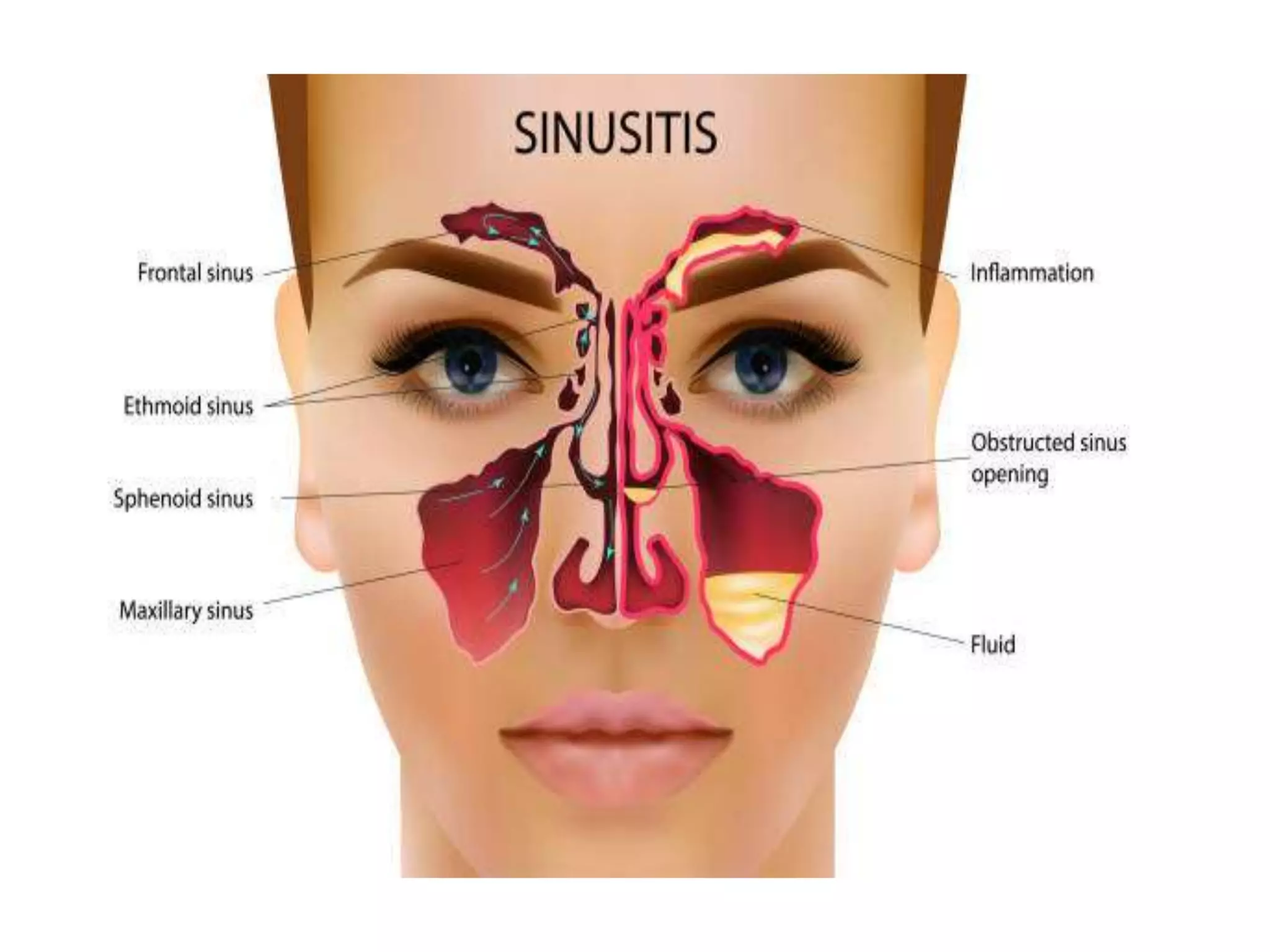
Sinusitis is an inflammation and/or
infection of the paranasal sinus mucosa.
The paranasal sinuses are air-filled spaces located
within the bones of the skull and facial bones.
They are centered on the nasal cavity and have
various functions, including..
1. lightening the weight of the head,
2. humidifying and heating inhaled air,
3. increasing the resonance of speech, and
4. serving as a crumple zone to protect vital
structures in the event of facial trauma.
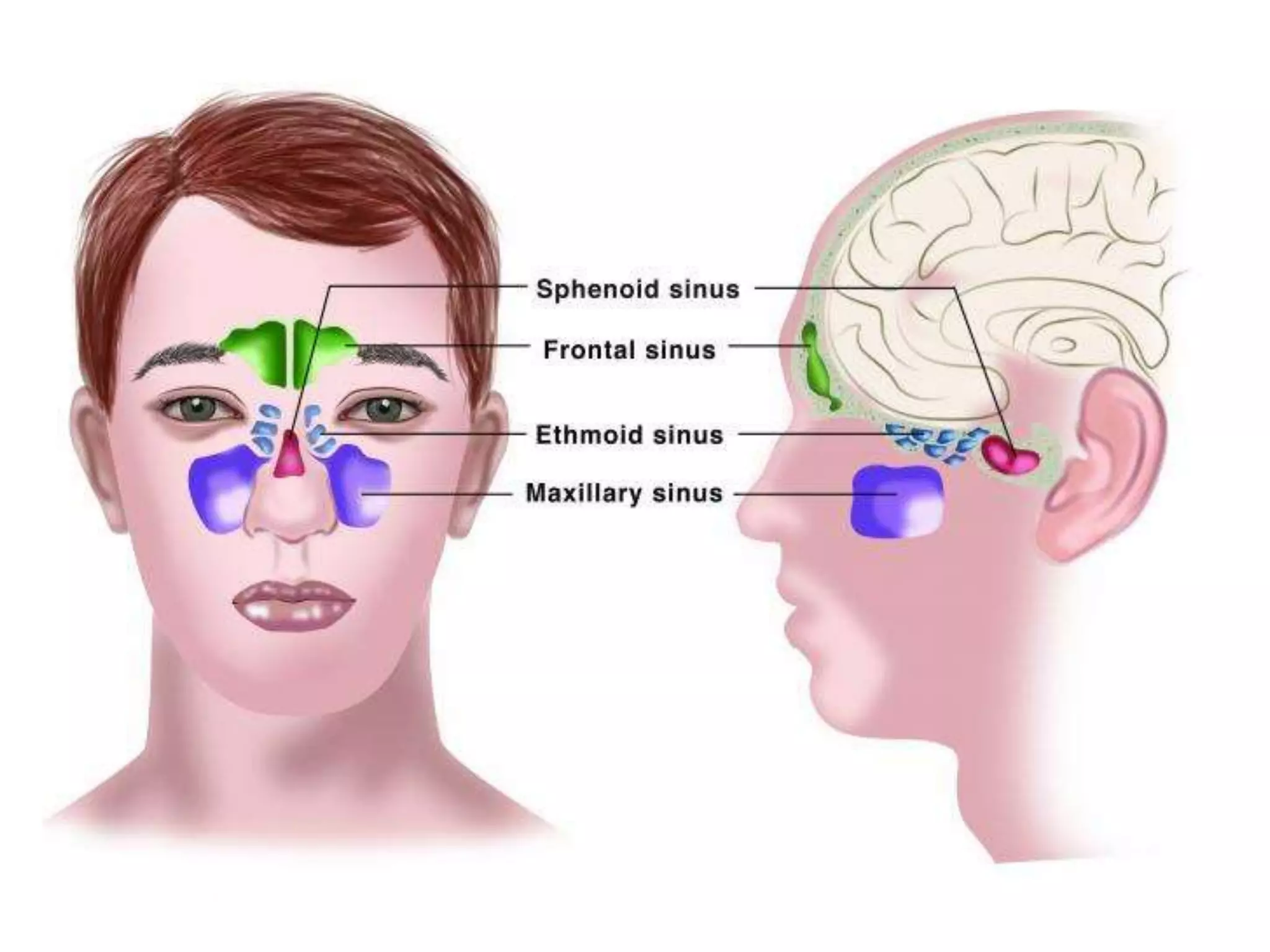
Four sets of paired sinuses are recognized:
maxillary, frontal, sphenoid, and ethmoid
Even though the majority of these infections are viral in
origin, antimicrobials are prescribed frequently.
It is thus important to differentiate between viral and
bacterial sinusitis to aid in optimizing treatment
decisions.
Viral sinusitis and bacterial sinusitis are difficult to
differentiate because their clinical presentations are
similar. Viral infections, however, tend to resolve by 7
to 10 days. Persistence of symptoms beyond this time
or worsening of symptoms likely indicates a bacterial
infection. ACUCTE sinusitis lasts less than 30 days, and
CHRONIC for more than 3 months
ETIO-PATHOPHYSIOLOGY
Main cause: Bacterial, Viral infections
• Viruses are responsible for most cases of acute
sinusitis; however, when symptoms are persistent
(≥7 days) or severe, bacteria may be a primary
cause.
• Other factors that can be associated with sinus
disease include allergic inflammation, systemic
diseases, trauma, environmental exposures, and
anatomic abnormalities.
• Complications include: osteitis, orbital cellulitis,
meningitis, and brain abscess, but are extremely
rare.
ORGANISMS
• S. pneumoniae and H. influenzae are
responsible for approximately 70% of
bacterial causes of acute sinusitis in both
adults and children.
• Moraxella catarrhalis is also frequently
implicated in children (approximately 25%) S.
pyogenes, S. aureus, fungi, and anaerobes
are associated less frequently with acute
sinusitis
Acute bacterial sinusitis
usually preceded by a viral respiratory
tract infection that causes mucosal
inflammation. This can lead to
obstruction of the sinus ostia, the
pathways that drain the sinuses.
Mucosal secretions become trapped,
local defenses are impaired, and
bacteria from adjacent surfaces begin to
proliferate
Signs and symptoms
In Acute Adults
• Nasal discharge/congestion
• Maxillary tooth pain, facial or sinus pain that may radiate (unilateral in
particular)
Children
• Nasal discharge and cough for greater than 10 to 14 days or severe signs
and symptoms such as temperature above 39°C (102.2°F) or facial swelling
or pain are indications for antimicrobial therapy
Chronic
• Symptoms are similar to acute sinusitis but more nonspecific
• Rhinorrhea is associated with acute exacerbations
• Chronic unproductive cough, laryngitis, and headache may occur
• Chronic/recurrent infections occur three to four times a year and are
unresponsive to steam and decongestants
• Uncomplicated Sinusitis - Amoxicillin
Uncomplicated sinusitis with penicillin allergic
patient
• Non–immediate-type hypersensitivity:
cefuroxime, cefixime
• Immediate-type hypersensitivity:
Clarithromycin or azithromycin or
trimethoprim-sulfamethoxazole or
doxycycline or respiratory fluoroquinolone
• Treatment failure or prior antibiotic therapy in
past 4 to 6 weeks: High-dose amoxicillin with
clavulanate or β- lactamase–stable
cephalosporin
• Second choice: respiratory fluoroquinolone
(levofloxacin)
• High suspicion of penicillin-resistant
Streptococcus pneumoniae: High-dose
amoxicillin or clindamycin
• Second choice: respiratory fluoroquinolone
CASE DISCUSSION
• A 40-year-old woman presents to her GP with
a 2-week history of rhinorrhoea, nose block,
headache for a week. She is normally fit and
well and has had no other symptoms other
than some lethargy. She has fever for last
3days
Question:
1. What is likely her diagnosis?
2. What drug would you suggest?
ANSWER:
Most likely the patient has Bacterial Sinusitis
So, Treatment would be as follows
Rx
1. Tab. Paracetamol 650mg SOS
2. Tab. Amoxiclav 625mg BID 3days
3. Supportive symptomatic therapy like
antihistamine, nasal decongestent etc which
ever required.
THANK YOU

BACTERIAL SINUSITIS - CASE DISCUSSION

  • 1.
    SINUSITIS – CASEDISCUSSION Dr. S P Srinivas Nayak Assistant Professor, SUCP Hyderabad, Telangana, India.
  • 2.
    Sinusitis is aninflammation and/or infection of the paranasal sinus mucosa. The paranasal sinuses are air-filled spaces located within the bones of the skull and facial bones. They are centered on the nasal cavity and have various functions, including.. 1. lightening the weight of the head, 2. humidifying and heating inhaled air, 3. increasing the resonance of speech, and 4. serving as a crumple zone to protect vital structures in the event of facial trauma. Four sets of paired sinuses are recognized: maxillary, frontal, sphenoid, and ethmoid
  • 5.
    Even though themajority of these infections are viral in origin, antimicrobials are prescribed frequently. It is thus important to differentiate between viral and bacterial sinusitis to aid in optimizing treatment decisions. Viral sinusitis and bacterial sinusitis are difficult to differentiate because their clinical presentations are similar. Viral infections, however, tend to resolve by 7 to 10 days. Persistence of symptoms beyond this time or worsening of symptoms likely indicates a bacterial infection. ACUCTE sinusitis lasts less than 30 days, and CHRONIC for more than 3 months
  • 6.
    ETIO-PATHOPHYSIOLOGY Main cause: Bacterial,Viral infections • Viruses are responsible for most cases of acute sinusitis; however, when symptoms are persistent (≥7 days) or severe, bacteria may be a primary cause. • Other factors that can be associated with sinus disease include allergic inflammation, systemic diseases, trauma, environmental exposures, and anatomic abnormalities. • Complications include: osteitis, orbital cellulitis, meningitis, and brain abscess, but are extremely rare.
  • 7.
    ORGANISMS • S. pneumoniaeand H. influenzae are responsible for approximately 70% of bacterial causes of acute sinusitis in both adults and children. • Moraxella catarrhalis is also frequently implicated in children (approximately 25%) S. pyogenes, S. aureus, fungi, and anaerobes are associated less frequently with acute sinusitis
  • 8.
    Acute bacterial sinusitis usuallypreceded by a viral respiratory tract infection that causes mucosal inflammation. This can lead to obstruction of the sinus ostia, the pathways that drain the sinuses. Mucosal secretions become trapped, local defenses are impaired, and bacteria from adjacent surfaces begin to proliferate
  • 9.
    Signs and symptoms InAcute Adults • Nasal discharge/congestion • Maxillary tooth pain, facial or sinus pain that may radiate (unilateral in particular) Children • Nasal discharge and cough for greater than 10 to 14 days or severe signs and symptoms such as temperature above 39°C (102.2°F) or facial swelling or pain are indications for antimicrobial therapy Chronic • Symptoms are similar to acute sinusitis but more nonspecific • Rhinorrhea is associated with acute exacerbations • Chronic unproductive cough, laryngitis, and headache may occur • Chronic/recurrent infections occur three to four times a year and are unresponsive to steam and decongestants
  • 10.
    • Uncomplicated Sinusitis- Amoxicillin Uncomplicated sinusitis with penicillin allergic patient • Non–immediate-type hypersensitivity: cefuroxime, cefixime • Immediate-type hypersensitivity: Clarithromycin or azithromycin or trimethoprim-sulfamethoxazole or doxycycline or respiratory fluoroquinolone
  • 11.
    • Treatment failureor prior antibiotic therapy in past 4 to 6 weeks: High-dose amoxicillin with clavulanate or β- lactamase–stable cephalosporin • Second choice: respiratory fluoroquinolone (levofloxacin) • High suspicion of penicillin-resistant Streptococcus pneumoniae: High-dose amoxicillin or clindamycin • Second choice: respiratory fluoroquinolone
  • 13.
    CASE DISCUSSION • A40-year-old woman presents to her GP with a 2-week history of rhinorrhoea, nose block, headache for a week. She is normally fit and well and has had no other symptoms other than some lethargy. She has fever for last 3days Question: 1. What is likely her diagnosis? 2. What drug would you suggest?
  • 14.
    ANSWER: Most likely thepatient has Bacterial Sinusitis So, Treatment would be as follows Rx 1. Tab. Paracetamol 650mg SOS 2. Tab. Amoxiclav 625mg BID 3days 3. Supportive symptomatic therapy like antihistamine, nasal decongestent etc which ever required.
  • 15.