Case presentation on pneumonia
Presented by :
METI.BHARATH KUMAR
16DK1T0014
Pharm-D(Intern)
Demographics
• Name :xyz
• Age :25
• Sex:female
• Admission No: 1133
• Department : general medicine
unit :fm -7
• Date of admission :6-1-2022
• Consultant physician:Dr Maheswara Reddy
Subjective evidence
• A 25 yrs old female patient admitted in female
medical ward with complaints of-
c/o shortnesss of breath since 1 week
c/o loose stools
c/o swelling of face since 3 days
c/o fever since 1 week
c/o generalized body pains
Past medical history : MDR TB ( completed the
course of ATT)
Objective evidence
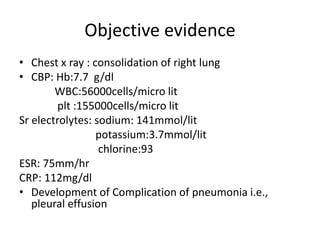
• Chest x ray : consolidation of right lung
• CBP: Hb:7.7 g/dl
WBC:56000cells/micro lit
plt :155000cells/micro lit
Sr electrolytes: sodium: 141mmol/lit
potassium:3.7mmol/lit
chlorine:93
ESR: 75mm/hr
CRP: 112mg/dl
• Development of Complication of pneumonia i.e.,
pleural effusion
Assessment
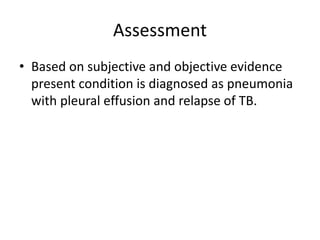
• Based on subjective and objective evidence
present condition is diagnosed as pneumonia
with pleural effusion and relapse of TB.
planning
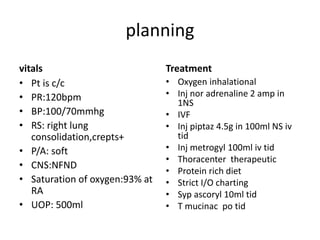
vitals
• Pt is c/c
• PR:120bpm
• BP:100/70mmhg
• RS: right lung
consolidation,crepts+
• P/A: soft
• CNS:NFND
• Saturation of oxygen:93% at
RA
• UOP: 500ml
Treatment
• Oxygen inhalational
• Inj nor adrenaline 2 amp in
1NS
• IVF
• Inj piptaz 4.5g in 100ml NS iv
tid
• Inj metrogyl 100ml iv tid
• Thoracenter therapeutic
• Protein rich diet
• Strict I/O charting
• Syp ascoryl 10ml tid
• T mucinac po tid
planning
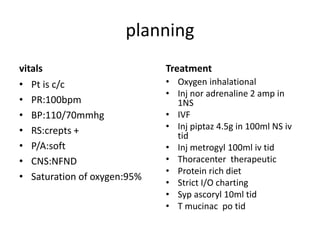
vitals
• Pt is c/c
• PR:100bpm
• BP:110/70mmhg
• RS:crepts +
• P/A:soft
• CNS:NFND
• Saturation of oxygen:95%
Treatment
• Oxygen inhalational
• Inj nor adrenaline 2 amp in
1NS
• IVF
• Inj piptaz 4.5g in 100ml NS iv
tid
• Inj metrogyl 100ml iv tid
• Thoracenter therapeutic
• Protein rich diet
• Strict I/O charting
• Syp ascoryl 10ml tid
• T mucinac po tid
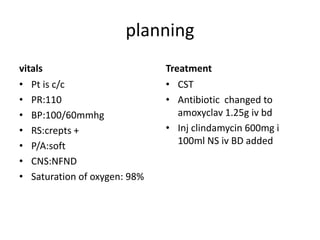
planning
vitals
• Pt is c/c
• PR:110
• BP:100/60mmhg
• RS:crepts +
• P/A:soft
• CNS:NFND
• Saturation of oxygen: 98%
Treatment
• CST
• Antibiotic changed to
amoxyclav 1.25g iv bd
• Inj clindamycin 600mg i
100ml NS iv BD added
Pharmaceutical care issues
• No pharmaceutical care issues
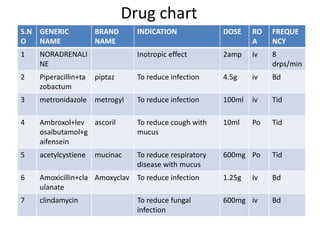
Drug chart
S.N
O
GENERIC
NAME
BRAND
NAME
INDICATION DOSE RO
A
FREQUE
NCY
1 NORADRENALI
NE
Inotropic effect 2amp iv 8
drps/min
2 Piperacillin+ta
zobactum
piptaz To reduce infection 4.5g iv Bd
3 metronidazole metrogyl To reduce infection 100ml iv Tid
4 Ambroxol+lev
osalbutamol+g
aifensein
ascoril To reduce cough with
mucus
10ml Po Tid
5 acetylcystiene mucinac To reduce respiratory
disease with mucus
600mg Po Tid
6 Amoxicillin+cla
ulanate
Amoxyclav To reduce infection 1.25g Iv Bd
7 clindamycin To reduce fungal
infection
600mg iv Bd
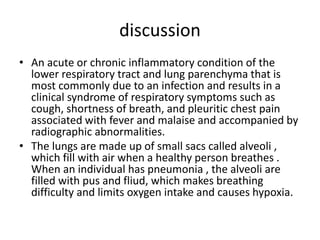
discussion
• An acute or chronic inflammatory condition of the
lower respiratory tract and lung parenchyma that is
most commonly due to an infection and results in a
clinical syndrome of respiratory symptoms such as
cough, shortness of breath, and pleuritic chest pain
associated with fever and malaise and accompanied by
radiographic abnormalities.
• The lungs are made up of small sacs called alveoli ,
which fill with air when a healthy person breathes .
When an individual has pneumonia , the alveoli are
filled with pus and fliud, which makes breathing
difficulty and limits oxygen intake and causes hypoxia.
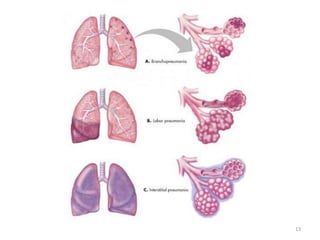
Classification of pneumonia :
based on anatomical site :1.Lobar pneumonia
2.bronchopneumonia
3.interstitial pneumonia
Based on aetiology –causative agent
Based on mode of aquiring pneumonia: CAP and
HAP
13
Place of acquisition of the infection.
This determines which pathogens are likely to cause the
disease.
a. Community-acquired pneumonia (CAP) occurs without
prior contact to the healthcare system in the outpatient
setting or within 48 hours of hospital admission.
b. Hospital-acquired pneumonia (HAP) is defined as a
pneumonia that occurs 48 hours after admission and was
not incubating at the time of admission (e.g., no signs of
pulmonary infection on hospital admission).
c. Ventilator-associated pneumonia (VAP) occurs greater
than or equal to 48 to 72 hours after endotracheal
intubation.
Risk Factors
1. Community-acquired pneumonia.
Risk factors:
a. Alcoholism and smoking; these are associated with a
decreased cough and mucociliary clearance.
b. Age greater than 65 years.
c. Recent viral upper respiratory tract infection; influenza is
classically followed by a bacterial pneumonia caused by S.
pneumoniae or S. aureus.
d. Underlying pulmonary diseases (e.g., chronic obstructive
pulmonary disease [COPD], bronchiectasis, lung cancer).
e. Immunosuppression (e.g., HIV infection, solid organ or stem
cell transplantation, and chronic corticosteroid use).
f. Medical comorbid conditions (e.g., heart failure, chronic
kidney disease, chronic liver disease, and diabetes
mellitus); these are associated with altered immune
defense and risk for increased colonization.
g. Proton-pump inhibitor therapy; initiation of treatment
with these in the last 30 days might be associated with
an increased risk of gastric bacterial colonization that
can eventually be aspirated into the lungs.
h. Stroke or sedating medications; these are associated
with altered levels of consciousness, decreased cough,
and dysphagia (increases risk of aspiration).
• 2. Hospital-acquired pneumonia/ventilator-associated
pneumonia risk factors. These risk factors often combine
an increased aspiration risk, immunosuppression,
colonization with more pathogenic microorganisms, and
alteration of the respiratory tract:
• a. Severity of underlying illness (e.g., malnutrition, uremia,
neutropenia)
• b. Prior surgery
• c. Prior and recent antibiotic administration
• d. Presence of invasive respiratory devices
• e. Supine positioning
• f. Enteral feeding with nasogastric or orogastric tubes
• g. Stress ulcer prophylaxis
• h. Blood transfusions
• i. Poor oral hygiene
Etiology
• A. CAP-Related Microorganisms
1.Streptococcus pneumoniae
Risk factors associated with drug-resistant Streptococcus pneumoniae
(DRSP):
a. Age greater than 65 years
b. History of alcoholism
c. Antimicrobial therapy within 3 months
d. Immunosuppression and/or significant comorbid medical
conditions
e. Exposure to children in daycare
2. Staphylococcus aureus
3. Klebsiella pneumoniae
4. Haemophilus influenzae and Moraxella catarrhalis
5. Pseudomonas aeruginosa is a rare pathogen in CAP except in
patients with structural lung disease such as cystic fi brosis and
bronchiectasis.
6. Atypical pneumonia microorganisms account for up to 60% and may
be present as copathogens in 40% of cases. The most common
microorganisms include:
a. Mycoplasma pneumoniae
b. Chlamydophila pneumoniae.
c. Legionella spp
7.virus :RSV,influenza virus, adenovirus
8. Fungal pathogens most commonly seen are Cryptococcus
neoformans and the endemic mycoses Histoplasma capsulatum,
Blastomyces dermatitidis, and Coccidioides immitis.
• Hospital-Acquired Pneumonia and Ventilatory-
Associated Pneumonia Related Microorganisms.
.Viral or fungal pathogens are uncommon
immunocompetent hosts. The microbiology of both
conditions is similar:
1. Pseudomonas aeruginosa (very common after more
than 4 days of mechanical ventilation)
2. Klebsiella pneumoniae, Escherichia coli, Enterobacter
spp, Serratia spp
3. Acinetobacter baumannii (commonly associated with
prolonged mechanical ventilation and signifi cant
antimicrobial resistance)
4. Stenotrophomonas maltophilia
5. Staphylococcus aureus, especially methicillin-resistant
Staphylococcus aureus (MRSA).
Pathophysiology
1.Micro organism gains access to lower respiratory
tract by failure of defence mechanism by lungs
like cough reflux,muco ciliary clearance.
2. This results in proliferation of microbial pathogen
at alveolar level and the host response to those
pathogens.
3. Alveolar edema and exudate formation
4.Alveoli and bronchioles fill with fliud
5.Promotion abcess formation
6.Tissue necrosis
21
Mechanisms
• Bacterial
Most bacteria enter the lungs via small aspirations of organisms residing in
the throat or nose.[Half of normal people have these small aspirations
during sleep. While the throat always contains bacteria, potentially
infectious ones reside there only at certain times and under certain
conditions.
A minority of types of bacteria such as Mycobacterium
tuberculosis and Legionella pneumophila reach the lungs via contaminated
airborne droplets.
Bacteria can also spread via the blood.
The neutrophils also release cytokines, causing a general activation of the
immune system. This leads to the fever, chills, and fatigue common in
bacterial pneumonia.The neutrophils, bacteria, and fluid from
surrounding blood vessels fill the alveoli, resulting in the consolidation
seen on chest X-ray.
22
Viruses may reach the lung by a number of different routes.
• Respiratory syncytial virus is typically contracted when people touch
contaminated objects and then touch their eyes or nose.
• Other viral infections occur when contaminated airborne droplets are
inhaled through the nose or mouth.
• Once in the upper airway, the viruses may make their way into the lungs,
where they invade the cells lining the airways, alveoli, or lung
parenchyma.
• Some viruses such as measles and herpes simplex may reach the lungs via
the blood.
• Primarily white blood cells, mainly mononuclear cells, generate the
inflammation. As well as damaging the lungs, many viruses simultaneously
affect other organs and thus disrupt other body functions. Viruses also
make the body more susceptible to bacterial infections; in this way,
bacterial pneumonia can occur at the same time as viral pneumonia.
23
Clinical presentations
• fever
• breathing difficulty, such as shortness of breath
• Chest retractions
• chest pain that may get worse with coughing or breathing deeply
• coughing up mucus
• sweating
• chills or shivering
• muscle aches
• low energy and fatigue
• loss of appetite
• headaches
• confusion or disorientation, especially in older adults
• dizziness
• nausea and vomiting
• coughing up blood
24
Diagnosis
• Thorough history taking ( immunization status)
Identifying the onset of symptoms and clinical
presentation
• physical examination
In physical examination vital sign assessment is important
1.Tachypnea and hypoxia(SpO2) is important sign of
pneumonia
2.Auscultation : rales are heard in bacterial .p,
low pitch wheezing throught chest in viral.P
25
• Chest x ray and blood cultures
• Indication for chest x ray:hypoxemia,RD,
failure of intial antibiotic therapy,hospitalization
• Indication for blood or sputum culture is severe
pneumonia
26
Diagnosis
• The World Health Organization has defined pneumonia in
children clinically based on either a cough or difficulty
breathing and a rapid respiratory rate, chest indrawing, or a
decreased level of consciousness.
• A rapid respiratory rate is defined as greater than 60
breaths per minute in children under 2 months old, greater
than 50 breaths per minute in children 2 months to 1 year
old, or greater than 40 breaths per minute in children 1 to 5
years old.
• In children, low oxygen levels and lower chest indrawing
are more sensitive than hearing chest crackles with
a stethoscope or increased respiratory rate.Grunting and
nasal flaring may be other useful signs in children less than
five years old.
27
Bacterial pneumonia
• Illness is sudden onset with
greater severity
• Typically associated with high
fever , chills , cough, dyspnea ,
and ascultatory findings of
lung consolidations
• The chest radiograph often
shows lobar consolidation
• The WBC count is elevated
with predominance of
neutrophils
Viral pneumonia
• It has gradual onset with
cough,wheezing; fever is
less prominent
• WBC count will be normal
or slightly elevated
28
Management
A. Outpatient Management.
The recommendation for using empiric antimicrobial therapy
is based on likely pathogens to cause infection as outlined
the following:
1. Previously healthy patient without DRSP risks (see Section
II.A.1).
a. Azithromycin 500 mg PO daily or
b. Doxycycline 100 mg PO BID
2. Presence of comorbidities and/or DRSP risks.
a. Moxifl oxacin 400 mg PO daily or
b. Levofl oxacin 750 mg PO daily or
c. Amoxicillin 1 g PO TID plus azithromycin 500 mg PO
daily or doxycycline 100 mg PO BID
B. Inpatient Management.
The first dose of the antibiotic drug should be administered without
delay:
1. Inpatient, non-ICU setting
a. Moxifl oxacin 400 mg PO/IV daily or
b. b. Levofloxacin 750 mg PO/IV daily or
c. c. Ceftriaxone 1 g IV daily plus azithromycin 500 mg PO/IV daily
2. Inpatient, ICU setting
a. Risk factors for Pseudomonas; consider the following (gentamicin
5 mg/kg IV q24 can be added to these regimens):
i. Piperacillin–tazobactam 4.5 g IV q6 or
ii. Meropenem 500 mg IV q8 or
iii. Cefepime 2 g IV q8 or
iv. Aztreonam 2 g IV q8 (patients allergic to penicillin)
Plus
i. Moxifl oxacin 400 mg PO/IV daily or
ii. Levofl oxacin 750 mg PO/IV daily or
iii. Ciprofl oxacin 400 mg IV q12 or
iv. Azithromycin 500 mg PO/IV daily
b. Risk factors for MRSA; add the following to the
aforementioned regimens:
i. Vancomycin 15 mg/kg IV q12–24 or
ii. Linezolid 600 mg PO/IV q12
C. HCAP/HAP/VAP.
Broad-spectrum antimicrobial therapy is recommended
initially as empirical therapy for the most likely causative
pathogen. Empirical therapy should be based on the local
antibiotic susceptibility patterns. Suggested empirical
regimens include:
1. Healthcare-associated or hospital-acquired pneumonia
a. Early onset (less than 5 days of hospitalization) and no
multidrug resistance microorganism risks.
i. Ceftriaxone 1 to 2 g IV daily or
ii. Moxifl oxacin 400 mg IV daily or
iii. Levofl oxacin 750 mg IV daily
b. Late onset and multidrug resistance microorganism
risks.
i. Piperacillin–tazobactam 3.375–4.5 g IV q6 or
ii. Cefepime 1–2 g IV q8–12 or
iii. Ciprofloxacin 400 mg IV q12. Add vancomycin 15
mg/kg IV q12–24 or
iv. Linezolid 600 mg IV q12 if concern for MRSA infection
D. Influenza Pneumonia.
Oseltamivir 75 mg PO BID for 5 days. It should be started
within 48 hours of symptoms onset.
Management of Antibiotic Therapy
1. Pathogen-directed therapy. Once culture results or other
reliable microbiological methods reveal a specific etiology
of pneumonia, antimicrobial therapy can be directed
against this pathogen.
2. 2. Intravenous to oral switch. This can be done with the
equivalent oral therapy once the patient is
hemodynamically stable, clinically improving, and able to
ingest and absorb medications.
3. 3. Discharge from the hospital. Patients can be discharged
into a safe environment once they are clinically stable and
have no other active medical problems.
4. 4. Length of antimicrobial therapy a. CAP. The treatment
recommendation is for a minimum of 5 days. At therapy
discontinuation patients should be afebrile for 48 to 72
hours and have stable vital signs and a normal mental
status. b. HCAP/HAP/VAP. Most patients are successfully
treated within 8 days; P. aeruginosa, Acinetobacter spp, or
MRSA may require longer therapy (e.g., 14–21 days).
Patient education
• Advice patient attainder to complete entire
course of antibiotics.
• Explain that a chest x ray is usually taken 4 to 6
wks after recovery.
• Avoid the patient stay in smoking area.
• Provide healthy diet
• Clearing the nose which interferes with feeding
• Prevention by proper immunization .
34

A Case Presentation on Pneumonia

  • 1.
    Case presentation onpneumonia Presented by : METI.BHARATH KUMAR 16DK1T0014 Pharm-D(Intern)
  • 2.
    Demographics • Name :xyz •Age :25 • Sex:female • Admission No: 1133 • Department : general medicine unit :fm -7 • Date of admission :6-1-2022 • Consultant physician:Dr Maheswara Reddy
  • 3.
    Subjective evidence • A25 yrs old female patient admitted in female medical ward with complaints of- c/o shortnesss of breath since 1 week c/o loose stools c/o swelling of face since 3 days c/o fever since 1 week c/o generalized body pains Past medical history : MDR TB ( completed the course of ATT)
  • 4.
    Objective evidence • Chestx ray : consolidation of right lung • CBP: Hb:7.7 g/dl WBC:56000cells/micro lit plt :155000cells/micro lit Sr electrolytes: sodium: 141mmol/lit potassium:3.7mmol/lit chlorine:93 ESR: 75mm/hr CRP: 112mg/dl • Development of Complication of pneumonia i.e., pleural effusion
  • 5.
    Assessment • Based onsubjective and objective evidence present condition is diagnosed as pneumonia with pleural effusion and relapse of TB.
  • 6.
    planning vitals • Pt isc/c • PR:120bpm • BP:100/70mmhg • RS: right lung consolidation,crepts+ • P/A: soft • CNS:NFND • Saturation of oxygen:93% at RA • UOP: 500ml Treatment • Oxygen inhalational • Inj nor adrenaline 2 amp in 1NS • IVF • Inj piptaz 4.5g in 100ml NS iv tid • Inj metrogyl 100ml iv tid • Thoracenter therapeutic • Protein rich diet • Strict I/O charting • Syp ascoryl 10ml tid • T mucinac po tid
  • 7.
    planning vitals • Pt isc/c • PR:100bpm • BP:110/70mmhg • RS:crepts + • P/A:soft • CNS:NFND • Saturation of oxygen:95% Treatment • Oxygen inhalational • Inj nor adrenaline 2 amp in 1NS • IVF • Inj piptaz 4.5g in 100ml NS iv tid • Inj metrogyl 100ml iv tid • Thoracenter therapeutic • Protein rich diet • Strict I/O charting • Syp ascoryl 10ml tid • T mucinac po tid
  • 8.
    planning vitals • Pt isc/c • PR:110 • BP:100/60mmhg • RS:crepts + • P/A:soft • CNS:NFND • Saturation of oxygen: 98% Treatment • CST • Antibiotic changed to amoxyclav 1.25g iv bd • Inj clindamycin 600mg i 100ml NS iv BD added
  • 9.
    Pharmaceutical care issues •No pharmaceutical care issues
  • 10.
    Drug chart S.N O GENERIC NAME BRAND NAME INDICATION DOSERO A FREQUE NCY 1 NORADRENALI NE Inotropic effect 2amp iv 8 drps/min 2 Piperacillin+ta zobactum piptaz To reduce infection 4.5g iv Bd 3 metronidazole metrogyl To reduce infection 100ml iv Tid 4 Ambroxol+lev osalbutamol+g aifensein ascoril To reduce cough with mucus 10ml Po Tid 5 acetylcystiene mucinac To reduce respiratory disease with mucus 600mg Po Tid 6 Amoxicillin+cla ulanate Amoxyclav To reduce infection 1.25g Iv Bd 7 clindamycin To reduce fungal infection 600mg iv Bd
  • 11.
    discussion • An acuteor chronic inflammatory condition of the lower respiratory tract and lung parenchyma that is most commonly due to an infection and results in a clinical syndrome of respiratory symptoms such as cough, shortness of breath, and pleuritic chest pain associated with fever and malaise and accompanied by radiographic abnormalities. • The lungs are made up of small sacs called alveoli , which fill with air when a healthy person breathes . When an individual has pneumonia , the alveoli are filled with pus and fliud, which makes breathing difficulty and limits oxygen intake and causes hypoxia.
  • 12.
    Classification of pneumonia: based on anatomical site :1.Lobar pneumonia 2.bronchopneumonia 3.interstitial pneumonia Based on aetiology –causative agent Based on mode of aquiring pneumonia: CAP and HAP
  • 13.
  • 14.
    Place of acquisitionof the infection. This determines which pathogens are likely to cause the disease. a. Community-acquired pneumonia (CAP) occurs without prior contact to the healthcare system in the outpatient setting or within 48 hours of hospital admission. b. Hospital-acquired pneumonia (HAP) is defined as a pneumonia that occurs 48 hours after admission and was not incubating at the time of admission (e.g., no signs of pulmonary infection on hospital admission). c. Ventilator-associated pneumonia (VAP) occurs greater than or equal to 48 to 72 hours after endotracheal intubation.
  • 15.
    Risk Factors 1. Community-acquiredpneumonia. Risk factors: a. Alcoholism and smoking; these are associated with a decreased cough and mucociliary clearance. b. Age greater than 65 years. c. Recent viral upper respiratory tract infection; influenza is classically followed by a bacterial pneumonia caused by S. pneumoniae or S. aureus. d. Underlying pulmonary diseases (e.g., chronic obstructive pulmonary disease [COPD], bronchiectasis, lung cancer). e. Immunosuppression (e.g., HIV infection, solid organ or stem cell transplantation, and chronic corticosteroid use).
  • 16.
    f. Medical comorbidconditions (e.g., heart failure, chronic kidney disease, chronic liver disease, and diabetes mellitus); these are associated with altered immune defense and risk for increased colonization. g. Proton-pump inhibitor therapy; initiation of treatment with these in the last 30 days might be associated with an increased risk of gastric bacterial colonization that can eventually be aspirated into the lungs. h. Stroke or sedating medications; these are associated with altered levels of consciousness, decreased cough, and dysphagia (increases risk of aspiration).
  • 17.
    • 2. Hospital-acquiredpneumonia/ventilator-associated pneumonia risk factors. These risk factors often combine an increased aspiration risk, immunosuppression, colonization with more pathogenic microorganisms, and alteration of the respiratory tract: • a. Severity of underlying illness (e.g., malnutrition, uremia, neutropenia) • b. Prior surgery • c. Prior and recent antibiotic administration • d. Presence of invasive respiratory devices • e. Supine positioning • f. Enteral feeding with nasogastric or orogastric tubes • g. Stress ulcer prophylaxis • h. Blood transfusions • i. Poor oral hygiene
  • 18.
    Etiology • A. CAP-RelatedMicroorganisms 1.Streptococcus pneumoniae Risk factors associated with drug-resistant Streptococcus pneumoniae (DRSP): a. Age greater than 65 years b. History of alcoholism c. Antimicrobial therapy within 3 months d. Immunosuppression and/or significant comorbid medical conditions e. Exposure to children in daycare 2. Staphylococcus aureus 3. Klebsiella pneumoniae 4. Haemophilus influenzae and Moraxella catarrhalis
  • 19.
    5. Pseudomonas aeruginosais a rare pathogen in CAP except in patients with structural lung disease such as cystic fi brosis and bronchiectasis. 6. Atypical pneumonia microorganisms account for up to 60% and may be present as copathogens in 40% of cases. The most common microorganisms include: a. Mycoplasma pneumoniae b. Chlamydophila pneumoniae. c. Legionella spp 7.virus :RSV,influenza virus, adenovirus 8. Fungal pathogens most commonly seen are Cryptococcus neoformans and the endemic mycoses Histoplasma capsulatum, Blastomyces dermatitidis, and Coccidioides immitis.
  • 20.
    • Hospital-Acquired Pneumoniaand Ventilatory- Associated Pneumonia Related Microorganisms. .Viral or fungal pathogens are uncommon immunocompetent hosts. The microbiology of both conditions is similar: 1. Pseudomonas aeruginosa (very common after more than 4 days of mechanical ventilation) 2. Klebsiella pneumoniae, Escherichia coli, Enterobacter spp, Serratia spp 3. Acinetobacter baumannii (commonly associated with prolonged mechanical ventilation and signifi cant antimicrobial resistance) 4. Stenotrophomonas maltophilia 5. Staphylococcus aureus, especially methicillin-resistant Staphylococcus aureus (MRSA).
  • 21.
    Pathophysiology 1.Micro organism gainsaccess to lower respiratory tract by failure of defence mechanism by lungs like cough reflux,muco ciliary clearance. 2. This results in proliferation of microbial pathogen at alveolar level and the host response to those pathogens. 3. Alveolar edema and exudate formation 4.Alveoli and bronchioles fill with fliud 5.Promotion abcess formation 6.Tissue necrosis 21
  • 22.
    Mechanisms • Bacterial Most bacteriaenter the lungs via small aspirations of organisms residing in the throat or nose.[Half of normal people have these small aspirations during sleep. While the throat always contains bacteria, potentially infectious ones reside there only at certain times and under certain conditions. A minority of types of bacteria such as Mycobacterium tuberculosis and Legionella pneumophila reach the lungs via contaminated airborne droplets. Bacteria can also spread via the blood. The neutrophils also release cytokines, causing a general activation of the immune system. This leads to the fever, chills, and fatigue common in bacterial pneumonia.The neutrophils, bacteria, and fluid from surrounding blood vessels fill the alveoli, resulting in the consolidation seen on chest X-ray. 22
  • 23.
    Viruses may reachthe lung by a number of different routes. • Respiratory syncytial virus is typically contracted when people touch contaminated objects and then touch their eyes or nose. • Other viral infections occur when contaminated airborne droplets are inhaled through the nose or mouth. • Once in the upper airway, the viruses may make their way into the lungs, where they invade the cells lining the airways, alveoli, or lung parenchyma. • Some viruses such as measles and herpes simplex may reach the lungs via the blood. • Primarily white blood cells, mainly mononuclear cells, generate the inflammation. As well as damaging the lungs, many viruses simultaneously affect other organs and thus disrupt other body functions. Viruses also make the body more susceptible to bacterial infections; in this way, bacterial pneumonia can occur at the same time as viral pneumonia. 23
  • 24.
    Clinical presentations • fever •breathing difficulty, such as shortness of breath • Chest retractions • chest pain that may get worse with coughing or breathing deeply • coughing up mucus • sweating • chills or shivering • muscle aches • low energy and fatigue • loss of appetite • headaches • confusion or disorientation, especially in older adults • dizziness • nausea and vomiting • coughing up blood 24
  • 25.
    Diagnosis • Thorough historytaking ( immunization status) Identifying the onset of symptoms and clinical presentation • physical examination In physical examination vital sign assessment is important 1.Tachypnea and hypoxia(SpO2) is important sign of pneumonia 2.Auscultation : rales are heard in bacterial .p, low pitch wheezing throught chest in viral.P 25
  • 26.
    • Chest xray and blood cultures • Indication for chest x ray:hypoxemia,RD, failure of intial antibiotic therapy,hospitalization • Indication for blood or sputum culture is severe pneumonia 26
  • 27.
    Diagnosis • The WorldHealth Organization has defined pneumonia in children clinically based on either a cough or difficulty breathing and a rapid respiratory rate, chest indrawing, or a decreased level of consciousness. • A rapid respiratory rate is defined as greater than 60 breaths per minute in children under 2 months old, greater than 50 breaths per minute in children 2 months to 1 year old, or greater than 40 breaths per minute in children 1 to 5 years old. • In children, low oxygen levels and lower chest indrawing are more sensitive than hearing chest crackles with a stethoscope or increased respiratory rate.Grunting and nasal flaring may be other useful signs in children less than five years old. 27
  • 28.
    Bacterial pneumonia • Illnessis sudden onset with greater severity • Typically associated with high fever , chills , cough, dyspnea , and ascultatory findings of lung consolidations • The chest radiograph often shows lobar consolidation • The WBC count is elevated with predominance of neutrophils Viral pneumonia • It has gradual onset with cough,wheezing; fever is less prominent • WBC count will be normal or slightly elevated 28
  • 29.
    Management A. Outpatient Management. Therecommendation for using empiric antimicrobial therapy is based on likely pathogens to cause infection as outlined the following: 1. Previously healthy patient without DRSP risks (see Section II.A.1). a. Azithromycin 500 mg PO daily or b. Doxycycline 100 mg PO BID 2. Presence of comorbidities and/or DRSP risks. a. Moxifl oxacin 400 mg PO daily or b. Levofl oxacin 750 mg PO daily or c. Amoxicillin 1 g PO TID plus azithromycin 500 mg PO daily or doxycycline 100 mg PO BID
  • 30.
    B. Inpatient Management. Thefirst dose of the antibiotic drug should be administered without delay: 1. Inpatient, non-ICU setting a. Moxifl oxacin 400 mg PO/IV daily or b. b. Levofloxacin 750 mg PO/IV daily or c. c. Ceftriaxone 1 g IV daily plus azithromycin 500 mg PO/IV daily 2. Inpatient, ICU setting a. Risk factors for Pseudomonas; consider the following (gentamicin 5 mg/kg IV q24 can be added to these regimens): i. Piperacillin–tazobactam 4.5 g IV q6 or ii. Meropenem 500 mg IV q8 or iii. Cefepime 2 g IV q8 or iv. Aztreonam 2 g IV q8 (patients allergic to penicillin) Plus i. Moxifl oxacin 400 mg PO/IV daily or ii. Levofl oxacin 750 mg PO/IV daily or iii. Ciprofl oxacin 400 mg IV q12 or iv. Azithromycin 500 mg PO/IV daily
  • 31.
    b. Risk factorsfor MRSA; add the following to the aforementioned regimens: i. Vancomycin 15 mg/kg IV q12–24 or ii. Linezolid 600 mg PO/IV q12 C. HCAP/HAP/VAP. Broad-spectrum antimicrobial therapy is recommended initially as empirical therapy for the most likely causative pathogen. Empirical therapy should be based on the local antibiotic susceptibility patterns. Suggested empirical regimens include: 1. Healthcare-associated or hospital-acquired pneumonia a. Early onset (less than 5 days of hospitalization) and no multidrug resistance microorganism risks. i. Ceftriaxone 1 to 2 g IV daily or ii. Moxifl oxacin 400 mg IV daily or iii. Levofl oxacin 750 mg IV daily
  • 32.
    b. Late onsetand multidrug resistance microorganism risks. i. Piperacillin–tazobactam 3.375–4.5 g IV q6 or ii. Cefepime 1–2 g IV q8–12 or iii. Ciprofloxacin 400 mg IV q12. Add vancomycin 15 mg/kg IV q12–24 or iv. Linezolid 600 mg IV q12 if concern for MRSA infection D. Influenza Pneumonia. Oseltamivir 75 mg PO BID for 5 days. It should be started within 48 hours of symptoms onset.
  • 33.
    Management of AntibioticTherapy 1. Pathogen-directed therapy. Once culture results or other reliable microbiological methods reveal a specific etiology of pneumonia, antimicrobial therapy can be directed against this pathogen. 2. 2. Intravenous to oral switch. This can be done with the equivalent oral therapy once the patient is hemodynamically stable, clinically improving, and able to ingest and absorb medications. 3. 3. Discharge from the hospital. Patients can be discharged into a safe environment once they are clinically stable and have no other active medical problems. 4. 4. Length of antimicrobial therapy a. CAP. The treatment recommendation is for a minimum of 5 days. At therapy discontinuation patients should be afebrile for 48 to 72 hours and have stable vital signs and a normal mental status. b. HCAP/HAP/VAP. Most patients are successfully treated within 8 days; P. aeruginosa, Acinetobacter spp, or MRSA may require longer therapy (e.g., 14–21 days).
  • 34.
    Patient education • Advicepatient attainder to complete entire course of antibiotics. • Explain that a chest x ray is usually taken 4 to 6 wks after recovery. • Avoid the patient stay in smoking area. • Provide healthy diet • Clearing the nose which interferes with feeding • Prevention by proper immunization . 34