B1.7 Evolution
Theories of
Evolution
Accepting Darwin’s
ideas
Natural Selection
Classification and
evolution
Theories of Evolution
All species of living things alive today have evolved from the
first simple life forms
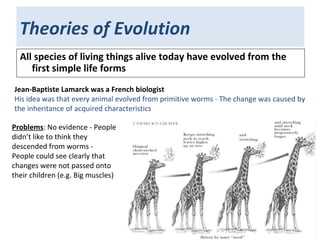
Jean-Baptiste Lamarck was a French biologist
His idea was that every animal evolved from primitive worms - The change was caused by
the inheritance of acquired characteristics
Problems: No evidence - People
didn’t like to think they
descended from worms -
People could see clearly that
changes were not passed onto
their children (e.g. Big muscles)
Accepting Darwin’s Ideas
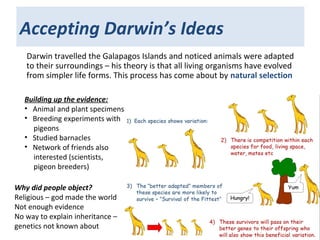
Darwin travelled the Galapagos Islands and noticed animals were adapted
to their surroundings – his theory is that all living organisms have evolved
from simpler life forms. This process has come about by natural selection
Why did people object?
Religious – god made the world
Not enough evidence
No way to explain inheritance –
genetics not known about
Building up the evidence:
• Animal and plant specimens
• Breeding experiments with
pigeons
• Studied barnacles
• Network of friends also
interested (scientists,
pigeon breeders)
Natural Selection
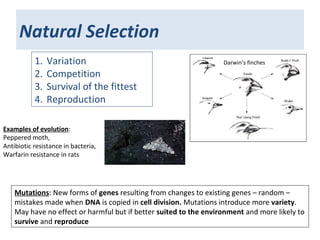
1. Variation
2. Competition
3. Survival of the fittest
4. Reproduction
Mutations: New forms of genes resulting from changes to existing genes – random –
mistakes made when DNA is copied in cell division. Mutations introduce more variety.
May have no effect or harmful but if better suited to the environment and more likely to
survive and reproduce
Examples of evolution:
Peppered moth,
Antibiotic resistance in bacteria,
Warfarin resistance in rats
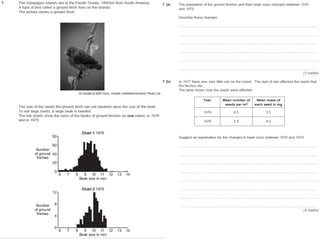
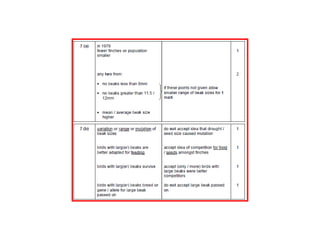
Darwin’s finches
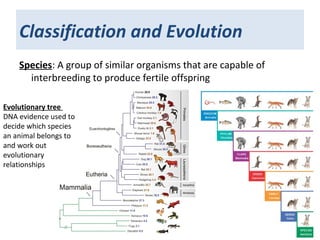
Classification and Evolution
Species: A group of similar organisms that are capable of
interbreeding to produce fertile offspring
Evolutionary tree
DNA evidence used to
decide which species
an animal belongs to
and work out
evolutionary
relationships
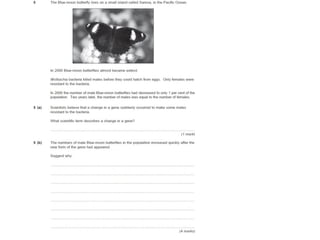
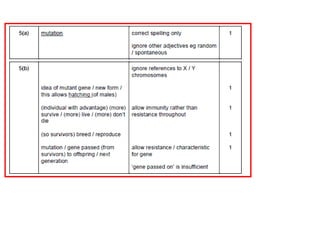
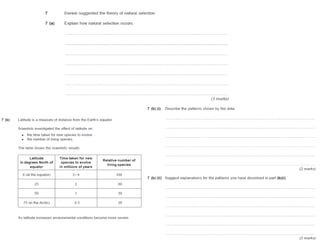
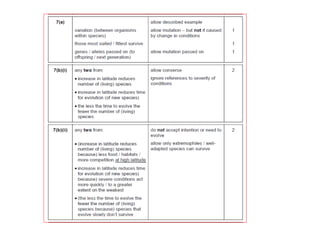
Exam questions:
B1.7  -_evolution
B1.7  -_evolution
B1.7  -_evolution
B1.7  -_evolution
B1.7  -_evolution
B1.7  -_evolution

B1.7 -_evolution

  • 1.
    B1.7 Evolution Theories of Evolution AcceptingDarwin’s ideas Natural Selection Classification and evolution
  • 2.
    Theories of Evolution Allspecies of living things alive today have evolved from the first simple life forms Jean-Baptiste Lamarck was a French biologist His idea was that every animal evolved from primitive worms - The change was caused by the inheritance of acquired characteristics Problems: No evidence - People didn’t like to think they descended from worms - People could see clearly that changes were not passed onto their children (e.g. Big muscles)
  • 3.
    Accepting Darwin’s Ideas Darwintravelled the Galapagos Islands and noticed animals were adapted to their surroundings – his theory is that all living organisms have evolved from simpler life forms. This process has come about by natural selection Why did people object? Religious – god made the world Not enough evidence No way to explain inheritance – genetics not known about Building up the evidence: • Animal and plant specimens • Breeding experiments with pigeons • Studied barnacles • Network of friends also interested (scientists, pigeon breeders)
  • 4.
    Natural Selection 1. Variation 2.Competition 3. Survival of the fittest 4. Reproduction Mutations: New forms of genes resulting from changes to existing genes – random – mistakes made when DNA is copied in cell division. Mutations introduce more variety. May have no effect or harmful but if better suited to the environment and more likely to survive and reproduce Examples of evolution: Peppered moth, Antibiotic resistance in bacteria, Warfarin resistance in rats Darwin’s finches
  • 5.
    Classification and Evolution Species:A group of similar organisms that are capable of interbreeding to produce fertile offspring Evolutionary tree DNA evidence used to decide which species an animal belongs to and work out evolutionary relationships
  • 6.