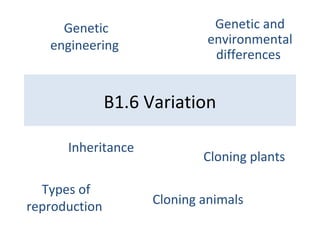
B1.6 Variation
Inheritance
Cloning plants
Types of
reproduction
Genetic and
environmental
differences
Genetic
engineering
Cloning animals
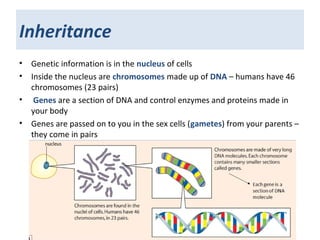
Inheritance
• Genetic information is in the nucleus of cells
• Inside the nucleus are chromosomes made up of DNA – humans have 46
chromosomes (23 pairs)
• Genes are a section of DNA and control enzymes and proteins made in
your body
• Genes are passed on to you in the sex cells (gametes) from your parents –
they come in pairs
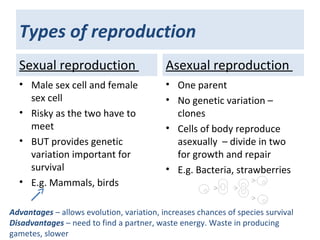
Types of reproduction
Sexual reproduction
• Male sex cell and female
sex cell
• Risky as the two have to
meet
• BUT provides genetic
variation important for
survival
• E.g. Mammals, birds
Asexual reproduction
• One parent
• No genetic variation –
clones
• Cells of body reproduce
asexually – divide in two
for growth and repair
• E.g. Bacteria, strawberries
Advantages – allows evolution, variation, increases chances of species survival
Disadvantages – need to find a partner, waste energy. Waste in producing
gametes, slower
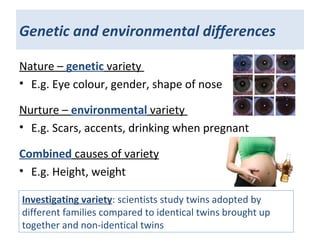
Genetic and environmental differences
Nature – genetic variety
• E.g. Eye colour, gender, shape of nose
Nurture – environmental variety
• E.g. Scars, accents, drinking when pregnant
Combined causes of variety
• E.g. Height, weight
Investigating variety: scientists study twins adopted by
different families compared to identical twins brought up
together and non-identical twins
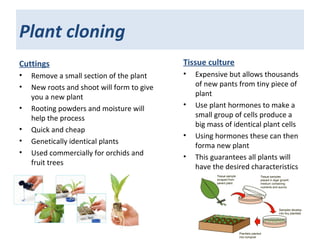
Plant cloning
Cuttings
• Remove a small section of the plant
• New roots and shoot will form to give
you a new plant
• Rooting powders and moisture will
help the process
• Quick and cheap
• Genetically identical plants
• Used commercially for orchids and
fruit trees
Tissue culture
• Expensive but allows thousands
of new pants from tiny piece of
plant
• Use plant hormones to make a
small group of cells produce a
big mass of identical plant cells
• Using hormones these can then
forma new plant
• This guarantees all plants will
have the desired characteristics
Animal cloning
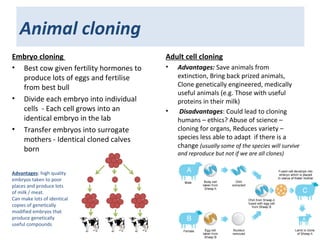
Embryo cloning
• Best cow given fertility hormones to
produce lots of eggs and fertilise
from best bull
• Divide each embryo into individual
cells - Each cell grows into an
identical embryo in the lab
• Transfer embryos into surrogate
mothers - Identical cloned calves
born
Adult cell cloning
• Advantages: Save animals from
extinction, Bring back prized animals,
Clone genetically engineered, medically
useful animals (e.g. Those with useful
proteins in their milk)
• Disadvantages: Could lead to cloning
humans – ethics? Abuse of science –
cloning for organs, Reduces variety –
species less able to adapt if there is a
change (usually some of the species will survive
and reproduce but not if we are all clones)
Advantages: high quality
embryos taken to poor
places and produce lots
of milk / meat.
Can make lots of identical
copies of genetically
modified embryos that
produce genetically
useful compounds
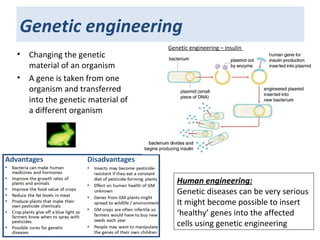
Genetic engineering
• Changing the genetic
material of an organism
• A gene is taken from one
organism and transferred
into the genetic material of
a different organism
Human engineering:
Genetic diseases can be very serious
It might become possible to insert
‘healthy’ genes into the affected
cells using genetic engineering
Genetic engineering – insulin
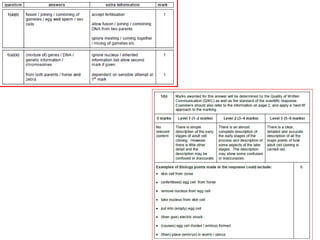
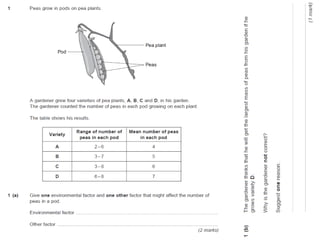
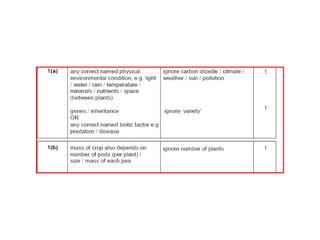
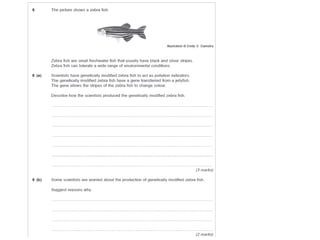
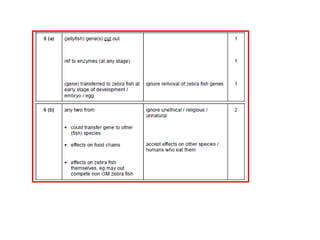
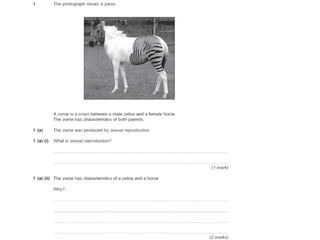
Exam questions
[6 marks]
B1.6  -_variation
B1.6  -_variation
B1.6  -_variation

B1.6 -_variation

  • 1.
    B1.6 Variation Inheritance Cloning plants Typesof reproduction Genetic and environmental differences Genetic engineering Cloning animals
  • 2.
    Inheritance • Genetic informationis in the nucleus of cells • Inside the nucleus are chromosomes made up of DNA – humans have 46 chromosomes (23 pairs) • Genes are a section of DNA and control enzymes and proteins made in your body • Genes are passed on to you in the sex cells (gametes) from your parents – they come in pairs
  • 3.
    Types of reproduction Sexualreproduction • Male sex cell and female sex cell • Risky as the two have to meet • BUT provides genetic variation important for survival • E.g. Mammals, birds Asexual reproduction • One parent • No genetic variation – clones • Cells of body reproduce asexually – divide in two for growth and repair • E.g. Bacteria, strawberries Advantages – allows evolution, variation, increases chances of species survival Disadvantages – need to find a partner, waste energy. Waste in producing gametes, slower
  • 4.
    Genetic and environmentaldifferences Nature – genetic variety • E.g. Eye colour, gender, shape of nose Nurture – environmental variety • E.g. Scars, accents, drinking when pregnant Combined causes of variety • E.g. Height, weight Investigating variety: scientists study twins adopted by different families compared to identical twins brought up together and non-identical twins
  • 5.
    Plant cloning Cuttings • Removea small section of the plant • New roots and shoot will form to give you a new plant • Rooting powders and moisture will help the process • Quick and cheap • Genetically identical plants • Used commercially for orchids and fruit trees Tissue culture • Expensive but allows thousands of new pants from tiny piece of plant • Use plant hormones to make a small group of cells produce a big mass of identical plant cells • Using hormones these can then forma new plant • This guarantees all plants will have the desired characteristics
  • 6.
    Animal cloning Embryo cloning •Best cow given fertility hormones to produce lots of eggs and fertilise from best bull • Divide each embryo into individual cells - Each cell grows into an identical embryo in the lab • Transfer embryos into surrogate mothers - Identical cloned calves born Adult cell cloning • Advantages: Save animals from extinction, Bring back prized animals, Clone genetically engineered, medically useful animals (e.g. Those with useful proteins in their milk) • Disadvantages: Could lead to cloning humans – ethics? Abuse of science – cloning for organs, Reduces variety – species less able to adapt if there is a change (usually some of the species will survive and reproduce but not if we are all clones) Advantages: high quality embryos taken to poor places and produce lots of milk / meat. Can make lots of identical copies of genetically modified embryos that produce genetically useful compounds
  • 7.
    Genetic engineering • Changingthe genetic material of an organism • A gene is taken from one organism and transferred into the genetic material of a different organism Human engineering: Genetic diseases can be very serious It might become possible to insert ‘healthy’ genes into the affected cells using genetic engineering Genetic engineering – insulin
  • 8.
  • 12.