Aztecs, Mayas, 
and Incas 
UUnniitt 22:: BBaacckkggrroouunndd IInnffoorrmmaattiioonn
Agenda 
Review three major civilizations that 
existed in Central and South America from 
2000 B.C until the arrival of the Spanish in 
the 16th centuray 
Discuss cultures, achievements
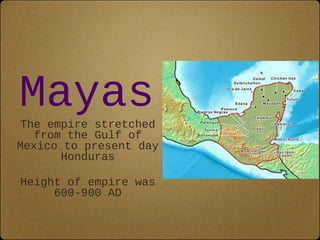
Mayas 
The empire stretched 
from the Gulf of 
Mexico to present day 
Honduras 
Height of empire was 
600-900 AD
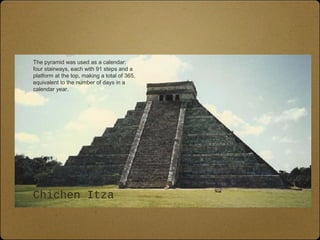
The pyramid was used as a calendar: 
four stairways, each with 91 steps and a 
platform at the top, making a total of 365, 
equivalent to the number of days in a 
calendar year. 
Mayas 
Chichen Itza was an 
important city in the 
empire and became a 
major market place 
Chichen Itza
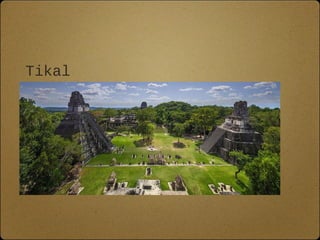
Tikal
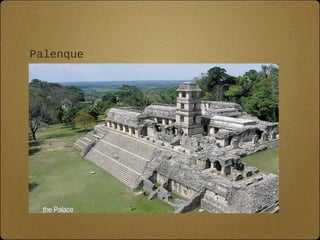
Palenque
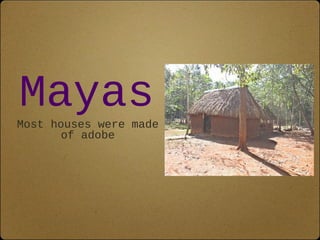
Mayas 
Most houses were made 
of adobe
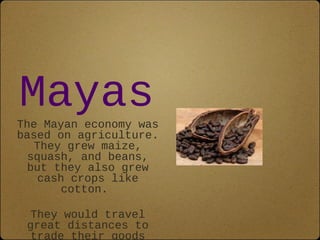
Mayas 
The Mayan economy was 
based on agriculture. 
They grew maize, 
squash, and beans, 
but they also grew 
cash crops like 
cotton. 
They would travel 
great distances to 
trade their goods
Mayas 
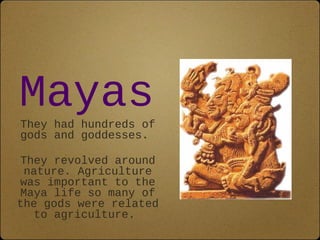
They had hundreds of 
gods and goddesses. 
They revolved around 
nature. Agriculture 
was important to the 
Maya life so many of 
the gods were related 
to agriculture.
Mayas 
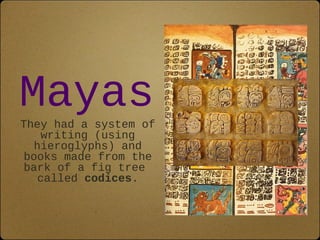
They had a system of 
writing (using 
hieroglyphs) and 
books made from the 
bark of a fig tree 
called codices.
Mayas 
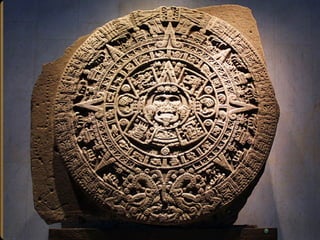
They had amazing 
knowledge of 
astronomy, creating 
an accurate calendar, 
plotting the 
movements of the moon 
and sun, and 
calculating the 
revolution of Venus 
around the sun.
Aztec 
s 
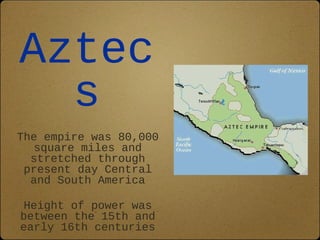
The empire was 80,000 
square miles and 
stretched through 
present day Central 
and South America 
Height of power was 
between the 15th and 
early 16th centuries
Aztec 
s 
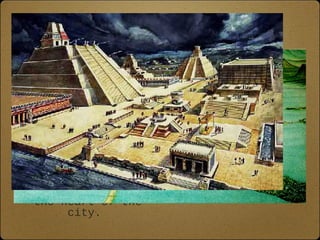
The heart of the 
Aztec Empire was 
Tenochtitlan. It was 
built on Lake Texcoco 
and had roads and 
bridges leading into 
the heart of the 
city.
Aztec 
s 
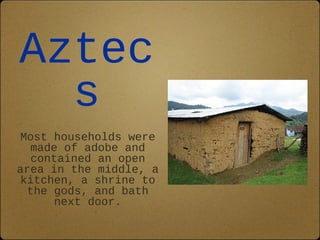
Most households were 
made of adobe and 
contained an open 
area in the middle, a 
kitchen, a shrine to 
the gods, and bath 
next door.
Aztec 
s 
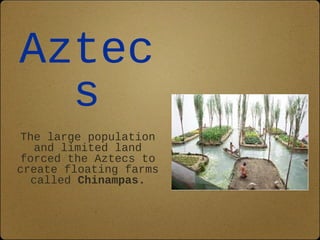
The large population 
and limited land 
forced the Aztecs to 
create floating farms 
called Chinampas.
Aztec 
s 
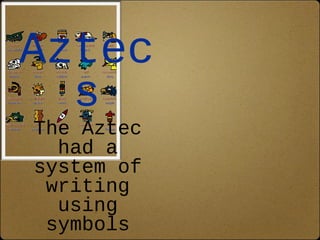
The Aztec 
had a 
system of 
writing 
using 
symbols
Aztec 
s 
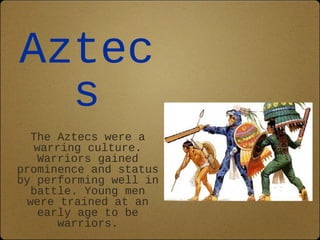
The Aztecs were a 
warring culture. 
Warriors gained 
prominence and status 
by performing well in 
battle. Young men 
were trained at an 
early age to be 
warriors.
Aztec 
s 
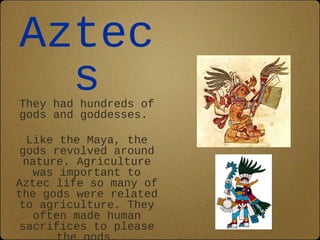
They had hundreds of 
gods and goddesses. 
Like the Maya, the 
gods revolved around 
nature. Agriculture 
was important to 
Aztec life so many of 
the gods were related 
to agriculture. They 
often made human 
sacrifices to please 
the gods.
Aztec 
s 
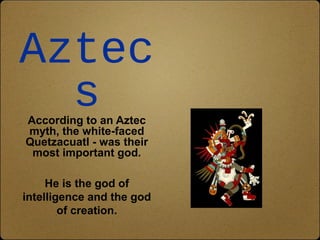
According to an Aztec 
myth, the white-faced 
Quetzacuatl - was their 
most important god. 
He is the god of 
intelligence and the god 
of creation.
Incas 
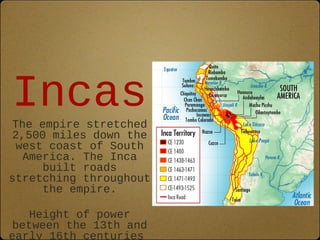
The empire stretched 
2,500 miles down the 
west coast of South 
America. The Inca 
built roads 
stretching throughout 
the empire. 
Height of power 
between the 13th and 
early 16th centuries
Incas 
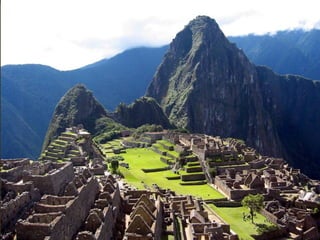
The Incas built their 
cities on many types 
of geography. Some 
high in the Andes and 
others along the 
coast
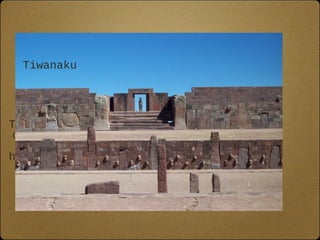
Tiwanaku 
Inca 
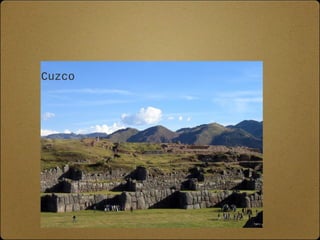
The Incas built their 
cities on many types 
of geography. Some 
high in the Andes and 
others along the 
coast
Cuzco
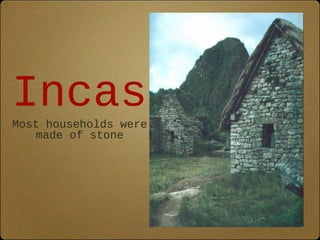
Incas 
Most households were 
made of stone
Incas 
The economy was based 
on agriculture and 
mines. They mined 
precious metals. 
Just like Aztec 
society, people had 
to pay a tribute 
(tax)
Incas 
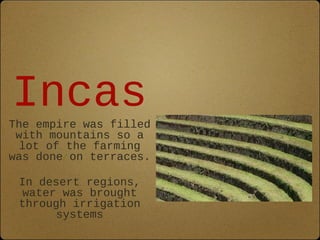
The empire was filled 
with mountains so a 
lot of the farming 
was done on terraces. 
In desert regions, 
water was brought 
through irrigation 
systems
Incas 
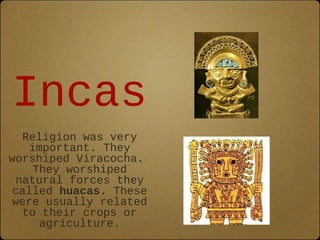
Religion was very 
important. They 
worshiped Viracocha. 
They worshiped 
natural forces they 
called huacas. These 
were usually related 
to their crops or 
agriculture.
Incas 
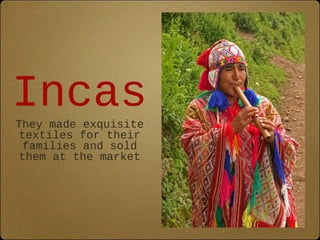
They made exquisite 
textiles for their 
families and sold 
them at the market
Comparing 
Cultures 
Based on Agriculture: These civilizations introduced chocolate 
(cocoa), tomato, potato, peppers, peanuts and several other 
foods to Europeans 
They had a system of government with religious leaders and the 
rich at the top. In Aztec culture you could gain status by being a 
great warrior 
The regular people paid taxes to the rich (fine metals and cocoa 
beans were used) 
Temples to honor the gods and to make sacrifices to keep 
agriculture strong 
They had great knowledge in mathematics and astronomy

Aztec, Inca, Maya- Civilizations

  • 1.
    Aztecs, Mayas, andIncas UUnniitt 22:: BBaacckkggrroouunndd IInnffoorrmmaattiioonn
  • 2.
    Agenda Review threemajor civilizations that existed in Central and South America from 2000 B.C until the arrival of the Spanish in the 16th centuray Discuss cultures, achievements
  • 3.
    Mayas The empirestretched from the Gulf of Mexico to present day Honduras Height of empire was 600-900 AD
  • 4.
    The pyramid wasused as a calendar: four stairways, each with 91 steps and a platform at the top, making a total of 365, equivalent to the number of days in a calendar year. Mayas Chichen Itza was an important city in the empire and became a major market place Chichen Itza
  • 5.
  • 6.
  • 7.
    Mayas Most houseswere made of adobe
  • 8.
    Mayas The Mayaneconomy was based on agriculture. They grew maize, squash, and beans, but they also grew cash crops like cotton. They would travel great distances to trade their goods
  • 9.
    Mayas They hadhundreds of gods and goddesses. They revolved around nature. Agriculture was important to the Maya life so many of the gods were related to agriculture.
  • 10.
    Mayas They hada system of writing (using hieroglyphs) and books made from the bark of a fig tree called codices.
  • 11.
    Mayas They hadamazing knowledge of astronomy, creating an accurate calendar, plotting the movements of the moon and sun, and calculating the revolution of Venus around the sun.
  • 12.
    Aztec s Theempire was 80,000 square miles and stretched through present day Central and South America Height of power was between the 15th and early 16th centuries
  • 13.
    Aztec s Theheart of the Aztec Empire was Tenochtitlan. It was built on Lake Texcoco and had roads and bridges leading into the heart of the city.
  • 14.
    Aztec s Mosthouseholds were made of adobe and contained an open area in the middle, a kitchen, a shrine to the gods, and bath next door.
  • 15.
    Aztec s Thelarge population and limited land forced the Aztecs to create floating farms called Chinampas.
  • 16.
    Aztec s TheAztec had a system of writing using symbols
  • 17.
    Aztec s TheAztecs were a warring culture. Warriors gained prominence and status by performing well in battle. Young men were trained at an early age to be warriors.
  • 18.
    Aztec s Theyhad hundreds of gods and goddesses. Like the Maya, the gods revolved around nature. Agriculture was important to Aztec life so many of the gods were related to agriculture. They often made human sacrifices to please the gods.
  • 19.
    Aztec s Accordingto an Aztec myth, the white-faced Quetzacuatl - was their most important god. He is the god of intelligence and the god of creation.
  • 20.
    Incas The empirestretched 2,500 miles down the west coast of South America. The Inca built roads stretching throughout the empire. Height of power between the 13th and early 16th centuries
  • 21.
    Incas The Incasbuilt their cities on many types of geography. Some high in the Andes and others along the coast
  • 22.
    Tiwanaku Inca TheIncas built their cities on many types of geography. Some high in the Andes and others along the coast
  • 23.
  • 24.
    Incas Most householdswere made of stone
  • 25.
    Incas The economywas based on agriculture and mines. They mined precious metals. Just like Aztec society, people had to pay a tribute (tax)
  • 26.
    Incas The empirewas filled with mountains so a lot of the farming was done on terraces. In desert regions, water was brought through irrigation systems
  • 27.
    Incas Religion wasvery important. They worshiped Viracocha. They worshiped natural forces they called huacas. These were usually related to their crops or agriculture.
  • 28.
    Incas They madeexquisite textiles for their families and sold them at the market
  • 29.
    Comparing Cultures Basedon Agriculture: These civilizations introduced chocolate (cocoa), tomato, potato, peppers, peanuts and several other foods to Europeans They had a system of government with religious leaders and the rich at the top. In Aztec culture you could gain status by being a great warrior The regular people paid taxes to the rich (fine metals and cocoa beans were used) Temples to honor the gods and to make sacrifices to keep agriculture strong They had great knowledge in mathematics and astronomy