Unit 3: Lesson 2
How did the Native Americans
and Europeans Cooperate?
By Mr. Casey
AGENDA
•Vocabulary
•Native American & European
Cooperation
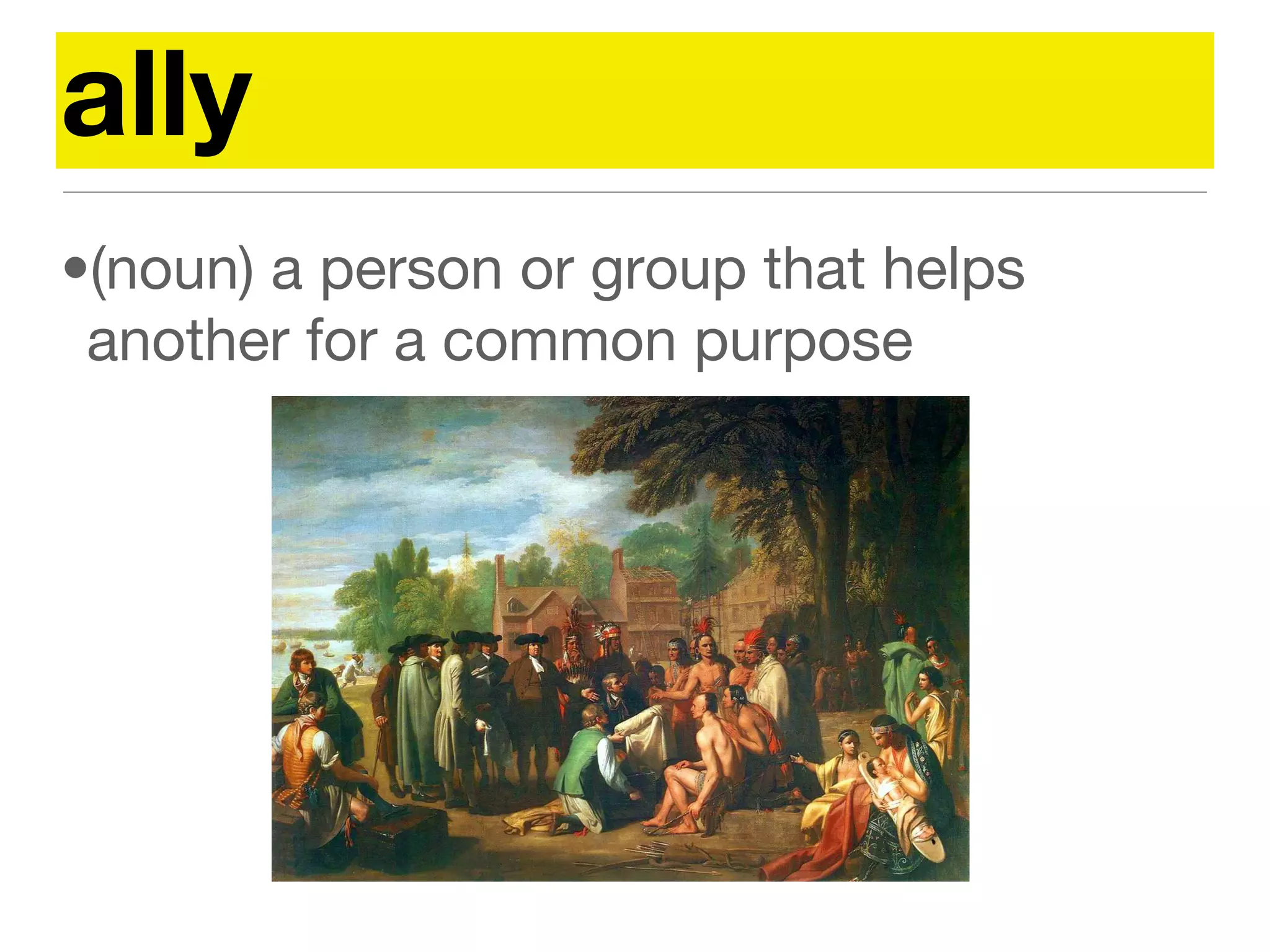
ally
•(noun) a person or group that helps
another for a common purpose
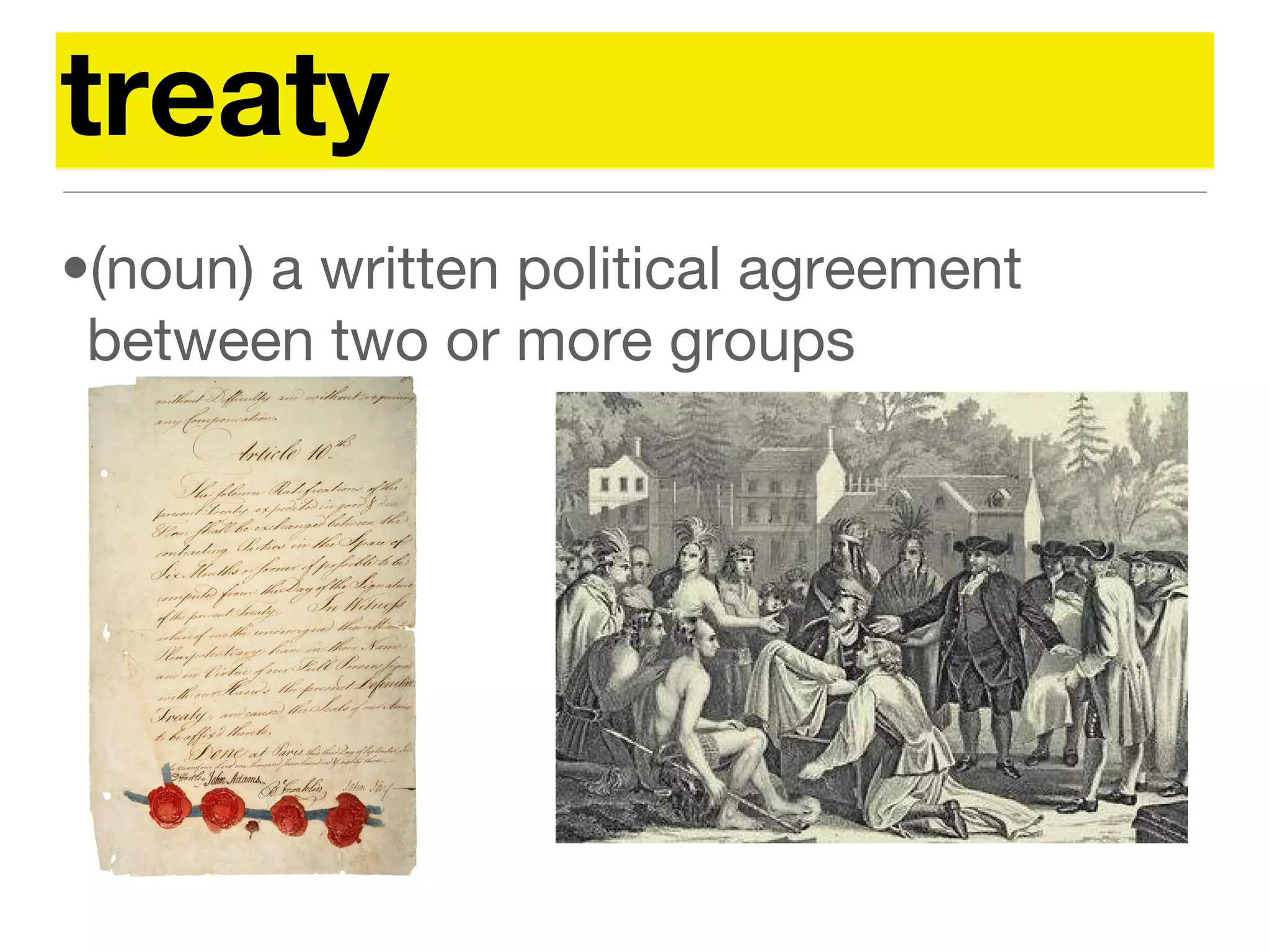
treaty
•(noun) a written political agreement
between two or more groups
EXAMPLES OF COOPERATION IN
NORTH AMERICA
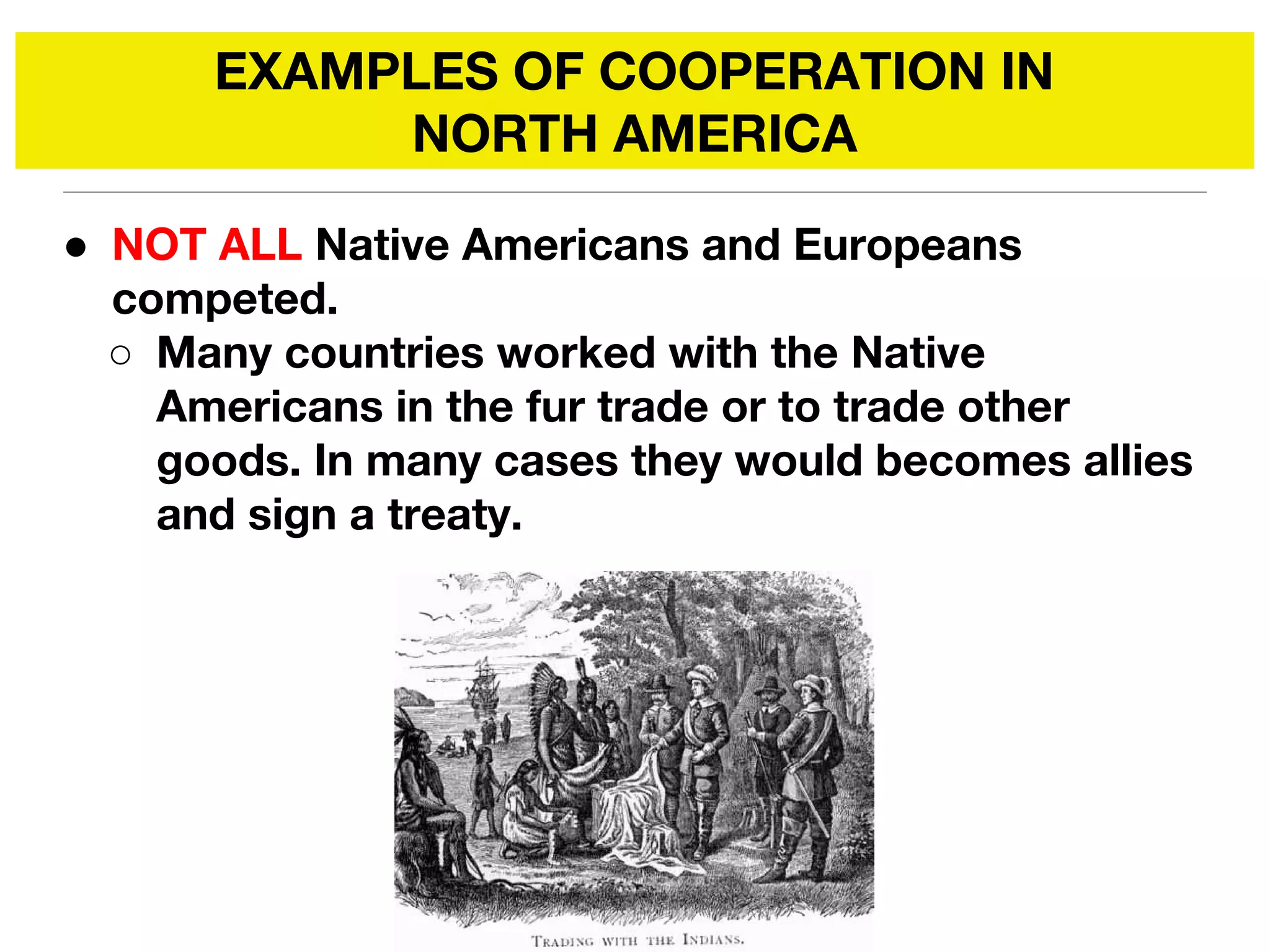
● NOT ALL Native Americans and Europeans
competed.
○ Many countries worked with the Native
Americans in the fur trade or to trade other
goods. In many cases they would becomes allies
and sign a treaty.
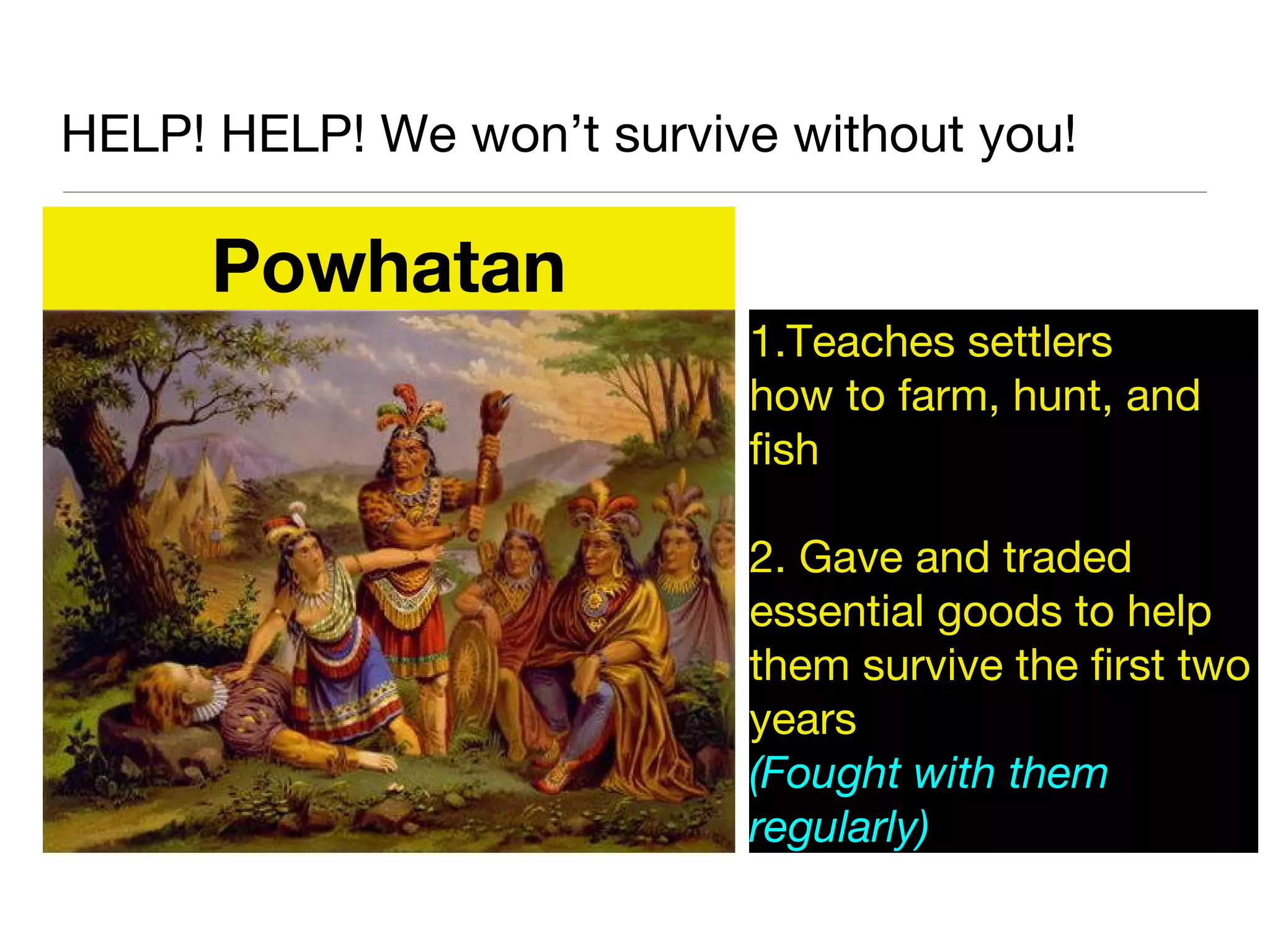
HELP! HELP! We won’t survive without you!
Powhatan
1.Teaches settlers
how to farm, hunt, and
fish
2. Gave and traded
essential goods to help
them survive the first two
years
(Fought with them
regularly)
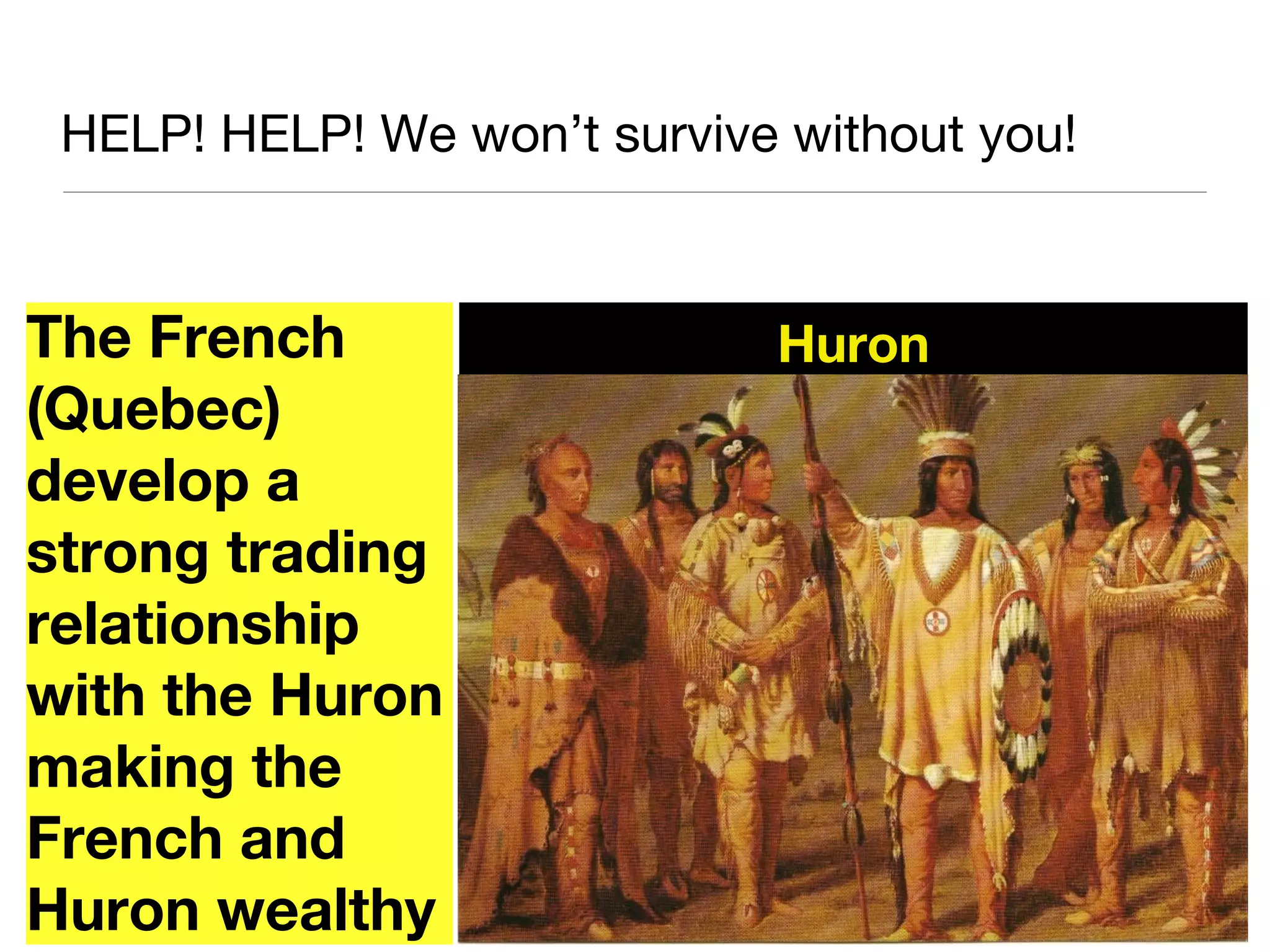
HELP! HELP! We won’t survive without you!
HuronThe French
(Quebec)
develop a
strong trading
relationship
with the Huron
making the
French and
Huron wealthy
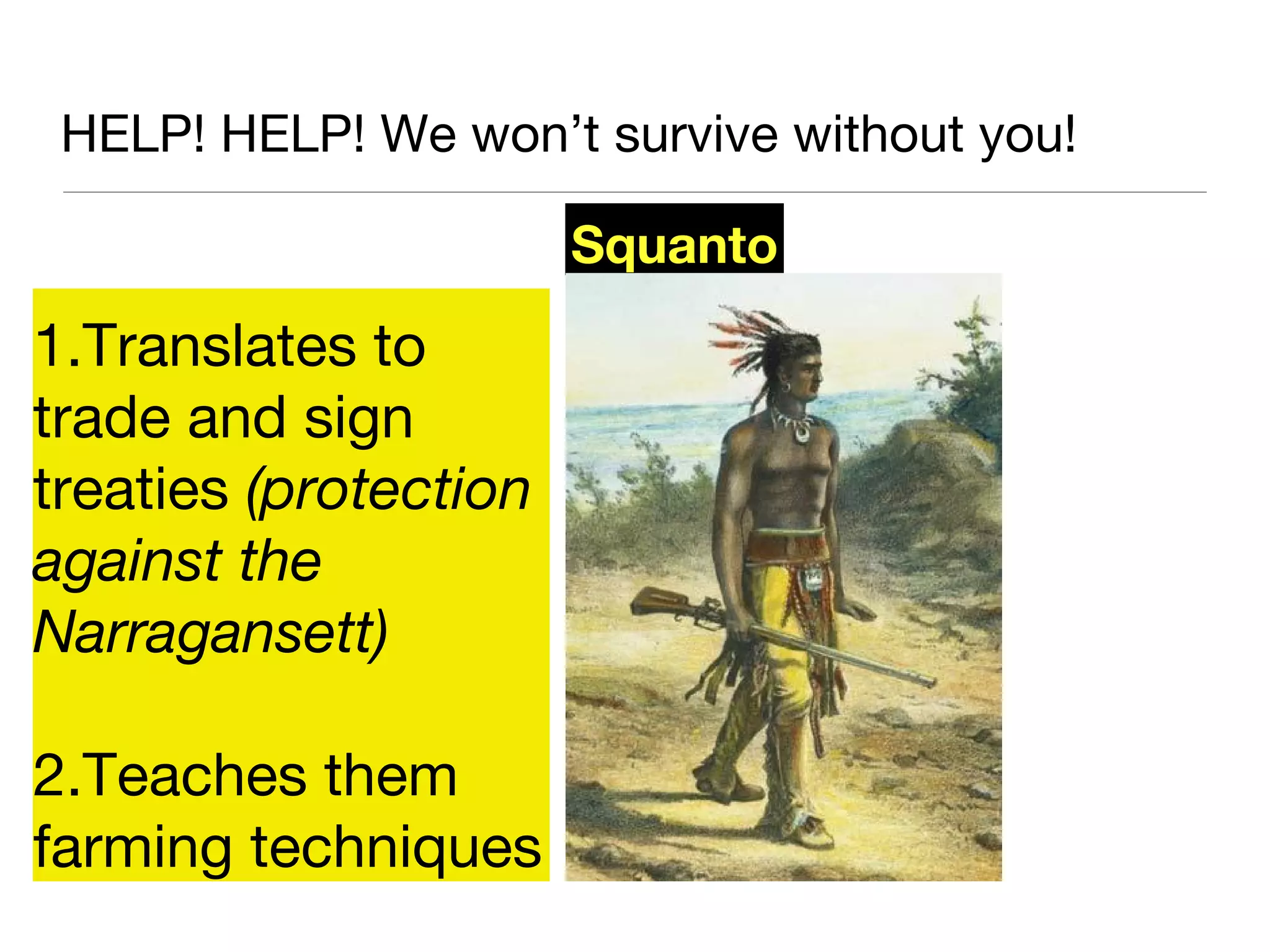
HELP! HELP! We won’t survive without you!
Squanto
1.Translates to
trade and sign
treaties (protection
against the
Narragansett)
2.Teaches them
farming techniques
LESSON 2-American Indians help the English
NATIVE AMERICANS HELP SETTLERS-
● Traded food and other goods to the
English settlers
● Taught them how to farm
● Taught them about local plants and
medicine
● Taught them how to grow tobacco
● Translated and helped settlers
communicate with tribal leaders (sign
treaties)
POSITIVE EFFECTS OF INTERACTION
● Native Americans are introduced to new
animals, tools, weapons, and the fur trade.
● The trade of ideas and goods changes the way
of life for the Native Americans and Europeans
● The settlers learned essential skills like
farming, hunting, and fishing. They were also
taught how to use local plants for medicine and
food.
NEGATIVE EFFECTS OF INTERACTION
● DISEASE
● LOSS OF LAND
● CONFLICT
● DEPENDANCE
○ Some Native American tribes become
dependent on trade with the Europeans (tools,
animals)

Unit 3, Lesson 2

  • 1.
    Unit 3: Lesson2 How did the Native Americans and Europeans Cooperate? By Mr. Casey
  • 2.
  • 3.
    ally •(noun) a personor group that helps another for a common purpose
  • 4.
    treaty •(noun) a writtenpolitical agreement between two or more groups
  • 5.
    EXAMPLES OF COOPERATIONIN NORTH AMERICA ● NOT ALL Native Americans and Europeans competed. ○ Many countries worked with the Native Americans in the fur trade or to trade other goods. In many cases they would becomes allies and sign a treaty.
  • 6.
    HELP! HELP! Wewon’t survive without you! Powhatan 1.Teaches settlers how to farm, hunt, and fish 2. Gave and traded essential goods to help them survive the first two years (Fought with them regularly)
  • 7.
    HELP! HELP! Wewon’t survive without you! HuronThe French (Quebec) develop a strong trading relationship with the Huron making the French and Huron wealthy
  • 8.
    HELP! HELP! Wewon’t survive without you! Squanto 1.Translates to trade and sign treaties (protection against the Narragansett) 2.Teaches them farming techniques
  • 9.
    LESSON 2-American Indianshelp the English NATIVE AMERICANS HELP SETTLERS- ● Traded food and other goods to the English settlers ● Taught them how to farm ● Taught them about local plants and medicine ● Taught them how to grow tobacco ● Translated and helped settlers communicate with tribal leaders (sign treaties)
  • 10.
    POSITIVE EFFECTS OFINTERACTION ● Native Americans are introduced to new animals, tools, weapons, and the fur trade. ● The trade of ideas and goods changes the way of life for the Native Americans and Europeans ● The settlers learned essential skills like farming, hunting, and fishing. They were also taught how to use local plants for medicine and food.
  • 11.
    NEGATIVE EFFECTS OFINTERACTION ● DISEASE ● LOSS OF LAND ● CONFLICT ● DEPENDANCE ○ Some Native American tribes become dependent on trade with the Europeans (tools, animals)