Boutkhil Guemide
University Mohammed Boudiaf, M’sila
Algeria
Aztec Civilization
• The Aztec tribe lived in southern
Mexico from about 900 CE (AD) to
1521.
• In the 1100s the Aztec settled in the
Valley of Mexico on the swampy shores
of Lake Texcoco and on a small island
in the lake.
• The Aztec named this place
Tenochtitlan (te noch tee
TLAHN) and it eventually became
the capital of their civilization.
The Aztecs
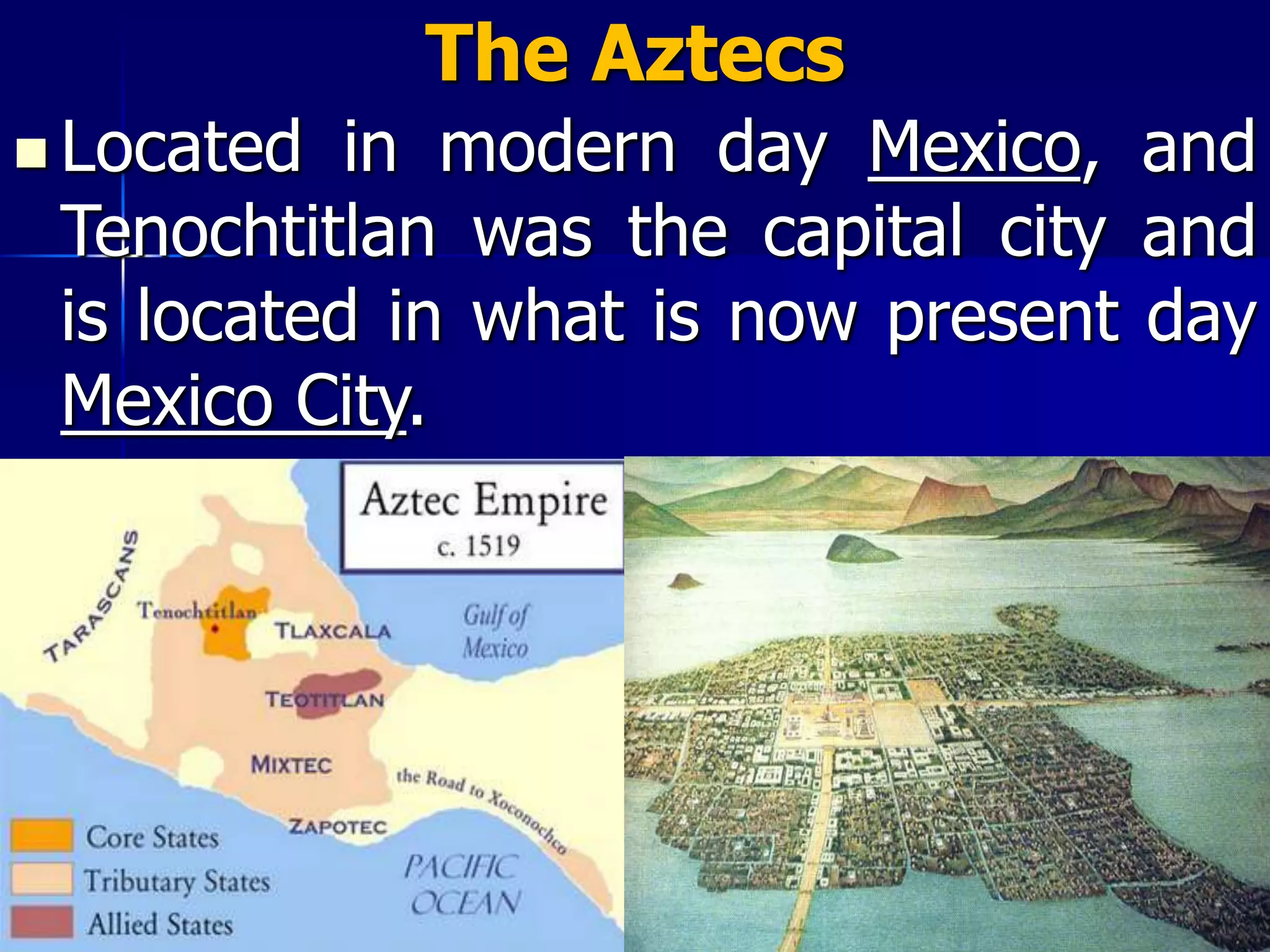
 Located in modern day Mexico, and
Tenochtitlan was the capital city and
is located in what is now present day
Mexico City.
Aztec Empire
The Aztecs were founded by the
Mexica, (came from west Mexico)
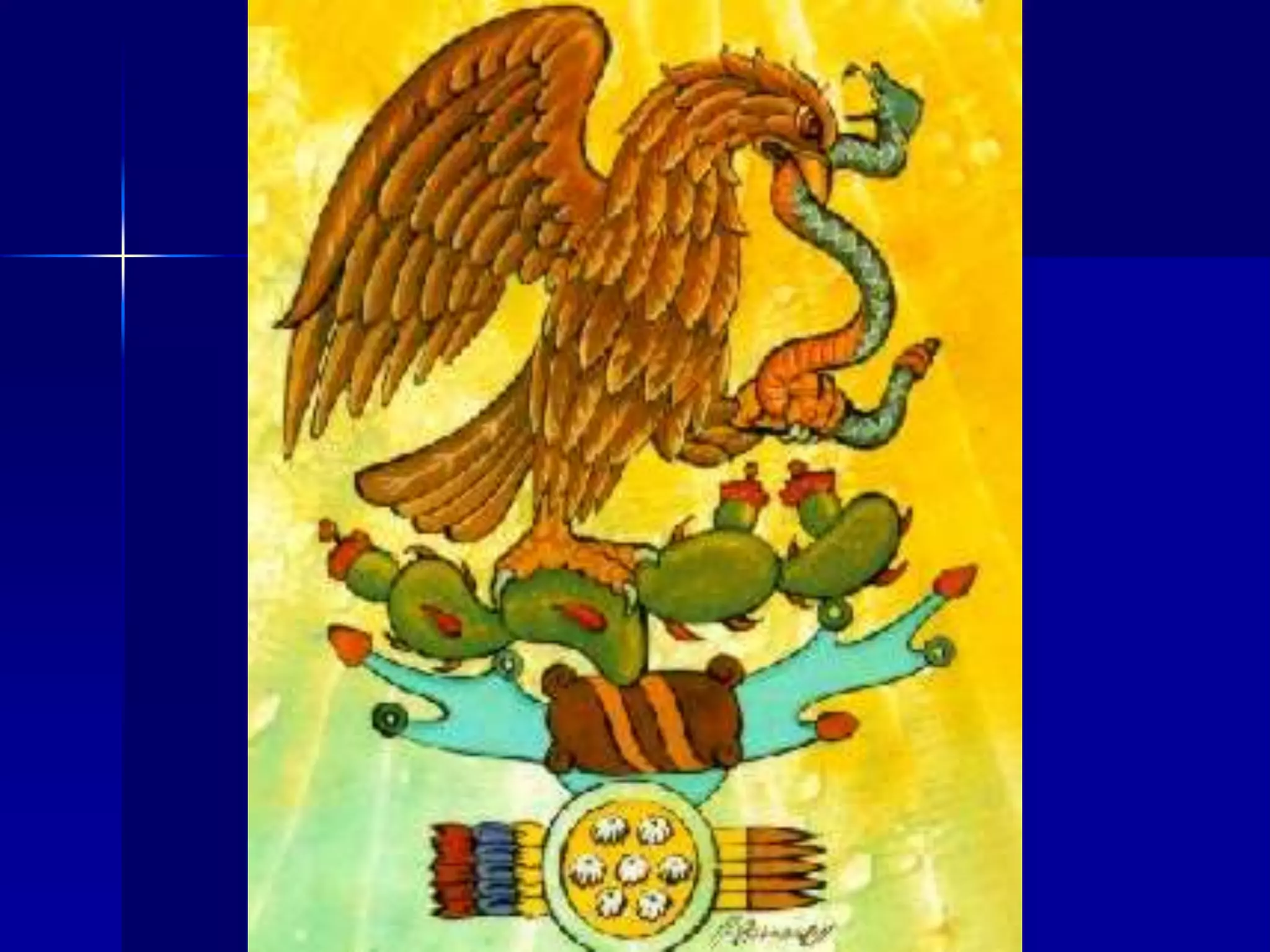
Legend predicted the Mexicans
would found a great civilization
where they saw an eagle perched
on a cactus growing out of a rock
Aztec civilization was created on
Lake Texcoco— strategic with
abundant food supplies &
waterways for transportation
Aztec Civilization
►Nomadic tribe that settled in the
Valley of Mexico around 1400 AD
►Many competing small empires
–war ends in 1428
►Triple Alliance
–(Texcoco, Tlacopan, and
Tenochtitlan)
►Empire lasts from 1428-1520
►Home to roughly 1.25 million
When captured by Spanish
conquistadors, Tenochtitlán was
possibly the largest city in the world
 The first Aztecs were
farmers, but when they
arrived in Central America,
all the good farmland was
taken.
 To survive, they had to
hire themselves out as
warriors.
The Aztecs’ Rise to Power
 War was the key factor in the Aztecs’ rise to
power.
 The Aztecs built alliances, or partnerships, to
build their empire.
 The Aztecs made the people they conquered
pay tribute, or give them cotton, gold, or
food.
 The Aztecs controlled a huge trade network.
Markets drew buyers and sellers from all
over the Aztec Empire.
 By the early 1500s the Aztecs had the most
powerful state in Mesoamerica.
Tenochtitlán
 Tenochtitlán was the capital of the Aztec
Empire. It was built in the middle of a lake, on
an island.
 The Aztecs built causeways, or raised roads
across water or wet ground, so people could
access the city.
 The Aztecs built stone canals to bring water to
the city and floating gardens to raise food and
flowers.
 The city had huge temples, a busy market,
clean streets, and magnificent palaces.
 It was the greatest city in the Americas during
Aztec Life
• At first, life was hard on the swampy land, but
the Aztecs gradually built up the city.
• They built causeways and bridges to connect the
island to the main land.
• A causeway is a raised road or path usually built
across a body of water.
Rise of the Aztec Empire
 Population consisted of farmers &
warriors.
–Allied with Texcoco and Tlacopan.
After the alliance was formed the
empire gained control over many
region.
–Ruled 400 – 500 other city-states.
–5 Million people under Aztec rule.
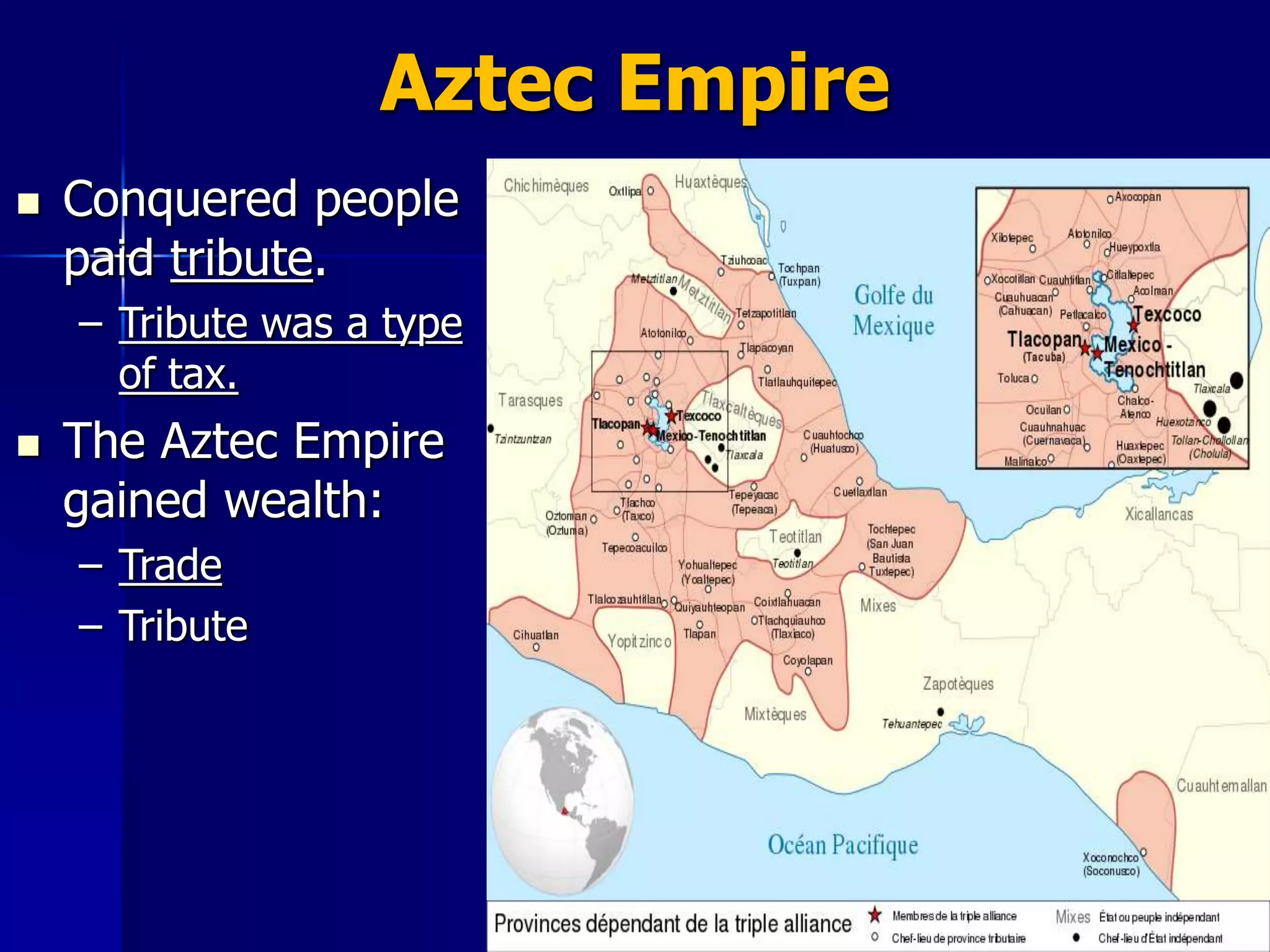
Aztec Empire
 Conquered people
paid tribute.
– Tribute was a type
of tax.
 The Aztec Empire
gained wealth:
– Trade
– Tribute
Aztec Empire
 Farming was the basis of the Aztec economy,
but land was not large enough to produce
enough food for the population;
• To solve the issue of growing crops in a swampy area,
the Aztecs built chimampas, by putting mud on
huge mats made of woven reeds & placed them
in lake— farmed on soil on these “farms”
• Chinampas are “floating” gardens built on a series of
rafts, which were anchored to the lake bed. They
piled dirt on top of the rafts and grew crops on them.
• The gardens were quite successful.
• The Aztecs grew chili peppers, squash, corn,
tomatoes, and beans.
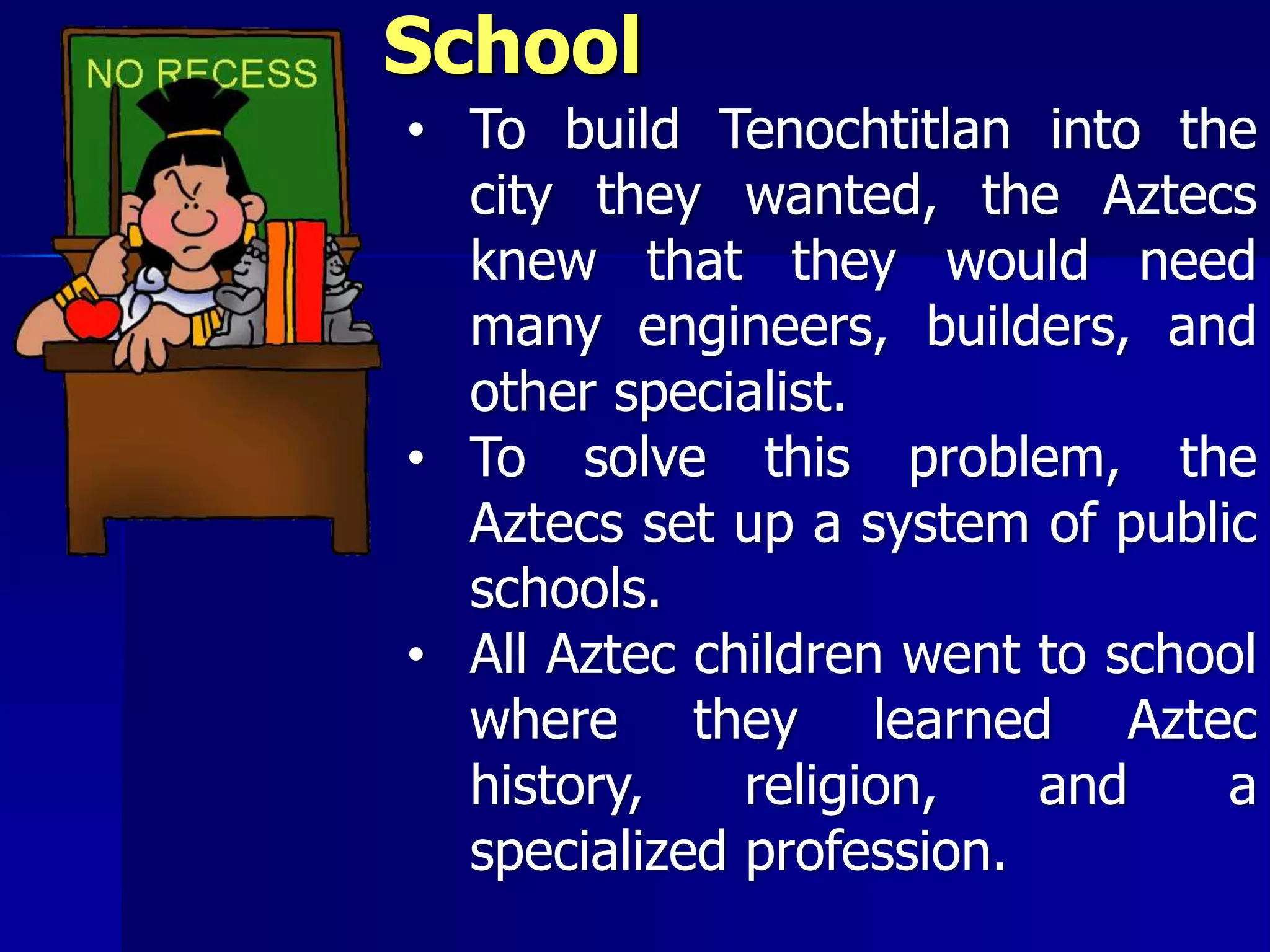
School
• To build Tenochtitlan into the
city they wanted, the Aztecs
knew that they would need
many engineers, builders, and
other specialist.
• To solve this problem, the
Aztecs set up a system of public
schools.
• All Aztec children went to school
where they learned Aztec
history, religion, and a
specialized profession.
Specialized Professions
• Aztec children were trained to be
a specialist in some area. Boys
studied how to be farmers,
traders, engineers, builders,
astronomers, and doctors.
• Students who became builders
and engineers designed and built
the amazing Aztec cities,
including the capital city of
Tenochtitlan.
Aztec Society
 Social Classes
King
Priests & Warriors
Farmers
Slaves & Prisoners of War
Though people were born
into a certain class it was
possible to move up the
ranks within a life time.
Also apart of the middle class
• Merchants and Artisans
Aztec Empire
 Aztec were excellent warriors who
expanded their empire by conquering
their neighbors
 Aztecs were the “people of the sun”
 They honored many gods,
especially sun god;
 They used human sacrifices to keep
the gods happy
 The victim ’s heart was removed &
priest ate flesh as sign
of respect
Aztec Religion
• The Aztecs believed that human sacrifice was
necessary to feed their gods.
• They believed that if their gods were not fed, they
would not do their jobs.
 War captives were used in the sacrifices
• In times of peace the Aztec would have to resort
to ritualistic warfar.
 In the year 1487 the Aztecs reported killing
84,400 war prisoners in four days at the great
pyramid of Tenochitlan.
• After a town was conquered the inhabitants
where no longer eligible of sacrifice and became
Aztec citizens.
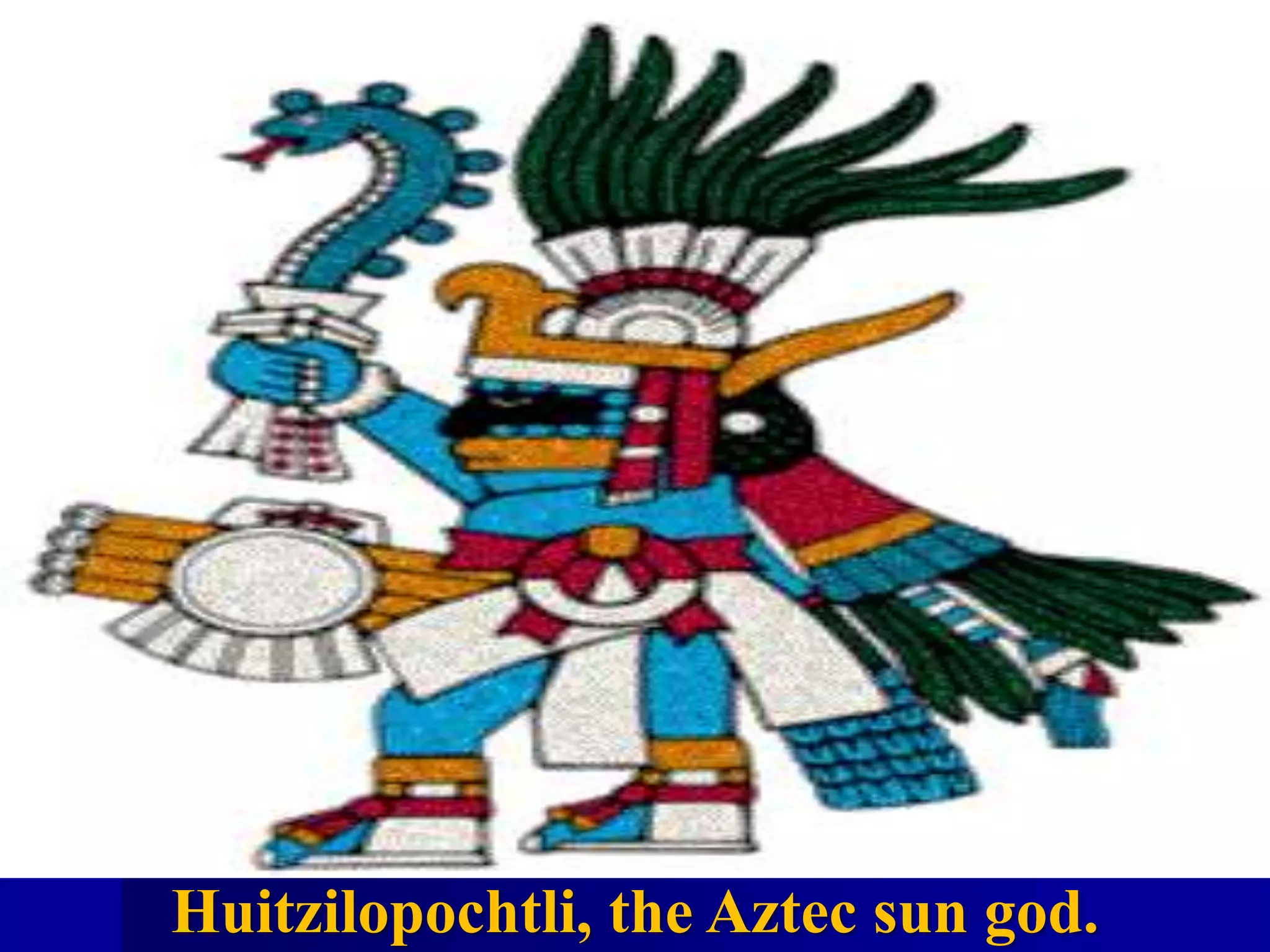
Huitzilopochtli, the Aztec sun god.
Aztec Art
 The Aztecs also made other
religious and non-religious
artifacts such as jade
masks.
– These artifacts were sold in
markets by visiting
merchants.
War
• War was an important part of Aztec life.
• The Aztecs conquered over 400 cities in
Mexico.
• The Aztecs often used the prisoners they
captured as slaves or as human sacrifices to
feed their gods.
The Aztecs had many achievements in
science, art, and language.
The Aztecs valued learning and art. Aztec scientific achievements, artistic
traditions, and language contributed to their culture.
Scientific Achievements
 The Aztecs studied astronomy and created a calendar much like the
Mayan calendar.
 The Aztecs also knew many different uses for plants. They knew of
100 different plants that could be used for medicine.
Writing and Literature
 The Aztecs had a complex writing system and kept extensive written
records.
 The Aztecs also had a very strong oral tradition.
 They considered fine speeches very important and also enjoyed
riddles.
 Stories about ancestors and gods were also a part of the oral tradition.
The Aztecs told these stories to their children and passed them down
from generation to generation.
 After the Spanish conquered the Aztecs, many of these stories were
written down.
The Fall of the Aztecs
• In 1521, Spanish conquistadors,
led by Hernan de Soto Cortez, and
their Native American partners
defeated the Aztecs and ended
their empire.
• Tenochtitlan was destroyed and a
new capital, Mexico City, was built
on top of the ruins of the
 1519: Spanish explorers
and soldiers arrived in the
Americas.
 The soldiers, or
conquistadors, came to
explore new lands, search
for gold, and spread the
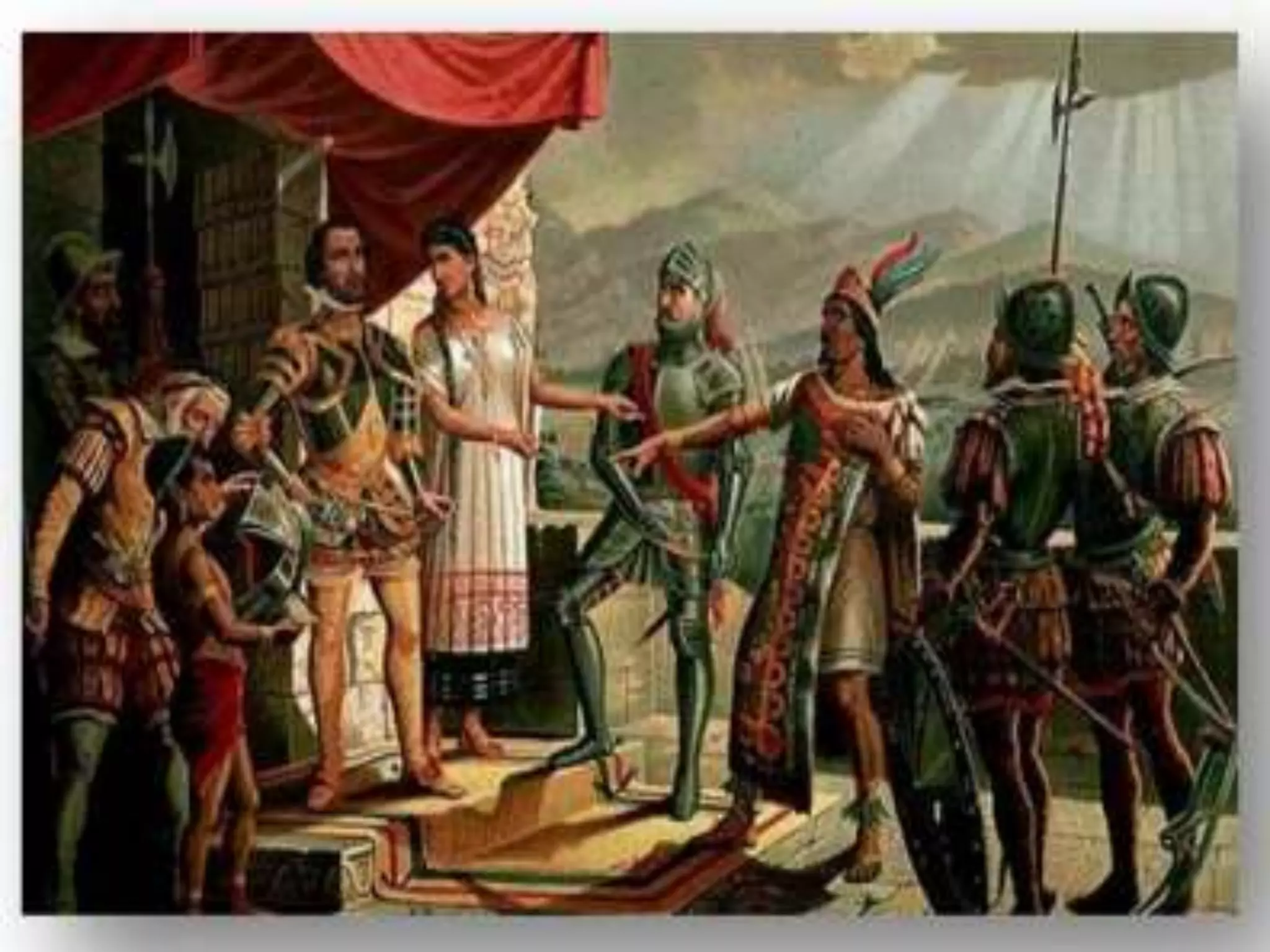
 A small group of conquistadors led by Cortés
reached Mexico in 1519.
 Moctezuma II, the Aztec leader, believed that
Cortés was a god.
 Moctezuma sent Cortés gifts, including gold.
Cortés wanted more gold, so he went to
Moctezuma.
 Cortés took Moctezuma prisoner. The other
Aztecs attacked Cortés and his men. The
Spanish were driven out, but Moctezuma was
killed.
 Cortés returned with many Indian allies and in
1521 they defeated the Aztecs and ended their
empire.
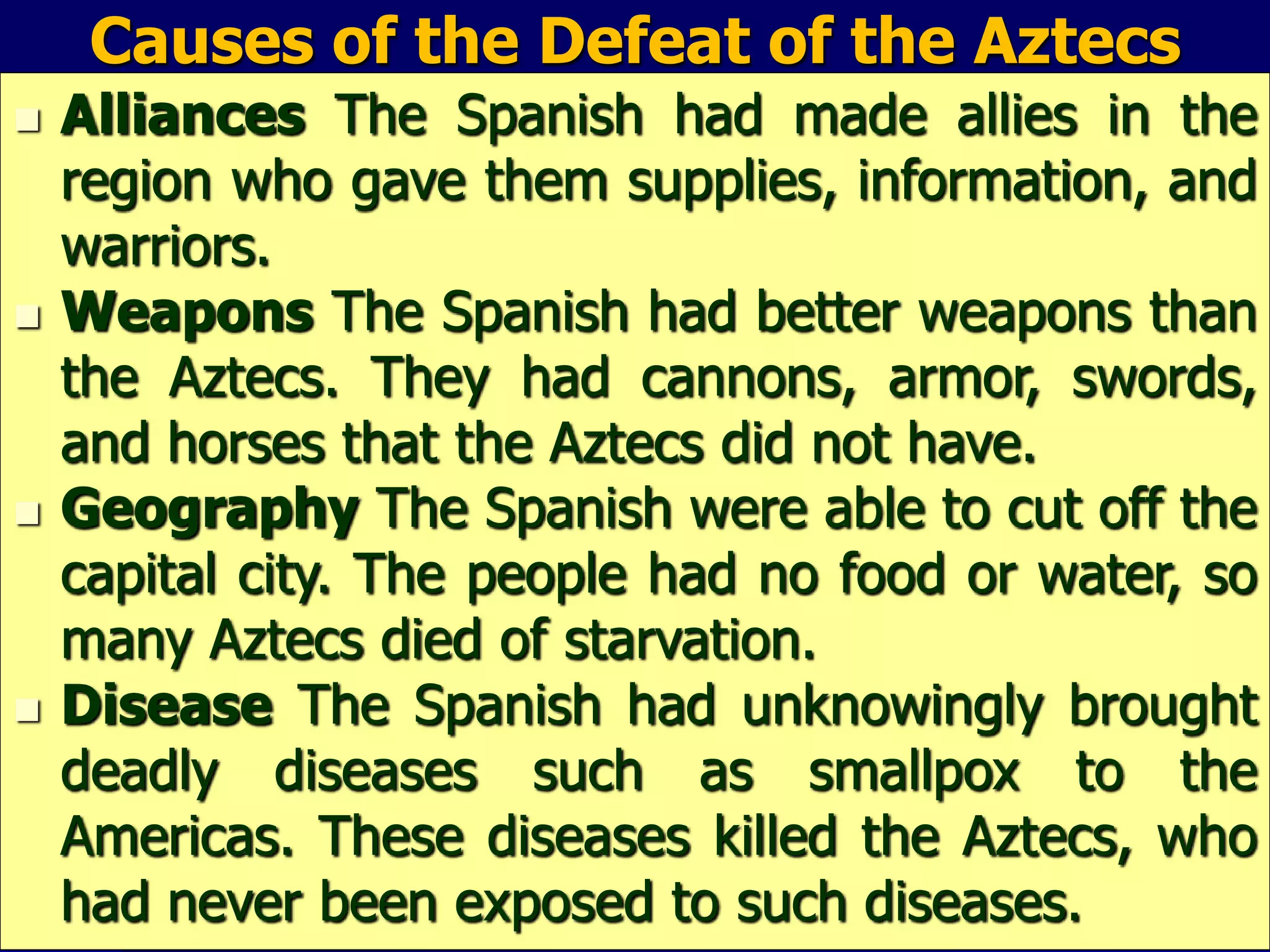
Causes of the Defeat of the Aztecs
 Alliances The Spanish had made allies in the
region who gave them supplies, information, and
warriors.
 Weapons The Spanish had better weapons than
the Aztecs. They had cannons, armor, swords,
and horses that the Aztecs did not have.
 Geography The Spanish were able to cut off the
capital city. The people had no food or water, so
many Aztecs died of starvation.
 Disease The Spanish had unknowingly brought
deadly diseases such as smallpox to the
Americas. These diseases killed the Aztecs, who
had never been exposed to such diseases.

The Aztec Empire

  • 1.
    Boutkhil Guemide University MohammedBoudiaf, M’sila Algeria
  • 3.
    Aztec Civilization • TheAztec tribe lived in southern Mexico from about 900 CE (AD) to 1521. • In the 1100s the Aztec settled in the Valley of Mexico on the swampy shores of Lake Texcoco and on a small island in the lake. • The Aztec named this place Tenochtitlan (te noch tee TLAHN) and it eventually became the capital of their civilization.
  • 5.
    The Aztecs  Locatedin modern day Mexico, and Tenochtitlan was the capital city and is located in what is now present day Mexico City.
  • 6.
    Aztec Empire The Aztecswere founded by the Mexica, (came from west Mexico) Legend predicted the Mexicans would found a great civilization where they saw an eagle perched on a cactus growing out of a rock Aztec civilization was created on Lake Texcoco— strategic with abundant food supplies & waterways for transportation
  • 8.
    Aztec Civilization ►Nomadic tribethat settled in the Valley of Mexico around 1400 AD ►Many competing small empires –war ends in 1428 ►Triple Alliance –(Texcoco, Tlacopan, and Tenochtitlan) ►Empire lasts from 1428-1520 ►Home to roughly 1.25 million
  • 9.
    When captured bySpanish conquistadors, Tenochtitlán was possibly the largest city in the world
  • 10.
     The firstAztecs were farmers, but when they arrived in Central America, all the good farmland was taken.  To survive, they had to hire themselves out as warriors.
  • 11.
    The Aztecs’ Riseto Power  War was the key factor in the Aztecs’ rise to power.  The Aztecs built alliances, or partnerships, to build their empire.  The Aztecs made the people they conquered pay tribute, or give them cotton, gold, or food.  The Aztecs controlled a huge trade network. Markets drew buyers and sellers from all over the Aztec Empire.  By the early 1500s the Aztecs had the most powerful state in Mesoamerica.
  • 12.
    Tenochtitlán  Tenochtitlán wasthe capital of the Aztec Empire. It was built in the middle of a lake, on an island.  The Aztecs built causeways, or raised roads across water or wet ground, so people could access the city.  The Aztecs built stone canals to bring water to the city and floating gardens to raise food and flowers.  The city had huge temples, a busy market, clean streets, and magnificent palaces.  It was the greatest city in the Americas during
  • 13.
    Aztec Life • Atfirst, life was hard on the swampy land, but the Aztecs gradually built up the city. • They built causeways and bridges to connect the island to the main land. • A causeway is a raised road or path usually built across a body of water.
  • 14.
    Rise of theAztec Empire  Population consisted of farmers & warriors. –Allied with Texcoco and Tlacopan. After the alliance was formed the empire gained control over many region. –Ruled 400 – 500 other city-states. –5 Million people under Aztec rule.
  • 15.
    Aztec Empire  Conqueredpeople paid tribute. – Tribute was a type of tax.  The Aztec Empire gained wealth: – Trade – Tribute
  • 16.
    Aztec Empire  Farmingwas the basis of the Aztec economy, but land was not large enough to produce enough food for the population; • To solve the issue of growing crops in a swampy area, the Aztecs built chimampas, by putting mud on huge mats made of woven reeds & placed them in lake— farmed on soil on these “farms” • Chinampas are “floating” gardens built on a series of rafts, which were anchored to the lake bed. They piled dirt on top of the rafts and grew crops on them. • The gardens were quite successful. • The Aztecs grew chili peppers, squash, corn, tomatoes, and beans.
  • 19.
    School • To buildTenochtitlan into the city they wanted, the Aztecs knew that they would need many engineers, builders, and other specialist. • To solve this problem, the Aztecs set up a system of public schools. • All Aztec children went to school where they learned Aztec history, religion, and a specialized profession.
  • 20.
    Specialized Professions • Aztecchildren were trained to be a specialist in some area. Boys studied how to be farmers, traders, engineers, builders, astronomers, and doctors. • Students who became builders and engineers designed and built the amazing Aztec cities, including the capital city of Tenochtitlan.
  • 21.
    Aztec Society  SocialClasses King Priests & Warriors Farmers Slaves & Prisoners of War Though people were born into a certain class it was possible to move up the ranks within a life time. Also apart of the middle class • Merchants and Artisans
  • 22.
    Aztec Empire  Aztecwere excellent warriors who expanded their empire by conquering their neighbors  Aztecs were the “people of the sun”  They honored many gods, especially sun god;  They used human sacrifices to keep the gods happy  The victim ’s heart was removed & priest ate flesh as sign of respect
  • 25.
    Aztec Religion • TheAztecs believed that human sacrifice was necessary to feed their gods. • They believed that if their gods were not fed, they would not do their jobs.  War captives were used in the sacrifices • In times of peace the Aztec would have to resort to ritualistic warfar.  In the year 1487 the Aztecs reported killing 84,400 war prisoners in four days at the great pyramid of Tenochitlan. • After a town was conquered the inhabitants where no longer eligible of sacrifice and became Aztec citizens.
  • 26.
  • 27.
    Aztec Art  TheAztecs also made other religious and non-religious artifacts such as jade masks. – These artifacts were sold in markets by visiting merchants.
  • 28.
    War • War wasan important part of Aztec life. • The Aztecs conquered over 400 cities in Mexico. • The Aztecs often used the prisoners they captured as slaves or as human sacrifices to feed their gods.
  • 29.
    The Aztecs hadmany achievements in science, art, and language. The Aztecs valued learning and art. Aztec scientific achievements, artistic traditions, and language contributed to their culture. Scientific Achievements  The Aztecs studied astronomy and created a calendar much like the Mayan calendar.  The Aztecs also knew many different uses for plants. They knew of 100 different plants that could be used for medicine. Writing and Literature  The Aztecs had a complex writing system and kept extensive written records.  The Aztecs also had a very strong oral tradition.  They considered fine speeches very important and also enjoyed riddles.  Stories about ancestors and gods were also a part of the oral tradition. The Aztecs told these stories to their children and passed them down from generation to generation.  After the Spanish conquered the Aztecs, many of these stories were written down.
  • 30.
    The Fall ofthe Aztecs • In 1521, Spanish conquistadors, led by Hernan de Soto Cortez, and their Native American partners defeated the Aztecs and ended their empire. • Tenochtitlan was destroyed and a new capital, Mexico City, was built on top of the ruins of the
  • 31.
     1519: Spanishexplorers and soldiers arrived in the Americas.  The soldiers, or conquistadors, came to explore new lands, search for gold, and spread the
  • 33.
     A smallgroup of conquistadors led by Cortés reached Mexico in 1519.  Moctezuma II, the Aztec leader, believed that Cortés was a god.  Moctezuma sent Cortés gifts, including gold. Cortés wanted more gold, so he went to Moctezuma.  Cortés took Moctezuma prisoner. The other Aztecs attacked Cortés and his men. The Spanish were driven out, but Moctezuma was killed.  Cortés returned with many Indian allies and in 1521 they defeated the Aztecs and ended their empire.
  • 35.
    Causes of theDefeat of the Aztecs  Alliances The Spanish had made allies in the region who gave them supplies, information, and warriors.  Weapons The Spanish had better weapons than the Aztecs. They had cannons, armor, swords, and horses that the Aztecs did not have.  Geography The Spanish were able to cut off the capital city. The people had no food or water, so many Aztecs died of starvation.  Disease The Spanish had unknowingly brought deadly diseases such as smallpox to the Americas. These diseases killed the Aztecs, who had never been exposed to such diseases.