EARLY AMERICAN CIVILIZATION EARLY AMERICAN CIVILIZATION EARLY AMERICAN CIVILIZATION
 
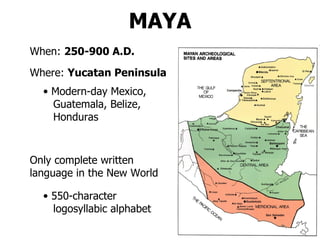
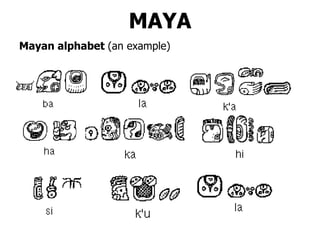
MAYA When:  250-900 A.D. Where:  Yucatan Peninsula Modern-day Mexico,   Guatemala, Belize,   Honduras Only complete written language in the New World 550-character   logosyllabic alphabet
MAYA Mayan alphabet  (an example)
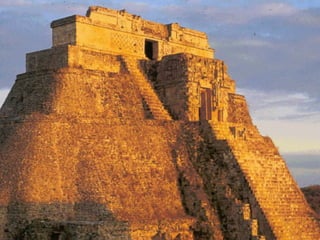
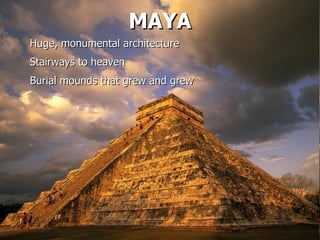
MAYA Huge, monumental architecture Stairways to heaven Burial mounds that grew and grew
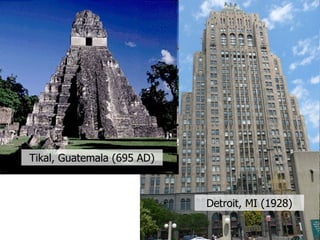
Detroit, MI (1928) Tikal, Guatemala (695 AD)
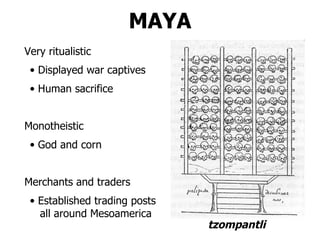
MAYA Very ritualistic Displayed war captives Human sacrifice Monotheistic God and corn Merchants and traders Established trading posts    all around Mesoamerica tzompantli
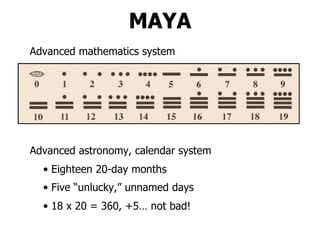
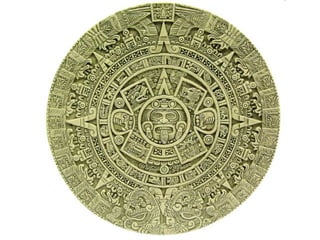
MAYA Advanced mathematics system Advanced astronomy, calendar system Eighteen 20-day months Five “unlucky,” unnamed days 18 x 20 = 360, +5… not bad!
MAYA “ Hey, Mr. T., what about… … this whole ‘end of the world’ thing?” The Mayans could not predict their own demise. They simply died out around 900 A.D.
 
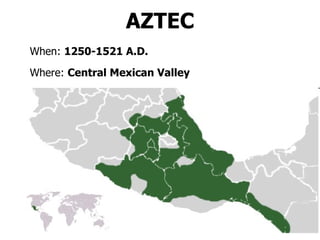
AZTEC When:  1250-1521 A.D. Where:  Central Mexican Valley
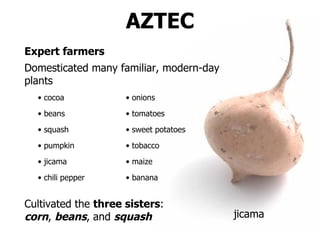
AZTEC Expert farmers Domesticated many familiar, modern-day plants jicama cocoa banana squash pumpkin beans chili pepper tobacco onions tomatoes sweet potatoes jicama maize Cultivated the  three sisters :  corn ,  beans , and  squash
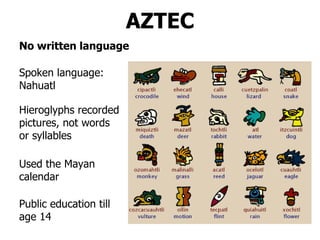
AZTEC Spoken language: Nahuatl No written language Hieroglyphs recorded pictures, not words or syllables Used the Mayan calendar Public education till age 14
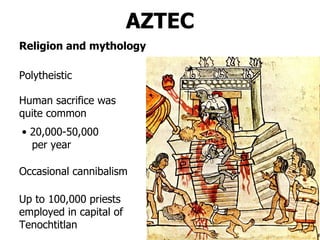
AZTEC Polytheistic Religion and mythology Human sacrifice was quite common 20,000-50,000   per year Occasional cannibalism Up to 100,000 priests employed in capital of Tenochtitlan
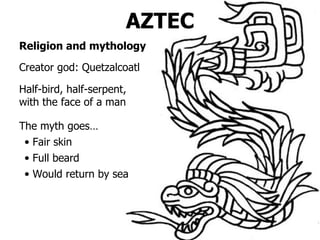
AZTEC Creator god: Quetzalcoatl Religion and mythology Half-bird, half-serpent, with the face of a man Fair skin Full beard Would return by sea The myth goes…
 
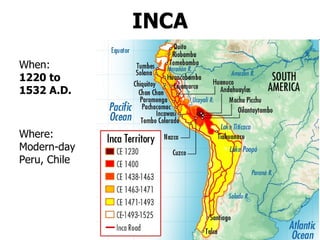
INCA Where: Modern-day Peru, Chile When:  1220 to 1532 A.D.
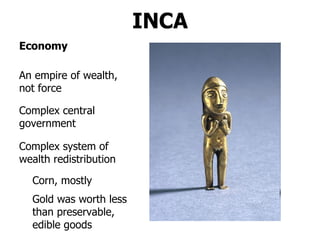
INCA An empire of wealth, not force Economy Complex system of wealth redistribution Corn, mostly Gold was worth less than preservable, edible goods Complex central government
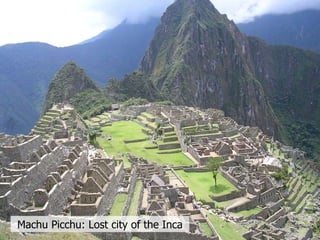
Machu Picchu: Lost city of the Inca
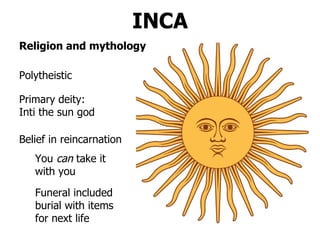
INCA Polytheistic Religion and mythology Belief in reincarnation Primary deity: Inti the sun god You  can  take it with you Funeral included burial with items for next life
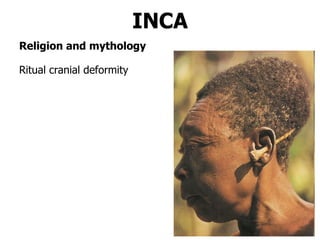
INCA Ritual cranial deformity Religion and mythology

Ancientamericans

  • 1.
    EARLY AMERICAN CIVILIZATIONEARLY AMERICAN CIVILIZATION EARLY AMERICAN CIVILIZATION
  • 2.
  • 3.
    MAYA When: 250-900 A.D. Where: Yucatan Peninsula Modern-day Mexico, Guatemala, Belize, Honduras Only complete written language in the New World 550-character logosyllabic alphabet
  • 4.
    MAYA Mayan alphabet (an example)
  • 5.
    MAYA Huge, monumentalarchitecture Stairways to heaven Burial mounds that grew and grew
  • 6.
    Detroit, MI (1928)Tikal, Guatemala (695 AD)
  • 7.
    MAYA Very ritualisticDisplayed war captives Human sacrifice Monotheistic God and corn Merchants and traders Established trading posts all around Mesoamerica tzompantli
  • 8.
    MAYA Advanced mathematicssystem Advanced astronomy, calendar system Eighteen 20-day months Five “unlucky,” unnamed days 18 x 20 = 360, +5… not bad!
  • 9.
    MAYA “ Hey,Mr. T., what about… … this whole ‘end of the world’ thing?” The Mayans could not predict their own demise. They simply died out around 900 A.D.
  • 10.
  • 11.
    AZTEC When: 1250-1521 A.D. Where: Central Mexican Valley
  • 12.
    AZTEC Expert farmersDomesticated many familiar, modern-day plants jicama cocoa banana squash pumpkin beans chili pepper tobacco onions tomatoes sweet potatoes jicama maize Cultivated the three sisters : corn , beans , and squash
  • 13.
    AZTEC Spoken language:Nahuatl No written language Hieroglyphs recorded pictures, not words or syllables Used the Mayan calendar Public education till age 14
  • 14.
    AZTEC Polytheistic Religionand mythology Human sacrifice was quite common 20,000-50,000 per year Occasional cannibalism Up to 100,000 priests employed in capital of Tenochtitlan
  • 15.
    AZTEC Creator god:Quetzalcoatl Religion and mythology Half-bird, half-serpent, with the face of a man Fair skin Full beard Would return by sea The myth goes…
  • 16.
  • 17.
    INCA Where: Modern-dayPeru, Chile When: 1220 to 1532 A.D.
  • 18.
    INCA An empireof wealth, not force Economy Complex system of wealth redistribution Corn, mostly Gold was worth less than preservable, edible goods Complex central government
  • 19.
    Machu Picchu: Lostcity of the Inca
  • 20.
    INCA Polytheistic Religionand mythology Belief in reincarnation Primary deity: Inti the sun god You can take it with you Funeral included burial with items for next life
  • 21.
    INCA Ritual cranialdeformity Religion and mythology