



Ancient civilizations of the
        Americas
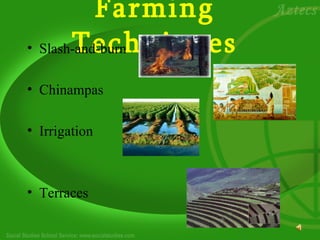
Farming
       Techniques
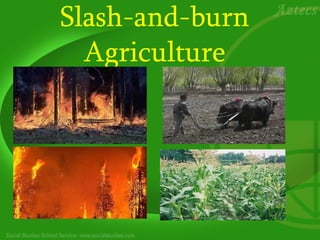
• Slash-and-burn

• Chinampas

• Irrigation


• Terraces
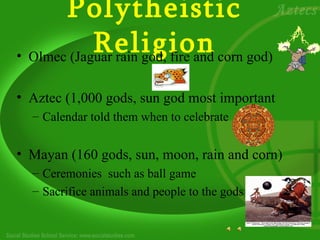
Polytheistic
            Religion corn god)
• Olmec (Jaguar rain god, fire and

• Aztec (1,000 gods, sun god most important
  – Calendar told them when to celebrate


• Mayan (160 gods, sun, moon, rain and corn)
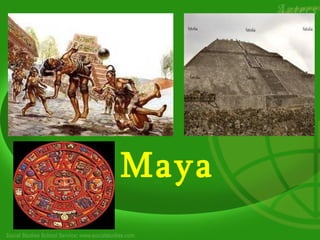
  – Ceremonies such as ball game
  – Sacrifice animals and people to the gods
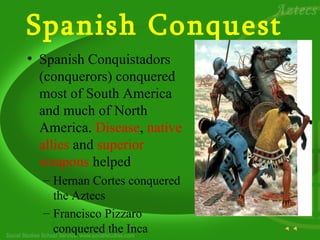
Spanish Conquest
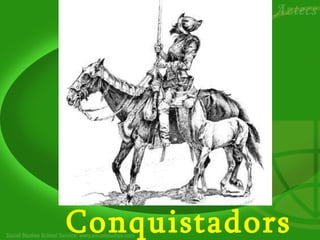
• Spanish Conquistadors
  (conquerors) conquered
  most of South America
  and much of North
  America. Disease, native
  allies and superior
  weapons helped
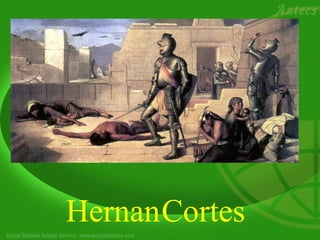
  – Hernan Cortes conquered
    the Aztecs
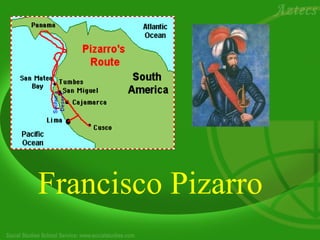
  – Francisco Pizzaro
    conquered the Inca
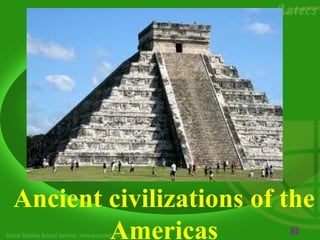
Pyramids
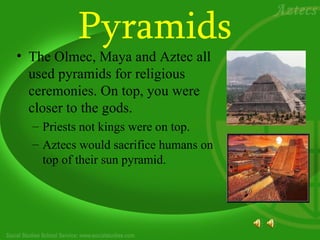
• The Olmec, Maya and Aztec all
  used pyramids for religious
  ceremonies. On top, you were
  closer to the gods.
  – Priests not kings were on top.
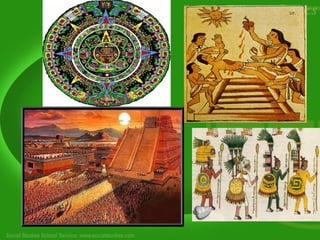
  – Aztecs would sacrifice humans on
    top of their sun pyramid.
Calendar/Astronom
                    y
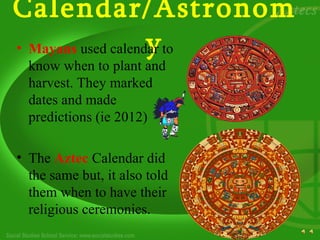
• Mayans used calendar to
  know when to plant and
  harvest. They marked
  dates and made
  predictions (ie 2012)

• The Aztec Calendar did
  the same but, it also told
  them when to have their
  religious ceremonies.
Priests, Noble, Farmers
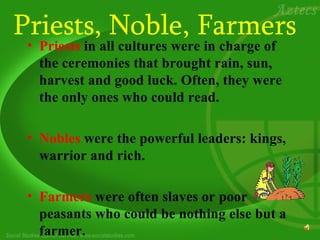
 • Priests in all cultures were in charge of
   the ceremonies that brought rain, sun,
   harvest and good luck. Often, they were
   the only ones who could read.

 • Nobles were the powerful leaders: kings,
   warrior and rich.

 • Farmers were often slaves or poor
   peasants who could be nothing else but a
   farmer.
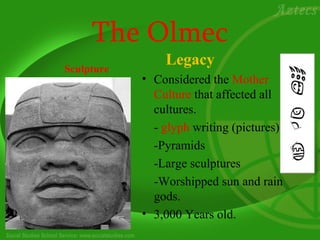
The Olmec
Sculpture
                Legacy
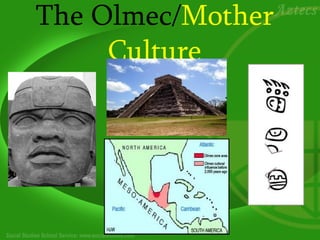
            • Considered the Mother
              Culture that affected all
              cultures.
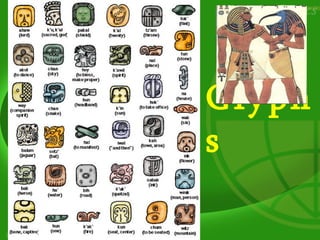
              - glyph writing (pictures)
              -Pyramids
              -Large sculptures
              -Worshipped sun and rain
              gods.
            • 3,000 Years old.
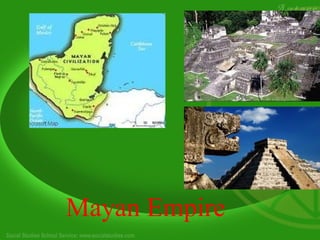
Mayan Empire
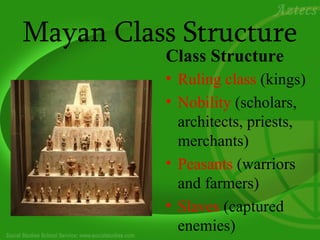
Mayan Class Structure
          Class Structure
          • Ruling class (kings)
          • Nobility (scholars,
            architects, priests,
            merchants)
          • Peasants (warriors
            and farmers)
          • Slaves (captured
            enemies)
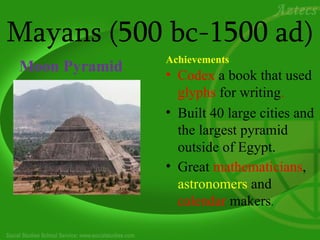
Mayans (500 bc-1500 ad)
               Achievements
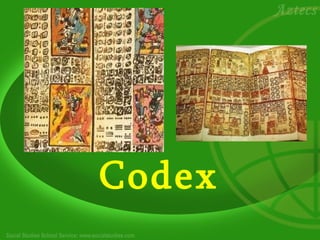
Moon Pyramid   • Codex a book that used
                 glyphs for writing.
               • Built 40 large cities and
                 the largest pyramid
                 outside of Egypt.
               • Great mathematicians,
                 astronomers and
                 calendar makers.
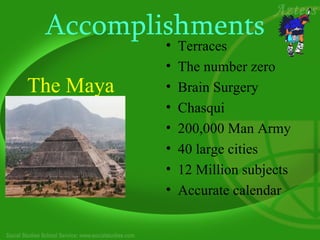
Accomplishments
           •   Terraces
           •   The number zero
The Maya   •   Brain Surgery
           •   Chasqui
           •   200,000 Man Army
           •   40 large cities
           •   12 Million subjects
           •   Accurate calendar
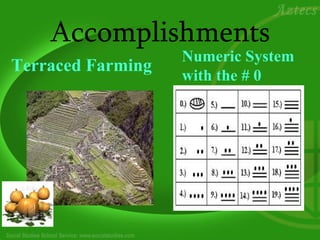
Accomplishments
                   Numeric System
Terraced Farming
                   with the # 0
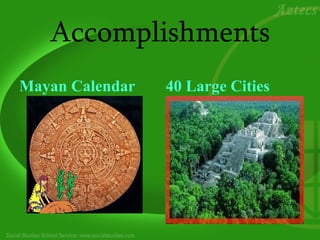
Accomplishments
Mayan Calendar   40 Large Cities
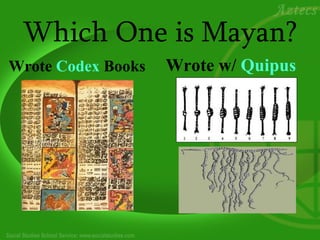
Which One is Mayan?
Wrote Codex Books   Wrote w/ Quipus
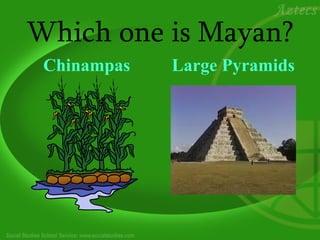
Which one is Mayan?
 Chinampas   Large Pyramids
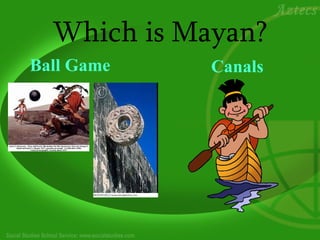
Which is Mayan?
Ball Game    Canals
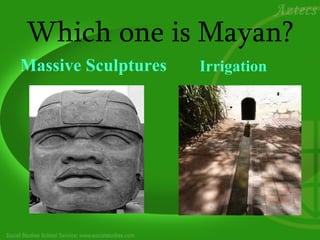
Which one is Mayan?
Massive Sculptures   Irrigation
Mayans and Aztecs
The
Awesom
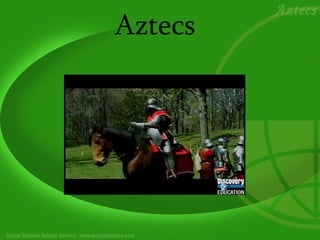
e Aztecs
Introduction
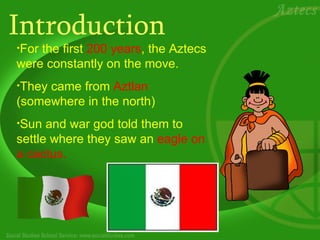
•For the first 200 years, the Aztecs
were constantly on the move.
•They came from Aztlan
(somewhere in the north)
•Sun and war god told them to
settle where they saw an eagle on
a cactus.
Aztecs
Settlement
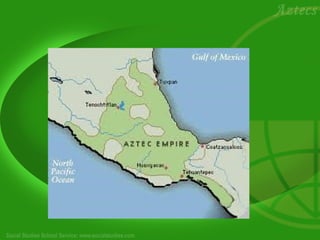
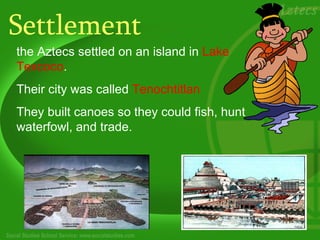
the Aztecs settled on an island in Lake
Texcoco.
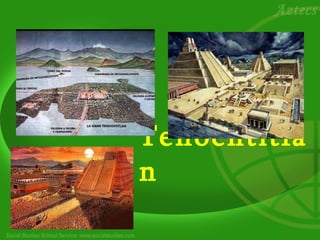
Their city was called Tenochtitlan
They built canoes so they could fish, hunt
waterfowl, and trade.
Empire
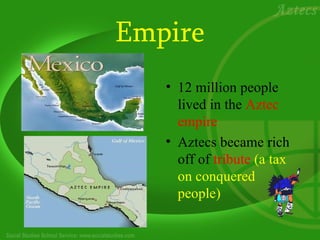
   • 12 million people
     lived in the Aztec
     empire
   • Aztecs became rich
     off of tribute (a tax
     on conquered
     people)
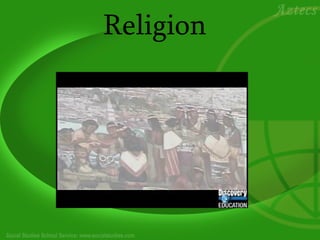
Religion
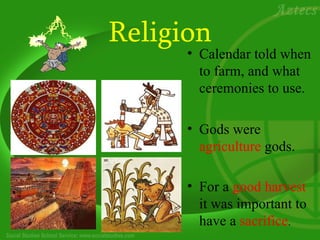
      • Calendar told when
        to farm, and what
        ceremonies to use.

      • Gods were
        agriculture gods.

      • For a good harvest
        it was important to
        have a sacrifice.
Religion
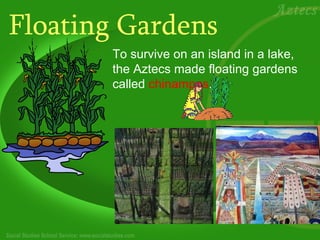
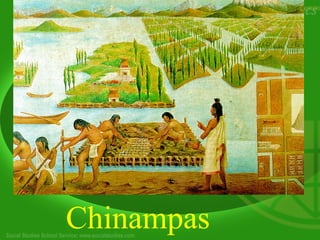
Floating Gardens
       To survive on an island in a lake,
       the Aztecs made floating gardens
       called chinampas.
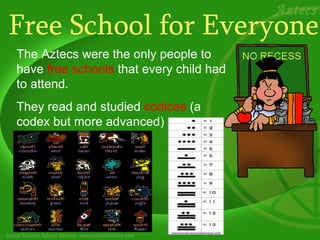
Free School for Everyone
The Aztecs were the only people to
have free schools that every child had
to attend.
They read and studied codices (a
codex but more advanced)
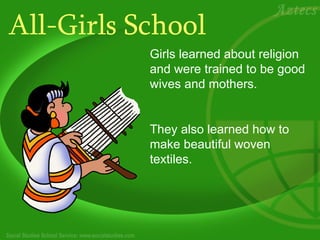
All-Girls School
           Girls learned about religion
           and were trained to be good
           wives and mothers.


           They also learned how to
           make beautiful woven
           textiles.
Spanish Conquest
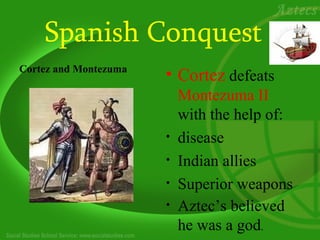
Cortez and Montezuma
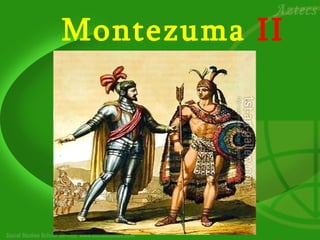
                       • Cortez defeats
                           Montezuma II
                           with the help of:
                       •   disease
                       •   Indian allies
                       •   Superior weapons
                       •   Aztec’s believed
                           he was a god.
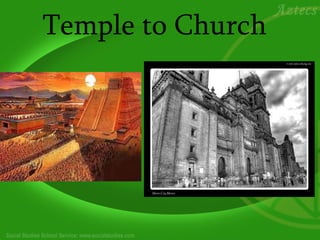
Temple to Church
The
Inca
empIr
e
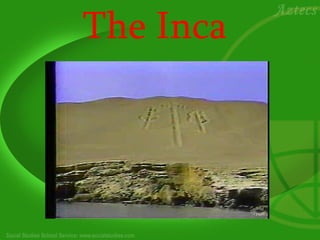
The Inca
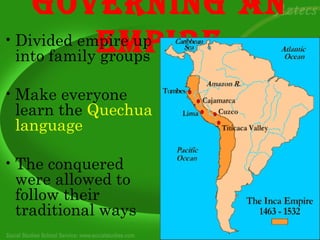
GovernInG an
             empIre
• Divided empire up
  into family groups

• Make everyone
  learn the Quechua
  language

• The conquered
  were allowed to
  follow their
  traditional ways
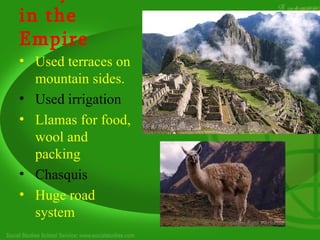
in the
Empire
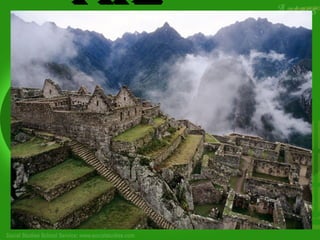
• Used terraces on
  mountain sides.
• Used irrigation
• Llamas for food,
  wool and
  packing
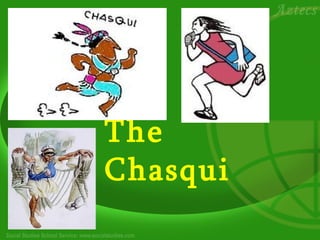
• Chasquis
• Huge road
  system
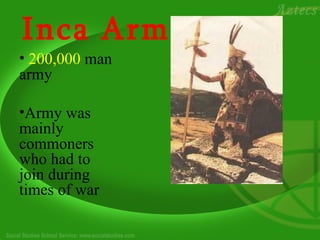
Inca Army
• 200,000 man
army

•Army was
mainly
commoners
who had to
join during
times of war
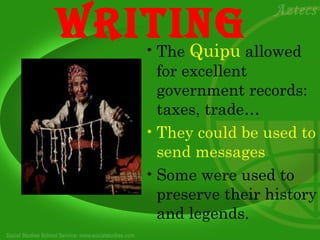
WrITInG
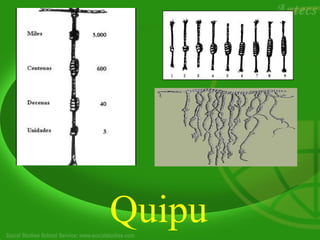
     Quipu
    • The          allowed
      for excellent
      government records:
      taxes, trade…
    • They could be used to
      send messages
    • Some were used to
      preserve their history
      and legends.
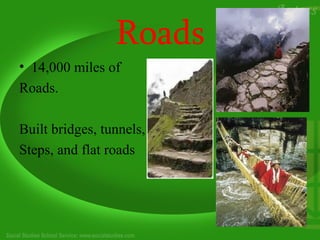
Roads
• 14,000 miles of
Roads.

Built bridges, tunnels,
Steps, and flat roads
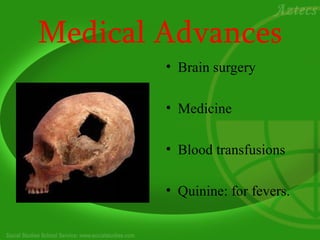
Medical Advances
        • Brain surgery

        • Medicine

        • Blood transfusions

        • Quinine: for fevers.
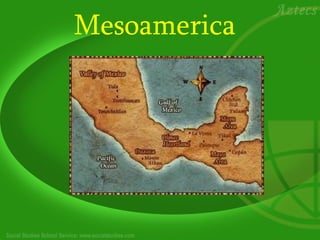
Mesoamerica
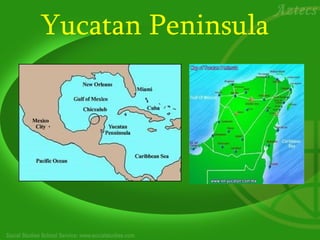
Yucatan Peninsula
Slash-and-burn
  Agriculture
The Olmec/Mother
     Culture
Glyph
s
Maya
Codex
Tenochtitla
n
Montezuma II
Hernan Cortes
Quipu
The
Chasqui
Francisco Pizarro
Chinampas
Conquistadors
Aztec  and Mayan civilizations

Aztec and Mayan civilizations

  • 2.
  • 3.
    Farming Techniques • Slash-and-burn • Chinampas • Irrigation • Terraces
  • 4.
    Polytheistic Religion corn god) • Olmec (Jaguar rain god, fire and • Aztec (1,000 gods, sun god most important – Calendar told them when to celebrate • Mayan (160 gods, sun, moon, rain and corn) – Ceremonies such as ball game – Sacrifice animals and people to the gods
  • 5.
    Spanish Conquest • SpanishConquistadors (conquerors) conquered most of South America and much of North America. Disease, native allies and superior weapons helped – Hernan Cortes conquered the Aztecs – Francisco Pizzaro conquered the Inca
  • 6.
    Pyramids • The Olmec,Maya and Aztec all used pyramids for religious ceremonies. On top, you were closer to the gods. – Priests not kings were on top. – Aztecs would sacrifice humans on top of their sun pyramid.
  • 7.
    Calendar/Astronom y • Mayans used calendar to know when to plant and harvest. They marked dates and made predictions (ie 2012) • The Aztec Calendar did the same but, it also told them when to have their religious ceremonies.
  • 8.
    Priests, Noble, Farmers • Priests in all cultures were in charge of the ceremonies that brought rain, sun, harvest and good luck. Often, they were the only ones who could read. • Nobles were the powerful leaders: kings, warrior and rich. • Farmers were often slaves or poor peasants who could be nothing else but a farmer.
  • 10.
    The Olmec Sculpture Legacy • Considered the Mother Culture that affected all cultures. - glyph writing (pictures) -Pyramids -Large sculptures -Worshipped sun and rain gods. • 3,000 Years old.
  • 11.
  • 12.
    Mayan Class Structure Class Structure • Ruling class (kings) • Nobility (scholars, architects, priests, merchants) • Peasants (warriors and farmers) • Slaves (captured enemies)
  • 13.
    Mayans (500 bc-1500ad) Achievements Moon Pyramid • Codex a book that used glyphs for writing. • Built 40 large cities and the largest pyramid outside of Egypt. • Great mathematicians, astronomers and calendar makers.
  • 14.
    Accomplishments • Terraces • The number zero The Maya • Brain Surgery • Chasqui • 200,000 Man Army • 40 large cities • 12 Million subjects • Accurate calendar
  • 15.
    Accomplishments Numeric System Terraced Farming with the # 0
  • 16.
  • 17.
    Which One isMayan? Wrote Codex Books Wrote w/ Quipus
  • 18.
    Which one isMayan? Chinampas Large Pyramids
  • 19.
  • 20.
    Which one isMayan? Massive Sculptures Irrigation
  • 22.
  • 23.
  • 26.
    Introduction •For the first200 years, the Aztecs were constantly on the move. •They came from Aztlan (somewhere in the north) •Sun and war god told them to settle where they saw an eagle on a cactus.
  • 27.
  • 28.
    Settlement the Aztecs settledon an island in Lake Texcoco. Their city was called Tenochtitlan They built canoes so they could fish, hunt waterfowl, and trade.
  • 29.
    Empire • 12 million people lived in the Aztec empire • Aztecs became rich off of tribute (a tax on conquered people)
  • 30.
    Religion • Calendar told when to farm, and what ceremonies to use. • Gods were agriculture gods. • For a good harvest it was important to have a sacrifice.
  • 31.
  • 32.
    Floating Gardens To survive on an island in a lake, the Aztecs made floating gardens called chinampas.
  • 33.
    Free School forEveryone The Aztecs were the only people to have free schools that every child had to attend. They read and studied codices (a codex but more advanced)
  • 34.
    All-Girls School Girls learned about religion and were trained to be good wives and mothers. They also learned how to make beautiful woven textiles.
  • 35.
    Spanish Conquest Cortez andMontezuma • Cortez defeats Montezuma II with the help of: • disease • Indian allies • Superior weapons • Aztec’s believed he was a god.
  • 36.
  • 37.
  • 38.
  • 39.
    GovernInG an empIre • Divided empire up into family groups • Make everyone learn the Quechua language • The conquered were allowed to follow their traditional ways
  • 40.
    in the Empire • Usedterraces on mountain sides. • Used irrigation • Llamas for food, wool and packing • Chasquis • Huge road system
  • 41.
    Inca Army • 200,000man army •Army was mainly commoners who had to join during times of war
  • 42.
    WrITInG Quipu • The allowed for excellent government records: taxes, trade… • They could be used to send messages • Some were used to preserve their history and legends.
  • 43.
    Roads • 14,000 milesof Roads. Built bridges, tunnels, Steps, and flat roads
  • 44.
    Medical Advances • Brain surgery • Medicine • Blood transfusions • Quinine: for fevers.
  • 45.
  • 46.
  • 47.
  • 48.
  • 49.
  • 50.
  • 51.
  • 52.
  • 53.
  • 54.
  • 55.
  • 56.
  • 57.
  • 58.
  • 59.

Editor's Notes

  • #24 S
  • #27 S
  • #29 S
  • #33 S Teacher’s notes: The Aztecs created more useable land by filling in marshlands and swamps. They created even more by building dikes to hold back the water.
  • #34 S
  • #35 S
  • #40 Inca: South American Indians ruled Tawantinsuyu (Incan name of empire) that extended along the Pacific coast and Andean highlands from northern border of modern Ecuador to Maule River in central Chile
  • #41 Polytheistic religion - Pantheon headed by Inti-the sun god , also included Viracocha-a creator god and culture hero , Apu Illapu-rain god , special attendants “chosen women” People offered food, clothing, drink to guardian spirits; gods linked to forces of nature; each month own festival