AX2 TYPE OF CRYSTAL
STRUCTURE
D. Sudha
21PGC29
1
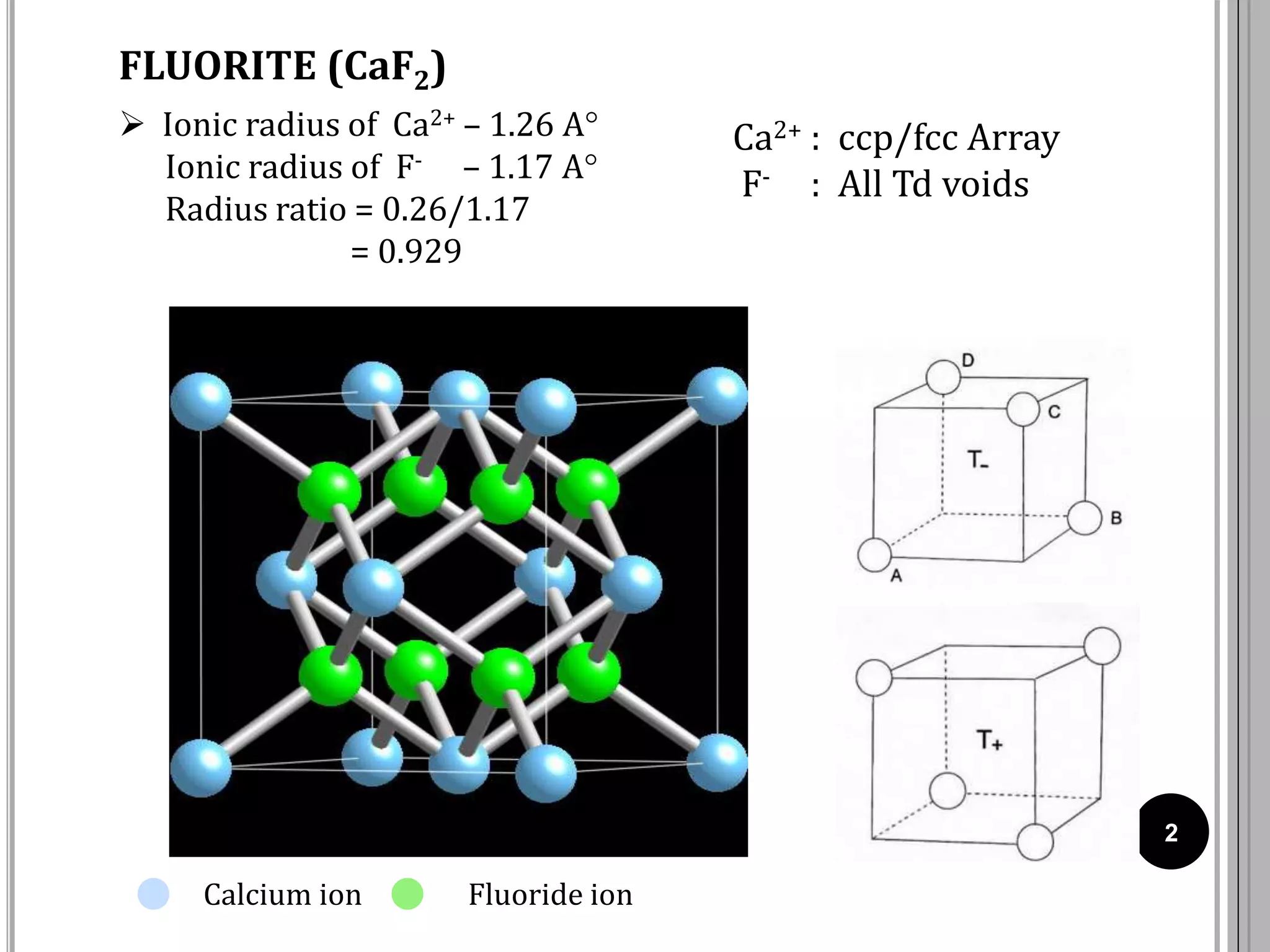
FLUORITE (CaF2)
2
Ca2+ : ccp/fcc Array
F- : All Td voids
Calcium ion Fluoride ion
 Ionic radius of Ca2+ – 1.26 A
Ionic radius of F- – 1.17 A
Radius ratio = 0.26/1.17
= 0.929
3
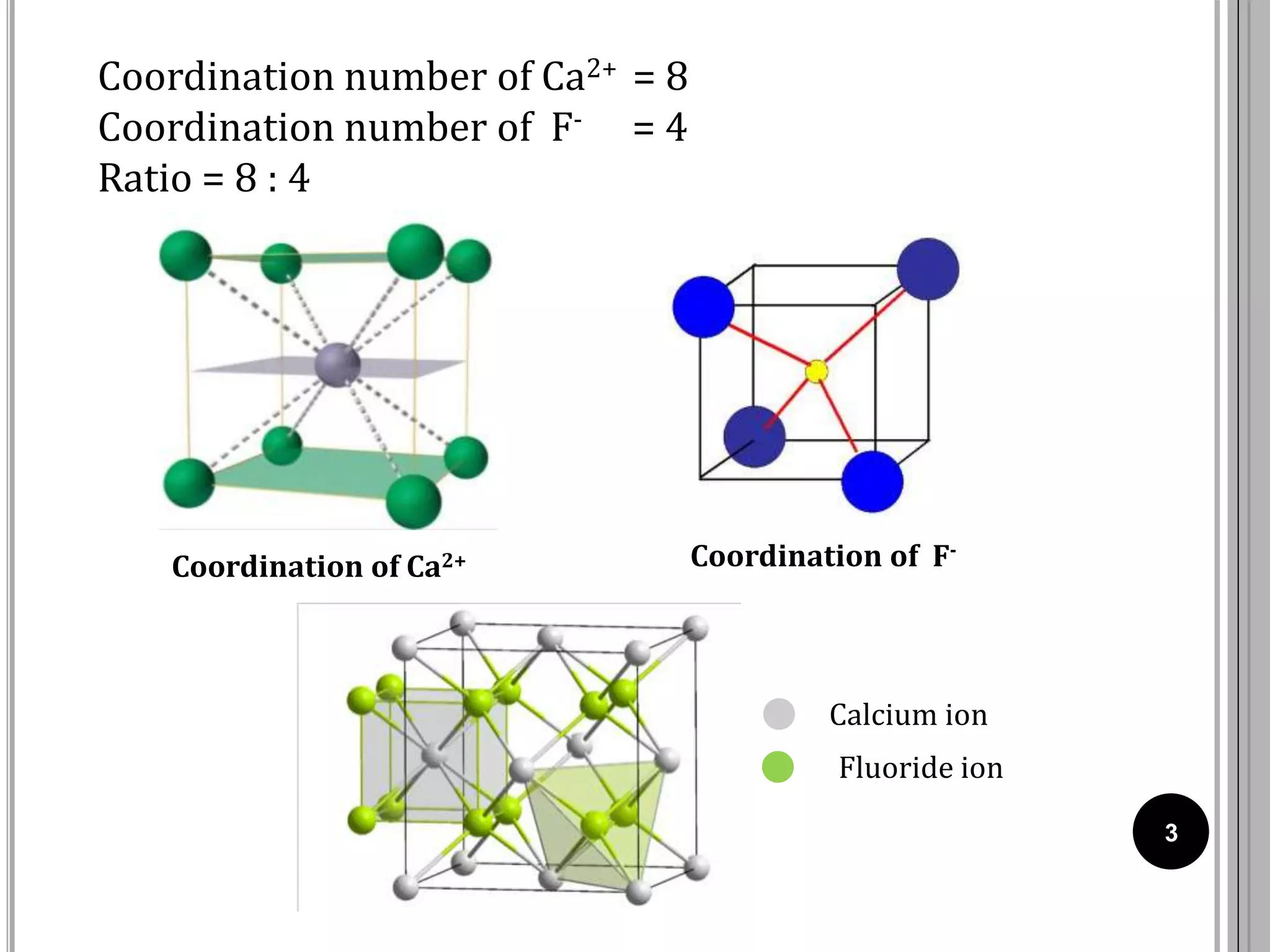
Coordination number of Ca2+ = 8
Coordination number of F- = 4
Ratio = 8 : 4
Coordination of Ca2+ Coordination of F-
Calcium ion
Fluoride ion
4
 No of atoms per unit cell
Ca2+ = Face + corner
= 6  1/2 + 8 1/8
= 3 + 1
= 4
F- = All Td Voids
= 8
 Other Examples:
SrF2 MgF2 , BaF2 , ZrO2 , HfO2 etc.,
5
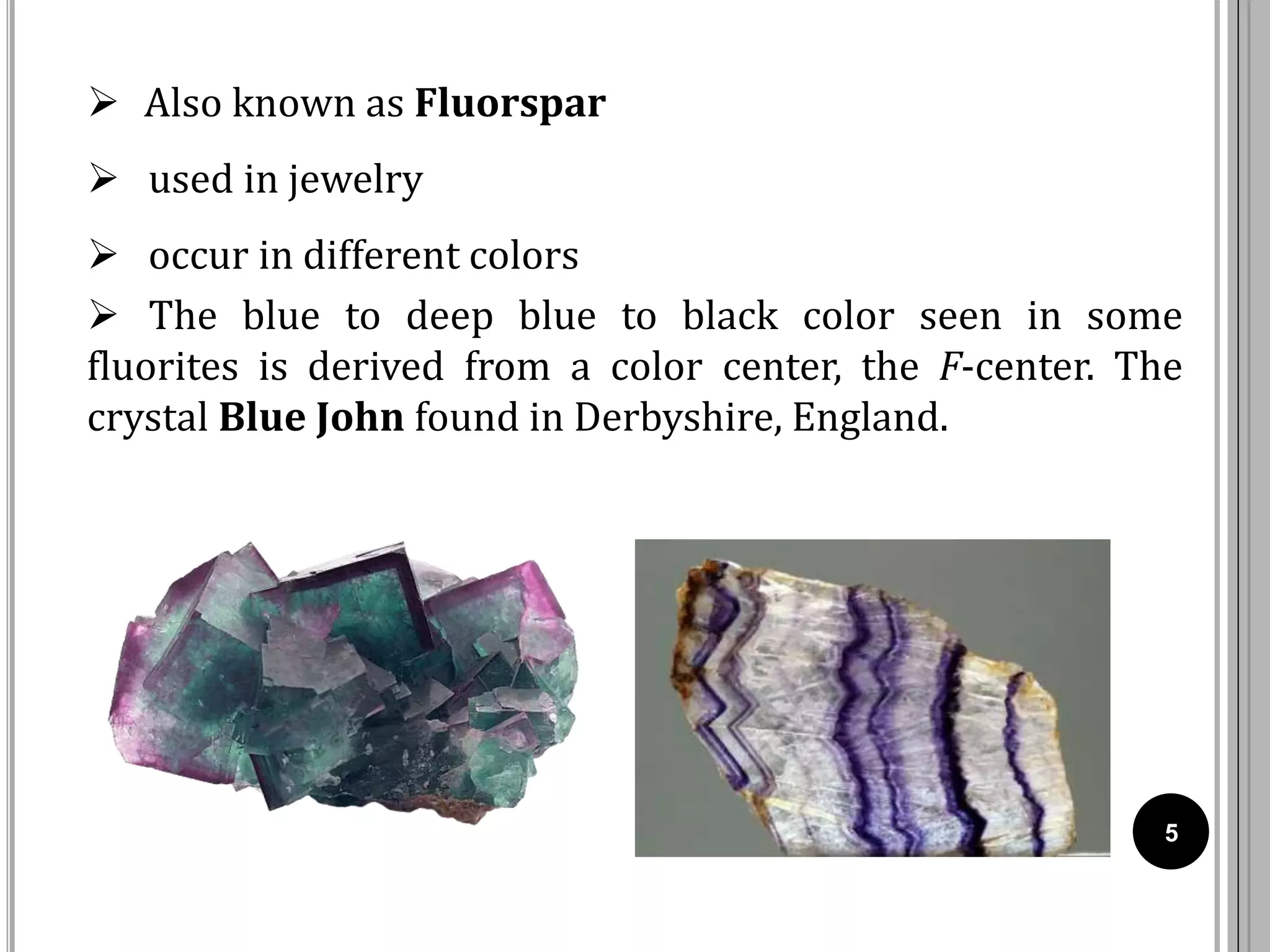
 Also known as Fluorspar
 used in jewelry
 occur in different colors
 The blue to deep blue to black color seen in some
fluorites is derived from a color center, the F-center. The
crystal Blue John found in Derbyshire, England.
6
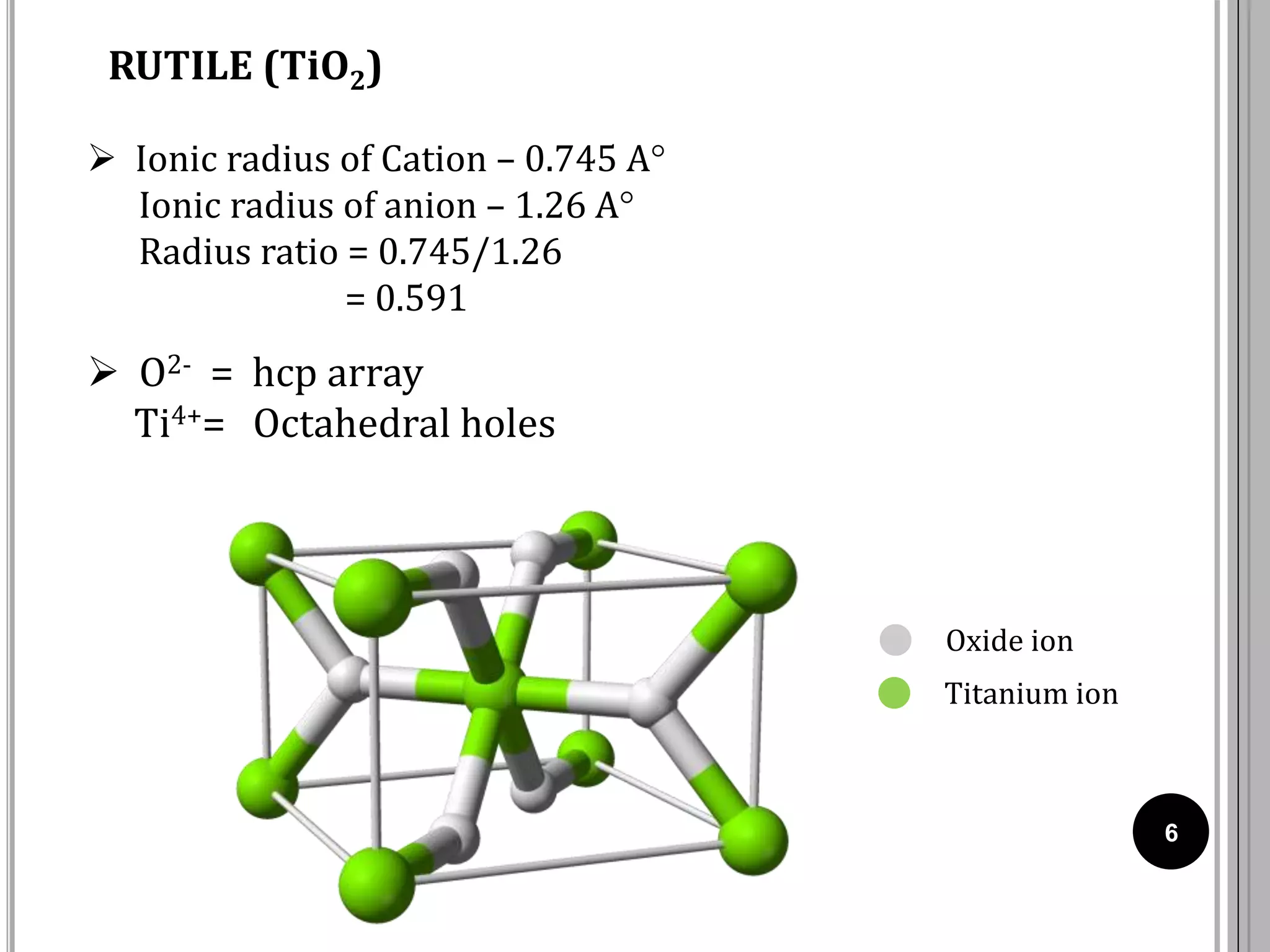
RUTILE (TiO2)
 O2- = hcp array
Ti4+= Octahedral holes
Oxide ion
Titanium ion
 Ionic radius of Cation – 0.745 A
Ionic radius of anion – 1.26 A
Radius ratio = 0.745/1.26
= 0.591
7
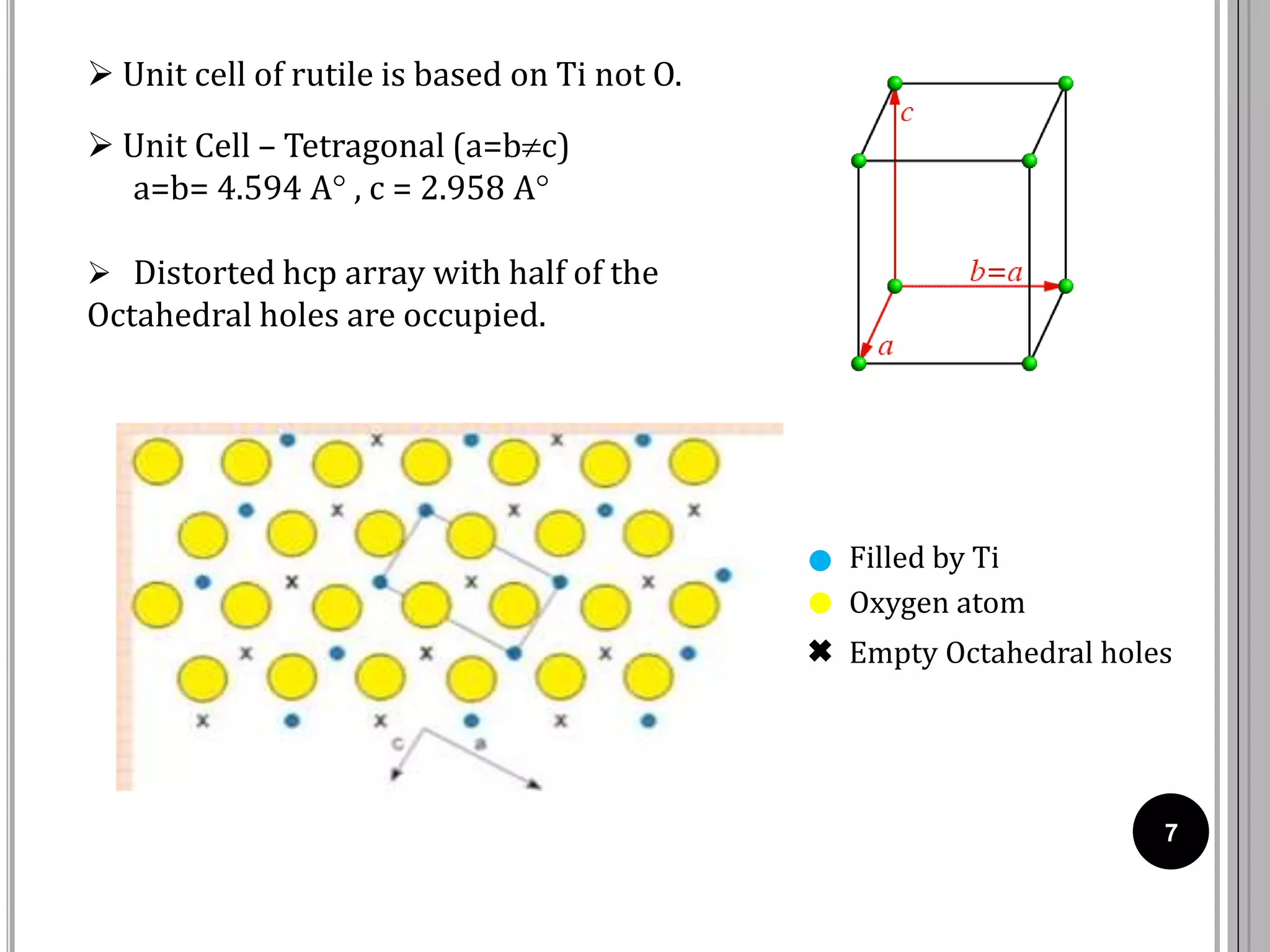
 Unit cell of rutile is based on Ti not O.
Filled by Ti
Oxygen atom
Empty Octahedral holes
 Unit Cell – Tetragonal (a=bc)
a=b= 4.594 A , c = 2.958 A
 Distorted hcp array with half of the
Octahedral holes are occupied.
8
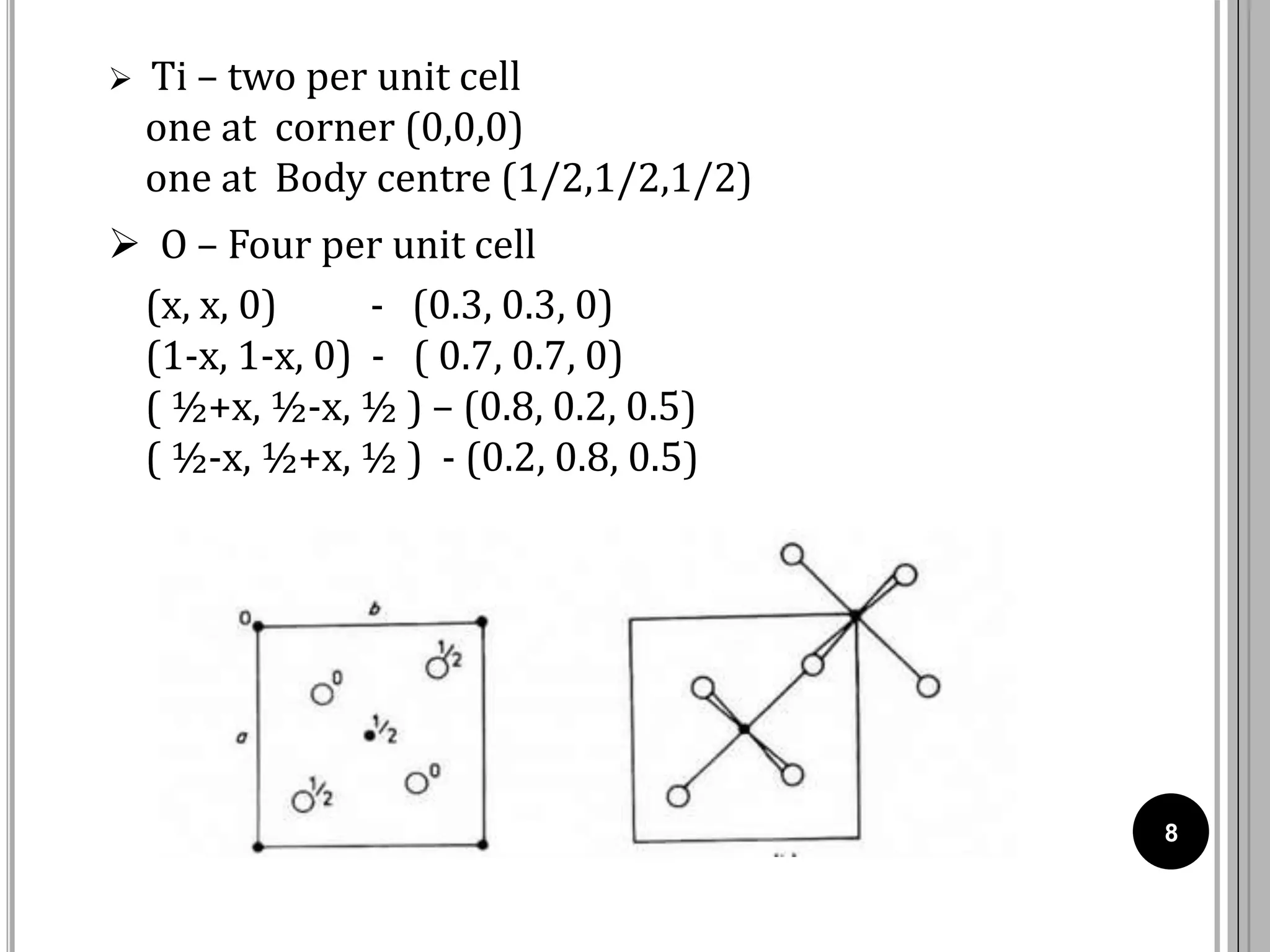
 Ti – two per unit cell
one at corner (0,0,0)
one at Body centre (1/2,1/2,1/2)
 O – Four per unit cell
(x, x, 0) - (0.3, 0.3, 0)
(1-x, 1-x, 0) - ( 0.7, 0.7, 0)
( ½+x, ½-x, ½ ) – (0.8, 0.2, 0.5)
( ½-x, ½+x, ½ ) - (0.2, 0.8, 0.5)
9
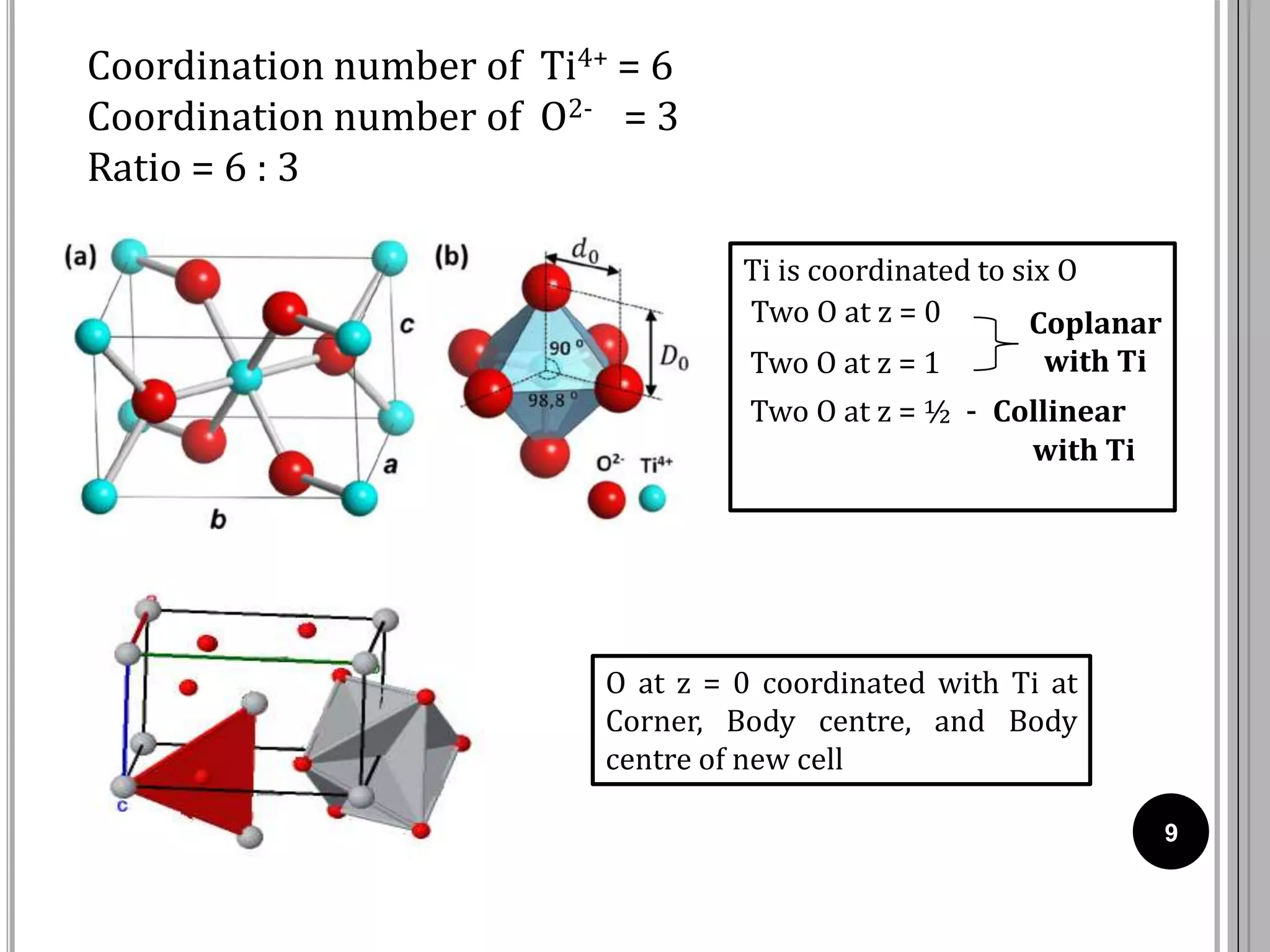
Coordination number of Ti4+ = 6
Coordination number of O2- = 3
Ratio = 6 : 3
Ti is coordinated to six O
Two O at z = 0
Two O at z = 1
Two O at z = ½ - Collinear
with Ti
Coplanar
with Ti
O at z = 0 coordinated with Ti at
Corner, Body centre, and Body
centre of new cell
10
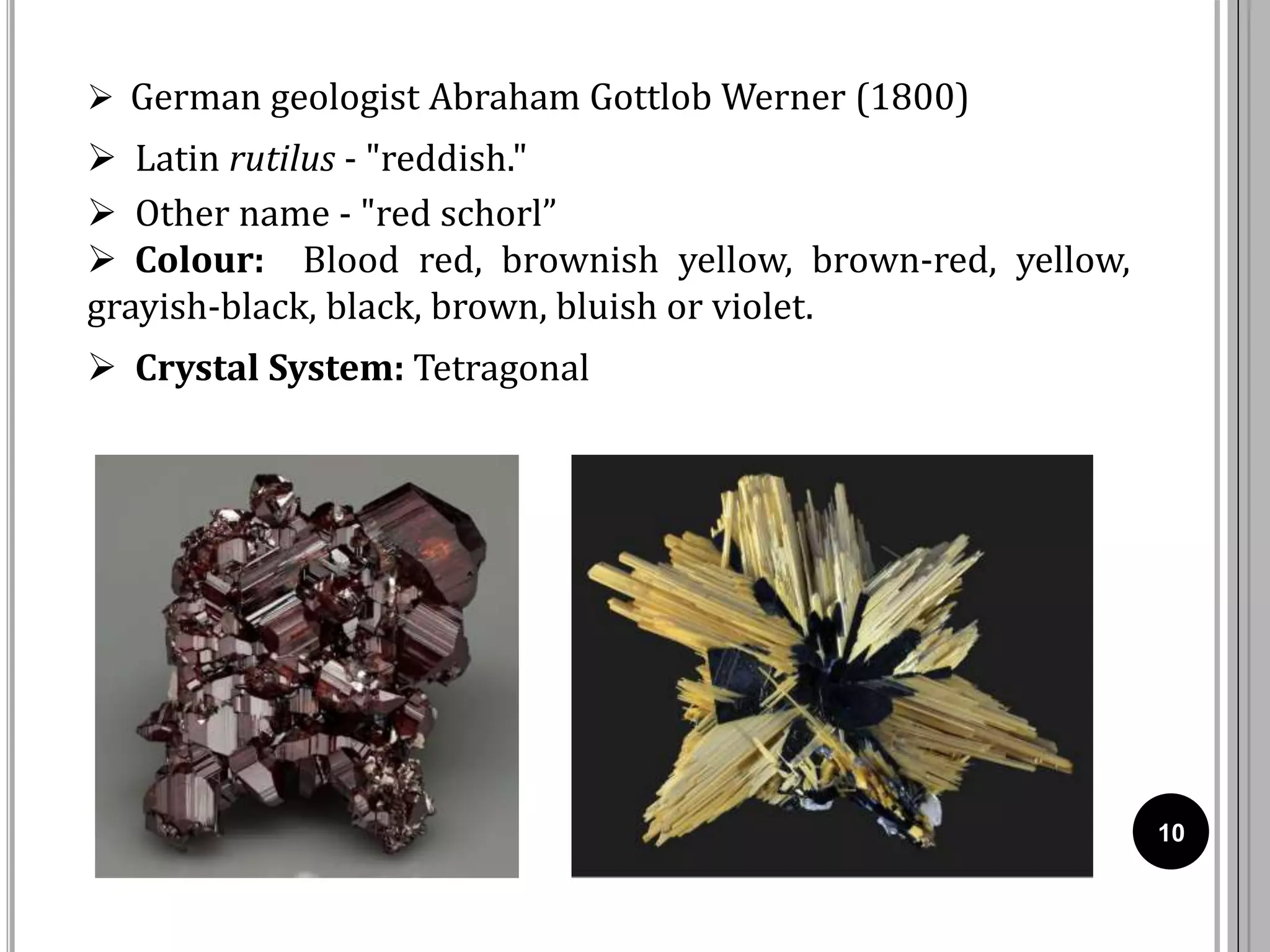
 German geologist Abraham Gottlob Werner (1800)
 Latin rutilus - "reddish."
 Other name - "red schorl”
 Colour: Blood red, brownish yellow, brown-red, yellow,
grayish-black, black, brown, bluish or violet.
 Crystal System: Tetragonal
11
Cadmium Iodide CdI2
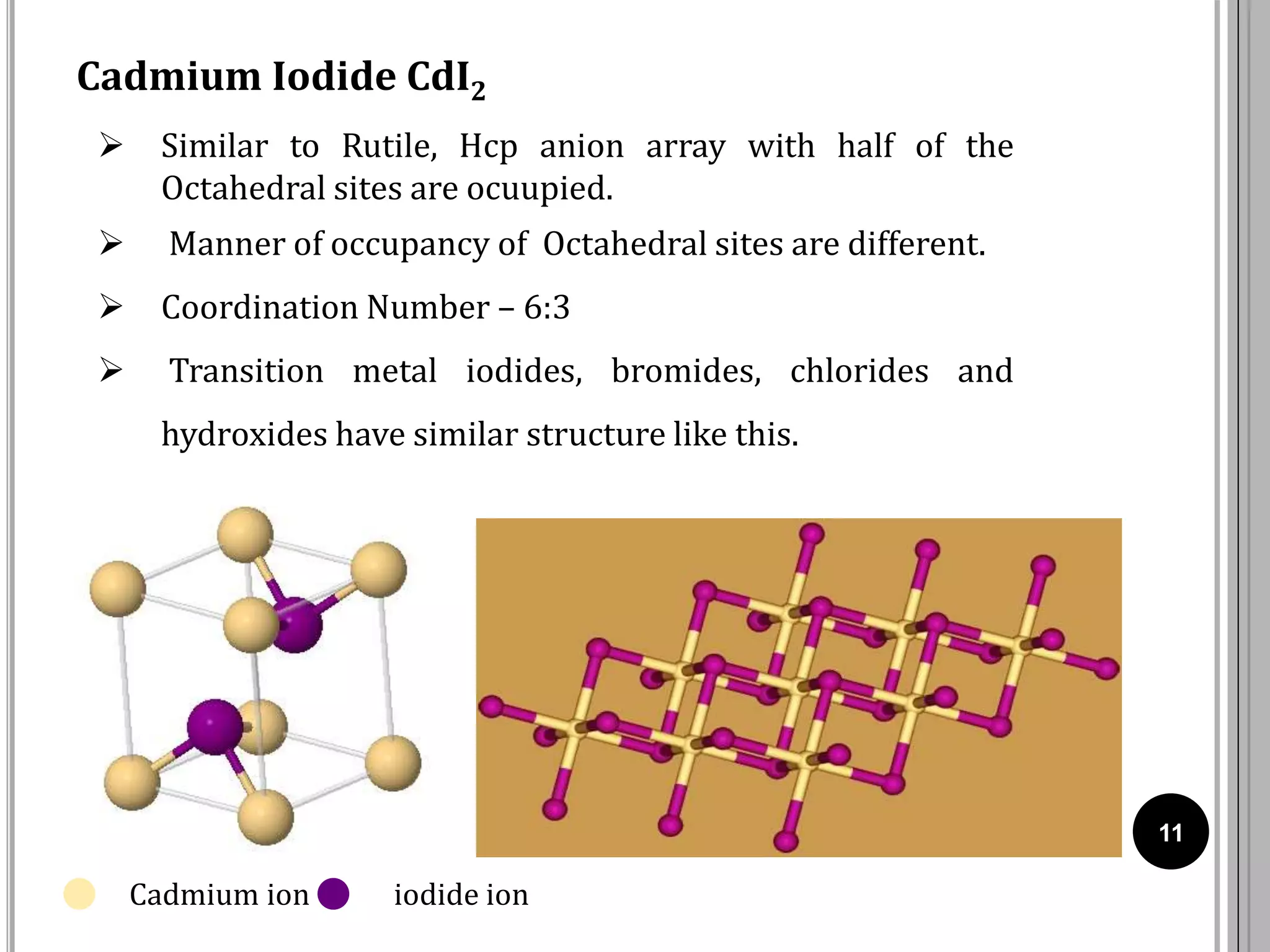
 Similar to Rutile, Hcp anion array with half of the
Octahedral sites are ocuupied.
 Manner of occupancy of Octahedral sites are different.
 Coordination Number – 6:3
 Transition metal iodides, bromides, chlorides and
hydroxides have similar structure like this.
Cadmium ion iodide ion
12
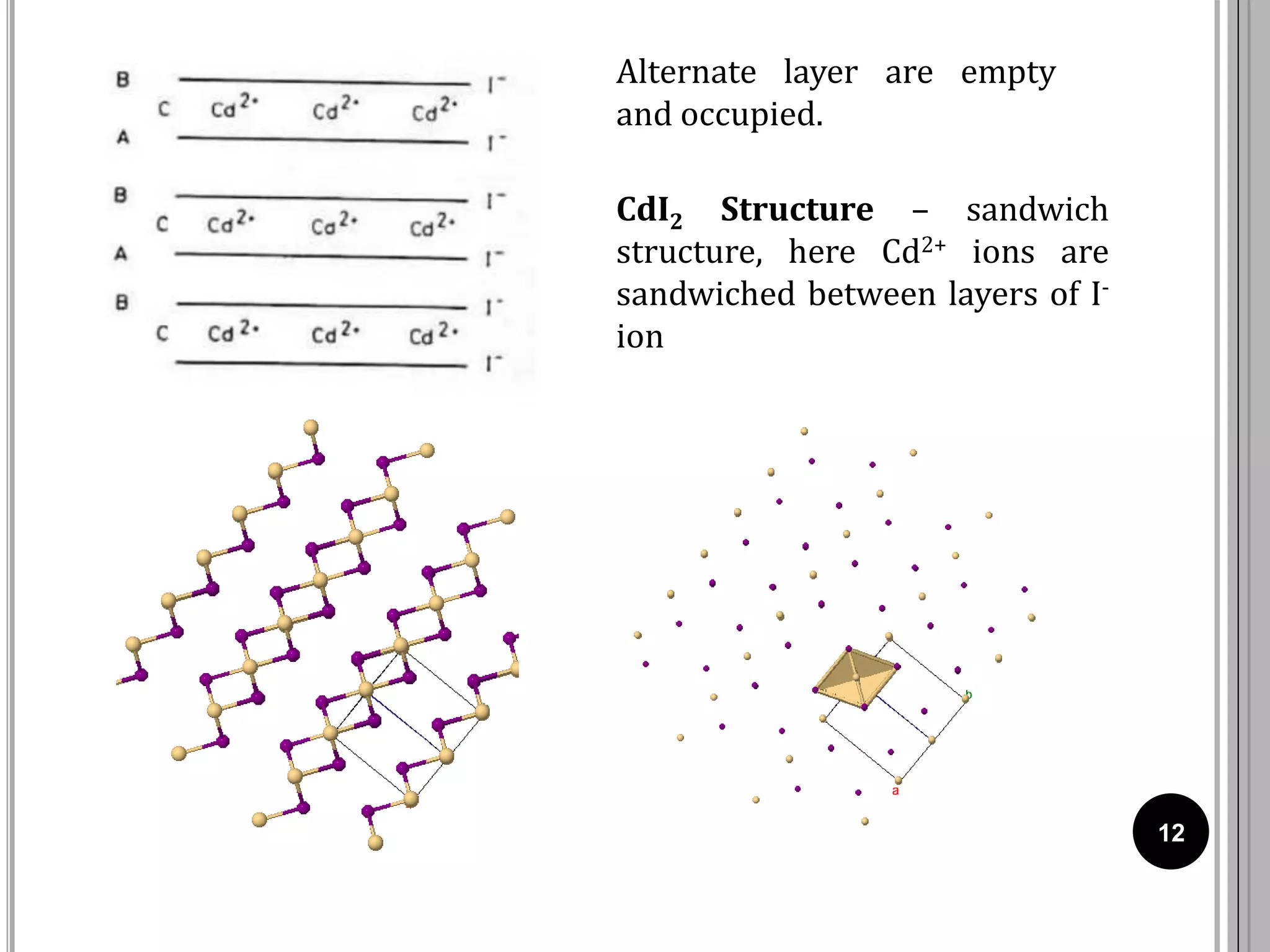
Alternate layer are empty
and occupied.
CdI2 Structure – sandwich
structure, here Cd2+ ions are
sandwiched between layers of I-
ion
13
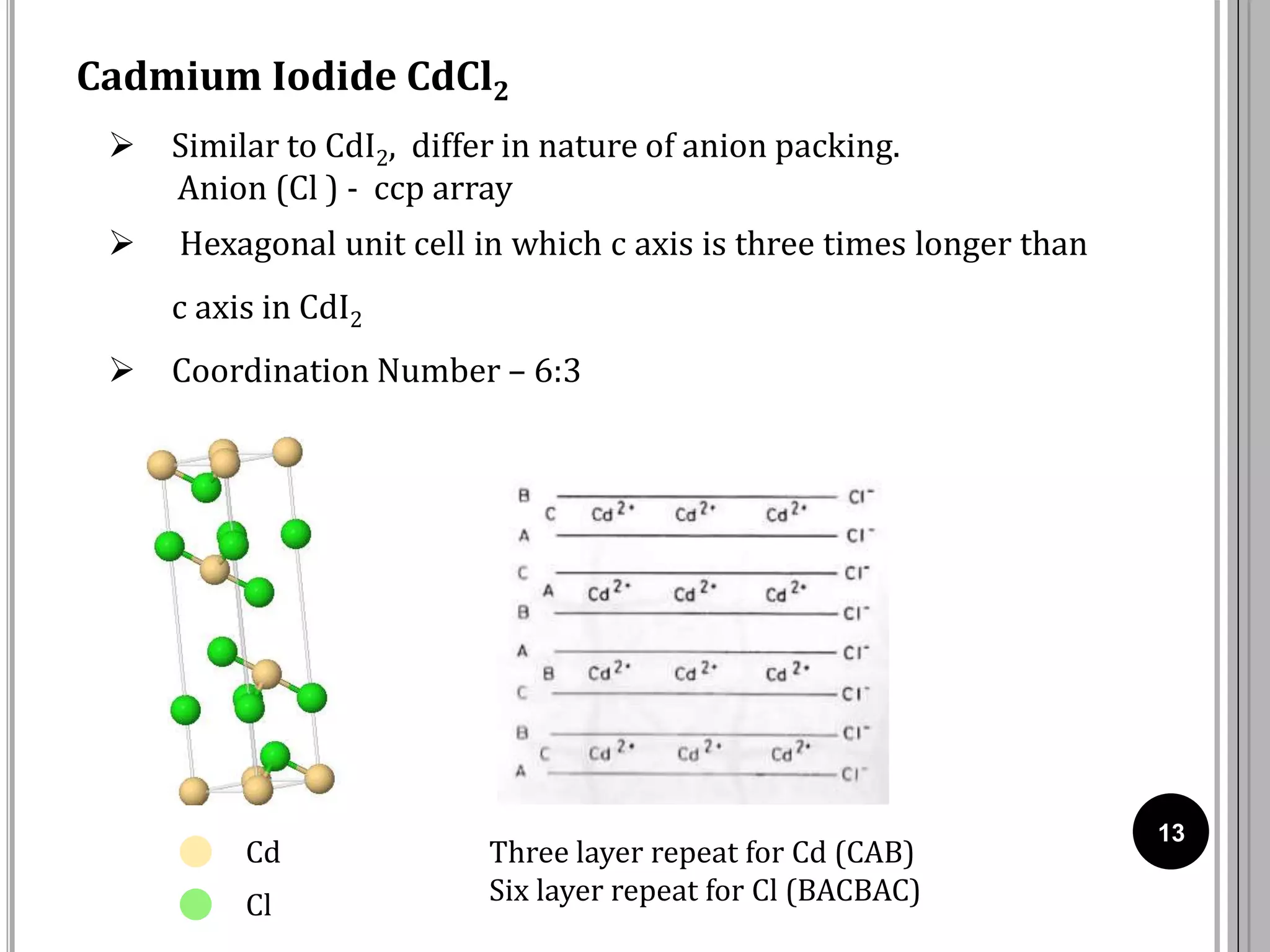
Cadmium Iodide CdCl2
 Similar to CdI2, differ in nature of anion packing.
Anion (Cl ) - ccp array
 Hexagonal unit cell in which c axis is three times longer than
c axis in CdI2
 Coordination Number – 6:3
Three layer repeat for Cd (CAB)
Six layer repeat for Cl (BACBAC)
Cd
Cl
14
References:
 Solid State chemistry – Anthony R. West
 Principles of Inorganic Chemistry – Puri & Sharma
 https://www.chemtube3d.com/
15

AX2 TYPE OF CRYSTAL STRUCTURE..pptx

  • 1.
    AX2 TYPE OFCRYSTAL STRUCTURE D. Sudha 21PGC29 1
  • 2.
    FLUORITE (CaF2) 2 Ca2+ :ccp/fcc Array F- : All Td voids Calcium ion Fluoride ion  Ionic radius of Ca2+ – 1.26 A Ionic radius of F- – 1.17 A Radius ratio = 0.26/1.17 = 0.929
  • 3.
    3 Coordination number ofCa2+ = 8 Coordination number of F- = 4 Ratio = 8 : 4 Coordination of Ca2+ Coordination of F- Calcium ion Fluoride ion
  • 4.
    4  No ofatoms per unit cell Ca2+ = Face + corner = 6  1/2 + 8 1/8 = 3 + 1 = 4 F- = All Td Voids = 8  Other Examples: SrF2 MgF2 , BaF2 , ZrO2 , HfO2 etc.,
  • 5.
    5  Also knownas Fluorspar  used in jewelry  occur in different colors  The blue to deep blue to black color seen in some fluorites is derived from a color center, the F-center. The crystal Blue John found in Derbyshire, England.
  • 6.
    6 RUTILE (TiO2)  O2-= hcp array Ti4+= Octahedral holes Oxide ion Titanium ion  Ionic radius of Cation – 0.745 A Ionic radius of anion – 1.26 A Radius ratio = 0.745/1.26 = 0.591
  • 7.
    7  Unit cellof rutile is based on Ti not O. Filled by Ti Oxygen atom Empty Octahedral holes  Unit Cell – Tetragonal (a=bc) a=b= 4.594 A , c = 2.958 A  Distorted hcp array with half of the Octahedral holes are occupied.
  • 8.
    8  Ti –two per unit cell one at corner (0,0,0) one at Body centre (1/2,1/2,1/2)  O – Four per unit cell (x, x, 0) - (0.3, 0.3, 0) (1-x, 1-x, 0) - ( 0.7, 0.7, 0) ( ½+x, ½-x, ½ ) – (0.8, 0.2, 0.5) ( ½-x, ½+x, ½ ) - (0.2, 0.8, 0.5)
  • 9.
    9 Coordination number ofTi4+ = 6 Coordination number of O2- = 3 Ratio = 6 : 3 Ti is coordinated to six O Two O at z = 0 Two O at z = 1 Two O at z = ½ - Collinear with Ti Coplanar with Ti O at z = 0 coordinated with Ti at Corner, Body centre, and Body centre of new cell
  • 10.
    10  German geologistAbraham Gottlob Werner (1800)  Latin rutilus - "reddish."  Other name - "red schorl”  Colour: Blood red, brownish yellow, brown-red, yellow, grayish-black, black, brown, bluish or violet.  Crystal System: Tetragonal
  • 11.
    11 Cadmium Iodide CdI2 Similar to Rutile, Hcp anion array with half of the Octahedral sites are ocuupied.  Manner of occupancy of Octahedral sites are different.  Coordination Number – 6:3  Transition metal iodides, bromides, chlorides and hydroxides have similar structure like this. Cadmium ion iodide ion
  • 12.
    12 Alternate layer areempty and occupied. CdI2 Structure – sandwich structure, here Cd2+ ions are sandwiched between layers of I- ion
  • 13.
    13 Cadmium Iodide CdCl2 Similar to CdI2, differ in nature of anion packing. Anion (Cl ) - ccp array  Hexagonal unit cell in which c axis is three times longer than c axis in CdI2  Coordination Number – 6:3 Three layer repeat for Cd (CAB) Six layer repeat for Cl (BACBAC) Cd Cl
  • 14.
    14 References:  Solid Statechemistry – Anthony R. West  Principles of Inorganic Chemistry – Puri & Sharma  https://www.chemtube3d.com/
  • 15.