CHAPTER 4 : AUDIT ASSURANCE 
MUHAMMAD SHAHRIZUL MUIZ BIN MOHAMED 
NASIR 10DAT11F2078 
RAVIVARMA S/O MORGAN 10DAT11F2053 
KOGILA DEWI D/O SANTHA RASE GARAN 10DAT11F2142 
MEHALEI D/O KRISHNAN 10DAT11F2056
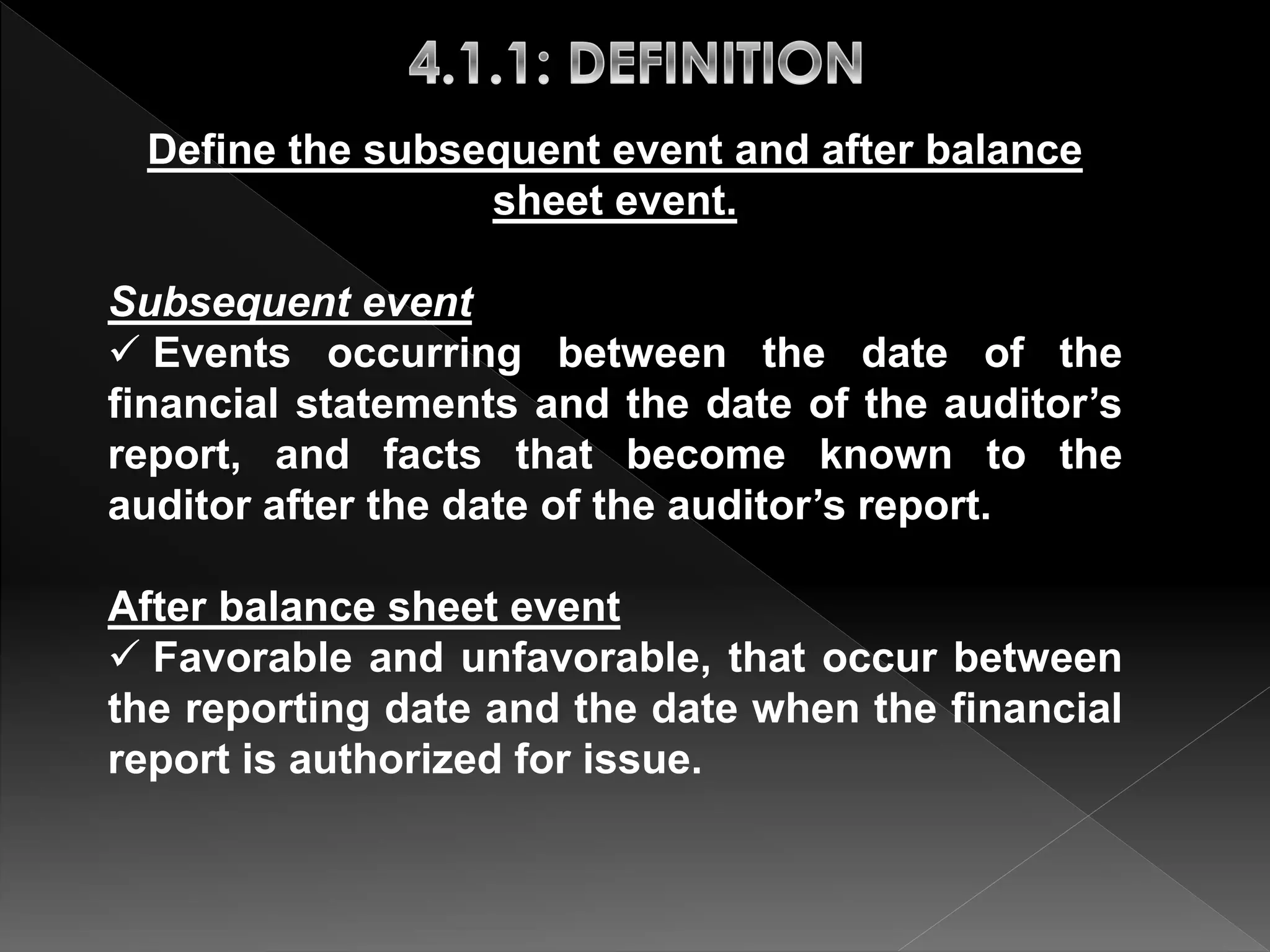
Define the subsequent event and after balance 
sheet event. 
Subsequent event 
 Events occurring between the date of the 
financial statements and the date of the auditor’s 
report, and facts that become known to the 
auditor after the date of the auditor’s report. 
After balance sheet event 
 Favorable and unfavorable, that occur between 
the reporting date and the date when the financial 
report is authorized for issue.
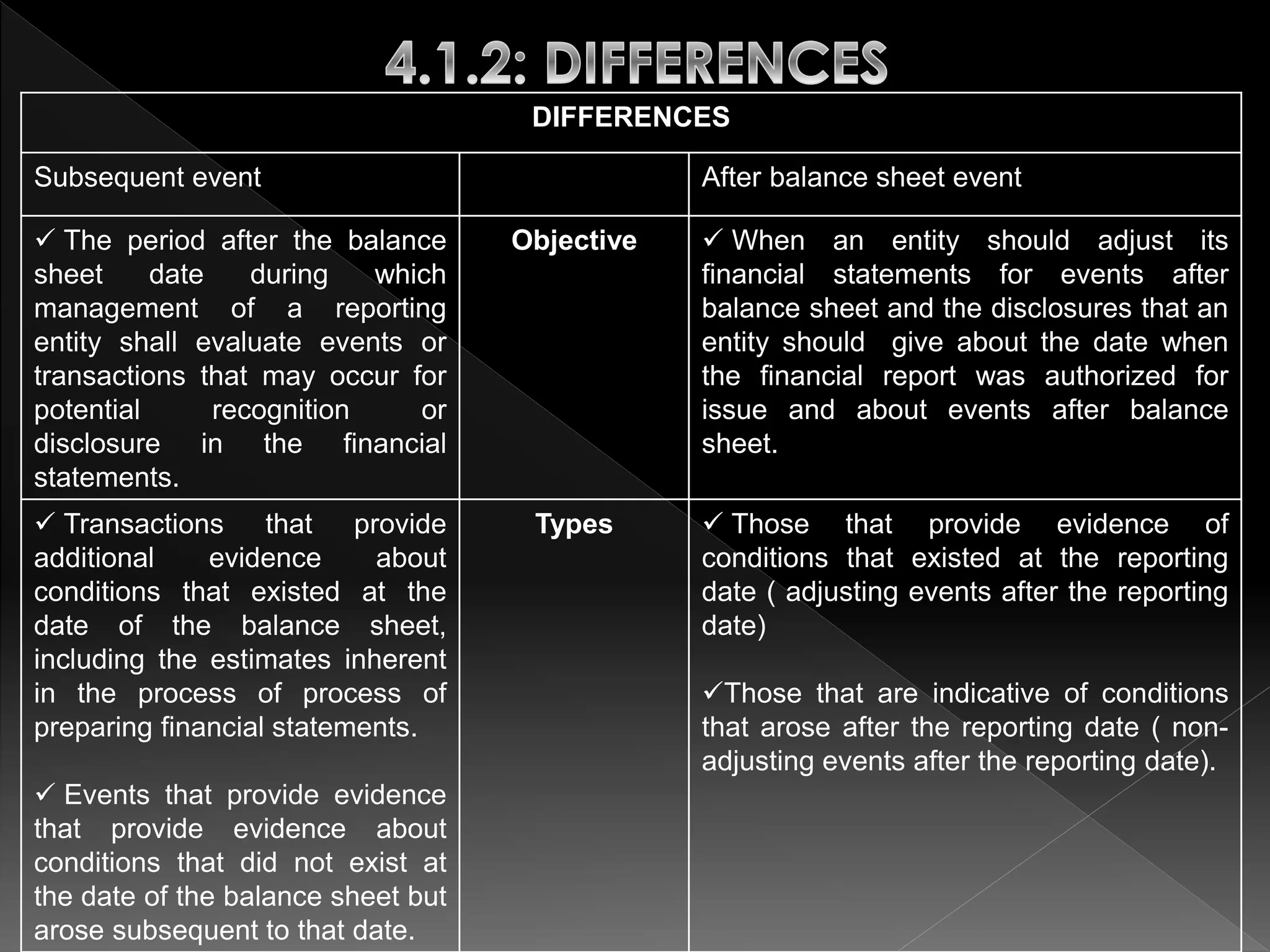
DIFFERENCES 
Subsequent event After balance sheet event 
 The period after the balance 
sheet date during which 
management of a reporting 
entity shall evaluate events or 
transactions that may occur for 
potential recognition or 
disclosure in the financial 
statements. 
Objective  When an entity should adjust its 
financial statements for events after 
balance sheet and the disclosures that an 
entity should give about the date when 
the financial report was authorized for 
issue and about events after balance 
sheet. 
 Transactions that provide 
additional evidence about 
conditions that existed at the 
date of the balance sheet, 
including the estimates inherent 
in the process of process of 
preparing financial statements. 
 Events that provide evidence 
that provide evidence about 
conditions that did not exist at 
the date of the balance sheet but 
arose subsequent to that date. 
Types  Those that provide evidence of 
conditions that existed at the reporting 
date ( adjusting events after the reporting 
date) 
Those that are indicative of conditions 
that arose after the reporting date ( non-adjusting 
events after the reporting date).
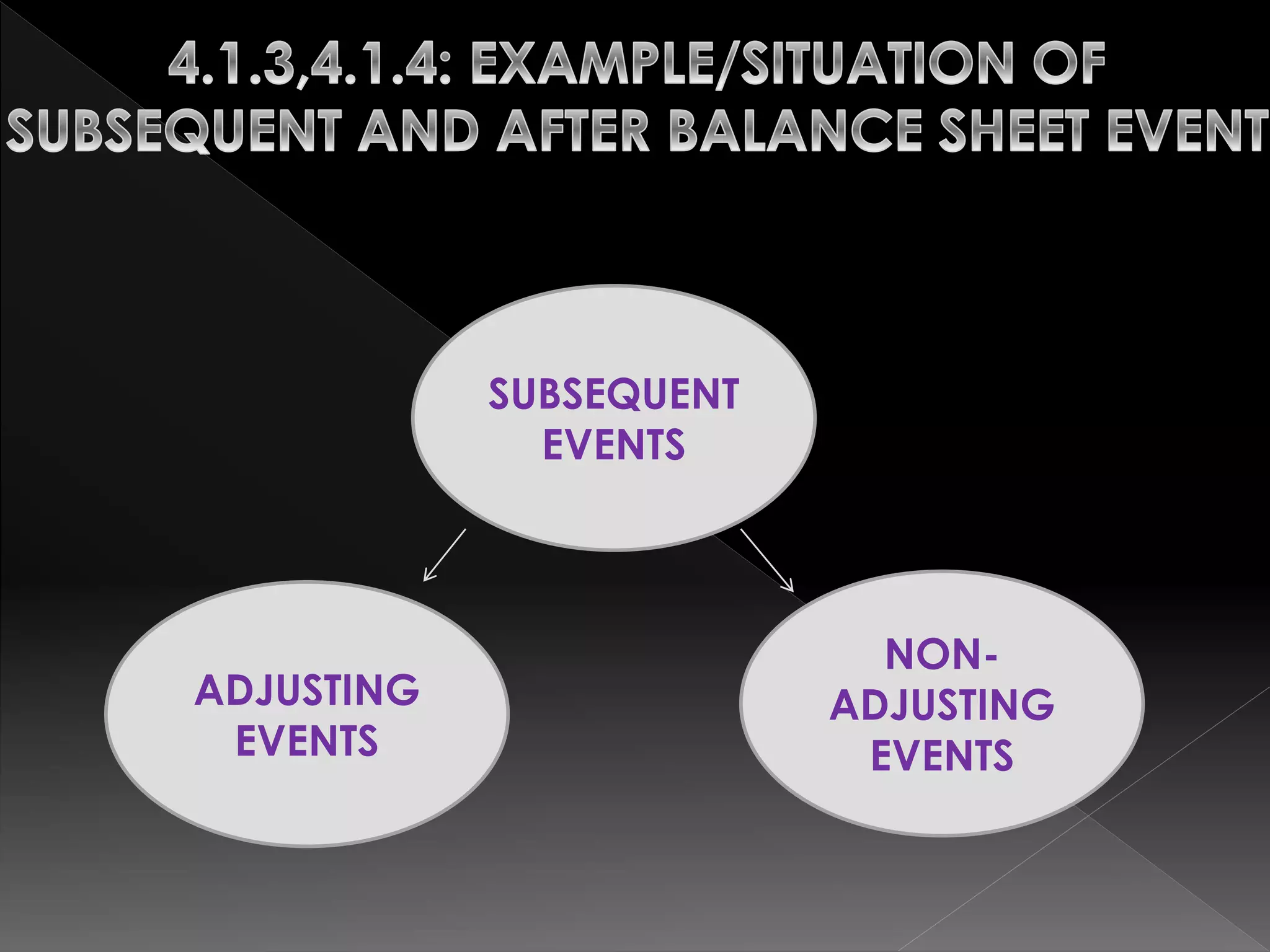
SUBSEQUENT 
EVENTS 
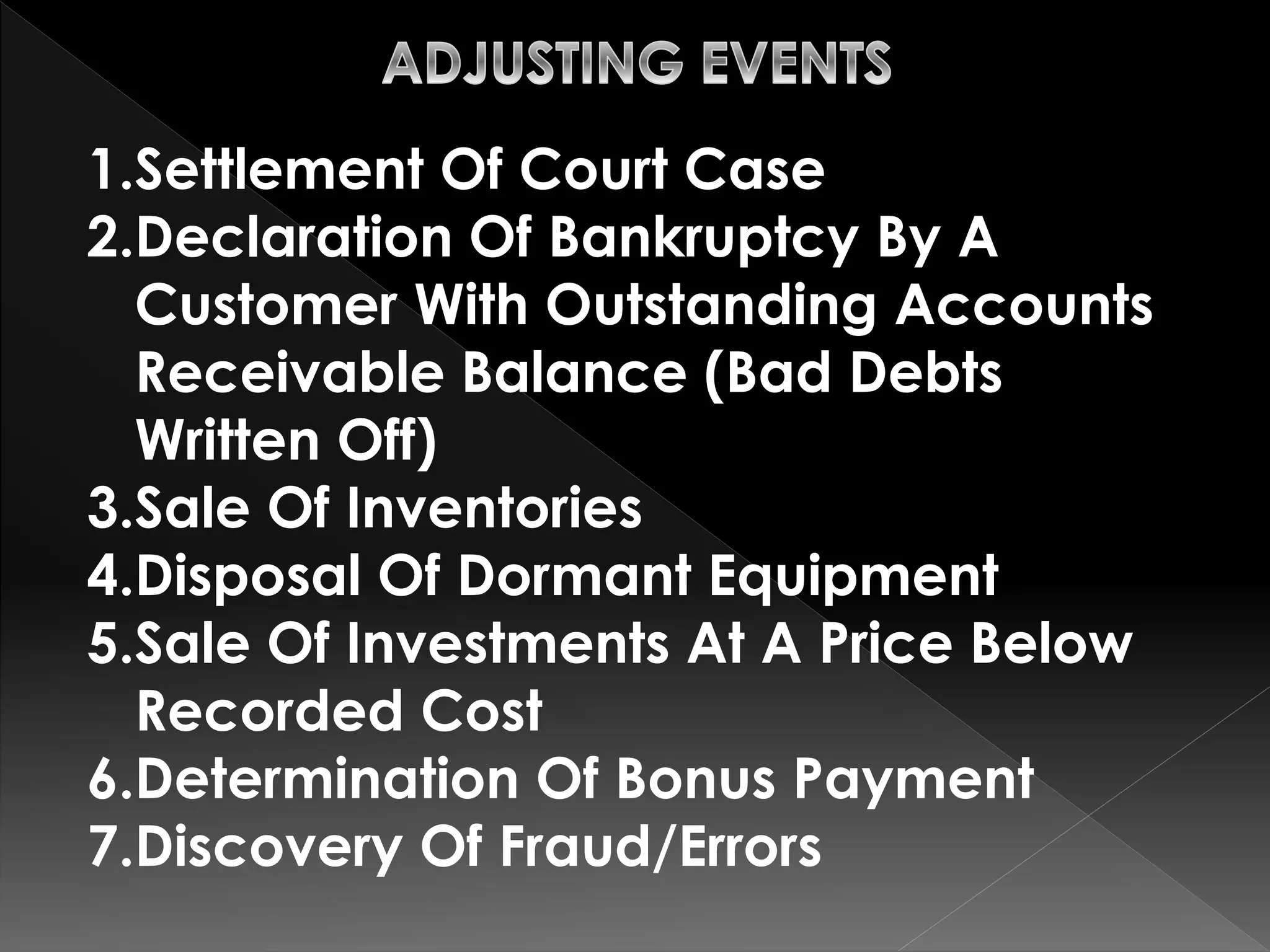
ADJUSTING 
EVENTS 
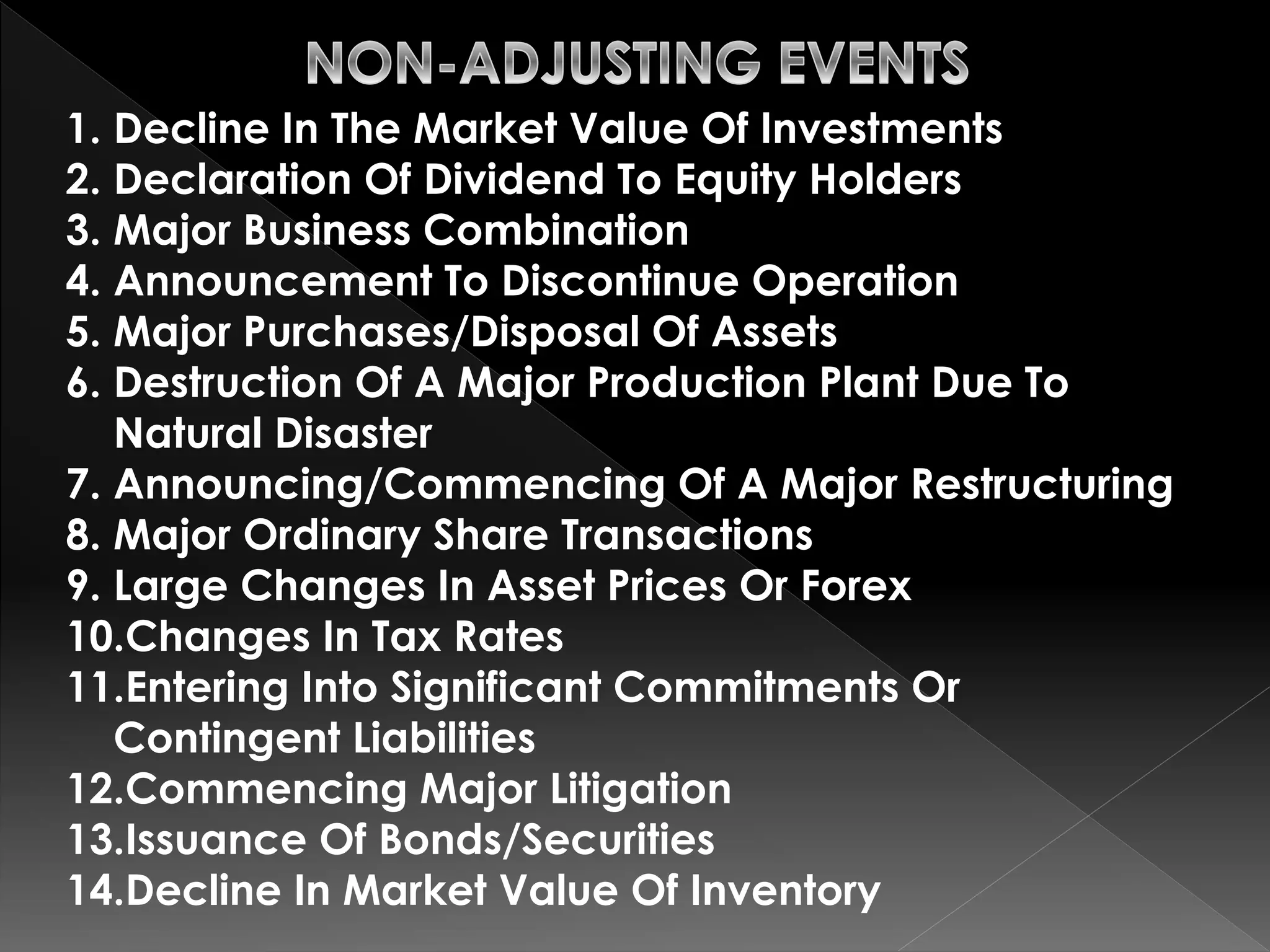
NON-ADJUSTING 
EVENTS
1.Settlement Of Court Case 
2.Declaration Of Bankruptcy By A 
Customer With Outstanding Accounts 
Receivable Balance (Bad Debts 
Written Off) 
3.Sale Of Inventories 
4.Disposal Of Dormant Equipment 
5.Sale Of Investments At A Price Below 
Recorded Cost 
6.Determination Of Bonus Payment 
7.Discovery Of Fraud/Errors
1. Decline In The Market Value Of Investments 
2. Declaration Of Dividend To Equity Holders 
3. Major Business Combination 
4. Announcement To Discontinue Operation 
5. Major Purchases/Disposal Of Assets 
6. Destruction Of A Major Production Plant Due To 
Natural Disaster 
7. Announcing/Commencing Of A Major Restructuring 
8. Major Ordinary Share Transactions 
9. Large Changes In Asset Prices Or Forex 
10.Changes In Tax Rates 
11.Entering Into Significant Commitments Or 
Contingent Liabilities 
12.Commencing Major Litigation 
13.Issuance Of Bonds/Securities 
14.Decline In Market Value Of Inventory
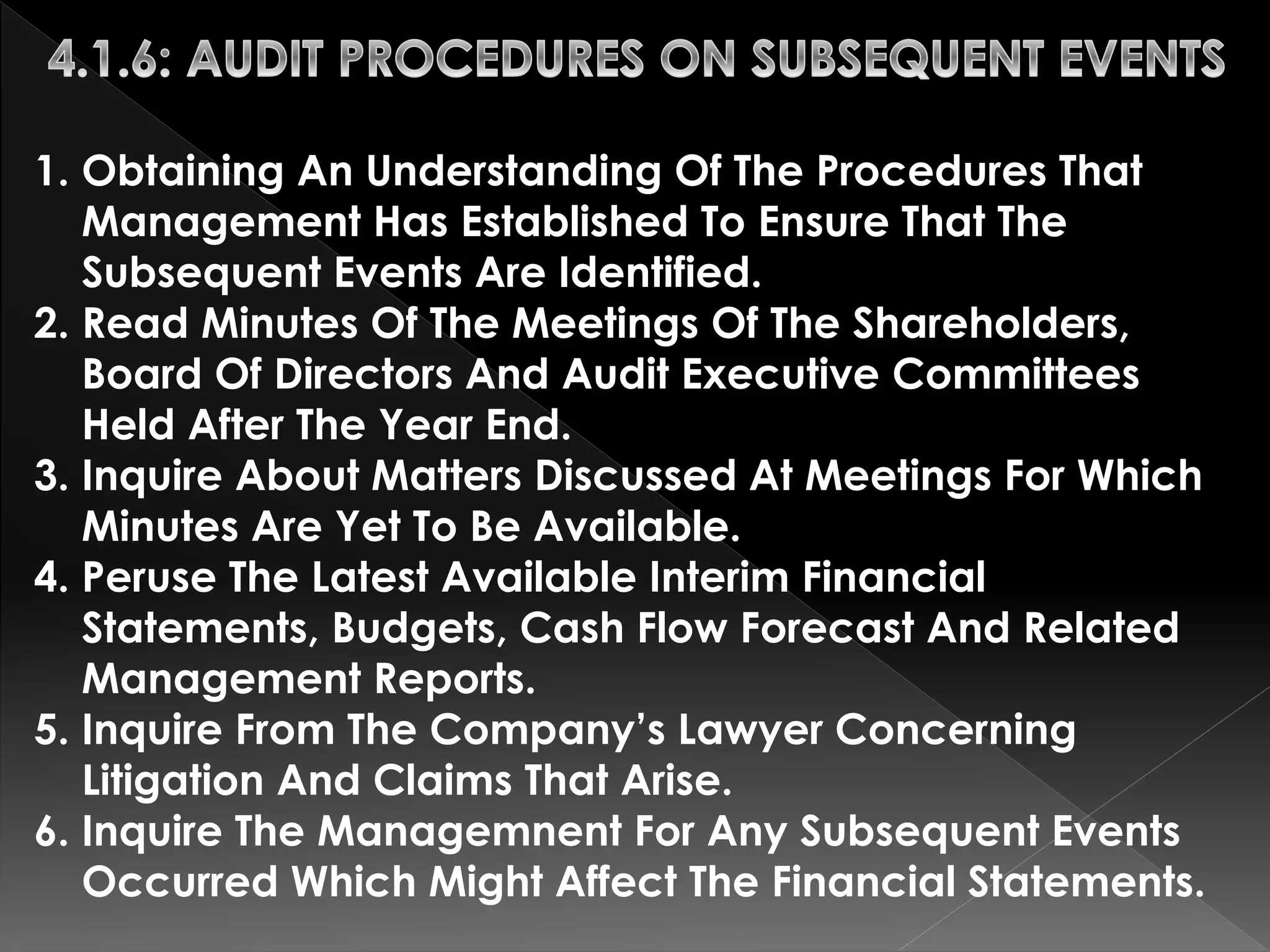
1. Obtaining An Understanding Of The Procedures That 
Management Has Established To Ensure That The 
Subsequent Events Are Identified. 
2. Read Minutes Of The Meetings Of The Shareholders, 
Board Of Directors And Audit Executive Committees 
Held After The Year End. 
3. Inquire About Matters Discussed At Meetings For Which 
Minutes Are Yet To Be Available. 
4. Peruse The Latest Available Interim Financial 
Statements, Budgets, Cash Flow Forecast And Related 
Management Reports. 
5. Inquire From The Company’s Lawyer Concerning 
Litigation And Claims That Arise. 
6. Inquire The Managemnent For Any Subsequent Events 
Occurred Which Might Affect The Financial Statements.
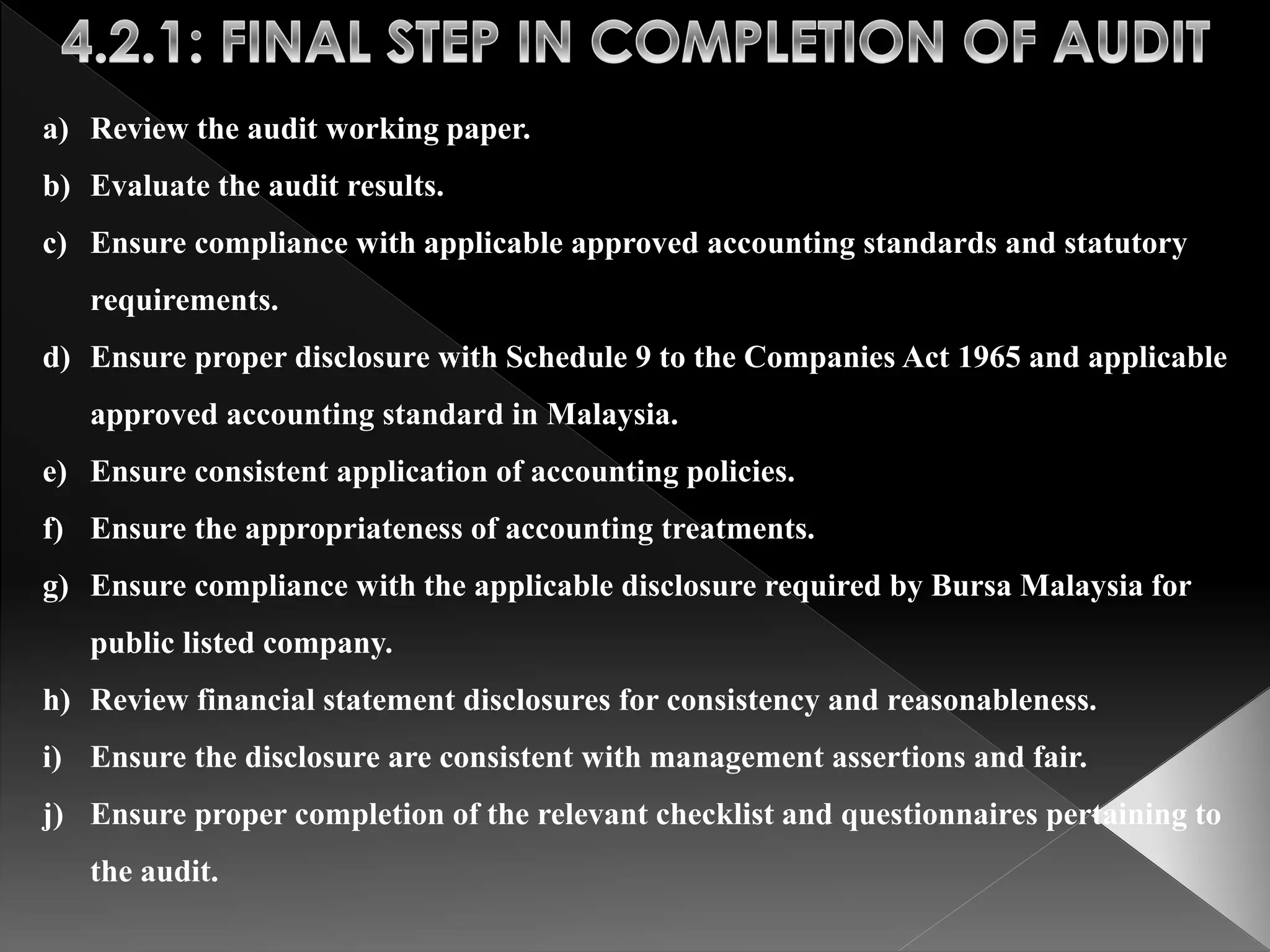
a) Review the audit working paper. 
b) Evaluate the audit results. 
c) Ensure compliance with applicable approved accounting standards and statutory 
requirements. 
d) Ensure proper disclosure with Schedule 9 to the Companies Act 1965 and applicable 
approved accounting standard in Malaysia. 
e) Ensure consistent application of accounting policies. 
f) Ensure the appropriateness of accounting treatments. 
g) Ensure compliance with the applicable disclosure required by Bursa Malaysia for 
public listed company. 
h) Review financial statement disclosures for consistency and reasonableness. 
i) Ensure the disclosure are consistent with management assertions and fair. 
j) Ensure proper completion of the relevant checklist and questionnaires pertaining to 
the audit.
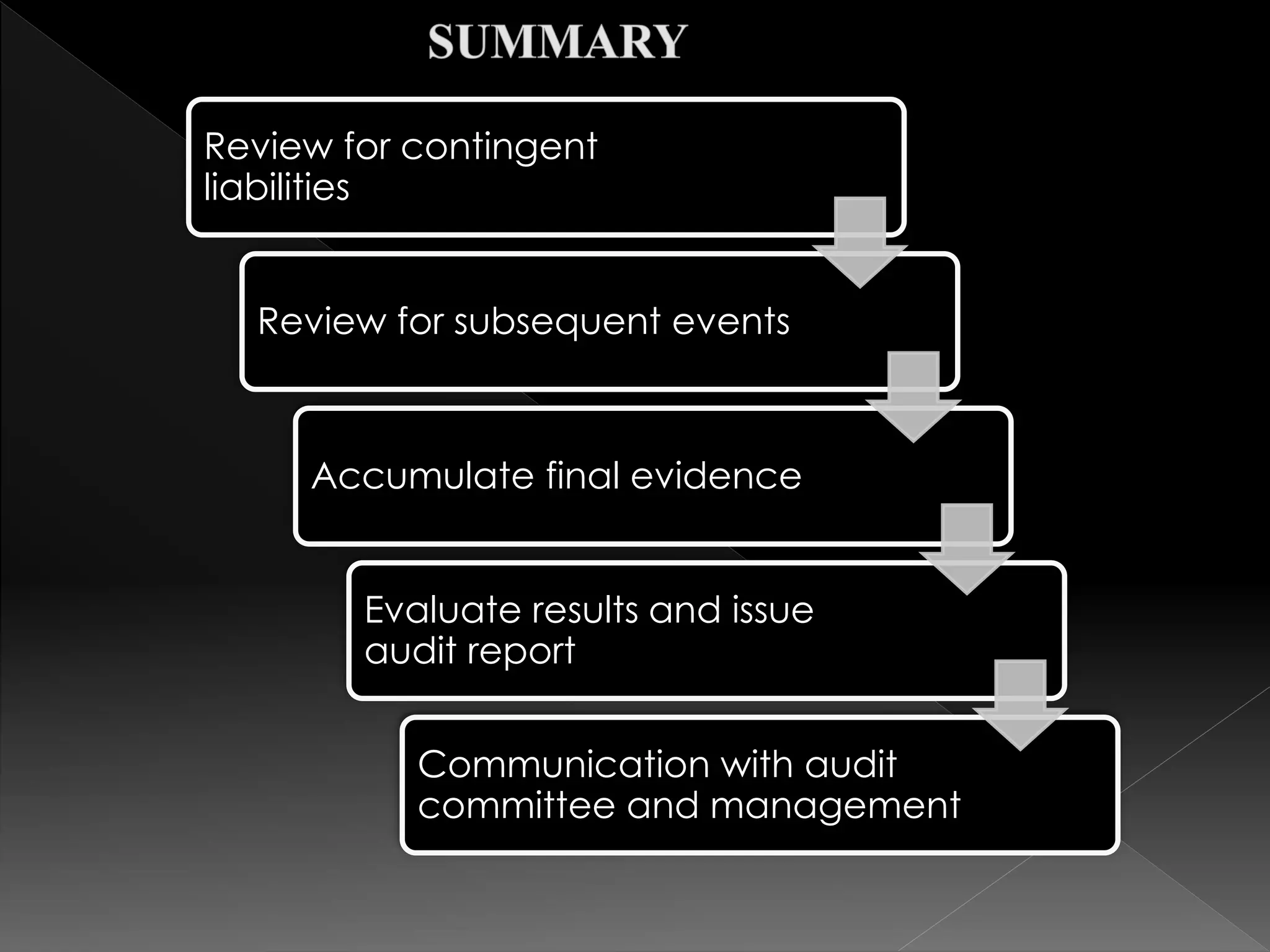
Review for contingent 
liabilities 
Review for subsequent events 
Accumulate final evidence 
Evaluate results and issue 
audit report 
Communication with audit 
committee and management
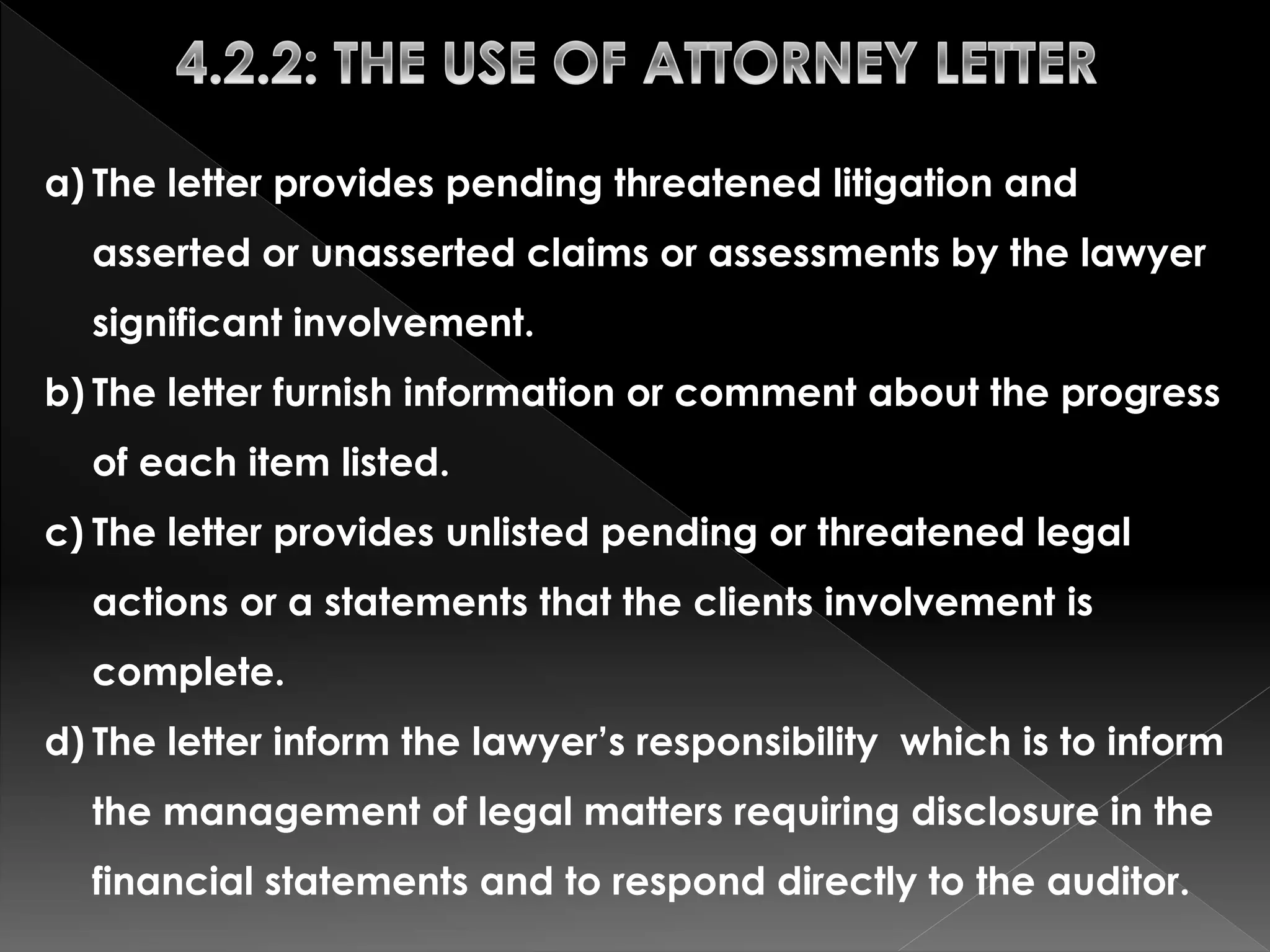
a) The letter provides pending threatened litigation and 
asserted or unasserted claims or assessments by the lawyer 
significant involvement. 
b) The letter furnish information or comment about the progress 
of each item listed. 
c) The letter provides unlisted pending or threatened legal 
actions or a statements that the clients involvement is 
complete. 
d) The letter inform the lawyer’s responsibility which is to inform 
the management of legal matters requiring disclosure in the 
financial statements and to respond directly to the auditor.
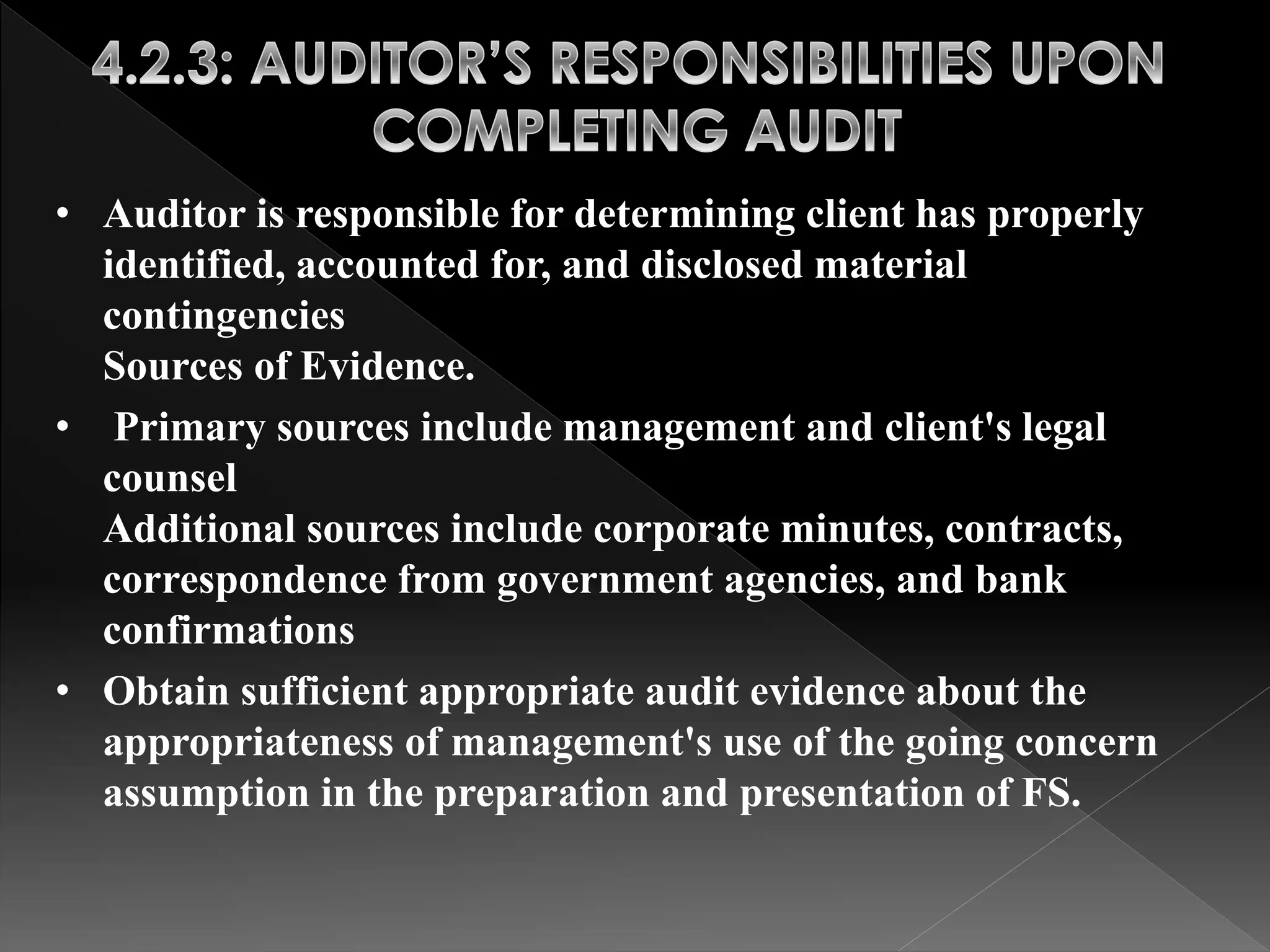
• Auditor is responsible for determining client has properly 
identified, accounted for, and disclosed material 
contingencies 
Sources of Evidence. 
• Primary sources include management and client's legal 
counsel 
Additional sources include corporate minutes, contracts, 
correspondence from government agencies, and bank 
confirmations 
• Obtain sufficient appropriate audit evidence about the 
appropriateness of management's use of the going concern 
assumption in the preparation and presentation of FS.
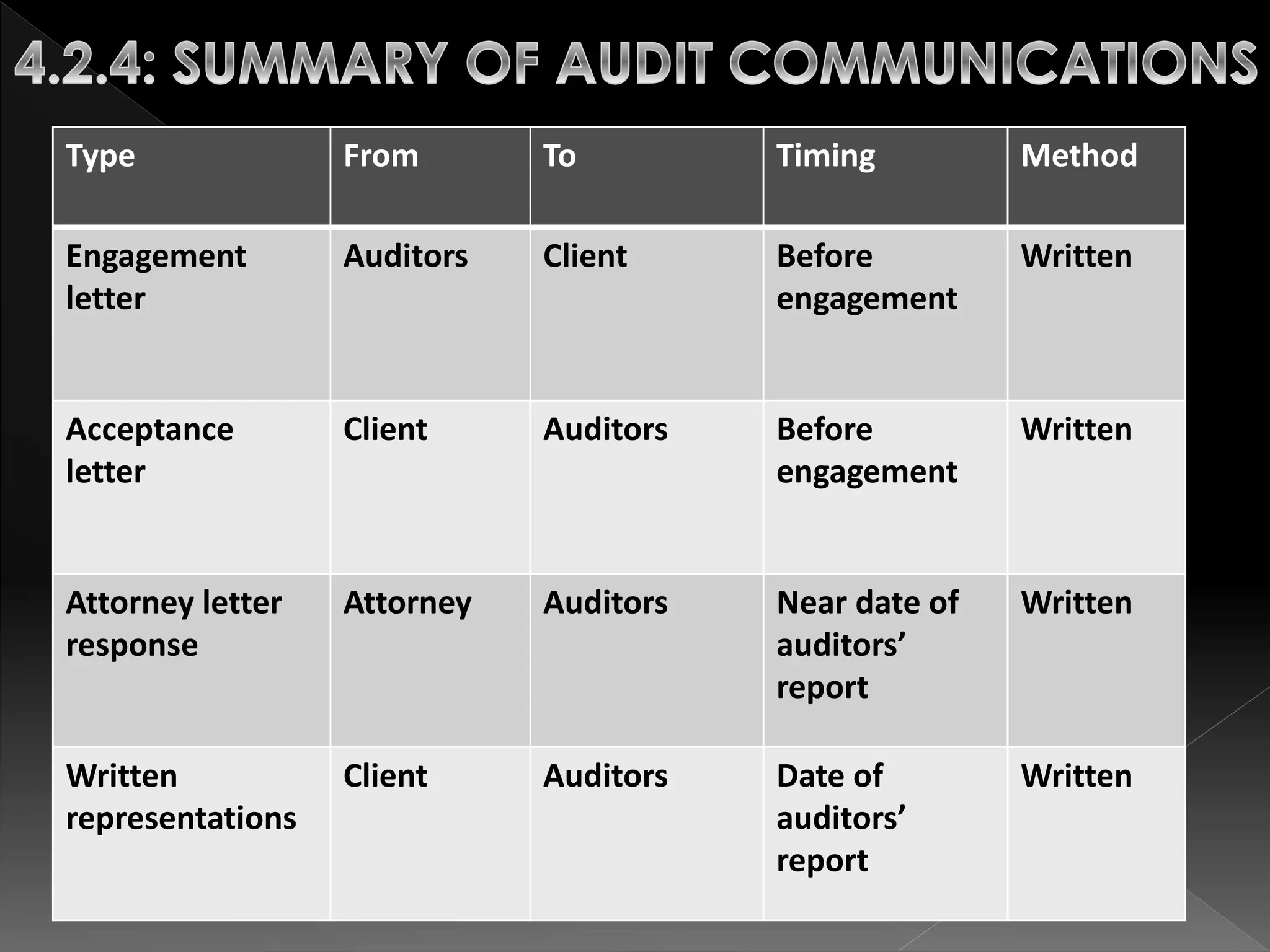
Type From To Timing Method 
Engagement 
letter 
Auditors Client Before 
engagement 
Written 
Acceptance 
letter 
Client Auditors Before 
engagement 
Written 
Attorney letter 
response 
Attorney Auditors Near date of 
auditors’ 
report 
Written 
Written 
representations 
Client Auditors Date of 
auditors’ 
report 
Written
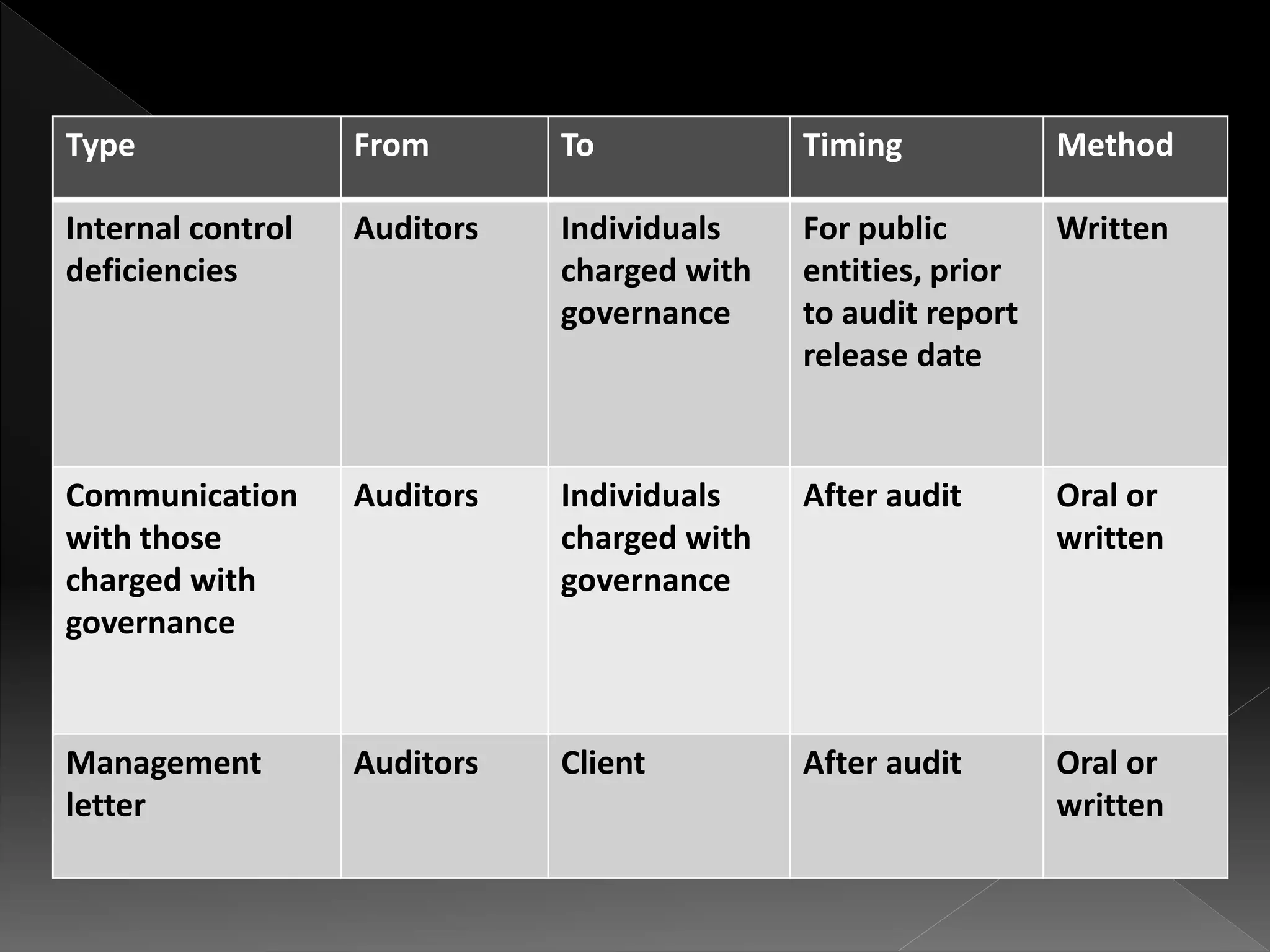
Type From To Timing Method 
Internal control 
deficiencies 
Auditors Individuals 
charged with 
governance 
For public 
entities, prior 
to audit report 
release date 
Written 
Communication 
with those 
charged with 
governance 
Auditors Individuals 
charged with 
governance 
After audit Oral or 
written 
Management 
letter 
Auditors Client After audit Oral or 
written
Chapter 4

Chapter 4

  • 1.
    CHAPTER 4 :AUDIT ASSURANCE MUHAMMAD SHAHRIZUL MUIZ BIN MOHAMED NASIR 10DAT11F2078 RAVIVARMA S/O MORGAN 10DAT11F2053 KOGILA DEWI D/O SANTHA RASE GARAN 10DAT11F2142 MEHALEI D/O KRISHNAN 10DAT11F2056
  • 4.
    Define the subsequentevent and after balance sheet event. Subsequent event  Events occurring between the date of the financial statements and the date of the auditor’s report, and facts that become known to the auditor after the date of the auditor’s report. After balance sheet event  Favorable and unfavorable, that occur between the reporting date and the date when the financial report is authorized for issue.
  • 5.
    DIFFERENCES Subsequent eventAfter balance sheet event  The period after the balance sheet date during which management of a reporting entity shall evaluate events or transactions that may occur for potential recognition or disclosure in the financial statements. Objective  When an entity should adjust its financial statements for events after balance sheet and the disclosures that an entity should give about the date when the financial report was authorized for issue and about events after balance sheet.  Transactions that provide additional evidence about conditions that existed at the date of the balance sheet, including the estimates inherent in the process of process of preparing financial statements.  Events that provide evidence that provide evidence about conditions that did not exist at the date of the balance sheet but arose subsequent to that date. Types  Those that provide evidence of conditions that existed at the reporting date ( adjusting events after the reporting date) Those that are indicative of conditions that arose after the reporting date ( non-adjusting events after the reporting date).
  • 6.
    SUBSEQUENT EVENTS ADJUSTING EVENTS NON-ADJUSTING EVENTS
  • 7.
    1.Settlement Of CourtCase 2.Declaration Of Bankruptcy By A Customer With Outstanding Accounts Receivable Balance (Bad Debts Written Off) 3.Sale Of Inventories 4.Disposal Of Dormant Equipment 5.Sale Of Investments At A Price Below Recorded Cost 6.Determination Of Bonus Payment 7.Discovery Of Fraud/Errors
  • 8.
    1. Decline InThe Market Value Of Investments 2. Declaration Of Dividend To Equity Holders 3. Major Business Combination 4. Announcement To Discontinue Operation 5. Major Purchases/Disposal Of Assets 6. Destruction Of A Major Production Plant Due To Natural Disaster 7. Announcing/Commencing Of A Major Restructuring 8. Major Ordinary Share Transactions 9. Large Changes In Asset Prices Or Forex 10.Changes In Tax Rates 11.Entering Into Significant Commitments Or Contingent Liabilities 12.Commencing Major Litigation 13.Issuance Of Bonds/Securities 14.Decline In Market Value Of Inventory
  • 9.
    1. Obtaining AnUnderstanding Of The Procedures That Management Has Established To Ensure That The Subsequent Events Are Identified. 2. Read Minutes Of The Meetings Of The Shareholders, Board Of Directors And Audit Executive Committees Held After The Year End. 3. Inquire About Matters Discussed At Meetings For Which Minutes Are Yet To Be Available. 4. Peruse The Latest Available Interim Financial Statements, Budgets, Cash Flow Forecast And Related Management Reports. 5. Inquire From The Company’s Lawyer Concerning Litigation And Claims That Arise. 6. Inquire The Managemnent For Any Subsequent Events Occurred Which Might Affect The Financial Statements.
  • 11.
    a) Review theaudit working paper. b) Evaluate the audit results. c) Ensure compliance with applicable approved accounting standards and statutory requirements. d) Ensure proper disclosure with Schedule 9 to the Companies Act 1965 and applicable approved accounting standard in Malaysia. e) Ensure consistent application of accounting policies. f) Ensure the appropriateness of accounting treatments. g) Ensure compliance with the applicable disclosure required by Bursa Malaysia for public listed company. h) Review financial statement disclosures for consistency and reasonableness. i) Ensure the disclosure are consistent with management assertions and fair. j) Ensure proper completion of the relevant checklist and questionnaires pertaining to the audit.
  • 12.
    Review for contingent liabilities Review for subsequent events Accumulate final evidence Evaluate results and issue audit report Communication with audit committee and management
  • 13.
    a) The letterprovides pending threatened litigation and asserted or unasserted claims or assessments by the lawyer significant involvement. b) The letter furnish information or comment about the progress of each item listed. c) The letter provides unlisted pending or threatened legal actions or a statements that the clients involvement is complete. d) The letter inform the lawyer’s responsibility which is to inform the management of legal matters requiring disclosure in the financial statements and to respond directly to the auditor.
  • 14.
    • Auditor isresponsible for determining client has properly identified, accounted for, and disclosed material contingencies Sources of Evidence. • Primary sources include management and client's legal counsel Additional sources include corporate minutes, contracts, correspondence from government agencies, and bank confirmations • Obtain sufficient appropriate audit evidence about the appropriateness of management's use of the going concern assumption in the preparation and presentation of FS.
  • 15.
    Type From ToTiming Method Engagement letter Auditors Client Before engagement Written Acceptance letter Client Auditors Before engagement Written Attorney letter response Attorney Auditors Near date of auditors’ report Written Written representations Client Auditors Date of auditors’ report Written
  • 16.
    Type From ToTiming Method Internal control deficiencies Auditors Individuals charged with governance For public entities, prior to audit report release date Written Communication with those charged with governance Auditors Individuals charged with governance After audit Oral or written Management letter Auditors Client After audit Oral or written