Chapter 10 Reference Groups and Family References
Chapter Outline What Is a Group? Categories of Reference Groups Selected Consumer-Related Reference Groups Reference Group Appeals The Changing U.S. Family Consumer Socialization Family Decision Making The Family Life Cycle
What Is a Group? Two or more people who interact to accomplish either individual or mutual goals A membership group is one to which a person either belongs or would qualify for membership A symbolic group is one in which an individual is not likely to receive membership despite acting like a member
Reference Group A person or group that serves as a point of comparison (or reference) for an individual in the formation of either general or specific values, attitudes, or behavior.
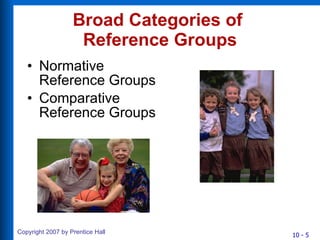
Broad Categories of  Reference Groups Normative Reference Groups Comparative Reference Groups
Indirect Reference Groups Individuals or groups with whom a person identifies but does not have direct face-to-face contact, such as movie stars, sports heroes, political leaders, or TV personalities.
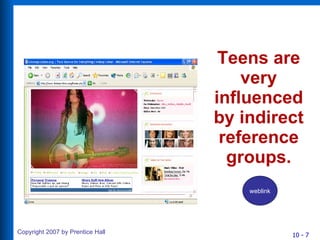
Teens are very influenced by indirect reference groups. weblink
Discussion Question You are marketing a new fragrance for young men (ages 17-22).  Who would make a good spokesperson?  Why?
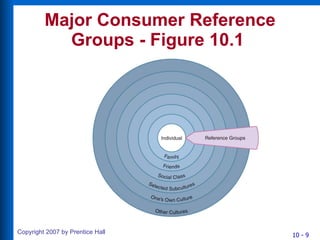
Major Consumer Reference Groups - Figure 10.1
Table 10.1 Positive Influences on Conformity Group Characteristics Attractiveness Expertise Credibility Past Success Clarity of Group Goals Personal Characteristics Tendency to Conform Need for Affiliation Need to be Liked Desire for Control Fear of Negative Evaluation
Factors Encouraging Conformity: A Reference Group Must ... Inform or make the individual aware of a specific product or brand Provide the individual with the opportunity to compare his or her own thinking with the attitudes and behavior of the group Influence the individual to adopt attitudes and behavior that are consistent with the norms of the group Legitimize the decision to use the same products as the group
Discussion Question Who are your reference groups? How do they influence different types of purchases?  When do certain groups have the most influence?
This ad compares the product  to a reference group.
Selected Consumer-Related  Reference Groups Friendship groups Shopping groups Work groups Virtual groups or communities Consumer-action groups
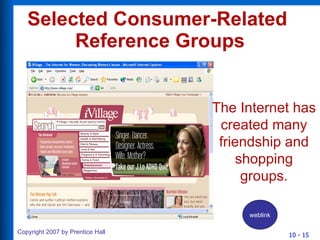
Selected Consumer-Related  Reference Groups The Internet has created many friendship and shopping groups. weblink
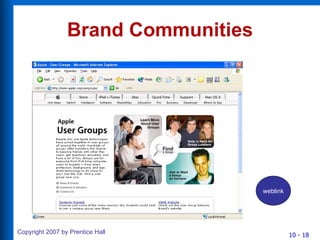
Brand Communities Saturn car owners who meet for reunions and barbecues Saab owners Harley-Davidson Owner Groups
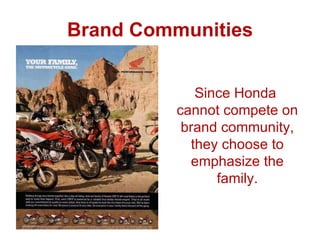
Brand Communities Since Honda  cannot compete on brand community, they choose to emphasize the family.
Brand Communities weblink
Reference Group Appeals Celebrities The expert The “common man” The executive and employee spokesperson Trade or spokes-characters Other reference group appeals
The common “wo”men
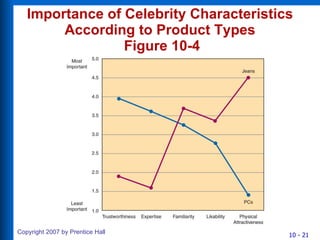
Importance of Celebrity Characteristics According to Product Types  Figure 10-4
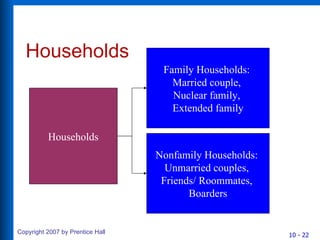
Households Households Family Households:  Married couple,  Nuclear family,  Extended family Nonfamily Households:  Unmarried couples,  Friends/ Roommates,  Boarders
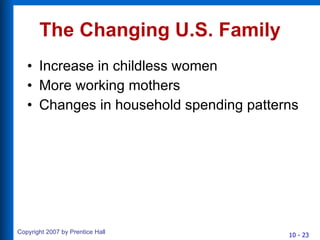
The Changing U.S. Family Increase in childless women More working mothers Changes in household spending patterns
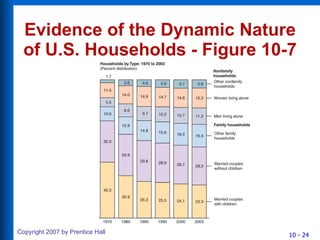
Evidence of the Dynamic Nature of U.S. Households - Figure 10-7
Consumer Socialization The process by which children acquire the skills, knowledge, and attitudes necessary to function as consumers.
Discussion Question How do marketers influence consumer socialization? Does this seem unethical?  At what point would it be unethical?
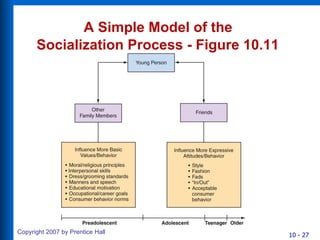
A Simple Model of the  Socialization Process - Figure 10.11
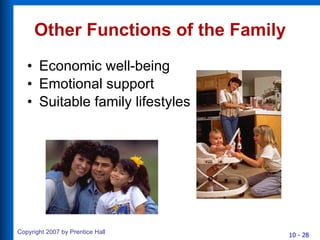
Other Functions of the Family Economic well-being Emotional support Suitable family lifestyles
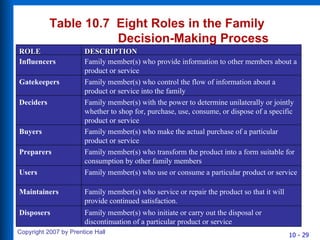
Table 10.7  Eight Roles in the Family  Decision-Making Process ROLE DESCRIPTION Influencers Family member(s) who provide information to other members about a product or service Gatekeepers Family member(s) who control the flow of information about a product or service into the family Deciders Family member(s) with the power to determine unilaterally or jointly whether to shop for, purchase, use, consume, or dispose of a specific product or service Buyers Family member(s) who make the actual purchase of a particular product or service Preparers Family member(s) who transform the product into a form suitable for consumption by other family members Users Family member(s) who use or consume a particular product or service Maintainers Family member(s) who service or repair the product so that it will provide continued satisfaction. Disposers Family member(s) who initiate or carry out the disposal or discontinuation of a particular product or service
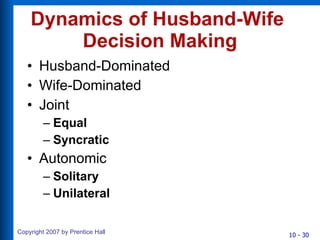
Dynamics of Husband-Wife  Decision Making Husband-Dominated Wife-Dominated Joint Equal Syncratic Autonomic Solitary Unilateral
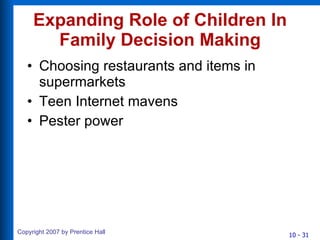
Expanding Role of Children In Family Decision Making Choosing restaurants and items in supermarkets Teen Internet mavens Pester power
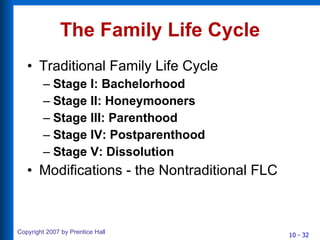
The Family Life Cycle Traditional Family Life Cycle Stage I: Bachelorhood Stage II: Honeymooners Stage III: Parenthood Stage IV: Postparenthood Stage V: Dissolution Modifications - the Nontraditional FLC
Targeting the parenthood segment

Chapter 10 Referene Group And Family Reference

  • 1.
    Chapter 10 ReferenceGroups and Family References
  • 2.
    Chapter Outline WhatIs a Group? Categories of Reference Groups Selected Consumer-Related Reference Groups Reference Group Appeals The Changing U.S. Family Consumer Socialization Family Decision Making The Family Life Cycle
  • 3.
    What Is aGroup? Two or more people who interact to accomplish either individual or mutual goals A membership group is one to which a person either belongs or would qualify for membership A symbolic group is one in which an individual is not likely to receive membership despite acting like a member
  • 4.
    Reference Group Aperson or group that serves as a point of comparison (or reference) for an individual in the formation of either general or specific values, attitudes, or behavior.
  • 5.
    Broad Categories of Reference Groups Normative Reference Groups Comparative Reference Groups
  • 6.
    Indirect Reference GroupsIndividuals or groups with whom a person identifies but does not have direct face-to-face contact, such as movie stars, sports heroes, political leaders, or TV personalities.
  • 7.
    Teens are veryinfluenced by indirect reference groups. weblink
  • 8.
    Discussion Question Youare marketing a new fragrance for young men (ages 17-22). Who would make a good spokesperson? Why?
  • 9.
    Major Consumer ReferenceGroups - Figure 10.1
  • 10.
    Table 10.1 PositiveInfluences on Conformity Group Characteristics Attractiveness Expertise Credibility Past Success Clarity of Group Goals Personal Characteristics Tendency to Conform Need for Affiliation Need to be Liked Desire for Control Fear of Negative Evaluation
  • 11.
    Factors Encouraging Conformity:A Reference Group Must ... Inform or make the individual aware of a specific product or brand Provide the individual with the opportunity to compare his or her own thinking with the attitudes and behavior of the group Influence the individual to adopt attitudes and behavior that are consistent with the norms of the group Legitimize the decision to use the same products as the group
  • 12.
    Discussion Question Whoare your reference groups? How do they influence different types of purchases? When do certain groups have the most influence?
  • 13.
    This ad comparesthe product to a reference group.
  • 14.
    Selected Consumer-Related Reference Groups Friendship groups Shopping groups Work groups Virtual groups or communities Consumer-action groups
  • 15.
    Selected Consumer-Related Reference Groups The Internet has created many friendship and shopping groups. weblink
  • 16.
    Brand Communities Saturncar owners who meet for reunions and barbecues Saab owners Harley-Davidson Owner Groups
  • 17.
    Brand Communities SinceHonda cannot compete on brand community, they choose to emphasize the family.
  • 18.
  • 19.
    Reference Group AppealsCelebrities The expert The “common man” The executive and employee spokesperson Trade or spokes-characters Other reference group appeals
  • 20.
  • 21.
    Importance of CelebrityCharacteristics According to Product Types Figure 10-4
  • 22.
    Households Households FamilyHouseholds: Married couple, Nuclear family, Extended family Nonfamily Households: Unmarried couples, Friends/ Roommates, Boarders
  • 23.
    The Changing U.S.Family Increase in childless women More working mothers Changes in household spending patterns
  • 24.
    Evidence of theDynamic Nature of U.S. Households - Figure 10-7
  • 25.
    Consumer Socialization Theprocess by which children acquire the skills, knowledge, and attitudes necessary to function as consumers.
  • 26.
    Discussion Question Howdo marketers influence consumer socialization? Does this seem unethical? At what point would it be unethical?
  • 27.
    A Simple Modelof the Socialization Process - Figure 10.11

  • 28.
    Other Functions ofthe Family Economic well-being Emotional support Suitable family lifestyles
  • 29.
    Table 10.7 Eight Roles in the Family Decision-Making Process ROLE DESCRIPTION Influencers Family member(s) who provide information to other members about a product or service Gatekeepers Family member(s) who control the flow of information about a product or service into the family Deciders Family member(s) with the power to determine unilaterally or jointly whether to shop for, purchase, use, consume, or dispose of a specific product or service Buyers Family member(s) who make the actual purchase of a particular product or service Preparers Family member(s) who transform the product into a form suitable for consumption by other family members Users Family member(s) who use or consume a particular product or service Maintainers Family member(s) who service or repair the product so that it will provide continued satisfaction. Disposers Family member(s) who initiate or carry out the disposal or discontinuation of a particular product or service
  • 30.
    Dynamics of Husband-Wife Decision Making Husband-Dominated Wife-Dominated Joint Equal Syncratic Autonomic Solitary Unilateral
  • 31.
    Expanding Role ofChildren In Family Decision Making Choosing restaurants and items in supermarkets Teen Internet mavens Pester power
  • 32.
    The Family LifeCycle Traditional Family Life Cycle Stage I: Bachelorhood Stage II: Honeymooners Stage III: Parenthood Stage IV: Postparenthood Stage V: Dissolution Modifications - the Nontraditional FLC
  • 33.