Fundamentals of Project
Planning, Scheduling,
Monitoring & Control
BAWA 2nd March 2016
Feedback from Attendees on Good
Practice
Good Practice
 The attendees at each table were provided with a topic related to
Project Planning, Scheduling, Monitoring & Control and were
asked to list their top 5 ‘good practice’ lessons learned
 Topics: Planning, Change Management, Reporting, Scope,
Schedule Management, Risk Management
 The following slides capture their feedback.
Planning
1. Communication and engagement with stakeholders (also seek
their experience)
2. Iterative scope & dependency review and management & review of
Business Case
3. Realistic planning, account for optimism and realistic timescales
4. Engage with risk management and ‘learning from experience’ from
the start
5. Consider the necessary detail at the point in time
Planning
1. Clarify scope, what are the requirements of the project
2. Clarify resource needs
3. Understanding dependencies
4. Plan length of project and bring in appropriate mitigation actions
5. Establish project milestones and plan around them
Change Management
1. Early stakeholder engagement
2. Configuration Control
3. Analyse impacts
4. Risk Management
5. Leadership
6. Evaluation / lessons learned
7. Cost control
Reporting
1. Graphical information
2. Tailored to the audience / relevance
3. Imparting context
4. Taking feedback from reporting / amending presentation and
content as necessary
5. One truth / real time
Reporting
1. Cadence of reporting
2. Messaging tailored to the audience
3. Past, current and forecast performance
4. Standardised reporting – so people are used to them
5. Reuse information as you go up the reporting chain, automated as
far as possible to avoid “old” data
Scope
1. Store it so everyone can find it
2. Logical layout, in line with the schedule
3. Suitable level of detail
4. Detail progress with planning
5. Stakeholder involvement
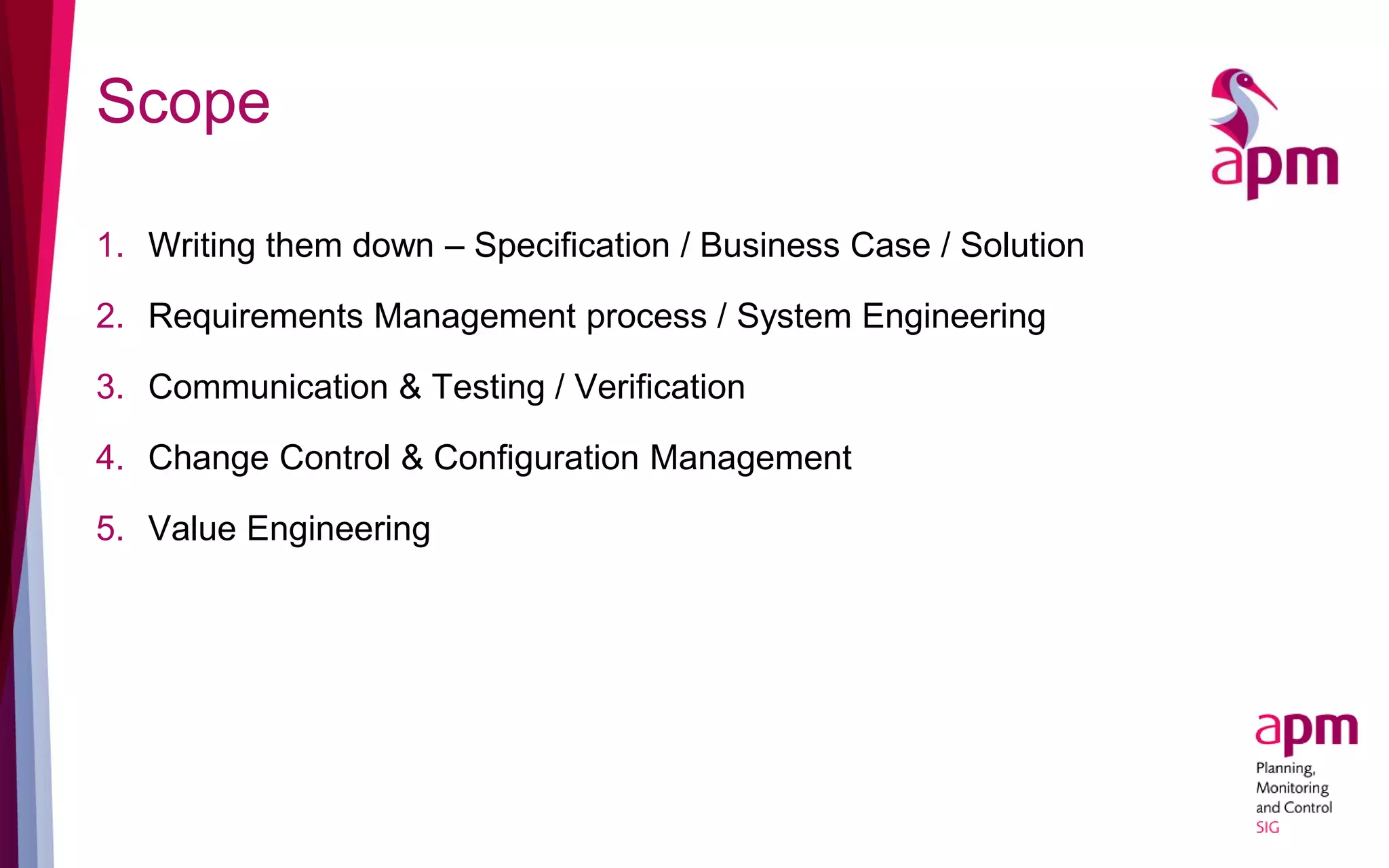
Scope
1. Writing them down – Specification / Business Case / Solution
2. Requirements Management process / System Engineering
3. Communication & Testing / Verification
4. Change Control & Configuration Management
5. Value Engineering
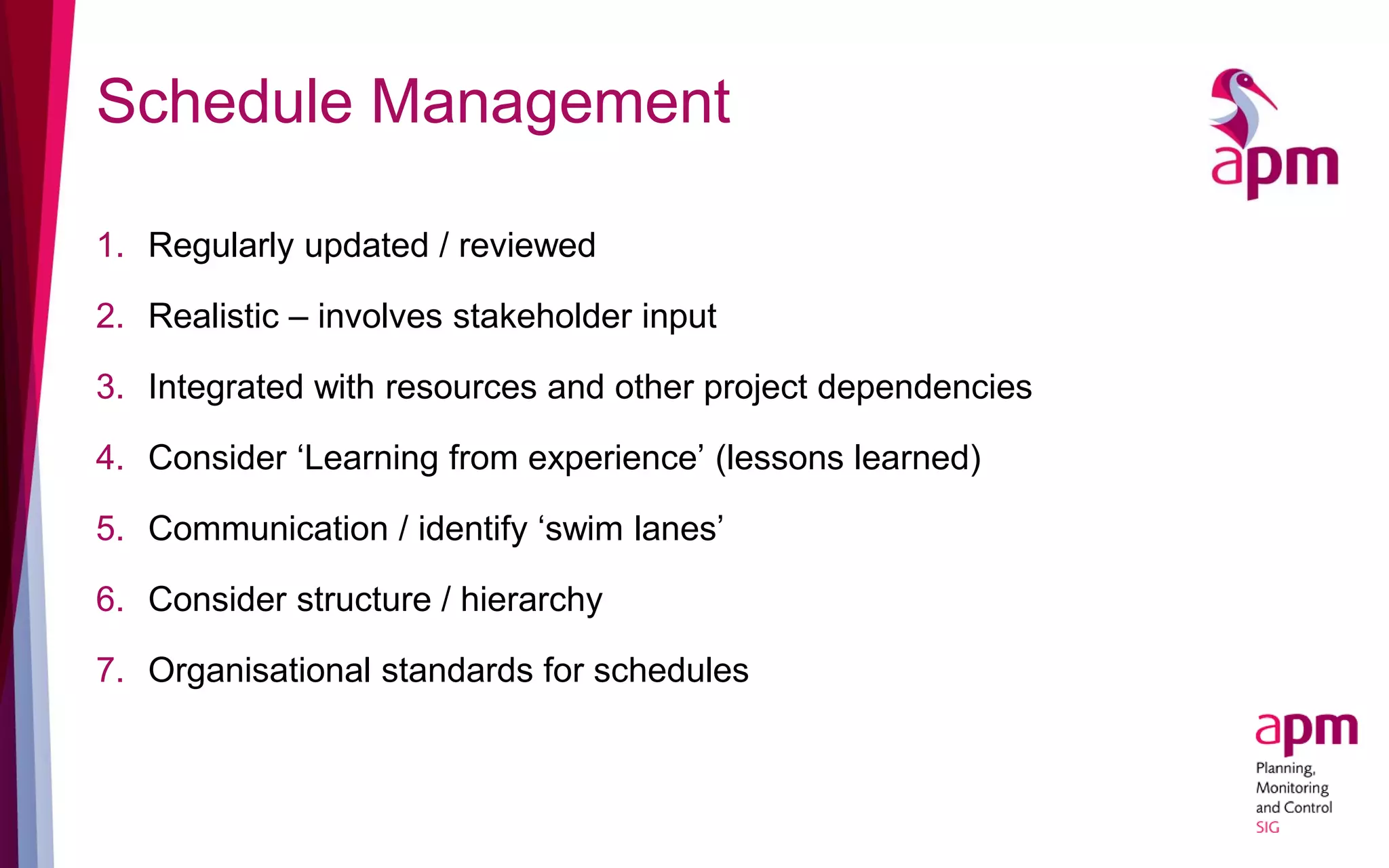
Schedule Management
1. Regularly updated / reviewed
2. Realistic – involves stakeholder input
3. Integrated with resources and other project dependencies
4. Consider ‘Learning from experience’ (lessons learned)
5. Communication / identify ‘swim lanes’
6. Consider structure / hierarchy
7. Organisational standards for schedules
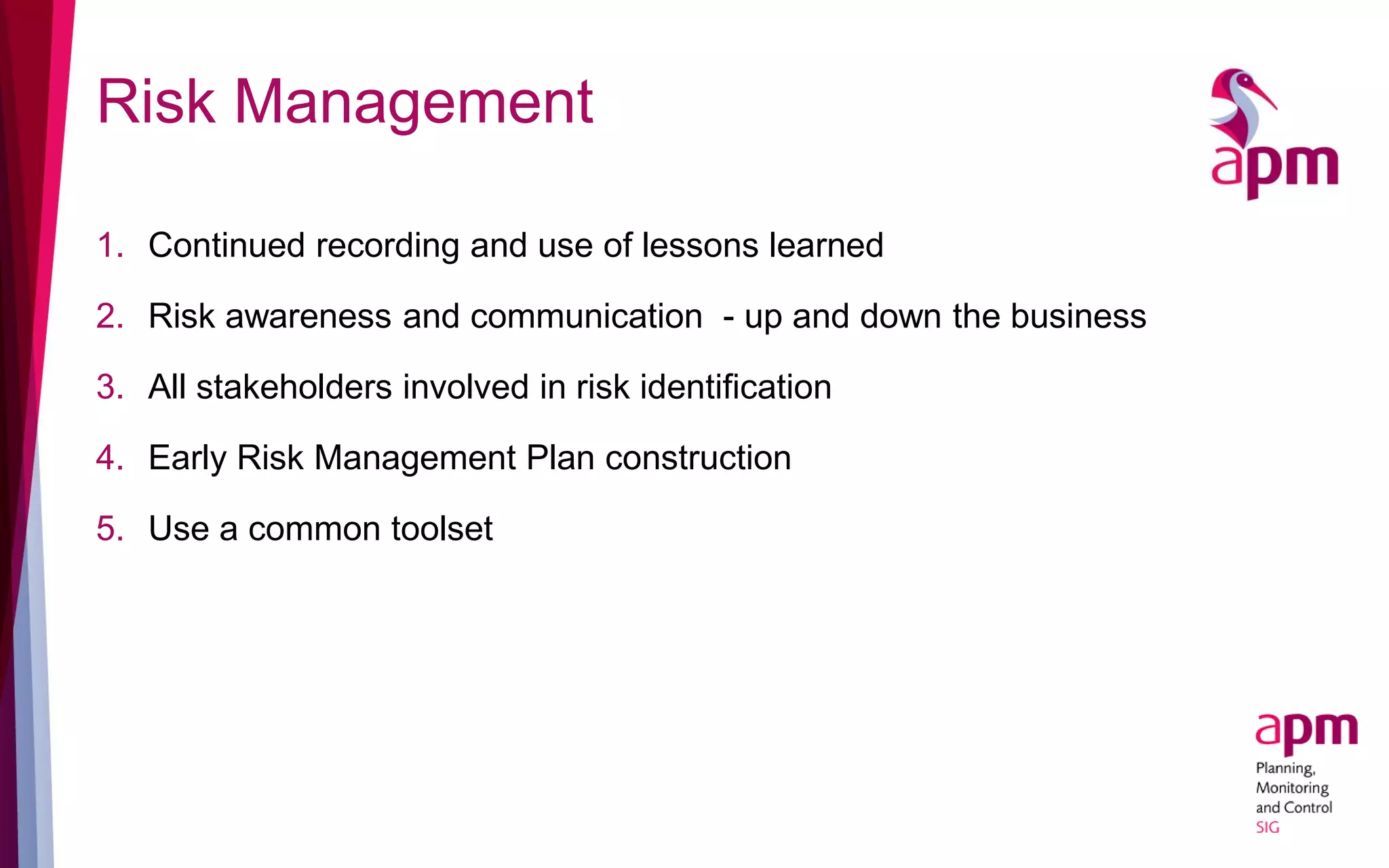
Risk Management
1. Continued recording and use of lessons learned
2. Risk awareness and communication - up and down the business
3. All stakeholders involved in risk identification
4. Early Risk Management Plan construction
5. Use a common toolset
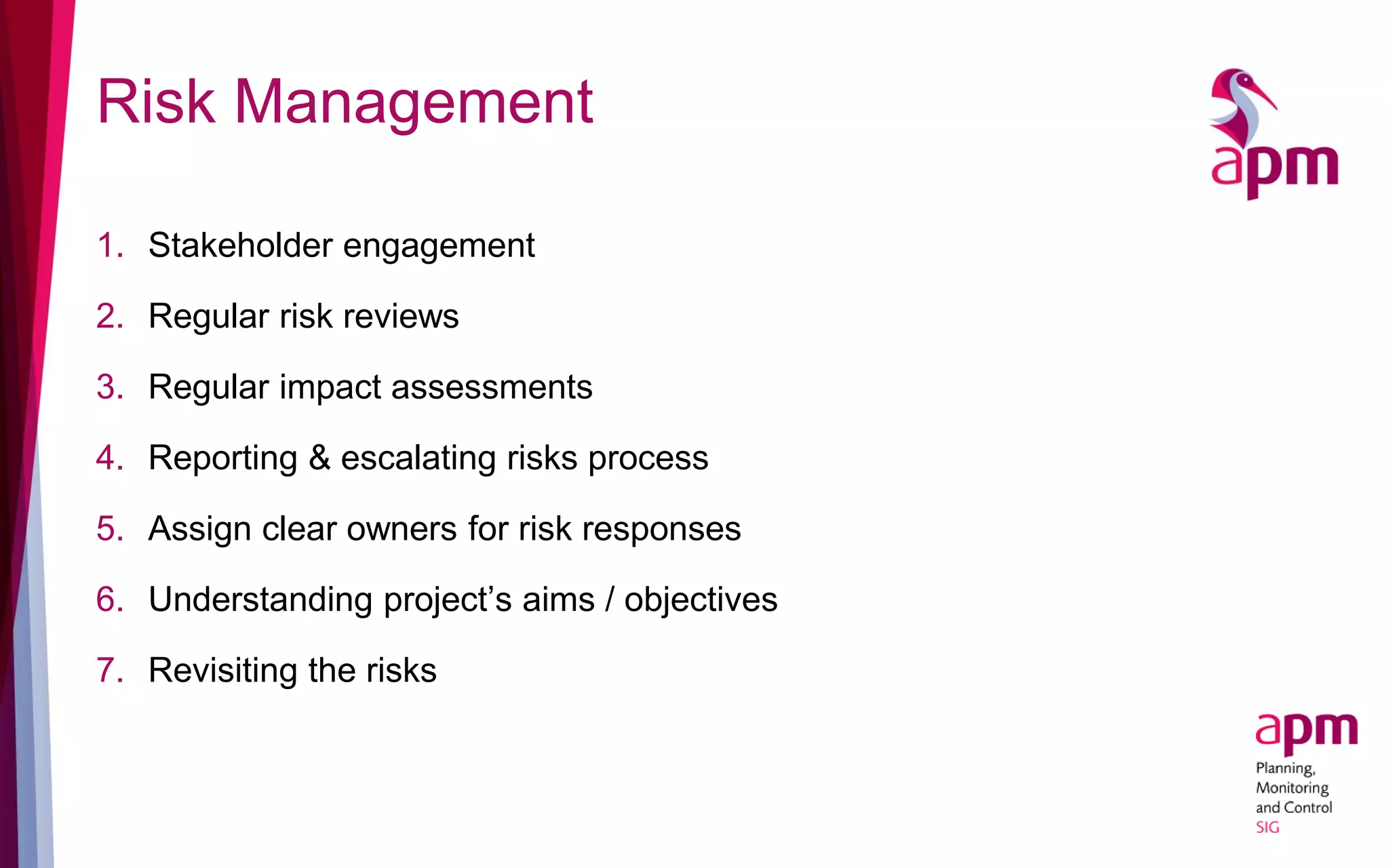
Risk Management
1. Stakeholder engagement
2. Regular risk reviews
3. Regular impact assessments
4. Reporting & escalating risks process
5. Assign clear owners for risk responses
6. Understanding project’s aims / objectives
7. Revisiting the risks

Fundamentals of Project Planning, Scheduling, Monitoring & Control

  • 1.
    Fundamentals of Project Planning,Scheduling, Monitoring & Control BAWA 2nd March 2016 Feedback from Attendees on Good Practice
  • 2.
    Good Practice  Theattendees at each table were provided with a topic related to Project Planning, Scheduling, Monitoring & Control and were asked to list their top 5 ‘good practice’ lessons learned  Topics: Planning, Change Management, Reporting, Scope, Schedule Management, Risk Management  The following slides capture their feedback.
  • 3.
    Planning 1. Communication andengagement with stakeholders (also seek their experience) 2. Iterative scope & dependency review and management & review of Business Case 3. Realistic planning, account for optimism and realistic timescales 4. Engage with risk management and ‘learning from experience’ from the start 5. Consider the necessary detail at the point in time
  • 4.
    Planning 1. Clarify scope,what are the requirements of the project 2. Clarify resource needs 3. Understanding dependencies 4. Plan length of project and bring in appropriate mitigation actions 5. Establish project milestones and plan around them
  • 5.
    Change Management 1. Earlystakeholder engagement 2. Configuration Control 3. Analyse impacts 4. Risk Management 5. Leadership 6. Evaluation / lessons learned 7. Cost control
  • 6.
    Reporting 1. Graphical information 2.Tailored to the audience / relevance 3. Imparting context 4. Taking feedback from reporting / amending presentation and content as necessary 5. One truth / real time
  • 7.
    Reporting 1. Cadence ofreporting 2. Messaging tailored to the audience 3. Past, current and forecast performance 4. Standardised reporting – so people are used to them 5. Reuse information as you go up the reporting chain, automated as far as possible to avoid “old” data
  • 8.
    Scope 1. Store itso everyone can find it 2. Logical layout, in line with the schedule 3. Suitable level of detail 4. Detail progress with planning 5. Stakeholder involvement
  • 9.
    Scope 1. Writing themdown – Specification / Business Case / Solution 2. Requirements Management process / System Engineering 3. Communication & Testing / Verification 4. Change Control & Configuration Management 5. Value Engineering
  • 10.
    Schedule Management 1. Regularlyupdated / reviewed 2. Realistic – involves stakeholder input 3. Integrated with resources and other project dependencies 4. Consider ‘Learning from experience’ (lessons learned) 5. Communication / identify ‘swim lanes’ 6. Consider structure / hierarchy 7. Organisational standards for schedules
  • 11.
    Risk Management 1. Continuedrecording and use of lessons learned 2. Risk awareness and communication - up and down the business 3. All stakeholders involved in risk identification 4. Early Risk Management Plan construction 5. Use a common toolset
  • 12.
    Risk Management 1. Stakeholderengagement 2. Regular risk reviews 3. Regular impact assessments 4. Reporting & escalating risks process 5. Assign clear owners for risk responses 6. Understanding project’s aims / objectives 7. Revisiting the risks