Distributed Denial of Service(DDoS) and False Data
Injection Attack Detection in Cyber Physical System
PRESENTED BY: SUPERVISED BY:
NURJAHAN DR. M. SHAMIM KAISER
FARHANA NIZAM
SHUDARSHON CHAKI
Outline
 Abstract
 Related Work
 Introduction
 System Model
 Flowchart of Intrusion Detection Method
 Attack Detection Using Fuzzy Logic Attack Classifier
 Simulation Result
 References
2
Abstract
 Proposes DDoS and False data injection attack detection in Cyber Physical System.
 The Chi square detector and Fuzzy logic based attack classifier (FLAC) were used to identify
distributed denial of service and False data injection attacks.
 An example scenario has been created using OpNET Simulator.
 Proposes intrusion detection algorithm in the underlying cyber network.
3
Related Work
 In (1), Authors have surveyed the vulnerabilities in smart grid networks, the types of attacks and attackers, the
current and needed solutions.
Limitation-Do not perform any types of simulation or design any security frameworks.
 In (2), Detecting false data injection attacks by Euclidean detector with Kalman filter and also detects DDoS
attacks, short term and long term random attacks by Chi-square detector with Kalman filter.
Limitation- Focusing that Chi-Square detector is unable to detect the statistically derived false data-injection
attack.
4
Continue
 In (3), Highlighting security requirements and issues of smart grid and describing smart grid anomalies and
protecting smart grid from cyber vulnerabilities.
Limitation-No smart grid cyber attack risk assessment and mitigation discussion and implementation of
intrusion detection algorithms throughout system.
 In (4), Focus on both random and targeted false data injection attack.
Limitation-Protection of the confidentiality of sensor measurements against false data injection is not revealed.
5
Introduction
 Physical objects are connected with each other through cyber networks are collectively called
cyber physical system.
 Smart grid is an example of such a system where grid is automated, controlled and has
access via internet.
 But this system is much more vulnerable to various cyber-attacks, there is more scope of
damaging physical infrastructures and making the power station unstable.
6
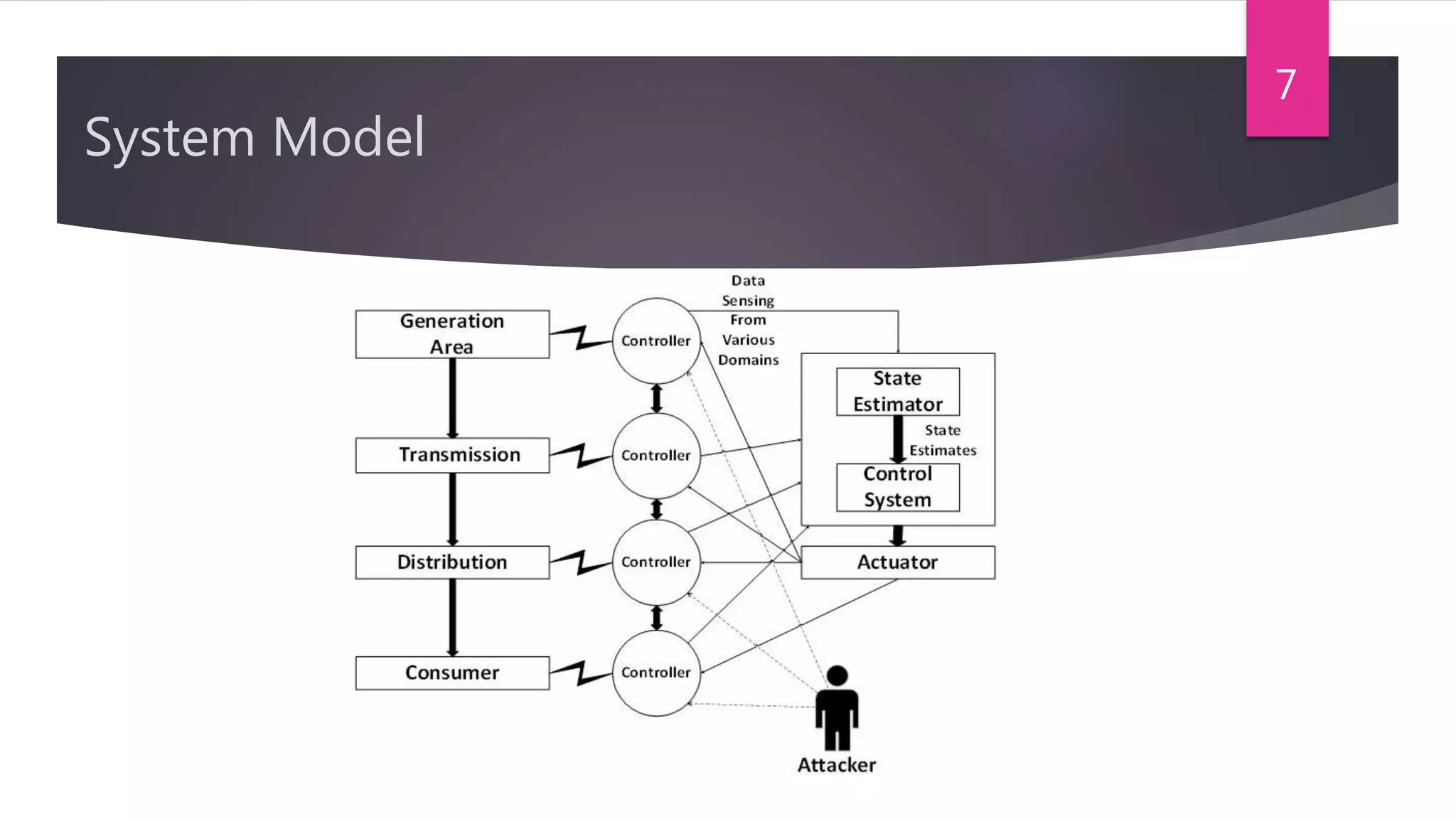
System Model
7
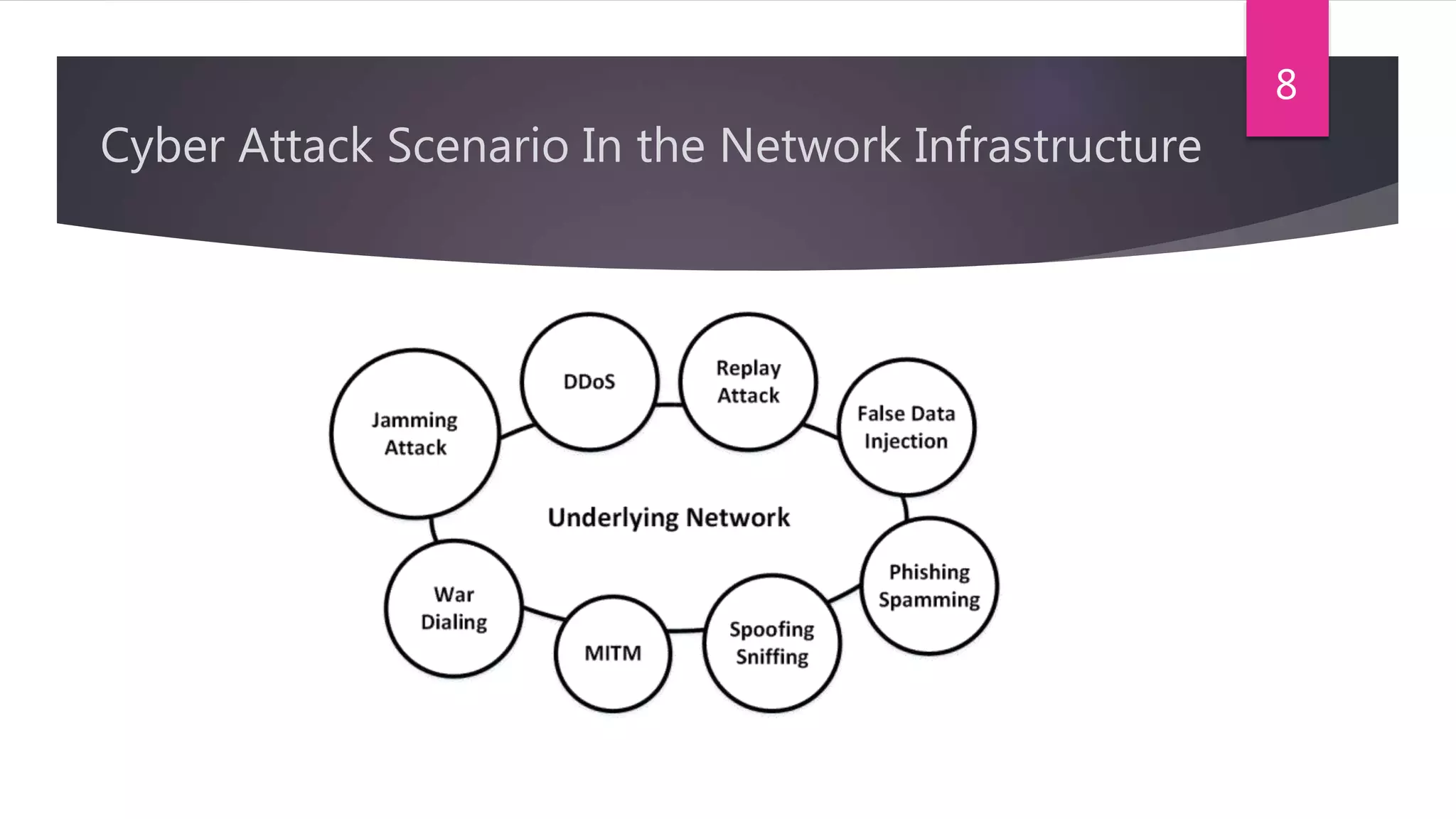
Cyber Attack Scenario In the Network Infrastructure
8
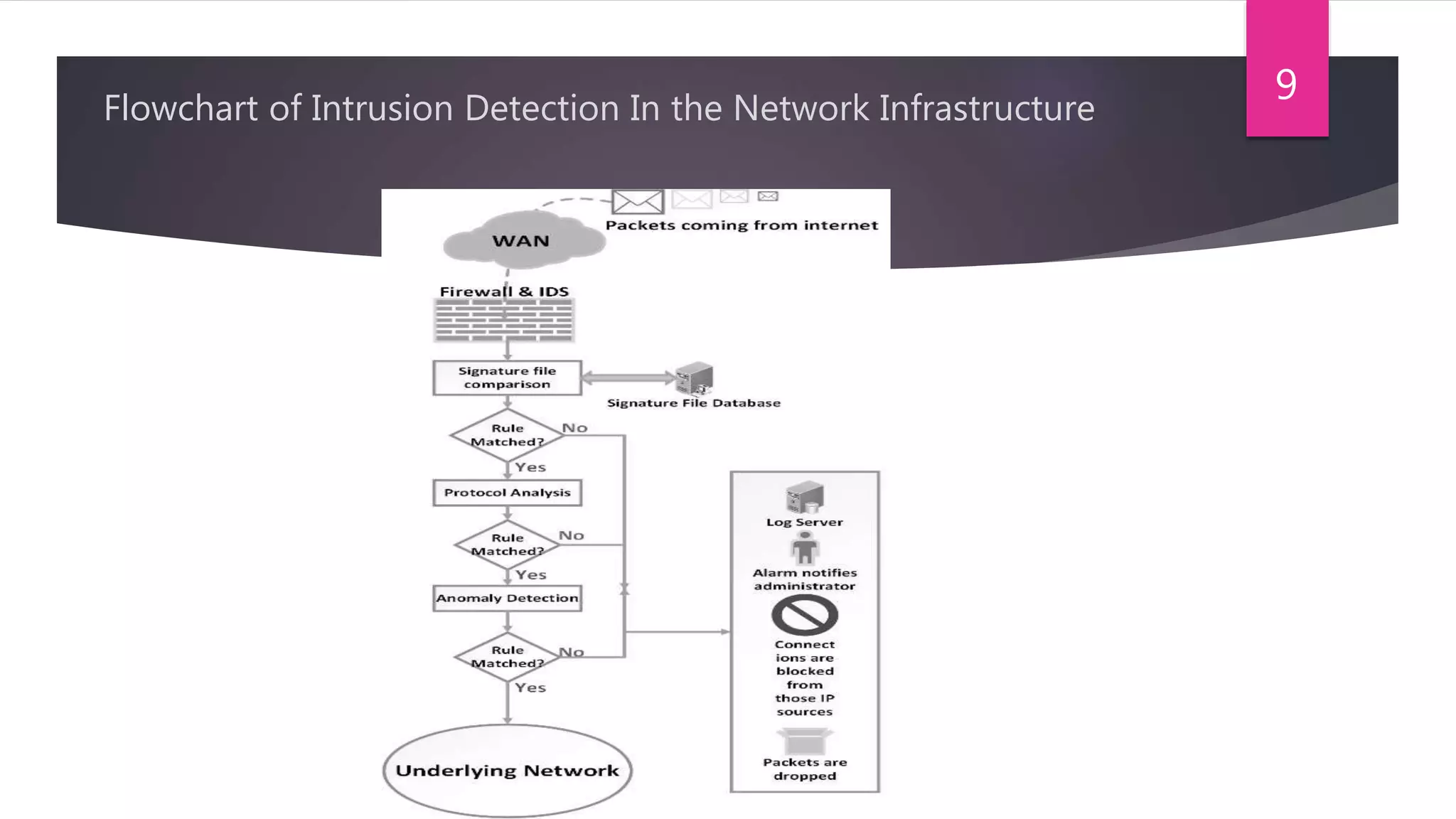
Flowchart of Intrusion Detection In the Network Infrastructure
9
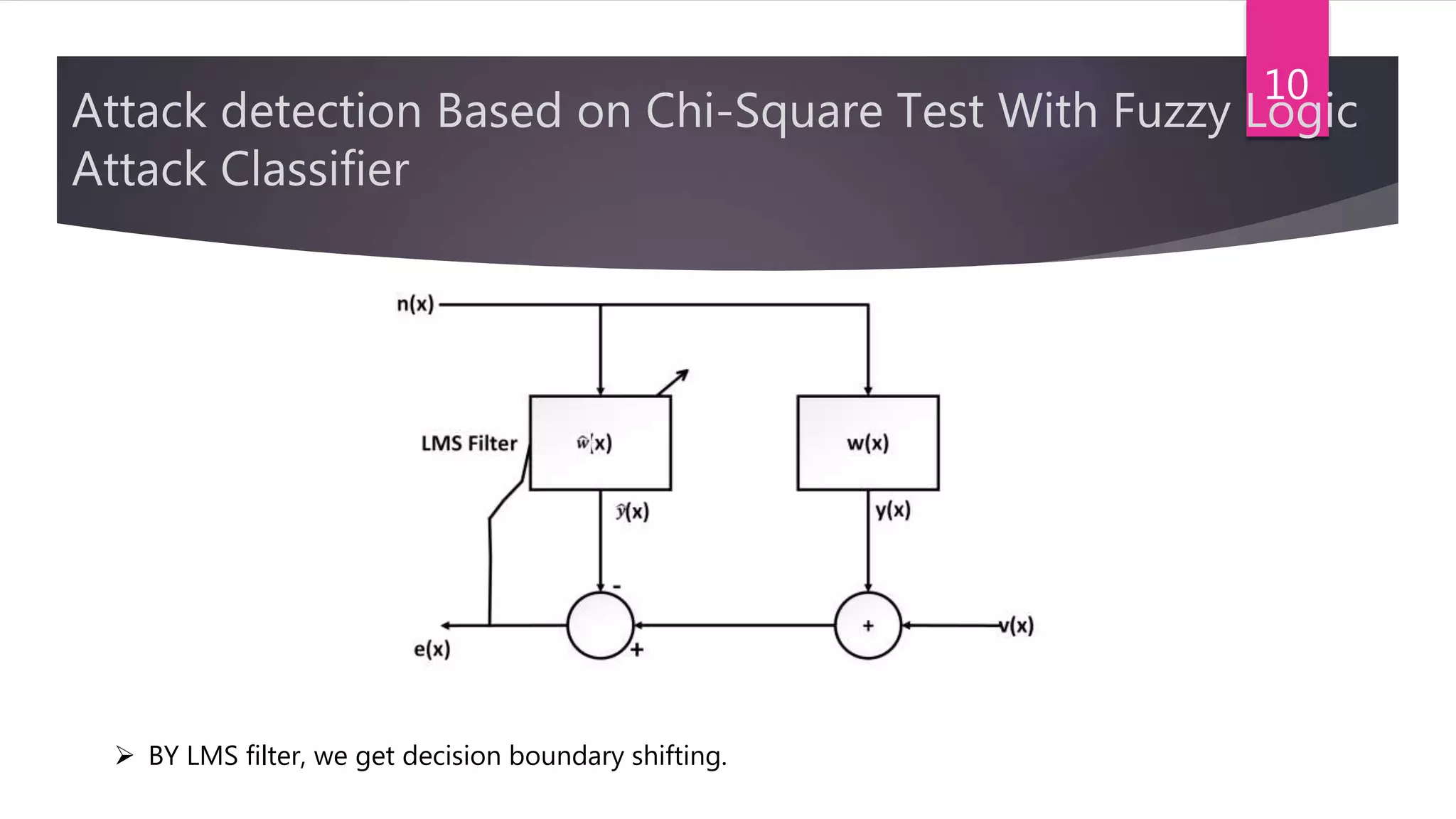
Attack detection Based on Chi-Square Test With Fuzzy Logic
Attack Classifier
10
 BY LMS filter, we get decision boundary shifting.
Continue….
Then through statistical measurement of sensitivity
and specificity, we derived the confusion matrix [5],
 True Positive = Correctly identified
 False Positive = Incorrectly identified
 True Negative = Correctly rejected
 False negative = Incorrectly rejected
In general, positive = identified
Negative = rejected. Therefore,
Confusion Matrix
11
DDoS False Data
Injection
DDoS 96% 4%
False Data
Injection
4% 96%
Continue….
 Data miner along with Kuok’s algorithm is used for optimizing association rule
algorithm.[6]
12
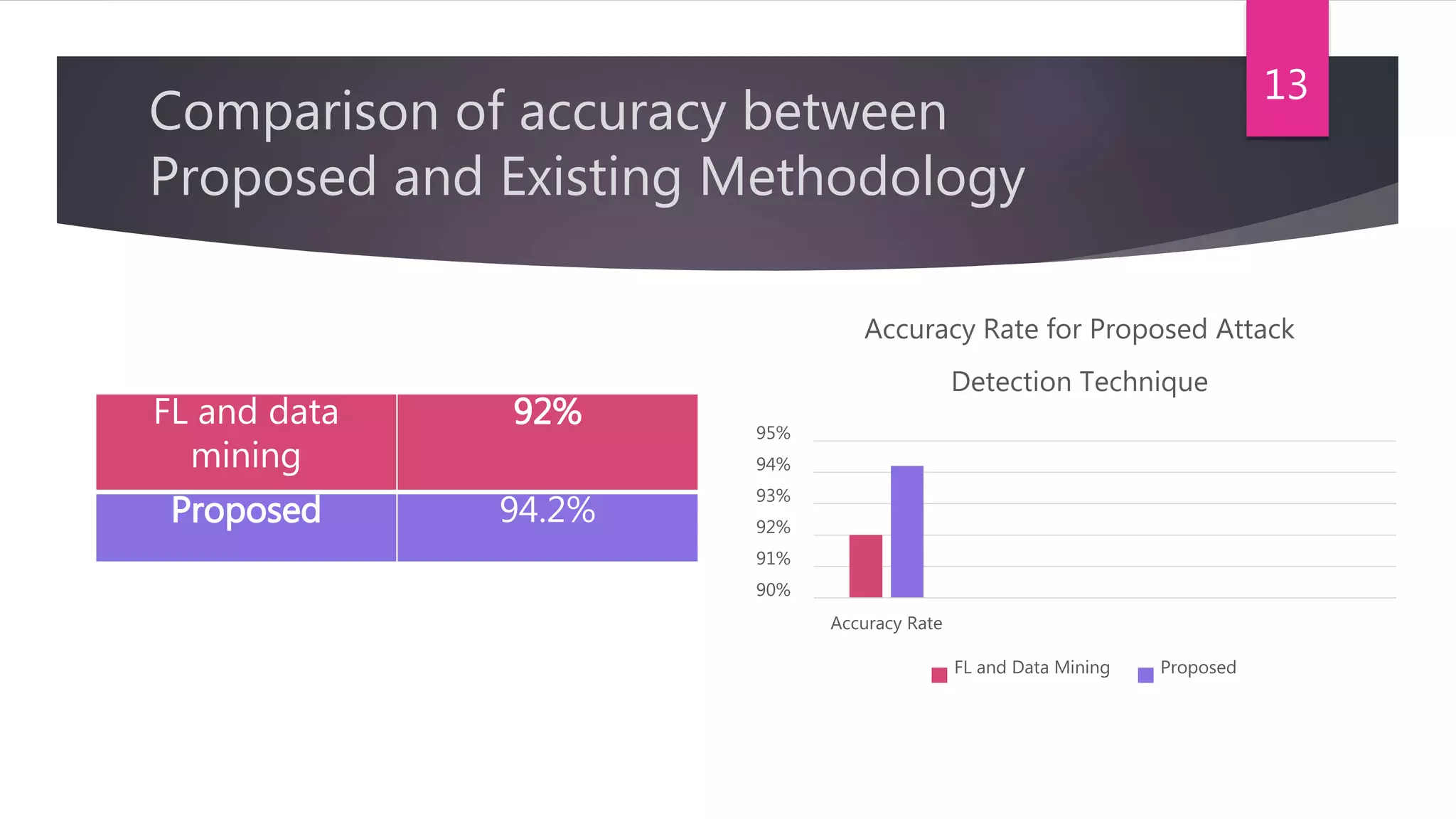
Comparison of accuracy between
Proposed and Existing Methodology
90%
91%
92%
93%
94%
95%
Accuracy Rate
Accuracy Rate for Proposed Attack
Detection Technique
FL and Data Mining Proposed
13
FL and data
mining
92%
Proposed 94.2%
References
[1]F. Aloul, A. R. Al-Ali, R. Al-Dalky, M. Al-Mardini, and W. El-Hajj, “Smart grid security: Threats,
vulnerabilities and solutions,” International Journal Of Smart Grid And Clean Energy, pp. 1–6, 2012.
[2]K. Manandhar, X. Cao, F. Hu, and Y. Liu, “Detection of faults and attacks including false data injection
attack in smart grid using kalman filter,” IEEE Transactions On Control Of Network Systems, vol. 1, no. 4,
pp. 370–379, 2014.
[3]K. Sgouras, A. Birda, and D. Labridis, “Cyber attack impact on critical smart grid infrastructures,” in
Innovative Smart Grid Technologies Conference (ISGT), 2014 IEEE PES, pp. 1–5, Feb 2014.
14
Continue
[4]R. B. Bobba, K. M. Rogers, Q. Wang, H. Khurana, K. Nahrstedt, and T. J. Overbye, “Detecting
false data injection attacks on dc state estimation,” Preprints Of the First Workshop On Secure
Control Systems, CPSWEEK, vol. 2010, 2010.
[5]Wikipedia, "Sensitivity and specificity", 2015. [Online]. Available:
https://en.wikipedia.org/wiki/Sensitivity_and_specificity. [Accessed: 31- DEC- 2015]
[6]C. M. Kuok, A. Fu, and M. H. Wong, “Mining fuzzy association rules in databases,” ACM
SIGMOD Record, vol. 27, no. 1, pp. 41–46, 1998.
15
THANK YOU
16

Attack detection and prevention in the cyber

  • 1.
    Distributed Denial ofService(DDoS) and False Data Injection Attack Detection in Cyber Physical System PRESENTED BY: SUPERVISED BY: NURJAHAN DR. M. SHAMIM KAISER FARHANA NIZAM SHUDARSHON CHAKI
  • 2.
    Outline  Abstract  RelatedWork  Introduction  System Model  Flowchart of Intrusion Detection Method  Attack Detection Using Fuzzy Logic Attack Classifier  Simulation Result  References 2
  • 3.
    Abstract  Proposes DDoSand False data injection attack detection in Cyber Physical System.  The Chi square detector and Fuzzy logic based attack classifier (FLAC) were used to identify distributed denial of service and False data injection attacks.  An example scenario has been created using OpNET Simulator.  Proposes intrusion detection algorithm in the underlying cyber network. 3
  • 4.
    Related Work  In(1), Authors have surveyed the vulnerabilities in smart grid networks, the types of attacks and attackers, the current and needed solutions. Limitation-Do not perform any types of simulation or design any security frameworks.  In (2), Detecting false data injection attacks by Euclidean detector with Kalman filter and also detects DDoS attacks, short term and long term random attacks by Chi-square detector with Kalman filter. Limitation- Focusing that Chi-Square detector is unable to detect the statistically derived false data-injection attack. 4
  • 5.
    Continue  In (3),Highlighting security requirements and issues of smart grid and describing smart grid anomalies and protecting smart grid from cyber vulnerabilities. Limitation-No smart grid cyber attack risk assessment and mitigation discussion and implementation of intrusion detection algorithms throughout system.  In (4), Focus on both random and targeted false data injection attack. Limitation-Protection of the confidentiality of sensor measurements against false data injection is not revealed. 5
  • 6.
    Introduction  Physical objectsare connected with each other through cyber networks are collectively called cyber physical system.  Smart grid is an example of such a system where grid is automated, controlled and has access via internet.  But this system is much more vulnerable to various cyber-attacks, there is more scope of damaging physical infrastructures and making the power station unstable. 6
  • 7.
  • 8.
    Cyber Attack ScenarioIn the Network Infrastructure 8
  • 9.
    Flowchart of IntrusionDetection In the Network Infrastructure 9
  • 10.
    Attack detection Basedon Chi-Square Test With Fuzzy Logic Attack Classifier 10  BY LMS filter, we get decision boundary shifting.
  • 11.
    Continue…. Then through statisticalmeasurement of sensitivity and specificity, we derived the confusion matrix [5],  True Positive = Correctly identified  False Positive = Incorrectly identified  True Negative = Correctly rejected  False negative = Incorrectly rejected In general, positive = identified Negative = rejected. Therefore, Confusion Matrix 11 DDoS False Data Injection DDoS 96% 4% False Data Injection 4% 96%
  • 12.
    Continue….  Data mineralong with Kuok’s algorithm is used for optimizing association rule algorithm.[6] 12
  • 13.
    Comparison of accuracybetween Proposed and Existing Methodology 90% 91% 92% 93% 94% 95% Accuracy Rate Accuracy Rate for Proposed Attack Detection Technique FL and Data Mining Proposed 13 FL and data mining 92% Proposed 94.2%
  • 14.
    References [1]F. Aloul, A.R. Al-Ali, R. Al-Dalky, M. Al-Mardini, and W. El-Hajj, “Smart grid security: Threats, vulnerabilities and solutions,” International Journal Of Smart Grid And Clean Energy, pp. 1–6, 2012. [2]K. Manandhar, X. Cao, F. Hu, and Y. Liu, “Detection of faults and attacks including false data injection attack in smart grid using kalman filter,” IEEE Transactions On Control Of Network Systems, vol. 1, no. 4, pp. 370–379, 2014. [3]K. Sgouras, A. Birda, and D. Labridis, “Cyber attack impact on critical smart grid infrastructures,” in Innovative Smart Grid Technologies Conference (ISGT), 2014 IEEE PES, pp. 1–5, Feb 2014. 14
  • 15.
    Continue [4]R. B. Bobba,K. M. Rogers, Q. Wang, H. Khurana, K. Nahrstedt, and T. J. Overbye, “Detecting false data injection attacks on dc state estimation,” Preprints Of the First Workshop On Secure Control Systems, CPSWEEK, vol. 2010, 2010. [5]Wikipedia, "Sensitivity and specificity", 2015. [Online]. Available: https://en.wikipedia.org/wiki/Sensitivity_and_specificity. [Accessed: 31- DEC- 2015] [6]C. M. Kuok, A. Fu, and M. H. Wong, “Mining fuzzy association rules in databases,” ACM SIGMOD Record, vol. 27, no. 1, pp. 41–46, 1998. 15
  • 16.

Editor's Notes

  • #7 How presentation will benefit audience: Adult learners are more interested in a subject if they know how or why it is important to them. Presenter’s level of expertise in the subject: Briefly state your credentials in this area, or explain why participants should listen to you.
  • #8 Lesson descriptions should be brief.