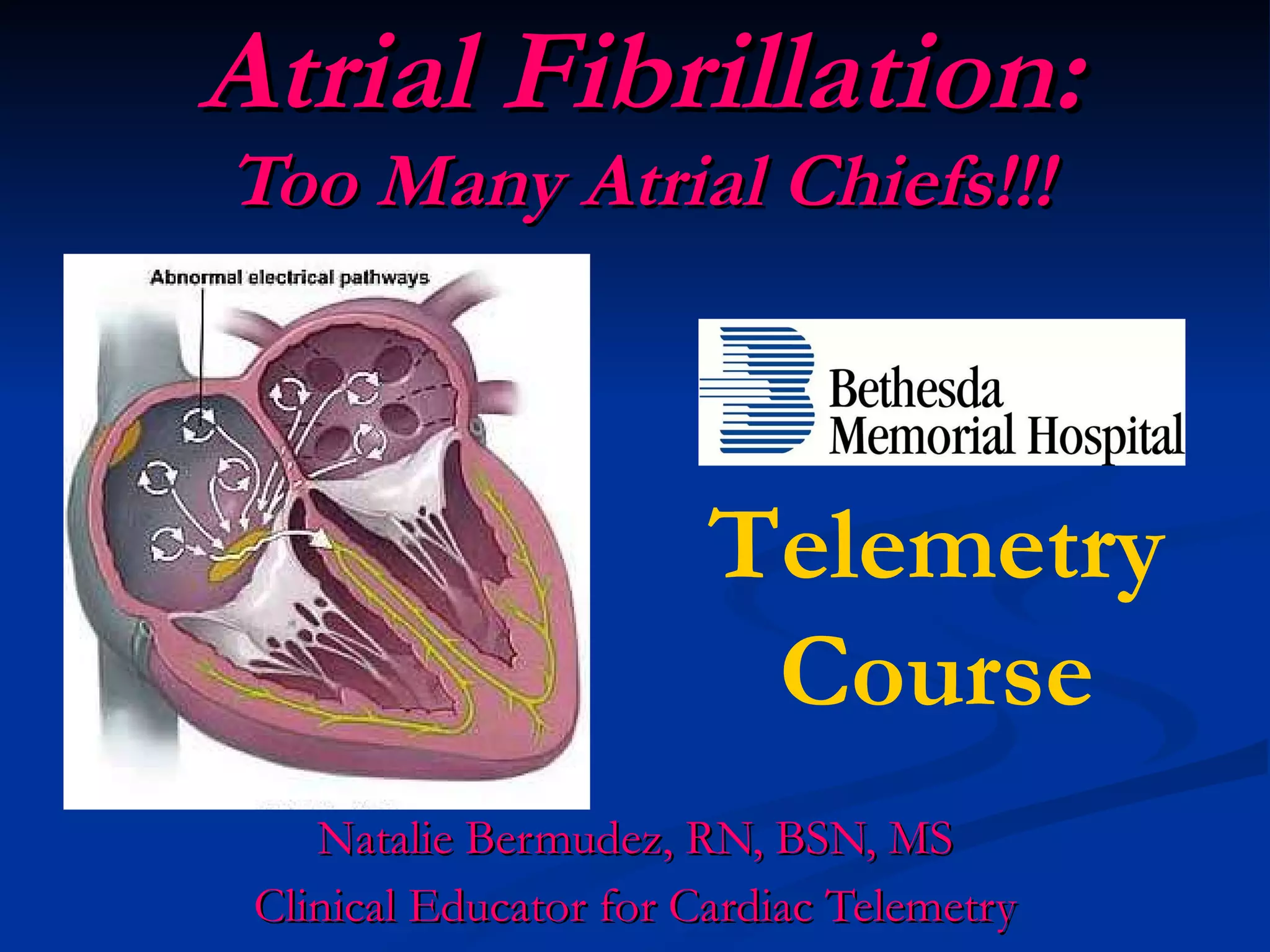
Atrial Fibrillation: Too Many Atrial Chiefs!!! Natalie Bermudez, RN, BSN, MS Clinical Educator for Cardiac Telemetry Telemetry Course
Course Objectives Discuss prevalence of atrial fibrillation in the United States Discuss pathophysiology of atrial fibrillation Discuss the main goals for treatment of atrial fibrillation Discuss the electrical cardioversion versus chemical cardioversion Review medications that are used to treat atrial fibrillation
Statistics “ More than 2.2 million Americans – nearly 15% of those older than age 85 – experience this arrhythmia”  (Prudente, 2008, p. 21) “… An estimated 150,000 new cases will be diagnosed each year.”  (Zak, 2010, p. 68) “ Experts expect the prevalence to increase to 5 million by 2050 as the population ages”  (Prudente, 2008, p. 21)
More Statistics “ Occurs in 11% to 64% of patients after a CABG, valvular replacements, and heart transplantation” (Smeltzer et al, 2008, p.832)
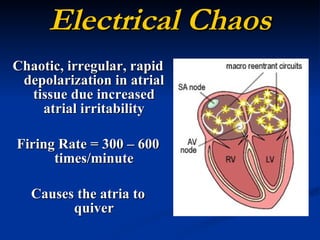
Electrical Chaos Chaotic, irregular, rapid depolarization in atrial tissue due increased atrial irritability Firing Rate = 300 – 600 times/minute Causes the atria to quiver
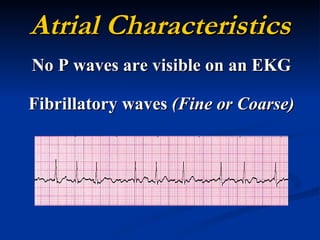
Atrial Characteristics No P waves are visible on an EKG Fibrillatory waves  (Fine or Coarse)
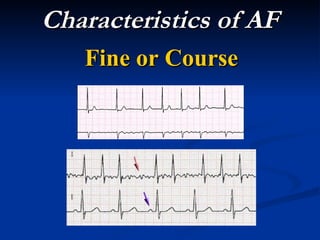
Characteristics of AF Fine or Course
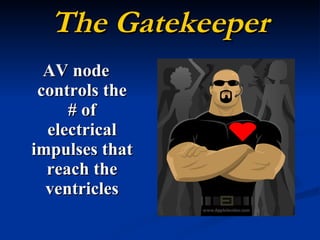
The Gatekeeper AV node controls the # of electrical impulses that reach the ventricles
AV Conduction However, the AV conduction rate is more often tachycardic with atrial fibrillation Dependent on the AV node Refractory Period
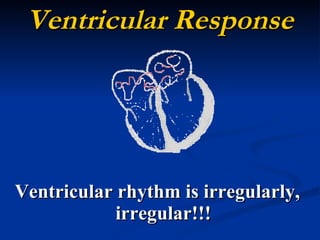
Ventricular Response Ventricular rhythm is irregularly, irregular!!!
Origins of AF Onset is sudden May be self-limiting May represent a single, isolated incident (Prudente, 2008, p. 21) Paroxysmal
Transient rhythm disturbances are commonly caused by: Thyrotoxicosis Heart Failure Exacerbation S/P Cardiac or Thoracic Surgery Excessive Alcohol Intake (Prudente, 2008) Origins of AF Paroxysmal
Origins of AF Primary rhythm disturbance without underlying heart disease (Prudente, 2008, p. 21) “ Lone AF”
Origins of AF AF is secondary to a cardiac disease or other disease that causes atrial remodeling (Prudente, 2008) Secondary AF
Secondary AF Hypertension CAD Valvular Disease Pulmonary Disease Sleep Apnea Obesity (Prudente, 2008) Atrial Remodeling
Secondary AF “ Nearly two-thirds of AF patients have underlying heart disease that may contribute to structural remodeling” (Prudente, 2008, p. 21)
Etiology in a Nutshell Cardiac Surgery MVR, MVS Hyperthyroidism Infection AMI, CAD Pericarditis Hypoxia Coffee, ETOH, Cigarettes Fatigue or Stress Meds (Digoxin or Aminophylline) Catecholamine release during exercise
3 P’s: Types of AF Paroxysmal AF Persistent AF Permanent AF (Prudente, 2008, p. 21)
Paroxysmal AF Episodes come and go, typically lasting less than 24 hours, and convert spontaneously within 7 days (Prudente, 2008, p. 21)
Persistent AF Episodes last more than 7 days and require cardioversion with drugs, electrical shock, or both (Prudente, 2008, p. 21)
Permanent AF A longstanding episode in which cardioversion fails or no cardioversion effort is made (Prudente, 2008, p. 21)
AF and Atrial Kick What is atrial kick??? A-fib causes loss of Atrial Kick Uncontrolled A-fib in combo with loss of Atrial Kick results in  ↓ CO  (as much as 30% less) May result in Heart Failure, Angina, and/or Syncope
Treatment of AF Controlled or Uncontrolled??? Dependent upon AV conduction or ventricular response Without heart rate controlling medications, atrial fibrillation is typically uncontrolled (rapid ventricular response)
Ventricular Response HR 60 – 100  Controlled Ventricular Response HR > 100  uncontrolled Or Rapid Ventricular Response (RVR) HR < 50 Slow Ventricular Response (SVR)
Uncontrolled AF If left untreated can lead to: Cardiovascular Collapse Thrombus Formation Systemic Arterial or Pulmonary Emboli “ In AF patients, the yearly risk of ischemic stroke ranges from 3% to 8%” (Prudente, 2008, p. 22)
Signs & Symptoms None with Controlled A-fib Irregular Rhythm Uncontrolled or SVR: Irregular Rhythm Hypotension Light-headedness Weakness Palpitations SOB
Goals for Treatment  Convert to NSR or Rate Control with Prevention of Blood Clots & Atrial Remodeling
TREATMENT : Asymptomatic versus Symptomatic If < 48 hours, synchronized cardioversion If > 48 hours, anticoagulation therapy and rate control 1 st Then chemical or synchronized cardioversion, if desired by physician
Rhythm Control Medications that Act as  Chemical Cardioverters  by prolonging refractory periods: Antidysrhythmics: Cordarone (amiodarone) Corvert (ibutilide) Rhythmol (propafenone) Tambocor (flecainide) Tikosyn (dofetilide)
Rhythm Control Medications that Act as Chemical Cardioverters by prolonging action potential in myocardial fibers without affecting conduction: Betapace (sotalol): non-selective beta-blocker/antidysrhythmic
Rhythm Control Patients likely to receive chemical cardioversion: First Episode of AF Paroxysmal AF Younger Patients with Structural  Remodeling Patients with Pronounced AF Symptoms (Prudente, 2008)
Preparing Patients for  Synchronized Cardioversion May occur at the bedside or in the Cath Lab! Cardiologist MUST be present for intervention Sedation is usually ordered prior to delivering electrical shock Attach patient to pulse generator pads and the 3-lead wire system Pulse generator should be set to “SYNC” (R waves are marked) Shock delivery: 100J, 150J, 200J
Synchronized Cardioversion If the patient’s rhythm converts to NSR, then the heart rate control and antiagulation therapy is not needed If the cardioversion is unsuccessful, then the patient will need medications!
Catheter Ablation It is the delivery of low-frequency, alternating current through a catheter electrode that produces thermal myocardial injury at the tip of the 4-mm catheter These areas of injury, or lesions, create electrically unexcitable tissue, a situation that prevents depolarization and conduction of electrical impulse (Zak, 2010, p. 70)
Catheter Ablation Indications for Ablation: Primary Indication: Symptomatic AF that is refractory or intolerant to at least one class I or class III antiarrhythmic medication Documented HF or decreased EF who have increasing symptoms of HF in AF Do not take antiarrhythmic meds Long-term anticoagulation treatment (Zak, 2010, p. 70)
Catheter Ablation Contraindicated for: Left atrial thrombus indicated  by TEE Active bleeding or the inability to achieve anticoagulation (Zak, 2010, p. 70)
Catheter Ablation The duration of the procedure is about 3 to 5 hours Under moderate sedation or general anesthesia Performed in an EP lab (Zak, 2010, p. 70)
Rate Control Medications that Slow the Heart Rate: May or May Not act as a Chemical Cardioverters!!! Beta-Blockers   (decrease contractility) Calcium Channel Blockers (nondihydropyridine - decrease contractility) Cardiac Glycosides   (increase contractility) Antiarrhythmics
Medications for Treatment of New Onset or Sudden Onset Atrial Fibrillation Cardizem (diltiazem)  – nondihydropyridine CCB Cordarone (amiodarone)  – antiarrhythmic agent Lanoxin (digoxin)  –  cardiac glycoside
Cardizem (diltiazem hydrochloride) Nondihydropyridine Calcium Channel Blocker “ Diltiazem IV is the drug of choice for urgent rate control in patients with AF A constant IV infusion brings ventricular response under control reliably Sinus rhythm is achieved in only 15% and hypotension occurs in up to 33% of patients (Khan, 2007, p. 260)
Cardizem (diltiazem hydrochloride) Nondihydropyridine Calcium Channel Blocker Inhibits calcium ion influx across cell membrane during cardiac depolarization Slows SA/AV node conduction times
Cardizem Drip How is it ordered??? Ordered to control heart rate Titrate to keep HR between 60 – 100 Need to monitor HR, B/P, & EKG rhythm closely
Cardizem Drip IV Bolus administered first 5 – 20 mg IVP  Supplied as: 25 mg/5 ml
Cardizem Drip Physician will order drip in mg/hr Usually starting @ 5mg/hr May titrate up to 15 mg/hr maximum How Supplied: 100 mg/100 ml (1 mg/ml)
Cardizem Drip If HR < 60 or SBP < 90 Call physician for further orders (Do not stop or discontinue without physician orders!!!) An order with titrating does not include orders to discontinue a medication; unless otherwise specified!!!
Cardizem Drip Before drip is discontinued, make sure patient is on oral Cardizem, or another rate control medication, first To wean or not to wean???
Amiodarone (Cordarone) Acts as a chemical cardioverter  Prolongs refractory period of all cardiac cells Nurses responsible for preparing IV bolus and first bottle for maintenance dose
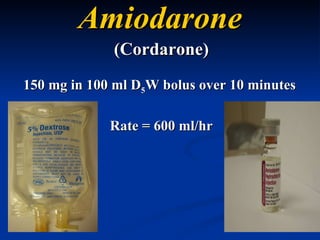
Amiodarone (Cordarone) 150 mg in 100 ml D 5 W bolus over 10 minutes  Rate = 600 ml/hr
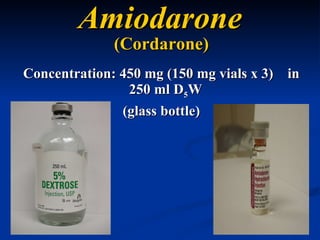
Amiodarone (Cordarone) Concentration: 450 mg (150 mg vials x 3)  in 250 ml D 5 W  (glass bottle)
Amiodarone Infusion Maintenance Drip: 1 mg/min (33 ml/hr) x 6 hours  followed by 0.5 mg/min (17 ml/hr) x 18 hours or until discontinued Important: To avoid medication infiltration, use  0.22 Micron Filter  (white)!!!
Amiodarone Infusion Maintenance Drip: This is not a drip that is titrated!!!
Digoxin (Lanoxin) The most commonly cardiac glycoside to be used The only one that is used in the United States Functional Classification: Cardiac glycoside, inotropic, antidysrhythmic (Lilley, Harrington, and Snyder, 2007)
Digoxin (Lanoxin) Increased Contractility: Positive Inotropic Effects It boosts intracellular calcium and sodium at the cell membrane, enabling stronger heart contractions **(requiring increased O 2  consumption)**
Digoxin (Lanoxin) Decreased Electrical Conduction Velocity: Negative Dromotropic Effects Decreases the velocity (rate) of electrical conduction  Mainly at the SA and AV nodes   Prolongs the refractory period in the conduction system Atrial and Ventricular cardiac cells remain in a state of depolarization longer and are unable to start another electrical impulse
Digoxin (Lanoxin) Decreased Heart Rate: Negative Chronotropic Effect Blocks the reuptake of norepinephrine at the adrenergic nerve terminal
Digoxin (Lanoxin) Improved Cardiac Output: Parasympathetic effects Augments vagal tone (cholinergic or parasympathetic) Slower heart rates allow for increased cardiac filling time
Adverse Reactions/Side Effects Digoxin Toxicity  [has a narrow therapeutic index – (0.5 – 2 ng/ml)] Bradycardia Arrhythmias, complete heart blocks Nausea, vomiting Abdominal pain, diarrhea Headache, vision changes Irritability, insomnia, depression (Eckman, Labus, and Thompson, 2009, p. 184)
Herbal Drug Interaction St. John’s wort  and  ginseng  inhibit the metabolism of digoxin increasing the risk of toxicity (Eckman, Labus, and Thompson, 2009)
Anticoagulation Therapy for Patients with Atrial Fibrillation What is the difference between an anticoagulant, such as warfarin, and an antiplatelet agent, such as clopidogrel??? Why are anticoagulants used for atrial fibrillation and not an antiplatelet agent???
Anticoagulation Therapy for Patients with Atrial Fibrillation Thrombolytic events are the most feared complication of AF Patients with AF are up to 7 times more likely than the general population to have a stroke (Zak, 2010, p. 68)
Heparin Sodium Anticoagulant “ Blood Thinner” Prevents conversion of fibrinogen to fibrin and prothrombin to thrombin Main use is prevention of blood clot formation!!!
Heparin Sodium Common Administration Routes: Subcutaneously or Intravenously
Heparin Drip IV Bolus administered first according to patient’s weight How Supplied: 10,000 units/ml Followed by continuous drip  (dose determined by pharmacy) How Supplied: 25,000 units/250 ml D 5 W (100 units/ml)
Monitoring Heparin PTT measured on a regular basis; 6 hours initially and after any rate changes; otherwise every 12 hours or once daily Platelet Count daily – H.I.T.
Heparin Induced Thrombocytopenia (HIT) Aka Heparin Associate Thrombocytopenia (HAT) An allergic reaction that is mediated by by the production of immunoglobulin (Ig)G antibodies The greatest risk of this condition is the paradoxical occurrence of thrombosis, something that heparin normally prevents or alleviates (Lilley, Harrington, and Snyder, 2007, p. 422)
Heparin Induced Thrombocytopenia (HIT) Incidence is 5% to 15% of patients Is higher bovine versus porcine heparins Argatroban and lepirudin (Refludan) are indicated for treating HIT (Lilley, Harrington, and Snyder, 2007, p. 422)
Monitoring Heparin Monitor: S/S of Bleeding  -> gums, hematuria, black tarry stools Labs -> PTT (Target PTT = 60 – 80 seconds or 2 – 2.5 greater than baseline Platelet Count > 100
Heparin: Too Much? ATTENTION!!! Reversal agent for Heparin is… Protamine Sulfate 1 gram per 100 units of heparin (IV)
Heparin Discontinuation Before heparin drip is discontinued, patient needs to be on Coumadin (warfarin) and INR needs to be therapeutic (2.0 – 3.0) This is not a nursing or pharmacy judgment – physician will order discontinuation of heparin or write standing orders
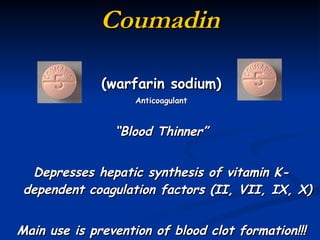
Coumadin (warfarin sodium) Anticoagulant “ Blood Thinner” Depresses hepatic synthesis of vitamin K-dependent coagulation factors (II, VII, IX, X) Main use is prevention of blood clot formation!!!
Coumadin Dosing Coumadin is usually ordered on a daily basis Dose is adjusted by prescribing physician according to INR level. Upon D/C, patient will need to be instructed to keep follow-up appointments for INR level monitoring
Coumadin  Monitor: S/S of Bleeding  -> gums, hematuria, black tarry stools Labs -> PT/INR (Target INR = 2.0 – 3.0) Avoid IM injections
Herbal Drug Interaction St. John’s wort, ginseng,  and  gingko  inhibit the metabolism of warfarin increasing the risk of toxicity (Micromedex)
Coumadin: Too Much? Anticoagulant Therapy ATTENTION!!! Reversal agent for Coumadin is… Vitamin K (Oral, SQ, or IV)
References Donofrio, J., Haworth,K., Achaeffer, L., & Thompson, G. (2005).  Cardiovascular care made incredibly easy.  Ambler, PA: Lippincott Wilkins & Williams Eckman, M., Labus, D., & Thompson, G., (Eds). (2009).  Nursing pharmacology made incredibly easy.  Ambler, PA: Lippincott, Williams, and Wilkins. Hodgson, B. B., & Kizior, R. J. (2007).  Saunders nursing drug handbook.  St. Louis, MS: Saunders Elsevier. Khan, M. G. (2007).  Cardiac drug therapy,  (7 th  ed.). Totowa, NJ: Humana Press. Lilley, L. L., Harrington, S., & Snyder, J. S. (2007).  Pharmacology and the nursing process,  (5 th  ed.). St. Louis, MO: Mosby Elsevier.
References Prudente, L. A. (2008). Quelling atrial chaos: Current approaches to managing atrial fibrillation.  American Nurse Today, 3 (8), 21-26. Skidmore-Roth, L. et al. (2007).  Mosby’s nursing drug reference,  (20 th  ed.). St. Louis, MS: Mosby Elsevier. Smeltzer et al. (2008).  Brunner and suddarth’s textbook of medical-surgical nursing,  (11 th  ed.). Philadelphia, PA: Lippincott Williams and Wilkins. Zak, J. (2010). Ablation to treat atrial fibrillation: Beyond rhythm control.  Critical Care Nurse, 30 (6),   68-78.

Atrial Fibrillation - BMH/Tele

  • 1.
    Atrial Fibrillation: TooMany Atrial Chiefs!!! Natalie Bermudez, RN, BSN, MS Clinical Educator for Cardiac Telemetry Telemetry Course
  • 2.
    Course Objectives Discussprevalence of atrial fibrillation in the United States Discuss pathophysiology of atrial fibrillation Discuss the main goals for treatment of atrial fibrillation Discuss the electrical cardioversion versus chemical cardioversion Review medications that are used to treat atrial fibrillation
  • 3.
    Statistics “ Morethan 2.2 million Americans – nearly 15% of those older than age 85 – experience this arrhythmia” (Prudente, 2008, p. 21) “… An estimated 150,000 new cases will be diagnosed each year.” (Zak, 2010, p. 68) “ Experts expect the prevalence to increase to 5 million by 2050 as the population ages” (Prudente, 2008, p. 21)
  • 4.
    More Statistics “Occurs in 11% to 64% of patients after a CABG, valvular replacements, and heart transplantation” (Smeltzer et al, 2008, p.832)
  • 5.
    Electrical Chaos Chaotic,irregular, rapid depolarization in atrial tissue due increased atrial irritability Firing Rate = 300 – 600 times/minute Causes the atria to quiver
  • 6.
    Atrial Characteristics NoP waves are visible on an EKG Fibrillatory waves (Fine or Coarse)
  • 7.
    Characteristics of AFFine or Course
  • 8.
    The Gatekeeper AVnode controls the # of electrical impulses that reach the ventricles
  • 9.
    AV Conduction However,the AV conduction rate is more often tachycardic with atrial fibrillation Dependent on the AV node Refractory Period
  • 10.
    Ventricular Response Ventricularrhythm is irregularly, irregular!!!
  • 11.
    Origins of AFOnset is sudden May be self-limiting May represent a single, isolated incident (Prudente, 2008, p. 21) Paroxysmal
  • 12.
    Transient rhythm disturbancesare commonly caused by: Thyrotoxicosis Heart Failure Exacerbation S/P Cardiac or Thoracic Surgery Excessive Alcohol Intake (Prudente, 2008) Origins of AF Paroxysmal
  • 13.
    Origins of AFPrimary rhythm disturbance without underlying heart disease (Prudente, 2008, p. 21) “ Lone AF”
  • 14.
    Origins of AFAF is secondary to a cardiac disease or other disease that causes atrial remodeling (Prudente, 2008) Secondary AF
  • 15.
    Secondary AF HypertensionCAD Valvular Disease Pulmonary Disease Sleep Apnea Obesity (Prudente, 2008) Atrial Remodeling
  • 16.
    Secondary AF “Nearly two-thirds of AF patients have underlying heart disease that may contribute to structural remodeling” (Prudente, 2008, p. 21)
  • 17.
    Etiology in aNutshell Cardiac Surgery MVR, MVS Hyperthyroidism Infection AMI, CAD Pericarditis Hypoxia Coffee, ETOH, Cigarettes Fatigue or Stress Meds (Digoxin or Aminophylline) Catecholamine release during exercise
  • 18.
    3 P’s: Typesof AF Paroxysmal AF Persistent AF Permanent AF (Prudente, 2008, p. 21)
  • 19.
    Paroxysmal AF Episodescome and go, typically lasting less than 24 hours, and convert spontaneously within 7 days (Prudente, 2008, p. 21)
  • 20.
    Persistent AF Episodeslast more than 7 days and require cardioversion with drugs, electrical shock, or both (Prudente, 2008, p. 21)
  • 21.
    Permanent AF Alongstanding episode in which cardioversion fails or no cardioversion effort is made (Prudente, 2008, p. 21)
  • 22.
    AF and AtrialKick What is atrial kick??? A-fib causes loss of Atrial Kick Uncontrolled A-fib in combo with loss of Atrial Kick results in ↓ CO (as much as 30% less) May result in Heart Failure, Angina, and/or Syncope
  • 23.
    Treatment of AFControlled or Uncontrolled??? Dependent upon AV conduction or ventricular response Without heart rate controlling medications, atrial fibrillation is typically uncontrolled (rapid ventricular response)
  • 24.
    Ventricular Response HR60 – 100 Controlled Ventricular Response HR > 100 uncontrolled Or Rapid Ventricular Response (RVR) HR < 50 Slow Ventricular Response (SVR)
  • 25.
    Uncontrolled AF Ifleft untreated can lead to: Cardiovascular Collapse Thrombus Formation Systemic Arterial or Pulmonary Emboli “ In AF patients, the yearly risk of ischemic stroke ranges from 3% to 8%” (Prudente, 2008, p. 22)
  • 26.
    Signs & SymptomsNone with Controlled A-fib Irregular Rhythm Uncontrolled or SVR: Irregular Rhythm Hypotension Light-headedness Weakness Palpitations SOB
  • 27.
    Goals for Treatment Convert to NSR or Rate Control with Prevention of Blood Clots & Atrial Remodeling
  • 28.
    TREATMENT : Asymptomaticversus Symptomatic If < 48 hours, synchronized cardioversion If > 48 hours, anticoagulation therapy and rate control 1 st Then chemical or synchronized cardioversion, if desired by physician
  • 29.
    Rhythm Control Medicationsthat Act as Chemical Cardioverters by prolonging refractory periods: Antidysrhythmics: Cordarone (amiodarone) Corvert (ibutilide) Rhythmol (propafenone) Tambocor (flecainide) Tikosyn (dofetilide)
  • 30.
    Rhythm Control Medicationsthat Act as Chemical Cardioverters by prolonging action potential in myocardial fibers without affecting conduction: Betapace (sotalol): non-selective beta-blocker/antidysrhythmic
  • 31.
    Rhythm Control Patientslikely to receive chemical cardioversion: First Episode of AF Paroxysmal AF Younger Patients with Structural Remodeling Patients with Pronounced AF Symptoms (Prudente, 2008)
  • 32.
    Preparing Patients for Synchronized Cardioversion May occur at the bedside or in the Cath Lab! Cardiologist MUST be present for intervention Sedation is usually ordered prior to delivering electrical shock Attach patient to pulse generator pads and the 3-lead wire system Pulse generator should be set to “SYNC” (R waves are marked) Shock delivery: 100J, 150J, 200J
  • 33.
    Synchronized Cardioversion Ifthe patient’s rhythm converts to NSR, then the heart rate control and antiagulation therapy is not needed If the cardioversion is unsuccessful, then the patient will need medications!
  • 34.
    Catheter Ablation Itis the delivery of low-frequency, alternating current through a catheter electrode that produces thermal myocardial injury at the tip of the 4-mm catheter These areas of injury, or lesions, create electrically unexcitable tissue, a situation that prevents depolarization and conduction of electrical impulse (Zak, 2010, p. 70)
  • 35.
    Catheter Ablation Indicationsfor Ablation: Primary Indication: Symptomatic AF that is refractory or intolerant to at least one class I or class III antiarrhythmic medication Documented HF or decreased EF who have increasing symptoms of HF in AF Do not take antiarrhythmic meds Long-term anticoagulation treatment (Zak, 2010, p. 70)
  • 36.
    Catheter Ablation Contraindicatedfor: Left atrial thrombus indicated by TEE Active bleeding or the inability to achieve anticoagulation (Zak, 2010, p. 70)
  • 37.
    Catheter Ablation Theduration of the procedure is about 3 to 5 hours Under moderate sedation or general anesthesia Performed in an EP lab (Zak, 2010, p. 70)
  • 38.
    Rate Control Medicationsthat Slow the Heart Rate: May or May Not act as a Chemical Cardioverters!!! Beta-Blockers (decrease contractility) Calcium Channel Blockers (nondihydropyridine - decrease contractility) Cardiac Glycosides (increase contractility) Antiarrhythmics
  • 39.
    Medications for Treatmentof New Onset or Sudden Onset Atrial Fibrillation Cardizem (diltiazem) – nondihydropyridine CCB Cordarone (amiodarone) – antiarrhythmic agent Lanoxin (digoxin) – cardiac glycoside
  • 40.
    Cardizem (diltiazem hydrochloride)Nondihydropyridine Calcium Channel Blocker “ Diltiazem IV is the drug of choice for urgent rate control in patients with AF A constant IV infusion brings ventricular response under control reliably Sinus rhythm is achieved in only 15% and hypotension occurs in up to 33% of patients (Khan, 2007, p. 260)
  • 41.
    Cardizem (diltiazem hydrochloride)Nondihydropyridine Calcium Channel Blocker Inhibits calcium ion influx across cell membrane during cardiac depolarization Slows SA/AV node conduction times
  • 42.
    Cardizem Drip Howis it ordered??? Ordered to control heart rate Titrate to keep HR between 60 – 100 Need to monitor HR, B/P, & EKG rhythm closely
  • 43.
    Cardizem Drip IVBolus administered first 5 – 20 mg IVP Supplied as: 25 mg/5 ml
  • 44.
    Cardizem Drip Physicianwill order drip in mg/hr Usually starting @ 5mg/hr May titrate up to 15 mg/hr maximum How Supplied: 100 mg/100 ml (1 mg/ml)
  • 45.
    Cardizem Drip IfHR < 60 or SBP < 90 Call physician for further orders (Do not stop or discontinue without physician orders!!!) An order with titrating does not include orders to discontinue a medication; unless otherwise specified!!!
  • 46.
    Cardizem Drip Beforedrip is discontinued, make sure patient is on oral Cardizem, or another rate control medication, first To wean or not to wean???
  • 47.
    Amiodarone (Cordarone) Actsas a chemical cardioverter Prolongs refractory period of all cardiac cells Nurses responsible for preparing IV bolus and first bottle for maintenance dose
  • 48.
    Amiodarone (Cordarone) 150mg in 100 ml D 5 W bolus over 10 minutes Rate = 600 ml/hr
  • 49.
    Amiodarone (Cordarone) Concentration:450 mg (150 mg vials x 3) in 250 ml D 5 W (glass bottle)
  • 50.
    Amiodarone Infusion MaintenanceDrip: 1 mg/min (33 ml/hr) x 6 hours followed by 0.5 mg/min (17 ml/hr) x 18 hours or until discontinued Important: To avoid medication infiltration, use 0.22 Micron Filter (white)!!!
  • 51.
    Amiodarone Infusion MaintenanceDrip: This is not a drip that is titrated!!!
  • 52.
    Digoxin (Lanoxin) Themost commonly cardiac glycoside to be used The only one that is used in the United States Functional Classification: Cardiac glycoside, inotropic, antidysrhythmic (Lilley, Harrington, and Snyder, 2007)
  • 53.
    Digoxin (Lanoxin) IncreasedContractility: Positive Inotropic Effects It boosts intracellular calcium and sodium at the cell membrane, enabling stronger heart contractions **(requiring increased O 2 consumption)**
  • 54.
    Digoxin (Lanoxin) DecreasedElectrical Conduction Velocity: Negative Dromotropic Effects Decreases the velocity (rate) of electrical conduction Mainly at the SA and AV nodes Prolongs the refractory period in the conduction system Atrial and Ventricular cardiac cells remain in a state of depolarization longer and are unable to start another electrical impulse
  • 55.
    Digoxin (Lanoxin) DecreasedHeart Rate: Negative Chronotropic Effect Blocks the reuptake of norepinephrine at the adrenergic nerve terminal
  • 56.
    Digoxin (Lanoxin) ImprovedCardiac Output: Parasympathetic effects Augments vagal tone (cholinergic or parasympathetic) Slower heart rates allow for increased cardiac filling time
  • 57.
    Adverse Reactions/Side EffectsDigoxin Toxicity [has a narrow therapeutic index – (0.5 – 2 ng/ml)] Bradycardia Arrhythmias, complete heart blocks Nausea, vomiting Abdominal pain, diarrhea Headache, vision changes Irritability, insomnia, depression (Eckman, Labus, and Thompson, 2009, p. 184)
  • 58.
    Herbal Drug InteractionSt. John’s wort and ginseng inhibit the metabolism of digoxin increasing the risk of toxicity (Eckman, Labus, and Thompson, 2009)
  • 59.
    Anticoagulation Therapy forPatients with Atrial Fibrillation What is the difference between an anticoagulant, such as warfarin, and an antiplatelet agent, such as clopidogrel??? Why are anticoagulants used for atrial fibrillation and not an antiplatelet agent???
  • 60.
    Anticoagulation Therapy forPatients with Atrial Fibrillation Thrombolytic events are the most feared complication of AF Patients with AF are up to 7 times more likely than the general population to have a stroke (Zak, 2010, p. 68)
  • 61.
    Heparin Sodium Anticoagulant“ Blood Thinner” Prevents conversion of fibrinogen to fibrin and prothrombin to thrombin Main use is prevention of blood clot formation!!!
  • 62.
    Heparin Sodium CommonAdministration Routes: Subcutaneously or Intravenously
  • 63.
    Heparin Drip IVBolus administered first according to patient’s weight How Supplied: 10,000 units/ml Followed by continuous drip (dose determined by pharmacy) How Supplied: 25,000 units/250 ml D 5 W (100 units/ml)
  • 64.
    Monitoring Heparin PTTmeasured on a regular basis; 6 hours initially and after any rate changes; otherwise every 12 hours or once daily Platelet Count daily – H.I.T.
  • 65.
    Heparin Induced Thrombocytopenia(HIT) Aka Heparin Associate Thrombocytopenia (HAT) An allergic reaction that is mediated by by the production of immunoglobulin (Ig)G antibodies The greatest risk of this condition is the paradoxical occurrence of thrombosis, something that heparin normally prevents or alleviates (Lilley, Harrington, and Snyder, 2007, p. 422)
  • 66.
    Heparin Induced Thrombocytopenia(HIT) Incidence is 5% to 15% of patients Is higher bovine versus porcine heparins Argatroban and lepirudin (Refludan) are indicated for treating HIT (Lilley, Harrington, and Snyder, 2007, p. 422)
  • 67.
    Monitoring Heparin Monitor:S/S of Bleeding -> gums, hematuria, black tarry stools Labs -> PTT (Target PTT = 60 – 80 seconds or 2 – 2.5 greater than baseline Platelet Count > 100
  • 68.
    Heparin: Too Much?ATTENTION!!! Reversal agent for Heparin is… Protamine Sulfate 1 gram per 100 units of heparin (IV)
  • 69.
    Heparin Discontinuation Beforeheparin drip is discontinued, patient needs to be on Coumadin (warfarin) and INR needs to be therapeutic (2.0 – 3.0) This is not a nursing or pharmacy judgment – physician will order discontinuation of heparin or write standing orders
  • 70.
    Coumadin (warfarin sodium)Anticoagulant “ Blood Thinner” Depresses hepatic synthesis of vitamin K-dependent coagulation factors (II, VII, IX, X) Main use is prevention of blood clot formation!!!
  • 71.
    Coumadin Dosing Coumadinis usually ordered on a daily basis Dose is adjusted by prescribing physician according to INR level. Upon D/C, patient will need to be instructed to keep follow-up appointments for INR level monitoring
  • 72.
    Coumadin Monitor:S/S of Bleeding -> gums, hematuria, black tarry stools Labs -> PT/INR (Target INR = 2.0 – 3.0) Avoid IM injections
  • 73.
    Herbal Drug InteractionSt. John’s wort, ginseng, and gingko inhibit the metabolism of warfarin increasing the risk of toxicity (Micromedex)
  • 74.
    Coumadin: Too Much?Anticoagulant Therapy ATTENTION!!! Reversal agent for Coumadin is… Vitamin K (Oral, SQ, or IV)
  • 75.
    References Donofrio, J.,Haworth,K., Achaeffer, L., & Thompson, G. (2005). Cardiovascular care made incredibly easy. Ambler, PA: Lippincott Wilkins & Williams Eckman, M., Labus, D., & Thompson, G., (Eds). (2009). Nursing pharmacology made incredibly easy. Ambler, PA: Lippincott, Williams, and Wilkins. Hodgson, B. B., & Kizior, R. J. (2007). Saunders nursing drug handbook. St. Louis, MS: Saunders Elsevier. Khan, M. G. (2007). Cardiac drug therapy, (7 th ed.). Totowa, NJ: Humana Press. Lilley, L. L., Harrington, S., & Snyder, J. S. (2007). Pharmacology and the nursing process, (5 th ed.). St. Louis, MO: Mosby Elsevier.
  • 76.
    References Prudente, L.A. (2008). Quelling atrial chaos: Current approaches to managing atrial fibrillation. American Nurse Today, 3 (8), 21-26. Skidmore-Roth, L. et al. (2007). Mosby’s nursing drug reference, (20 th ed.). St. Louis, MS: Mosby Elsevier. Smeltzer et al. (2008). Brunner and suddarth’s textbook of medical-surgical nursing, (11 th ed.). Philadelphia, PA: Lippincott Williams and Wilkins. Zak, J. (2010). Ablation to treat atrial fibrillation: Beyond rhythm control. Critical Care Nurse, 30 (6), 68-78.