

PRACTICE TEACHING ON: ASTHMA
PRESENTED BY
NIKHIL VAISHNAV
M.SC. 1st year
 Asthma is an inflammatory disease
characterized by hyper responsiveness of the
airway and period of bronchospasm.
 Asthma is a chronic disease involving the
airway in the lungs, It is a chronic lung
disease that inflames and narrows the airway.
 People who are suffered with asthma called
as asthmatic.
 An estimated 300 million people
worldwide suffer from asthma.
 It is the most common chronic
disease in childhood, affecting an
estimated 7 million children.
1. Allergic asthma.
2. Asthma without allergy.
3. Exercise induced asthma.
4. Aspirin Induced asthma.
5. Cough variant asthma.
6. Occupational asthma.
 It is the most common type of
asthma.
 Also known as allergy induced
asthma.
 It is caused by allergic reaction.
 After inhaling allergens person feels
symptoms.
Some allergens can cause allergic asthma are:
 Pet dander.
 Dust mites.
 Pollen.
 Air pollution.
 Chemical fumes.
 Usually Upper respiratory tract infections
(Cold/ flu/ Rhinovirus) causes such type of
asthma.
 They cause inflammation or narrowing of
the airways.
 Also termed as Samter’s syndrome,
aspirin exacerbated respiratory
disease (AERD).
 This type of asthma is triggered by
aspirin.
 Patient may have Nasal polyps,
Rhinitis, Sneezing and a running nose,
history of sensitivity.
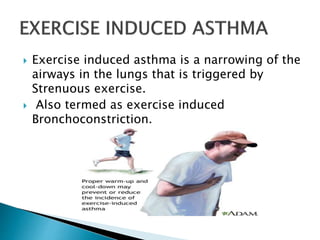
 Exercise induced asthma is a narrowing of the
airways in the lungs that is triggered by
Strenuous exercise.
 Also termed as exercise induced
Bronchoconstriction.
 It is a kind of asthma in which the main
symptoms is a dry, non-productive cough.
 Such kinds of asthmatics do have classic
symptoms of asthma like Wheezing,
Shortness of breath.
 Occupational asthma is a lung disorder in which
substances found in the workplace cause the
airways of the lungs to swell and narrow .
 It leads to wheezing attack, shortness of breath,
chest tightness etc.
 The Exact cause of asthma is not clear.
However Hyperresponsiveness of the airway
is caused by allergic substances called
Allergens.
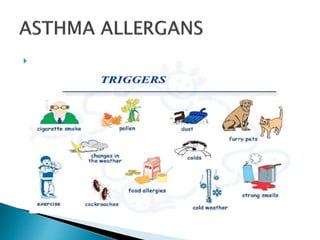
1. Airborne substances such as pollen, dust mites,
mold spores, pet dander or particles of
cockroach waste .
2. Common cold.
3. Physical activity.
4. Cold air .
5. Air pollutants and irritants, such as smoke.
6. Certain medications, including beta blockers,
aspirin, ibuprofen and naproxen (Aleve).
7. Strong emotions and stress.
8. Gastro oesophageal reflux disease (GERD).

1. Having a blood relative with asthma.
2. Being a overweight.
3. Being Smoker.
4. Exposure to second-hand smoke.
5. Exposure to exhaust fumes or other types
of pollution.
6. Exposure to occupational triggers, such as
chemicals used in farming.
7. Atopic dermatitis, allergic rhinitis.
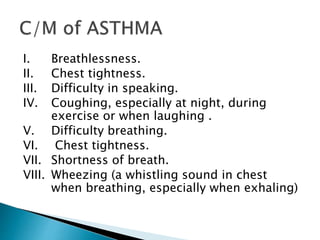
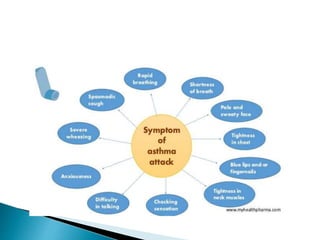
I. Breathlessness.
II. Chest tightness.
III. Difficulty in speaking.
IV. Coughing, especially at night, during
exercise or when laughing .
V. Difficulty breathing.
VI. Chest tightness.
VII. Shortness of breath.
VIII. Wheezing (a whistling sound in chest
when breathing, especially when exhaling)
1. History collection.
2. Physical examination.
3. Peak flow meter: Peak expiratory flow rate
is a person’s maximum speed of expiration,
measured with peak flow meter.
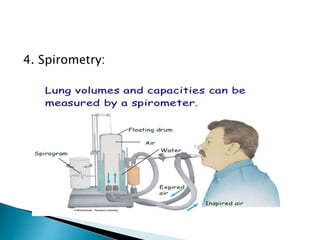
4. Spirometry:
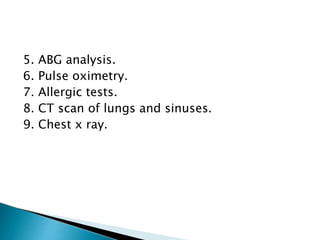
5. ABG analysis.
6. Pulse oximetry.
7. Allergic tests.
8. CT scan of lungs and sinuses.
9. Chest x ray.
9.Methacholine Inhalation challenge test: Also
termed as Bronchial challenge test.
- Methacholine is a cholinergic drug.
- It provokes Bronchoconstriction or narrowing
of bronchioles.
10. Nitric oxide test: Exhaled nitric oxide (Eno)
can be measured in breath test for
asthma. Spirometry.
 The Treatment strategies consists of Long
term Controllers, Quick relief medications
and other measures.
 The goal of management of asthma is to
allow the person with asthma to live a
normal life.
1) Inhaled corticosteroids (ICSs), such as
beclomethasone, budesonide, flunisolide,
fluticasone, mometasone, ciclesonide.
2) Long acting Inhaled beta- agonists (LABA)
include salmeterol, formoterol.
3) Combination inhalers, such as fluticasone and
salmeterol, budesonide and formoterol,
mometasone and formoterol.
4) Leukotriene modifiers, such as montelukast
and zafirlukast.
5) Inhaled mast cell stabilizer; Cromolyn
sodium.
6) Long acting oral beta agonists, such as
Albuterol extended- release tablets.
7) Oral corticosteroids (maintenance dose).
8) Methylxanthines such as theophylline.
9) Muscarinic agents, namely tioropium, as
adjunct therapy.
10) An IgE blocker (omalizumab) can be added
to standard maintenance therapy to reduce
exacerbations in moderate to severe
asthma.
1) Short – acting bronchodilators by
inhalation:
Short- acting beta agonists (SABAs), such
as Albuterol, pirbuterol and levalbuterol.
Anticholinergic agents such as
Ipratropium bromide.
2) Systemic corticosteroids (short course):
Prednisone, prednisolone, methylprednisolone.
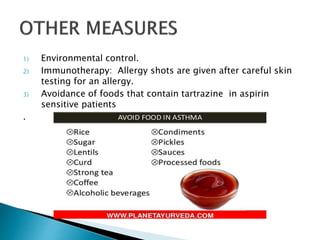
1) Environmental control.
2) Immunotherapy: Allergy shots are given after careful skin
testing for an allergy.
3) Avoidance of foods that contain tartrazine in aspirin
sensitive patients
.
 Regular aerobic exercise should be
encouraged.
 Use of an inhaled Cromolyn taken 5 to 10
minutes before exercise will decrease
exercise induced bronchoconstriction.
 Antibiotics are prescribed only during
Bacterial invasion.
 Alternative and complementary therapies that
include acupuncture, herbal preparations,
yoga and chiropractic treatment .
1. Ineffective Breathing pattern related to
bronchospasm.
2. Anxiety related to fear of suffocating,
difficulty in breathing.
3. Risk of injury related to drug treatment
and potential adverse effects.

Asthma nikhil ppt

  • 1.
    PRACTICE TEACHING ON:ASTHMA PRESENTED BY NIKHIL VAISHNAV M.SC. 1st year
  • 2.
     Asthma isan inflammatory disease characterized by hyper responsiveness of the airway and period of bronchospasm.  Asthma is a chronic disease involving the airway in the lungs, It is a chronic lung disease that inflames and narrows the airway.  People who are suffered with asthma called as asthmatic.
  • 3.
     An estimated300 million people worldwide suffer from asthma.  It is the most common chronic disease in childhood, affecting an estimated 7 million children.
  • 4.
    1. Allergic asthma. 2.Asthma without allergy. 3. Exercise induced asthma. 4. Aspirin Induced asthma. 5. Cough variant asthma. 6. Occupational asthma.
  • 5.
     It isthe most common type of asthma.  Also known as allergy induced asthma.  It is caused by allergic reaction.  After inhaling allergens person feels symptoms.
  • 6.
    Some allergens cancause allergic asthma are:  Pet dander.  Dust mites.  Pollen.  Air pollution.  Chemical fumes.
  • 7.
     Usually Upperrespiratory tract infections (Cold/ flu/ Rhinovirus) causes such type of asthma.  They cause inflammation or narrowing of the airways.
  • 8.
     Also termedas Samter’s syndrome, aspirin exacerbated respiratory disease (AERD).  This type of asthma is triggered by aspirin.  Patient may have Nasal polyps, Rhinitis, Sneezing and a running nose, history of sensitivity.
  • 9.
     Exercise inducedasthma is a narrowing of the airways in the lungs that is triggered by Strenuous exercise.  Also termed as exercise induced Bronchoconstriction.
  • 10.
     It isa kind of asthma in which the main symptoms is a dry, non-productive cough.  Such kinds of asthmatics do have classic symptoms of asthma like Wheezing, Shortness of breath.
  • 11.
     Occupational asthmais a lung disorder in which substances found in the workplace cause the airways of the lungs to swell and narrow .  It leads to wheezing attack, shortness of breath, chest tightness etc.
  • 12.
     The Exactcause of asthma is not clear. However Hyperresponsiveness of the airway is caused by allergic substances called Allergens.
  • 13.
    1. Airborne substancessuch as pollen, dust mites, mold spores, pet dander or particles of cockroach waste . 2. Common cold. 3. Physical activity. 4. Cold air . 5. Air pollutants and irritants, such as smoke. 6. Certain medications, including beta blockers, aspirin, ibuprofen and naproxen (Aleve). 7. Strong emotions and stress. 8. Gastro oesophageal reflux disease (GERD).
  • 14.
  • 15.
    1. Having ablood relative with asthma. 2. Being a overweight. 3. Being Smoker. 4. Exposure to second-hand smoke. 5. Exposure to exhaust fumes or other types of pollution. 6. Exposure to occupational triggers, such as chemicals used in farming. 7. Atopic dermatitis, allergic rhinitis.
  • 16.
    I. Breathlessness. II. Chesttightness. III. Difficulty in speaking. IV. Coughing, especially at night, during exercise or when laughing . V. Difficulty breathing. VI. Chest tightness. VII. Shortness of breath. VIII. Wheezing (a whistling sound in chest when breathing, especially when exhaling)
  • 18.
    1. History collection. 2.Physical examination. 3. Peak flow meter: Peak expiratory flow rate is a person’s maximum speed of expiration, measured with peak flow meter.
  • 19.
  • 20.
    5. ABG analysis. 6.Pulse oximetry. 7. Allergic tests. 8. CT scan of lungs and sinuses. 9. Chest x ray.
  • 21.
    9.Methacholine Inhalation challengetest: Also termed as Bronchial challenge test. - Methacholine is a cholinergic drug. - It provokes Bronchoconstriction or narrowing of bronchioles. 10. Nitric oxide test: Exhaled nitric oxide (Eno) can be measured in breath test for asthma. Spirometry.
  • 22.
     The Treatmentstrategies consists of Long term Controllers, Quick relief medications and other measures.  The goal of management of asthma is to allow the person with asthma to live a normal life.
  • 23.
    1) Inhaled corticosteroids(ICSs), such as beclomethasone, budesonide, flunisolide, fluticasone, mometasone, ciclesonide. 2) Long acting Inhaled beta- agonists (LABA) include salmeterol, formoterol. 3) Combination inhalers, such as fluticasone and salmeterol, budesonide and formoterol, mometasone and formoterol. 4) Leukotriene modifiers, such as montelukast and zafirlukast. 5) Inhaled mast cell stabilizer; Cromolyn sodium.
  • 24.
    6) Long actingoral beta agonists, such as Albuterol extended- release tablets. 7) Oral corticosteroids (maintenance dose). 8) Methylxanthines such as theophylline. 9) Muscarinic agents, namely tioropium, as adjunct therapy. 10) An IgE blocker (omalizumab) can be added to standard maintenance therapy to reduce exacerbations in moderate to severe asthma.
  • 25.
    1) Short –acting bronchodilators by inhalation: Short- acting beta agonists (SABAs), such as Albuterol, pirbuterol and levalbuterol. Anticholinergic agents such as Ipratropium bromide. 2) Systemic corticosteroids (short course): Prednisone, prednisolone, methylprednisolone.
  • 26.
    1) Environmental control. 2)Immunotherapy: Allergy shots are given after careful skin testing for an allergy. 3) Avoidance of foods that contain tartrazine in aspirin sensitive patients .
  • 27.
     Regular aerobicexercise should be encouraged.  Use of an inhaled Cromolyn taken 5 to 10 minutes before exercise will decrease exercise induced bronchoconstriction.  Antibiotics are prescribed only during Bacterial invasion.  Alternative and complementary therapies that include acupuncture, herbal preparations, yoga and chiropractic treatment .
  • 29.
    1. Ineffective Breathingpattern related to bronchospasm. 2. Anxiety related to fear of suffocating, difficulty in breathing. 3. Risk of injury related to drug treatment and potential adverse effects.