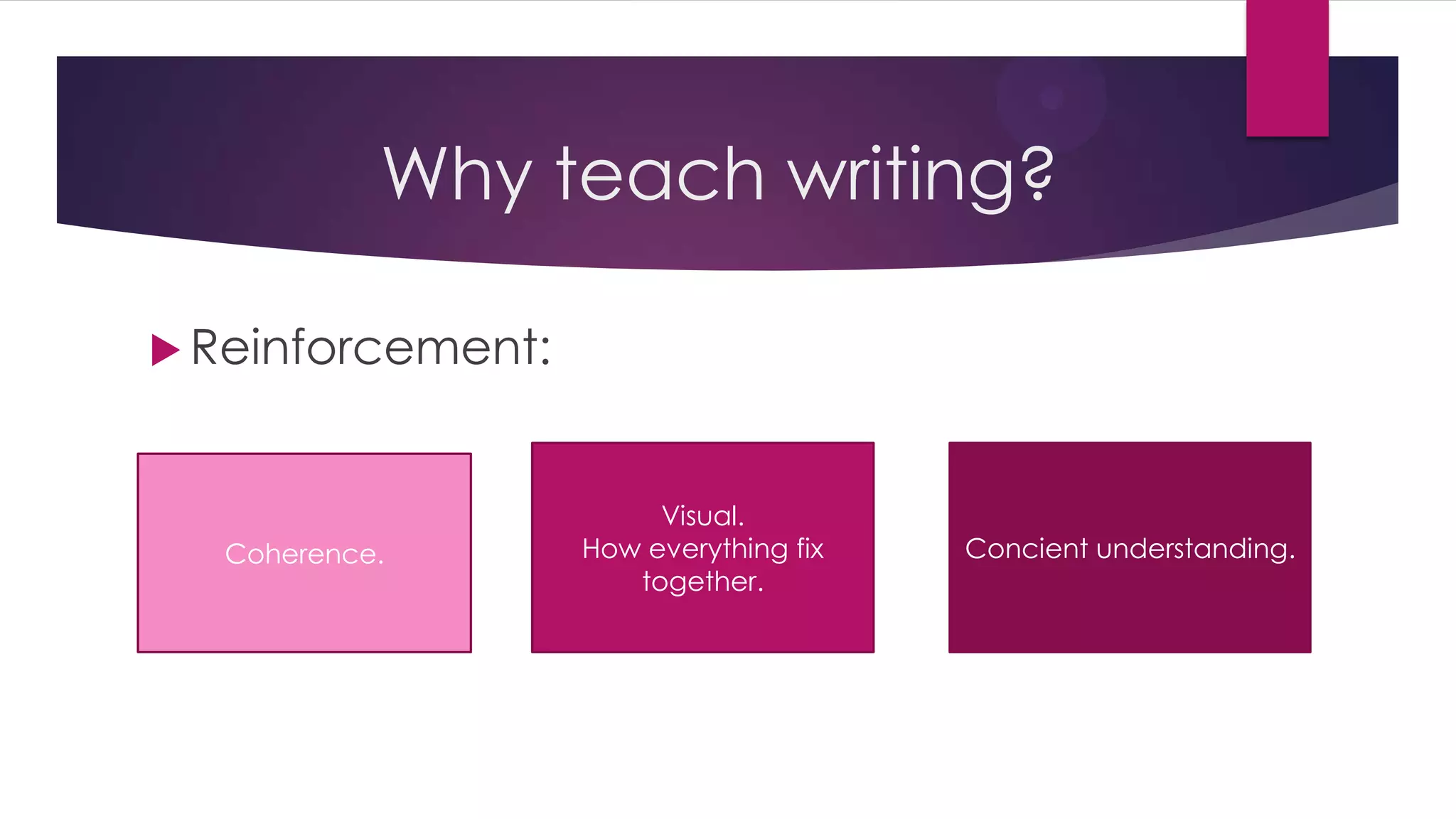
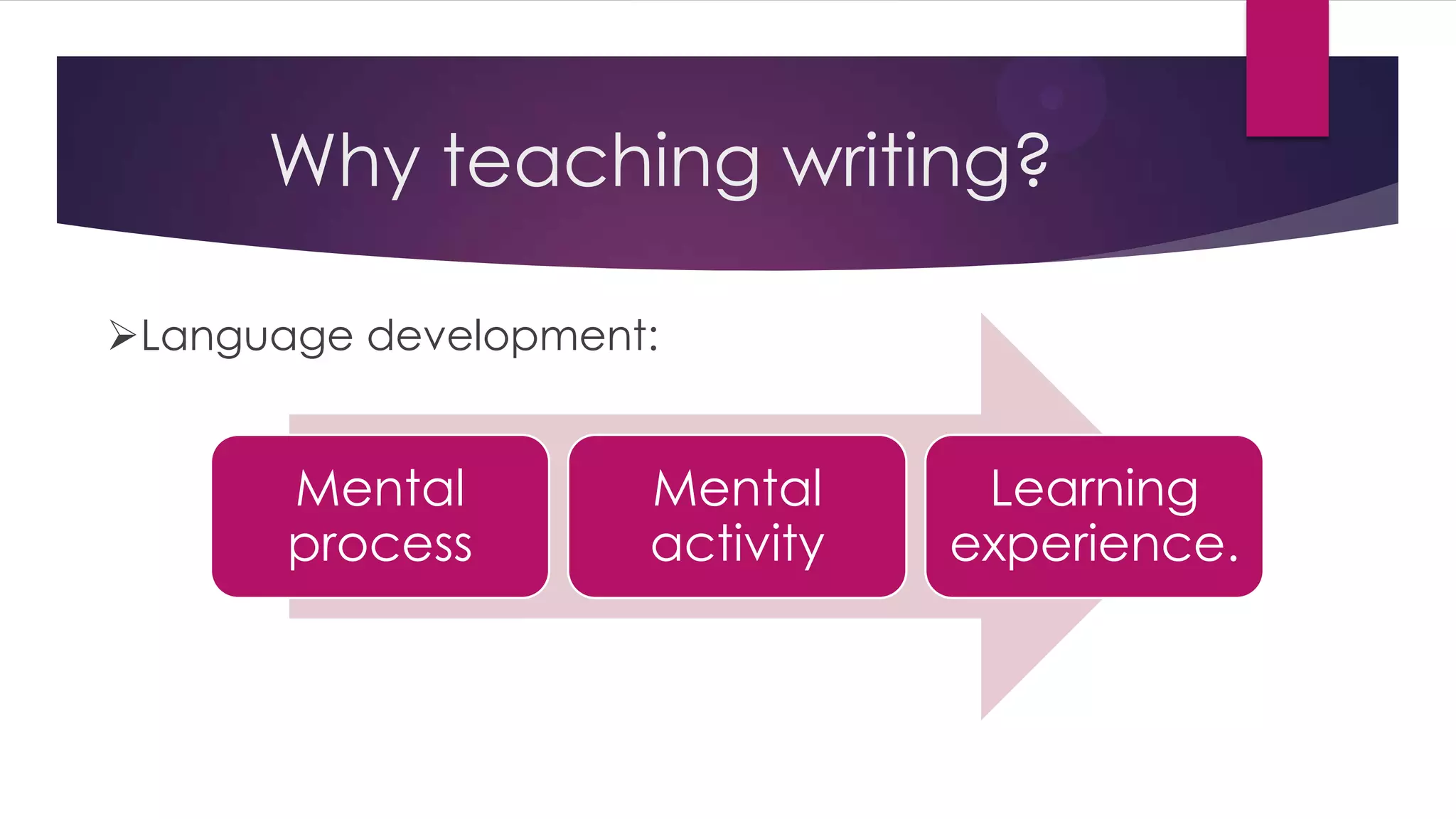
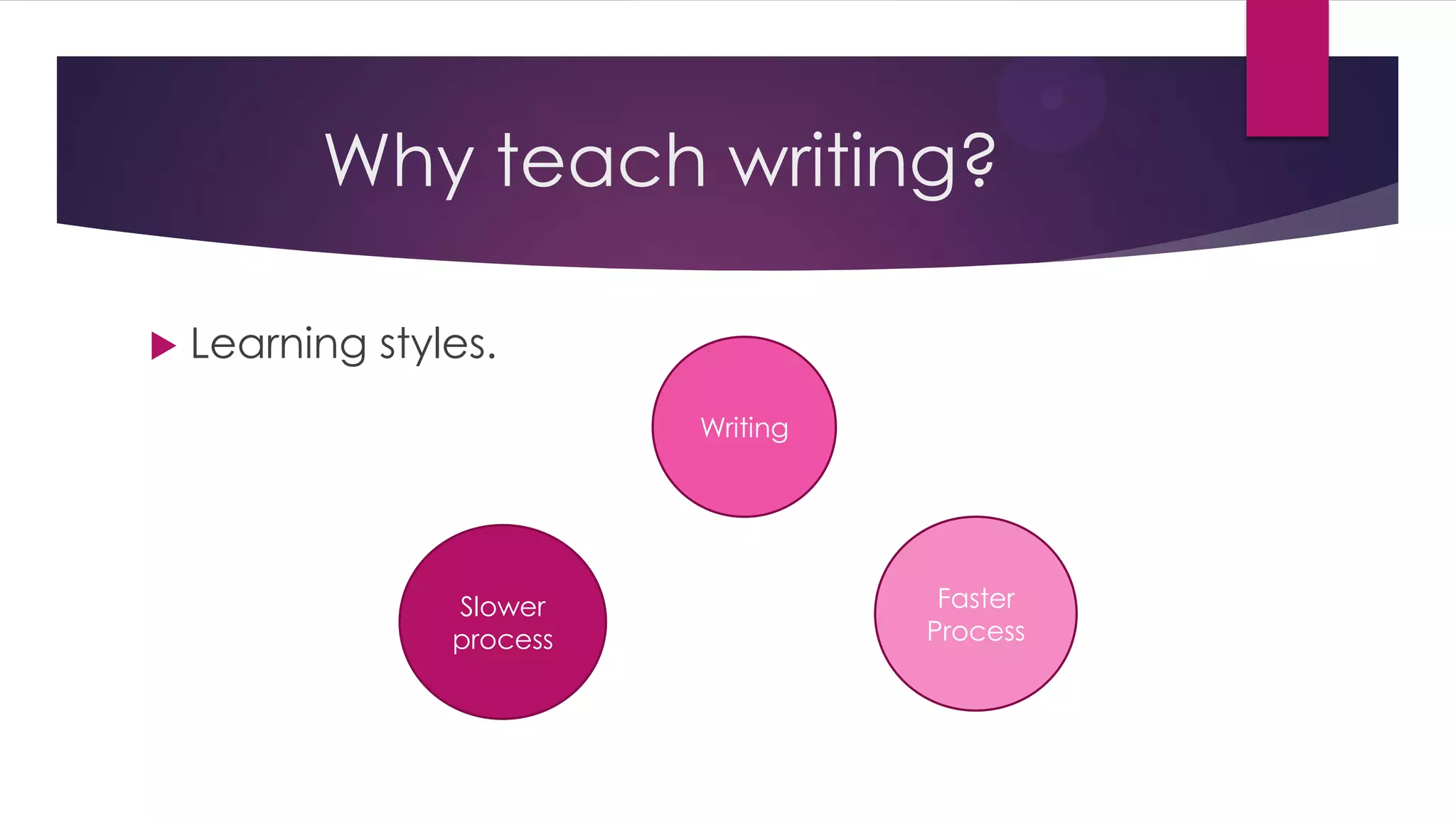
This document summarizes Jeremy Harmer's book "How to Teach English" and provides guidance on teaching writing. It discusses that writing is important for language development and reinforces visual and mental skills. Teachers should consider students' interests and abilities when assigning writing tasks. Writing sequences should start simply and become more complex, from elementary to advanced levels. Teachers are advised to correct writing by having students self-correct or using symbols rather than red ink, and to accommodate different handwriting styles when possible. The document also notes that writing fits well into the "Engage, Study, Activate" teaching model and can promote literature and journaling.
What kind ofwriting should students
do?
Level.
Interests
Age.
Motivate
them.
Find general
or similar
interests.
7.
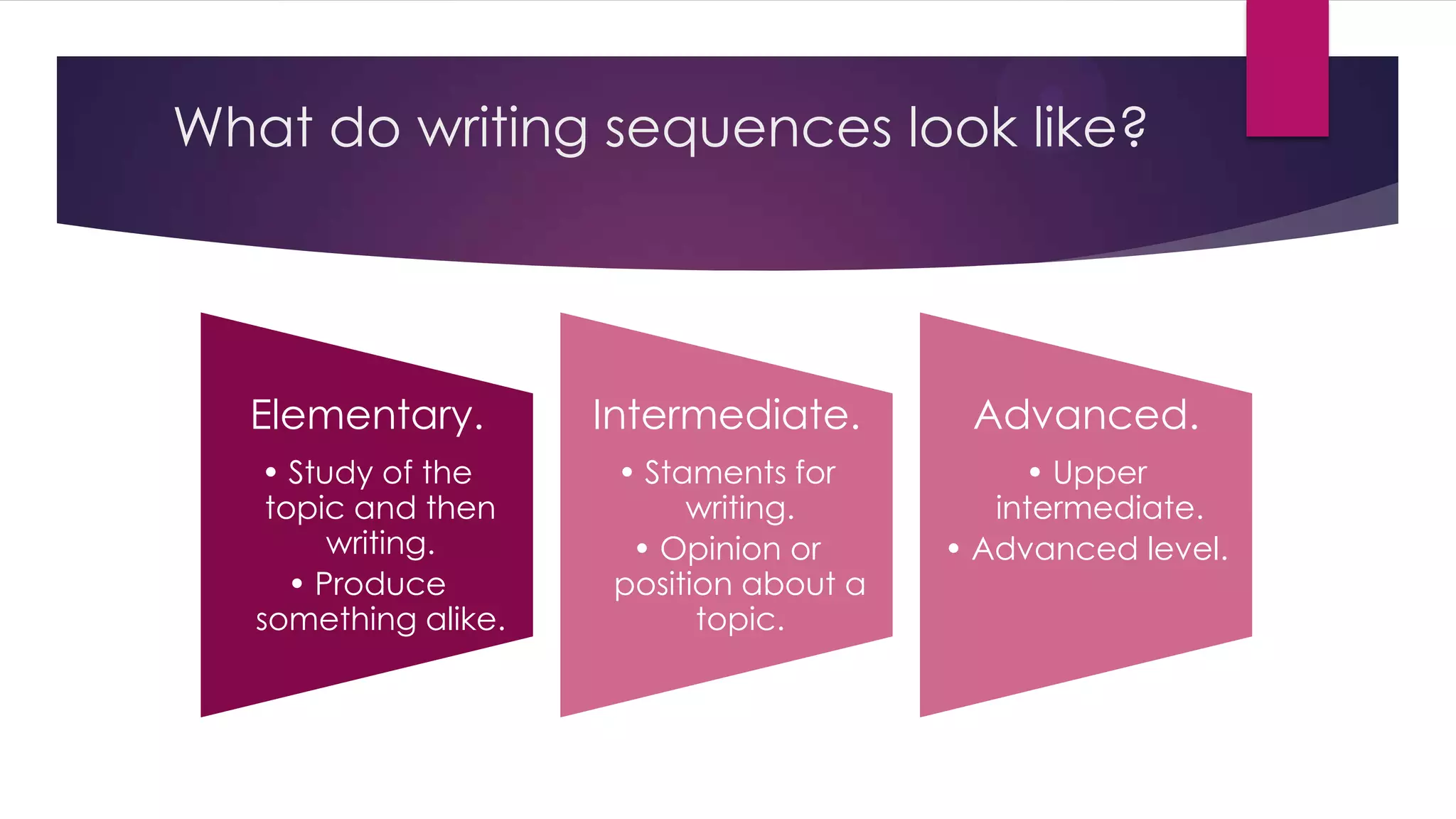
What do writingsequences look like?
Elementary.
• Study of the
topic and then
writing.
• Produce
something alike.
Intermediate.
• Staments for
writing.
• Opinion or
position about a
topic.
Advanced.
• Upper
intermediate.
• Advanced level.
8.
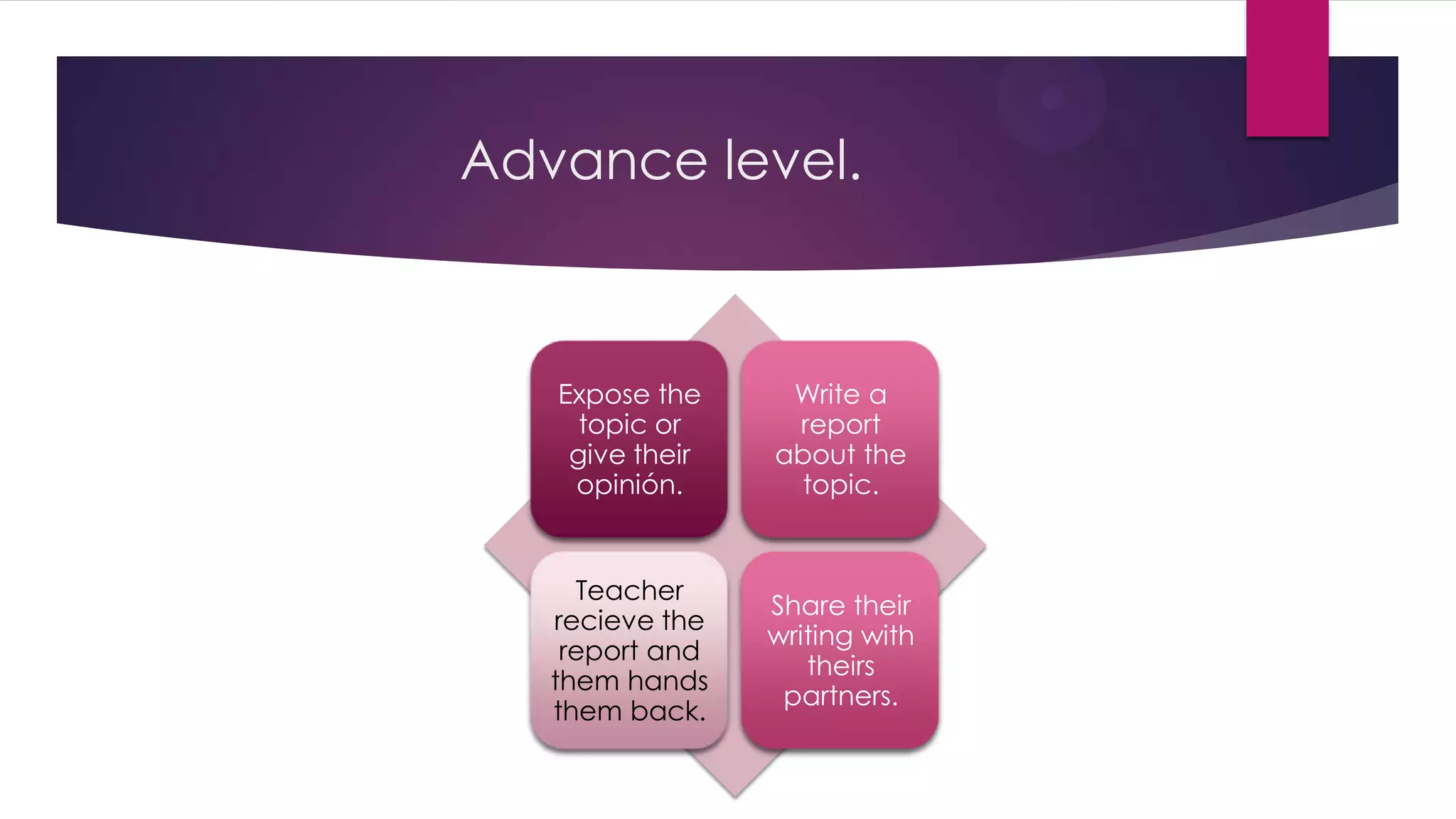
Advance level.
Expose the
topicor
give their
opinión.
Write a
report
about the
topic.
Teacher
recieve the
report and
them hands
them back.
Share their
writing with
theirs
partners.
9.
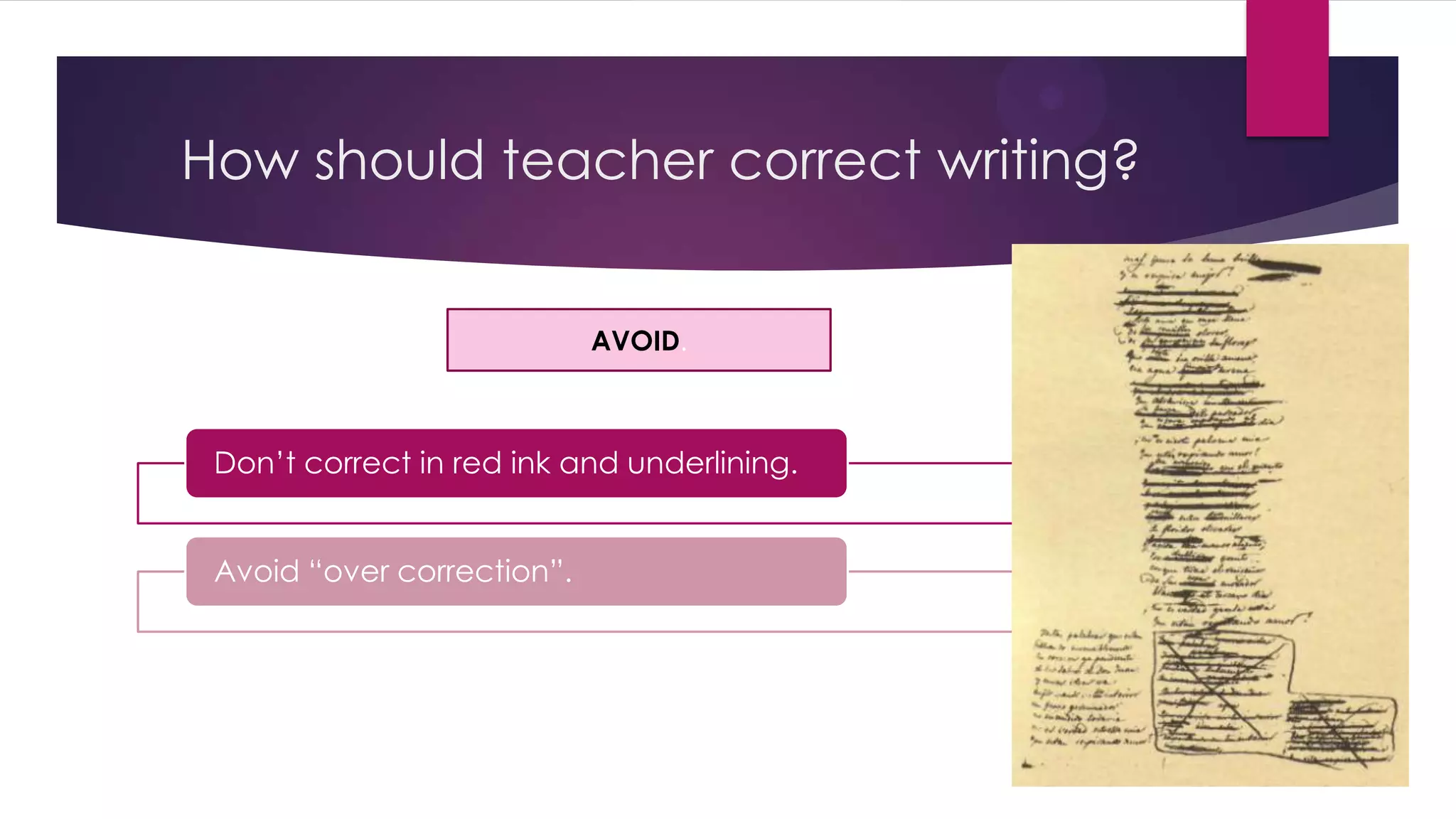
How should teachercorrect writing?
Don’t correct in red ink and underlining.
Avoid “over correction”.
AVOID.
10.
How should teacherscorrect writing?
We can have them correcting
their own work.
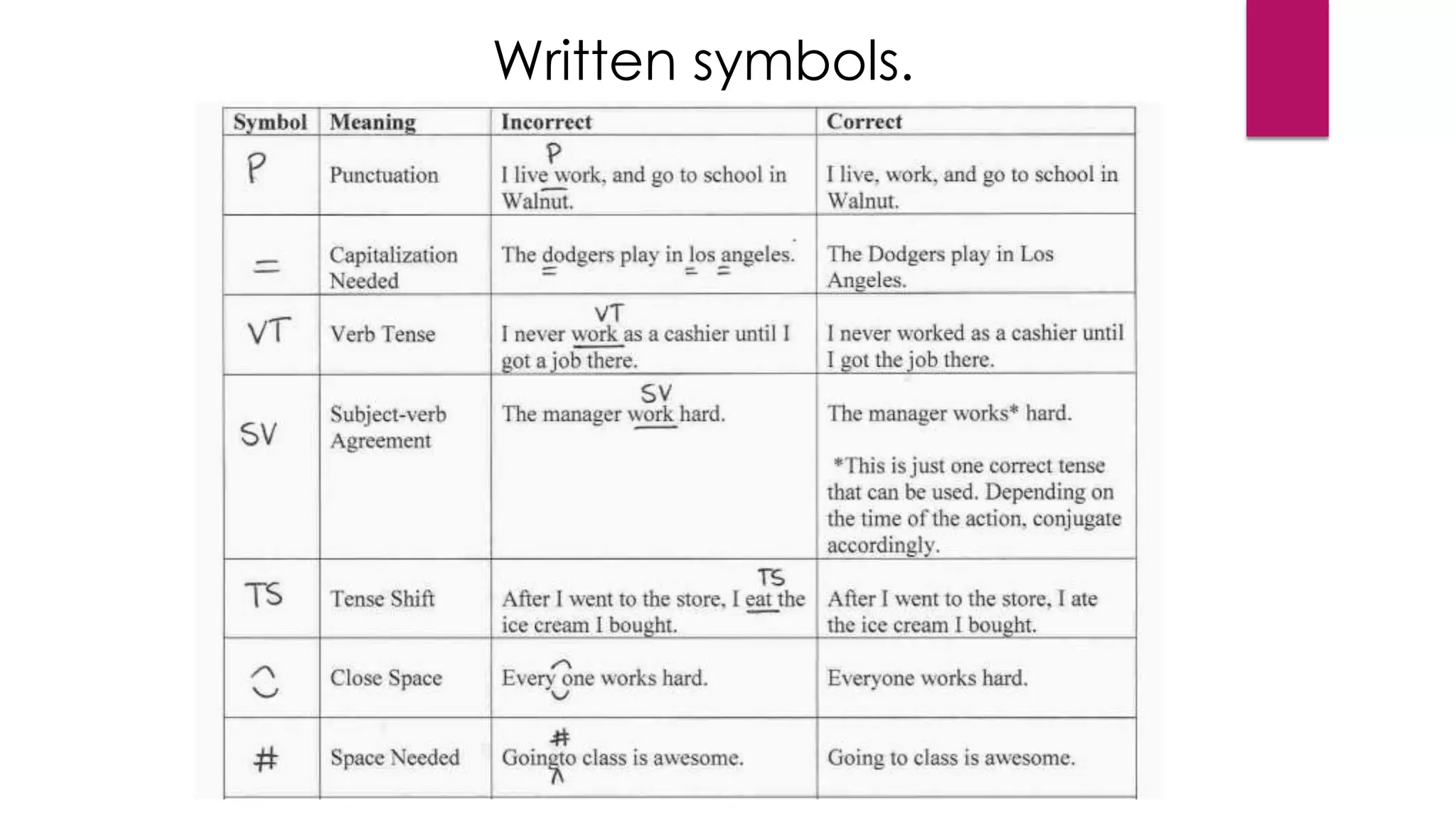
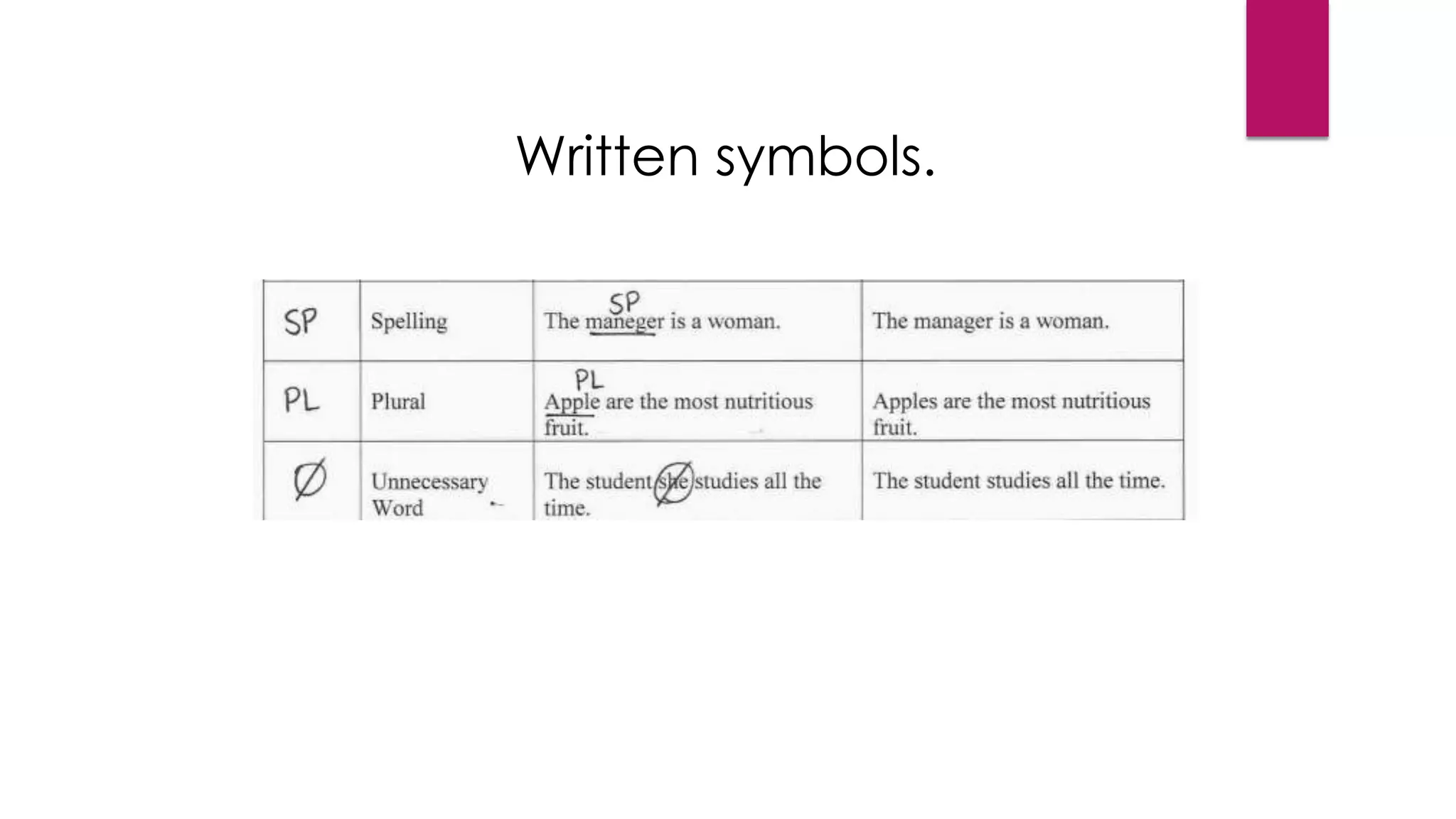
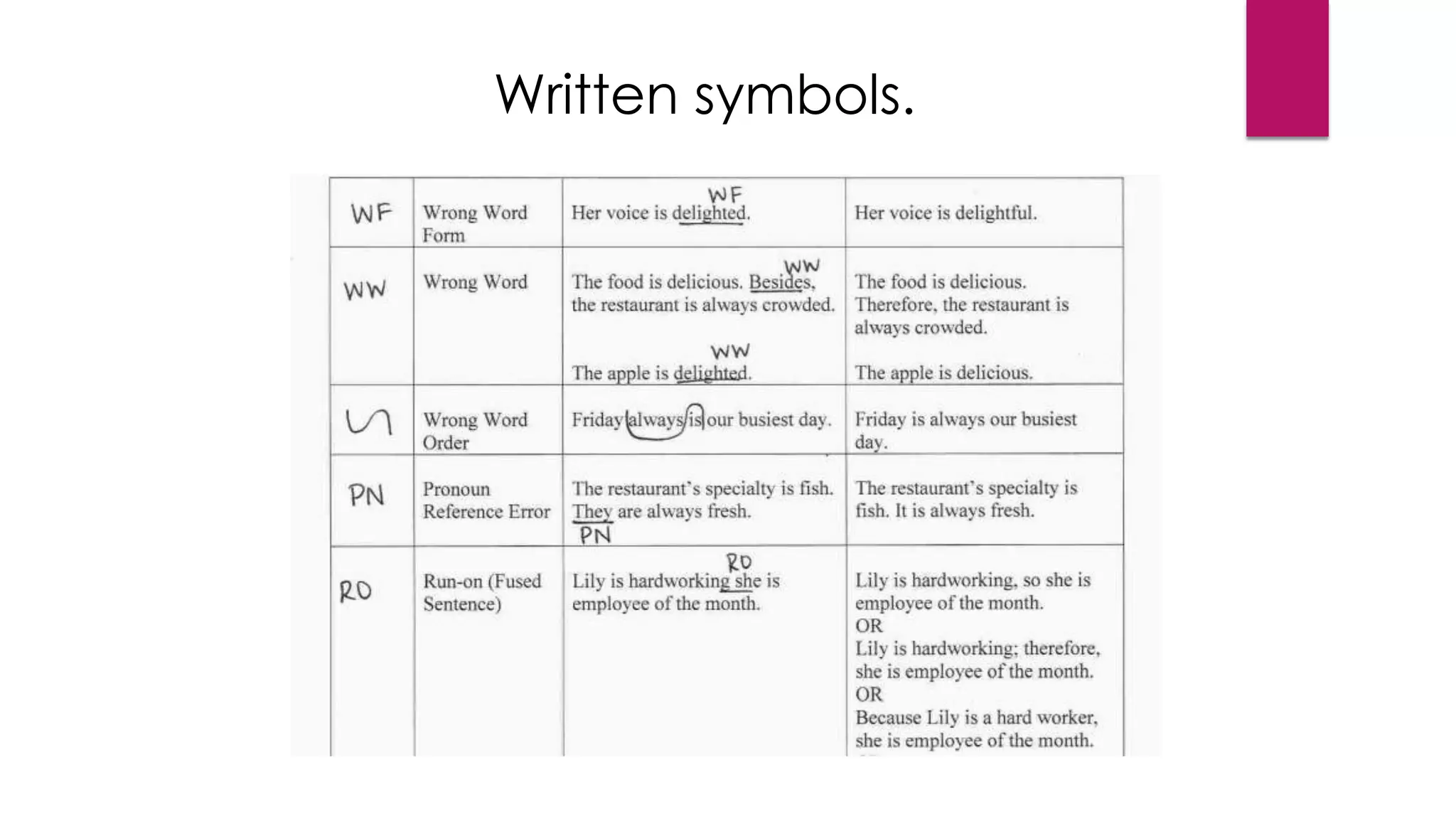
Written symbols.
Write a comment.
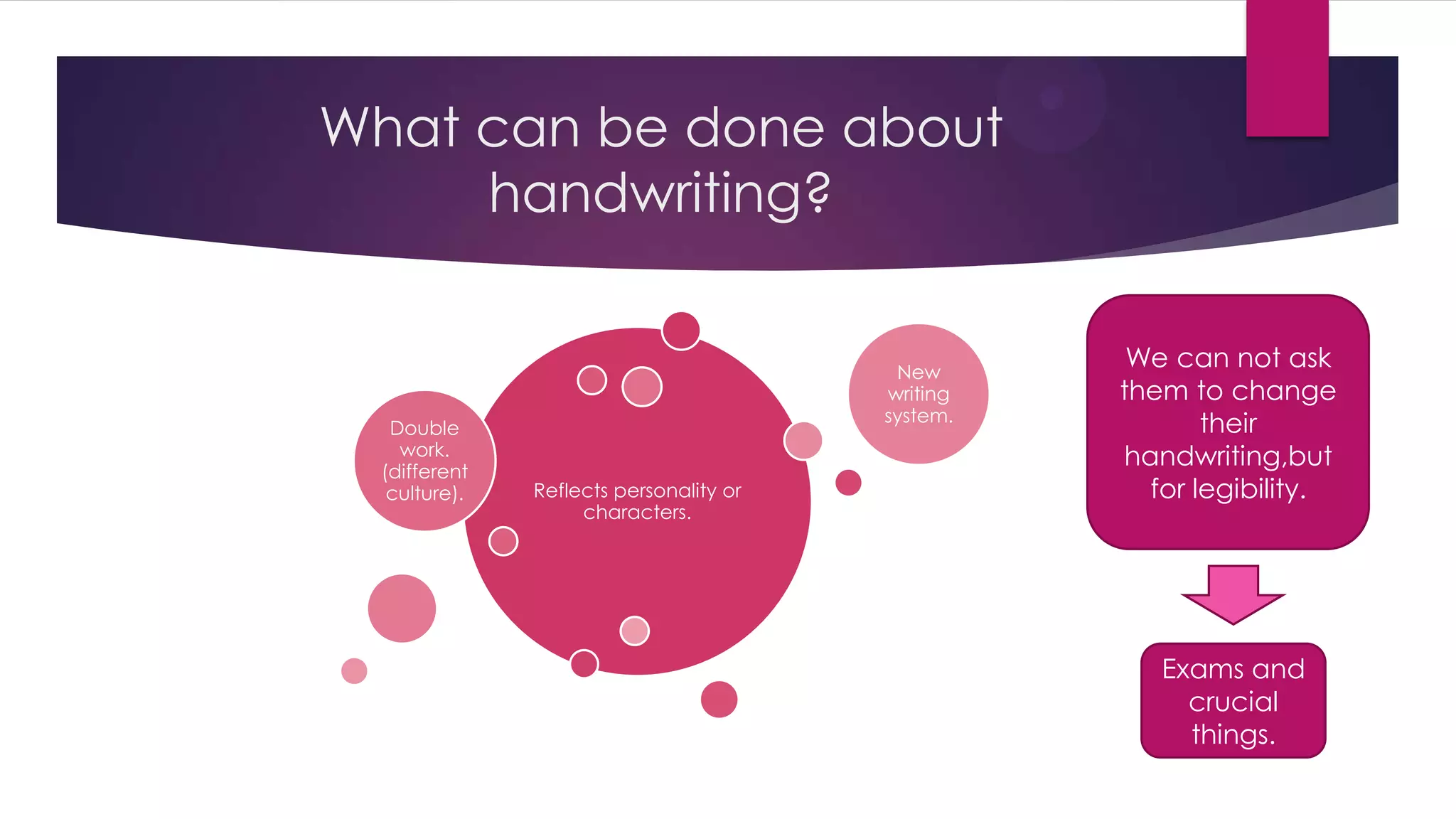
What can bedone about
handwriting?
Reflects personality or
characters.
Double
work.
(different
culture).
New
writing
system.
We can not ask
them to change
their
handwriting,but
for legibility.
Exams and
crucial
things.
15.
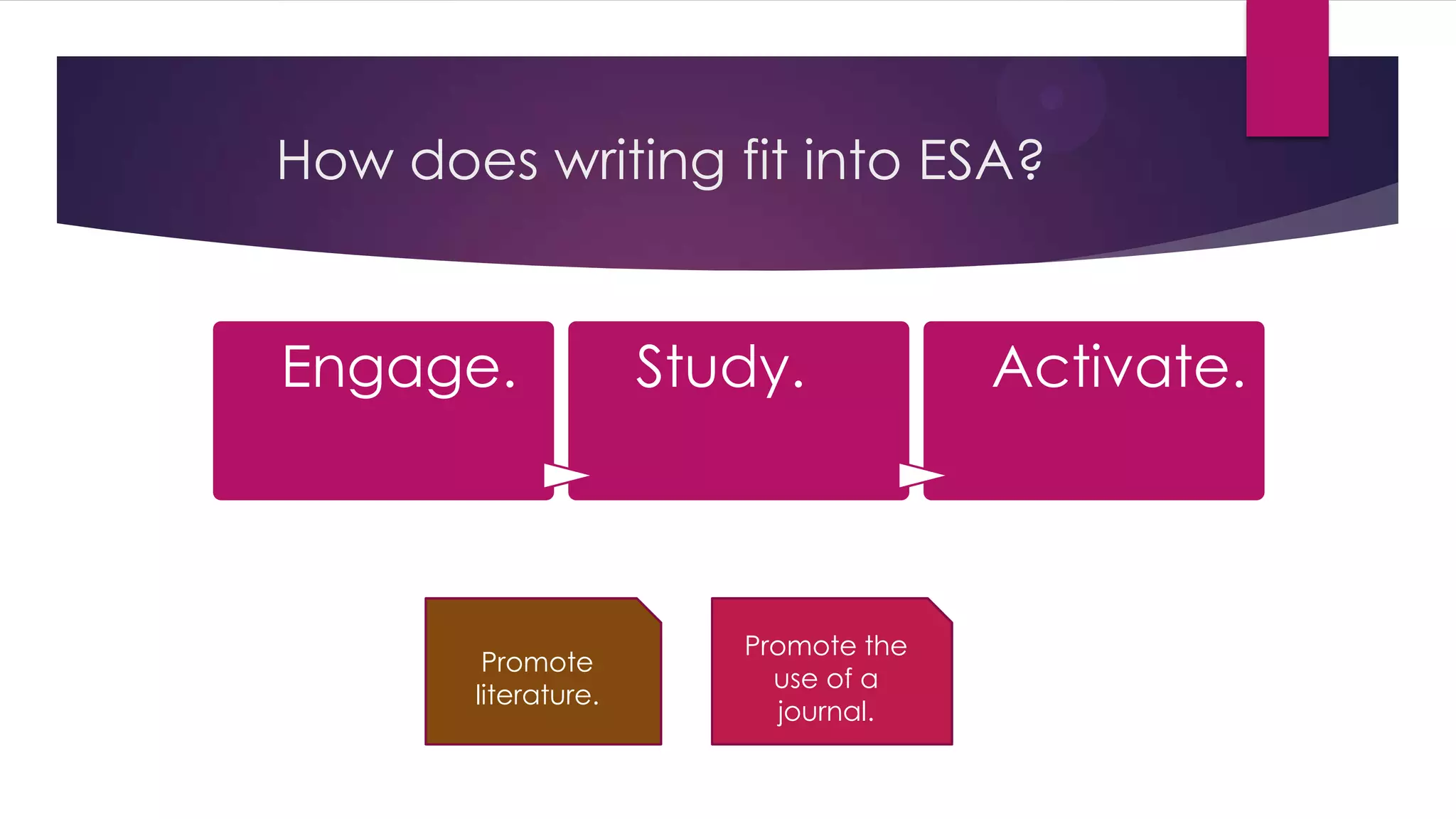
How does writingfit into ESA?
Engage. Study. Activate.
Promote
literature.
Promote the
use of a
journal.
16.
“There is nolimit to
the kind of texts we
can ask students to
write.”