


Mail us: businessconsulting007@gmail.com
ASAP Methodology
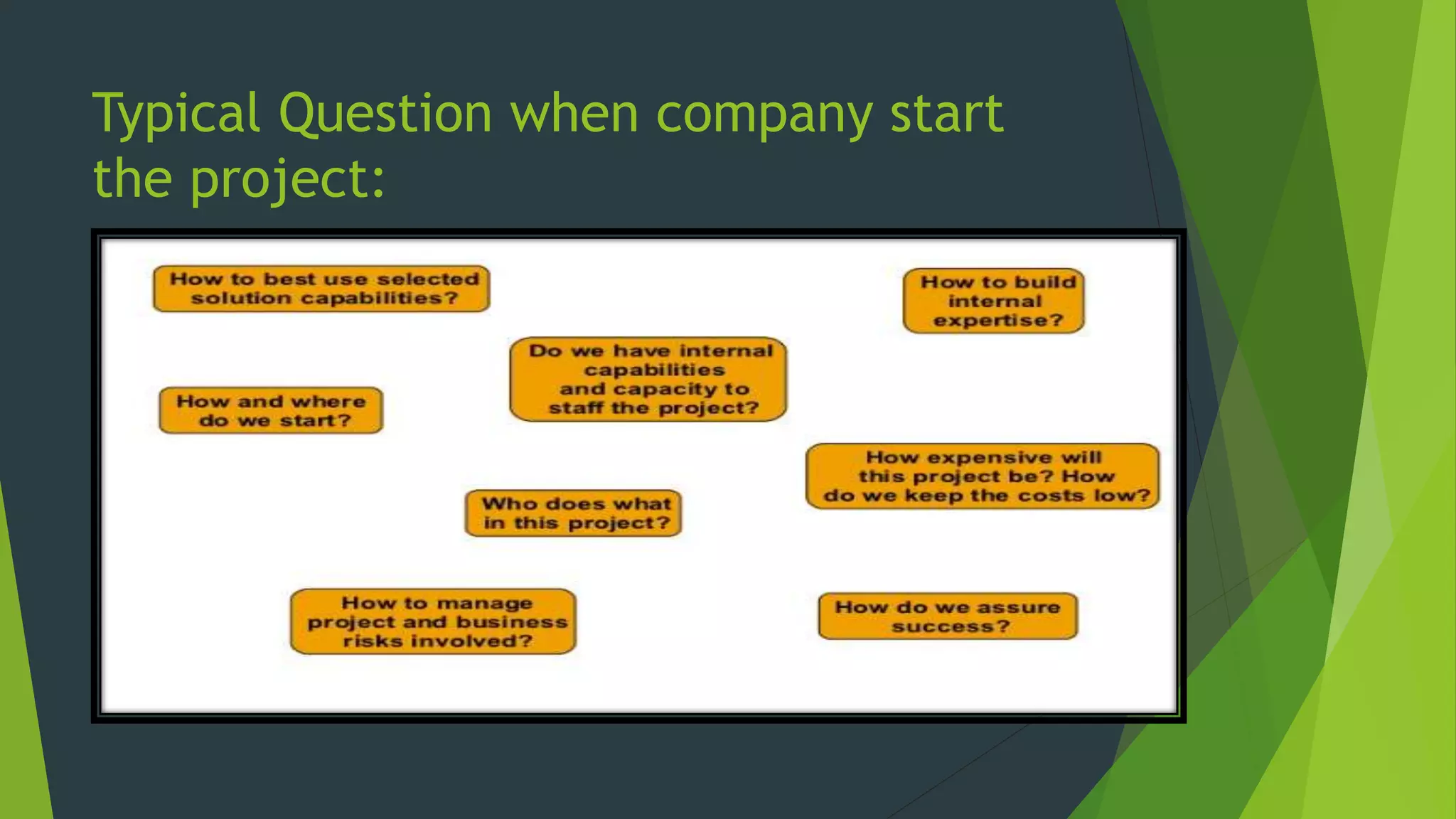
Typical Question when company start
the project:
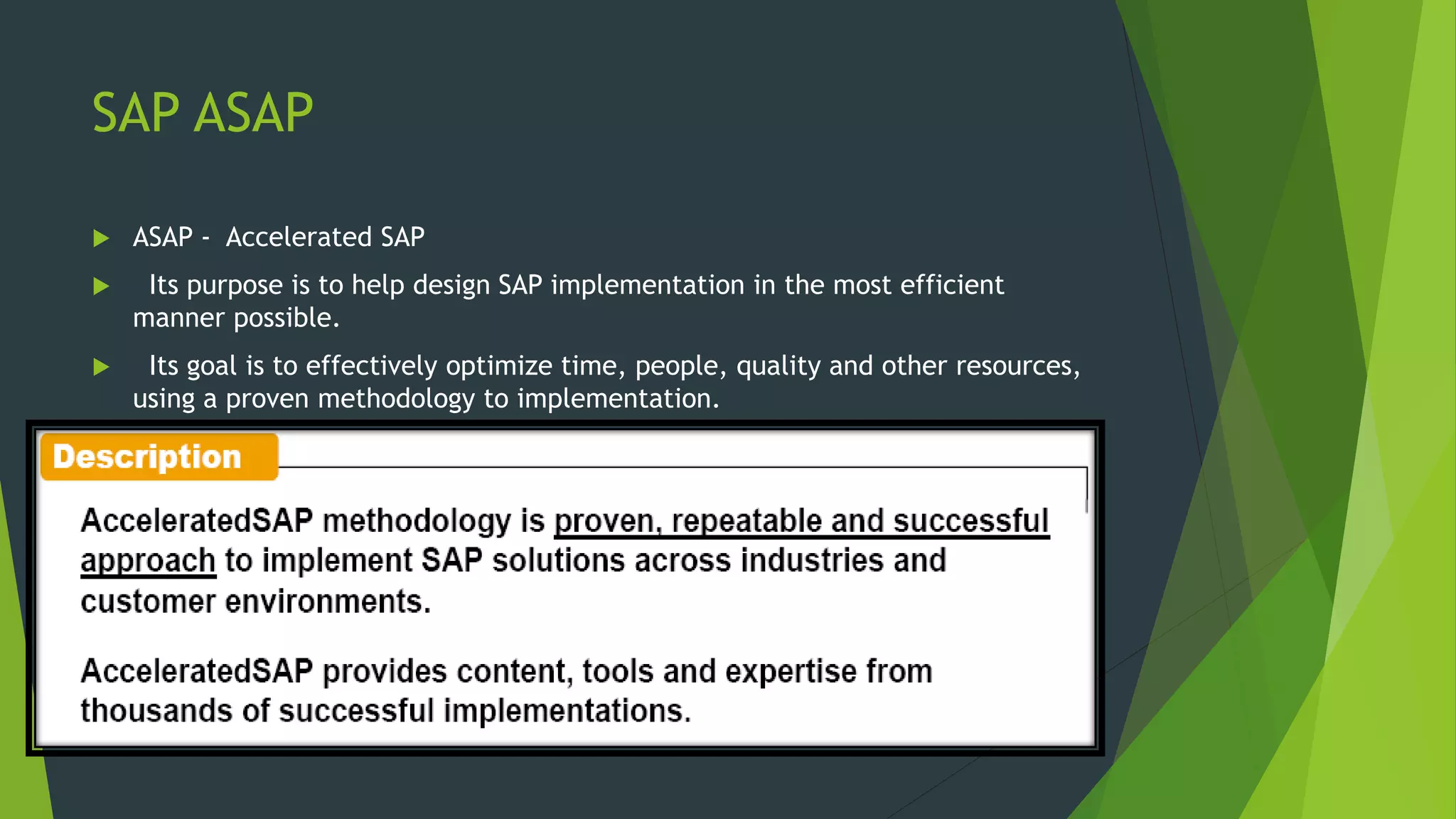
SAP ASAP
 ASAP - Accelerated SAP
 Its purpose is to help design SAP implementation in the most efficient
manner possible.
 Its goal is to effectively optimize time, people, quality and other resources,
using a proven methodology to implementation.
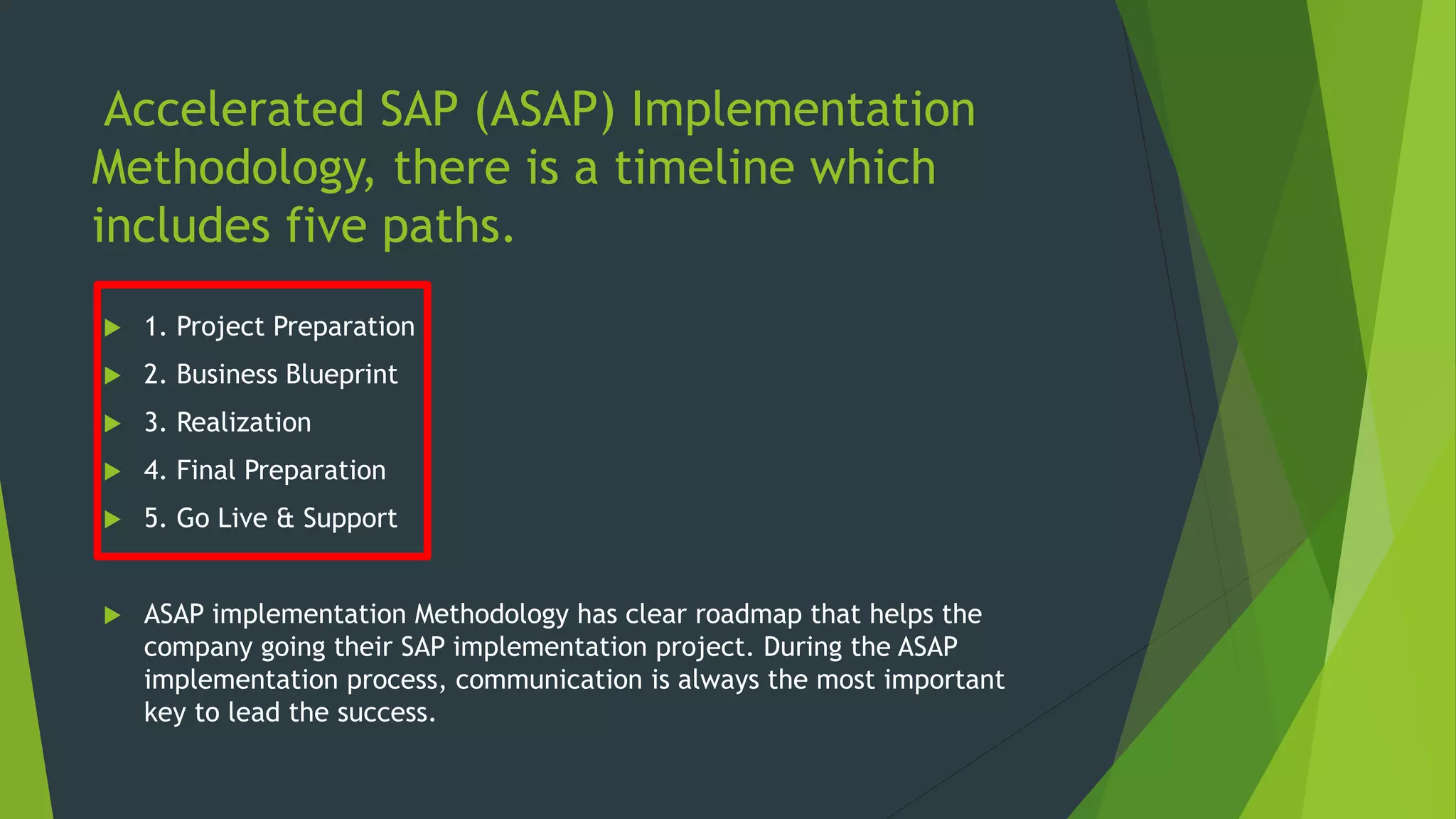
Accelerated SAP (ASAP) Implementation
Methodology, there is a timeline which
includes five paths.
 1. Project Preparation
 2. Business Blueprint
 3. Realization
 4. Final Preparation
 5. Go Live & Support
 ASAP implementation Methodology has clear roadmap that helps the
company going their SAP implementation project. During the ASAP
implementation process, communication is always the most important
key to lead the success.
IST 600 ERP Systems: Key Implementation Issues U. Yeliz Eseryel
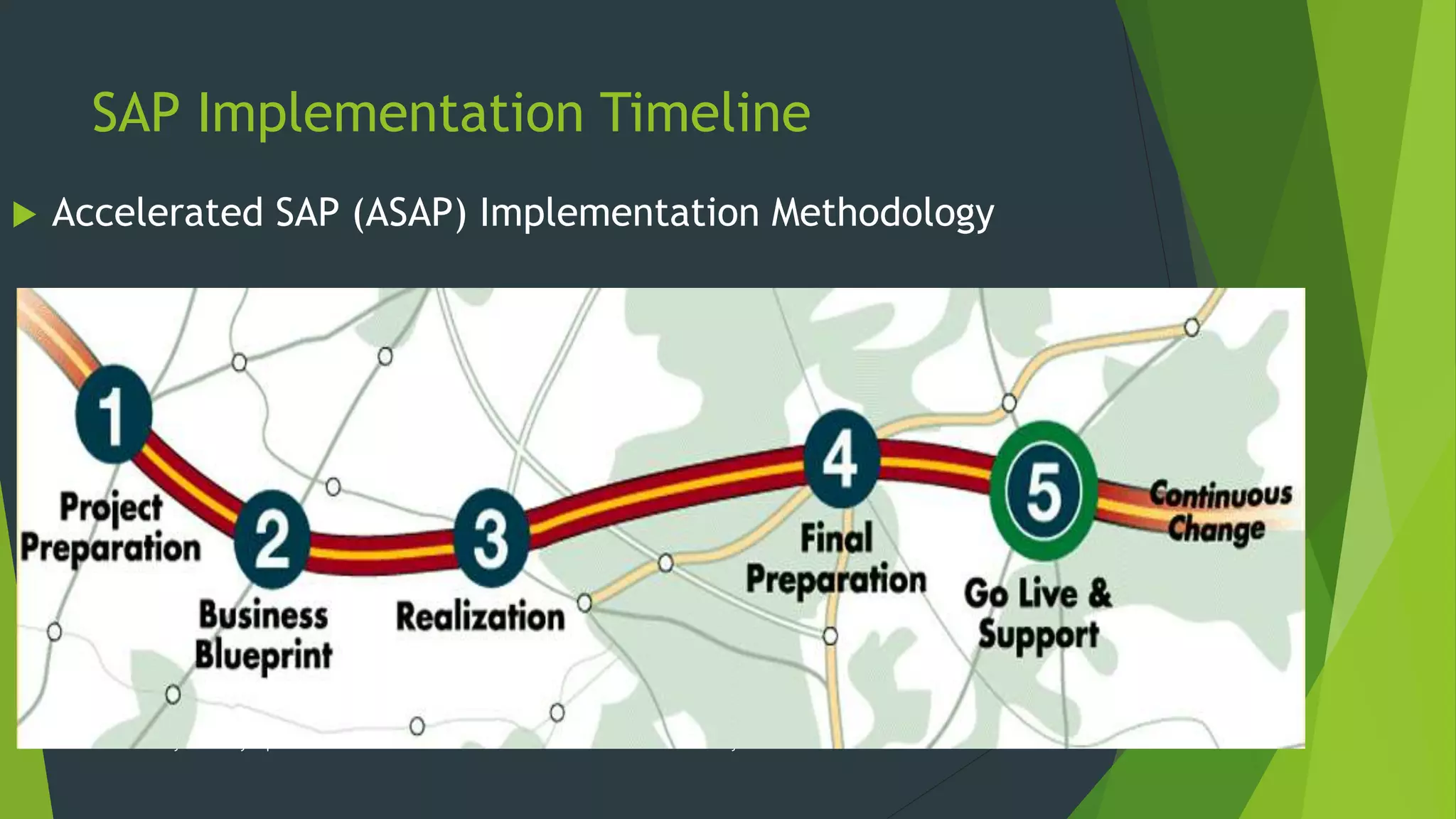
SAP Implementation Timeline
 Accelerated SAP (ASAP) Implementation Methodology
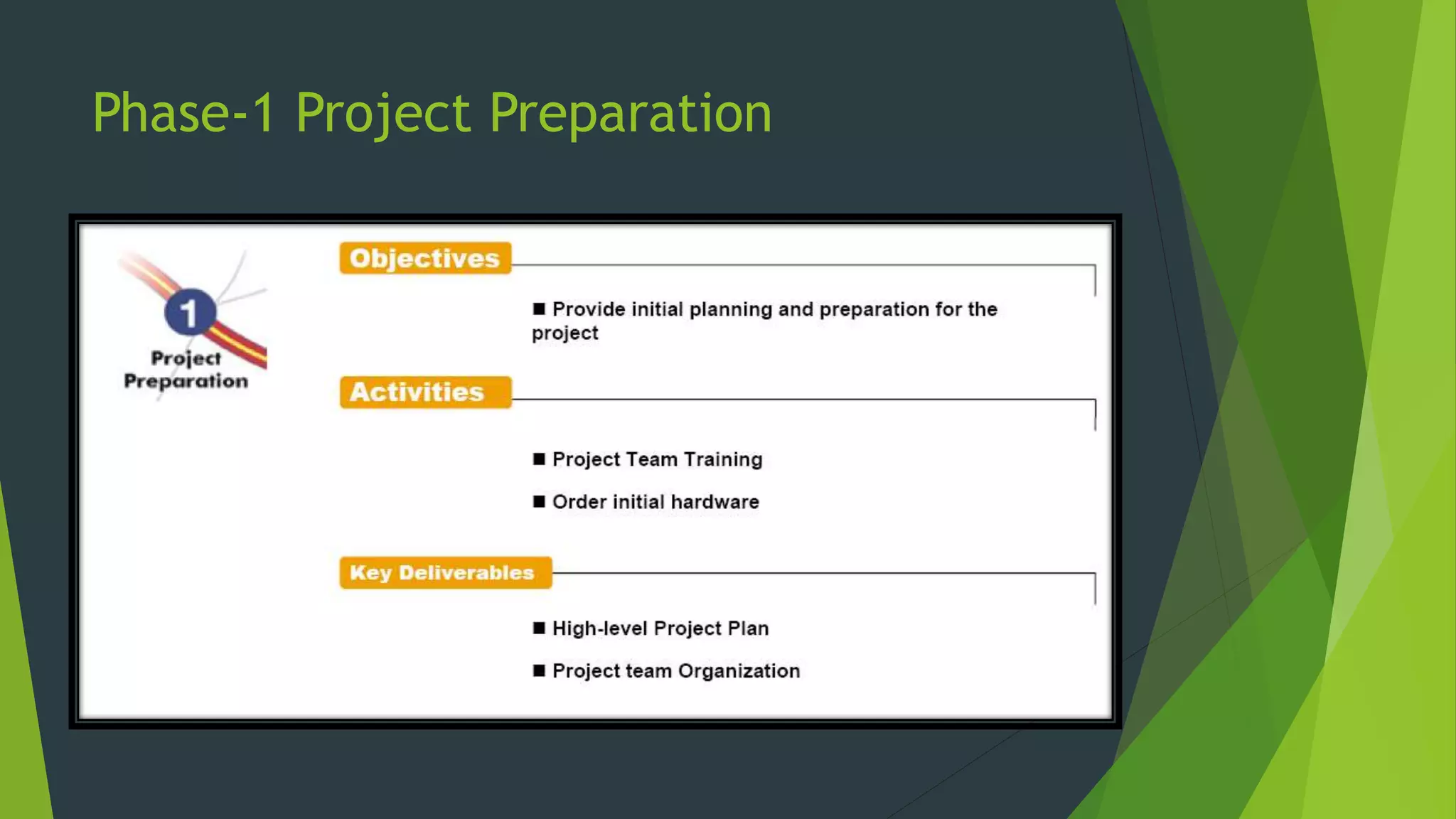
Phase-1 Project Preparation
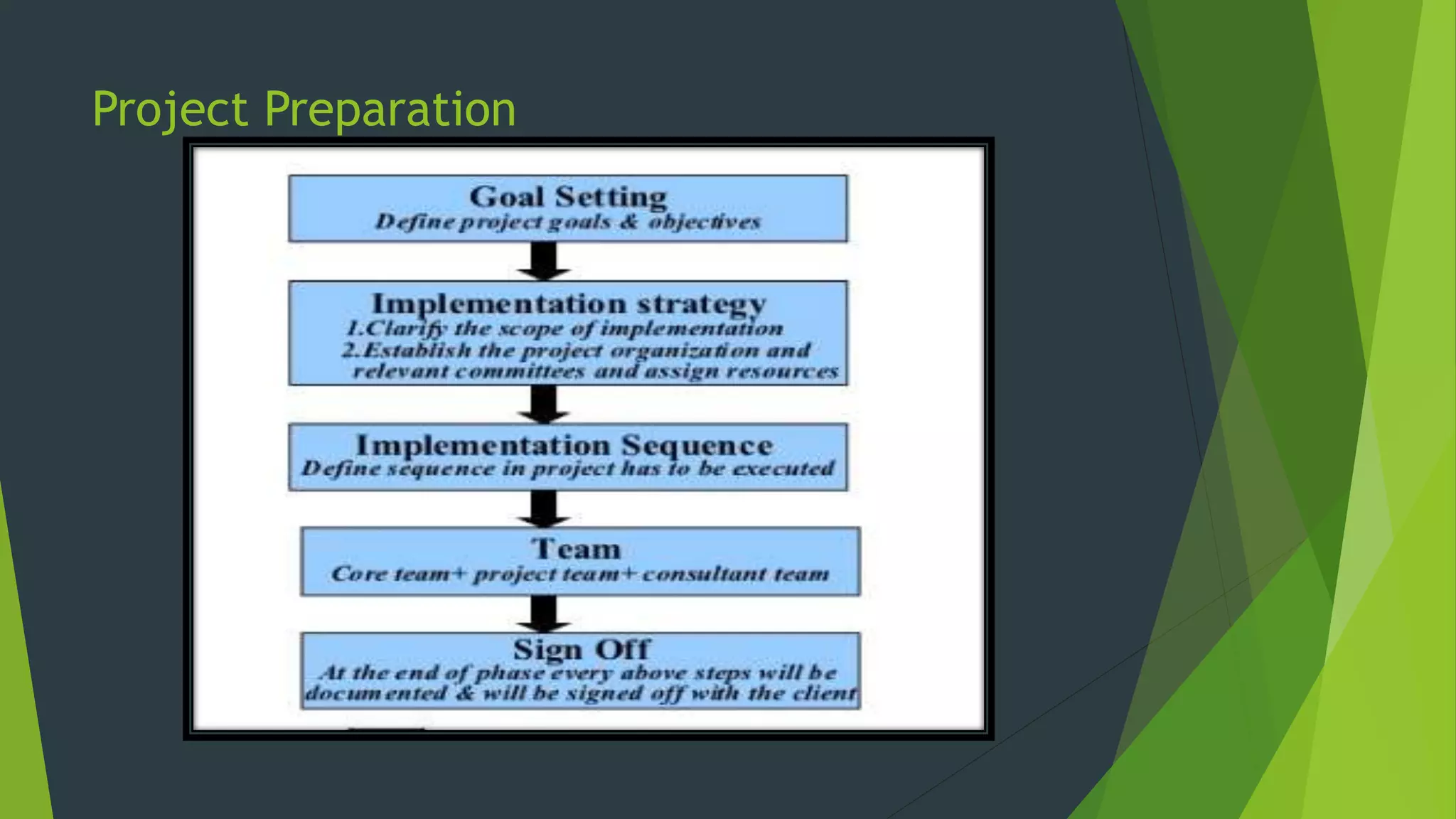
Project Preparation
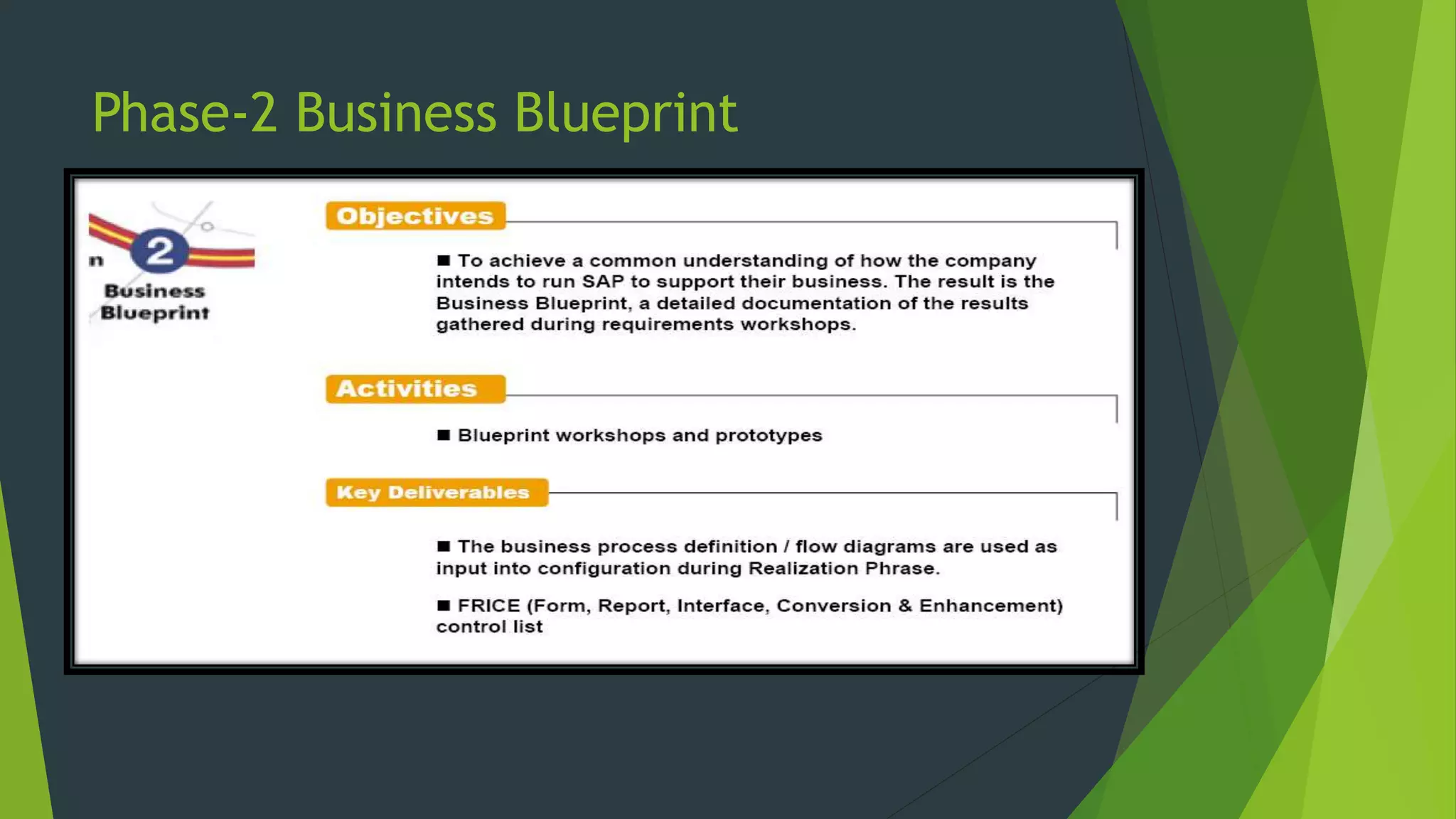
Phase-2 Business Blueprint
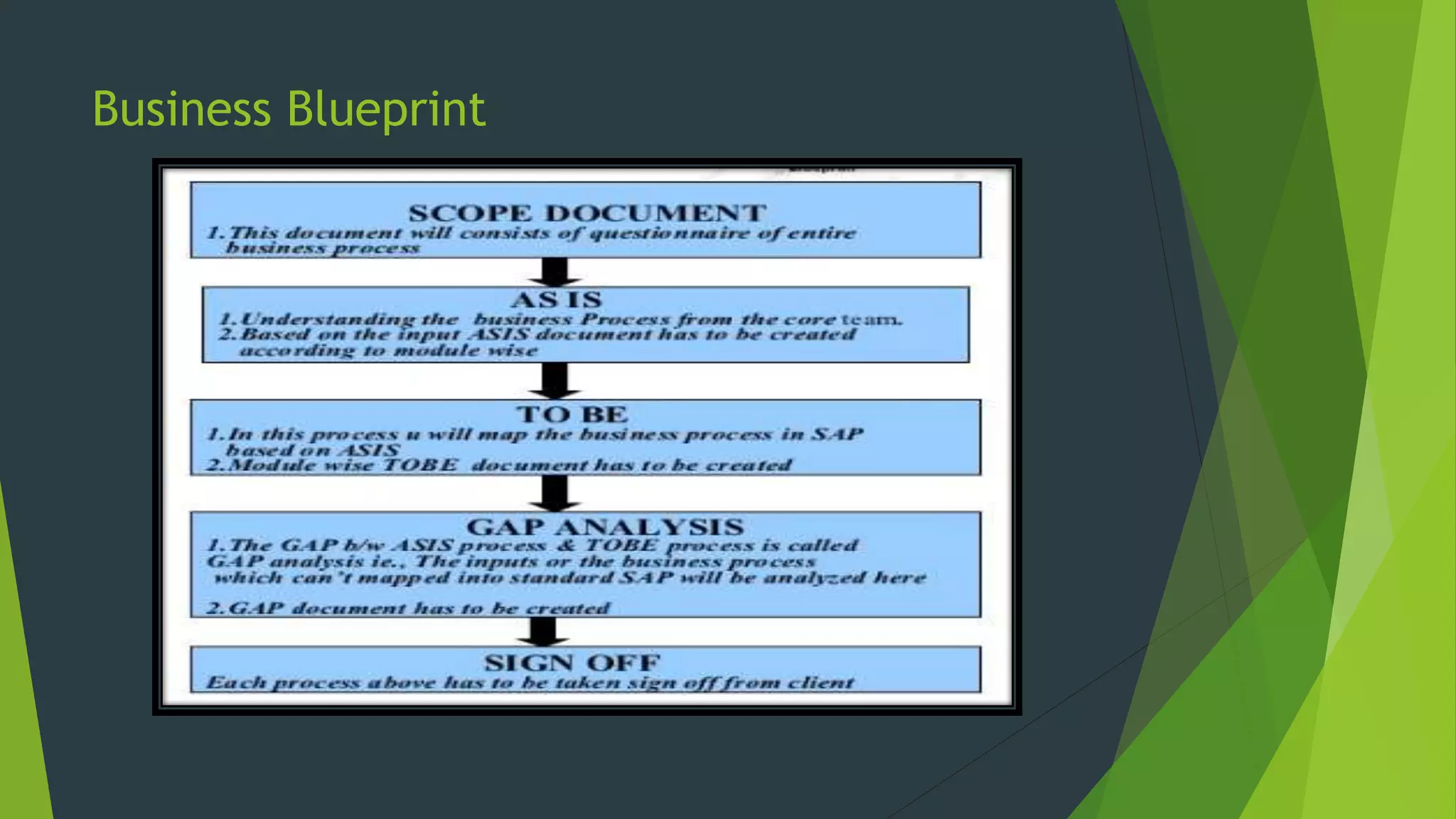
Business Blueprint
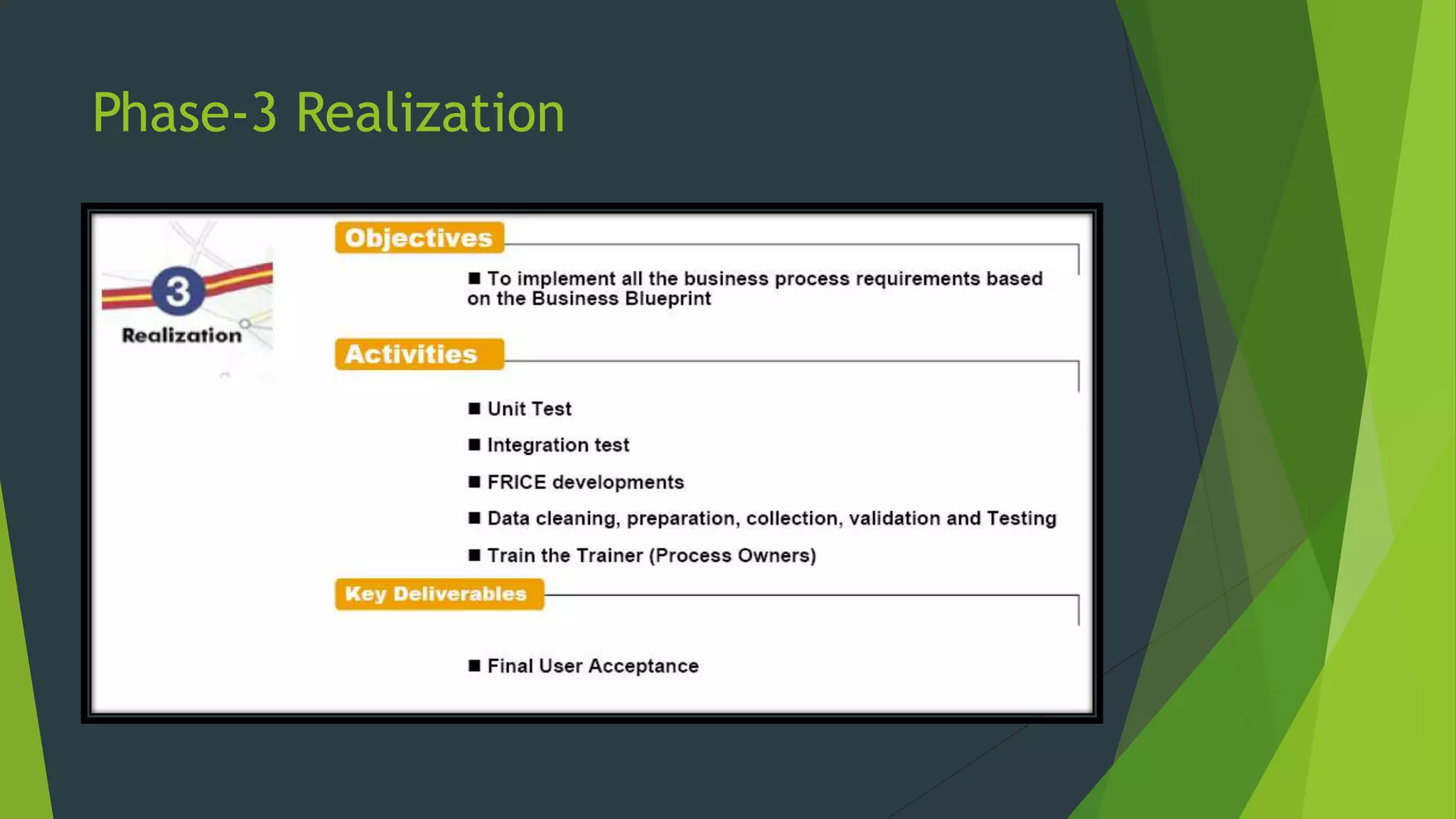
Phase-3 Realization
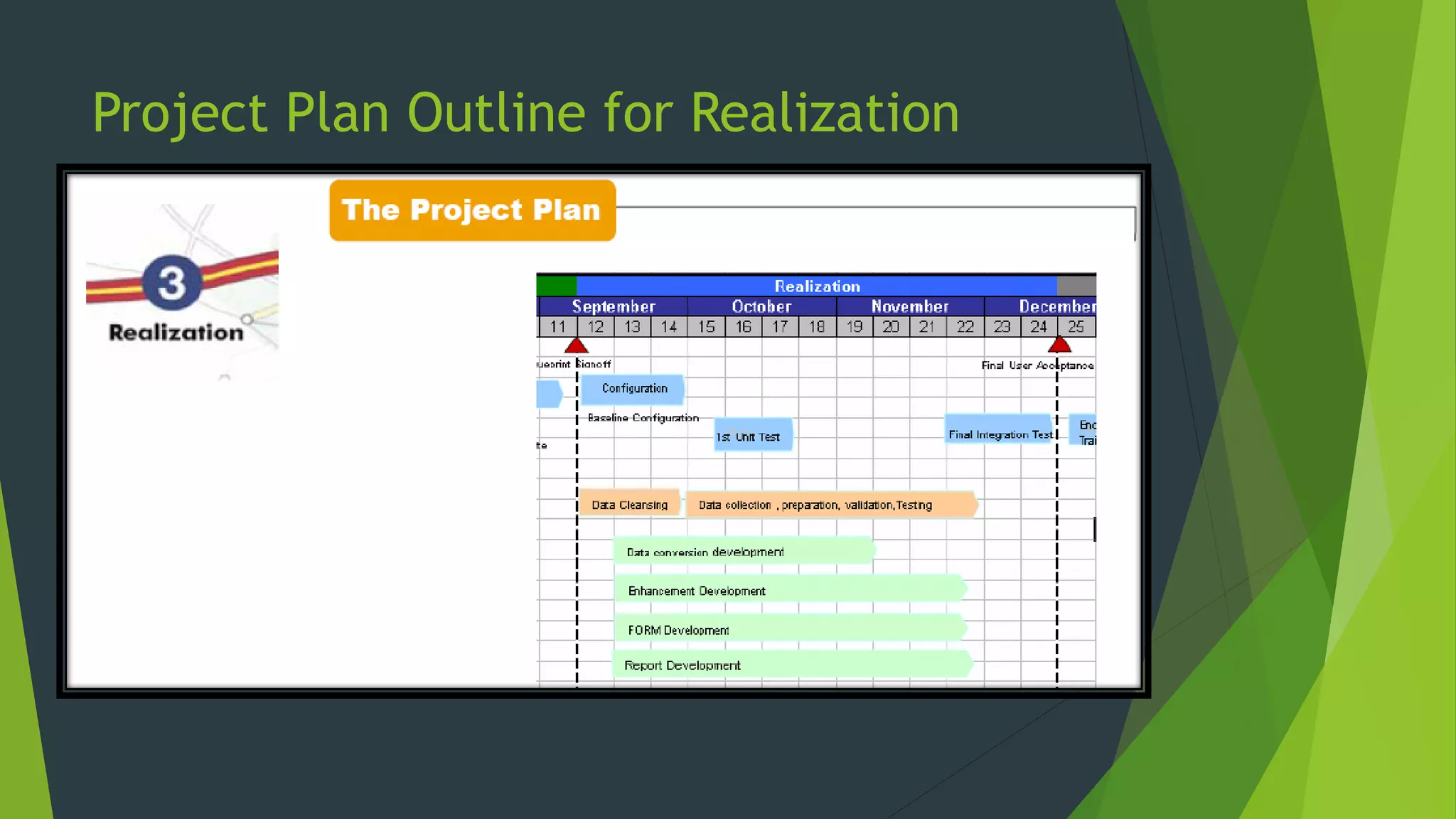
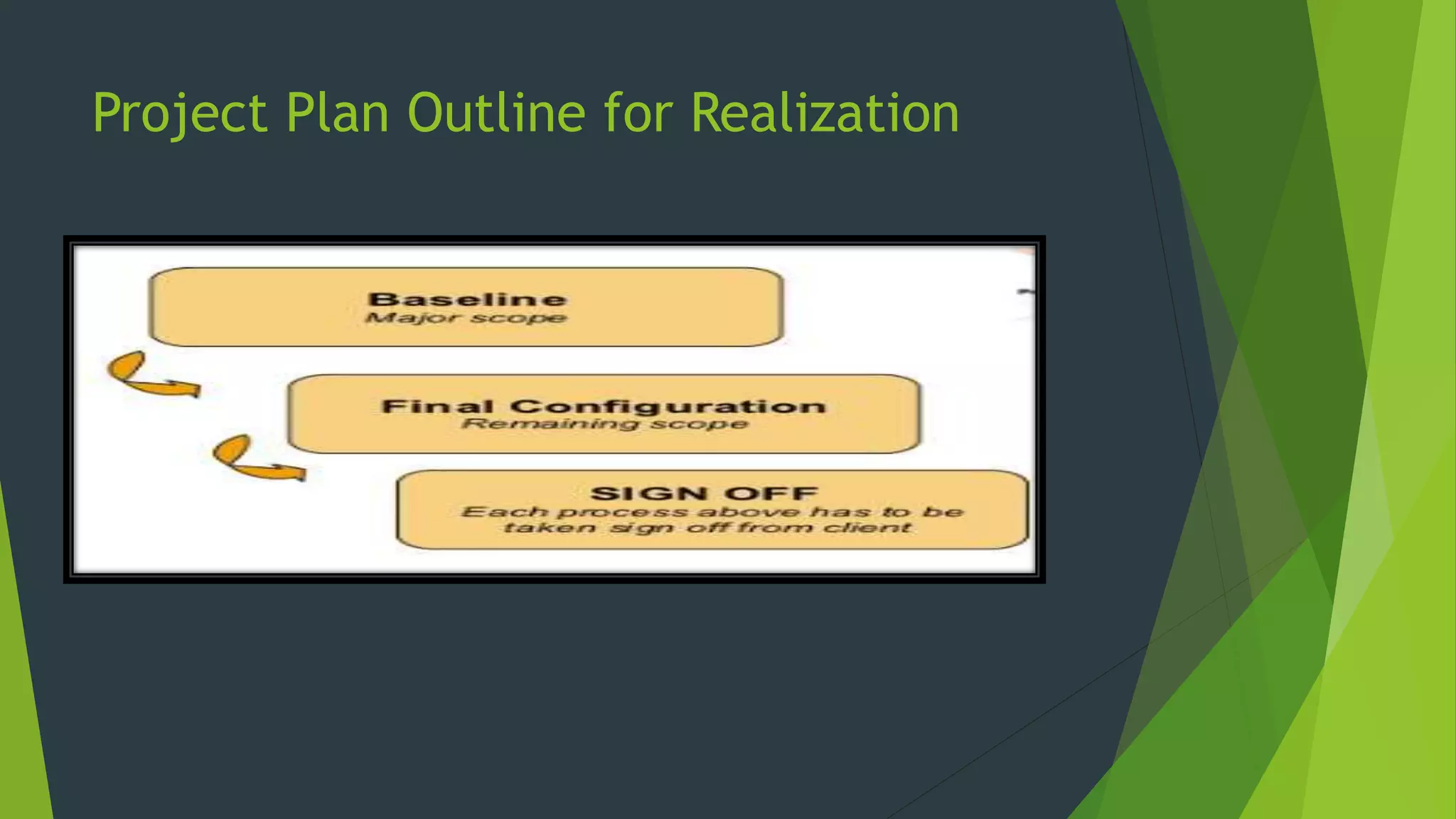
Project Plan Outline for Realization
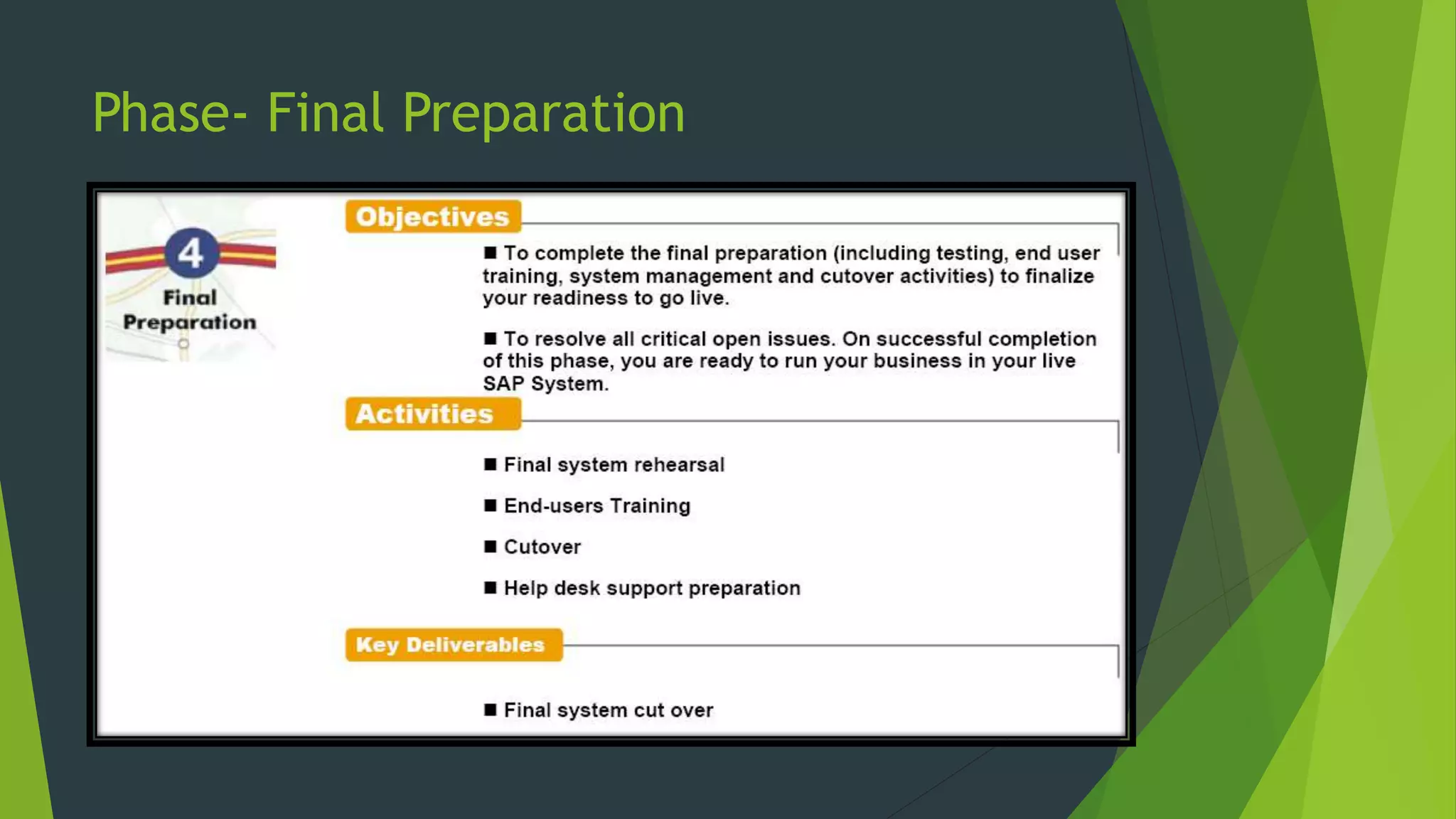
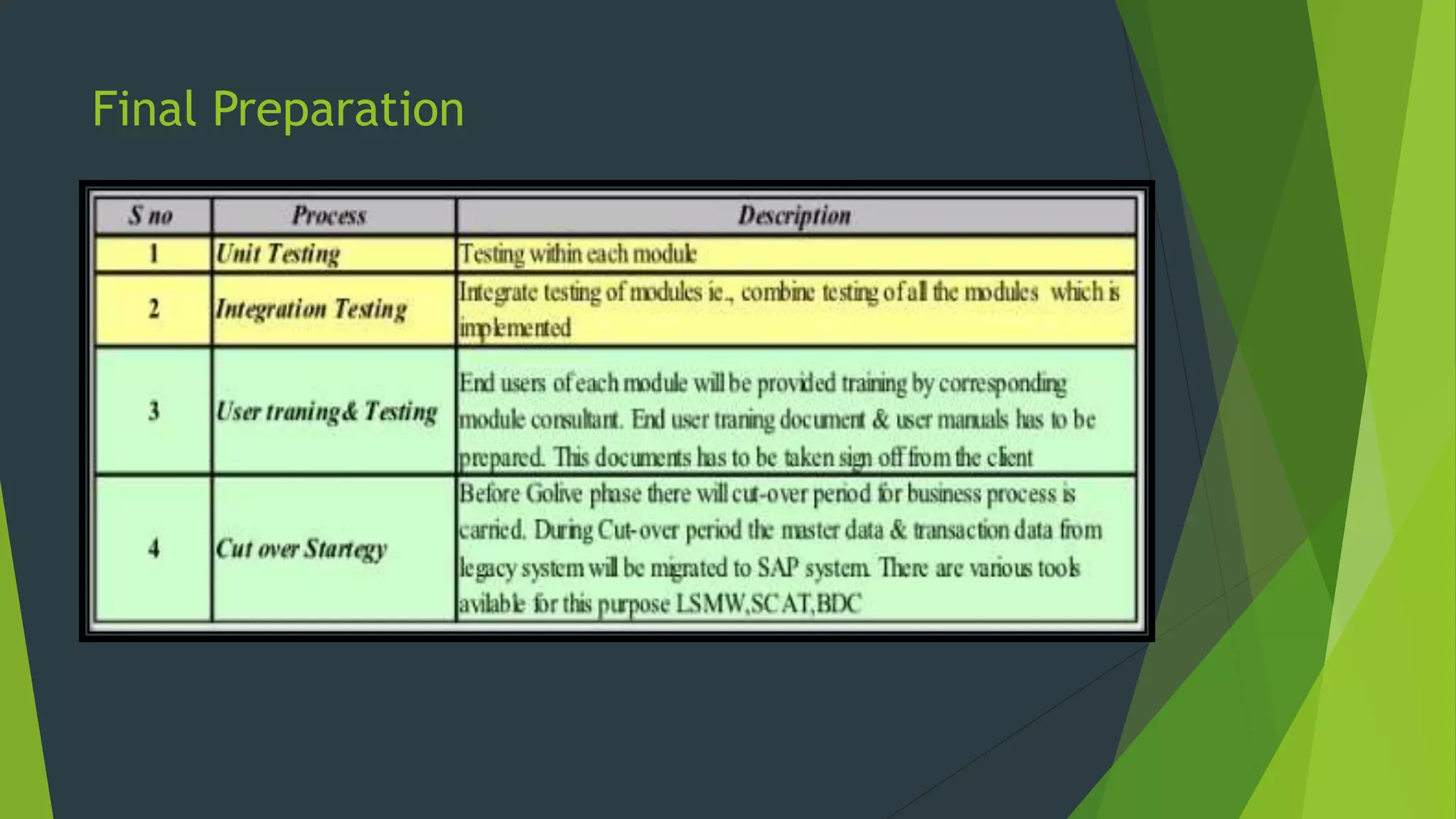
Phase- Final Preparation
Final Preparation
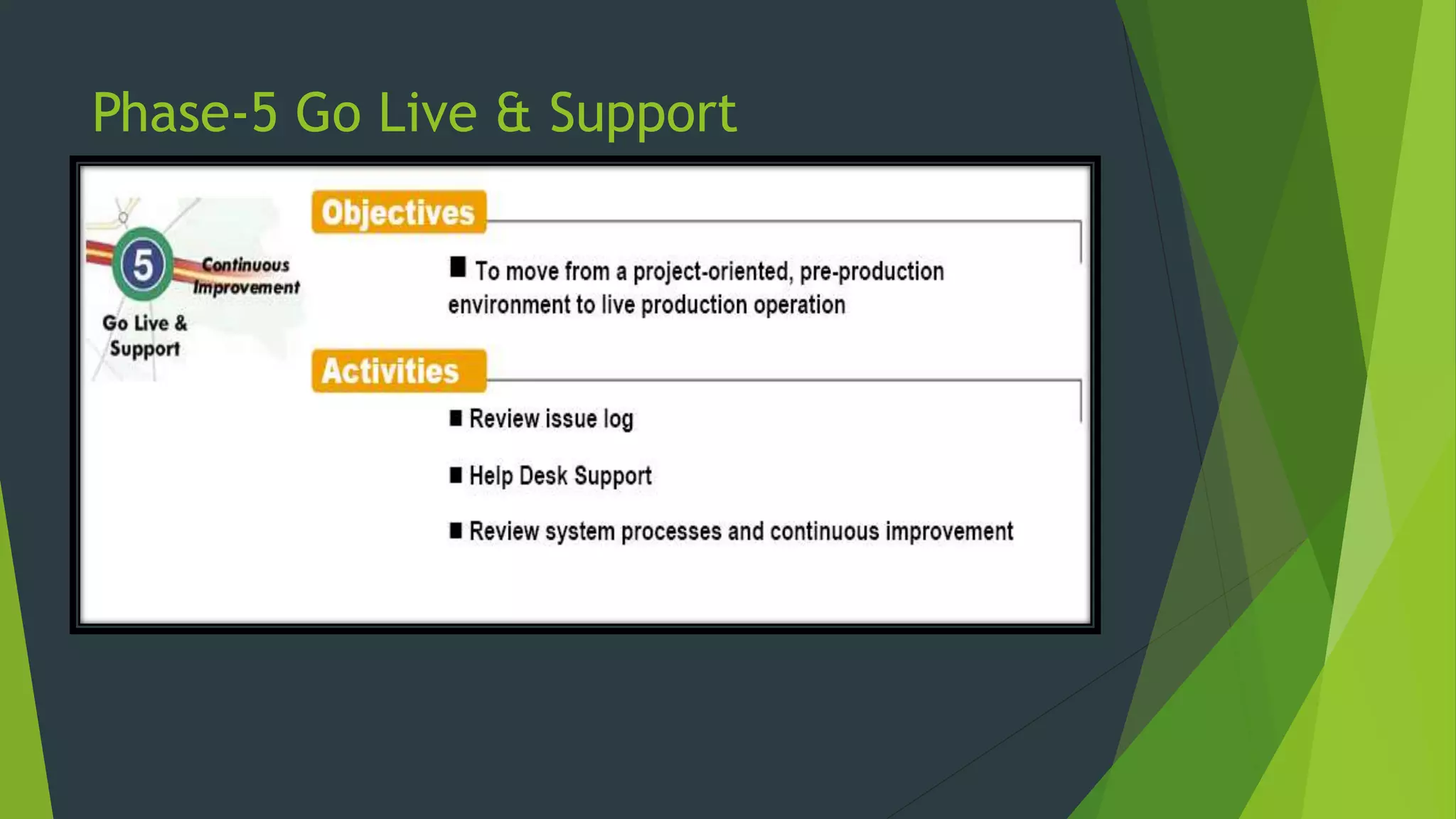
Phase-5 Go Live & Support
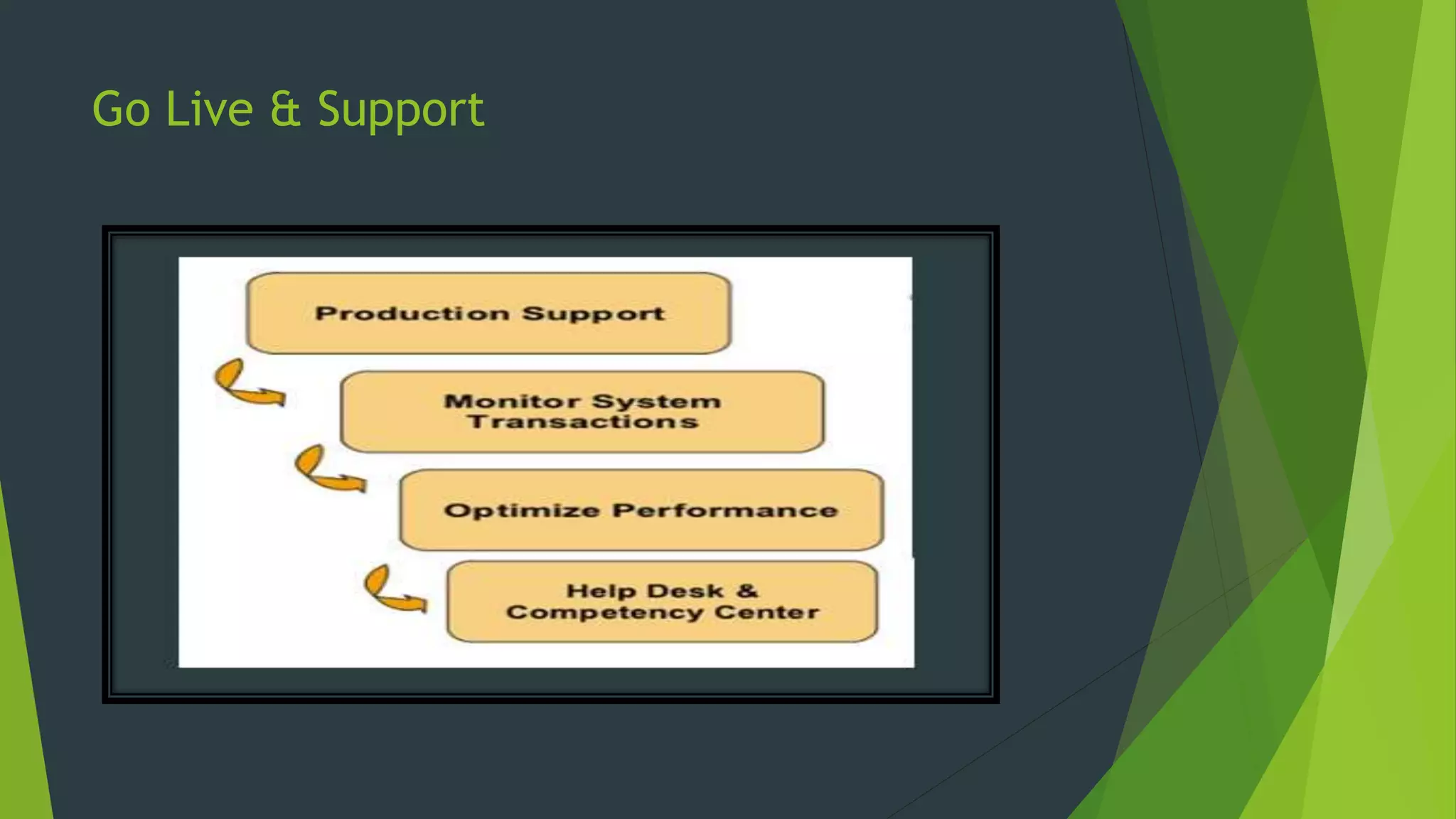
Go Live & Support
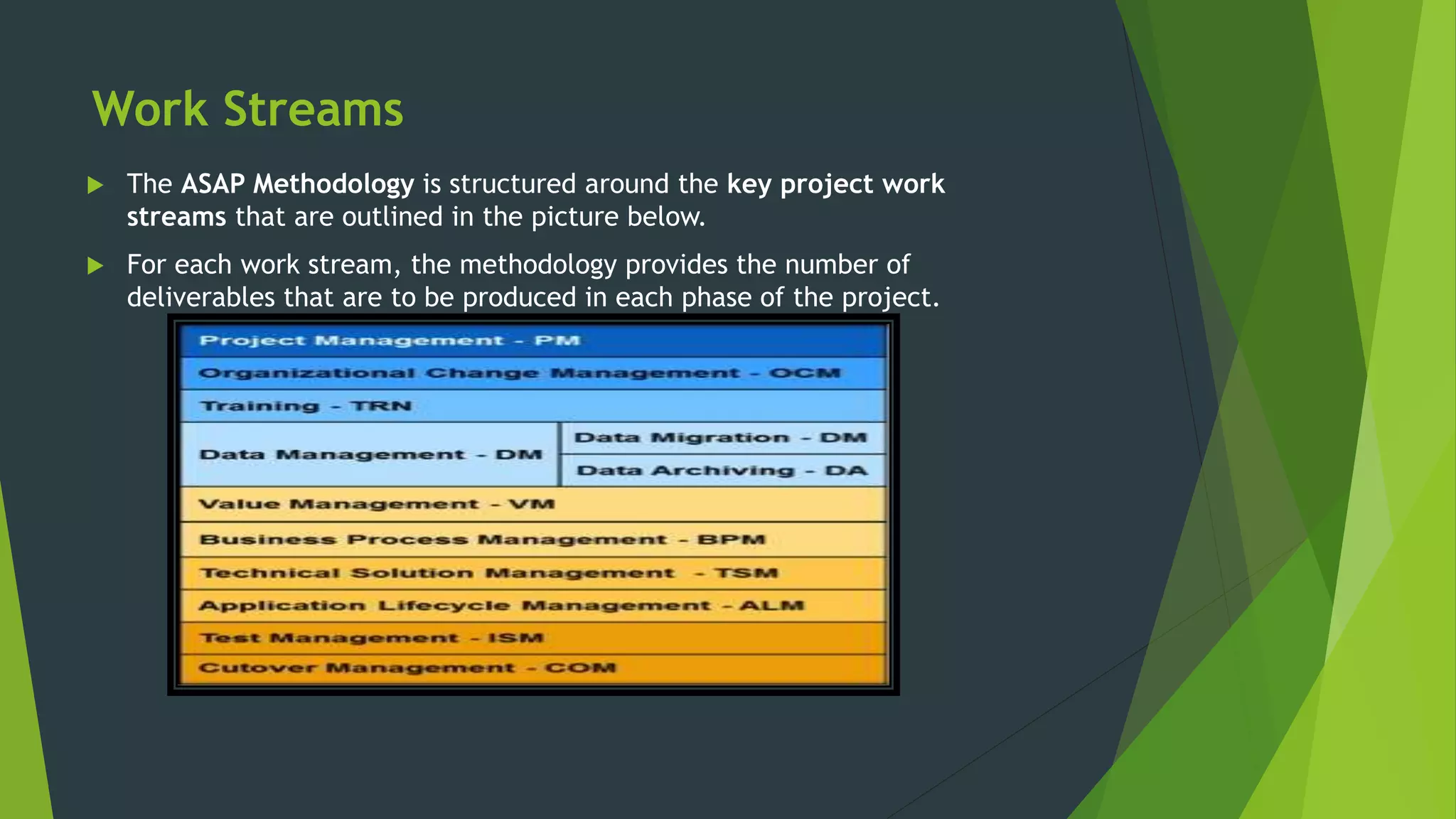
Work Streams
 The ASAP Methodology is structured around the key project work
streams that are outlined in the picture below.
 For each work stream, the methodology provides the number of
deliverables that are to be produced in each phase of the project.
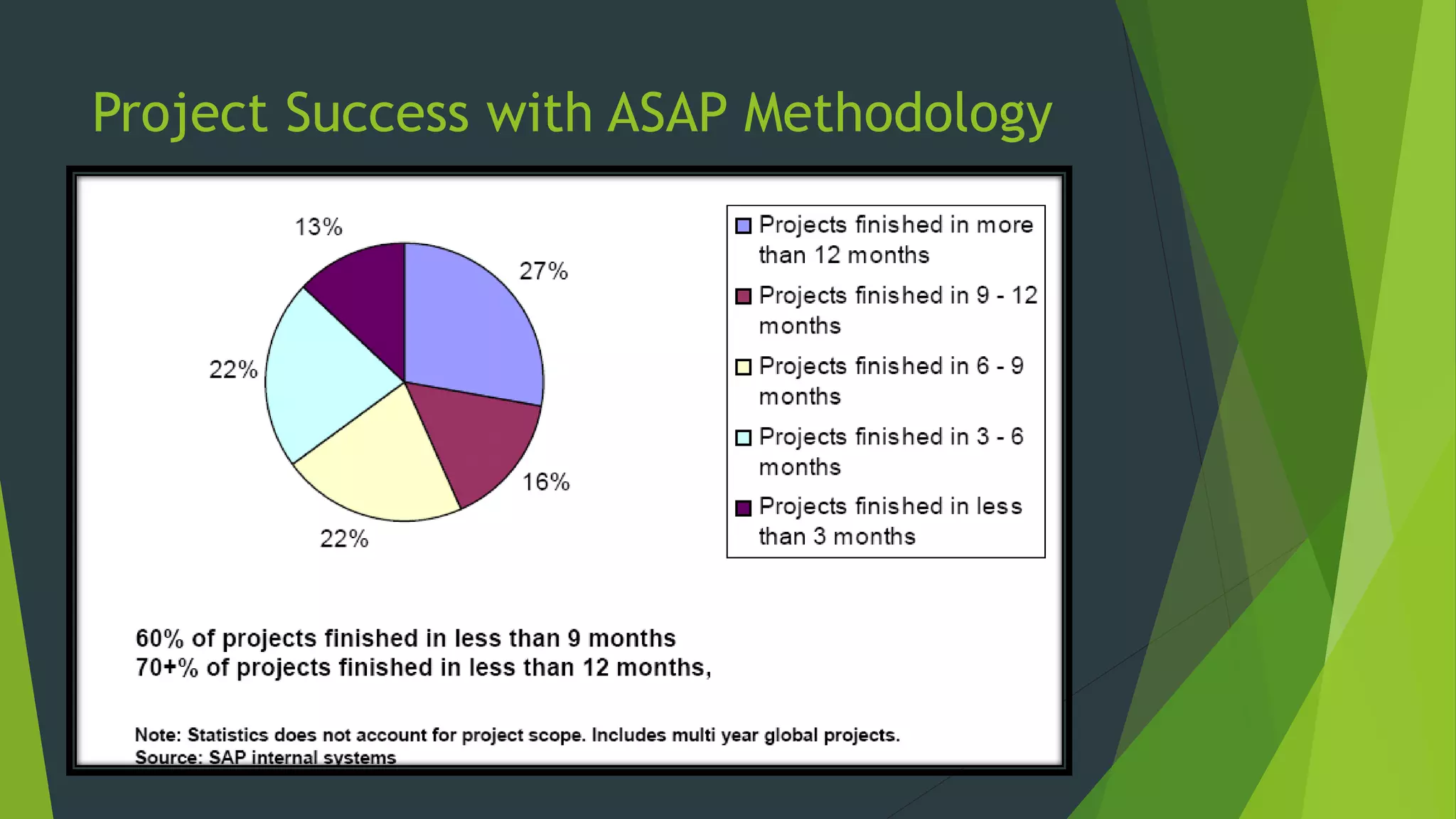
Project Success with ASAP Methodology
Before the SAP system implementation
process, Brainstorm and consider following
questions:
 Will the company require consultants for the implementation?
 Who and how many people must be involved in house?
 Should the company consider outsourcing the ERP implementation?
 How many people in house and from outside should form the project
team?
 In the implementation process, the company should consider about
customization level. The company has to choose appropriate
customization level, depending on company size, processes, market
presence and culture. In general, there are three types of 'Technical
ASAP Methodology for Implementing SAP System

ASAP Methodology for Implementing SAP System

  • 1.
  • 2.
  • 3.
    Typical Question whencompany start the project:
  • 4.
    SAP ASAP  ASAP- Accelerated SAP  Its purpose is to help design SAP implementation in the most efficient manner possible.  Its goal is to effectively optimize time, people, quality and other resources, using a proven methodology to implementation.
  • 5.
    Accelerated SAP (ASAP)Implementation Methodology, there is a timeline which includes five paths.  1. Project Preparation  2. Business Blueprint  3. Realization  4. Final Preparation  5. Go Live & Support  ASAP implementation Methodology has clear roadmap that helps the company going their SAP implementation project. During the ASAP implementation process, communication is always the most important key to lead the success.
  • 6.
    IST 600 ERPSystems: Key Implementation Issues U. Yeliz Eseryel SAP Implementation Timeline  Accelerated SAP (ASAP) Implementation Methodology
  • 7.
  • 8.
  • 9.
  • 10.
  • 11.
  • 12.
    Project Plan Outlinefor Realization
  • 13.
    Project Plan Outlinefor Realization
  • 14.
  • 15.
  • 16.
    Phase-5 Go Live& Support
  • 17.
    Go Live &Support
  • 18.
    Work Streams  TheASAP Methodology is structured around the key project work streams that are outlined in the picture below.  For each work stream, the methodology provides the number of deliverables that are to be produced in each phase of the project.
  • 19.
    Project Success withASAP Methodology
  • 20.
    Before the SAPsystem implementation process, Brainstorm and consider following questions:  Will the company require consultants for the implementation?  Who and how many people must be involved in house?  Should the company consider outsourcing the ERP implementation?  How many people in house and from outside should form the project team?  In the implementation process, the company should consider about customization level. The company has to choose appropriate customization level, depending on company size, processes, market presence and culture. In general, there are three types of 'Technical