SAP PI Sheet integration with DMS
(Document Management System)
Execution Steps (XSteps) & Classic PI-Sheet
By,
Ankit Sharma
SAP PP Consultant
businessconsulting007@gmail.com
+91 – 8888896575 / 8888632763
Introduction
This document is related to integration of PI Sheet with DMS.
You can use this function to directly integrate production-relevant documents that are stored in the SAP
Document Management Service (DMS) in a PI sheet or manufacturing cockpit. The system can automatically
determine and display the valid, released document version. If the documents can be read directly in an
embedded frame in the PI sheet, they are archived in the batch record together with the PI sheet.
Prerequisites
You have stored your documents in DMS. To create a document in DMS from the SAP Easy Access screen,
choose Logistics → Central Functions → Document Management → Document → Create.
To display a document in the PI sheet, the following requirements must be met:
 The deletion flag is not set for the document.
 The document version specified is valid and released.
 Only one original application file with the specified workstation application is assigned to the document.
 The original application file to be displayed is active and stored in the secure storage area .
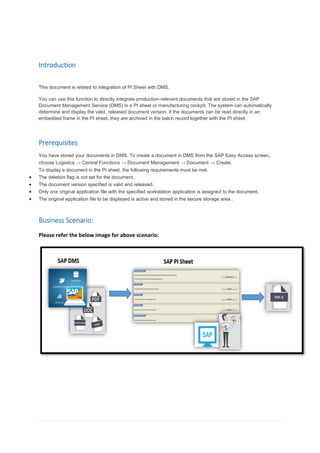
Business Scenario:
Please refer the below image for above scenario:
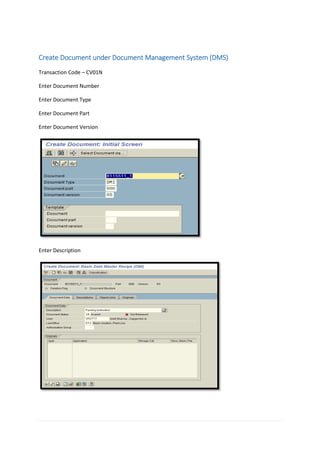
Create Document under Document Management System (DMS)
Transaction Code – CV01N
Enter Document Number
Enter Document Type
Enter Document Part
Enter Document Version
Enter Description
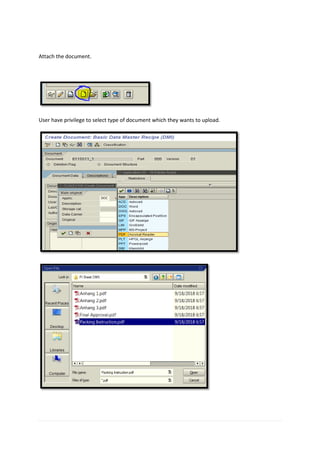
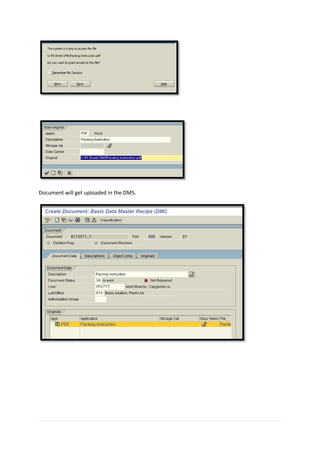
Attach the document.
User have privilege to select type of document which they wants to upload.
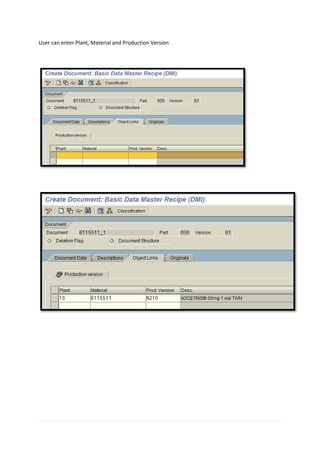
Document will get uploaded in the DMS.
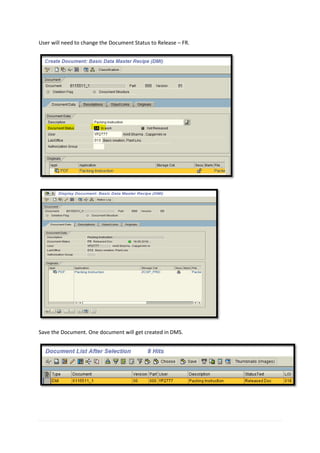
User can enter Plant, Material and Production Version
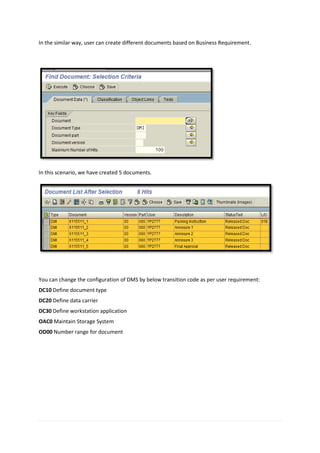
User will need to change the Document Status to Release – FR.
Save the Document. One document will get created in DMS.
In the similar way, user can create different documents based on Business Requirement.
In this scenario, we have created 5 documents.
You can change the configuration of DMS by below transition code as per user requirement:
DC10 Define document type
DC20 Define data carrier
DC30 Define workstation application
OAC0 Maintain Storage System
OD00 Number range for document
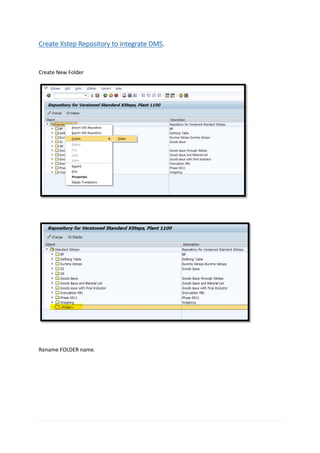
Create Xstep Repository to integrate DMS.
Create New Folder
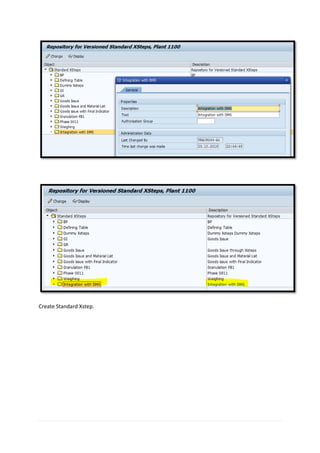
Rename FOLDER name.
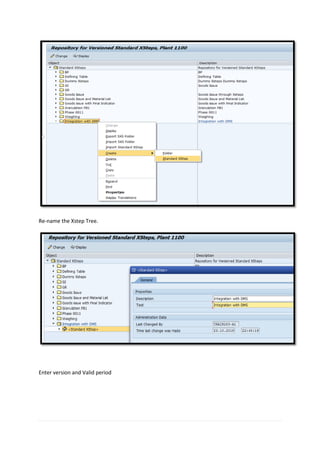
Create Standard Xstep.
Re-name the Xstep Tree.
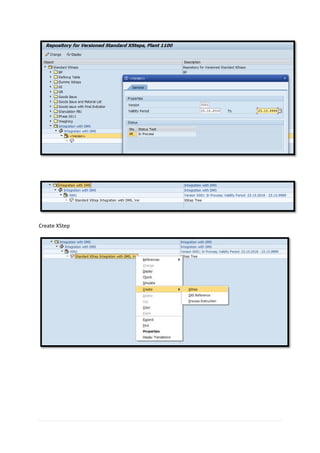
Enter version and Valid period
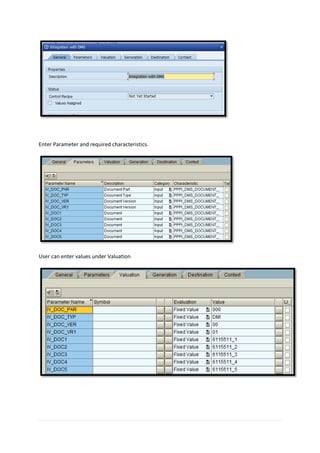
Create XStep
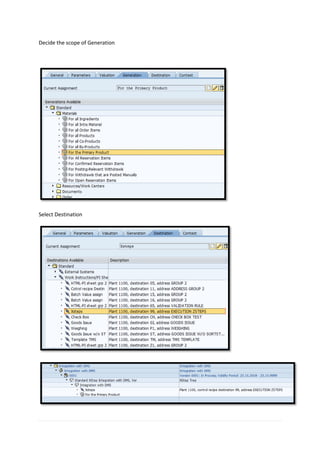
Enter Parameter and required characteristics.
User can enter values under Valuation
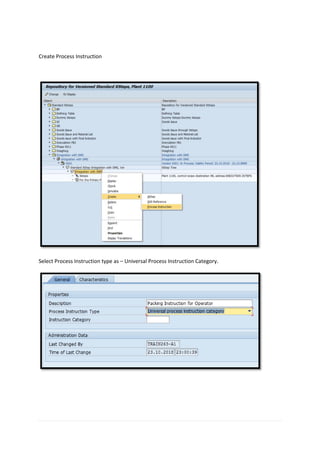
Decide the scope of Generation
Select Destination
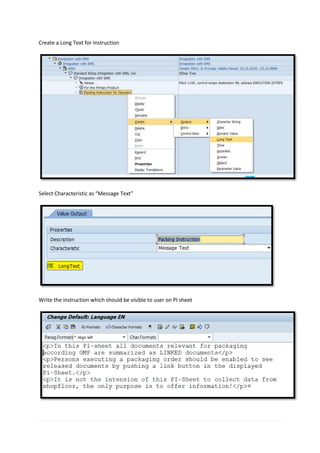
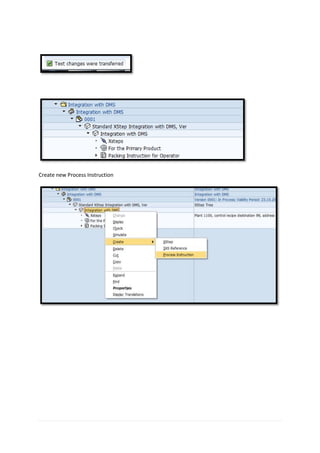
Create Process Instruction
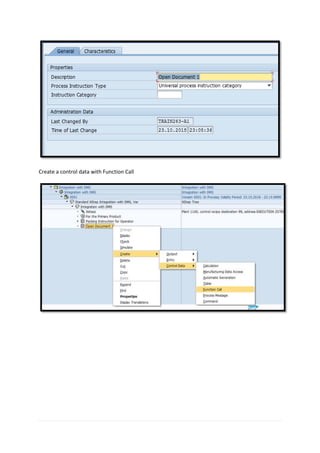
Select Process Instruction type as – Universal Process Instruction Category.
Create a Long Text for Instruction
Select Characteristic as “Message Text”
Write the instruction which should be visible to user on PI sheet
Create new Process Instruction
Create a control data with Function Call
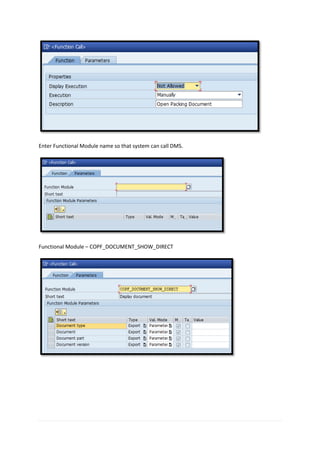
Enter Functional Module name so that system can call DMS.
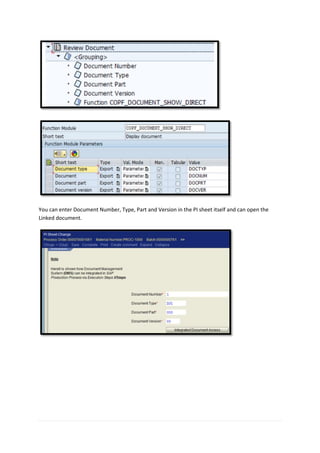
Functional Module – COPF_DOCUMENT_SHOW_DIRECT
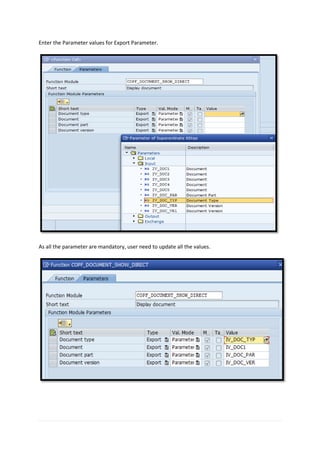
Enter the Parameter values for Export Parameter.
As all the parameter are mandatory, user need to update all the values.
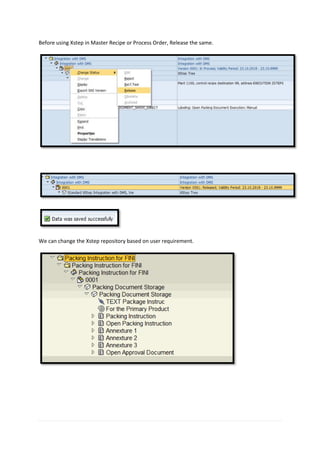
Before using Xstep in Master Recipe or Process Order, Release the same.
We can change the Xstep repository based on user requirement.
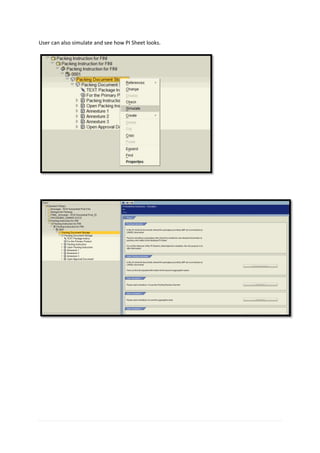
User can also simulate and see how PI Sheet looks.
Testing the Functionality:
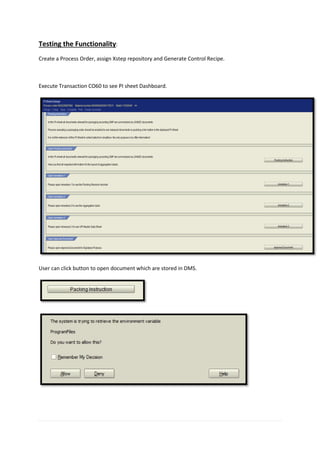
Create a Process Order, assign Xstep repository and Generate Control Recipe.
Execute Transaction CO60 to see PI sheet Dashboard.
User can click button to open document which are stored in DMS.
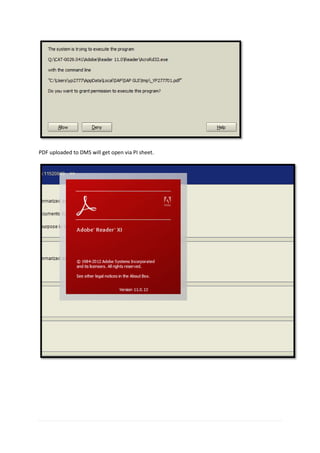
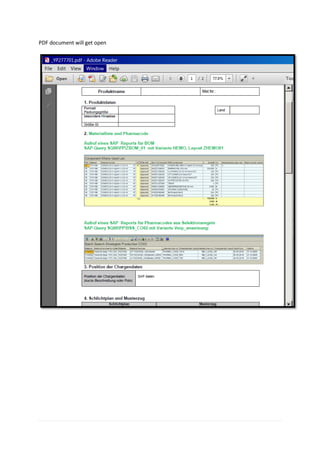
PDF uploaded to DMS will get open via PI sheet.
PDF document will get open
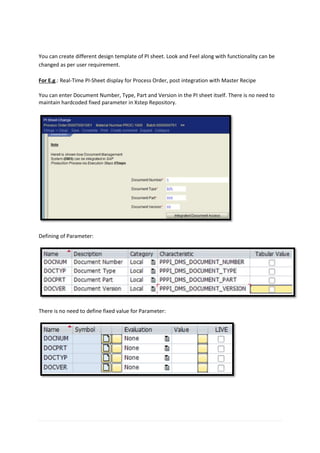
You can create different design template of PI sheet. Look and Feel along with functionality can be
changed as per user requirement.
For E.g.: Real-Time PI-Sheet display for Process Order, post integration with Master Recipe
You can enter Document Number, Type, Part and Version in the PI sheet itself. There is no need to
maintain hardcoded fixed parameter in Xstep Repository.
Defining of Parameter:
There is no need to define fixed value for Parameter:
You can enter Document Number, Type, Part and Version in the PI sheet itself and can open the
Linked document.
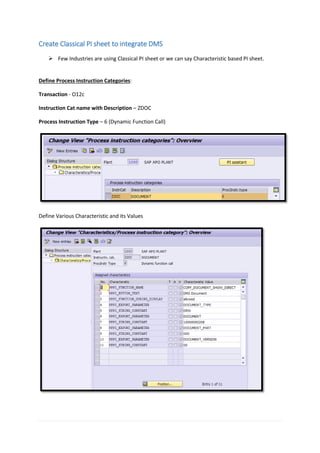
Create Classical PI sheet to integrate DMS
 Few Industries are using Classical PI sheet or we can say Characteristic based PI sheet.
Define Process Instruction Categories:
Transaction - O12c
Instruction Cat name with Description – ZDOC
Process Instruction Type – 6 (Dynamic Function Call)
Define Various Characteristic and its Values
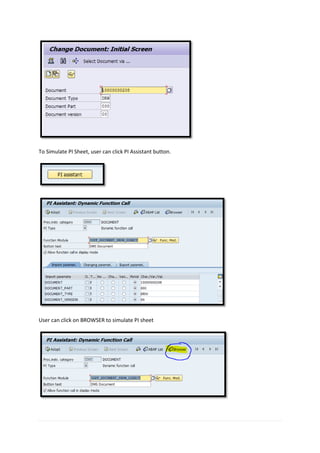
To Simulate PI Sheet, user can click PI Assistant button.
User can click on BROWSER to simulate PI sheet
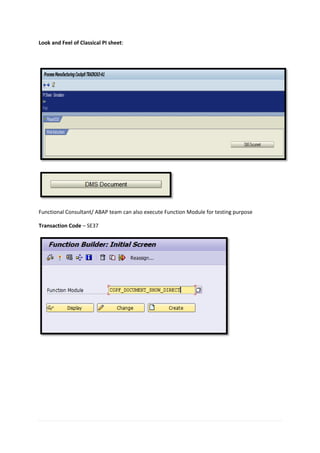
Look and Feel of Classical PI sheet:
Functional Consultant/ ABAP team can also execute Function Module for testing purpose
Transaction Code – SE37
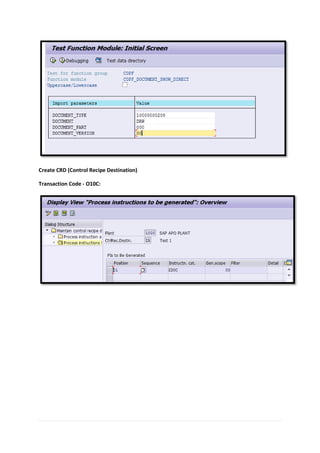
Create CRD (Control Recipe Destination)
Transaction Code - O10C:
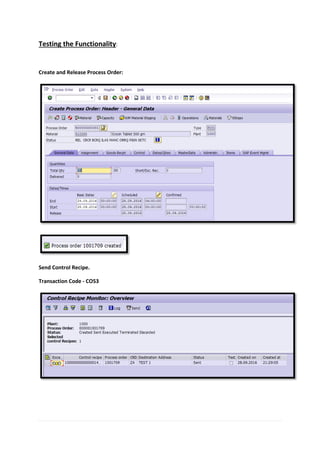
Testing the Functionality:
Create and Release Process Order:
Send Control Recipe.
Transaction Code - CO53
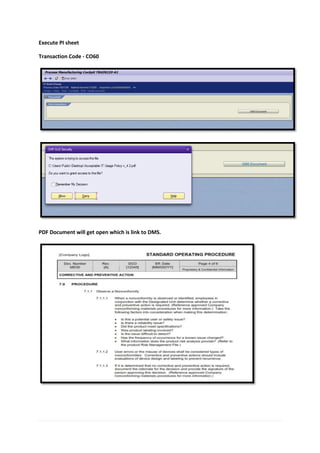
Execute PI sheet
Transaction Code - CO60
PDF Document will get open which is link to DMS.

SAP PI Sheet integration with DMS(Document Management System)

  • 1.
    SAP PI Sheetintegration with DMS (Document Management System) Execution Steps (XSteps) & Classic PI-Sheet By, Ankit Sharma SAP PP Consultant businessconsulting007@gmail.com +91 – 8888896575 / 8888632763
  • 2.
    Introduction This document isrelated to integration of PI Sheet with DMS. You can use this function to directly integrate production-relevant documents that are stored in the SAP Document Management Service (DMS) in a PI sheet or manufacturing cockpit. The system can automatically determine and display the valid, released document version. If the documents can be read directly in an embedded frame in the PI sheet, they are archived in the batch record together with the PI sheet. Prerequisites You have stored your documents in DMS. To create a document in DMS from the SAP Easy Access screen, choose Logistics → Central Functions → Document Management → Document → Create. To display a document in the PI sheet, the following requirements must be met:  The deletion flag is not set for the document.  The document version specified is valid and released.  Only one original application file with the specified workstation application is assigned to the document.  The original application file to be displayed is active and stored in the secure storage area . Business Scenario: Please refer the below image for above scenario:
  • 3.
    Create Document underDocument Management System (DMS) Transaction Code – CV01N Enter Document Number Enter Document Type Enter Document Part Enter Document Version Enter Description
  • 4.
    Attach the document. Userhave privilege to select type of document which they wants to upload.
  • 5.
    Document will getuploaded in the DMS.
  • 6.
    User can enterPlant, Material and Production Version
  • 7.
    User will needto change the Document Status to Release – FR. Save the Document. One document will get created in DMS.
  • 8.
    In the similarway, user can create different documents based on Business Requirement. In this scenario, we have created 5 documents. You can change the configuration of DMS by below transition code as per user requirement: DC10 Define document type DC20 Define data carrier DC30 Define workstation application OAC0 Maintain Storage System OD00 Number range for document
  • 9.
    Create Xstep Repositoryto integrate DMS. Create New Folder Rename FOLDER name.
  • 10.
  • 11.
    Re-name the XstepTree. Enter version and Valid period
  • 12.
  • 13.
    Enter Parameter andrequired characteristics. User can enter values under Valuation
  • 14.
    Decide the scopeof Generation Select Destination
  • 15.
    Create Process Instruction SelectProcess Instruction type as – Universal Process Instruction Category.
  • 16.
    Create a LongText for Instruction Select Characteristic as “Message Text” Write the instruction which should be visible to user on PI sheet
  • 17.
    Create new ProcessInstruction
  • 18.
    Create a controldata with Function Call
  • 19.
    Enter Functional Modulename so that system can call DMS. Functional Module – COPF_DOCUMENT_SHOW_DIRECT
  • 20.
    Enter the Parametervalues for Export Parameter. As all the parameter are mandatory, user need to update all the values.
  • 21.
    Before using Xstepin Master Recipe or Process Order, Release the same. We can change the Xstep repository based on user requirement.
  • 22.
    User can alsosimulate and see how PI Sheet looks.
  • 23.
    Testing the Functionality: Createa Process Order, assign Xstep repository and Generate Control Recipe. Execute Transaction CO60 to see PI sheet Dashboard. User can click button to open document which are stored in DMS.
  • 24.
    PDF uploaded toDMS will get open via PI sheet.
  • 25.
  • 26.
    You can createdifferent design template of PI sheet. Look and Feel along with functionality can be changed as per user requirement. For E.g.: Real-Time PI-Sheet display for Process Order, post integration with Master Recipe You can enter Document Number, Type, Part and Version in the PI sheet itself. There is no need to maintain hardcoded fixed parameter in Xstep Repository. Defining of Parameter: There is no need to define fixed value for Parameter:
  • 27.
    You can enterDocument Number, Type, Part and Version in the PI sheet itself and can open the Linked document.
  • 28.
    Create Classical PIsheet to integrate DMS  Few Industries are using Classical PI sheet or we can say Characteristic based PI sheet. Define Process Instruction Categories: Transaction - O12c Instruction Cat name with Description – ZDOC Process Instruction Type – 6 (Dynamic Function Call) Define Various Characteristic and its Values
  • 29.
    To Simulate PISheet, user can click PI Assistant button. User can click on BROWSER to simulate PI sheet
  • 30.
    Look and Feelof Classical PI sheet: Functional Consultant/ ABAP team can also execute Function Module for testing purpose Transaction Code – SE37
  • 31.
    Create CRD (ControlRecipe Destination) Transaction Code - O10C:
  • 32.
    Testing the Functionality: Createand Release Process Order: Send Control Recipe. Transaction Code - CO53
  • 33.
    Execute PI sheet TransactionCode - CO60 PDF Document will get open which is link to DMS.