
Overview of Technical
Support Capabilities:
Textiles/Nonwovens
For AGC, AGCCA, and MIP Use Only PAGE 2
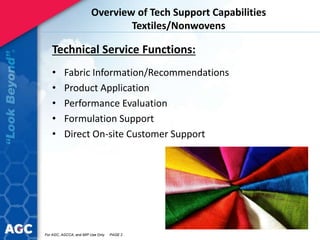
Technical Service Functions:
• Fabric Information/Recommendations
• Product Application
• Performance Evaluation
• Formulation Support
• Direct On-site Customer Support
Overview of Tech Support Capabilities
Textiles/Nonwovens
Fabric Information/Recommendations
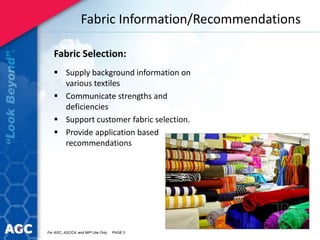
Fabric Selection:
 Supply background information on
various textiles
 Communicate strengths and
deficiencies
 Support customer fabric selection.
 Provide application based
recommendations
For AGC, AGCCA, and MIP Use Only PAGE 3
Application Services
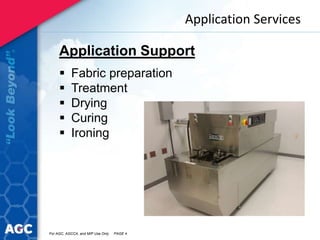
Application Support
 Fabric preparation
 Treatment
 Drying
 Curing
 Ironing
For AGC, AGCCA, and MIP Use Only PAGE 4
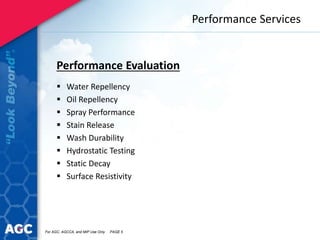
Performance Services
Performance Evaluation
 Water Repellency
 Oil Repellency
 Spray Performance
 Stain Release
 Wash Durability
 Hydrostatic Testing
 Static Decay
 Surface Resistivity
For AGC, AGCCA, and MIP Use Only PAGE 5
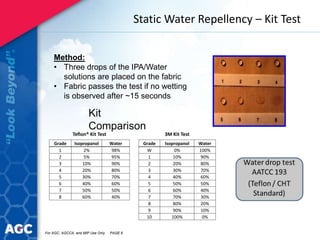
Static Water Repellency – Kit Test
Teflon® Kit Test
Grade Isopropanol Water
1 2% 98%
2 5% 95%
3 10% 90%
4 20% 80%
5 30% 70%
6 40% 60%
7 50% 50%
8 60% 40%
3M Kit Test
Grade Isopropanol Water
W 0% 100%
1 10% 90%
2 20% 80%
3 30% 70%
4 40% 60%
5 50% 50%
6 60% 40%
7 70% 30%
8 80% 20%
9 90% 10%
10 100% 0%
Kit
Comparison
Method:
• Three drops of the IPA/Water
solutions are placed on the fabric
• Fabric passes the test if no wetting
is observed after ~15 seconds
For AGC, AGCCA, and MIP Use Only PAGE 6
Oil Drop Kit Test
AATCC 118
Oil Repellency – Kit Test
Method:
• Three drops of the test grade
are placed on the fabric
• Fabric passes the test if no
wetting is observed after 15-30
seconds
Oil Kit Test
Grade Description
1 Kaydol Oil
2
65:35 Kaydol :
Hexadecane
3 Hexadecane
4 Tetradecane
5 Dodecane
6 Decane
7 Octane
8 Heptane
For AGC, AGCCA, and MIP Use Only PAGE 7
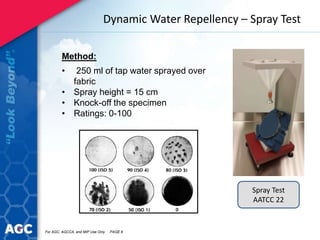
Dynamic Water Repellency – Spray Test
Method:
• 250 ml of tap water sprayed over
fabric
• Spray height = 15 cm
• Knock-off the specimen
• Ratings: 0-100
Spray Test
AATCC 22
For AGC, AGCCA, and MIP Use Only PAGE 8
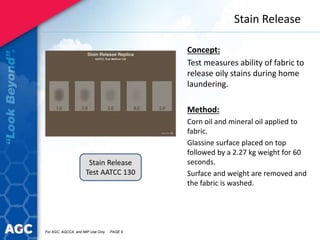
Stain Release
Concept:
Test measures ability of fabric to
release oily stains during home
laundering.
Method:
Corn oil and mineral oil applied to
fabric.
Glassine surface placed on top
followed by a 2.27 kg weight for 60
seconds.
Surface and weight are removed and
the fabric is washed.
Stain Release
Test AATCC 130
For AGC, AGCCA, and MIP Use Only PAGE 9
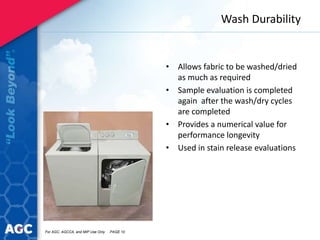
Wash Durability
• Allows fabric to be washed/dried
as much as required
• Sample evaluation is completed
again after the wash/dry cycles
are completed
• Provides a numerical value for
performance longevity
• Used in stain release evaluations
For AGC, AGCCA, and MIP Use Only PAGE 10
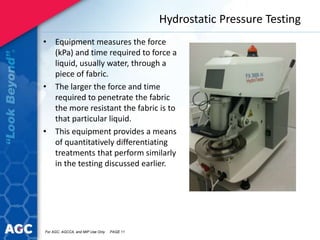
Hydrostatic Pressure Testing
• Equipment measures the force
(kPa) and time required to force a
liquid, usually water, through a
piece of fabric.
• The larger the force and time
required to penetrate the fabric
the more resistant the fabric is to
that particular liquid.
• This equipment provides a means
of quantitatively differentiating
treatments that perform similarly
in the testing discussed earlier.
For AGC, AGCCA, and MIP Use Only PAGE 11
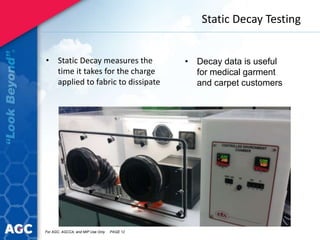
Static Decay Testing
• Static Decay measures the
time it takes for the charge
applied to fabric to dissipate
• Decay data is useful
for medical garment
and carpet customers
For AGC, AGCCA, and MIP Use Only PAGE 12
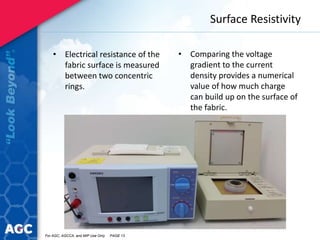
Surface Resistivity
• Electrical resistance of the
fabric surface is measured
between two concentric
rings.
• Comparing the voltage
gradient to the current
density provides a numerical
value of how much charge
can build up on the surface of
the fabric.
For AGC, AGCCA, and MIP Use Only PAGE 13
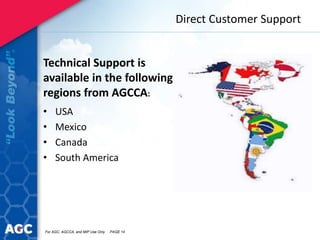
Direct Customer Support
Technical Support is
available in the following
regions from AGCCA:
• USA
• Mexico
• Canada
• South America
For AGC, AGCCA, and MIP Use Only PAGE 14
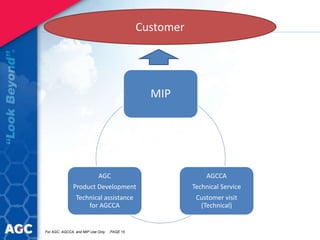
MIP
AGCCA
Technical Service
Customer visit
(Technical)
AGC
Product Development
Technical assistance
for AGCCA
Customer
For AGC, AGCCA, and MIP Use Only PAGE 15
For more information call: 1-
800-424-7833
Thank You!
For AGC, AGCCA, and MIP Use Only PAGE 16

AsahiGuard Technical Support: Textiles & Nonwovens

  • 1.
    Overview of Technical SupportCapabilities: Textiles/Nonwovens
  • 2.
    For AGC, AGCCA,and MIP Use Only PAGE 2 Technical Service Functions: • Fabric Information/Recommendations • Product Application • Performance Evaluation • Formulation Support • Direct On-site Customer Support Overview of Tech Support Capabilities Textiles/Nonwovens
  • 3.
    Fabric Information/Recommendations Fabric Selection: Supply background information on various textiles  Communicate strengths and deficiencies  Support customer fabric selection.  Provide application based recommendations For AGC, AGCCA, and MIP Use Only PAGE 3
  • 4.
    Application Services Application Support Fabric preparation  Treatment  Drying  Curing  Ironing For AGC, AGCCA, and MIP Use Only PAGE 4
  • 5.
    Performance Services Performance Evaluation Water Repellency  Oil Repellency  Spray Performance  Stain Release  Wash Durability  Hydrostatic Testing  Static Decay  Surface Resistivity For AGC, AGCCA, and MIP Use Only PAGE 5
  • 6.
    Static Water Repellency– Kit Test Teflon® Kit Test Grade Isopropanol Water 1 2% 98% 2 5% 95% 3 10% 90% 4 20% 80% 5 30% 70% 6 40% 60% 7 50% 50% 8 60% 40% 3M Kit Test Grade Isopropanol Water W 0% 100% 1 10% 90% 2 20% 80% 3 30% 70% 4 40% 60% 5 50% 50% 6 60% 40% 7 70% 30% 8 80% 20% 9 90% 10% 10 100% 0% Kit Comparison Method: • Three drops of the IPA/Water solutions are placed on the fabric • Fabric passes the test if no wetting is observed after ~15 seconds For AGC, AGCCA, and MIP Use Only PAGE 6
  • 7.
    Oil Drop KitTest AATCC 118 Oil Repellency – Kit Test Method: • Three drops of the test grade are placed on the fabric • Fabric passes the test if no wetting is observed after 15-30 seconds Oil Kit Test Grade Description 1 Kaydol Oil 2 65:35 Kaydol : Hexadecane 3 Hexadecane 4 Tetradecane 5 Dodecane 6 Decane 7 Octane 8 Heptane For AGC, AGCCA, and MIP Use Only PAGE 7
  • 8.
    Dynamic Water Repellency– Spray Test Method: • 250 ml of tap water sprayed over fabric • Spray height = 15 cm • Knock-off the specimen • Ratings: 0-100 Spray Test AATCC 22 For AGC, AGCCA, and MIP Use Only PAGE 8
  • 9.
    Stain Release Concept: Test measuresability of fabric to release oily stains during home laundering. Method: Corn oil and mineral oil applied to fabric. Glassine surface placed on top followed by a 2.27 kg weight for 60 seconds. Surface and weight are removed and the fabric is washed. Stain Release Test AATCC 130 For AGC, AGCCA, and MIP Use Only PAGE 9
  • 10.
    Wash Durability • Allowsfabric to be washed/dried as much as required • Sample evaluation is completed again after the wash/dry cycles are completed • Provides a numerical value for performance longevity • Used in stain release evaluations For AGC, AGCCA, and MIP Use Only PAGE 10
  • 11.
    Hydrostatic Pressure Testing •Equipment measures the force (kPa) and time required to force a liquid, usually water, through a piece of fabric. • The larger the force and time required to penetrate the fabric the more resistant the fabric is to that particular liquid. • This equipment provides a means of quantitatively differentiating treatments that perform similarly in the testing discussed earlier. For AGC, AGCCA, and MIP Use Only PAGE 11
  • 12.
    Static Decay Testing •Static Decay measures the time it takes for the charge applied to fabric to dissipate • Decay data is useful for medical garment and carpet customers For AGC, AGCCA, and MIP Use Only PAGE 12
  • 13.
    Surface Resistivity • Electricalresistance of the fabric surface is measured between two concentric rings. • Comparing the voltage gradient to the current density provides a numerical value of how much charge can build up on the surface of the fabric. For AGC, AGCCA, and MIP Use Only PAGE 13
  • 14.
    Direct Customer Support TechnicalSupport is available in the following regions from AGCCA: • USA • Mexico • Canada • South America For AGC, AGCCA, and MIP Use Only PAGE 14
  • 15.
    MIP AGCCA Technical Service Customer visit (Technical) AGC ProductDevelopment Technical assistance for AGCCA Customer For AGC, AGCCA, and MIP Use Only PAGE 15
  • 16.
    For more informationcall: 1- 800-424-7833 Thank You! For AGC, AGCCA, and MIP Use Only PAGE 16