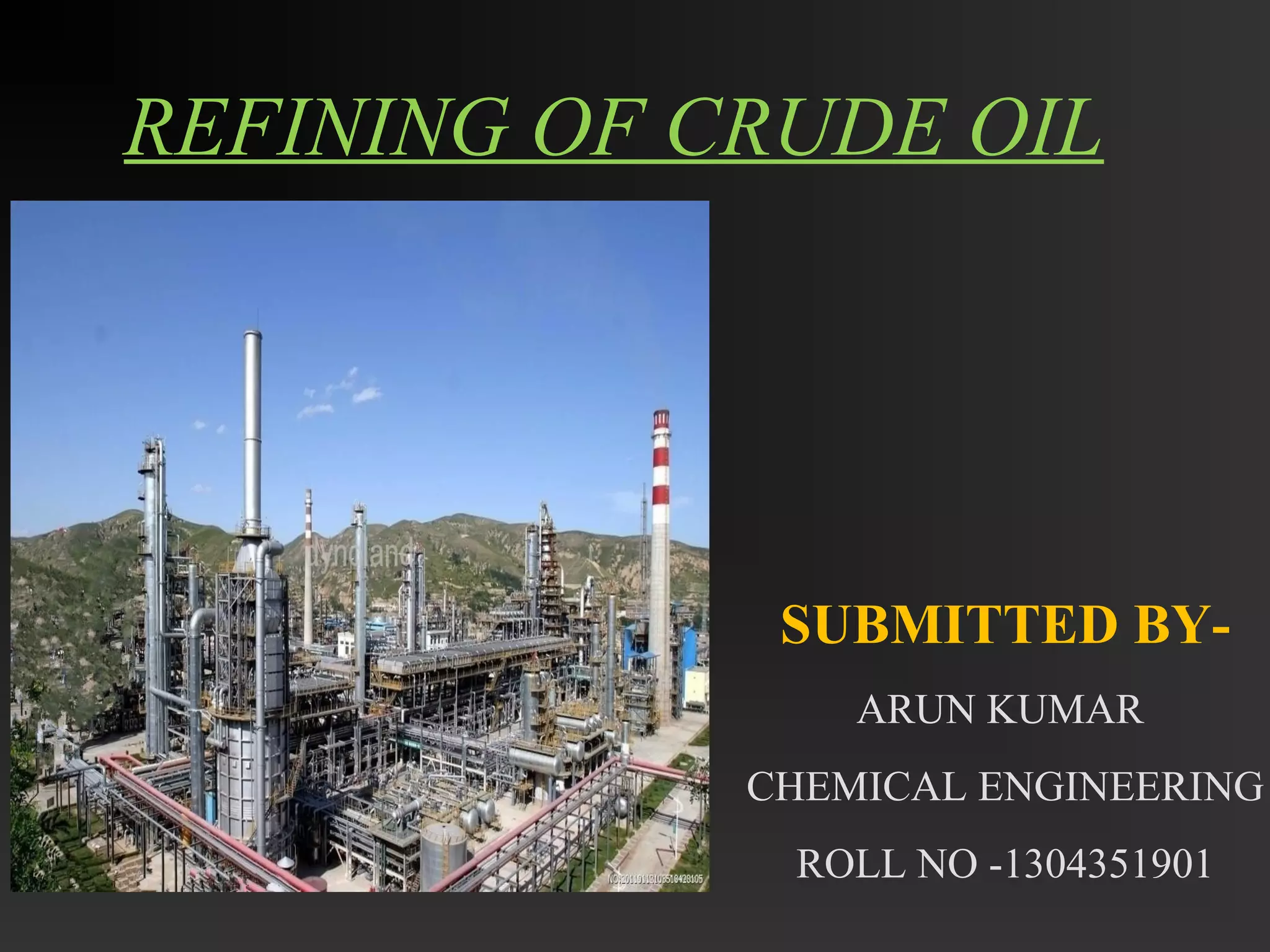
REFINING OF CRUDE OIL 
SUBMITTED BY-ARUN 
KUMAR 
CHEMICAL ENGINEERING 
ROLL NO -1304351901
CONTENT 
• Characteristic of crude oil 
• Refining process of crude oil 
• Technologies for achieving “clean fuels” 
• How fuel is distributed?
WHAT IS CRUDE OIL? 
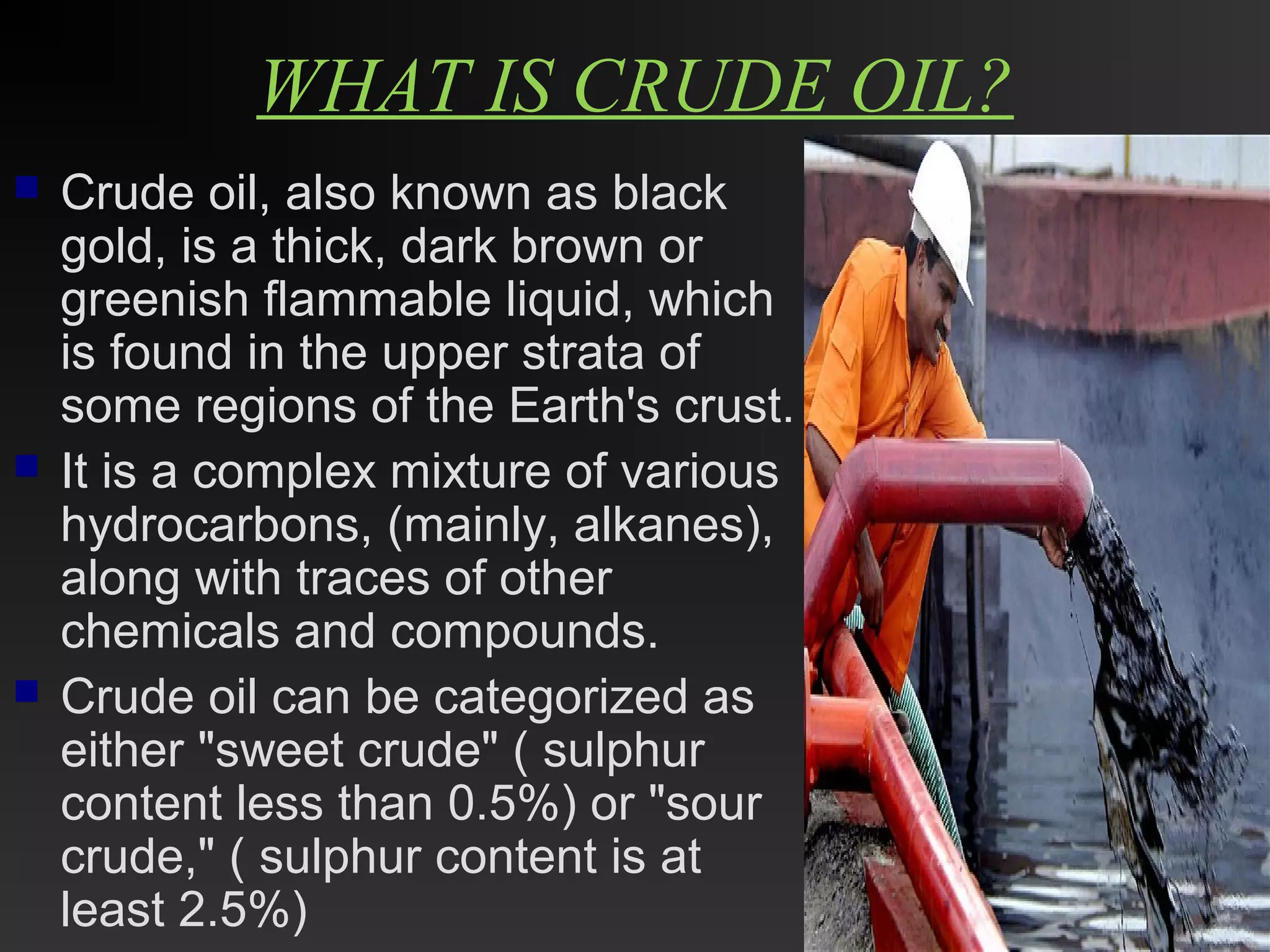
 Crude oil, also known as black 
gold, is a thick, dark brown or 
greenish flammable liquid, which 
is found in the upper strata of 
some regions of the Earth's crust. 
 It is a complex mixture of various 
hydrocarbons, (mainly, alkanes), 
along with traces of other 
chemicals and compounds. 
 Crude oil can be categorized as 
either "sweet crude" ( sulphur 
content less than 0.5%) or "sour 
crude," ( sulphur content is at 
least 2.5%)
HYDROCARBONS IN CRUDE OIL 
• Alkane (Paraffin’s) – methane, ethane, propane, 
butane, etc. 
• Aromatics – benzene, naphthalene 
• Naphthenic or Cycloalkanes – cyclohexane, 
methyl cyclopentane 
• Alkenes – ethylene, butene, isobutene 
• Dynes and Alkynes – acetylene, butadiene's
COMPOSITION OFCRUDE OIL 
– Carbon – 84% 
– Hydrogen – 14% 
– Sulfur – 1 to 3% 
– Nitrogen - <1% 
– Oxygen - <1% 
– Metals - <1% (nickel, iron,vanadium, etc.) 
– Salts - <1%
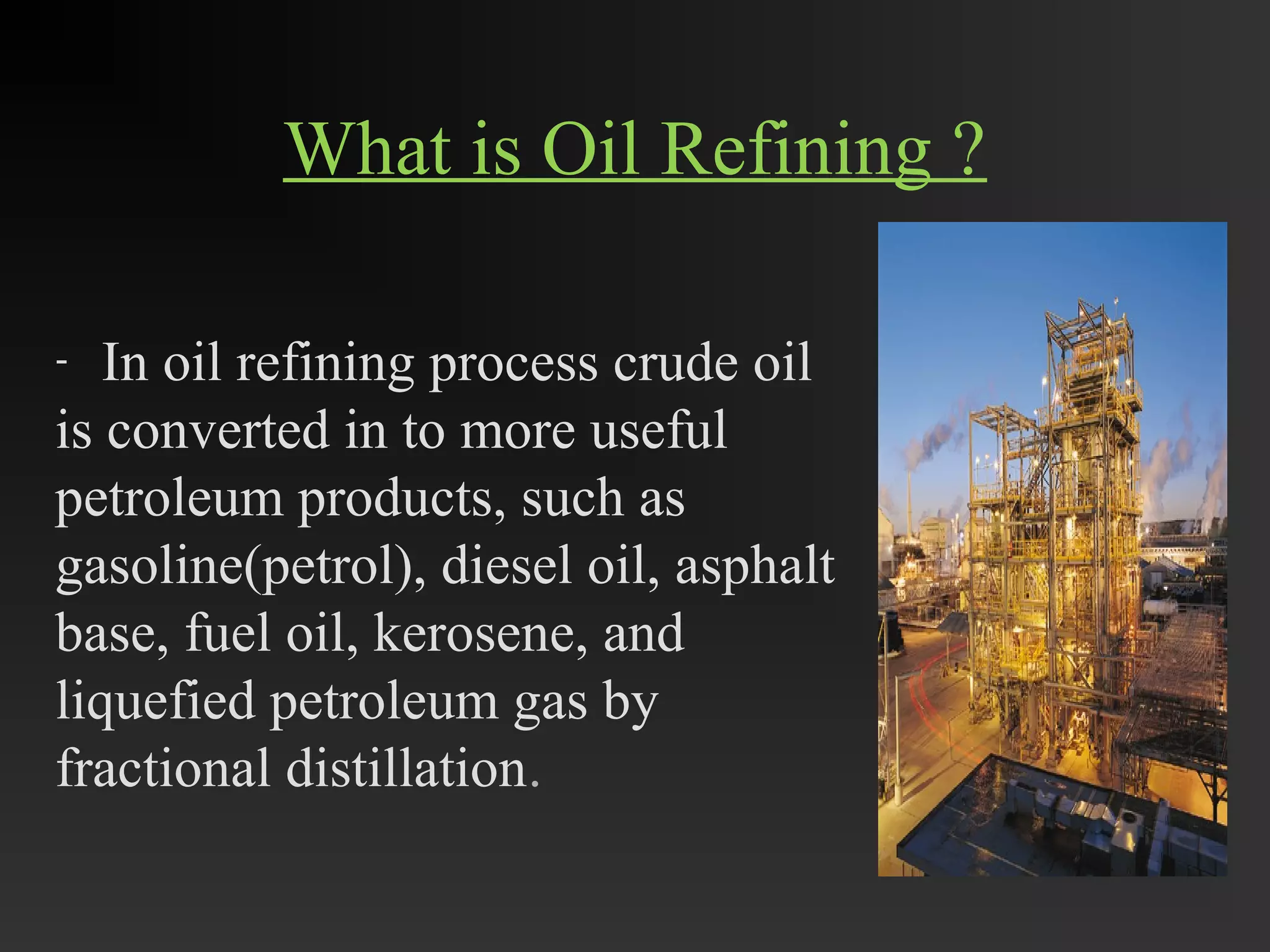
What is Oil Refining ? 
- In oil refining process crude oil 
is converted in to more useful 
petroleum products, such as 
gasoline(petrol), diesel oil, asphalt 
base, fuel oil, kerosene, and 
liquefied petroleum gas by 
fractional distillation.
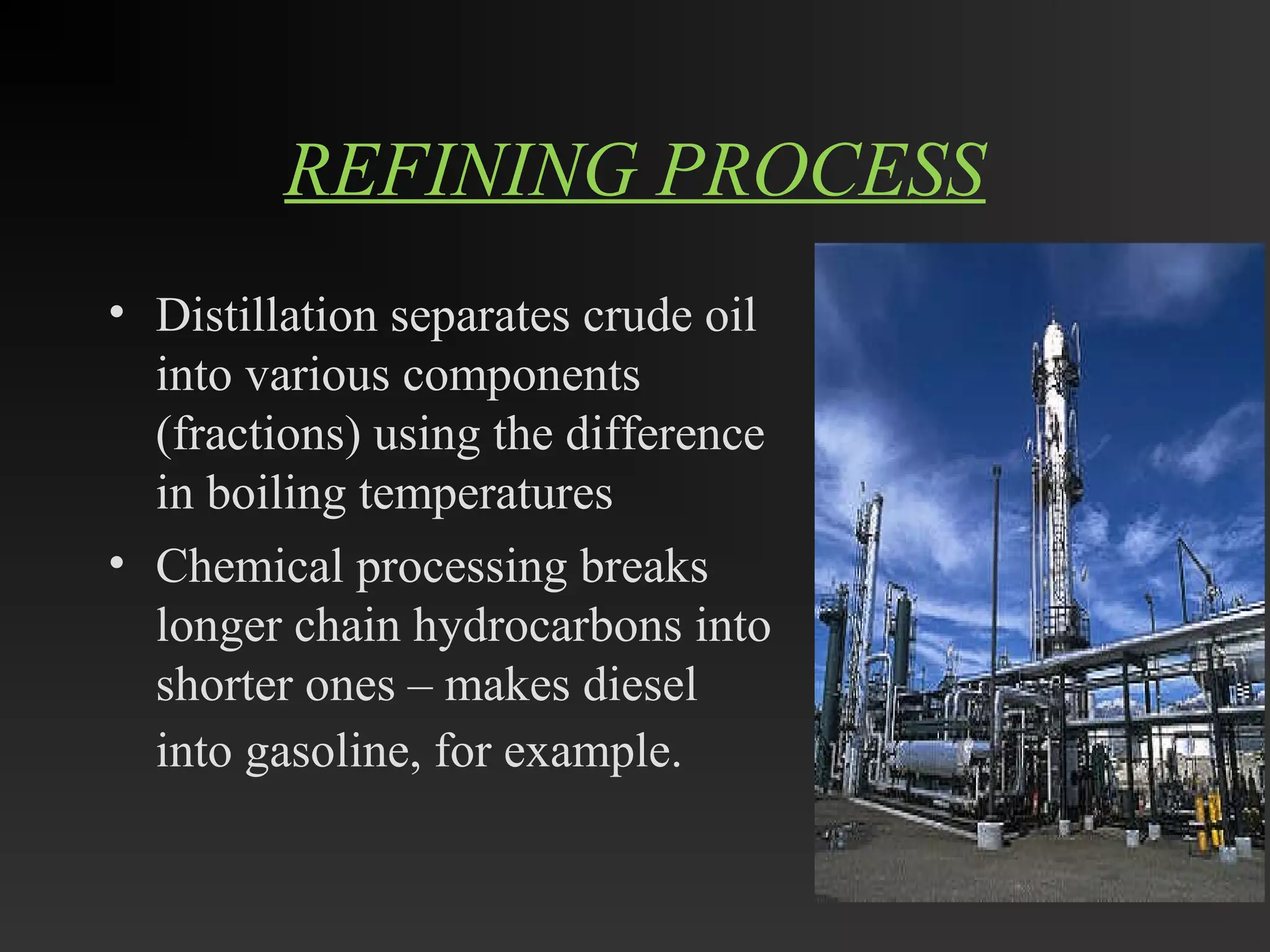
REFINING PROCESS 
• Distillation separates crude oil 
into various components 
(fractions) using the difference 
in boiling temperatures 
• Chemical processing breaks 
longer chain hydrocarbons into 
shorter ones – makes diesel 
into gasoline, for example.
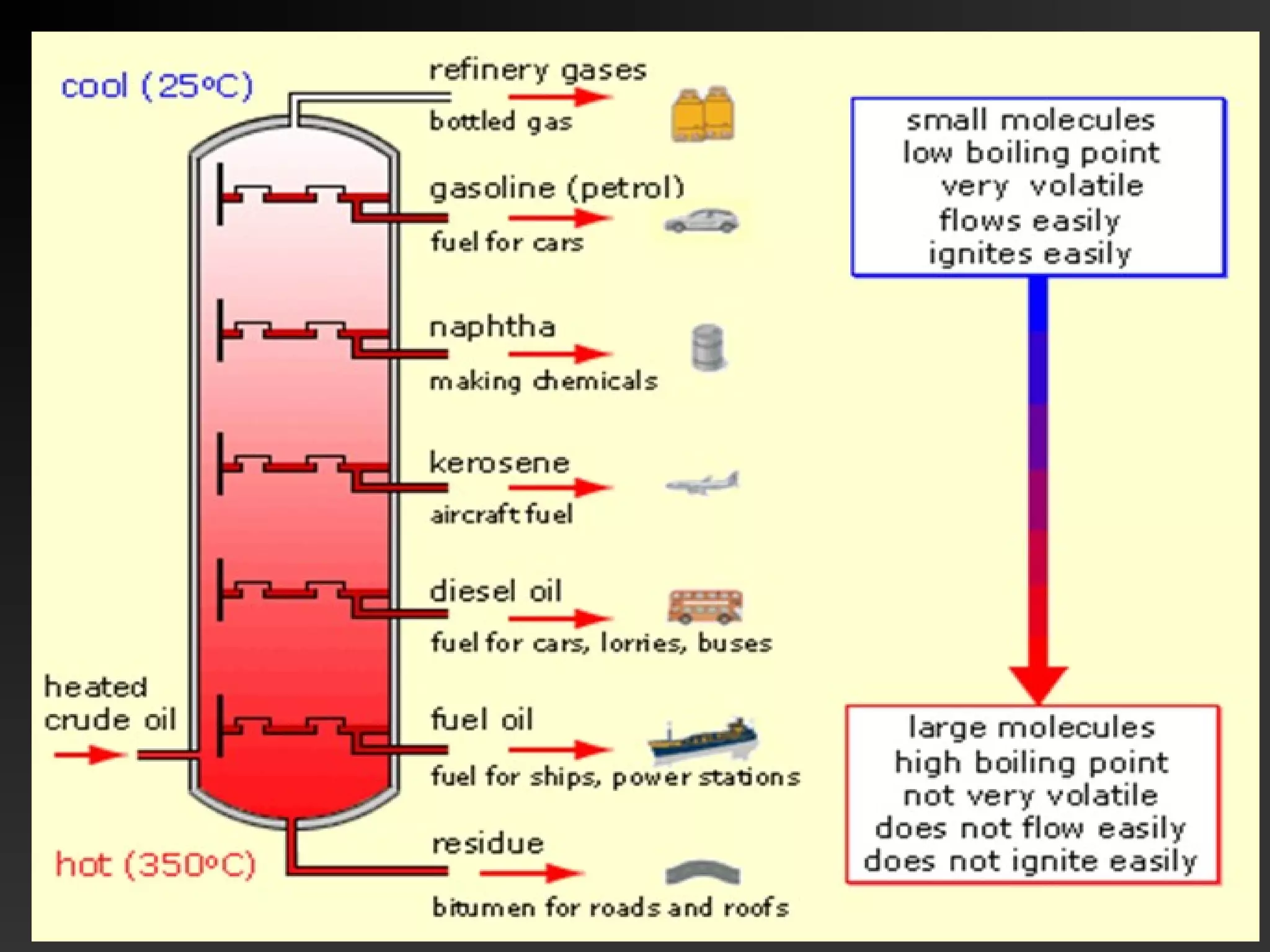
DISTILLATION OF CRUDE OIL 
• Separate the components of crude oil by the differences in 
their boiling points. This is done by simply heating up 
crude oil, allowing it to vaporize, and then letting the 
vapor to condense at different levels of the distillation 
tower. This process is called fractional distillation and 
the products of the fractional distillation of crude oil is 
called fractions. 
• A fraction from crude oil can be categorized into two 
categories: 
– Refined Product: A crude oil fraction which contains a lot of 
individual hydrocarbons (e.g. gasoline, asphalt, waxes, and 
lubricants) 
– Petrochemical Product: A crude oil fraction which contain one 
or two specific hydrocarbons of high purity (e.g. benzene, 
toluene, and ethylene).
PRODUCTS FROM REFINING 
• Petroleum Gas – used for heating, cooking, 
making plastics 
• Naphtha – an intermediate product used to 
make gasoline 
• Gasoline – motor fuel 
• Kerosene – fuel for jet engines and tractors 
and a starting material for making other 
products
PRODUCTS FROM REFINING 
• Gas Oil or Diesel – used for diesel fuel and heating oil 
and a starting material for making other products 
• Lubricating Oil – used for motor oil, grease, other 
lubricants 
• Heavy Gas or Fuel Oil – used for industrial fuel and a 
starting material for making other products 
• Residuals – coke, asphalt, tar, waxes, and a starting 
material for making other products
Chemical process 
• There are two types- 
(1) The thermal conversion processes 
(2) Catalytic conversion process 
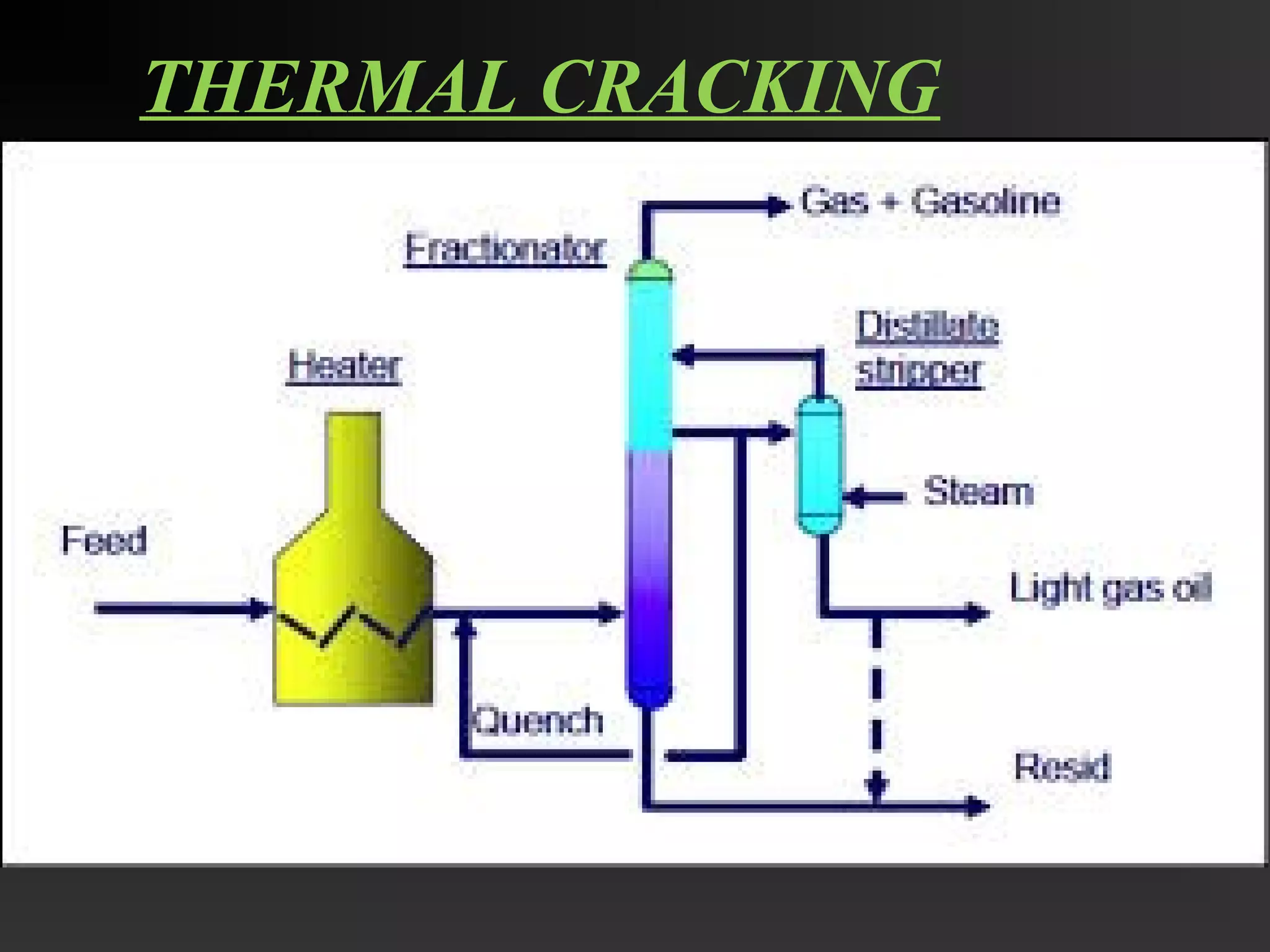
• (1)The thermal conversion processes 
-The larger hydrocarbons are decomposed at 
elevated temp. to form material of lower 
molecular weight. 
• Thermal cracking– heat large hydrocarbons 
at high temperature until they break apart.
THERMAL CRACKING
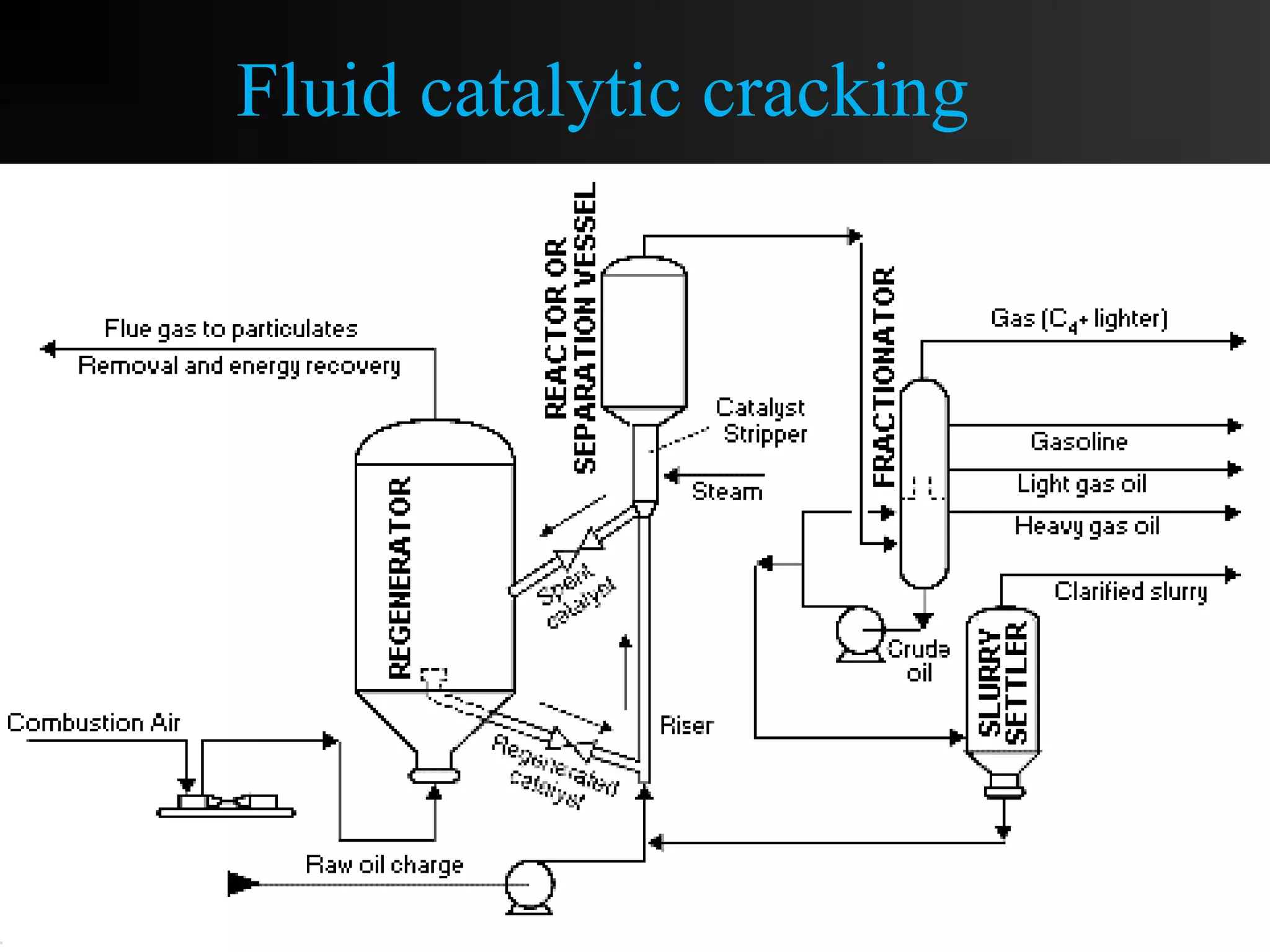
(2) Catalytic conversion processes 
It is a catalytic conversion processes for 
converting heavy gas oil, into more valuable 
products such as LPG, gasoline, cycle oil etc. 
- Fluid catalytic cracking 
-Hydro cracking
Fluid catalytic cracking
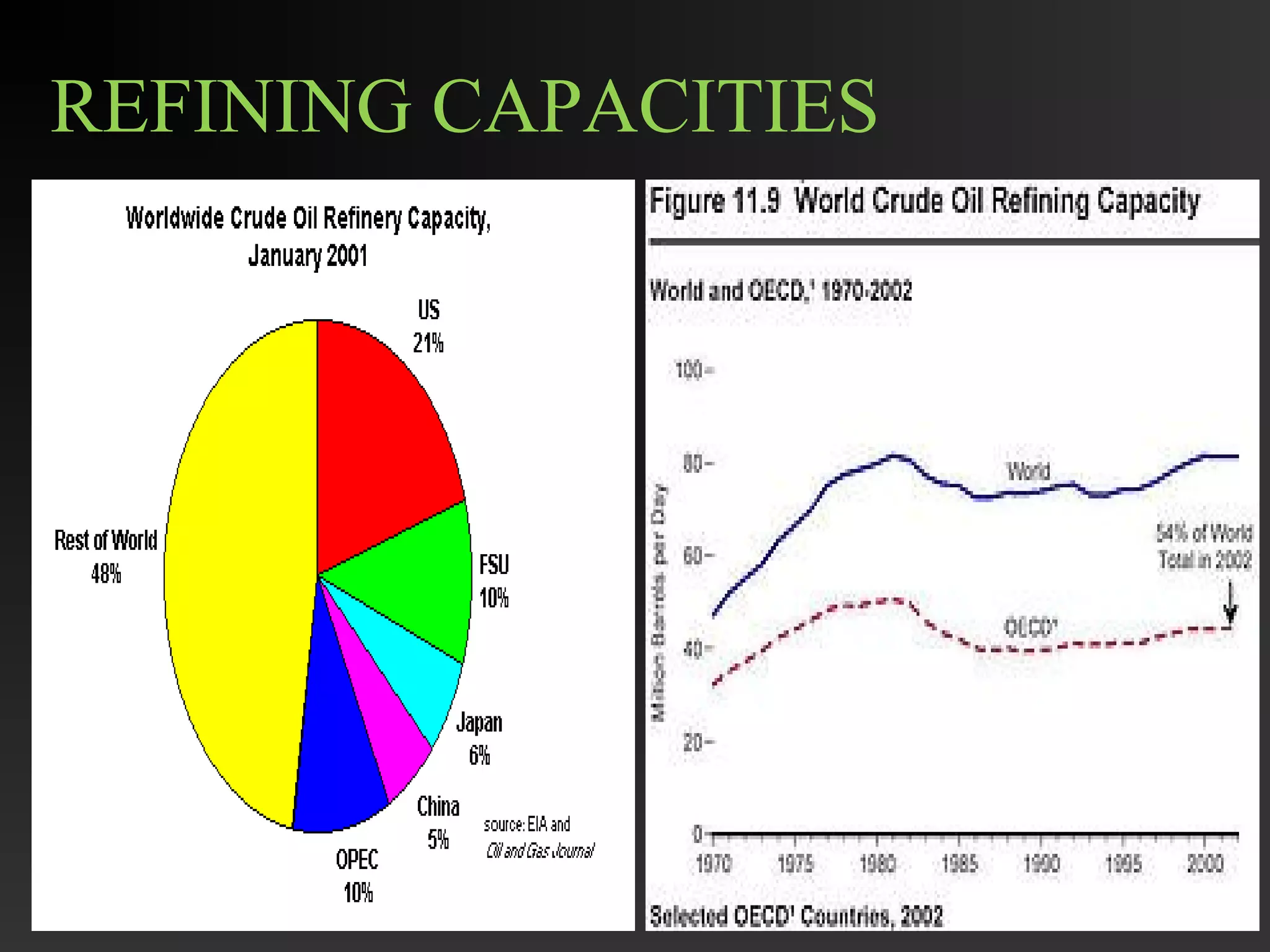
REFINING CAPACITIES
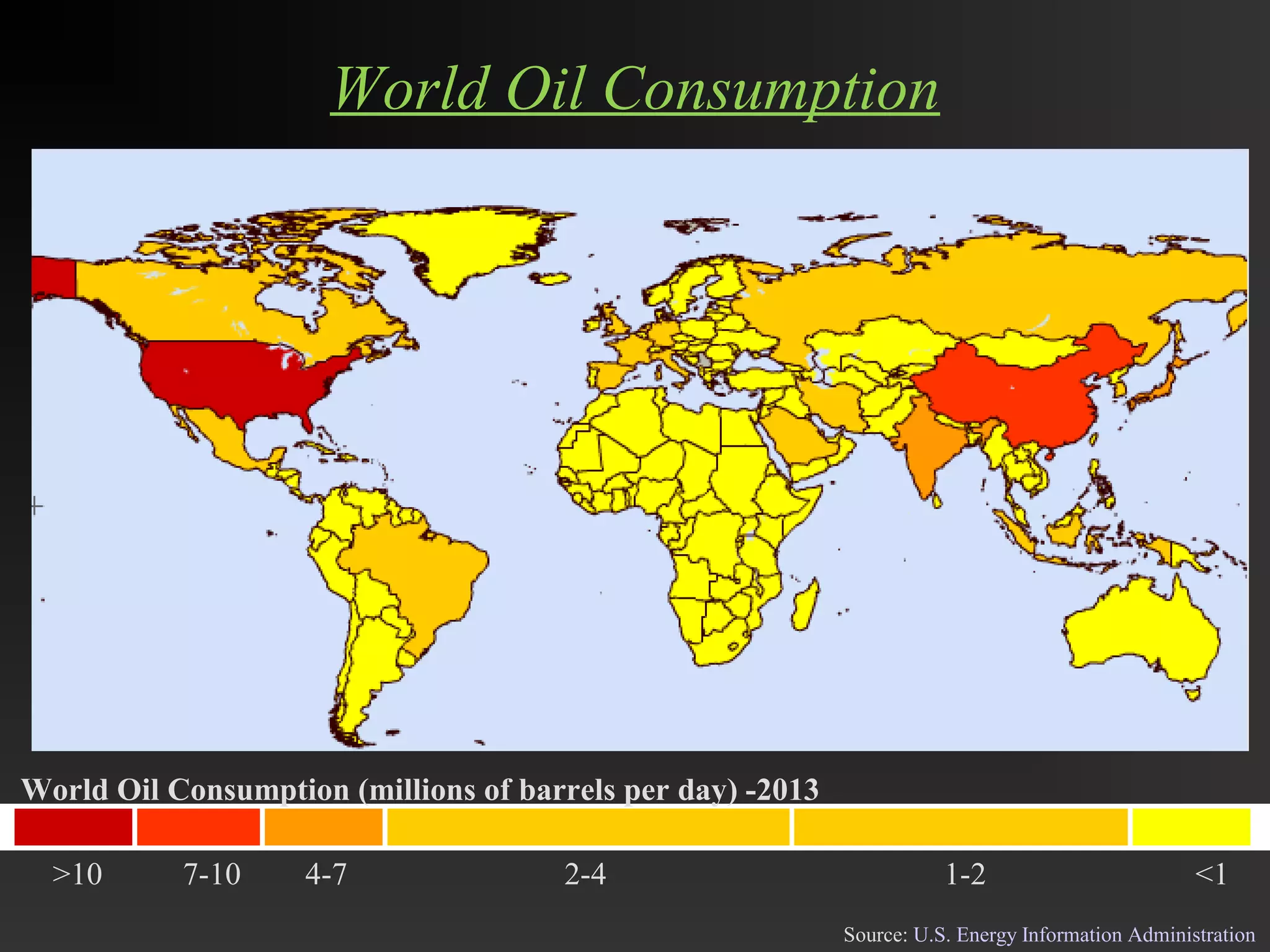
World Oil Consumption 
World Oil Consumption (millions of barrels per day) -2013 
>10 7-10 4-7 2-4 1-2 <1 
Source: U.S. Energy Information Administration
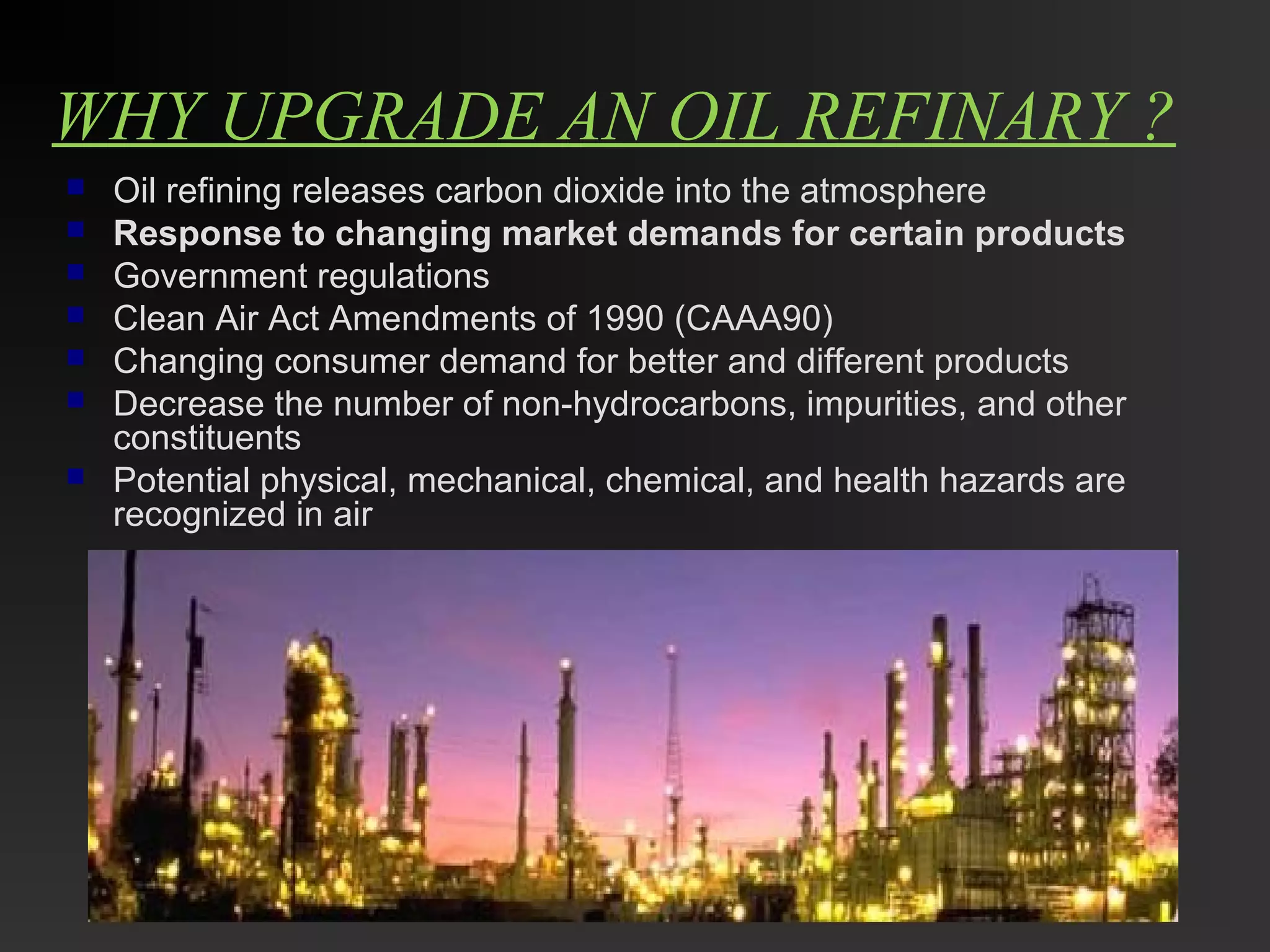
WHY UPGRADE AN OIL REFINARY ? 
 Oil refining releases carbon dioxide into the atmosphere 
 Response to changing market demands for certain products 
 Government regulations 
 Clean Air Act Amendments of 1990 (CAAA90) 
 Changing consumer demand for better and different products 
 Decrease the number of non-hydrocarbons, impurities, and other 
constituents 
 Potential physical, mechanical, chemical, and health hazards are 
recognized in air
refining of crude oil by Arun kumar rana

refining of crude oil by Arun kumar rana

  • 1.
    REFINING OF CRUDEOIL SUBMITTED BY-ARUN KUMAR CHEMICAL ENGINEERING ROLL NO -1304351901
  • 2.
    CONTENT • Characteristicof crude oil • Refining process of crude oil • Technologies for achieving “clean fuels” • How fuel is distributed?
  • 3.
    WHAT IS CRUDEOIL?  Crude oil, also known as black gold, is a thick, dark brown or greenish flammable liquid, which is found in the upper strata of some regions of the Earth's crust.  It is a complex mixture of various hydrocarbons, (mainly, alkanes), along with traces of other chemicals and compounds.  Crude oil can be categorized as either "sweet crude" ( sulphur content less than 0.5%) or "sour crude," ( sulphur content is at least 2.5%)
  • 4.
    HYDROCARBONS IN CRUDEOIL • Alkane (Paraffin’s) – methane, ethane, propane, butane, etc. • Aromatics – benzene, naphthalene • Naphthenic or Cycloalkanes – cyclohexane, methyl cyclopentane • Alkenes – ethylene, butene, isobutene • Dynes and Alkynes – acetylene, butadiene's
  • 5.
    COMPOSITION OFCRUDE OIL – Carbon – 84% – Hydrogen – 14% – Sulfur – 1 to 3% – Nitrogen - <1% – Oxygen - <1% – Metals - <1% (nickel, iron,vanadium, etc.) – Salts - <1%
  • 6.
    What is OilRefining ? - In oil refining process crude oil is converted in to more useful petroleum products, such as gasoline(petrol), diesel oil, asphalt base, fuel oil, kerosene, and liquefied petroleum gas by fractional distillation.
  • 7.
    REFINING PROCESS •Distillation separates crude oil into various components (fractions) using the difference in boiling temperatures • Chemical processing breaks longer chain hydrocarbons into shorter ones – makes diesel into gasoline, for example.
  • 8.
    DISTILLATION OF CRUDEOIL • Separate the components of crude oil by the differences in their boiling points. This is done by simply heating up crude oil, allowing it to vaporize, and then letting the vapor to condense at different levels of the distillation tower. This process is called fractional distillation and the products of the fractional distillation of crude oil is called fractions. • A fraction from crude oil can be categorized into two categories: – Refined Product: A crude oil fraction which contains a lot of individual hydrocarbons (e.g. gasoline, asphalt, waxes, and lubricants) – Petrochemical Product: A crude oil fraction which contain one or two specific hydrocarbons of high purity (e.g. benzene, toluene, and ethylene).
  • 10.
    PRODUCTS FROM REFINING • Petroleum Gas – used for heating, cooking, making plastics • Naphtha – an intermediate product used to make gasoline • Gasoline – motor fuel • Kerosene – fuel for jet engines and tractors and a starting material for making other products
  • 11.
    PRODUCTS FROM REFINING • Gas Oil or Diesel – used for diesel fuel and heating oil and a starting material for making other products • Lubricating Oil – used for motor oil, grease, other lubricants • Heavy Gas or Fuel Oil – used for industrial fuel and a starting material for making other products • Residuals – coke, asphalt, tar, waxes, and a starting material for making other products
  • 12.
    Chemical process •There are two types- (1) The thermal conversion processes (2) Catalytic conversion process • (1)The thermal conversion processes -The larger hydrocarbons are decomposed at elevated temp. to form material of lower molecular weight. • Thermal cracking– heat large hydrocarbons at high temperature until they break apart.
  • 13.
  • 14.
    (2) Catalytic conversionprocesses It is a catalytic conversion processes for converting heavy gas oil, into more valuable products such as LPG, gasoline, cycle oil etc. - Fluid catalytic cracking -Hydro cracking
  • 15.
  • 16.
  • 17.
    World Oil Consumption World Oil Consumption (millions of barrels per day) -2013 >10 7-10 4-7 2-4 1-2 <1 Source: U.S. Energy Information Administration
  • 18.
    WHY UPGRADE ANOIL REFINARY ?  Oil refining releases carbon dioxide into the atmosphere  Response to changing market demands for certain products  Government regulations  Clean Air Act Amendments of 1990 (CAAA90)  Changing consumer demand for better and different products  Decrease the number of non-hydrocarbons, impurities, and other constituents  Potential physical, mechanical, chemical, and health hazards are recognized in air