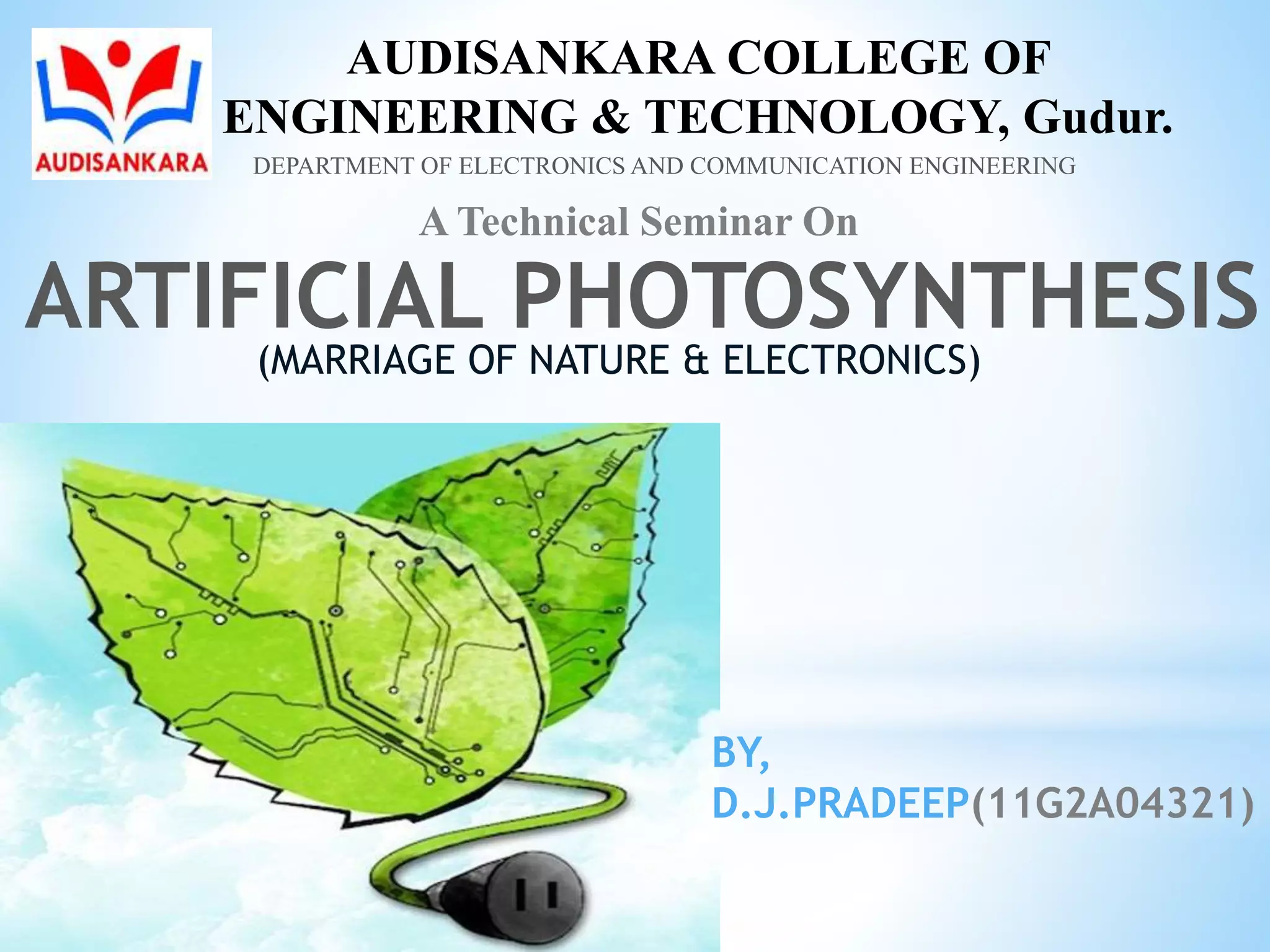
ARTIFICIAL PHOTOSYNTHESIS
(MARRIAGE OF NATURE & ELECTRONICS)
BY,
D.J.PRADEEP(11G2A04321)
AUDISANKARA COLLEGE OF
ENGINEERING & TECHNOLOGY, Gudur.
DEPARTMENT OF ELECTRONICS AND COMMUNICATION ENGINEERING
A Technical Seminar On
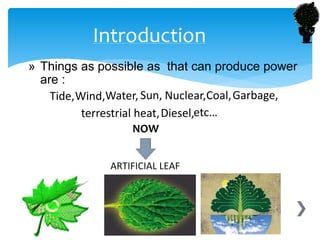
» Things as possible as that can produce power
are :
Tide,Wind,Water, Sun, Nuclear,Coal,Garbage,
terrestrial heat,Diesel,etc…
ARTIFICIAL LEAF
Introduction
NOW
As crude oil prices rise again, research is once again
focusing on converting solar energy into fuels.
Pollution is increasing day-by-day by increasing of
vehicles on road.
To reduce use of fossil fuel, to save nature we are using
artificial photosynthesis which uses sun and some low
cost materials as fuels and produce energy in form of
hydrogen & oxygen.
Why we use ARTIFICIAL LEAF
“ Artificial leaf “ is Like living leaves, this device
can turn the energy of sunlight directly into a
chemical fuel that can be stored and used
later as an energy source.
Artificial leaf
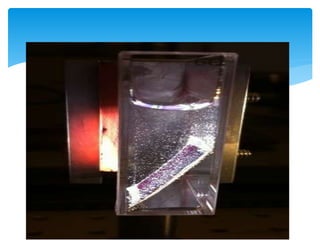
 When artificial leaf placed in a container of water
and exposed to sunlight it quickly begins to
generate streams of bubbles: oxygen bubbles from
one side and hydrogen bubbles from the other.
 The two streams of bubbles can be collected and stored
and used later to deliver power.
 The device is made entirely of earth
-
abundant ,
inexpensive materials mostly silicon, cobalt and nickel.
Working
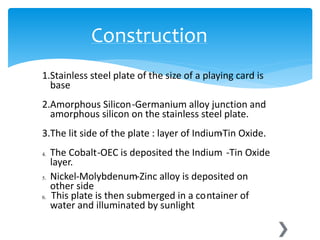
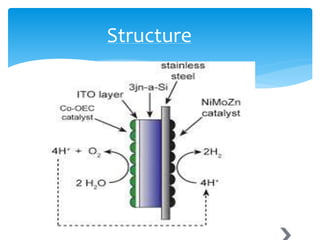
1.Stainless steel plate of the size of a playing card is
base
2.Amorphous Silicon-Germanium alloy junction and
amorphous silicon on the stainless steel plate.
3.The lit side of the plate : layer of Indium-Tin Oxide.
4. The Cobalt-OEC is deposited the Indium -Tin Oxide
layer.
5. Nickel-Molybdenum-Zinc alloy is deposited on
other side
6. This plate is then submerged in a container of
water and illuminated by sunlight
Construction
Structure
Fabricating or Manufacturing
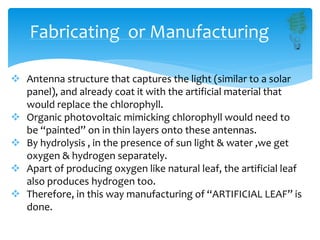
 Antenna structure that captures the light (similar to a solar
panel), and already coat it with the artificial material that
would replace the chlorophyll.
 Organic photovoltaic mimicking chlorophyll would need to
be “painted” on in thin layers onto these antennas.
 By hydrolysis , in the presence of sun light & water ,we get
oxygen & hydrogen separately.
 Apart of producing oxygen like natural leaf, the artificial leaf
also produces hydrogen too.
 Therefore, in this way manufacturing of “ARTIFICIAL LEAF” is
done.
Fabricating Materials
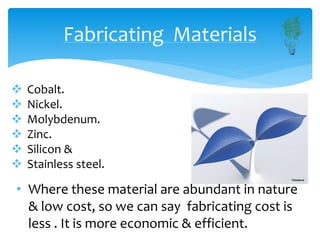
 Cobalt.
 Nickel.
 Molybdenum.
 Zinc.
 Silicon &
 Stainless steel.
• Where these material are abundant in nature
& low cost, so we can say fabricating cost is
less . It is more economic & efficient.
 Generation of power.
 Electronic uses.
 Fuel for hybrid vehicles.
 Medical fields.
 Industrial uses.
 Nano technology.
 Energy conservation purposes.
Applications
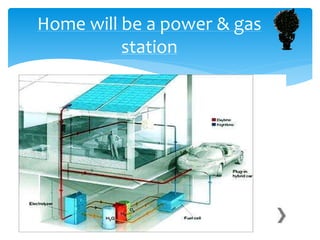
Home will be a power & gas
station
» H2 can then be stored and either burned or
run through a fuel cell to generate electricity.
» It can store energy in the chemical form that is the
great advantage of this device over the solar panal
which we use now a day.
» It is inexpensive as the materials are abundant.
Advantages
» safe storing of hydrogen gas.
» Freezing in sub zero temperatures.
» The efficiency needs to be improved.
» For high performance, the cost due to
huge silicon solar cell increases.
Disadvantages
Research is undergoing
 To reduce the cost of this leaf NOCERA LAB is working
on reducing the amount of silicon used in this artificial
leaf and is also looking to scale-up production.
 NOCERA lab is working with Roy Gordon’s group to use
chemical vapour deposition to coat flexible silicon on leaf,
or even depositing the semiconductor as well
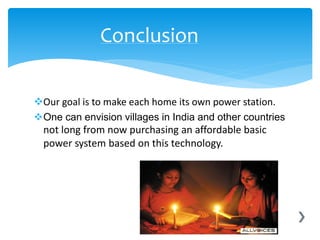
Our goal is to make each home its own power station.
One can envision villages in India and other countries
not long from now purchasing an affordable basic
power system based on this technology.
Conclusion
References
 www.mapageweb.com
 www.eere.energy.gov/solar/photovoltaics.html
 www.abc.net.au/rn/science/buzz/stories.html
 www.futurehi.net/archieves/000159.html
 www.geocites.com/flipy_nicki.html
 www.ioffe.rssi.com
 www.personal.rdg.ac.uk
 www.vafps.org/e-commercefuzzy.html
Artificial photosynthsis (3)

Artificial photosynthsis (3)

  • 1.
    ARTIFICIAL PHOTOSYNTHESIS (MARRIAGE OFNATURE & ELECTRONICS) BY, D.J.PRADEEP(11G2A04321) AUDISANKARA COLLEGE OF ENGINEERING & TECHNOLOGY, Gudur. DEPARTMENT OF ELECTRONICS AND COMMUNICATION ENGINEERING A Technical Seminar On
  • 2.
    » Things aspossible as that can produce power are : Tide,Wind,Water, Sun, Nuclear,Coal,Garbage, terrestrial heat,Diesel,etc… ARTIFICIAL LEAF Introduction NOW
  • 3.
    As crude oilprices rise again, research is once again focusing on converting solar energy into fuels. Pollution is increasing day-by-day by increasing of vehicles on road. To reduce use of fossil fuel, to save nature we are using artificial photosynthesis which uses sun and some low cost materials as fuels and produce energy in form of hydrogen & oxygen. Why we use ARTIFICIAL LEAF
  • 4.
    “ Artificial leaf“ is Like living leaves, this device can turn the energy of sunlight directly into a chemical fuel that can be stored and used later as an energy source. Artificial leaf
  • 5.
     When artificialleaf placed in a container of water and exposed to sunlight it quickly begins to generate streams of bubbles: oxygen bubbles from one side and hydrogen bubbles from the other.  The two streams of bubbles can be collected and stored and used later to deliver power.  The device is made entirely of earth - abundant , inexpensive materials mostly silicon, cobalt and nickel. Working
  • 7.
    1.Stainless steel plateof the size of a playing card is base 2.Amorphous Silicon-Germanium alloy junction and amorphous silicon on the stainless steel plate. 3.The lit side of the plate : layer of Indium-Tin Oxide. 4. The Cobalt-OEC is deposited the Indium -Tin Oxide layer. 5. Nickel-Molybdenum-Zinc alloy is deposited on other side 6. This plate is then submerged in a container of water and illuminated by sunlight Construction
  • 8.
  • 9.
    Fabricating or Manufacturing Antenna structure that captures the light (similar to a solar panel), and already coat it with the artificial material that would replace the chlorophyll.  Organic photovoltaic mimicking chlorophyll would need to be “painted” on in thin layers onto these antennas.  By hydrolysis , in the presence of sun light & water ,we get oxygen & hydrogen separately.  Apart of producing oxygen like natural leaf, the artificial leaf also produces hydrogen too.  Therefore, in this way manufacturing of “ARTIFICIAL LEAF” is done.
  • 10.
    Fabricating Materials  Cobalt. Nickel.  Molybdenum.  Zinc.  Silicon &  Stainless steel. • Where these material are abundant in nature & low cost, so we can say fabricating cost is less . It is more economic & efficient.
  • 11.
     Generation ofpower.  Electronic uses.  Fuel for hybrid vehicles.  Medical fields.  Industrial uses.  Nano technology.  Energy conservation purposes. Applications
  • 12.
    Home will bea power & gas station
  • 13.
    » H2 canthen be stored and either burned or run through a fuel cell to generate electricity. » It can store energy in the chemical form that is the great advantage of this device over the solar panal which we use now a day. » It is inexpensive as the materials are abundant. Advantages
  • 14.
    » safe storingof hydrogen gas. » Freezing in sub zero temperatures. » The efficiency needs to be improved. » For high performance, the cost due to huge silicon solar cell increases. Disadvantages
  • 15.
    Research is undergoing To reduce the cost of this leaf NOCERA LAB is working on reducing the amount of silicon used in this artificial leaf and is also looking to scale-up production.  NOCERA lab is working with Roy Gordon’s group to use chemical vapour deposition to coat flexible silicon on leaf, or even depositing the semiconductor as well
  • 16.
    Our goal isto make each home its own power station. One can envision villages in India and other countries not long from now purchasing an affordable basic power system based on this technology. Conclusion
  • 17.
    References  www.mapageweb.com  www.eere.energy.gov/solar/photovoltaics.html www.abc.net.au/rn/science/buzz/stories.html  www.futurehi.net/archieves/000159.html  www.geocites.com/flipy_nicki.html  www.ioffe.rssi.com  www.personal.rdg.ac.uk  www.vafps.org/e-commercefuzzy.html