Artificial
Intelligence:
Ethical Issues
in Focus
ashokveda.com
•
•
•
•
•
•
•
•
Introduction to AI Ethics
Privacy Concerns
Bias in AI
Transparency and Accountability
Impact on Employment
Ethical AI Guidelines
Case Study: Ethical AI in Practice
Conclusion
Agenda
ashokveda.com
Introduction to AI Ethics
What is AI Ethics?
●
●
●
AI ethics is the field that examines the moral implications
and responsibilities associated with the development and
application of artificial intelligence technologies.
It addresses issues like privacy, bias, and accountability,
ensuring that AI systems are designed and used in ways that
are fair and just.
AI ethics is crucial as it guides developers and organizations
in creating technologies that align with societal values and
norms.
ashokveda.com
AI systems often gather vast
amounts of personal data,
raising concerns about
consent and the extent of data
usage. Users may not be fully
aware of what data is
collected and how it is used.
The use of AI in surveillance
technologies can lead to mass
monitoring, infringing on
individual privacy rights and
creating a society of constant
observation.
AI systems can be targets for
cyberattacks, risking breaches
that expose sensitive personal
information, highlighting the
need for robust security
measures.
Data Collection Issues Surveillance Risks Data Security
Vulnerabilities
Privacy Concerns
ashokveda.com
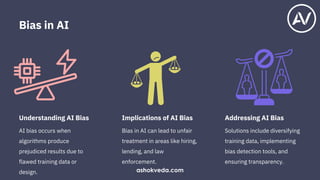
Bias in AI
AI bias occurs when
algorithms produce
prejudiced results due to
flawed training data or
design.
Bias in AI can lead to unfair
treatment in areas like hiring,
lending, and law
enforcement.
Solutions include diversifying
training data, implementing
bias detection tools, and
ensuring transparency.
Understanding AI Bias Implications of AI Bias Addressing AI Bias
ashokveda.com
Holding developers accountable for AI outcomes establishes legal and
ethical standards. Regular audits and third-party assessments can help
maintain compliance.
Ensuring AI systems are understandable allows users to trust decisions
made by algorithms. Clear documentation and user-friendly interfaces
enhance comprehension.
Engaging stakeholders in the development process fosters transparency.
Feedback from diverse groups can lead to better, more responsible AI
solutions.
Transparency and Accountability
ashokveda.com
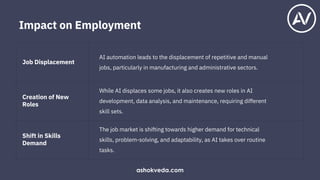
Impact on Employment
The job market is shifting towards higher demand for technical
skills, problem-solving, and adaptability, as AI takes over routine
tasks.
While AI displaces some jobs, it also creates new roles in AI
development, data analysis, and maintenance, requiring different
skill sets.
AI automation leads to the displacement of repetitive and manual
jobs, particularly in manufacturing and administrative sectors.
Shift in Skills
Demand
Creation of New
Roles
Job Displacement
ashokveda.com
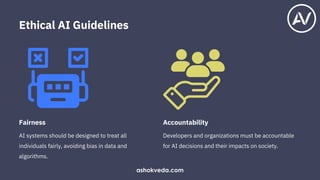
Ethical AI Guidelines
AI systems should be designed to treat all
individuals fairly, avoiding bias in data and
algorithms.
Developers and organizations must be accountable
for AI decisions and their impacts on society.
Fairness Accountability
ashokveda.com
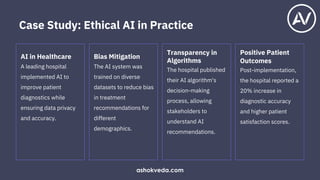
AI in Healthcare
A leading hospital
implemented AI to
improve patient
diagnostics while
ensuring data privacy
and accuracy.
Bias Mitigation
The AI system was
trained on diverse
datasets to reduce bias
in treatment
recommendations for
different
demographics.
Transparency in
Algorithms
The hospital published
their AI algorithm's
decision-making
process, allowing
stakeholders to
understand AI
recommendations.
Positive Patient
Outcomes
Post-implementation,
the hospital reported a
20% increase in
diagnostic accuracy
and higher patient
satisfaction scores.
Case Study: Ethical AI in Practice
ashokveda.com
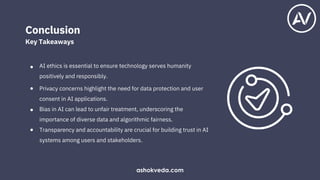
AI ethics is essential to ensure technology serves humanity
positively and responsibly.
Privacy concerns highlight the need for data protection and user
consent in AI applications.
Bias in AI can lead to unfair treatment, underscoring the
importance of diverse data and algorithmic fairness.
Transparency and accountability are crucial for building trust in AI
systems among users and stakeholders.
Conclusion
Key Takeaways
●
●
●
●
ashokveda.com

Artificial Intelligence Ethical Issues in Focus | ashokveda.pdf

  • 1.
  • 2.
    • • • • • • • • Introduction to AIEthics Privacy Concerns Bias in AI Transparency and Accountability Impact on Employment Ethical AI Guidelines Case Study: Ethical AI in Practice Conclusion Agenda ashokveda.com
  • 3.
    Introduction to AIEthics What is AI Ethics? ● ● ● AI ethics is the field that examines the moral implications and responsibilities associated with the development and application of artificial intelligence technologies. It addresses issues like privacy, bias, and accountability, ensuring that AI systems are designed and used in ways that are fair and just. AI ethics is crucial as it guides developers and organizations in creating technologies that align with societal values and norms. ashokveda.com
  • 4.
    AI systems oftengather vast amounts of personal data, raising concerns about consent and the extent of data usage. Users may not be fully aware of what data is collected and how it is used. The use of AI in surveillance technologies can lead to mass monitoring, infringing on individual privacy rights and creating a society of constant observation. AI systems can be targets for cyberattacks, risking breaches that expose sensitive personal information, highlighting the need for robust security measures. Data Collection Issues Surveillance Risks Data Security Vulnerabilities Privacy Concerns ashokveda.com
  • 5.
    Bias in AI AIbias occurs when algorithms produce prejudiced results due to flawed training data or design. Bias in AI can lead to unfair treatment in areas like hiring, lending, and law enforcement. Solutions include diversifying training data, implementing bias detection tools, and ensuring transparency. Understanding AI Bias Implications of AI Bias Addressing AI Bias ashokveda.com
  • 6.
    Holding developers accountablefor AI outcomes establishes legal and ethical standards. Regular audits and third-party assessments can help maintain compliance. Ensuring AI systems are understandable allows users to trust decisions made by algorithms. Clear documentation and user-friendly interfaces enhance comprehension. Engaging stakeholders in the development process fosters transparency. Feedback from diverse groups can lead to better, more responsible AI solutions. Transparency and Accountability ashokveda.com
  • 7.
    Impact on Employment Thejob market is shifting towards higher demand for technical skills, problem-solving, and adaptability, as AI takes over routine tasks. While AI displaces some jobs, it also creates new roles in AI development, data analysis, and maintenance, requiring different skill sets. AI automation leads to the displacement of repetitive and manual jobs, particularly in manufacturing and administrative sectors. Shift in Skills Demand Creation of New Roles Job Displacement ashokveda.com
  • 8.
    Ethical AI Guidelines AIsystems should be designed to treat all individuals fairly, avoiding bias in data and algorithms. Developers and organizations must be accountable for AI decisions and their impacts on society. Fairness Accountability ashokveda.com
  • 9.
    AI in Healthcare Aleading hospital implemented AI to improve patient diagnostics while ensuring data privacy and accuracy. Bias Mitigation The AI system was trained on diverse datasets to reduce bias in treatment recommendations for different demographics. Transparency in Algorithms The hospital published their AI algorithm's decision-making process, allowing stakeholders to understand AI recommendations. Positive Patient Outcomes Post-implementation, the hospital reported a 20% increase in diagnostic accuracy and higher patient satisfaction scores. Case Study: Ethical AI in Practice ashokveda.com
  • 10.
    AI ethics isessential to ensure technology serves humanity positively and responsibly. Privacy concerns highlight the need for data protection and user consent in AI applications. Bias in AI can lead to unfair treatment, underscoring the importance of diverse data and algorithmic fairness. Transparency and accountability are crucial for building trust in AI systems among users and stakeholders. Conclusion Key Takeaways ● ● ● ● ashokveda.com