Swipe
Artificial Intelligence
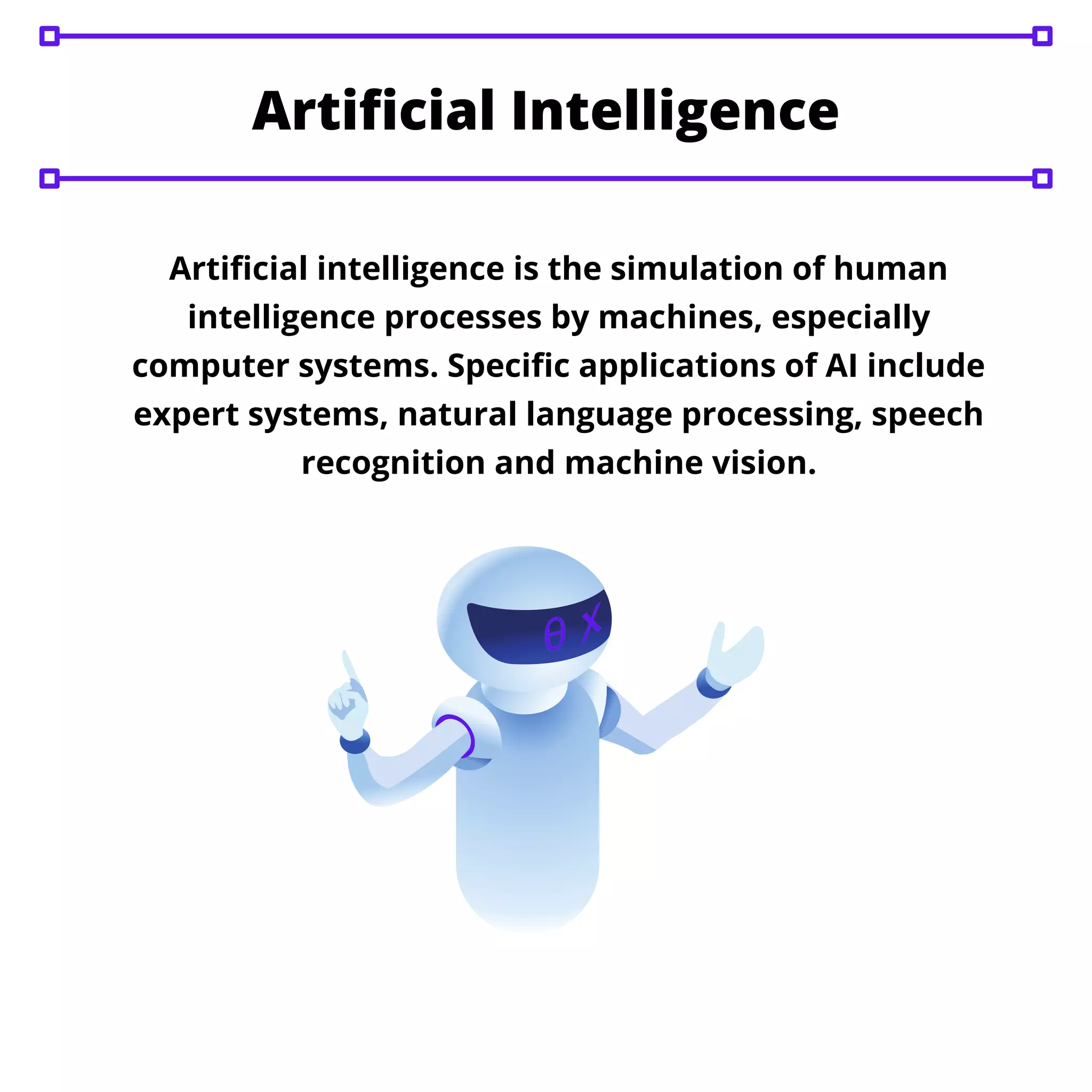
Artificial intelligence is the simulation of human
intelligence processes by machines, especially
computer systems. Specific applications of AI include
expert systems, natural language processing, speech
recognition and machine vision.
Artificial Intelligence
As the hype around AI has accelerated, vendors
have been scrambling to promote how their
products and services use AI.
Often what they refer to as AI is simply one
component of AI, such as machine learning. AI
requires a foundation of specialized hardware and
software for writing and training machine learning
algorithms.
No one programming language is synonymous with
AI, but a few, including Python, R and Java, are
popular.
How does AI work?
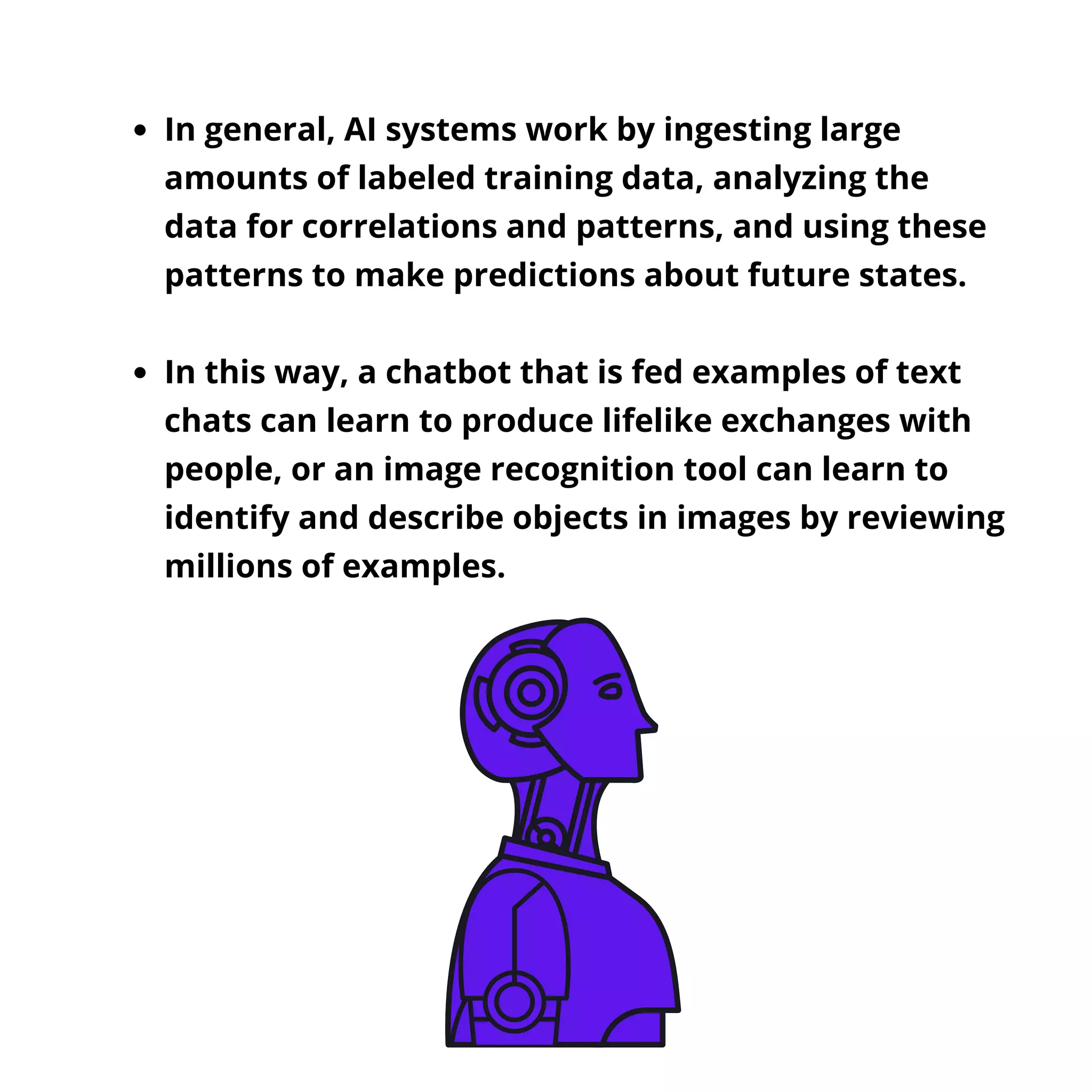
In general, AI systems work by ingesting large
amounts of labeled training data, analyzing the
data for correlations and patterns, and using these
patterns to make predictions about future states.
In this way, a chatbot that is fed examples of text
chats can learn to produce lifelike exchanges with
people, or an image recognition tool can learn to
identify and describe objects in images by reviewing
millions of examples.
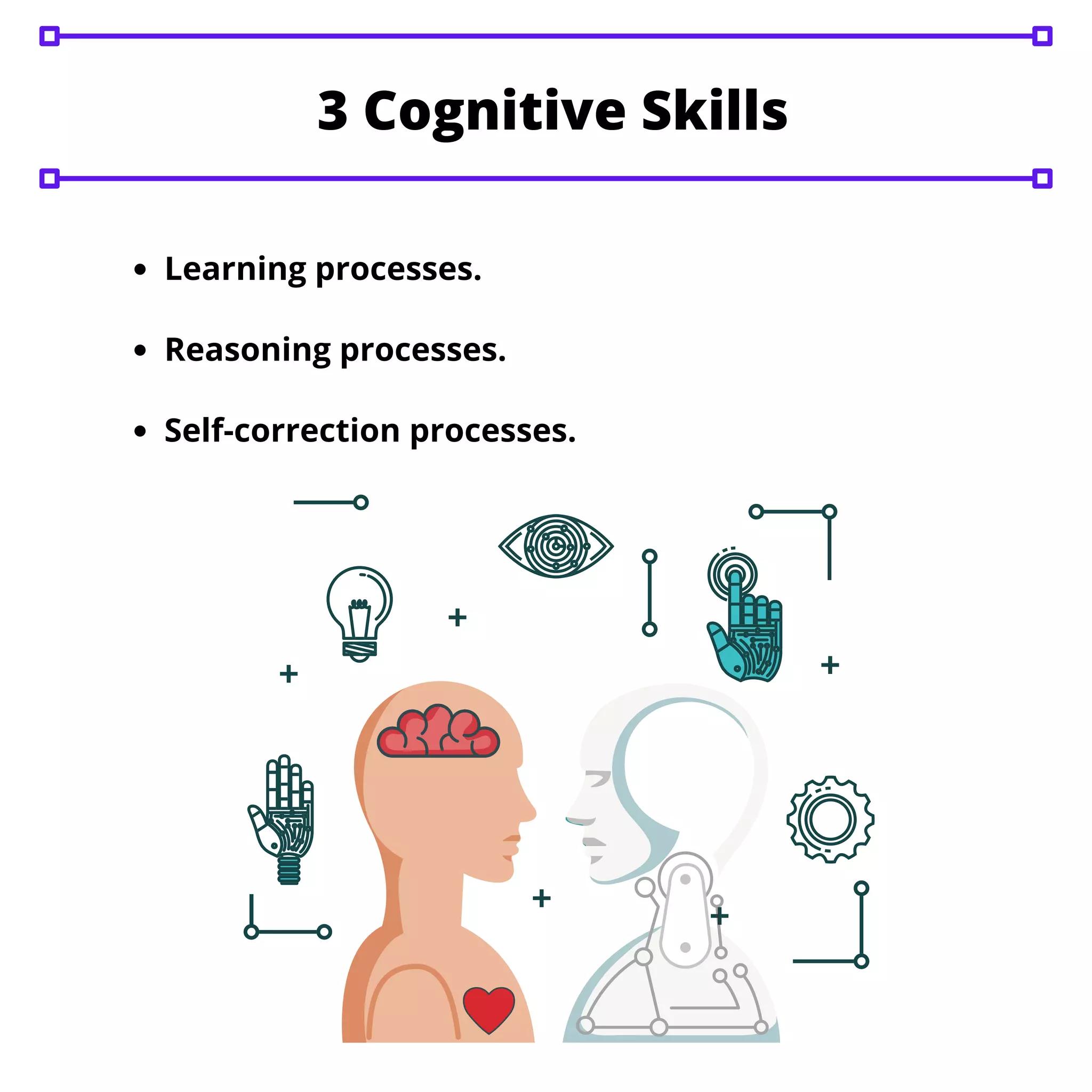
Learning processes.
Reasoning processes.
Self-correction processes.
3 Cognitive Skills
AI is important because it can give enterprises
insights into their operations that they may not
have been aware of previously and because, in
some cases, AI can perform tasks better than
humans.
Particularly when it comes to repetitive, detail-
oriented tasks like analyzing large numbers of
legal documents to ensure relevant fields are
filled in properly, AI tools often complete jobs
quickly and with relatively few errors.
Why is artificial intelligence important?
Advantages
Good at detail-oriented jobs;
Reduced time for data-heavy tasks;
Delivers consistent results; and
AI-powered virtual agents are always available.
Disadvantages
Expensive;
Requires deep technical expertise;
Limited supply of qualified workers to build AI
tools;
Only knows what it's been shown; and
Lack of ability to generalize from one task to
another.
Advantages and Disadvantages
Weak AI, also known as narrow AI, is an AI system
that is designed and trained to complete a specific
task. Industrial robots and virtual personal
assistants, such as Apple's Siri, use weak AI.
Strong AI, also known as artificial general
intelligence (AGI), describes programming that can
replicate the cognitive abilities of the human
brain. When presented with an unfamiliar task, a
strong AI system can use fuzzy logic to apply
knowledge from one domain to another and find a
solution autonomously. In theory, a strong AI
program should be able to pass both a Turing Test
and the Chinese room test.
Strong AI vs. weak AI
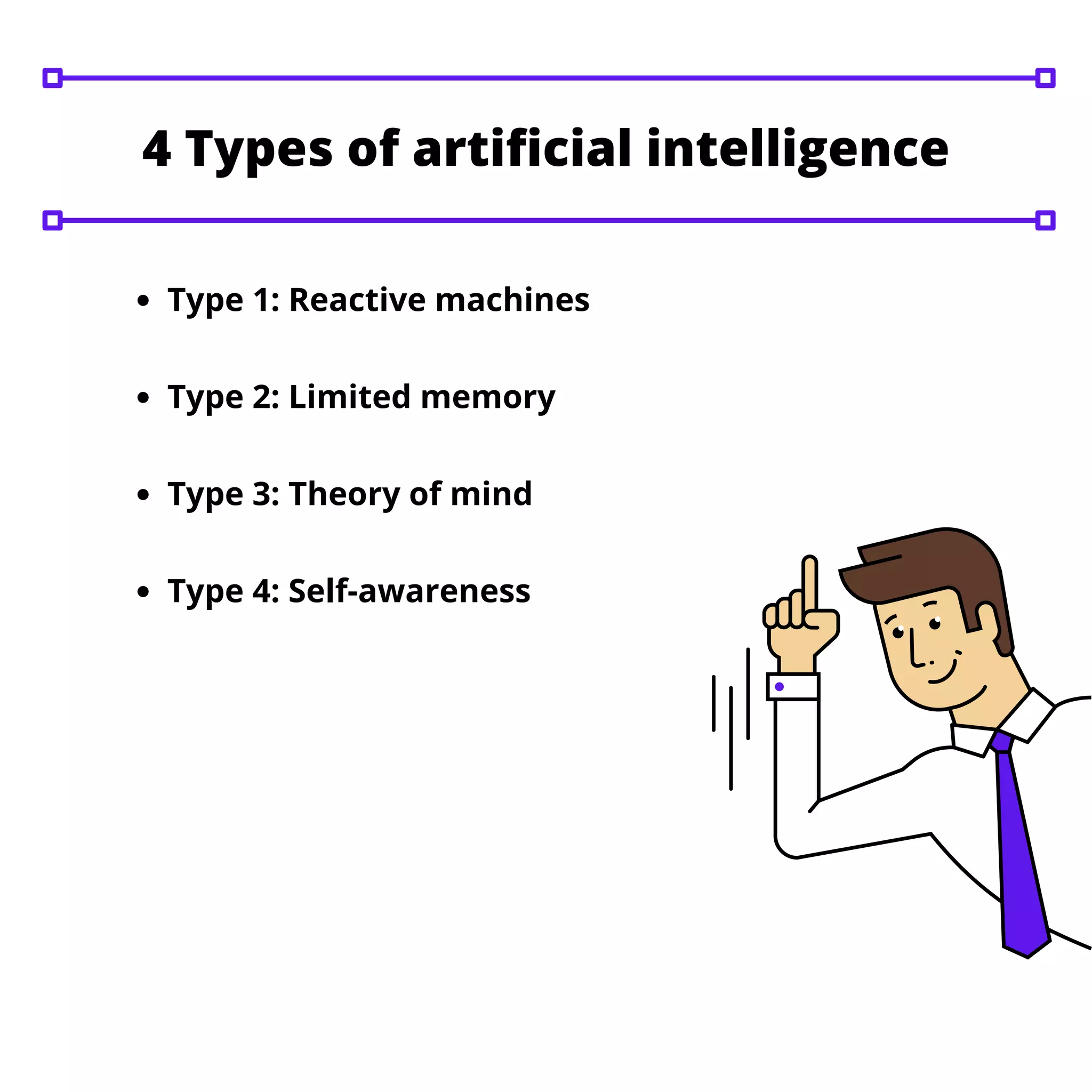
Type 1: Reactive machines
Type 2: Limited memory
Type 3: Theory of mind
Type 4: Self-awareness
4 Types of artificial intelligence
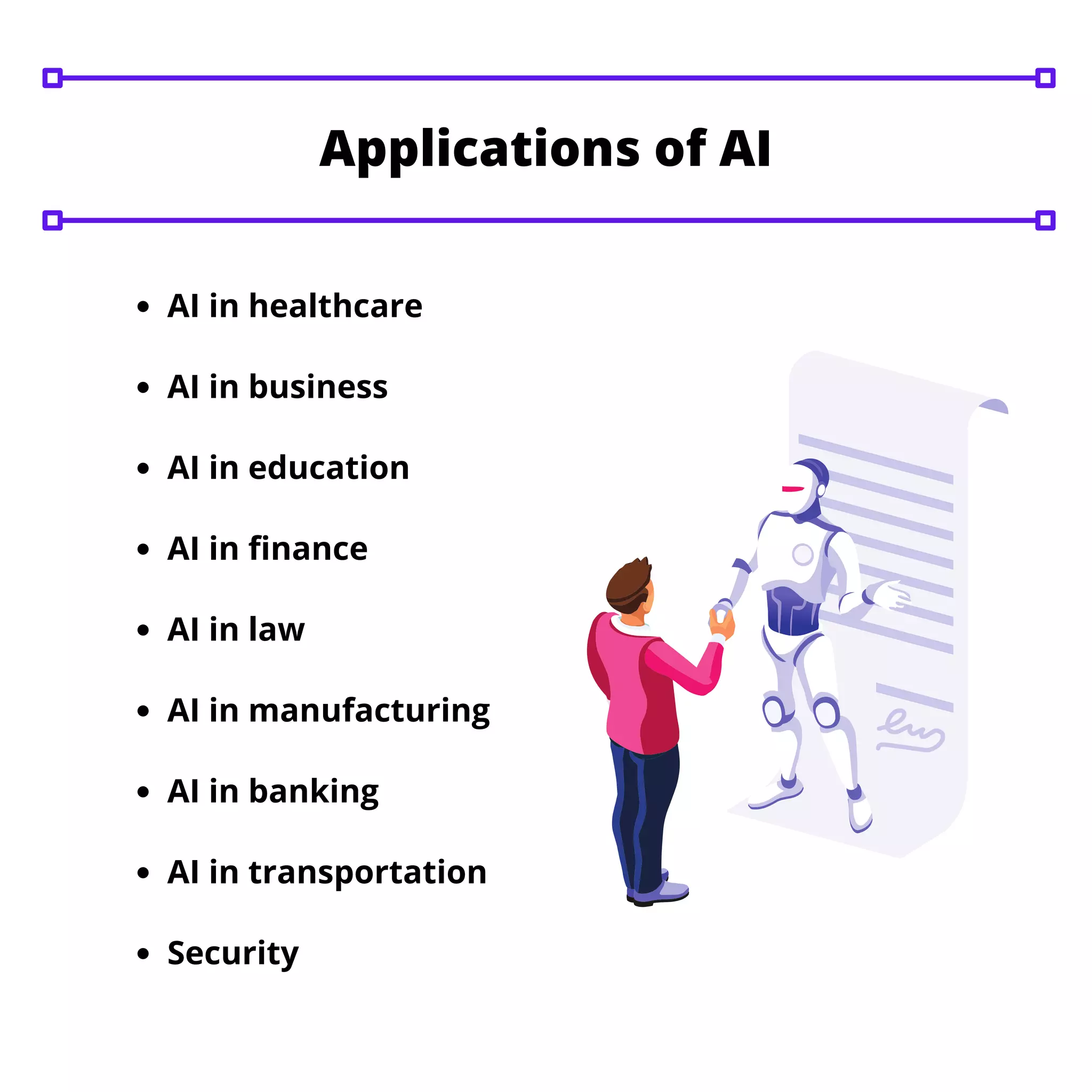
AI in healthcare
AI in business
AI in education
AI in finance
AI in law
AI in manufacturing
AI in banking
AI in transportation
Security
Applications of AI
Machine Learning With python
Python
Stay Tuned with
Topics for next Post

Artificial intelligence

  • 1.
  • 2.
    Artificial intelligence isthe simulation of human intelligence processes by machines, especially computer systems. Specific applications of AI include expert systems, natural language processing, speech recognition and machine vision. Artificial Intelligence
  • 3.
    As the hypearound AI has accelerated, vendors have been scrambling to promote how their products and services use AI. Often what they refer to as AI is simply one component of AI, such as machine learning. AI requires a foundation of specialized hardware and software for writing and training machine learning algorithms. No one programming language is synonymous with AI, but a few, including Python, R and Java, are popular. How does AI work?
  • 4.
    In general, AIsystems work by ingesting large amounts of labeled training data, analyzing the data for correlations and patterns, and using these patterns to make predictions about future states. In this way, a chatbot that is fed examples of text chats can learn to produce lifelike exchanges with people, or an image recognition tool can learn to identify and describe objects in images by reviewing millions of examples.
  • 5.
  • 6.
    AI is importantbecause it can give enterprises insights into their operations that they may not have been aware of previously and because, in some cases, AI can perform tasks better than humans. Particularly when it comes to repetitive, detail- oriented tasks like analyzing large numbers of legal documents to ensure relevant fields are filled in properly, AI tools often complete jobs quickly and with relatively few errors. Why is artificial intelligence important?
  • 7.
    Advantages Good at detail-orientedjobs; Reduced time for data-heavy tasks; Delivers consistent results; and AI-powered virtual agents are always available. Disadvantages Expensive; Requires deep technical expertise; Limited supply of qualified workers to build AI tools; Only knows what it's been shown; and Lack of ability to generalize from one task to another. Advantages and Disadvantages
  • 8.
    Weak AI, alsoknown as narrow AI, is an AI system that is designed and trained to complete a specific task. Industrial robots and virtual personal assistants, such as Apple's Siri, use weak AI. Strong AI, also known as artificial general intelligence (AGI), describes programming that can replicate the cognitive abilities of the human brain. When presented with an unfamiliar task, a strong AI system can use fuzzy logic to apply knowledge from one domain to another and find a solution autonomously. In theory, a strong AI program should be able to pass both a Turing Test and the Chinese room test. Strong AI vs. weak AI
  • 9.
    Type 1: Reactivemachines Type 2: Limited memory Type 3: Theory of mind Type 4: Self-awareness 4 Types of artificial intelligence
  • 10.
    AI in healthcare AIin business AI in education AI in finance AI in law AI in manufacturing AI in banking AI in transportation Security Applications of AI
  • 11.
    Machine Learning Withpython Python Stay Tuned with Topics for next Post