
AI Technology
Team Name : LIFE-LESS
Team Members :
1. Md Ashiqur Rahman
2. Adnan Al-emran Ontor
3. Medul Hasan Onik
4.Md Eyamin Molla
5. S. M Khaled Mahmud
1
Table of contents
01
05
Definition of AI,
Brief history of AI development
04
02
06
03
Types of Artificial
Intelligence
Applications of Artificial
Intelligence
Benefits and Advantages
of Artificial Intelligence
Challenges and Ethical
Considerations
Future Trends in Artificial
Intelligence
2
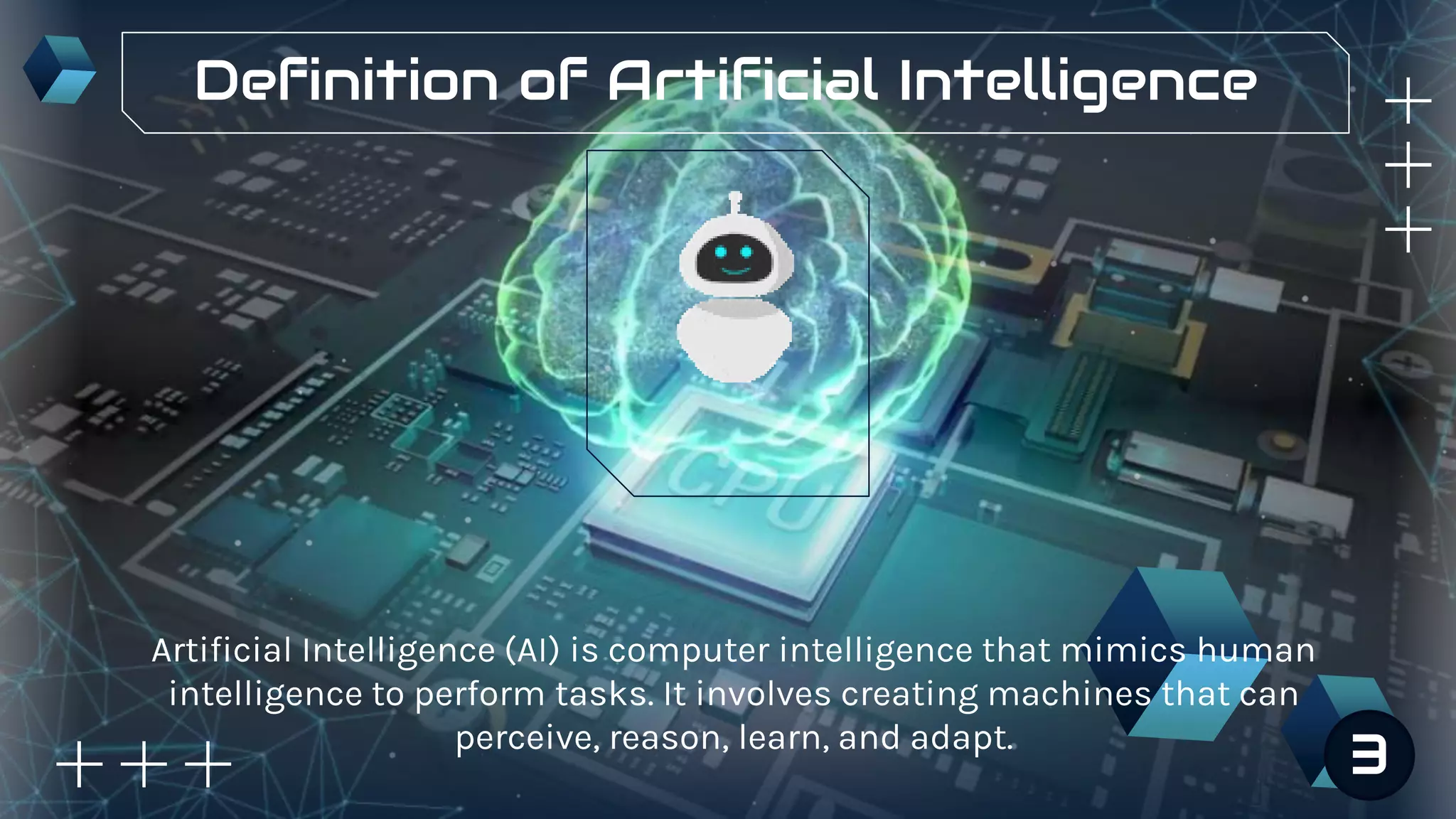
Definition of Artificial Intelligence
3
Brief history of AI development
 It start in the 1950.
 Alan Mathison Turing was create it first.
 This was the logical framework of his 1950
paper, Computing Machinery Intelligence .
4
Types of Artificial Intelligence
Natural
Language
Processing
NLP is AI for
understanding human
language. It involves
analyzing and
processing text data.
chat
question and
answer
Learning
Machine
Learning AI
DALL-E-2
Generate image
With ai
1 2 3
!
5
Applications of Artificial Intelligence
Robotics
Robotics and Automation
Assistants
Virtual Assistants (e.g., Siri,
Alexa)
Autonomous
Vehicles
Autonomous Vehicles with
ai (Tesla car etc.)
Technology
Smart Home Technology
6
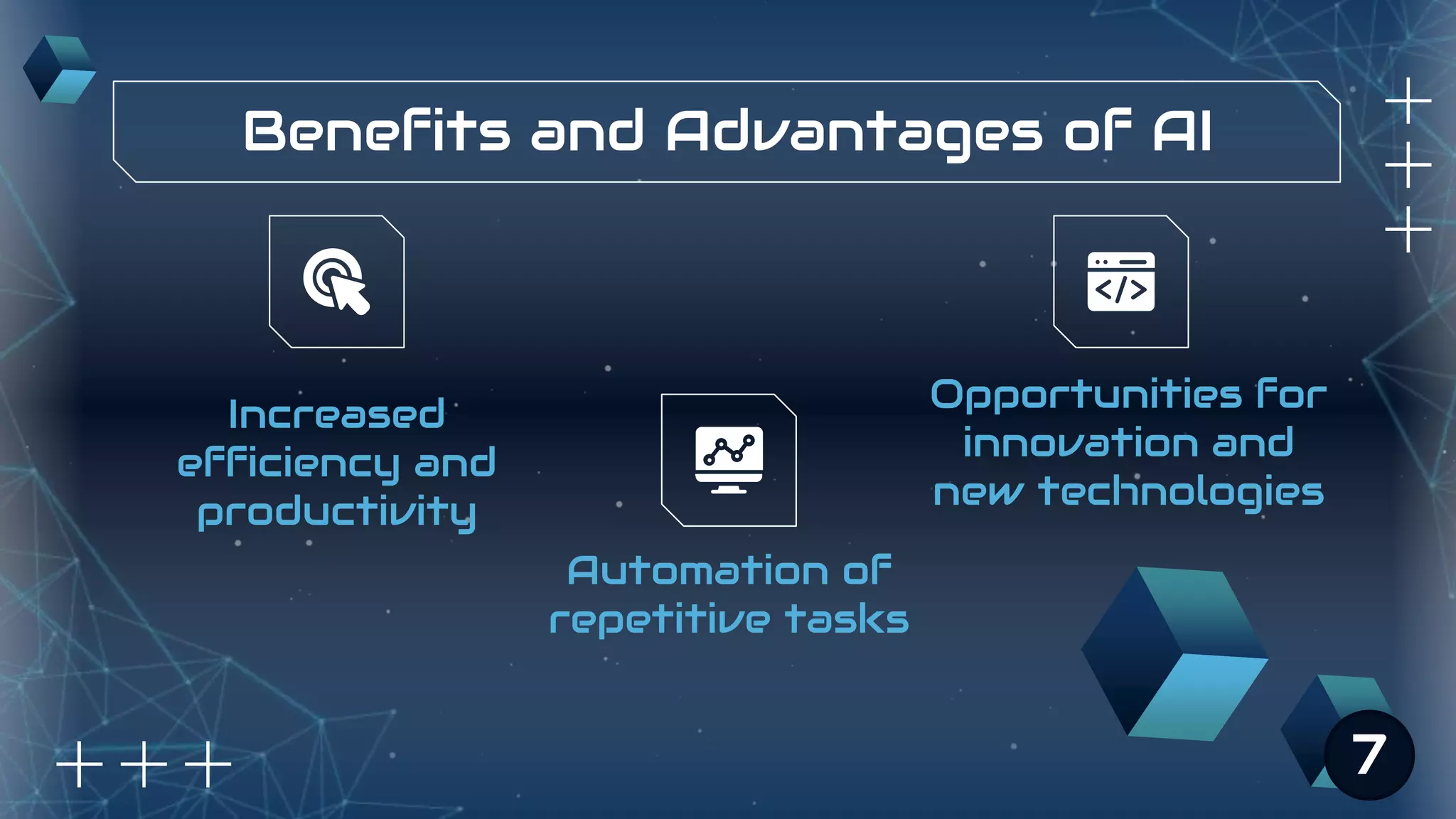
Benefits and Advantages of AI
Automation of
repetitive tasks
Opportunities for
innovation and
new technologies
7
Ethical Considerations
• Job displacement and economic impact
• Privacy and data security concerns
• Bias and fairness in AI algorithms
• Accountability and responsibility for AI decisions
8
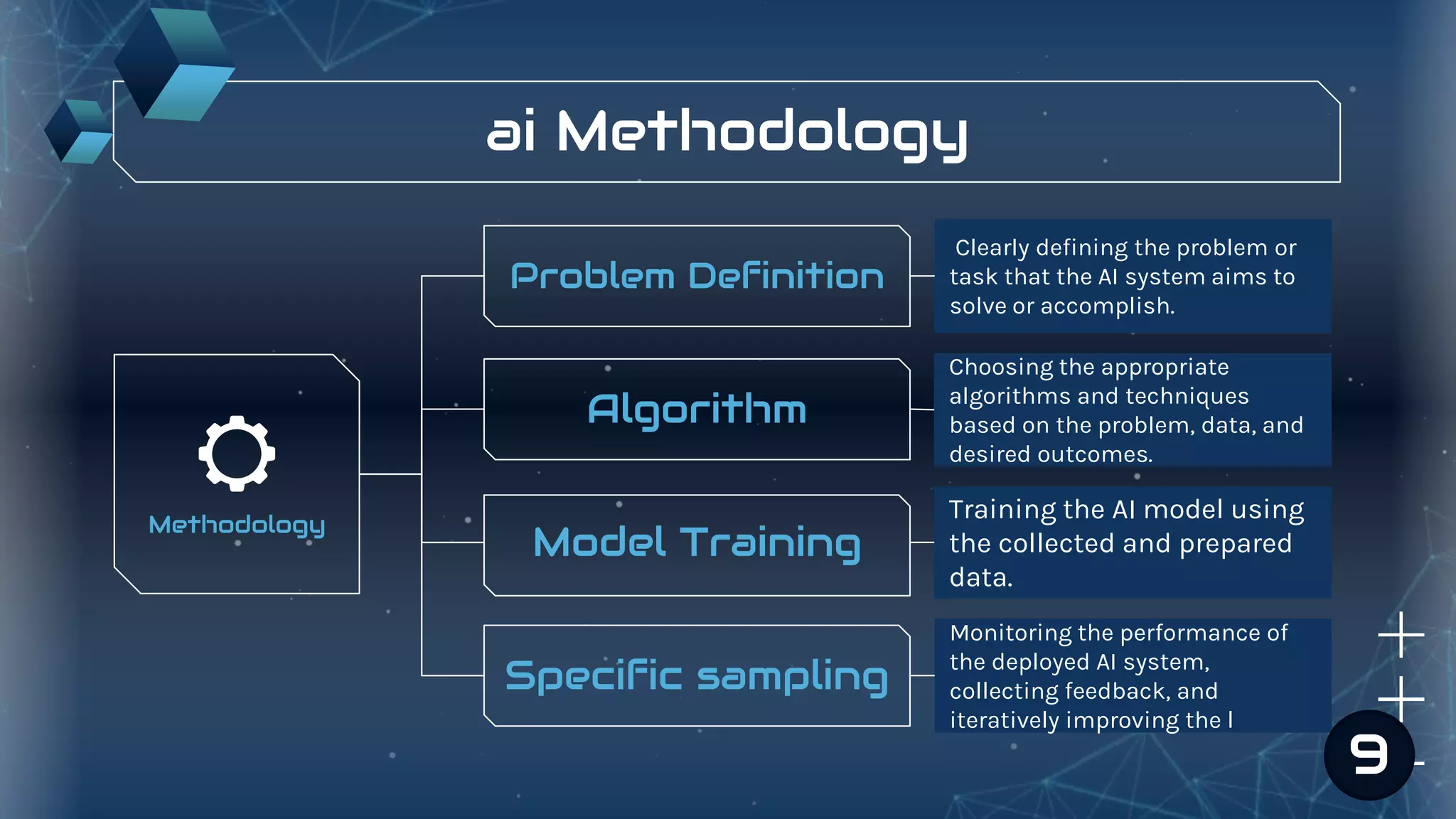
Clearly defining the problem or
task that the AI system aims to
solve or accomplish.
Choosing the appropriate
algorithms and techniques
based on the problem, data, and
desired outcomes.
Training the AI model using
the collected and prepared
data.
Monitoring the performance of
the deployed AI system,
collecting feedback, and
iteratively improving the l
ai Methodology
Methodology
Problem Definition
Algorithm
Model Training
Specific sampling
9
Analysis & development
Bad results
Related results
Good results
10%
30%
60%
10
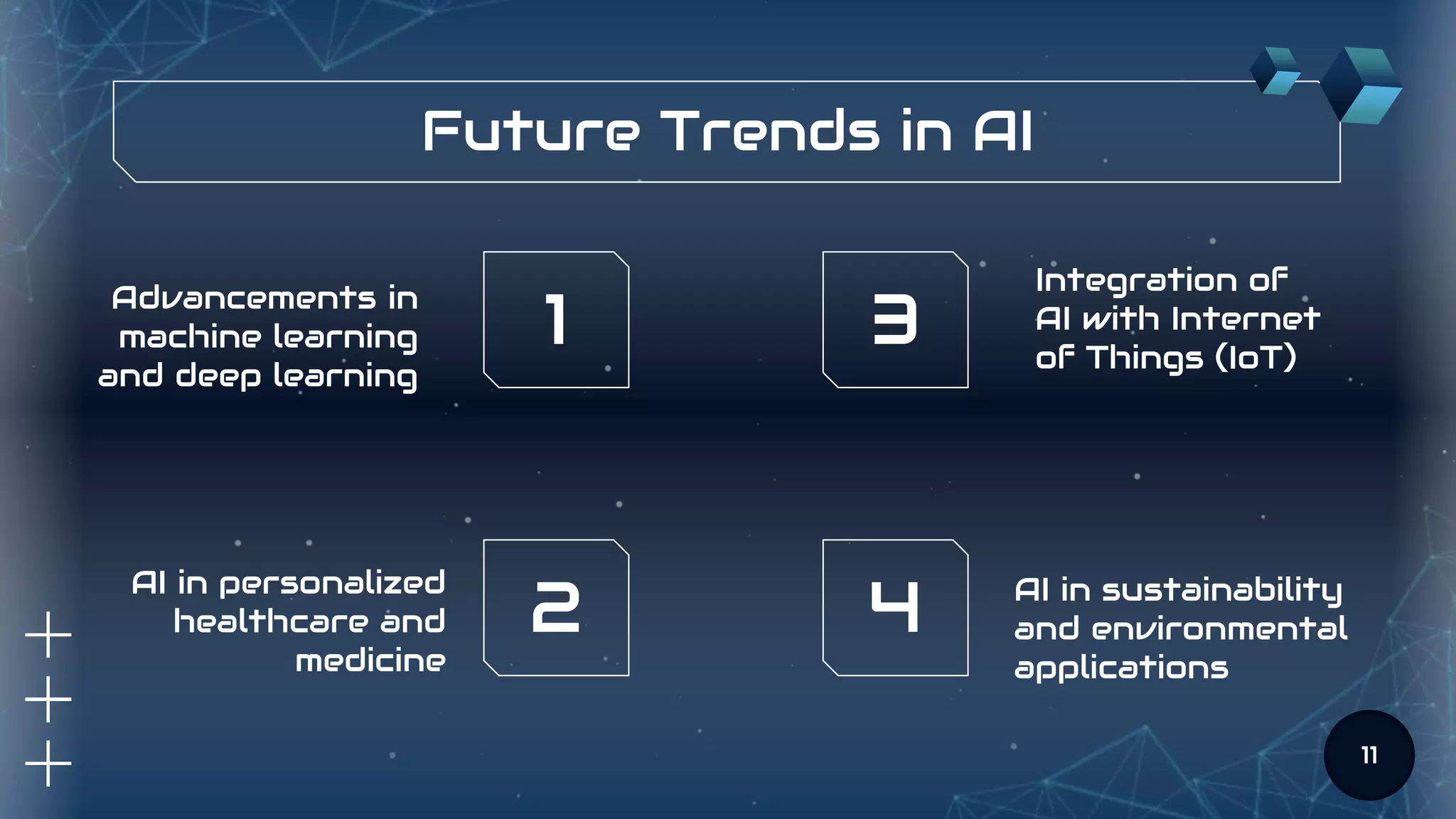
Future Trends in AI
AI in personalized
healthcare and
medicine
AI in sustainability
and environmental
applications
Advancements in
machine learning
and deep learning
Integration of
AI with Internet
of Things (IoT)
1
2 4
3
11
Conclusions
In conclusion, Artificial Intelligence (AI) is a powerful and
rapidly advancing field with applications such as Machine
Learning and Natural Language Processing. It has the
potential to revolutionize industries and improve decision-
making. However, ethical considerations are crucial for
responsible AI development. AI holds great promise for
shaping the future.
12
Technology
references
Info provide :
● https://en.wikipedia.org/wiki/Artificial_intelligence
● https://chat.openai.com/
● https://www.ibm.com/topics/artificial-intelligence
13
Thanks!
Do you have any questions?
14

artificial intelligence (ai)

  • 1.
    AI Technology Team Name: LIFE-LESS Team Members : 1. Md Ashiqur Rahman 2. Adnan Al-emran Ontor 3. Medul Hasan Onik 4.Md Eyamin Molla 5. S. M Khaled Mahmud 1
  • 2.
    Table of contents 01 05 Definitionof AI, Brief history of AI development 04 02 06 03 Types of Artificial Intelligence Applications of Artificial Intelligence Benefits and Advantages of Artificial Intelligence Challenges and Ethical Considerations Future Trends in Artificial Intelligence 2
  • 3.
  • 4.
    Brief history ofAI development  It start in the 1950.  Alan Mathison Turing was create it first.  This was the logical framework of his 1950 paper, Computing Machinery Intelligence . 4
  • 5.
    Types of ArtificialIntelligence Natural Language Processing NLP is AI for understanding human language. It involves analyzing and processing text data. chat question and answer Learning Machine Learning AI DALL-E-2 Generate image With ai 1 2 3 ! 5
  • 6.
    Applications of ArtificialIntelligence Robotics Robotics and Automation Assistants Virtual Assistants (e.g., Siri, Alexa) Autonomous Vehicles Autonomous Vehicles with ai (Tesla car etc.) Technology Smart Home Technology 6
  • 7.
    Benefits and Advantagesof AI Automation of repetitive tasks Opportunities for innovation and new technologies 7
  • 8.
    Ethical Considerations • Jobdisplacement and economic impact • Privacy and data security concerns • Bias and fairness in AI algorithms • Accountability and responsibility for AI decisions 8
  • 9.
    Clearly defining theproblem or task that the AI system aims to solve or accomplish. Choosing the appropriate algorithms and techniques based on the problem, data, and desired outcomes. Training the AI model using the collected and prepared data. Monitoring the performance of the deployed AI system, collecting feedback, and iteratively improving the l ai Methodology Methodology Problem Definition Algorithm Model Training Specific sampling 9
  • 10.
    Analysis & development Badresults Related results Good results 10% 30% 60% 10
  • 11.
    Future Trends inAI AI in personalized healthcare and medicine AI in sustainability and environmental applications Advancements in machine learning and deep learning Integration of AI with Internet of Things (IoT) 1 2 4 3 11
  • 12.
    Conclusions In conclusion, ArtificialIntelligence (AI) is a powerful and rapidly advancing field with applications such as Machine Learning and Natural Language Processing. It has the potential to revolutionize industries and improve decision- making. However, ethical considerations are crucial for responsible AI development. AI holds great promise for shaping the future. 12
  • 13.
    Technology references Info provide : ●https://en.wikipedia.org/wiki/Artificial_intelligence ● https://chat.openai.com/ ● https://www.ibm.com/topics/artificial-intelligence 13
  • 14.
    Thanks! Do you haveany questions? 14