By
SATHISHKUMAR G
(sathishsak111@gmail.com)
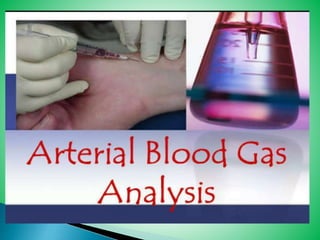
 An arterial blood gas (ABG) test measures the
acidity (PH) and levels of oxygen and carbon
dioxide in the blood from an artery.
 This test used to check how well your lungs
are able to move oxygen into the blood and
remove carbon dioxide from the blood.
 The first blood gas analyzer that measured
PH,PCO2, and PO2 was developed in 1957.
 Blood gas analysis came to be widely used in
clinical settings , surgery , anesthesia , and
intensive care by 1966. Competent device
were produced later.
 The first combined blood gas/electrolyte
analyzer was introduced in 1985.It comes
with a menu of Ph,pco2,po2,Na,K,iCa, and
hematocrit.
 A blood gas test measures the amount of
oxygen and carbon dioxide in the blood. It
may also be used to determine the pH of the
blood, or how acidic it is.
 The test is commonly known as a blood gas
analysis or arterial blood gas (ABG) test. Your
red blood cells transport oxygen and carbon
dioxide throughout your body.
 MEASURES
 PH –percent H+ Concentration
 PCO2-Pressure of CARBONDIOXIDE
 Po2-pressure of oxygen
 Sao2-oxygen saturation
 HCO3-Bicarbonate
These may include:
 Kidney failure
 Heart failure
 Uncontrolled diabetes
 Hemorrhage
 Chemical poisoning
 A drug overdose
 Shock
 Arterial blood Ph: 7.38 to 7.42
 Bicarbonate: 22 to 28 mill equivalents per
liter
 Partial pressure of oxygen : 75 to 100 mm Hg
 Partial pressure of carbon dioxide: 38 to 42
mm Hg.
 Protein buffer systems
 -Amino Acid buffers
 -Hemoglobin buffers
 -Plasma protein buffers
 Phosphate buffer systems
 Carbonic Acid-Bicarbonate buffer system
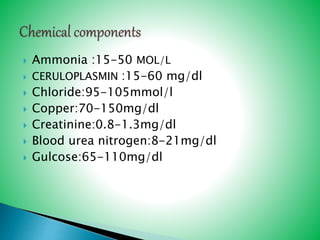
 Ammonia :15-50 MOL/L
 CERULOPLASMIN :15-60 mg/dl
 Chloride:95-105mmol/l
 Copper:70-150mg/dl
 Creatinine:0.8-1.3mg/dl
 Blood urea nitrogen:8-21mg/dl
 Gulcose:65-110mg/dl
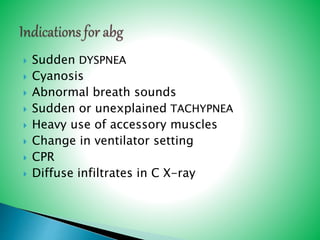
 Sudden DYSPNEA
 Cyanosis
 Abnormal breath sounds
 Sudden or unexplained TACHYPNEA
 Heavy use of accessory muscles
 Change in ventilator setting
 CPR
 Diffuse infiltrates in C X-ray
 Patient must have pulse
 Detects only significant decreases
inP02
 Does not comment on content
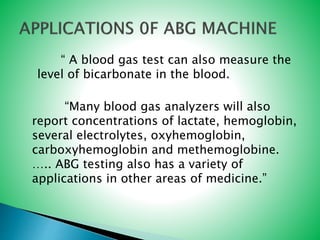
“ A blood gas test can also measure the
level of bicarbonate in the blood.
“Many blood gas analyzers will also
report concentrations of lactate, hemoglobin,
several electrolytes, oxyhemoglobin,
carboxyhemoglobin and methemoglobine.
….. ABG testing also has a variety of
applications in other areas of medicine.”
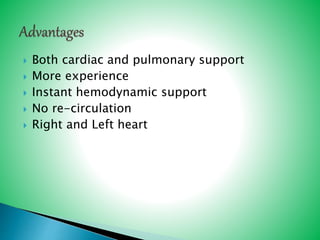
 Both cardiac and pulmonary support
 More experience
 Instant hemodynamic support
 No re-circulation
 Right and Left heart
 CANNULATION of major artery and sacrifice of
one carotid in newborn
 Poor coronary and pulmonary perfusion
 Systemic THROMBO embolism
 NONPULSATILE flow
 Myocardial stunning and LV DITENSION
THANK U…..

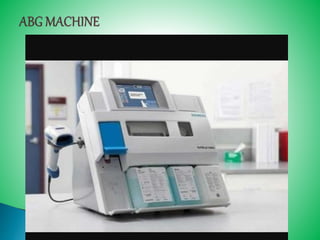
ARTERIAL BLOOD GAS ANALYSING MACHINE

  • 1.
  • 3.
     An arterialblood gas (ABG) test measures the acidity (PH) and levels of oxygen and carbon dioxide in the blood from an artery.  This test used to check how well your lungs are able to move oxygen into the blood and remove carbon dioxide from the blood.
  • 4.
     The firstblood gas analyzer that measured PH,PCO2, and PO2 was developed in 1957.  Blood gas analysis came to be widely used in clinical settings , surgery , anesthesia , and intensive care by 1966. Competent device were produced later.  The first combined blood gas/electrolyte analyzer was introduced in 1985.It comes with a menu of Ph,pco2,po2,Na,K,iCa, and hematocrit.
  • 6.
     A bloodgas test measures the amount of oxygen and carbon dioxide in the blood. It may also be used to determine the pH of the blood, or how acidic it is.  The test is commonly known as a blood gas analysis or arterial blood gas (ABG) test. Your red blood cells transport oxygen and carbon dioxide throughout your body.
  • 7.
     MEASURES  PH–percent H+ Concentration  PCO2-Pressure of CARBONDIOXIDE  Po2-pressure of oxygen  Sao2-oxygen saturation  HCO3-Bicarbonate
  • 8.
    These may include: Kidney failure  Heart failure  Uncontrolled diabetes  Hemorrhage  Chemical poisoning  A drug overdose  Shock
  • 10.
     Arterial bloodPh: 7.38 to 7.42  Bicarbonate: 22 to 28 mill equivalents per liter  Partial pressure of oxygen : 75 to 100 mm Hg  Partial pressure of carbon dioxide: 38 to 42 mm Hg.
  • 11.
     Protein buffersystems  -Amino Acid buffers  -Hemoglobin buffers  -Plasma protein buffers  Phosphate buffer systems  Carbonic Acid-Bicarbonate buffer system
  • 12.
     Ammonia :15-50MOL/L  CERULOPLASMIN :15-60 mg/dl  Chloride:95-105mmol/l  Copper:70-150mg/dl  Creatinine:0.8-1.3mg/dl  Blood urea nitrogen:8-21mg/dl  Gulcose:65-110mg/dl
  • 13.
     Sudden DYSPNEA Cyanosis  Abnormal breath sounds  Sudden or unexplained TACHYPNEA  Heavy use of accessory muscles  Change in ventilator setting  CPR  Diffuse infiltrates in C X-ray
  • 14.
     Patient musthave pulse  Detects only significant decreases inP02  Does not comment on content
  • 15.
    “ A bloodgas test can also measure the level of bicarbonate in the blood. “Many blood gas analyzers will also report concentrations of lactate, hemoglobin, several electrolytes, oxyhemoglobin, carboxyhemoglobin and methemoglobine. ….. ABG testing also has a variety of applications in other areas of medicine.”
  • 16.
     Both cardiacand pulmonary support  More experience  Instant hemodynamic support  No re-circulation  Right and Left heart
  • 17.
     CANNULATION ofmajor artery and sacrifice of one carotid in newborn  Poor coronary and pulmonary perfusion  Systemic THROMBO embolism  NONPULSATILE flow  Myocardial stunning and LV DITENSION
  • 18.