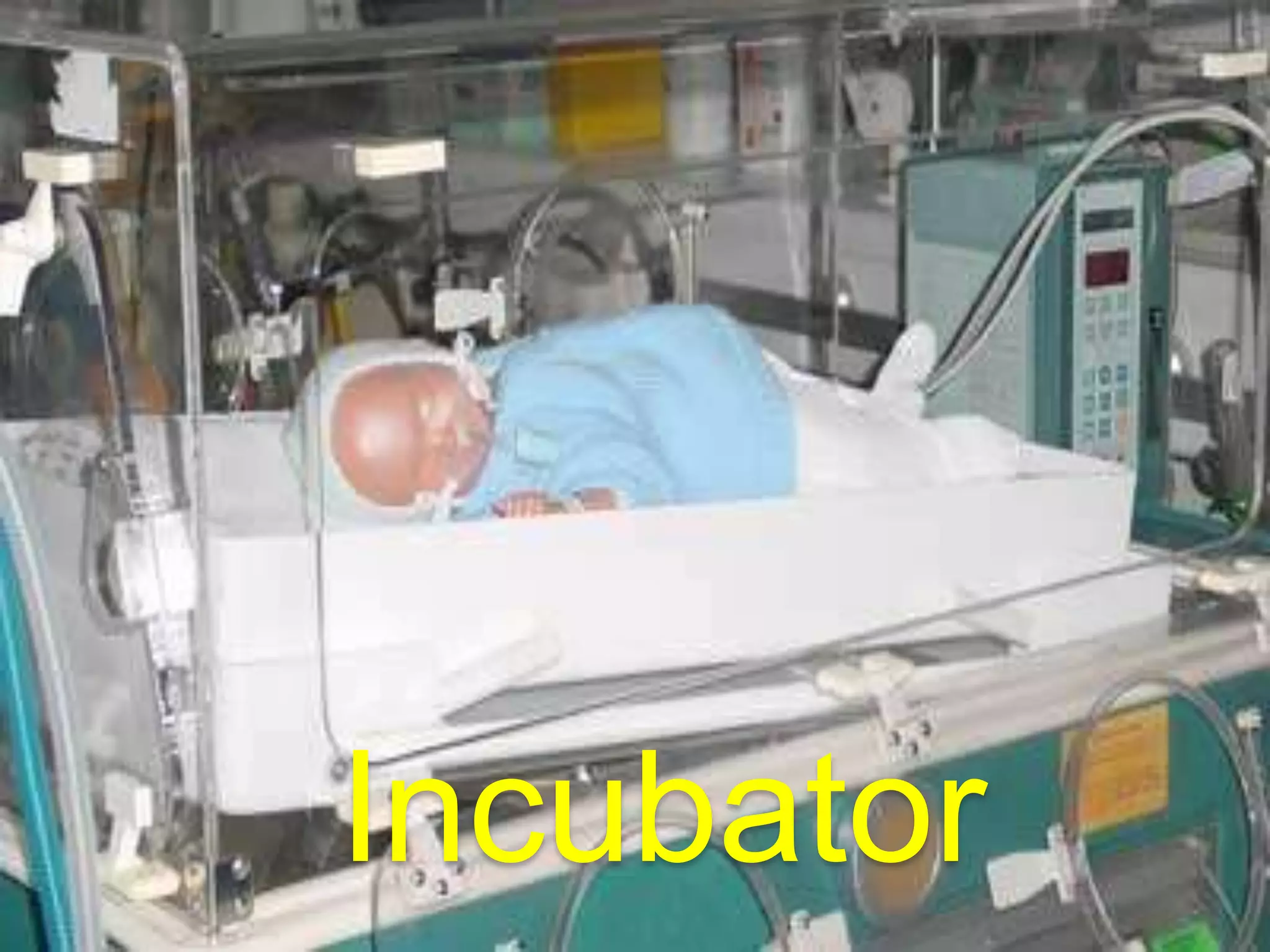
Incubator
Incubator	A heated and humidified apparatus for a newborn, often premature child.The use of incubators make it possible to provide the required environmental heat to maintain each infant’s body temperature.(35.5-36.5)
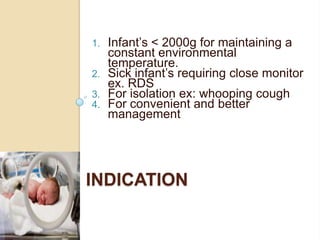
Infant’s < 2000g for maintaining a constant environmental temperature.Sick infant’s requiring close monitor ex. RDSFor isolation ex: whooping coughFor convenient and better managementindication
Pre heat the incubatorFill the water chamber with 2, 200cc of sterile distilled water so that the humidity can be increased if necessary.Set the pre heated incubator to the desired temperature and or as prescribed by the attending physician.  						-it can be regulated to meet the needs of the individual infantUndressed the infant except for a diaper then place infant in incubator through opened access panel.	- undresssed the infant so that the flow of air will cantract the body surface.Preparation of incubator
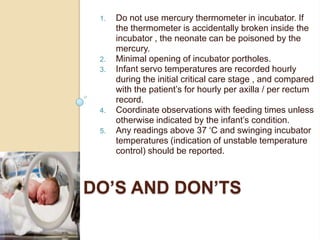
Do not use mercury thermometer in incubator. If the thermometer is accidentally broken inside the incubator , the neonate can be poisoned by the mercury.Minimal opening of incubator portholes.Infant servo temperatures are recorded hourly during the initial critical care stage , and compared with the patient’s for hourly per axilla / per rectum record.Coordinate observations with feeding times unless otherwise indicated by the infant’s condition.Any readings above 37 ‘C and swinging incubator temperatures (indication of unstable temperature control) should be reported.Do’s and Don’ts
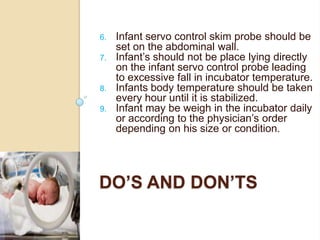
6.	Infant servo control skim probe should be set on the abdominal wall.7.	Infant’s should not be place lying directly on the infant servo control probe leading to excessive fall in incubator temperature.8.	Infants body temperature should be taken every hour until it is stabilized.9.	Infant may be weigh in the incubator daily or according to the physician’s order depending on his size or condition.Do’s and Don’ts
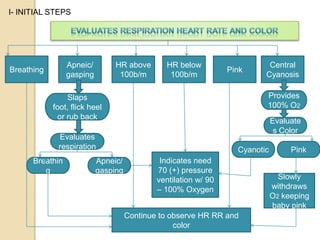
I- INITIAL STEPSEvaluates Respiration Heart Rate and ColorApneic/ gaspingBreathingHR above 100b/mHR below 100b/mPinkCentral CyanosisProvides 100% O2Slaps foot, flick heel or rub backEvaluates ColorEvaluates respirationCyanoticPinkIndicates need 70 (+) pressure ventilation w/ 90 – 100% Oxygen BreathingApneic/ gaspingSlowly withdraws O2 keeping baby pinkContinue to observe HR RR and color
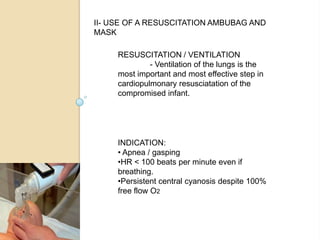
II- USE OF A RESUSCITATION AMBUBAG AND MASKRESUSCITATION / VENTILATION		- Ventilation of the lungs is the most important and most effective step in cardiopulmonary resusciatation of the compromised infant.INDICATION: Apnea / gasping
HR < 100 beats per minute even if breathing.
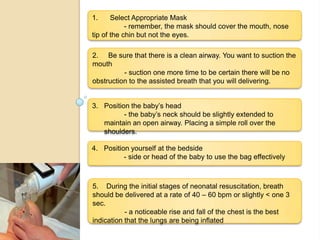
Persistent central cyanosis despite 100% free flow O22.     Be sure that there is a clean airway. You want to suction the mouth- suction one more time to be certain there will be no obstruction to the assisted breath that you will delivering.Position the baby’s head	- the baby’s neck should be slightly extended to maintain an open airway. Placing a simple roll over the shoulders.1.      Select Appropriate Mask- remember, the mask should cover the mouth, nose tip of the chin but not the eyes.Position yourself at the bedside	- side or head of the baby to use the bag effectively5.    During the initial stages of neonatal resuscitation, breath should be delivered at a rate of 40 – 60 bpm or slightly < one 3 sec.- a noticeable rise and fall of the chest is the best indication that the lungs are being inflated
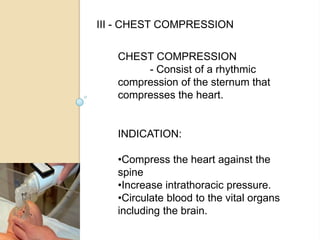
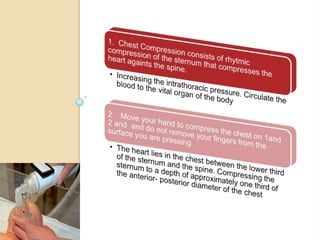
III - CHEST COMPRESSIONCHEST COMPRESSION 	- Consist of a rhythmic compression of the sternum that compresses the heart.INDICATION:Compress the heart against the spine
Increase intrathoracic pressure.
Circulate blood to the vital organs including the brain.
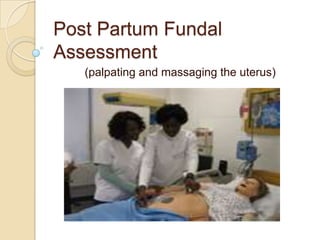
Post Partum Fundal Assessment (palpating and massaging the uterus)
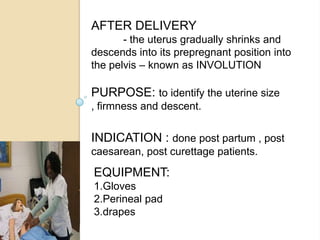
AFTER DELIVERY 	- the uterus gradually shrinks and descends into its prepregnant position into the pelvis – known as INVOLUTIONPURPOSE: to identify the uterine size , firmness and descent.INDICATION : done post partum , post caesarean, post curettage patients.EQUIPMENT:GlovesPerineal paddrapes

Incubator

  • 1.
  • 2.
    Incubator A heated andhumidified apparatus for a newborn, often premature child.The use of incubators make it possible to provide the required environmental heat to maintain each infant’s body temperature.(35.5-36.5)
  • 3.
    Infant’s < 2000gfor maintaining a constant environmental temperature.Sick infant’s requiring close monitor ex. RDSFor isolation ex: whooping coughFor convenient and better managementindication
  • 4.
    Pre heat theincubatorFill the water chamber with 2, 200cc of sterile distilled water so that the humidity can be increased if necessary.Set the pre heated incubator to the desired temperature and or as prescribed by the attending physician. -it can be regulated to meet the needs of the individual infantUndressed the infant except for a diaper then place infant in incubator through opened access panel. - undresssed the infant so that the flow of air will cantract the body surface.Preparation of incubator
  • 5.
    Do not usemercury thermometer in incubator. If the thermometer is accidentally broken inside the incubator , the neonate can be poisoned by the mercury.Minimal opening of incubator portholes.Infant servo temperatures are recorded hourly during the initial critical care stage , and compared with the patient’s for hourly per axilla / per rectum record.Coordinate observations with feeding times unless otherwise indicated by the infant’s condition.Any readings above 37 ‘C and swinging incubator temperatures (indication of unstable temperature control) should be reported.Do’s and Don’ts
  • 6.
    6. Infant servo controlskim probe should be set on the abdominal wall.7. Infant’s should not be place lying directly on the infant servo control probe leading to excessive fall in incubator temperature.8. Infants body temperature should be taken every hour until it is stabilized.9. Infant may be weigh in the incubator daily or according to the physician’s order depending on his size or condition.Do’s and Don’ts
  • 8.
    I- INITIAL STEPSEvaluatesRespiration Heart Rate and ColorApneic/ gaspingBreathingHR above 100b/mHR below 100b/mPinkCentral CyanosisProvides 100% O2Slaps foot, flick heel or rub backEvaluates ColorEvaluates respirationCyanoticPinkIndicates need 70 (+) pressure ventilation w/ 90 – 100% Oxygen BreathingApneic/ gaspingSlowly withdraws O2 keeping baby pinkContinue to observe HR RR and color
  • 9.
    II- USE OFA RESUSCITATION AMBUBAG AND MASKRESUSCITATION / VENTILATION - Ventilation of the lungs is the most important and most effective step in cardiopulmonary resusciatation of the compromised infant.INDICATION: Apnea / gasping
  • 10.
    HR < 100beats per minute even if breathing.
  • 11.
    Persistent central cyanosisdespite 100% free flow O22. Be sure that there is a clean airway. You want to suction the mouth- suction one more time to be certain there will be no obstruction to the assisted breath that you will delivering.Position the baby’s head - the baby’s neck should be slightly extended to maintain an open airway. Placing a simple roll over the shoulders.1. Select Appropriate Mask- remember, the mask should cover the mouth, nose tip of the chin but not the eyes.Position yourself at the bedside - side or head of the baby to use the bag effectively5. During the initial stages of neonatal resuscitation, breath should be delivered at a rate of 40 – 60 bpm or slightly < one 3 sec.- a noticeable rise and fall of the chest is the best indication that the lungs are being inflated
  • 12.
    III - CHESTCOMPRESSIONCHEST COMPRESSION - Consist of a rhythmic compression of the sternum that compresses the heart.INDICATION:Compress the heart against the spine
  • 13.
  • 14.
    Circulate blood tothe vital organs including the brain.
  • 15.
    Post Partum FundalAssessment (palpating and massaging the uterus)
  • 16.
    AFTER DELIVERY -the uterus gradually shrinks and descends into its prepregnant position into the pelvis – known as INVOLUTIONPURPOSE: to identify the uterine size , firmness and descent.INDICATION : done post partum , post caesarean, post curettage patients.EQUIPMENT:GlovesPerineal paddrapes

Editor's Notes

  • #10 INDICATION: apnea / gaspingHR &lt; 100 beats per minute even if breathing.Persistent central cyanosis despite 100% free flow O2
  • #12 III - CHEST COMPRESSIONINDICATION:Compress the heart againts the spineIncrease intrathoracic pressure.Circulate blood to the vital organs including the brain.