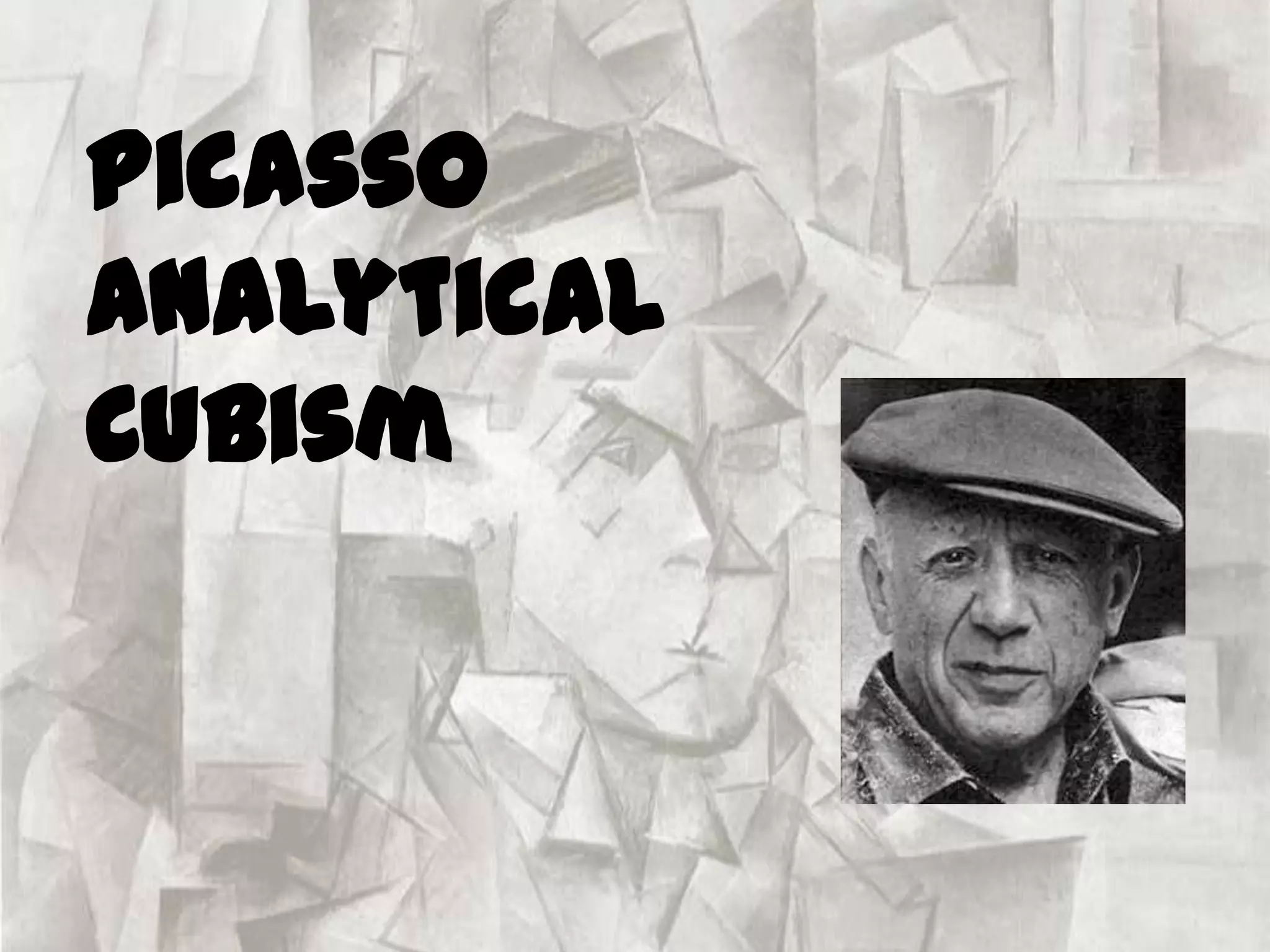
Picasso
Analytical
Cubism
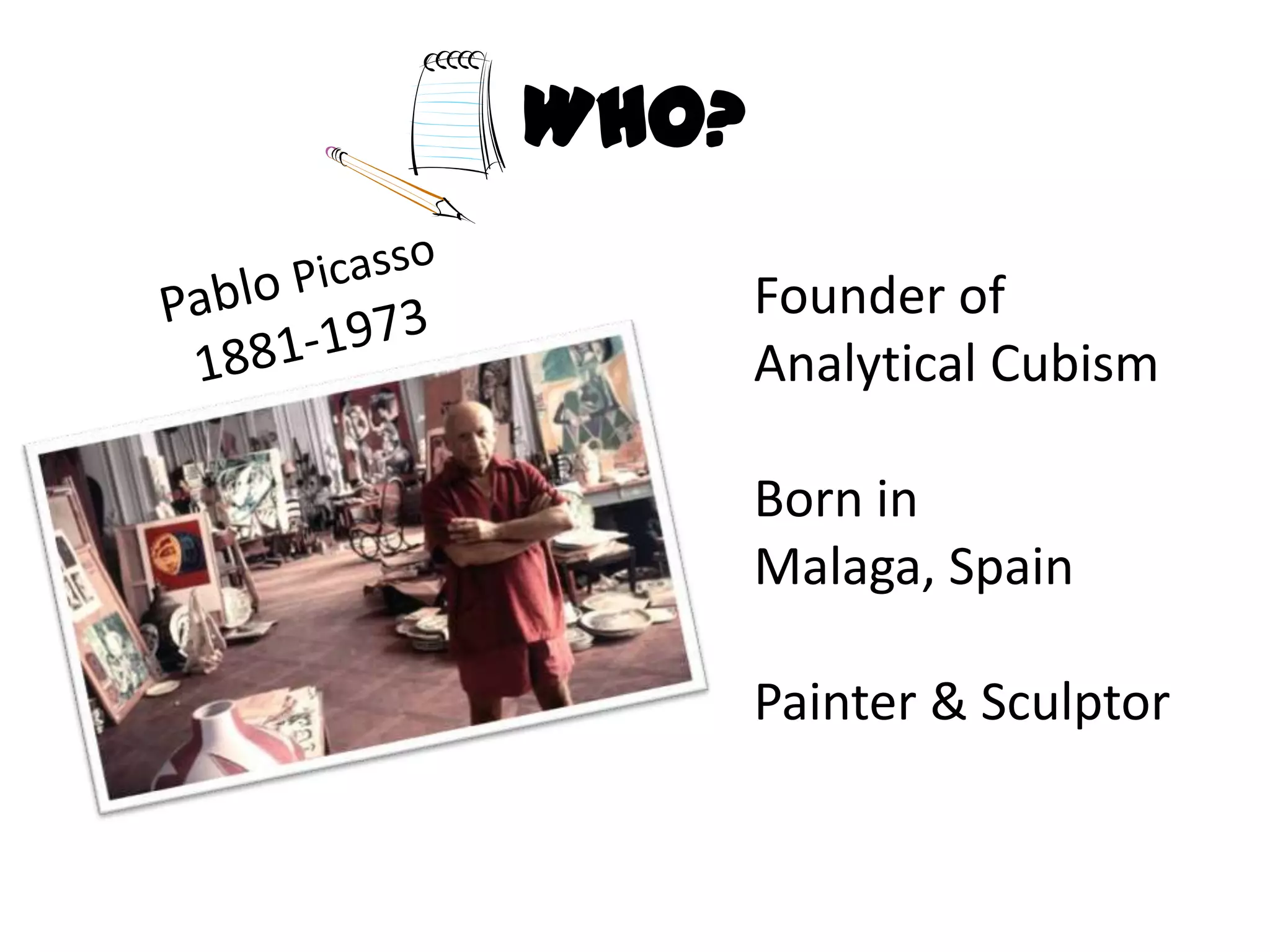
Who?
       Founder of
       Analytical Cubism

       Born in
       Malaga, Spain

       Painter & Sculptor
What?
  Analytical means to break down…

           “de-construct”

Cubism use of simple geometric shapes

         Analytical Cubism
  Reducing or breaking down forms
    into basic geometric shapes
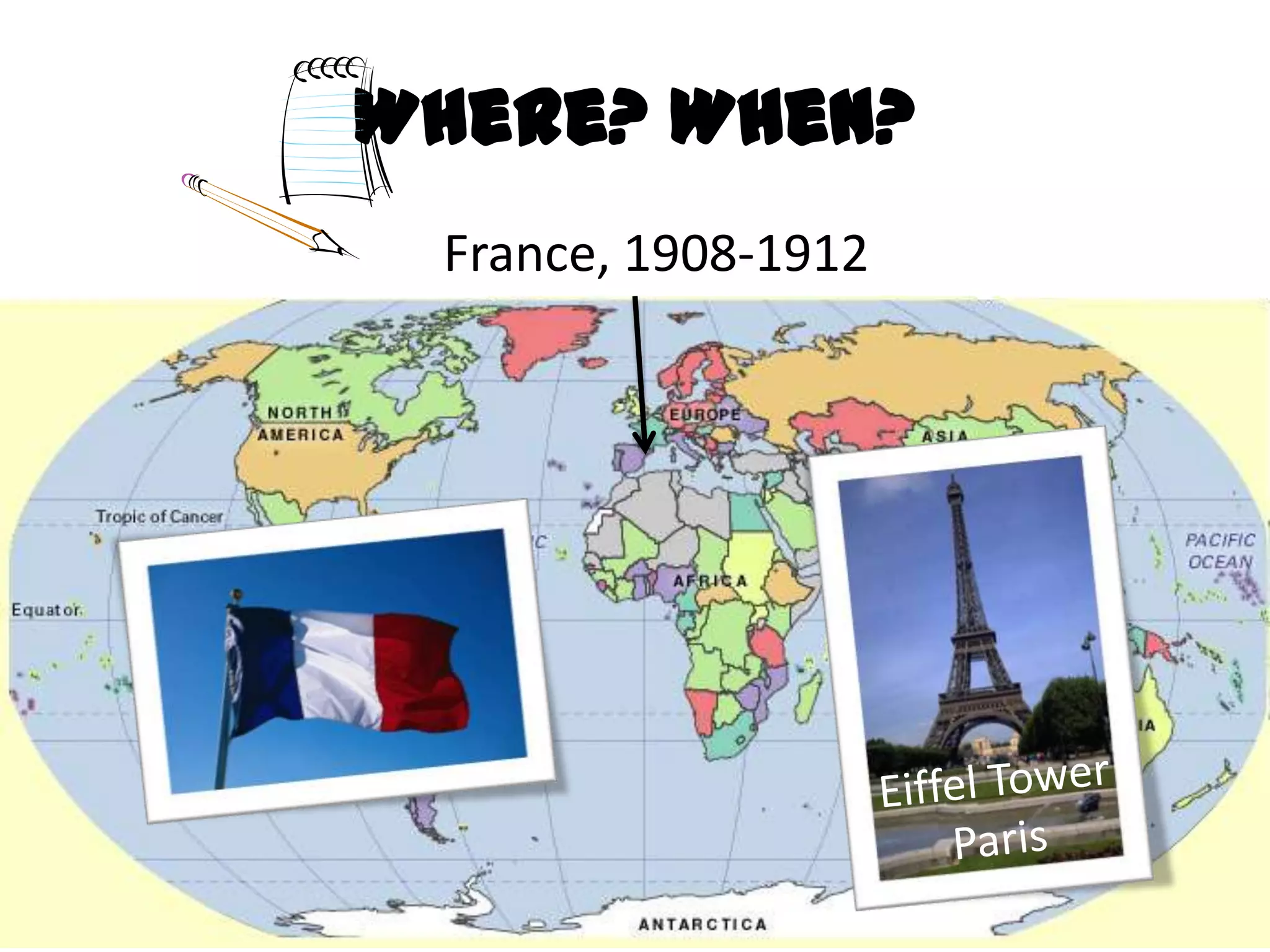
Where? When?
 France, 1908-1912
Analytical Cubism
                 Essentials
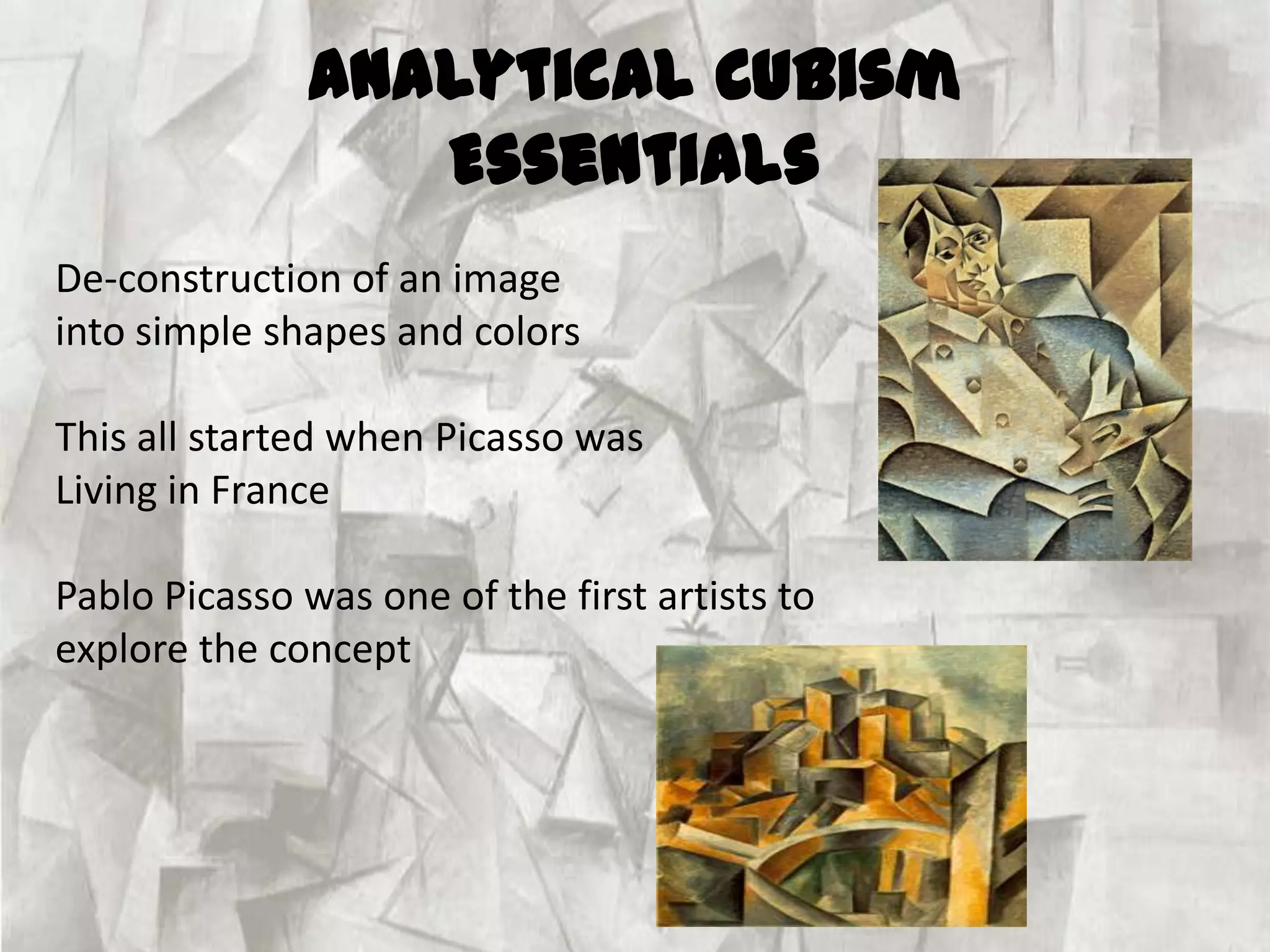
De-construction of an image
into simple shapes and colors

This all started when Picasso was
Living in France

Pablo Picasso was one of the first artists to
explore the concept
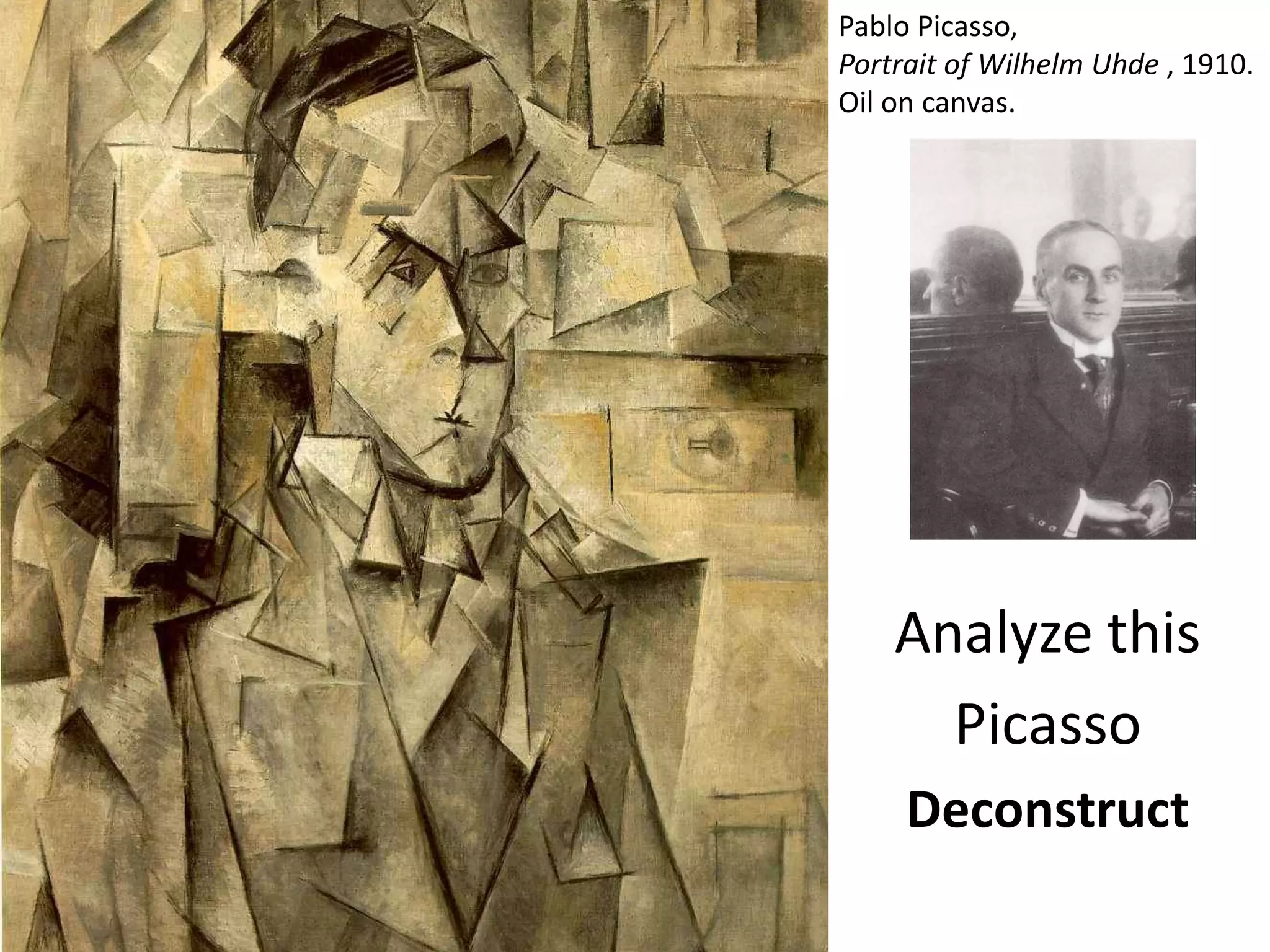
Pablo Picasso,
Portrait of Wilhelm Uhde , 1910.
Oil on canvas.


    Analyze this
      Picasso
     Deconstruct
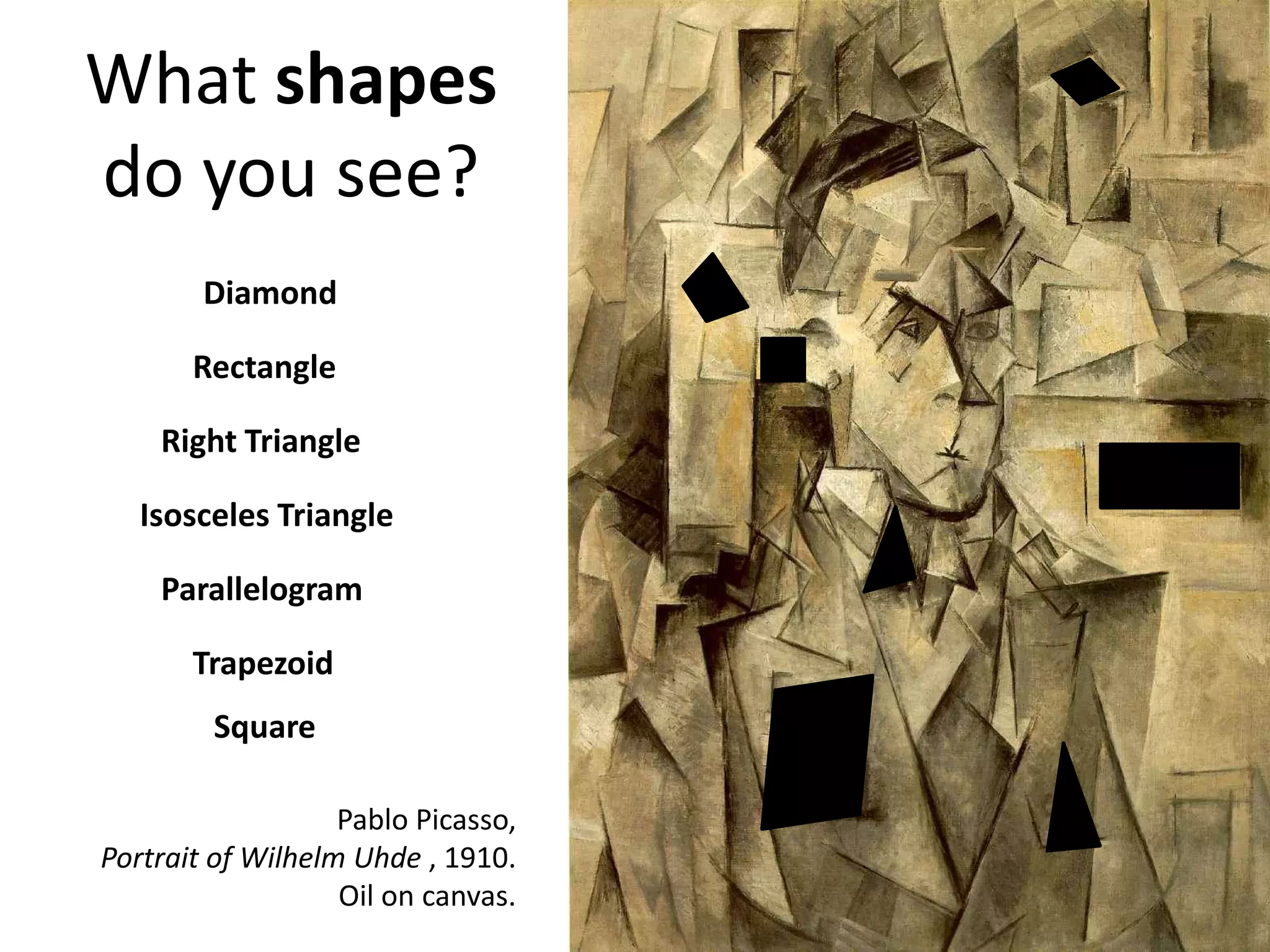
What shapes
do you see?
        Diamond

       Rectangle

    Right Triangle

   Isosceles Triangle

    Parallelogram

       Trapezoid
        Square

                   Pablo Picasso,
Portrait of Wilhelm Uhde , 1910.
                   Oil on canvas.
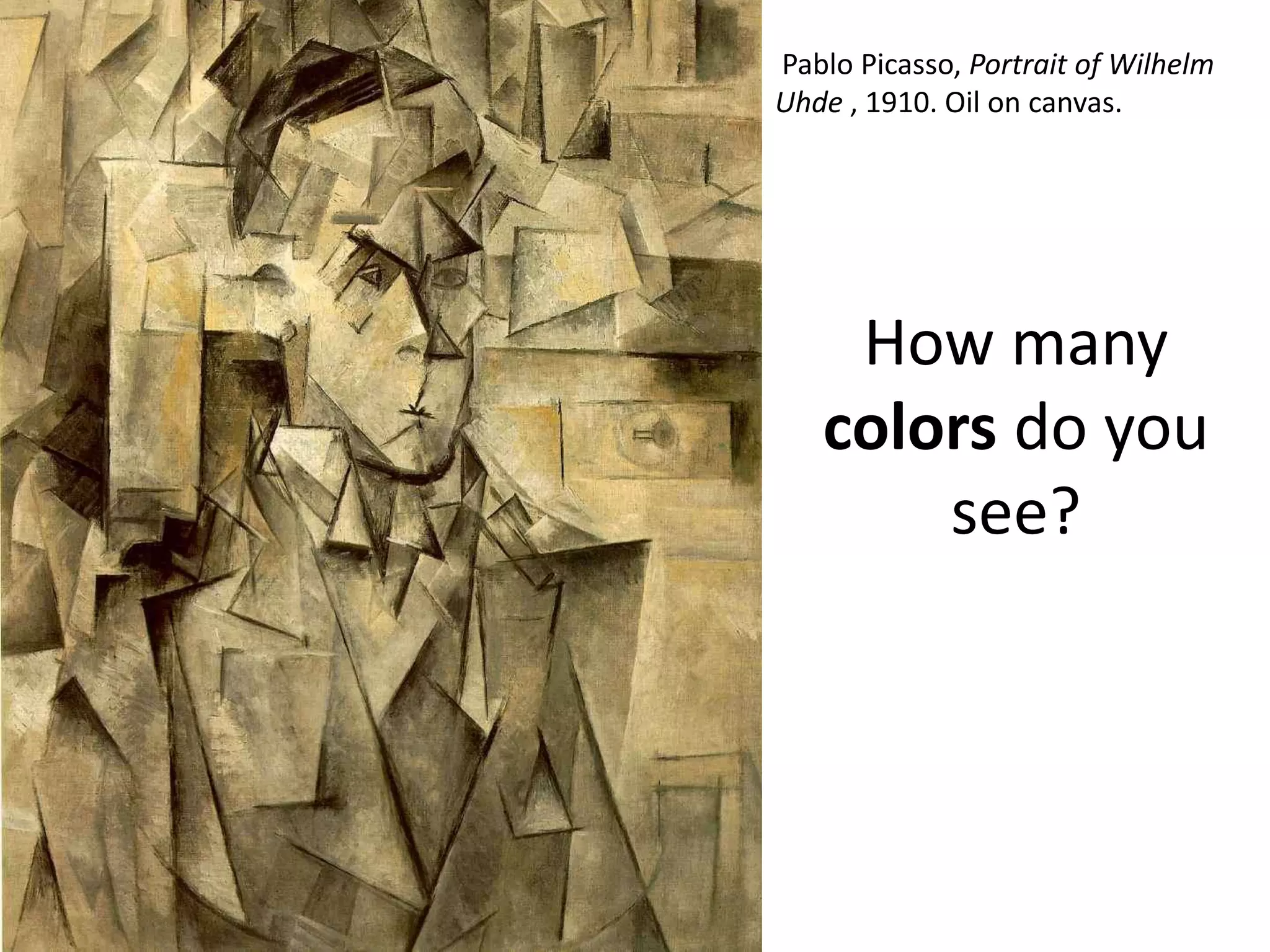
Pablo Picasso, Portrait of Wilhelm
Uhde , 1910. Oil on canvas.


    How many
   colors do you
       see?
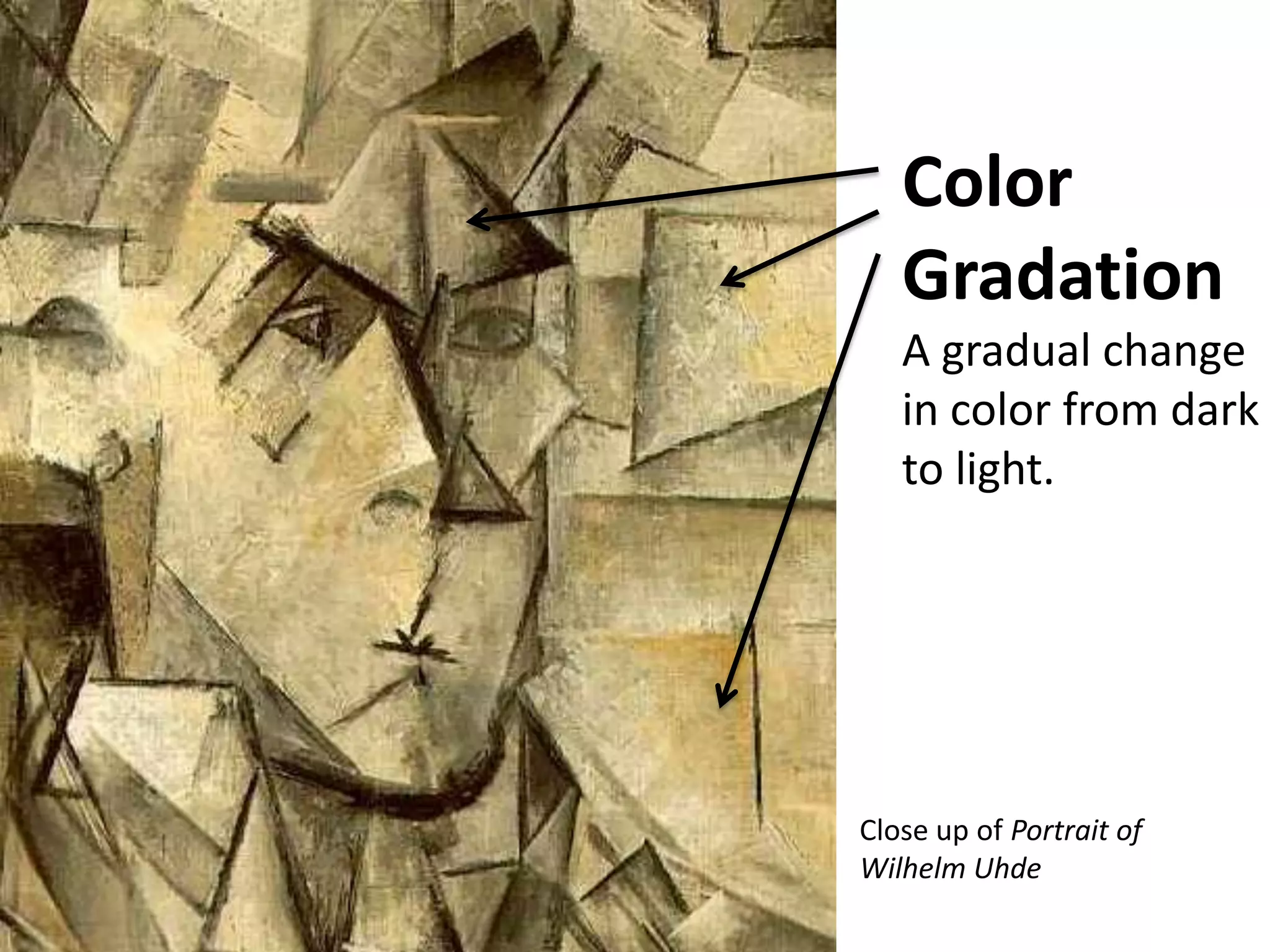
Color
   Gradation
   A gradual change
   in color from dark
   to light.


Close up of Portrait of
Wilhelm Uhde
Cubism Project
To Start: Choose a simple image or object.
         eye, fish, skull, violin, etc…

              Choose a shape.
circle, square, diamond, or make your own


Now follow the Cubism Experience Steps…
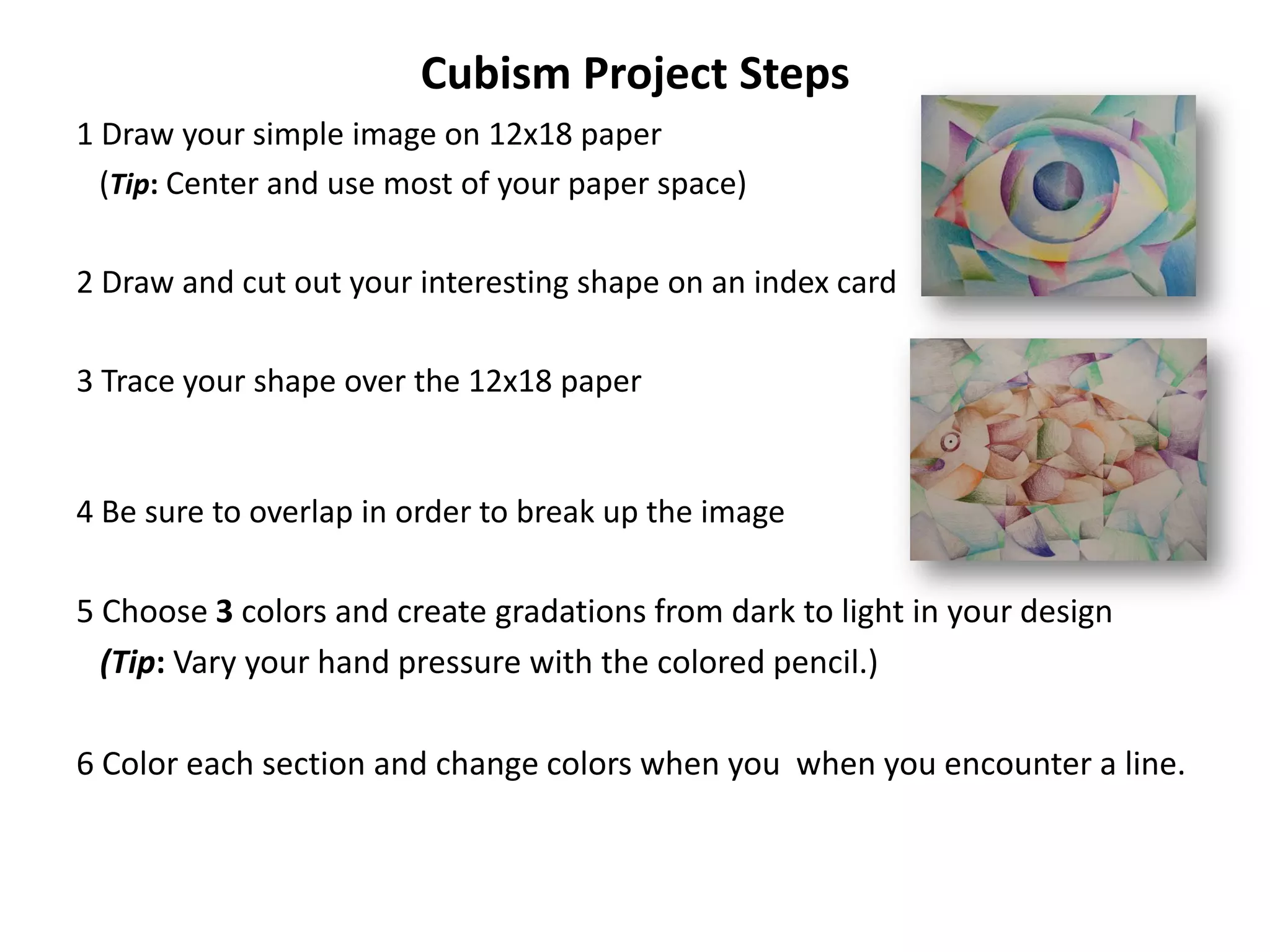
Cubism Project Steps
1 Draw your simple image on 12x18 paper
  (Tip: Center and use most of your paper space)

2 Draw and cut out your interesting shape on an index card

3 Trace your shape over the 12x18 paper


4 Be sure to overlap in order to break up the image

5 Choose 3 colors and create gradations from dark to light in your design
  (Tip: Vary your hand pressure with the colored pencil.)

6 Color each section and change colors when you when you encounter a line.
Picasso analytical cubism

Picasso analytical cubism

  • 1.
  • 2.
    Who? Founder of Analytical Cubism Born in Malaga, Spain Painter & Sculptor
  • 3.
    What? Analyticalmeans to break down… “de-construct” Cubism use of simple geometric shapes Analytical Cubism Reducing or breaking down forms into basic geometric shapes
  • 4.
  • 5.
    Analytical Cubism Essentials De-construction of an image into simple shapes and colors This all started when Picasso was Living in France Pablo Picasso was one of the first artists to explore the concept
  • 6.
    Pablo Picasso, Portrait ofWilhelm Uhde , 1910. Oil on canvas. Analyze this Picasso Deconstruct
  • 7.
    What shapes do yousee? Diamond Rectangle Right Triangle Isosceles Triangle Parallelogram Trapezoid Square Pablo Picasso, Portrait of Wilhelm Uhde , 1910. Oil on canvas.
  • 8.
    Pablo Picasso, Portraitof Wilhelm Uhde , 1910. Oil on canvas. How many colors do you see?
  • 9.
    Color Gradation A gradual change in color from dark to light. Close up of Portrait of Wilhelm Uhde
  • 10.
    Cubism Project To Start:Choose a simple image or object. eye, fish, skull, violin, etc… Choose a shape. circle, square, diamond, or make your own Now follow the Cubism Experience Steps…
  • 11.
    Cubism Project Steps 1Draw your simple image on 12x18 paper (Tip: Center and use most of your paper space) 2 Draw and cut out your interesting shape on an index card 3 Trace your shape over the 12x18 paper 4 Be sure to overlap in order to break up the image 5 Choose 3 colors and create gradations from dark to light in your design (Tip: Vary your hand pressure with the colored pencil.) 6 Color each section and change colors when you when you encounter a line.

Editor's Notes

  • #4 The main idea with Analytical Cubism is that the viewer is looking at an object from multiple positions, the view changes becausean object is not one dimensional. What this movement focused on was how the artist can deconstruct the object into simple shapes.  Artists thought that this was best achieved by using a limited color palette and color gradation in order to explore form.
  • #7 Art dealer who worked with Picasso