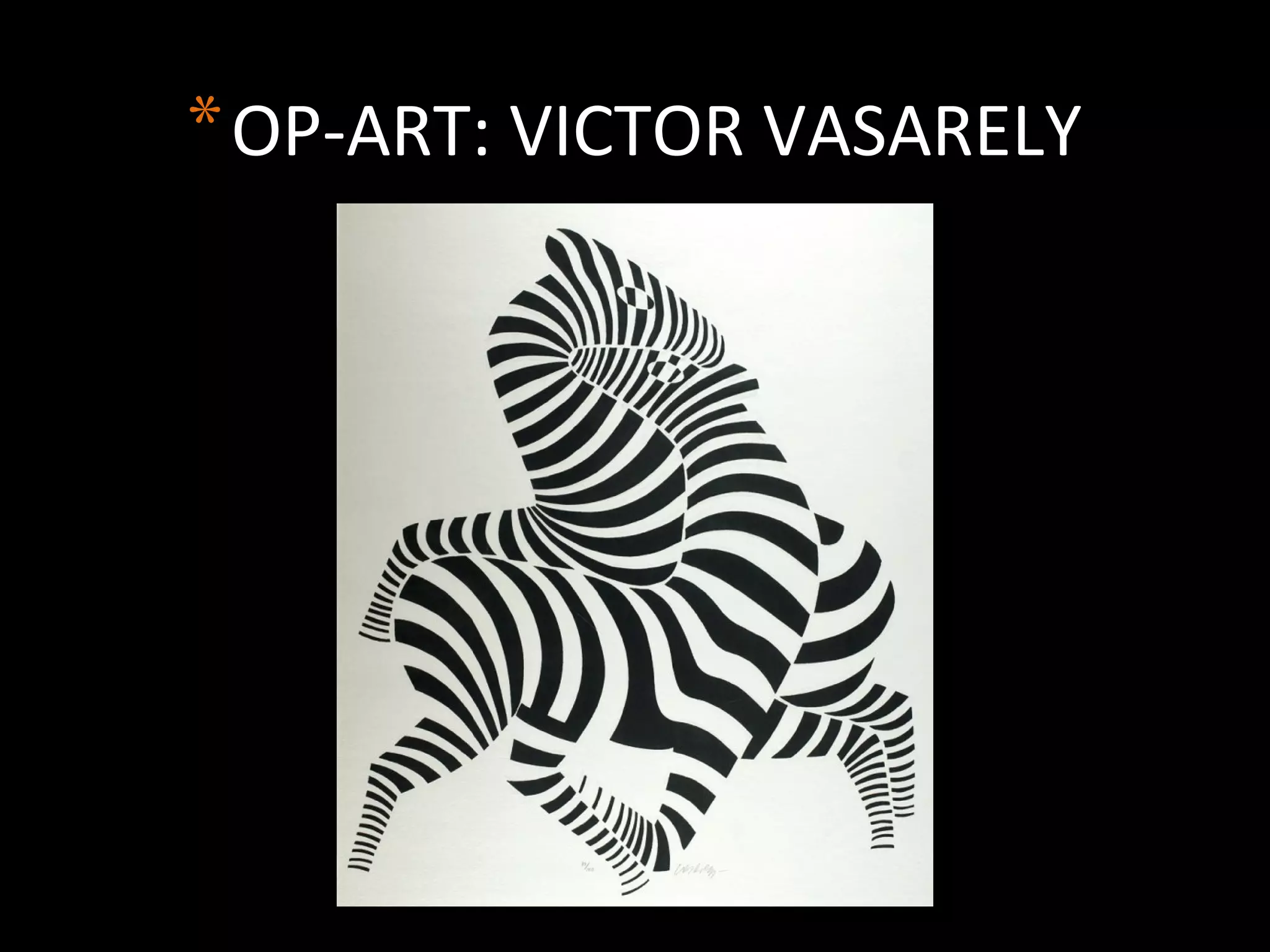
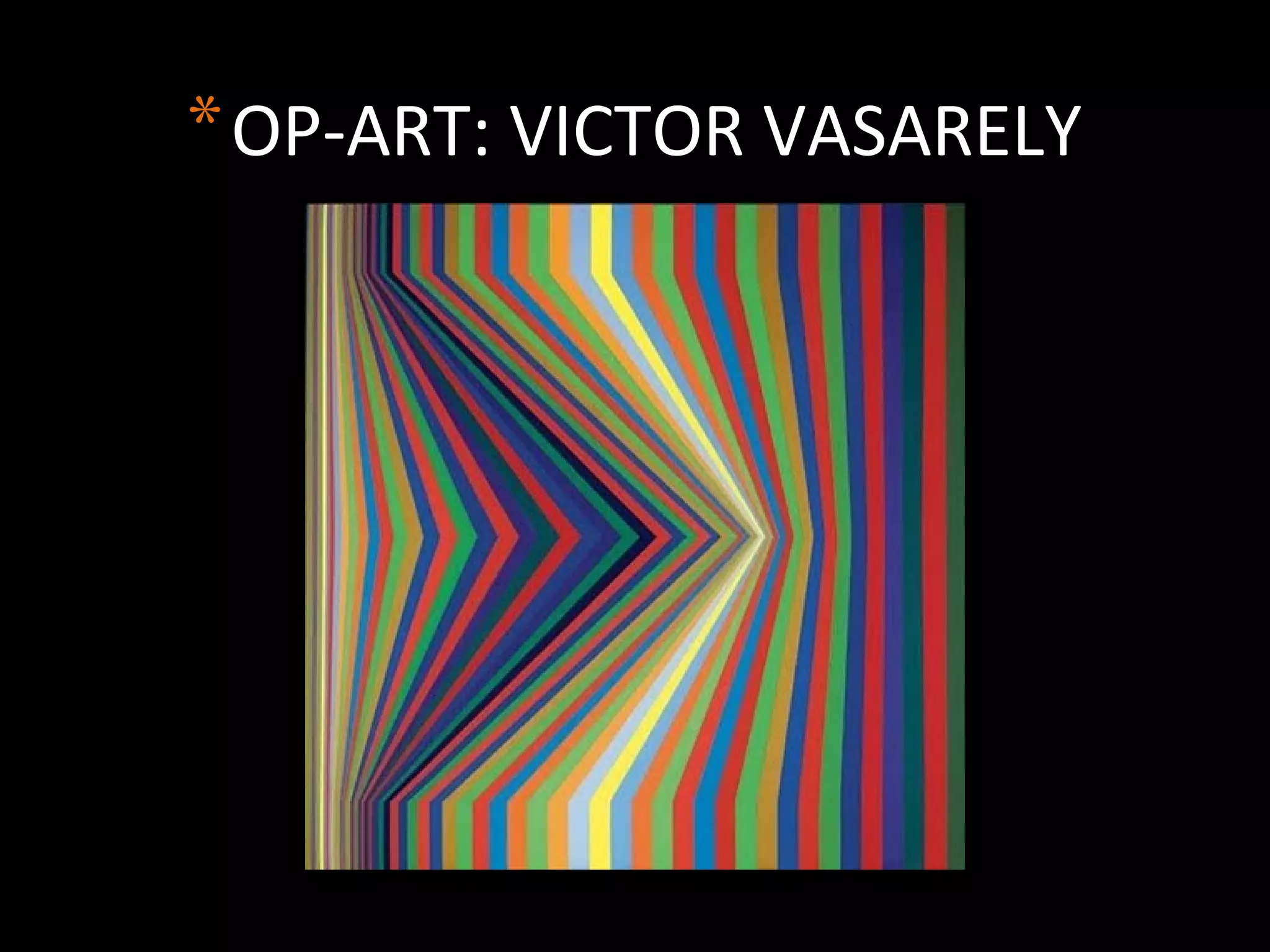
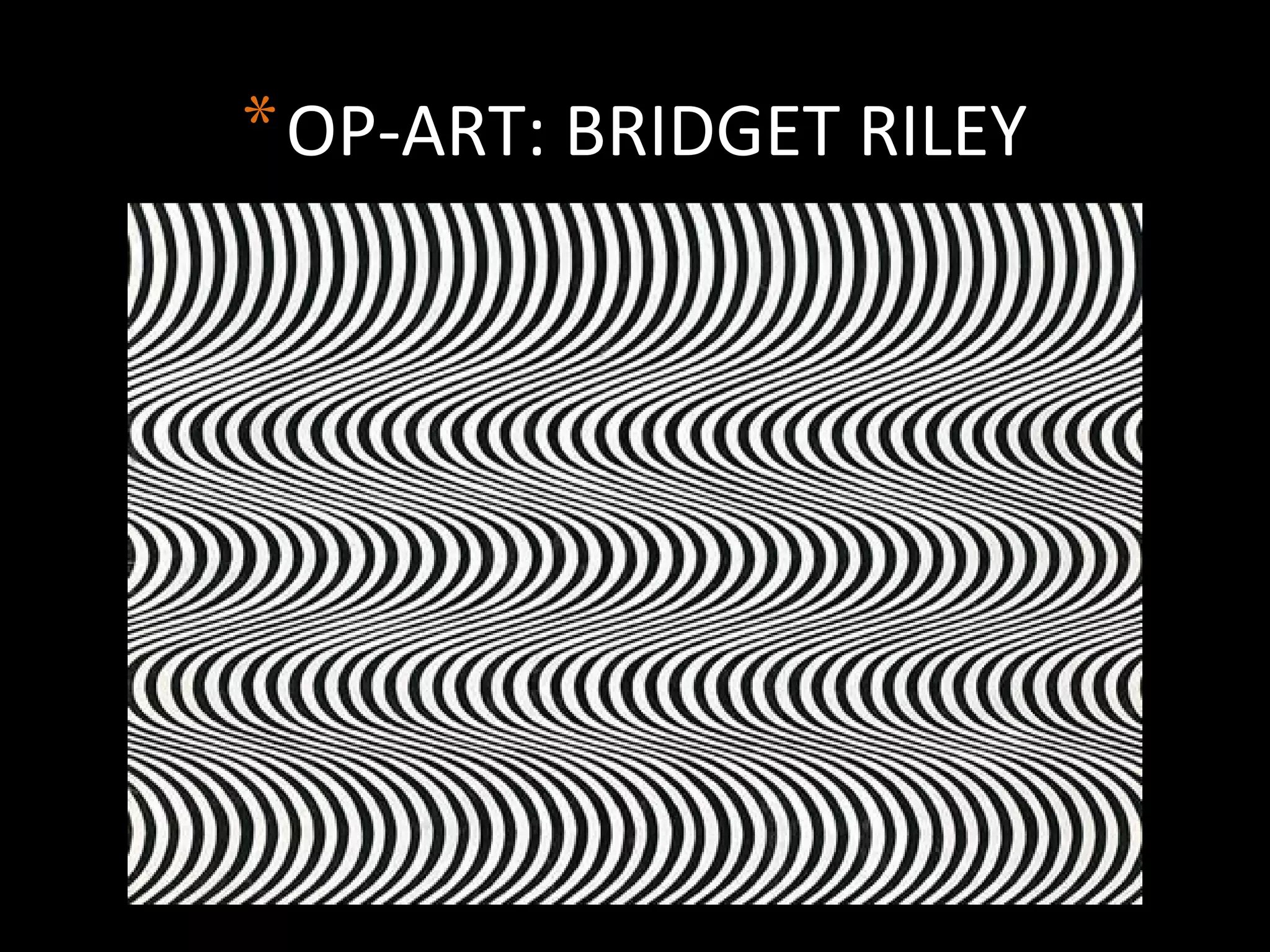
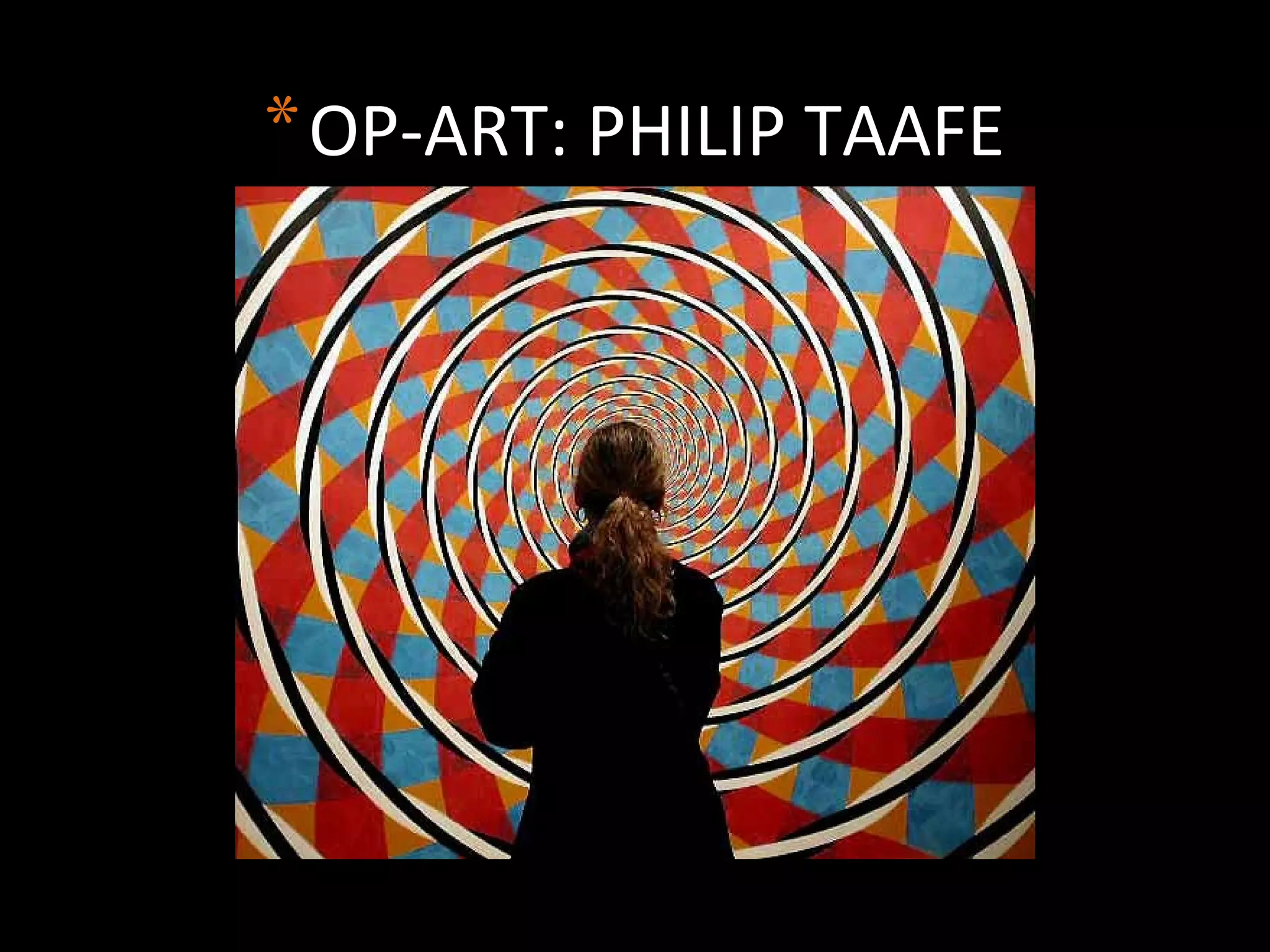
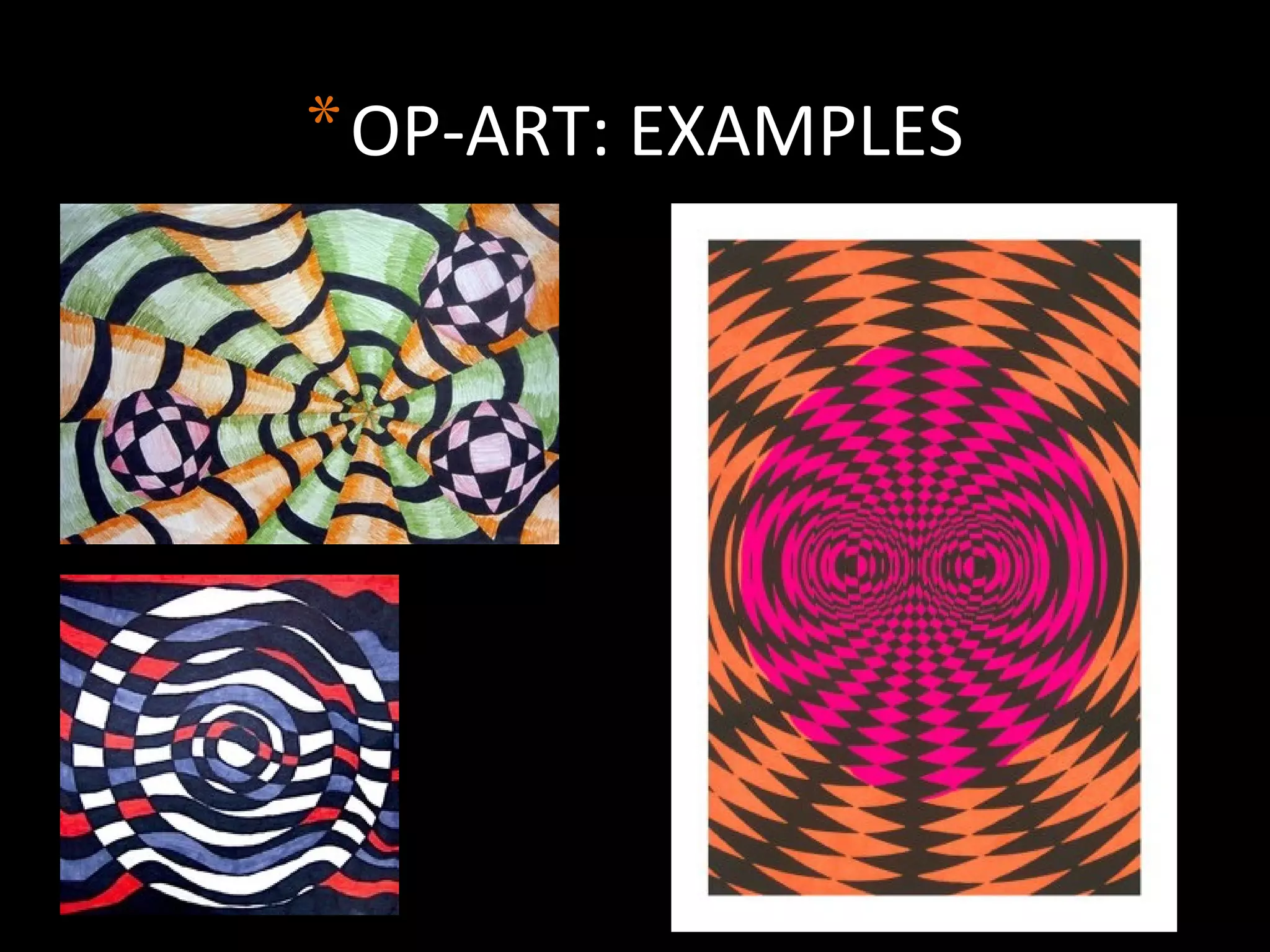
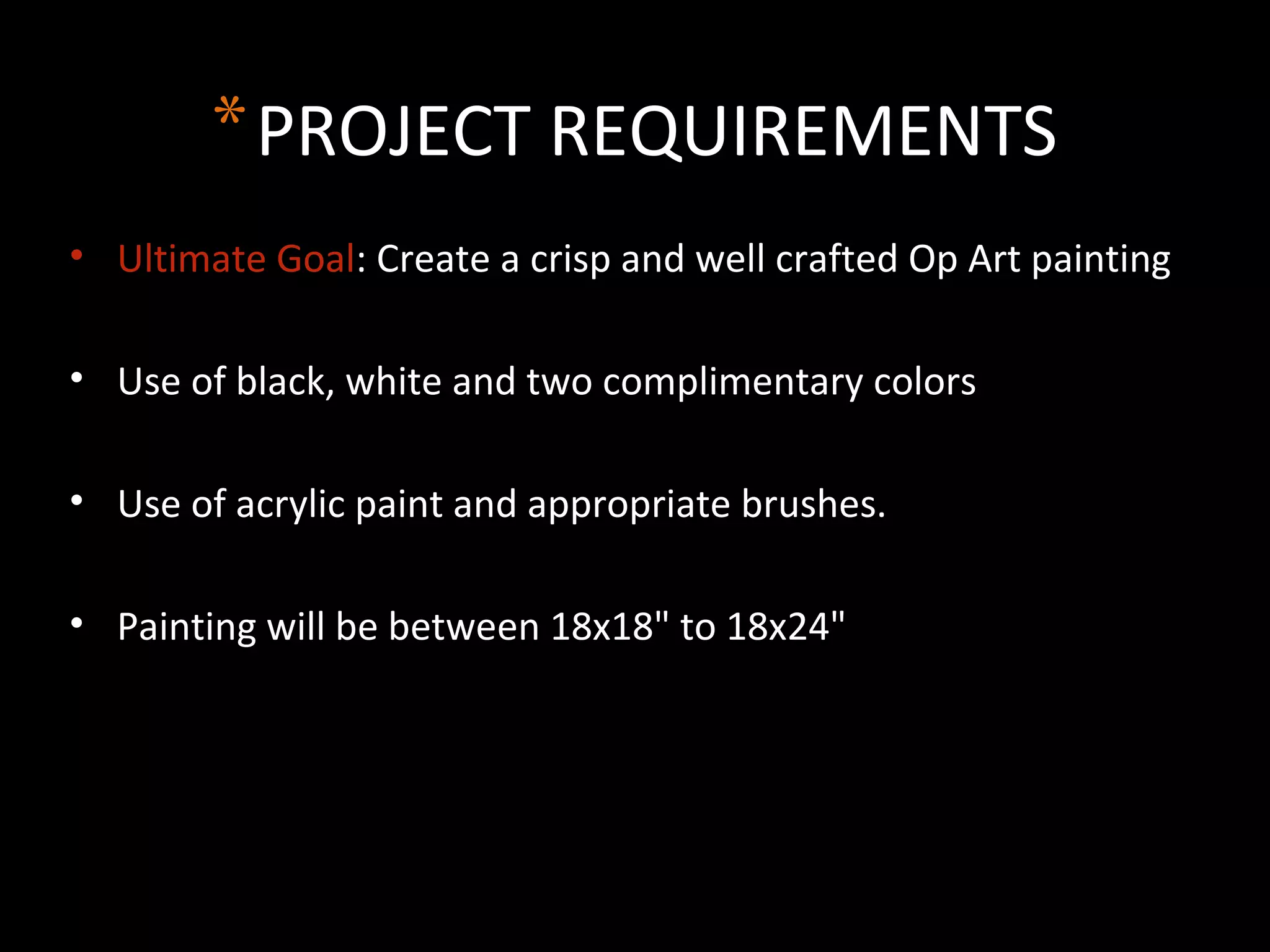
Op art is an art movement that uses optical illusions to create the effects of movement, depth, or swirling patterns in the viewer's mind. It emerged in the 1960s, building on scientific research into optical perceptions from the 19th century. Major op artists include Victor Vasarely, who helped popularize the movement, and Bridget Riley, known for her black and white paintings that create optical effects. They used simple geometric patterns and color contrasts to trick the eye into perceiving movement without any actual moving parts. The goal of op art is to produce visual illusions through precise mathematical compositions that appear to move or change when viewed from different angles.





![*OP-ART: HOW?
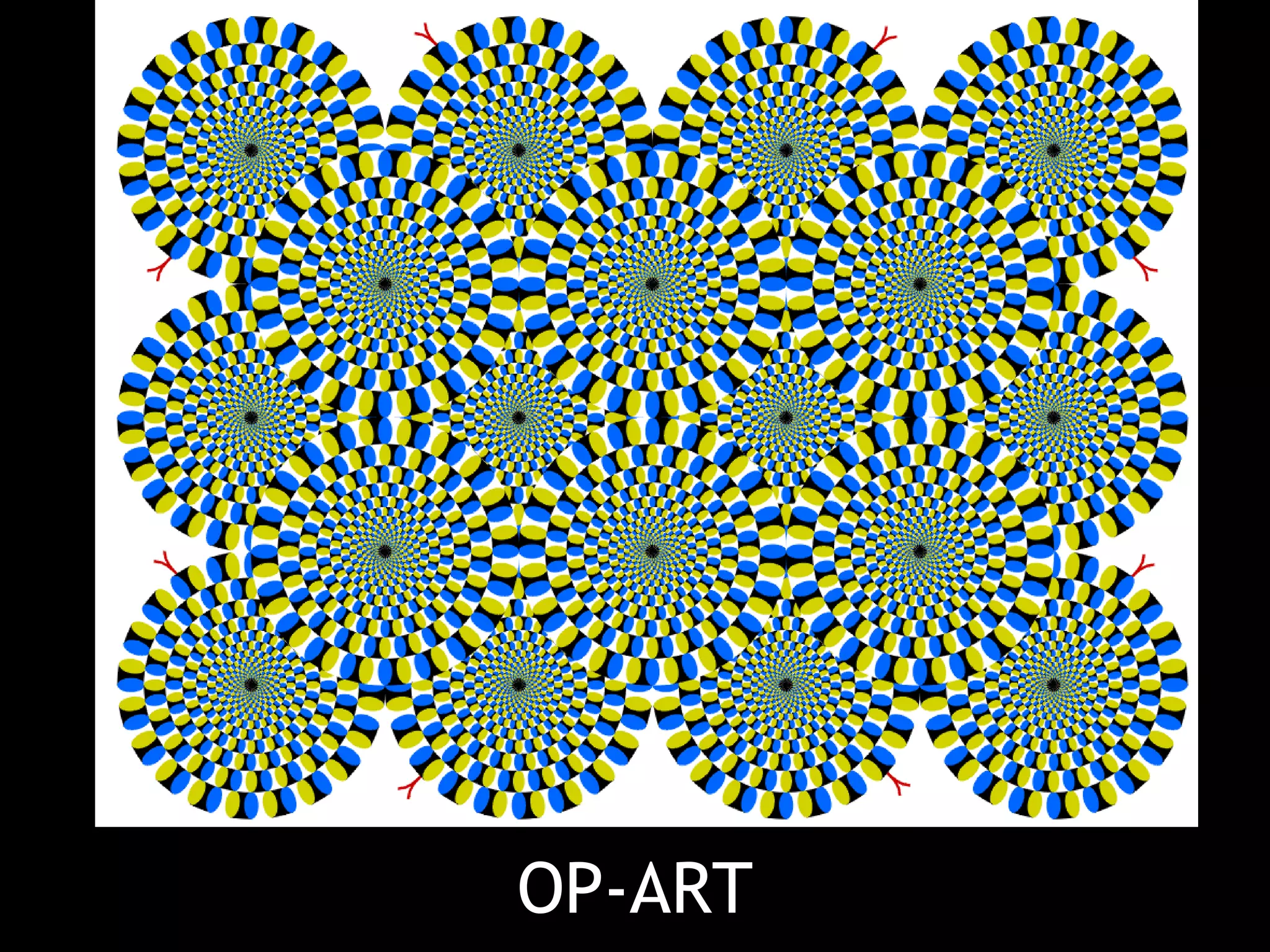
*Viewer gets the impression of movement by flashing and
vibration, or alternatively of swelling or warping.
*Used colors, lines and shapes repetitive and simple ways to
create perceived movement and to trick the viewer's eye.
*Goal of Op Art was to produce painting is to create a visual
illusion by using geometric patterns and contrasting colors.
*Techniques used in Op Art are perspective and careful
juxtaposition of color (whether chromatic [identifiable hues] or
achromatic [black, white or gray]).](https://image.slidesharecdn.com/baopart-130924100303-phpapp01/75/Op-Art-12-2048.jpg)