



ARROW POISONS AND
CURARES
OUTLINE:
ARROW POISONS AND CURARES
Arrow poisons
o Chondrodendron (Menispermaceae)
+ used medicinally
+ usually a "tube" curare
o Strychnos (Loganiaceae)
+ usually a "calabash" curare
Other curares
Chemistry
Iboga
Reading
Introduction
• Many plant products are used in "primitive
societies" to capture or kill game. These
range from those used to coat or tip arrows
and spears to those used to poison or stun
fish (sometimes called piscicides or
barbascos).
• Although we don't often consider it, we have
benefited from these unusual (to us) uses in
that we use these compounds medicinally
and for insecticides.
Curares or arrow poisons
• Arrow poisons have been used by almost all
primitive societies. Similar substances also
were used in Western Europe several
thousand years ago. They are still used in
South America, some parts of Africa, and in
Southeast Asia.
• The term curare is from a South American
aboriginal word. The plants upon which the
arrow poisons are based, the method of
preparation and the utilization of the materials
differ greatly from culture to culture.
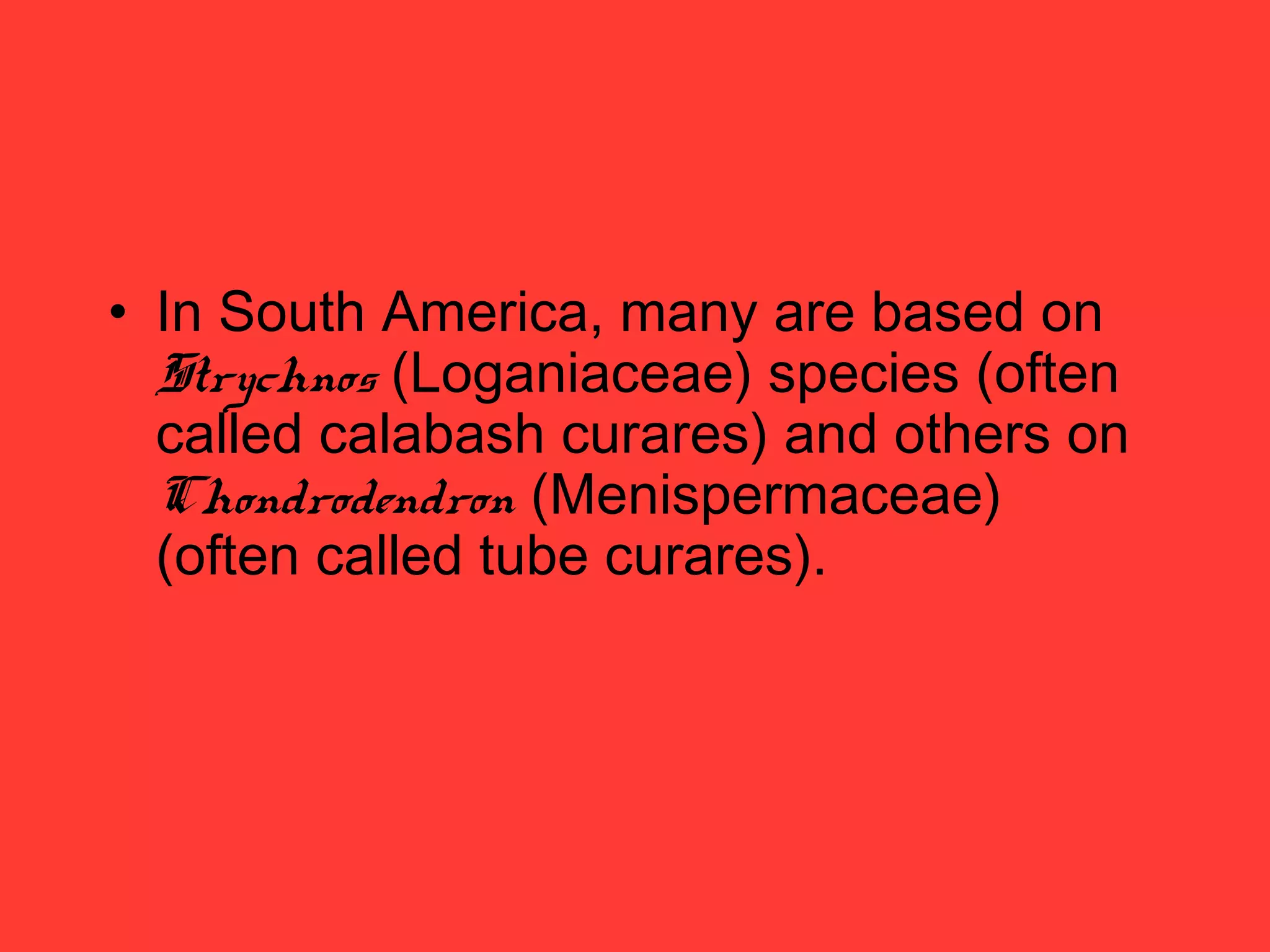
• In South America, many are based on
Strychnos (Loganiaceae) species (often
called calabash curares) and others on
Chondrodendron (Menispermaceae)
(often called tube curares).
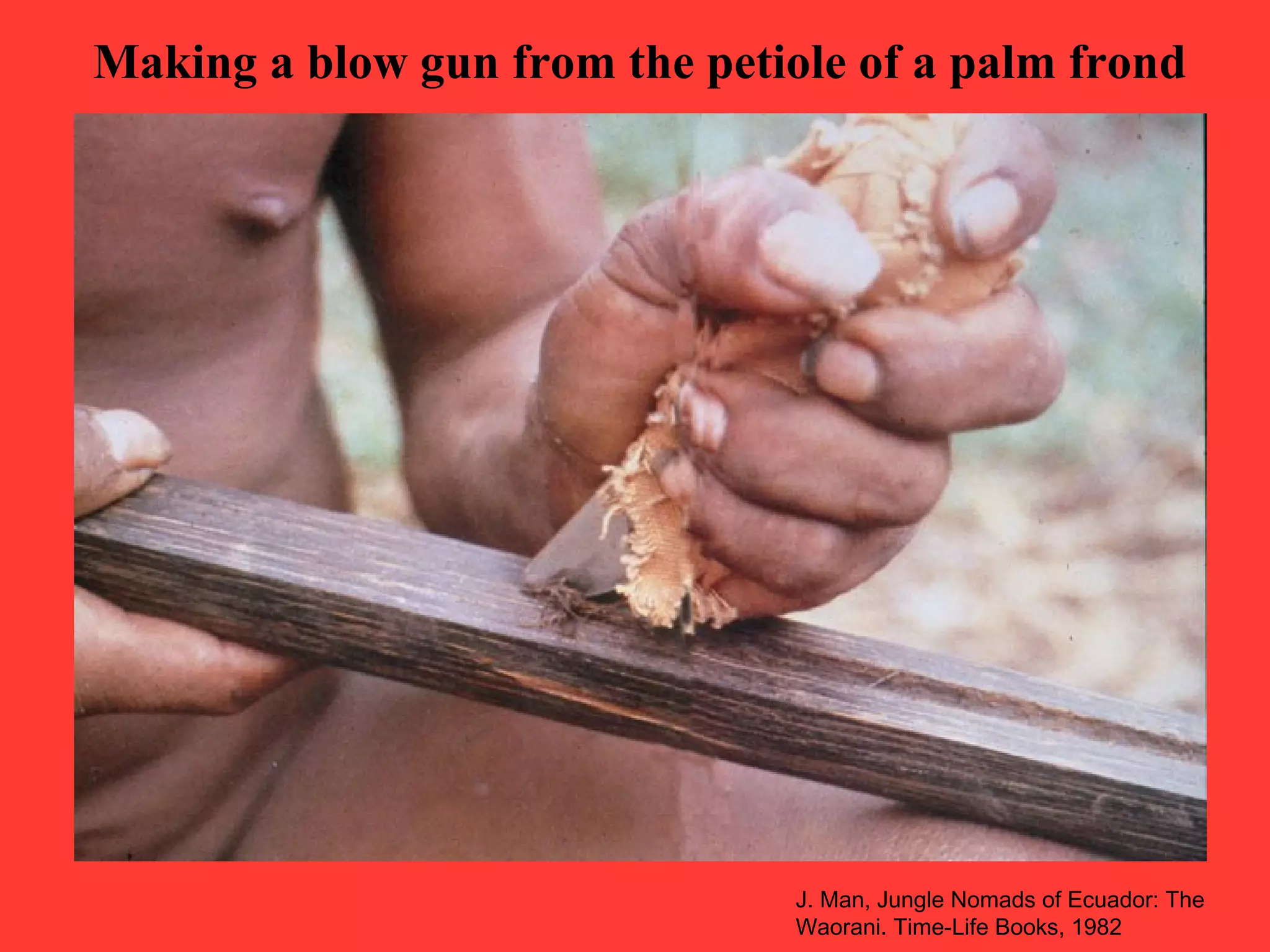
Making a blow gun from the petiole of a palm frond
J. Man, Jungle Nomads of Ecuador: The
Waorani. Time-Life Books, 1982
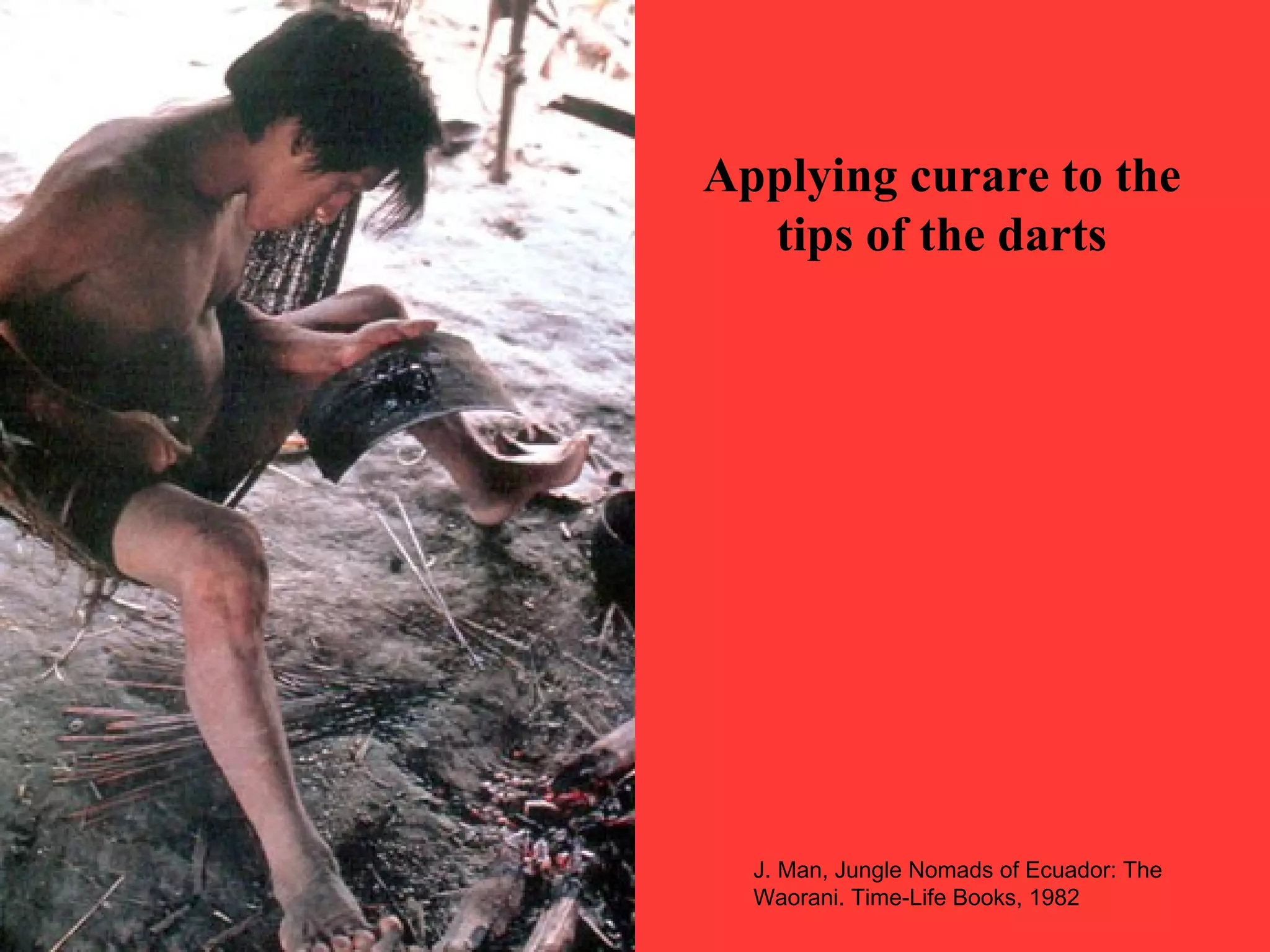
Applying curare to the
tips of the darts
J. Man, Jungle Nomads of Ecuador: The
Waorani. Time-Life Books, 1982
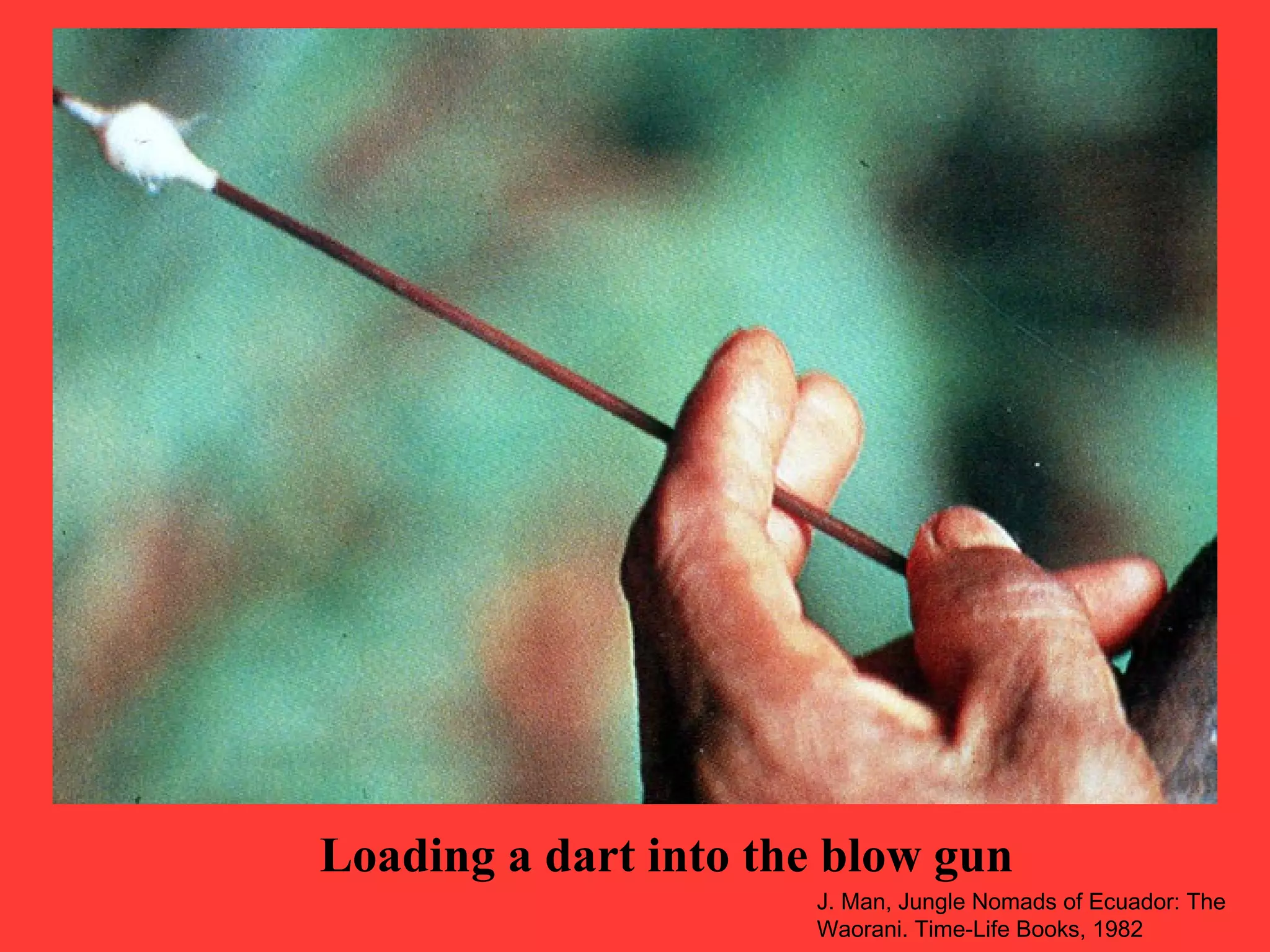
Kapok wadding for the
darts
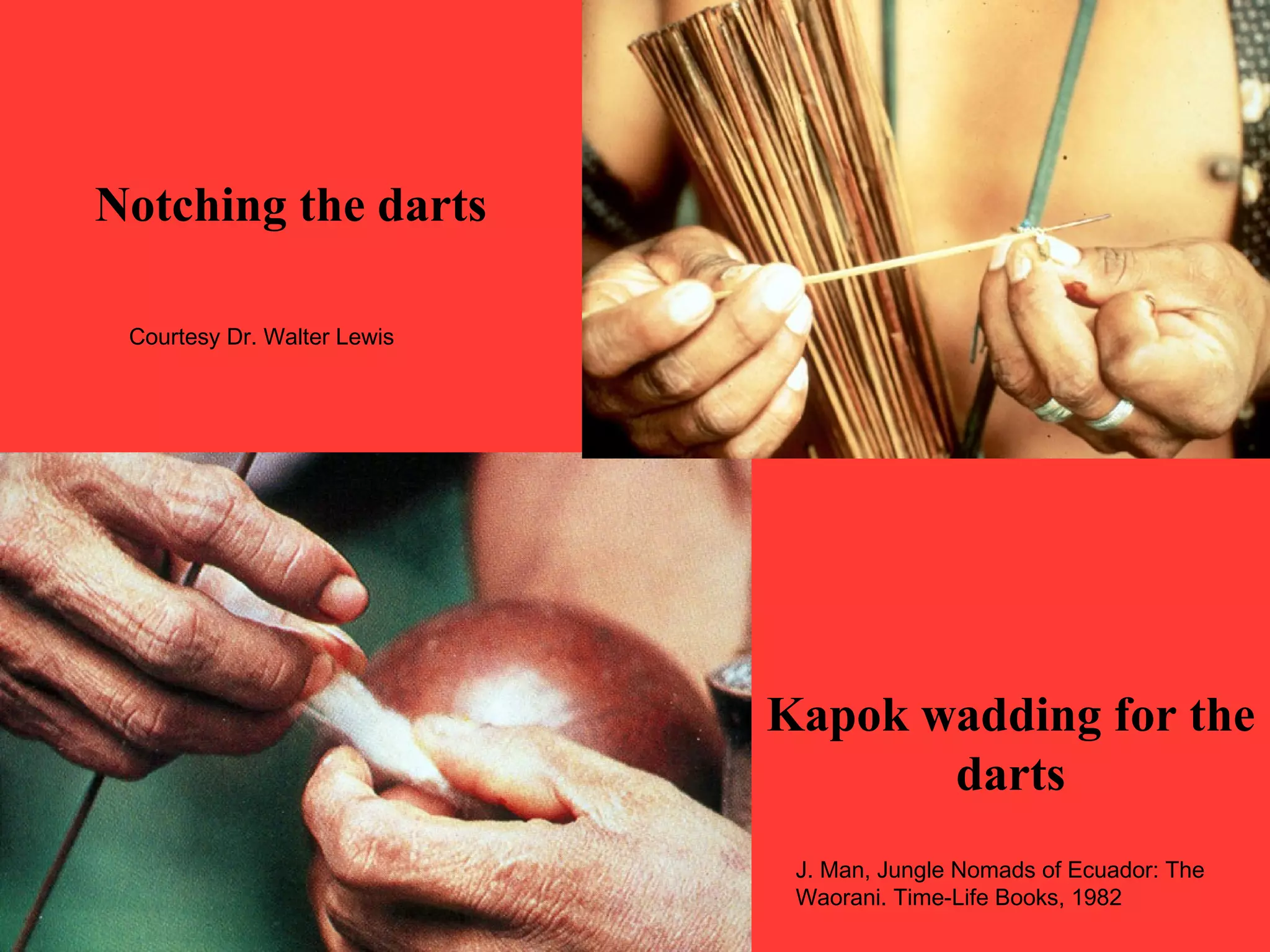
Notching the darts
Courtesy Dr. Walter Lewis
J. Man, Jungle Nomads of Ecuador: The
Waorani. Time-Life Books, 1982
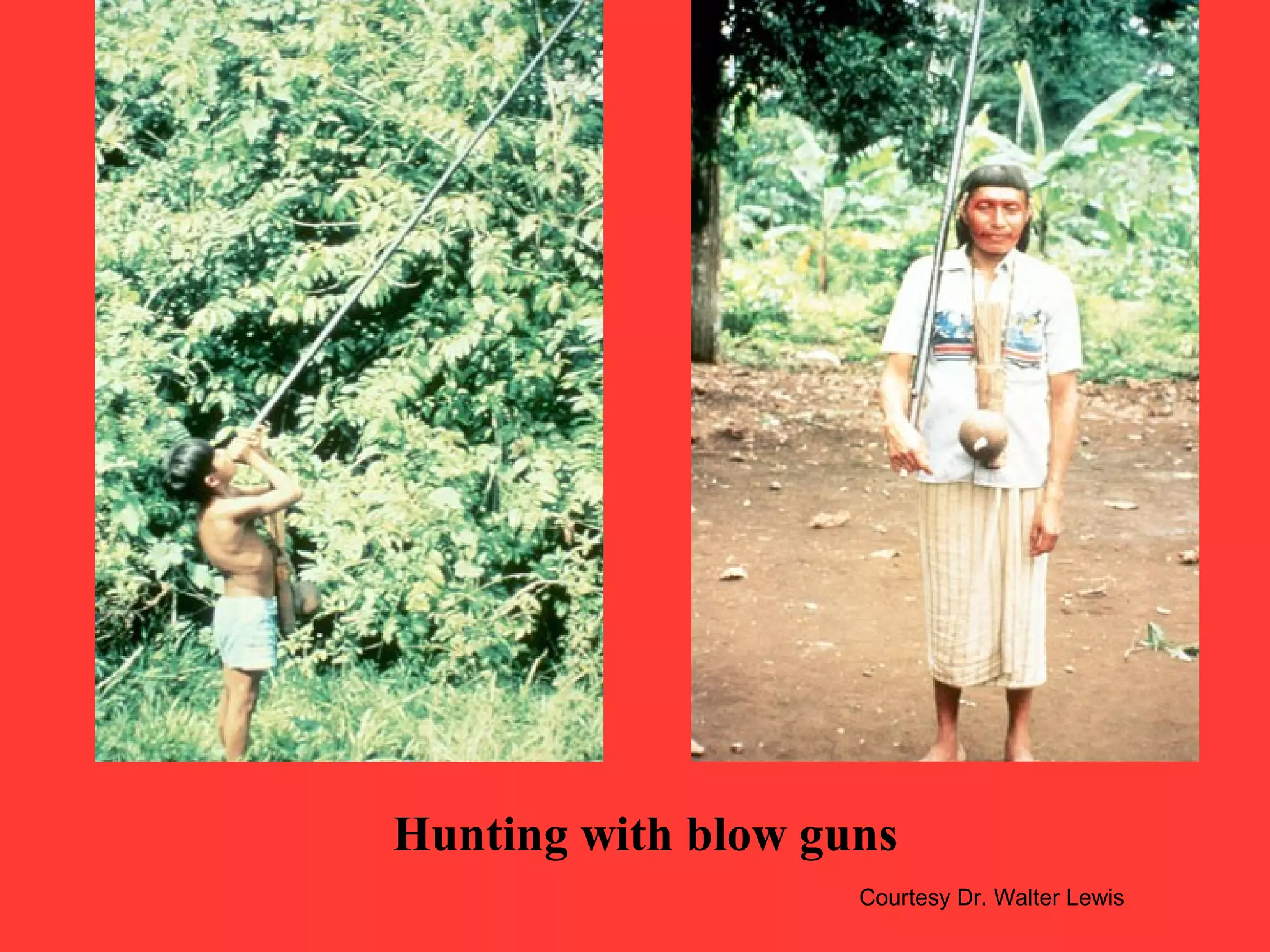
Loading a dart into the blow gun
J. Man, Jungle Nomads of Ecuador: The
Waorani. Time-Life Books, 1982
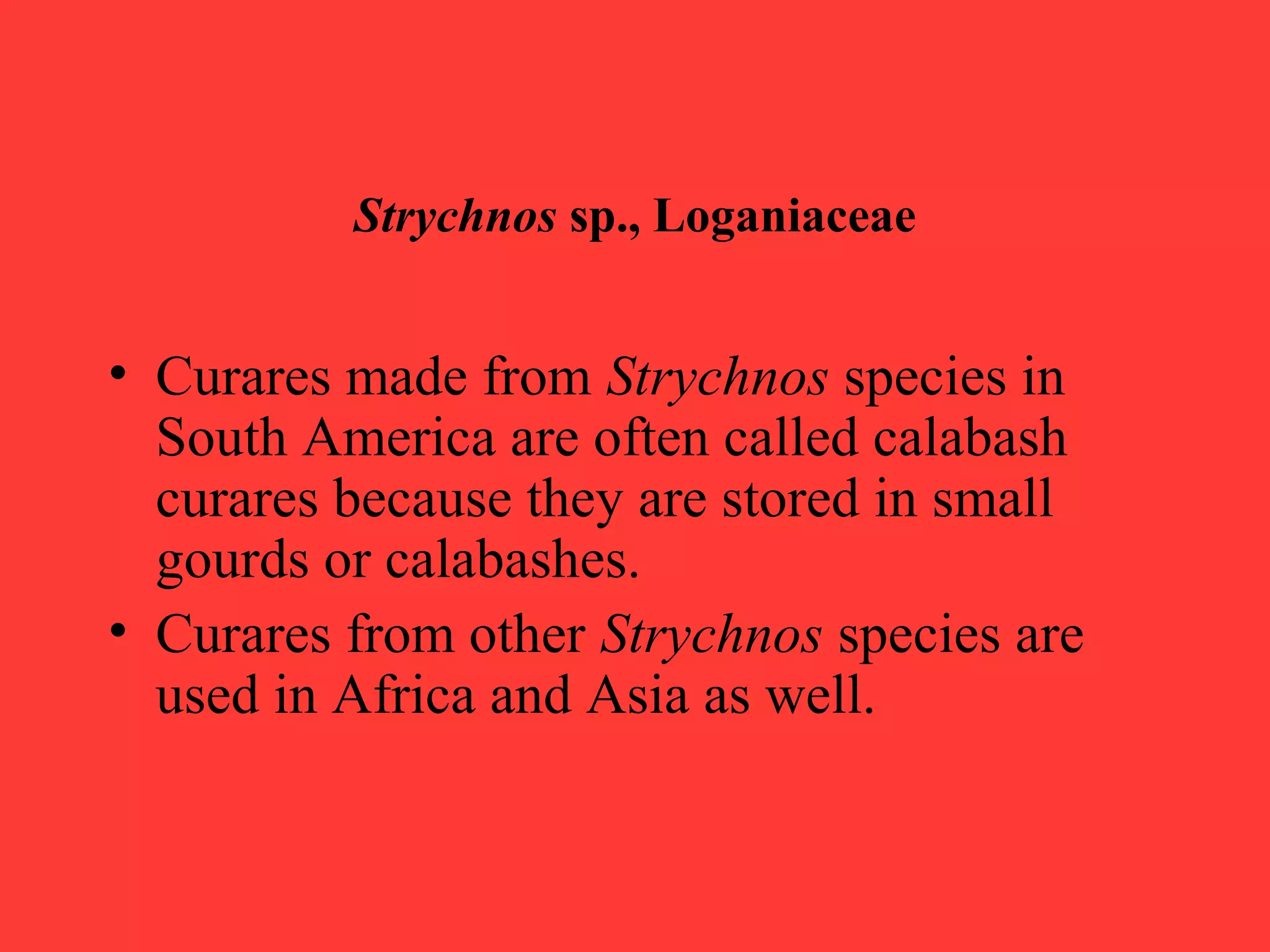
Hunting with blow guns
Courtesy Dr. Walter Lewis
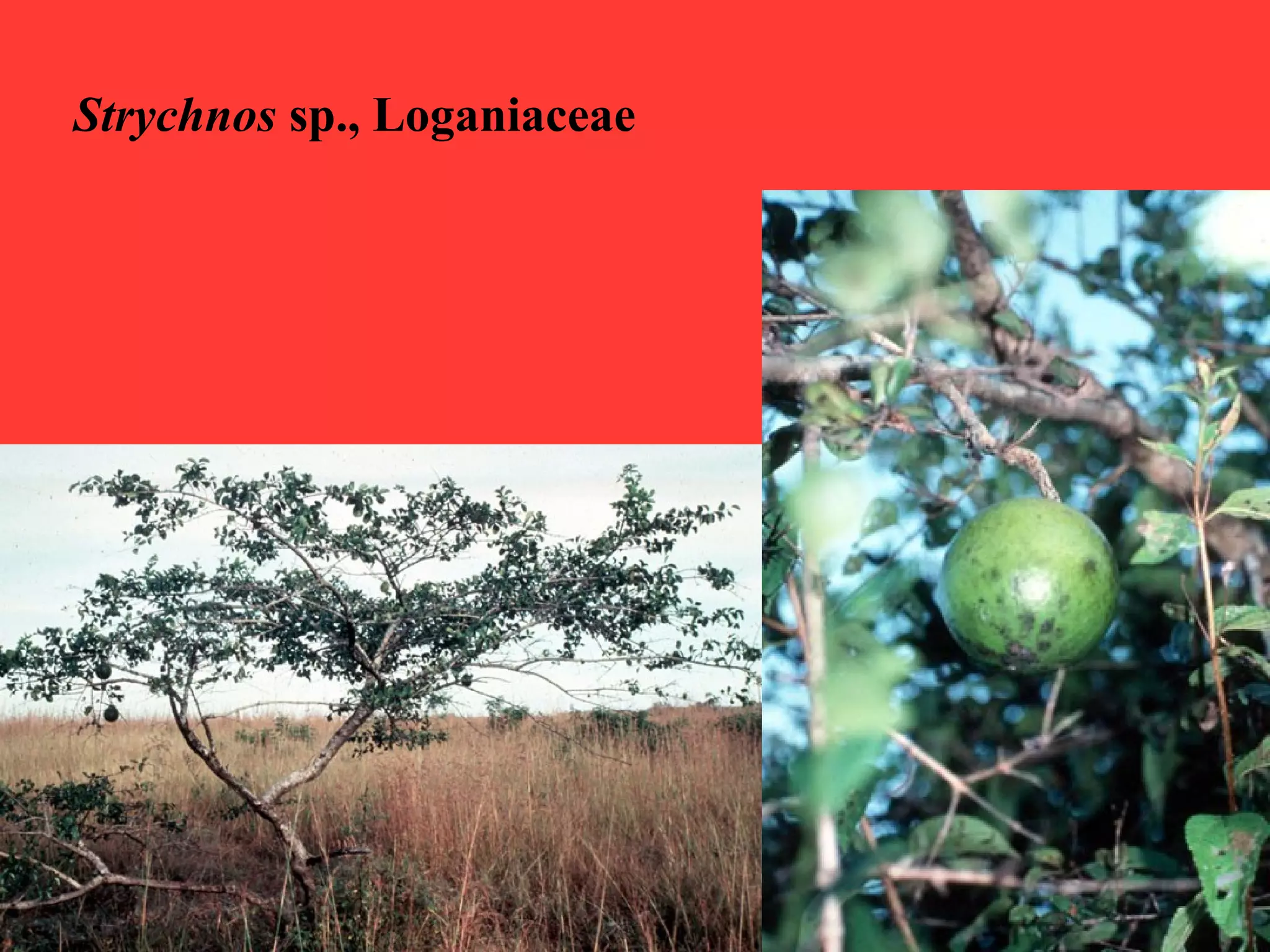
Strychnos sp., Loganiaceae
• Curares made from Strychnos species in
South America are often called calabash
curares because they are stored in small
gourds or calabashes.
• Curares from other Strychnos species are
used in Africa and Asia as well.
Strychnos sp., Loganiaceae
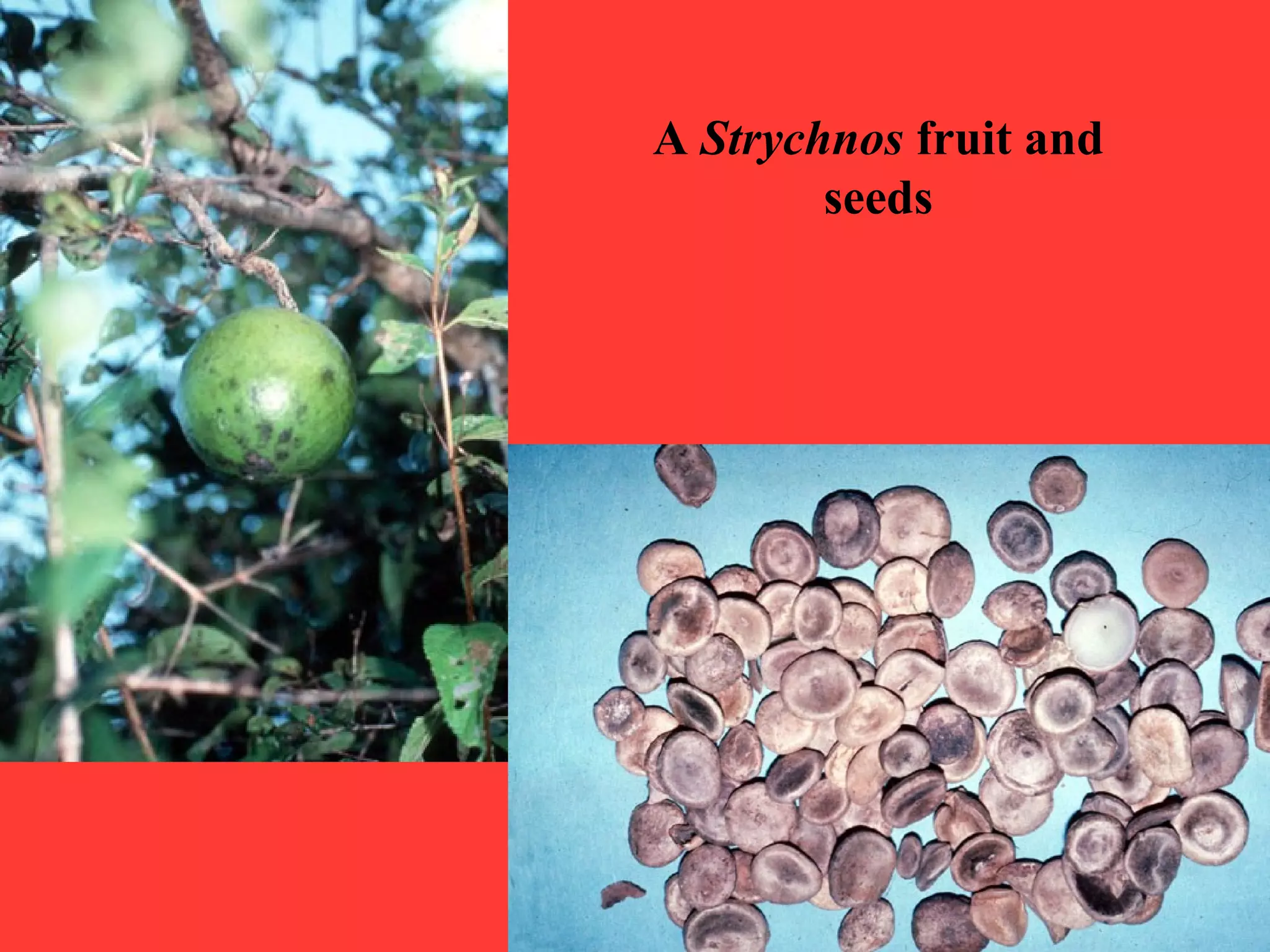
A Strychnos fruit and
seeds
Chondrodendron tomentosa, Menispermaceae
• Curares made from Chondrodendron
species in South America are often called
tube curares because they are stored in
small sections or tubes of bamboo.
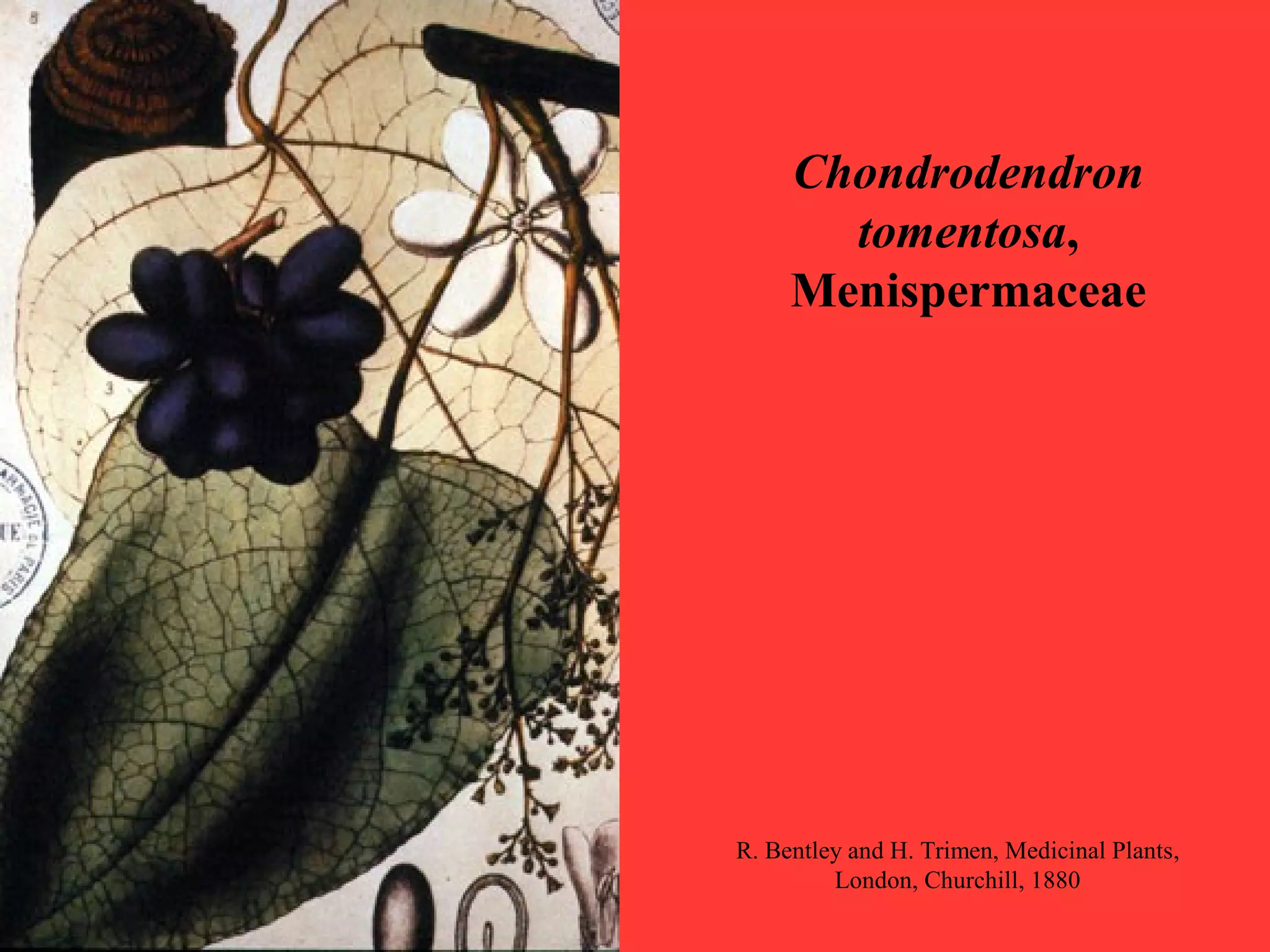
Chondrodendron
tomentosa,
Menispermaceae
R. Bentley and H. Trimen, Medicinal Plants,
London, Churchill, 1880
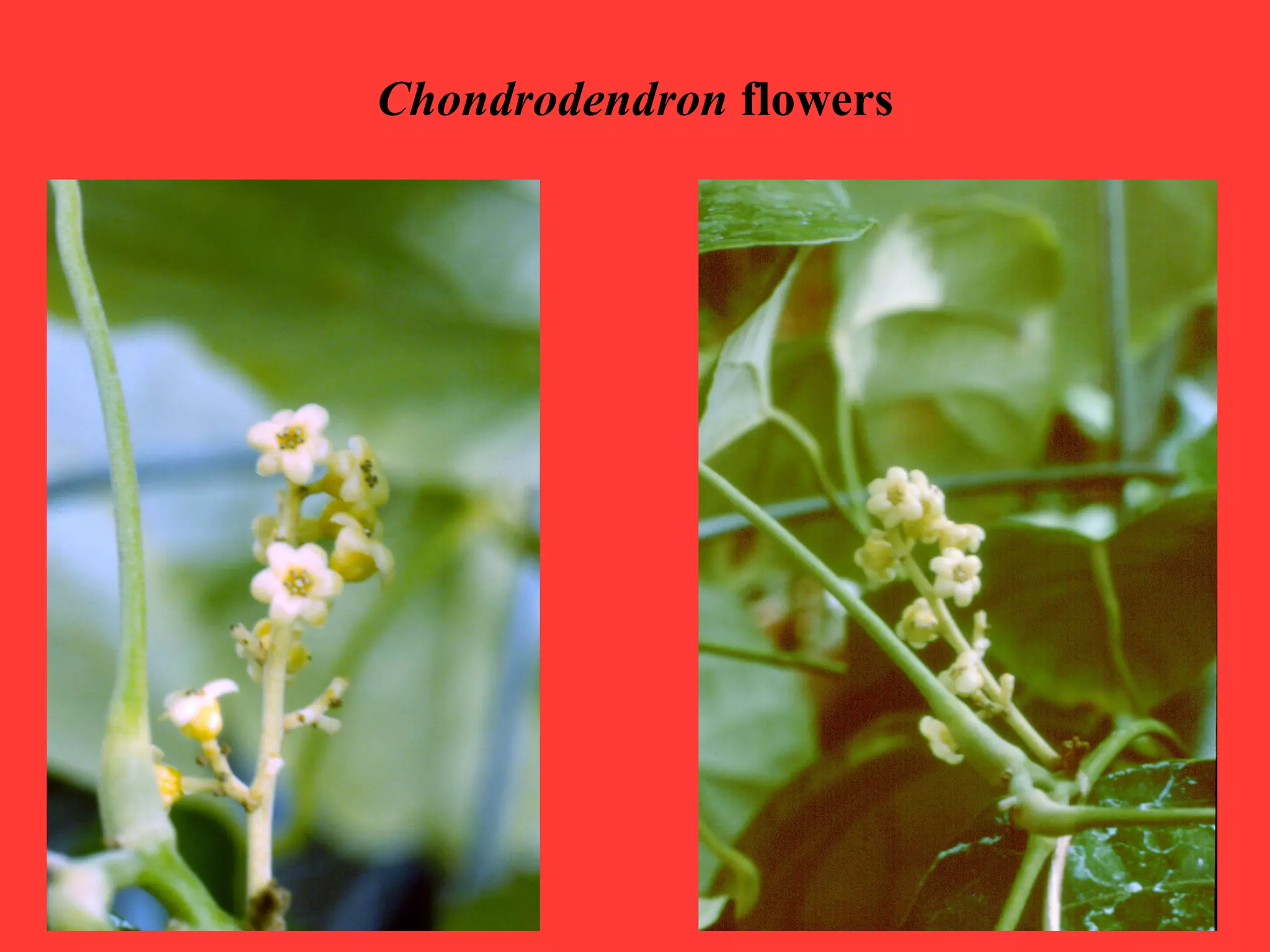
Chondrodendron flowers
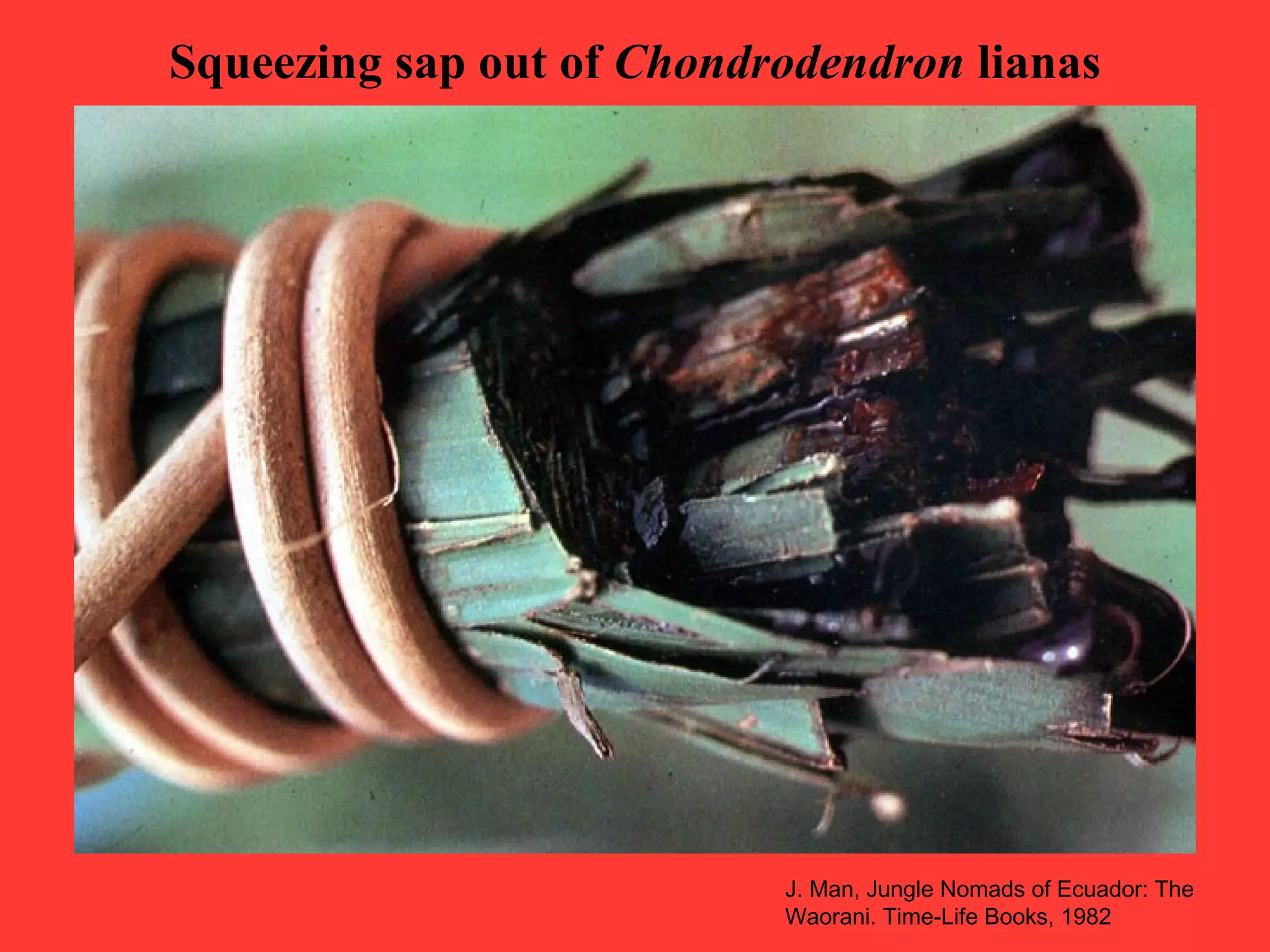
Squeezing sap out of Chondrodendron lianas
J. Man, Jungle Nomads of Ecuador: The
Waorani. Time-Life Books, 1982
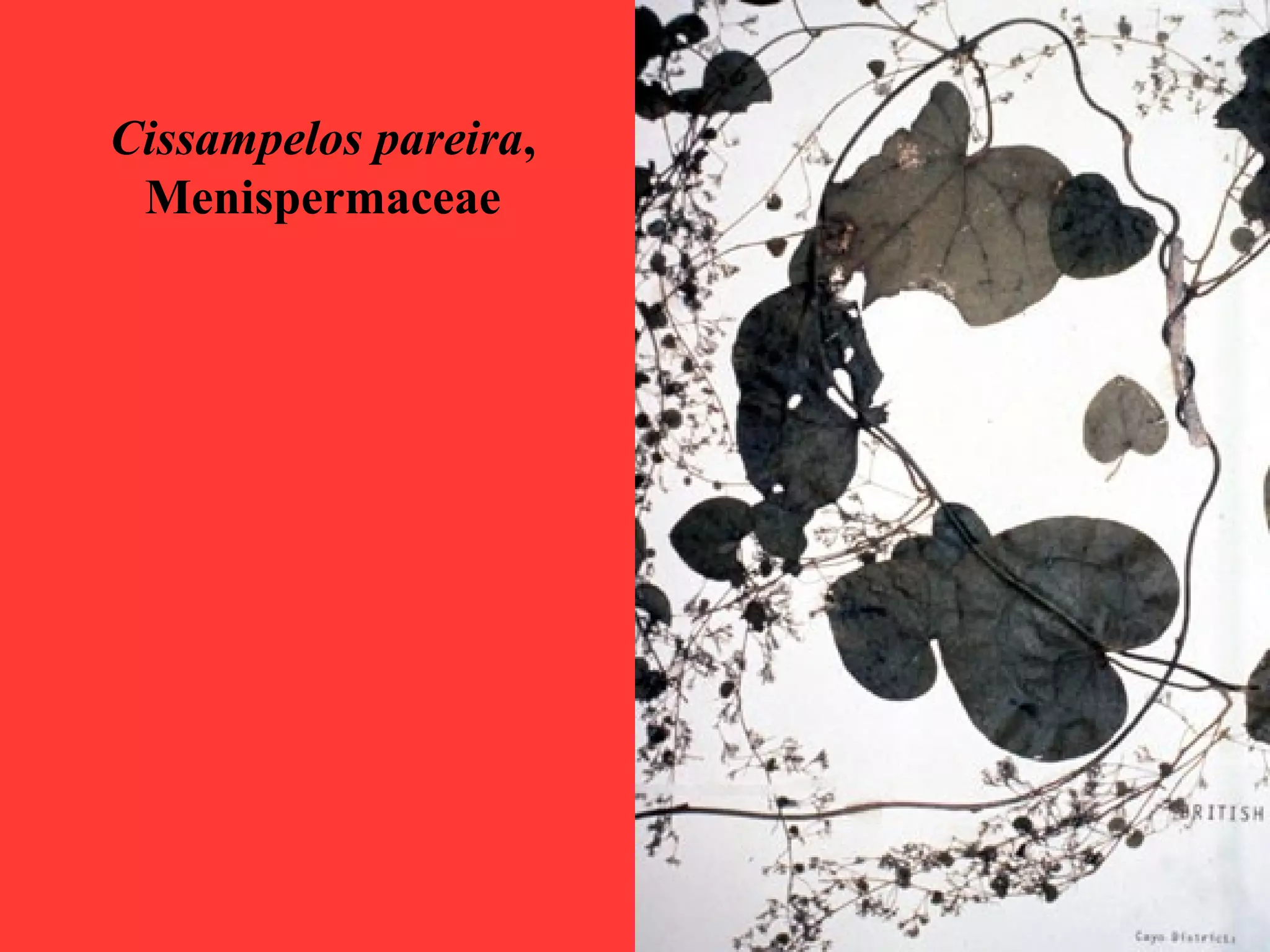
Cissampelos pareira,
Menispermaceae
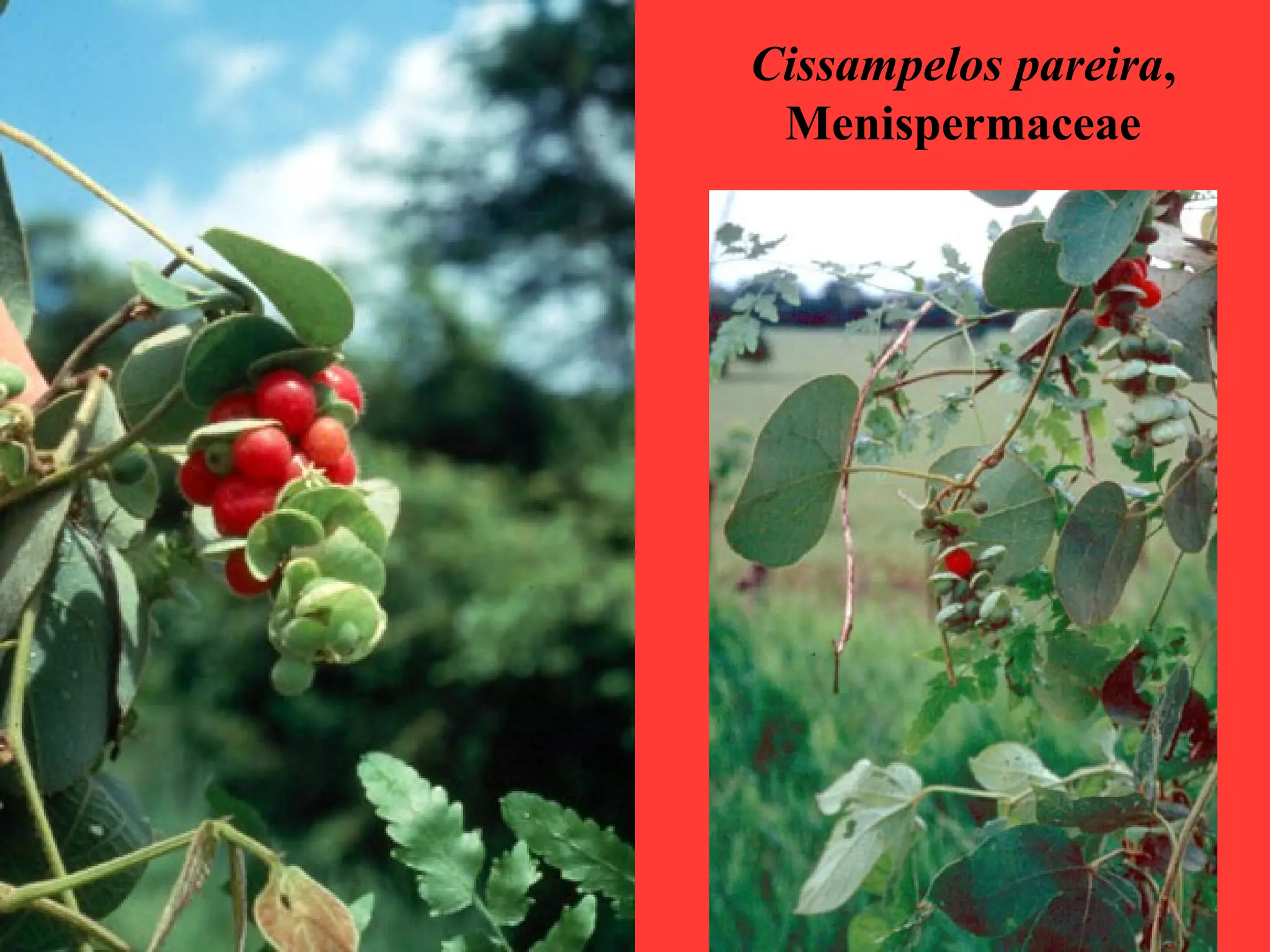
Cissampelos pareira,
Menispermaceae
• It should be noted, however, that calabash
and tube curares are terms based on the type
of containers used in various cultures and do
not say anything about what plants are used
to make the arrow poisons. Generally, the
correlations noted above hold.
• Calabashes are small gourds and tube
means a section of bamboo.
• Arrow poisons are also stored in small
pottery containers by people of some
cultures.
• The preparation of these mixtures is usually
complicated and many plant materials are
used in addition to the major active ones.
Some of these have been shown to have
synergistic effects.
• Once prepared, the dose is often
standardized by shooting small birds or
animals of particular species and noting the
amount necessary to kill them. Death usually
occurs by asphyxiation.
• Most curares are not considered toxic orally,
but some accounts suggest that consuming
them can be hazardous.
• In general, the active compounds are organic
bases called alkaloids.
• The alkaloids from both tube and calabash
curares have been used medicinally.
• They cause complete relaxation of skeletal
muscles. They are used in certain types of
surgery.
• In Africa, Strychnos species are also often
used to make curares.
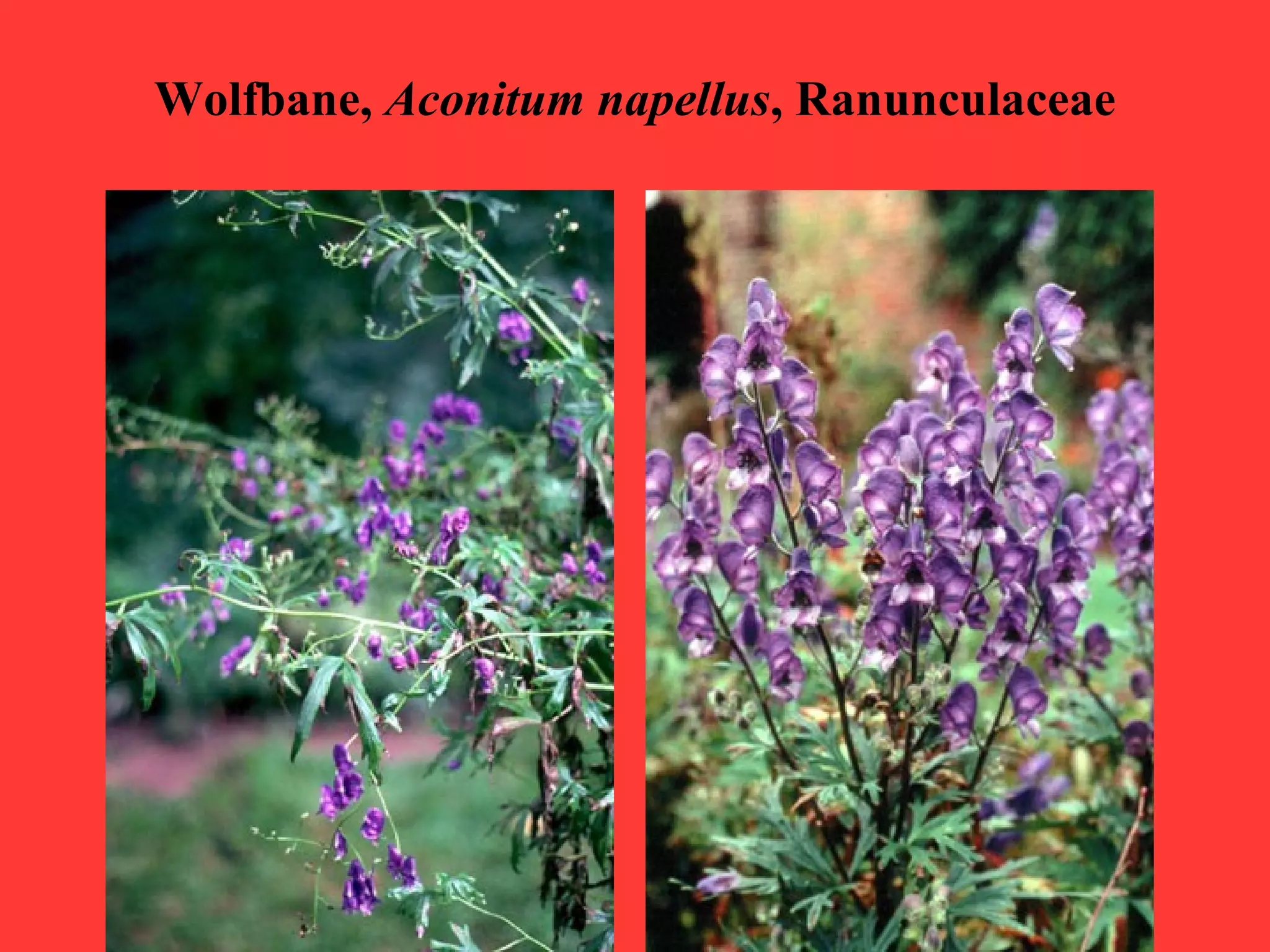
• In Siberia, Alaska, and in Japan (among the
Ainu), plants of the genus Aconitum
(Ranunculaceae) were favored.
Wolfbane, Aconitum napellus, Ranunculaceae
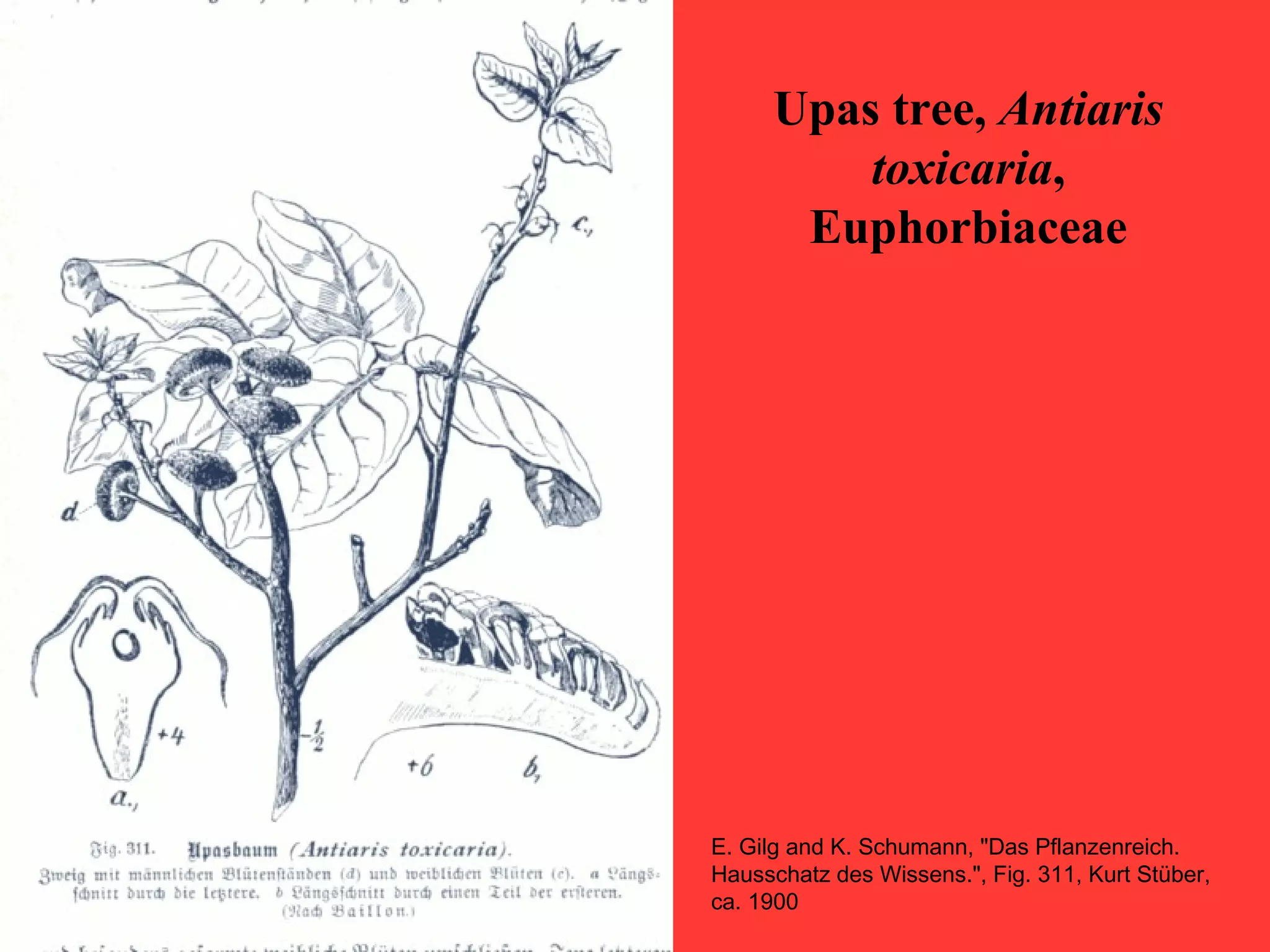
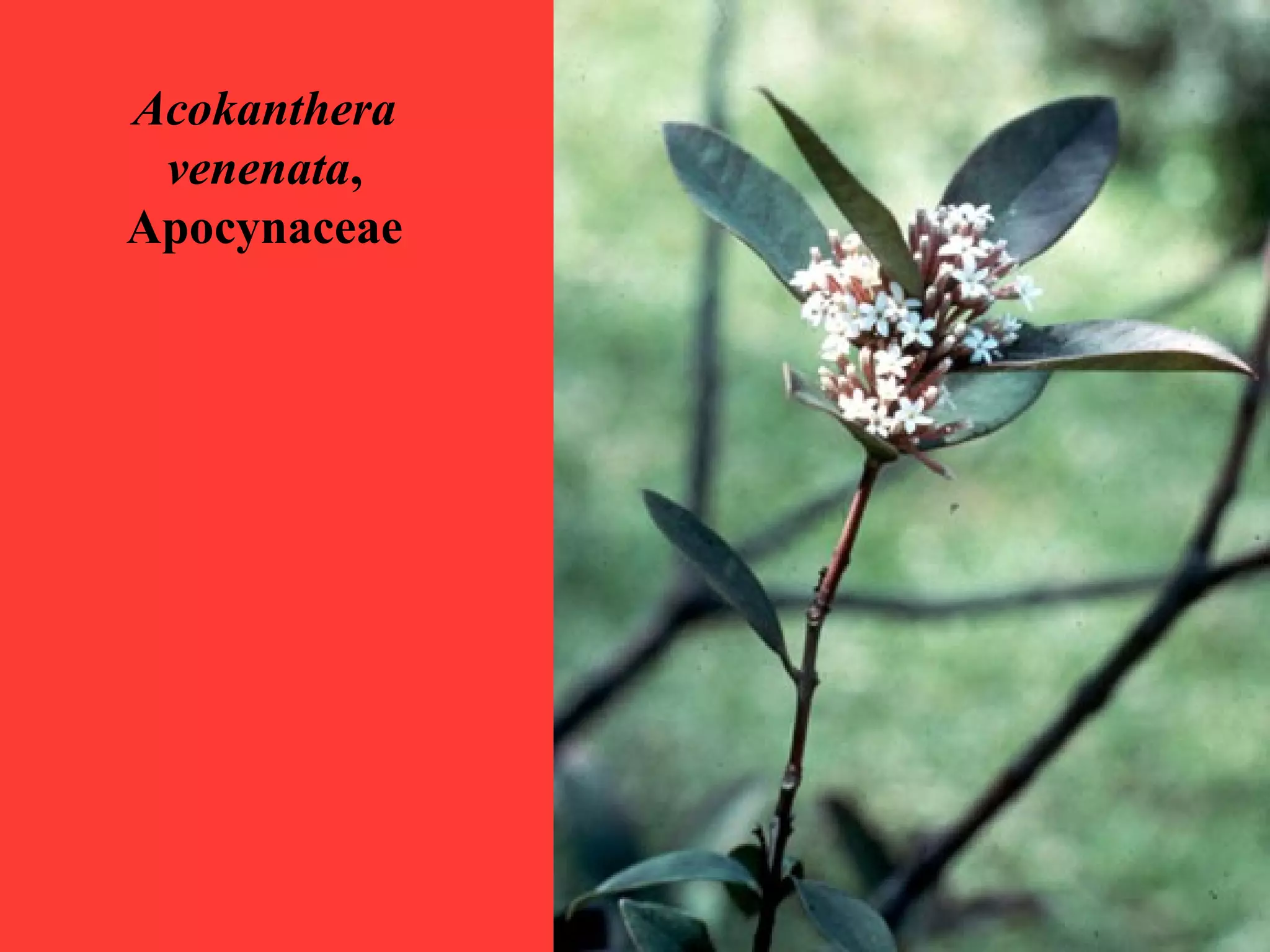
• In other areas, plants of the
Euphorbiaceae and Apocynaceae
containing cardiac glycosides were
used.
Upas tree, Antiaris
toxicaria,
Euphorbiaceae
E. Gilg and K. Schumann, "Das Pflanzenreich.
Hausschatz des Wissens.", Fig. 311, Kurt Stüber,
ca. 1900
Acokanthera
venenata,
Apocynaceae
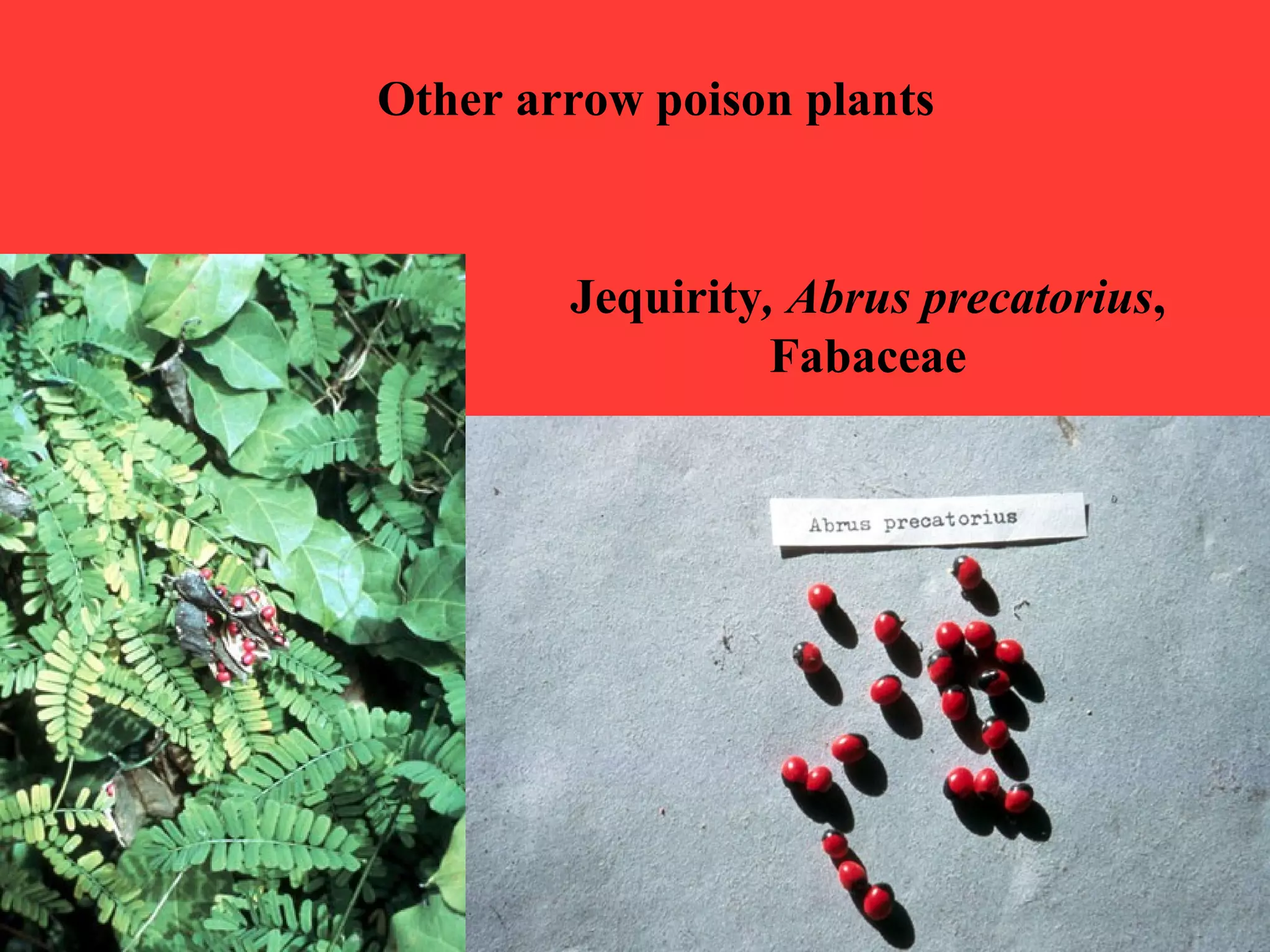
Jequirity, Abrus precatorius,
Fabaceae
Other arrow poison plants
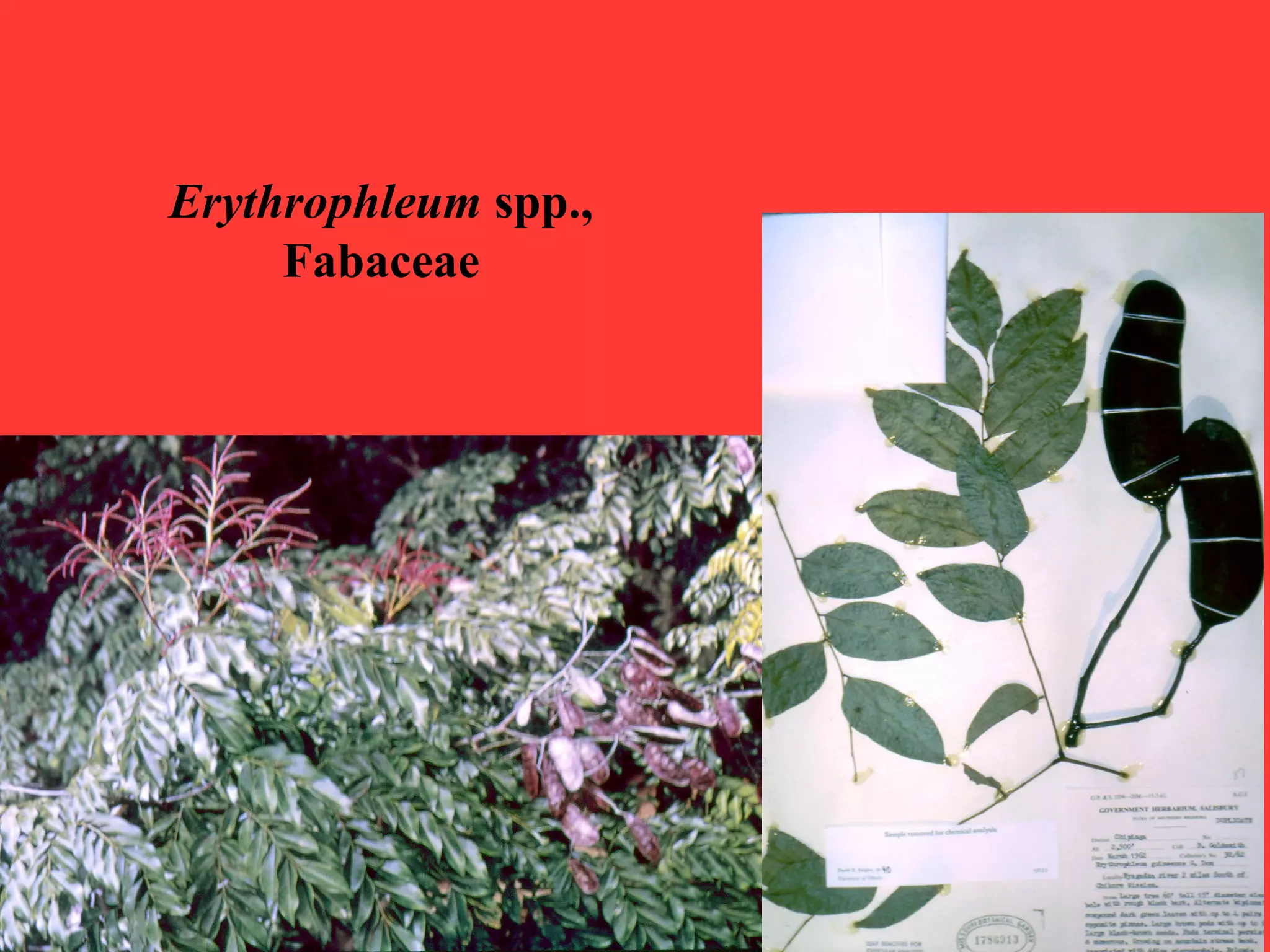
Erythrophleum spp.,
Fabaceae
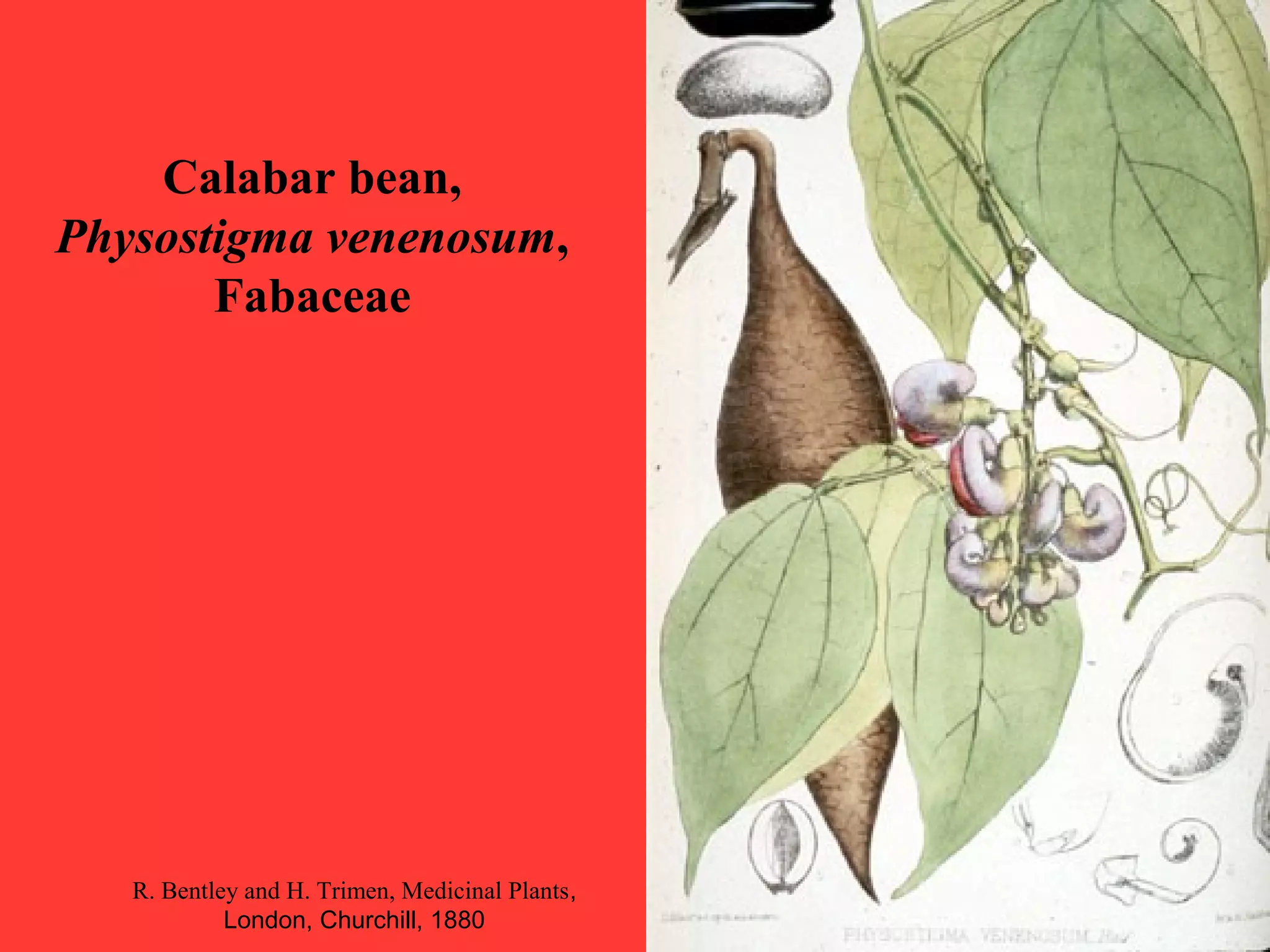
Calabar bean,
Physostigma venenosum,
Fabaceae
R. Bentley and H. Trimen, Medicinal Plants,
London, Churchill, 1880
Arrow Poisons and Curares

Arrow Poisons and Curares

  • 1.
  • 3.
    OUTLINE: ARROW POISONS ANDCURARES Arrow poisons o Chondrodendron (Menispermaceae) + used medicinally + usually a "tube" curare o Strychnos (Loganiaceae) + usually a "calabash" curare Other curares Chemistry Iboga
  • 4.
  • 5.
    Introduction • Many plantproducts are used in "primitive societies" to capture or kill game. These range from those used to coat or tip arrows and spears to those used to poison or stun fish (sometimes called piscicides or barbascos). • Although we don't often consider it, we have benefited from these unusual (to us) uses in that we use these compounds medicinally and for insecticides.
  • 7.
    Curares or arrowpoisons • Arrow poisons have been used by almost all primitive societies. Similar substances also were used in Western Europe several thousand years ago. They are still used in South America, some parts of Africa, and in Southeast Asia. • The term curare is from a South American aboriginal word. The plants upon which the arrow poisons are based, the method of preparation and the utilization of the materials differ greatly from culture to culture.
  • 8.
    • In SouthAmerica, many are based on Strychnos (Loganiaceae) species (often called calabash curares) and others on Chondrodendron (Menispermaceae) (often called tube curares).
  • 9.
    Making a blowgun from the petiole of a palm frond J. Man, Jungle Nomads of Ecuador: The Waorani. Time-Life Books, 1982
  • 10.
    Applying curare tothe tips of the darts J. Man, Jungle Nomads of Ecuador: The Waorani. Time-Life Books, 1982
  • 11.
    Kapok wadding forthe darts Notching the darts Courtesy Dr. Walter Lewis J. Man, Jungle Nomads of Ecuador: The Waorani. Time-Life Books, 1982
  • 12.
    Loading a dartinto the blow gun J. Man, Jungle Nomads of Ecuador: The Waorani. Time-Life Books, 1982
  • 13.
    Hunting with blowguns Courtesy Dr. Walter Lewis
  • 14.
    Strychnos sp., Loganiaceae •Curares made from Strychnos species in South America are often called calabash curares because they are stored in small gourds or calabashes. • Curares from other Strychnos species are used in Africa and Asia as well.
  • 15.
  • 16.
  • 17.
    Chondrodendron tomentosa, Menispermaceae •Curares made from Chondrodendron species in South America are often called tube curares because they are stored in small sections or tubes of bamboo.
  • 18.
    Chondrodendron tomentosa, Menispermaceae R. Bentley andH. Trimen, Medicinal Plants, London, Churchill, 1880
  • 19.
  • 20.
    Squeezing sap outof Chondrodendron lianas J. Man, Jungle Nomads of Ecuador: The Waorani. Time-Life Books, 1982
  • 21.
  • 22.
  • 23.
    • It shouldbe noted, however, that calabash and tube curares are terms based on the type of containers used in various cultures and do not say anything about what plants are used to make the arrow poisons. Generally, the correlations noted above hold. • Calabashes are small gourds and tube means a section of bamboo. • Arrow poisons are also stored in small pottery containers by people of some cultures.
  • 24.
    • The preparationof these mixtures is usually complicated and many plant materials are used in addition to the major active ones. Some of these have been shown to have synergistic effects. • Once prepared, the dose is often standardized by shooting small birds or animals of particular species and noting the amount necessary to kill them. Death usually occurs by asphyxiation. • Most curares are not considered toxic orally, but some accounts suggest that consuming them can be hazardous.
  • 25.
    • In general,the active compounds are organic bases called alkaloids. • The alkaloids from both tube and calabash curares have been used medicinally. • They cause complete relaxation of skeletal muscles. They are used in certain types of surgery.
  • 26.
    • In Africa,Strychnos species are also often used to make curares. • In Siberia, Alaska, and in Japan (among the Ainu), plants of the genus Aconitum (Ranunculaceae) were favored.
  • 27.
  • 28.
    • In otherareas, plants of the Euphorbiaceae and Apocynaceae containing cardiac glycosides were used.
  • 29.
    Upas tree, Antiaris toxicaria, Euphorbiaceae E.Gilg and K. Schumann, "Das Pflanzenreich. Hausschatz des Wissens.", Fig. 311, Kurt Stüber, ca. 1900
  • 30.
  • 31.
  • 32.
  • 33.
    Calabar bean, Physostigma venenosum, Fabaceae R.Bentley and H. Trimen, Medicinal Plants, London, Churchill, 1880