
Identification: Definition, Identification of unknown
person, dead bodies and remains of a
person by age, sex, stature, dental examination, scars,
tattoos, dactylography, DNA typing
Saurabh Bhargava
Identification
• Identification means determination of
individuality of a person.
1. Complete/Total identification
 Exact specification of an individual
2. Incomplete/Partial identification
 Recording of certain information or data which will
ultimately help complete or total identification
Need of Identification
1. In living persons
2. In dead persons
3. In skeletal remains
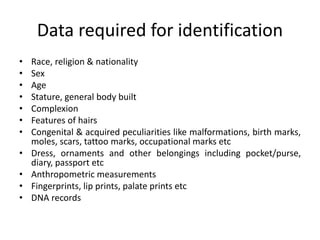
Data required for identification
• Race, religion & nationality
• Sex
• Age
• Stature, general body built
• Complexion
• Features of hairs
• Congenital & acquired peculiarities like malformations, birth marks,
moles, scars, tattoo marks, occupational marks etc
• Dress, ornaments and other belongings including pocket/purse,
diary, passport etc
• Anthropometric measurements
• Fingerprints, lip prints, palate prints etc
• DNA records
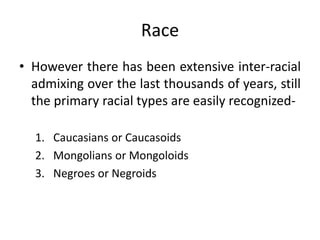
Race
• However there has been extensive inter-racial
admixing over the last thousands of years, still
the primary racial types are easily recognized-
1. Caucasians or Caucasoids
2. Mongolians or Mongoloids
3. Negroes or Negroids
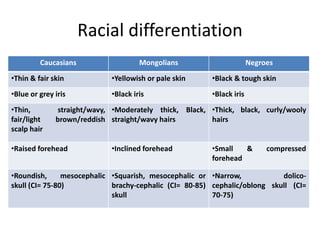
Racial differentiation
Caucasians Mongolians Negroes
•Thin & fair skin •Yellowish or pale skin •Black & tough skin
•Blue or grey iris •Black iris •Black iris
•Thin, straight/wavy,
fair/light brown/reddish
scalp hair
•Moderately thick, Black,
straight/wavy hairs
•Thick, black, curly/wooly
hairs
•Raised forehead •Inclined forehead •Small & compressed
forehead
•Roundish, mesocephalic
skull (CI= 75-80)
•Squarish, mesocephalic or
brachy-cephalic (CI= 80-85)
skull
•Narrow, dolico-
cephalic/oblong skull (CI=
70-75)
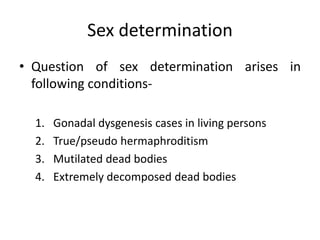
Sex determination
• Question of sex determination arises in
following conditions-
1. Gonadal dysgenesis cases in living persons
2. True/pseudo hermaphroditism
3. Mutilated dead bodies
4. Extremely decomposed dead bodies
Methods sex determination
• Sex of a person can be determined by any one of
the following methods-
1. Physical morphology
2. Studies of bones
3. Microscopic study of sex chromatins in cells
4. Dress (not always reliable)
5. Gonadal biopsy
6. Hormonal study (in cases of intersex)
7. Dental methods
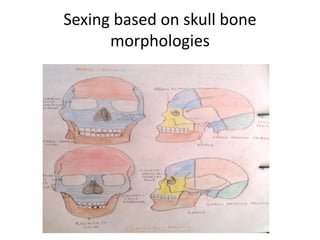
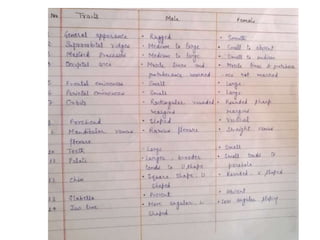
Sexing based on skull bone
morphologies
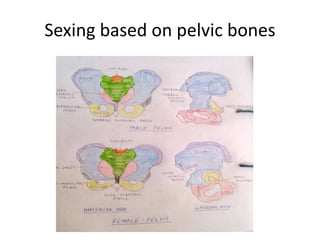
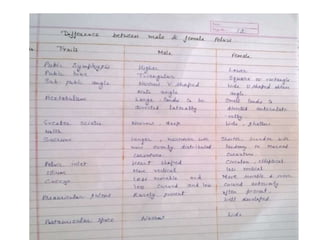
Sexing based on pelvic bones
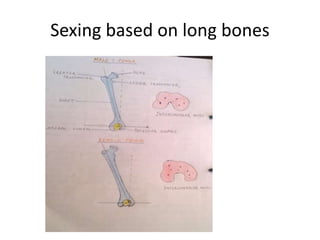
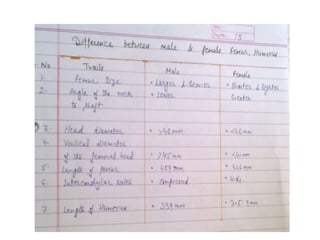
Sexing based on long bones
Estimation of age
• Age of a person in post-natal life can be
determined by following methods-
1. Physical or morphological features
2. Some laboratory tests (in infants)
3. Age estimation by teeth
4. Age estimation by ossification activities & growth of
bones
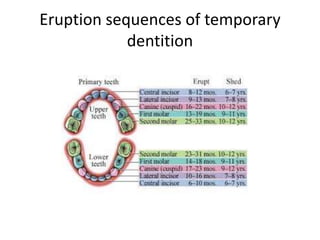
Eruption sequences of temporary
dentition
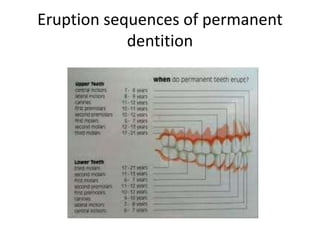
Eruption sequences of permanent
dentition
Stature
• By STATURE we mean body height or body dimension
in vertical direction.
• Stature is an important criterion for identification of a
person.
• Starting from the intra-uterine life, stature increases
upto early 20’s of that person
• After this age, though not of much significance, it
slightly reduces with further increase of age.
Methods of stature estimation
1. Karl Pearson’s formulae
2. Trotter & Glesser’s formulae
Tattoo marks
• Tattoo marks are fairly good identification mark, both for
living as well as dead subjects.
• They may provide wide range of informations about the
person possessing them
• In connection with identification; tattoo marks may speak
about-
– Race
– Nationality
– religion
– Occupation
– Language
– Name of the person
– Name of the relative, friend or lover
Scars for identification
• A scar is a product of healing of a wound by fibrosis and
other body mechanisms
• A scar is made of fibrous tissue devoid of hair follicles,
pigment & sweat glands and with lesser vascularity
• All scars, in the truest sense of their histological
morphology, are permanent, which may change in their size
during the growing ages but their shapes remain
unchanged all throughout the life.
• This permanency of scar makes it an important tool of
identification of a person
Scar conti…
• To record a scar as identification mark, it is to be
noted in terms of-
– Size
– Shape
– Site in relation to two anatomical landmarks
– Whether raised or depressed in relation to
surrounding tissue
– Whether freely movable or fixed with deeper tissue
Dactylography
• Study of fingerprints as a method of identification
is known as DACTYLOGRAPHY or DACTYLOSCOPY
or HENRY-GALTON SYSTEM OF IDENTIFICATION.
• It is the process of taking the impressions of
papillary ridges of the finger tips, for the purpose
of identification of a person.
• Identification by this method is ABSOLUTE,
without any chance of error
Basics of Dactylography
• Uniqueness
– Ridge pattern in two fingers differs and it can
never be identical in two persons
• Permanent
– Once formed, the ridge pattern in an individual
never changes except for the size
Types of finger prints & their
distribution in population
1. Loop – about 65%
2. Whorl – about 25%
3. Arch – about 7%
4. Composite – about 2-3%
Elements of fingerprint
- type lines
- delta
- core
DNA for identification
• Identification by using DNA is also known as
DNA fingerprinting in forensic practice
• Using PCR technique, a person can be
identified in definite term from his/her old
dead body remains, if his/her parents or
children are available
Thank you

Identification

  • 1.
    Identification: Definition, Identificationof unknown person, dead bodies and remains of a person by age, sex, stature, dental examination, scars, tattoos, dactylography, DNA typing Saurabh Bhargava
  • 2.
    Identification • Identification meansdetermination of individuality of a person. 1. Complete/Total identification  Exact specification of an individual 2. Incomplete/Partial identification  Recording of certain information or data which will ultimately help complete or total identification
  • 3.
    Need of Identification 1.In living persons 2. In dead persons 3. In skeletal remains
  • 4.
    Data required foridentification • Race, religion & nationality • Sex • Age • Stature, general body built • Complexion • Features of hairs • Congenital & acquired peculiarities like malformations, birth marks, moles, scars, tattoo marks, occupational marks etc • Dress, ornaments and other belongings including pocket/purse, diary, passport etc • Anthropometric measurements • Fingerprints, lip prints, palate prints etc • DNA records
  • 5.
    Race • However therehas been extensive inter-racial admixing over the last thousands of years, still the primary racial types are easily recognized- 1. Caucasians or Caucasoids 2. Mongolians or Mongoloids 3. Negroes or Negroids
  • 6.
    Racial differentiation Caucasians MongoliansNegroes •Thin & fair skin •Yellowish or pale skin •Black & tough skin •Blue or grey iris •Black iris •Black iris •Thin, straight/wavy, fair/light brown/reddish scalp hair •Moderately thick, Black, straight/wavy hairs •Thick, black, curly/wooly hairs •Raised forehead •Inclined forehead •Small & compressed forehead •Roundish, mesocephalic skull (CI= 75-80) •Squarish, mesocephalic or brachy-cephalic (CI= 80-85) skull •Narrow, dolico- cephalic/oblong skull (CI= 70-75)
  • 7.
    Sex determination • Questionof sex determination arises in following conditions- 1. Gonadal dysgenesis cases in living persons 2. True/pseudo hermaphroditism 3. Mutilated dead bodies 4. Extremely decomposed dead bodies
  • 8.
    Methods sex determination •Sex of a person can be determined by any one of the following methods- 1. Physical morphology 2. Studies of bones 3. Microscopic study of sex chromatins in cells 4. Dress (not always reliable) 5. Gonadal biopsy 6. Hormonal study (in cases of intersex) 7. Dental methods
  • 9.
    Sexing based onskull bone morphologies
  • 11.
    Sexing based onpelvic bones
  • 13.
    Sexing based onlong bones
  • 15.
    Estimation of age •Age of a person in post-natal life can be determined by following methods- 1. Physical or morphological features 2. Some laboratory tests (in infants) 3. Age estimation by teeth 4. Age estimation by ossification activities & growth of bones
  • 16.
    Eruption sequences oftemporary dentition
  • 17.
    Eruption sequences ofpermanent dentition
  • 18.
    Stature • By STATUREwe mean body height or body dimension in vertical direction. • Stature is an important criterion for identification of a person. • Starting from the intra-uterine life, stature increases upto early 20’s of that person • After this age, though not of much significance, it slightly reduces with further increase of age.
  • 19.
    Methods of statureestimation 1. Karl Pearson’s formulae 2. Trotter & Glesser’s formulae
  • 20.
    Tattoo marks • Tattoomarks are fairly good identification mark, both for living as well as dead subjects. • They may provide wide range of informations about the person possessing them • In connection with identification; tattoo marks may speak about- – Race – Nationality – religion – Occupation – Language – Name of the person – Name of the relative, friend or lover
  • 21.
    Scars for identification •A scar is a product of healing of a wound by fibrosis and other body mechanisms • A scar is made of fibrous tissue devoid of hair follicles, pigment & sweat glands and with lesser vascularity • All scars, in the truest sense of their histological morphology, are permanent, which may change in their size during the growing ages but their shapes remain unchanged all throughout the life. • This permanency of scar makes it an important tool of identification of a person
  • 22.
    Scar conti… • Torecord a scar as identification mark, it is to be noted in terms of- – Size – Shape – Site in relation to two anatomical landmarks – Whether raised or depressed in relation to surrounding tissue – Whether freely movable or fixed with deeper tissue
  • 23.
    Dactylography • Study offingerprints as a method of identification is known as DACTYLOGRAPHY or DACTYLOSCOPY or HENRY-GALTON SYSTEM OF IDENTIFICATION. • It is the process of taking the impressions of papillary ridges of the finger tips, for the purpose of identification of a person. • Identification by this method is ABSOLUTE, without any chance of error
  • 24.
    Basics of Dactylography •Uniqueness – Ridge pattern in two fingers differs and it can never be identical in two persons • Permanent – Once formed, the ridge pattern in an individual never changes except for the size
  • 25.
    Types of fingerprints & their distribution in population 1. Loop – about 65% 2. Whorl – about 25% 3. Arch – about 7% 4. Composite – about 2-3% Elements of fingerprint - type lines - delta - core
  • 26.
    DNA for identification •Identification by using DNA is also known as DNA fingerprinting in forensic practice • Using PCR technique, a person can be identified in definite term from his/her old dead body remains, if his/her parents or children are available
  • 27.