Division of
Radicals
Objectives
Rationalize a given
radical
Divide radicals with the
same index
Remember:
There should be
NO radicals on the
denominator.
Rationalization
Process of making the
denominator free from radicals
Recall:
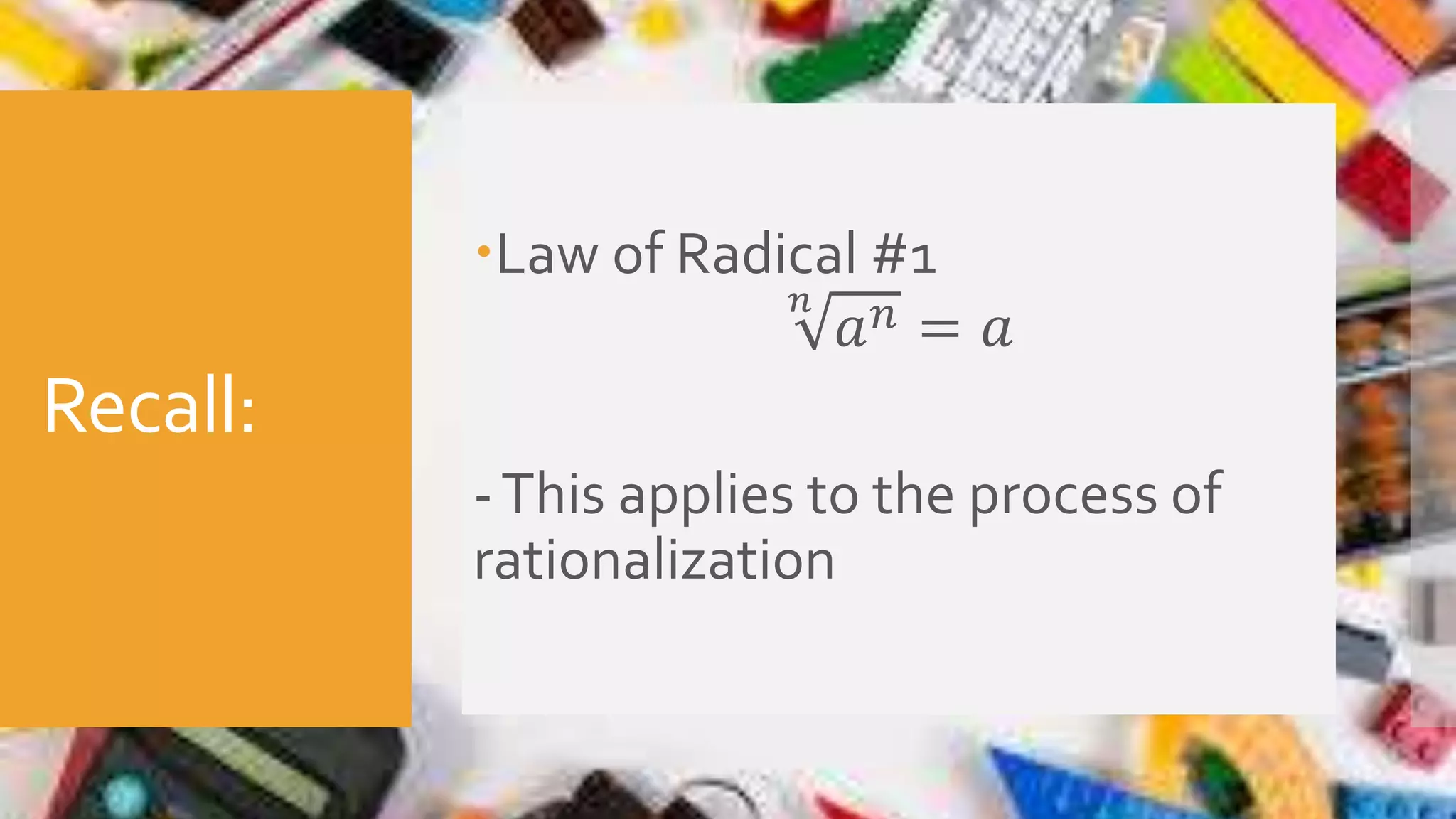
Law of Radical #1
𝑛
𝑎𝑛 = 𝑎
-This applies to the process of
rationalization
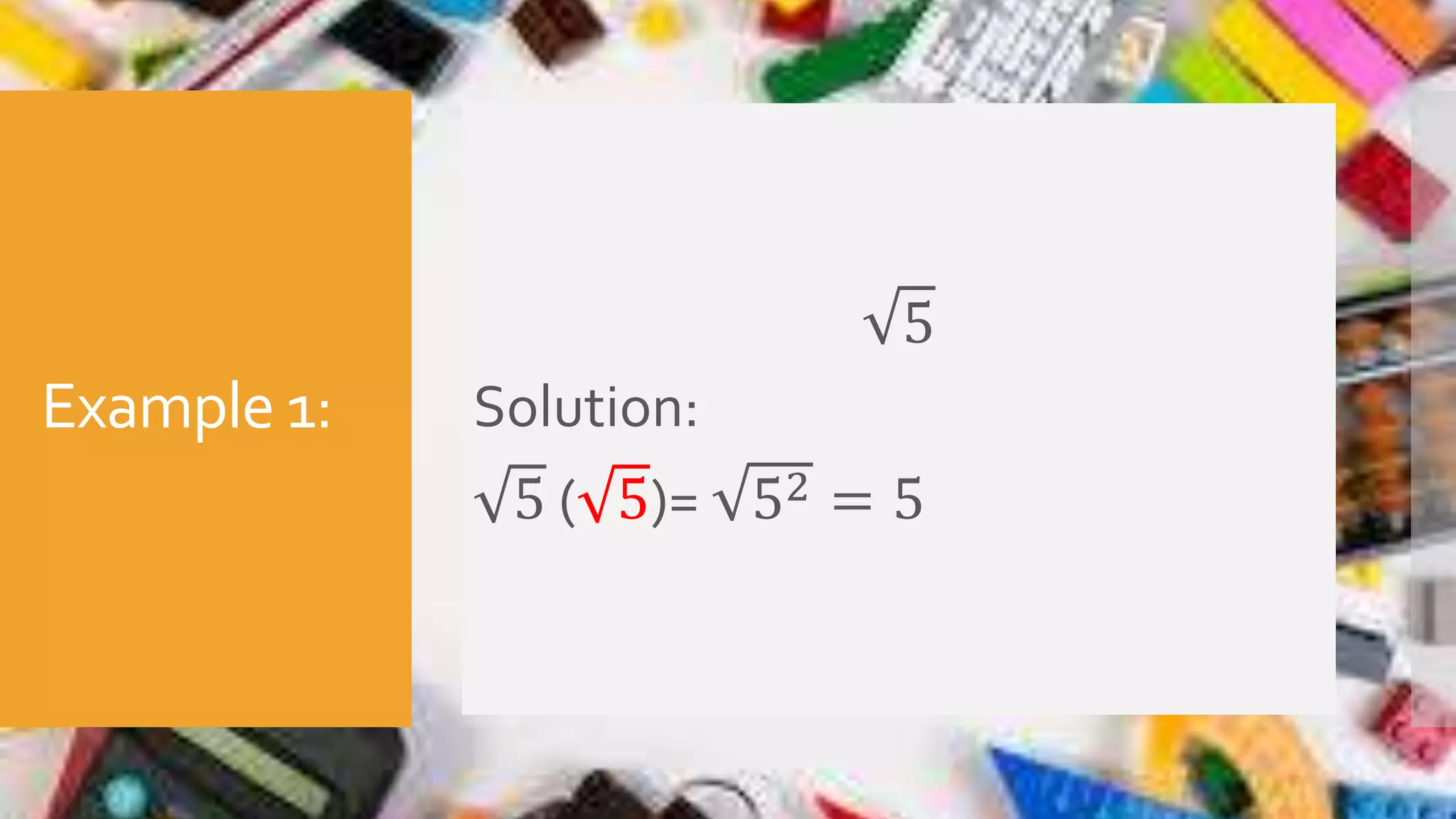
Example 1:
5
Solution:
5 ( 5)= 52 = 5
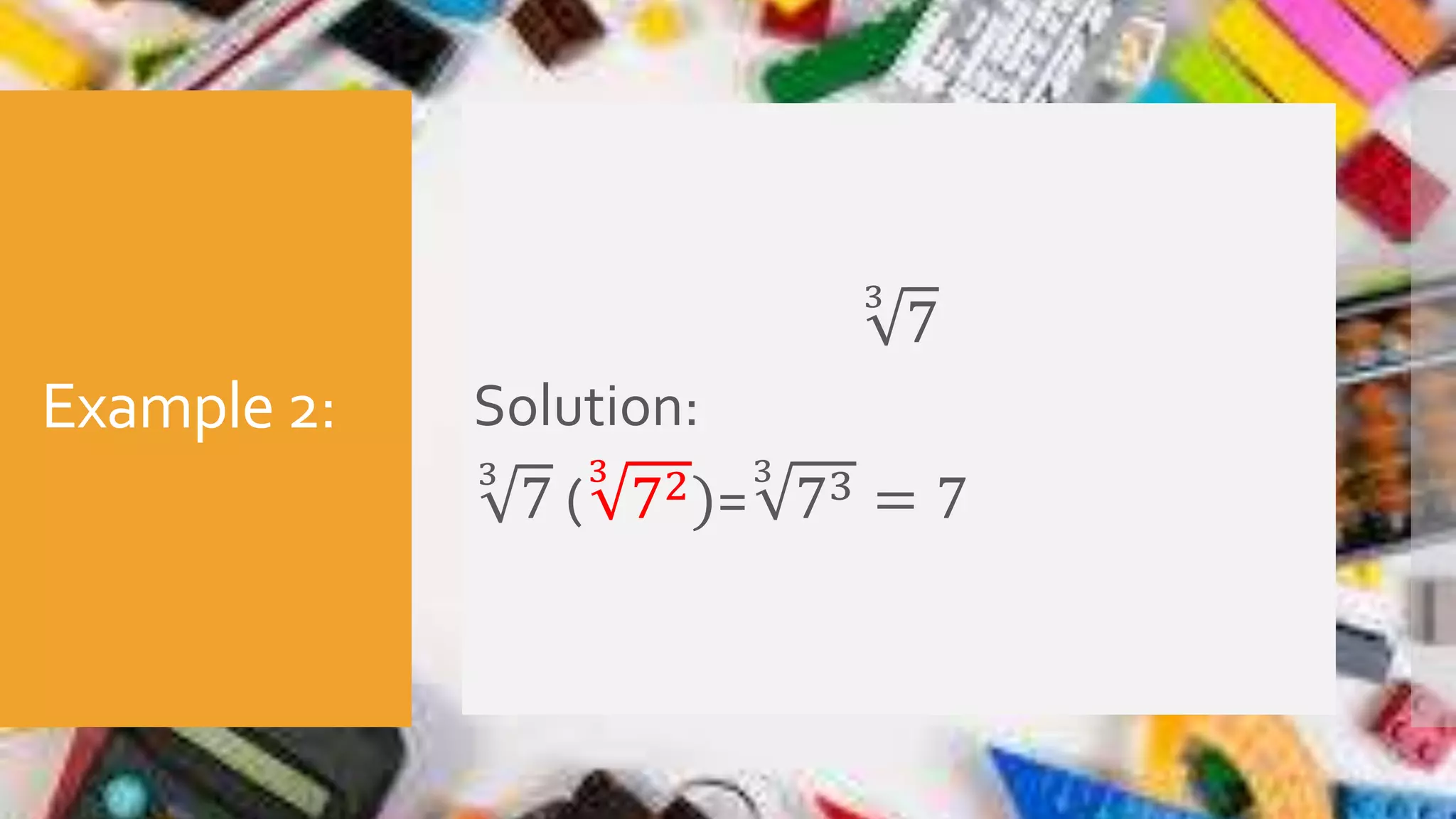
Example 2:
3
7
Solution:
3
7 (
3
72)=
3
73 = 7
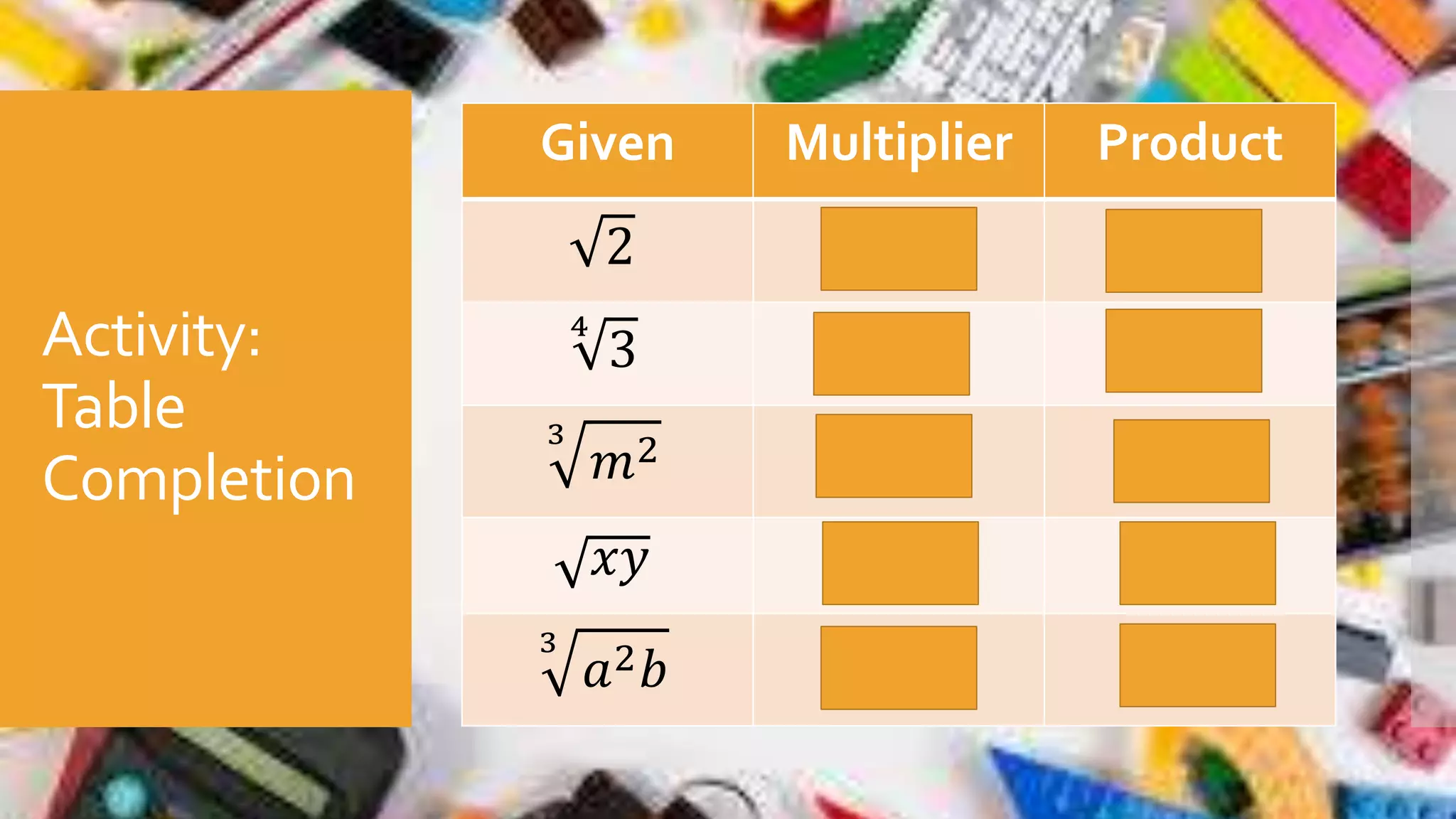
Activity:
Table
Completion
Given Multiplier Product
2 2 2
4
3 4
33 3
3
𝑚2
3
𝑚 m
𝑥𝑦 𝑥𝑦 xy
3
𝑎2𝑏
3
𝑎𝑏2 ab
Objectives
Rationalize a given
radical
Divide radicals with the
same index
How to
divide
radicals?
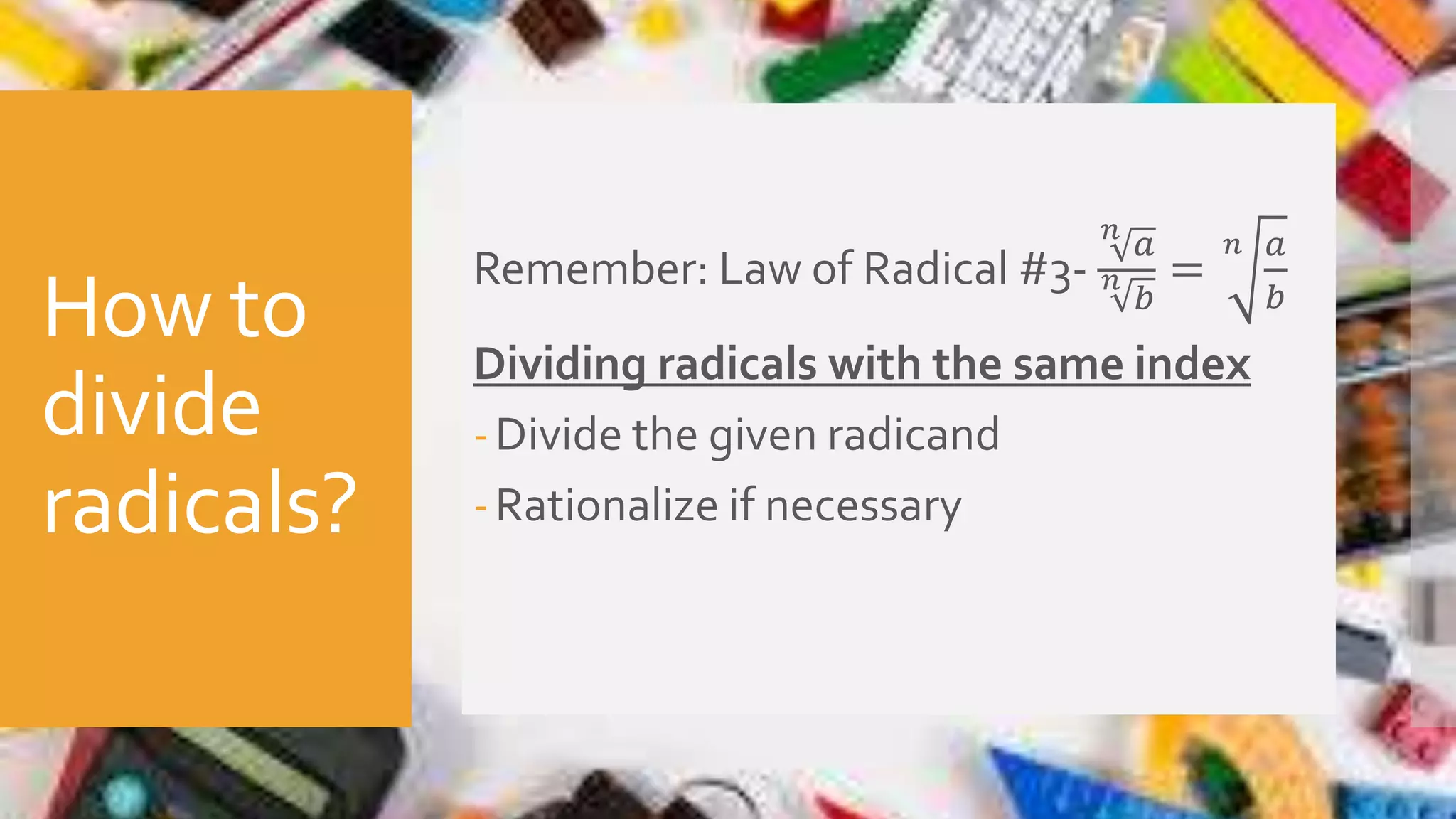
Remember: Law of Radical #3-
𝑛
𝑎
𝑛
𝑏
=
𝑛 𝑎
𝑏
Dividing radicals with the same index
-Divide the given radicand
-Rationalize if necessary
How to
divide
radicals?
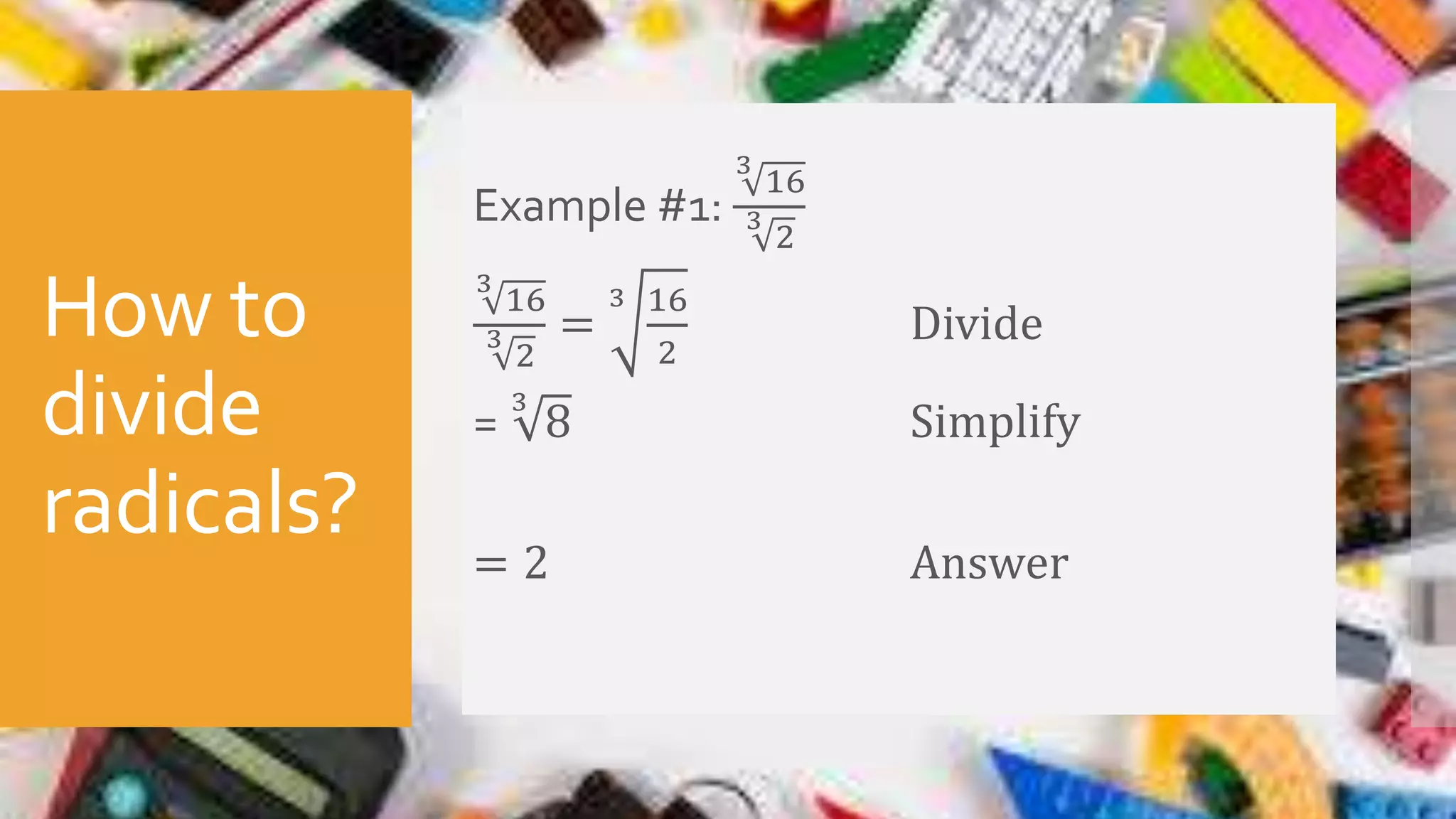
Example #1:
3
16
3
2
3
16
3
2
=
3 16
2
Divide
=
3
8 Simplify
= 2 Answer
How to
divide
radicals?
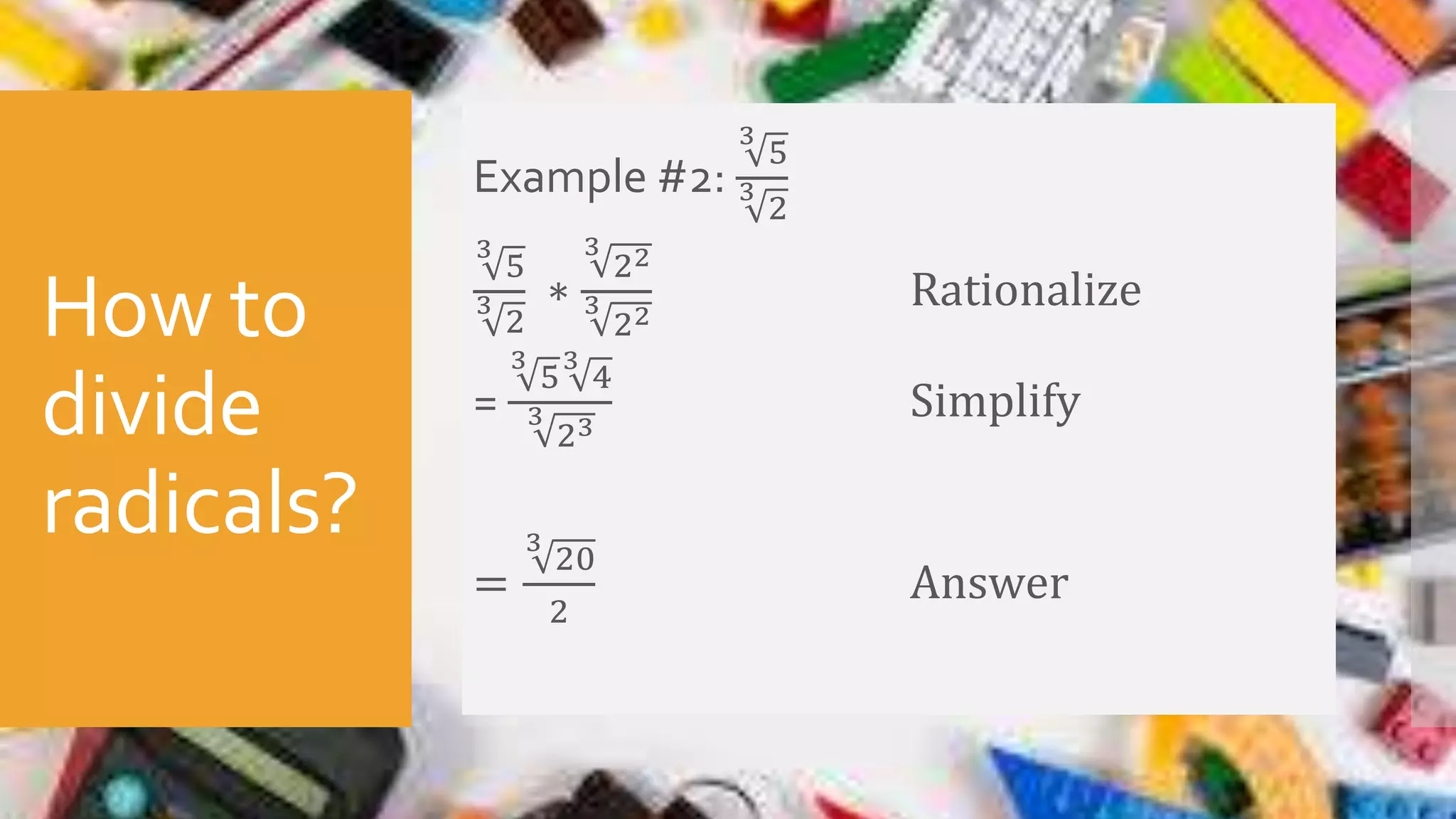
Example #2:
3
5
3
2
3
5
3
2
∗
3
22
3
22
Rationalize
=
3
5
3
4
3
23
Simplify
=
3
20
2
Answer
Group
Activity
1. Each group will be given a
radical expression to solve.
2.5 minutes will be given to talk
about the solution.
3. The group will present the
solution on the board in a
maximum of 2 minutes per
group. (Make sure to start the
presentation with a yell)
Objectives
Rationalize a given
radical
Divide radicals with the
same index
Seat
Work
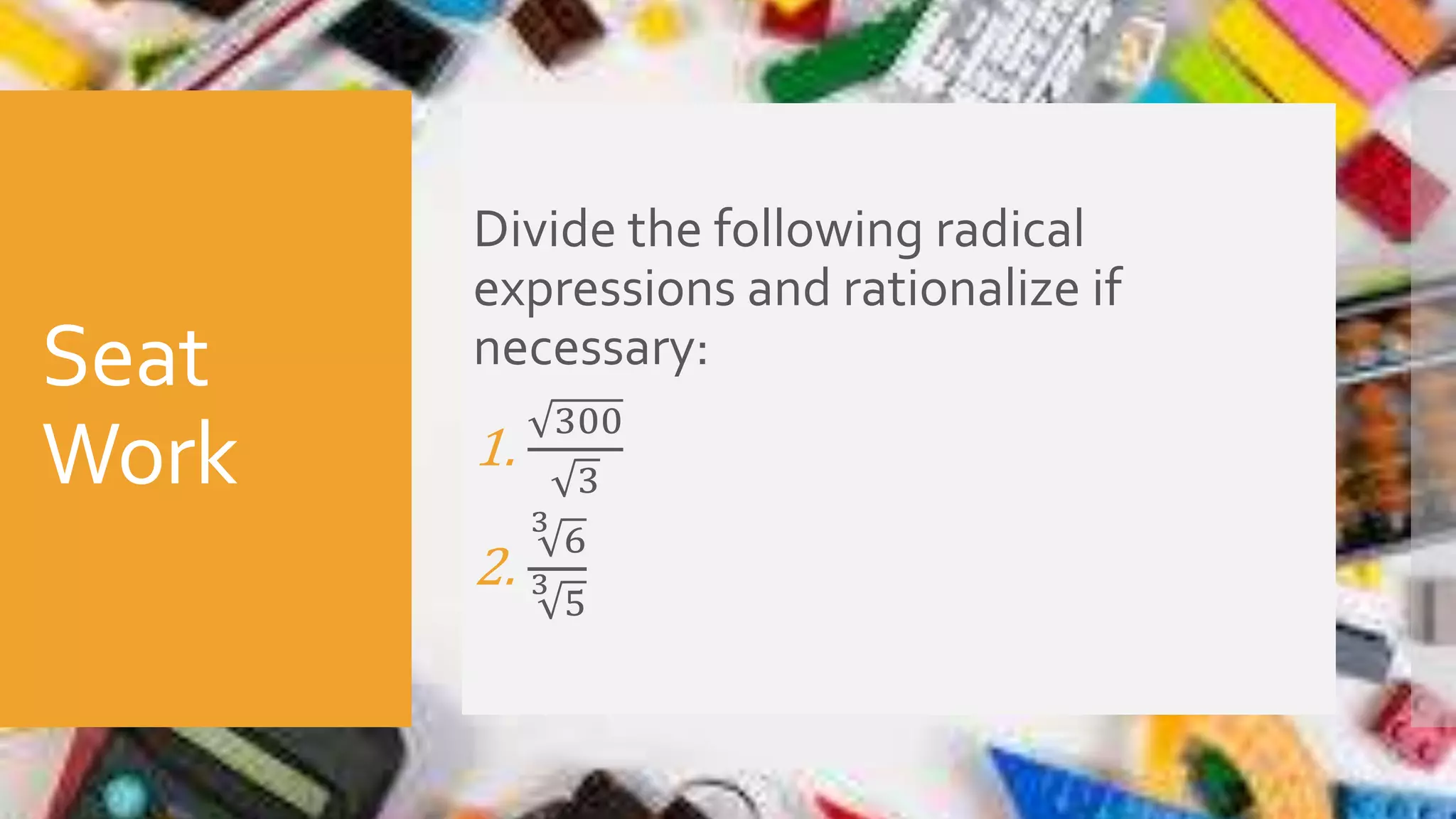
Divide the following radical
expressions and rationalize if
necessary:
1.
300
3
2.
3
6
3
5
Remember
Radicals can be divided if the
index are the same.
If the quotient appears to have a
radical on the denominator,
rationalization is needed.
Rationalization is applied to
make the denominator free from
radicals.

Division of Radicals.pptx