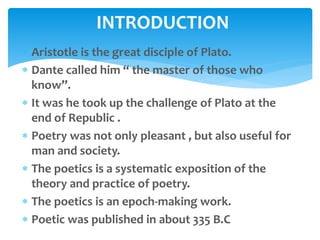
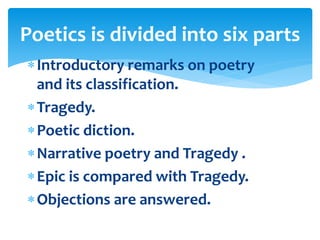
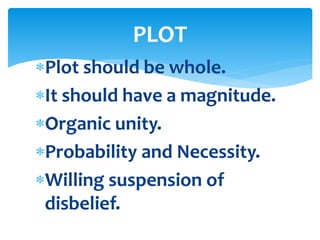
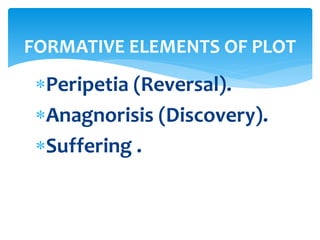
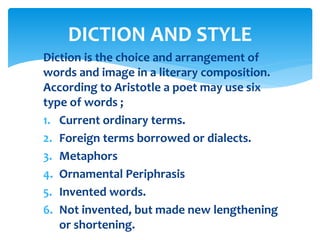
Aristotle's 'Poetics' systematically explores the theory and practice of poetry, emphasizing that poetry is both enjoyable and beneficial for society. It analyzes tragedy's components, including character, plot, diction, and spectacle, defining tragedy as the imitation of serious actions that provoke fear and pity. Aristotle also distinguishes between poetry types and the relationship between epic and tragic forms, ultimately asserting that tragedy holds superiority due to its necessary plot.