
By
Sri. Siddalingeshwara BP M.Sc, B.Ed, (P.hd)
AREAS RELATED TO CIRCLES
Chapter-10
for
class-x
 Content:
1.Perimeteer and Area of a Circle.
Area of a Circle
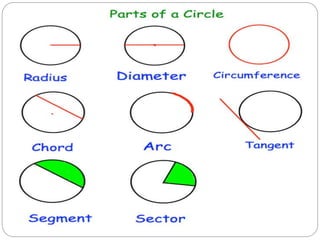
Parts of Circle
Circumference of a Circle
2.Areas of sector and segment of a Circle.
Segment of a circle
Sector of a Circle
Angle of a Sector
Length of an arc of a sector
Area of a Sector of a Circle
3.Areas of combination of Plane Figures.
1. PERIMETER AND AREA OF A CIRCLE
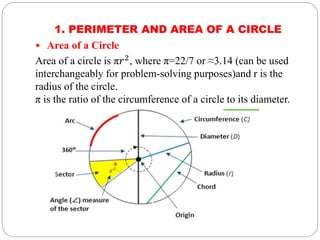
 Area of a Circle
Area of a circle is π𝑟2, where π=22/7 or ≈3.14 (can be used
interchangeably for problem-solving purposes)and r is the
radius of the circle.
π is the ratio of the circumference of a circle to its diameter.
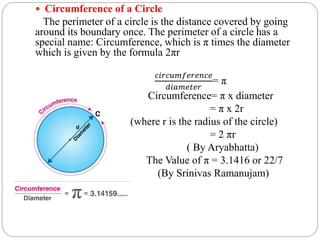
 Circumference of a Circle
The perimeter of a circle is the distance covered by going
around its boundary once. The perimeter of a circle has a
special name: Circumference, which is π times the diameter
which is given by the formula 2πr
𝑐𝑖𝑟𝑐𝑢𝑚𝑓𝑒𝑟𝑒𝑛𝑐𝑒
𝑑𝑖𝑎𝑚𝑒𝑡𝑒𝑟
= π
Circumference= π x diameter
= π x 2r
(where r is the radius of the circle)
= 2 πr
( By Aryabhatta)
The Value of π = 3.1416 or 22/7
(By Srinivas Ramanujam)
2.AREAS OF SECTOR AND SEGMENT OF A CIRCLE
• Segment of a circle
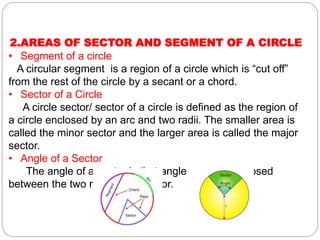
A circular segment is a region of a circle which is “cut off”
from the rest of the circle by a secant or a chord.
• Sector of a Circle
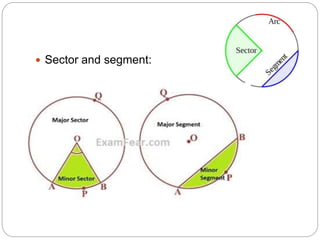
A circle sector/ sector of a circle is defined as the region of
a circle enclosed by an arc and two radii. The smaller area is
called the minor sector and the larger area is called the major
sector.
• Angle of a Sector
The angle of a sector is that angle which is enclosed
between the two radii of the sector.
 Sector and segment:
 Length of an arc of a sector
The length of the arc of a sector can be found by using the
expression for the circumference of a circle and the angle of the
sector, using the following formula:
L= (θ/360°)×2πr
Where θ is the angle of sector and r is the radius of the circle.
 Area of a Sector of a Circle
Area of a sector is given by
(θ/360°)×π𝑟2
where ∠θ is the angle of this sector(minor sector in the following
case) and r is its radius
 Perimeter of the Sector: (θ/360°)×2πr+2r
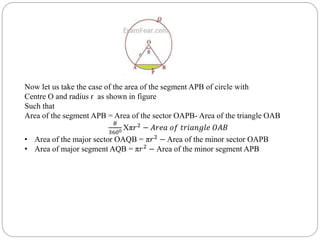
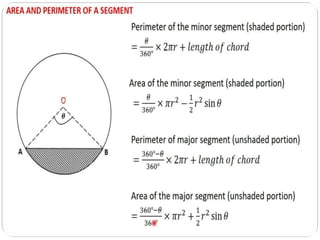
Now let us take the case of the area of the segment APB of circle with
Centre O and radius r as shown in figure
Such that
Area of the segment APB = Area of the sector OAPB- Area of the triangle OAB
𝜃
3600 Xπ𝑟2
− 𝐴𝑟𝑒𝑎 𝑜𝑓 𝑡𝑟𝑖𝑎𝑛𝑔𝑙𝑒 𝑂𝐴𝐵
• Area of the major sector OAQB = π𝑟2
− Area of the minor sector OAPB
• Area of major segment AQB = π𝑟2
− Area of the minor segment APB
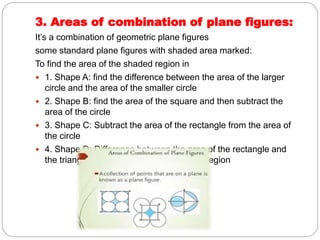
3. Areas of combination of plane figures:
It’s a combination of geometric plane figures
some standard plane figures with shaded area marked:
To find the area of the shaded region in
 1. Shape A: find the difference between the area of the larger
circle and the area of the smaller circle
 2. Shape B: find the area of the square and then subtract the
area of the circle
 3. Shape C: Subtract the area of the rectangle from the area of
the circle
 4. Shape D: Difference between the area of the rectangle and
the triangle gives the area of the shaded region
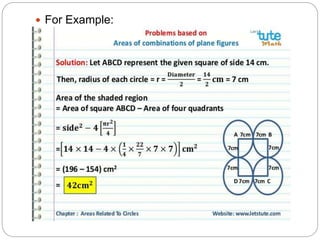
 For Example:
References:
1.NCERT Text book
2.Google Sources
Thank you

Areas related to circle, Chapter-10

  • 1.
    By Sri. Siddalingeshwara BPM.Sc, B.Ed, (P.hd) AREAS RELATED TO CIRCLES Chapter-10 for class-x
  • 2.
     Content: 1.Perimeteer andArea of a Circle. Area of a Circle Parts of Circle Circumference of a Circle 2.Areas of sector and segment of a Circle. Segment of a circle Sector of a Circle Angle of a Sector Length of an arc of a sector Area of a Sector of a Circle 3.Areas of combination of Plane Figures.
  • 3.
    1. PERIMETER ANDAREA OF A CIRCLE  Area of a Circle Area of a circle is π𝑟2, where π=22/7 or ≈3.14 (can be used interchangeably for problem-solving purposes)and r is the radius of the circle. π is the ratio of the circumference of a circle to its diameter.
  • 5.
     Circumference ofa Circle The perimeter of a circle is the distance covered by going around its boundary once. The perimeter of a circle has a special name: Circumference, which is π times the diameter which is given by the formula 2πr 𝑐𝑖𝑟𝑐𝑢𝑚𝑓𝑒𝑟𝑒𝑛𝑐𝑒 𝑑𝑖𝑎𝑚𝑒𝑡𝑒𝑟 = π Circumference= π x diameter = π x 2r (where r is the radius of the circle) = 2 πr ( By Aryabhatta) The Value of π = 3.1416 or 22/7 (By Srinivas Ramanujam)
  • 6.
    2.AREAS OF SECTORAND SEGMENT OF A CIRCLE • Segment of a circle A circular segment is a region of a circle which is “cut off” from the rest of the circle by a secant or a chord. • Sector of a Circle A circle sector/ sector of a circle is defined as the region of a circle enclosed by an arc and two radii. The smaller area is called the minor sector and the larger area is called the major sector. • Angle of a Sector The angle of a sector is that angle which is enclosed between the two radii of the sector.
  • 7.
  • 8.
     Length ofan arc of a sector The length of the arc of a sector can be found by using the expression for the circumference of a circle and the angle of the sector, using the following formula: L= (θ/360°)×2πr Where θ is the angle of sector and r is the radius of the circle.  Area of a Sector of a Circle Area of a sector is given by (θ/360°)×π𝑟2 where ∠θ is the angle of this sector(minor sector in the following case) and r is its radius  Perimeter of the Sector: (θ/360°)×2πr+2r
  • 9.
    Now let ustake the case of the area of the segment APB of circle with Centre O and radius r as shown in figure Such that Area of the segment APB = Area of the sector OAPB- Area of the triangle OAB 𝜃 3600 Xπ𝑟2 − 𝐴𝑟𝑒𝑎 𝑜𝑓 𝑡𝑟𝑖𝑎𝑛𝑔𝑙𝑒 𝑂𝐴𝐵 • Area of the major sector OAQB = π𝑟2 − Area of the minor sector OAPB • Area of major segment AQB = π𝑟2 − Area of the minor segment APB
  • 11.
    3. Areas ofcombination of plane figures: It’s a combination of geometric plane figures some standard plane figures with shaded area marked: To find the area of the shaded region in  1. Shape A: find the difference between the area of the larger circle and the area of the smaller circle  2. Shape B: find the area of the square and then subtract the area of the circle  3. Shape C: Subtract the area of the rectangle from the area of the circle  4. Shape D: Difference between the area of the rectangle and the triangle gives the area of the shaded region
  • 12.
  • 13.