ARE
ANTIDEPRESSANTS
OVERPRESCRIBED?
DEFINITION
WHAT IS DEPRESSION Depression is a common and serious medical
illness that negatively affects how you feel, the
way you think, and how you act (Parekh).
On the one hand, depression is connected with
the emotional state of a person causing
sadness, loss of interest, and problems in
relations with other people. However, it can
influence both the psychological and physical
state of a person triggering serious problems
with health and an inability to function in an
appropriate way.
Depression can be diagnosed after symptoms are sustained for two weeks.
Only in this case, a doctor can identify the problem and prescribe different
kinds of treatment.
THE SYMPTOMS OF
DEPRESSION
LOSS OF INTEREST
DEPRESSED MOOD
TROUBLES WITH SLEEPING
LOSS OF ENERGY
THOUGHTS ABOUT SUICIDE
CHANGES IN APPETITE
TREATMENT OF DEPRESSION
Referring to the primary stage of identifying depression
among other mental illnesses, the task of a doctor lies in
accurate physical evaluation, which means the general
assessment of the mental and physical health of a person.
Alongside a physical evaluation, an interview is another way
to discover the problem, and stands as an important
component for defining the kind of treatment.
Interviewing helps to find the root of the symptoms
traditionally connected with medical and family
history, cultural factors, environmental factors, and
possible psychological problems.
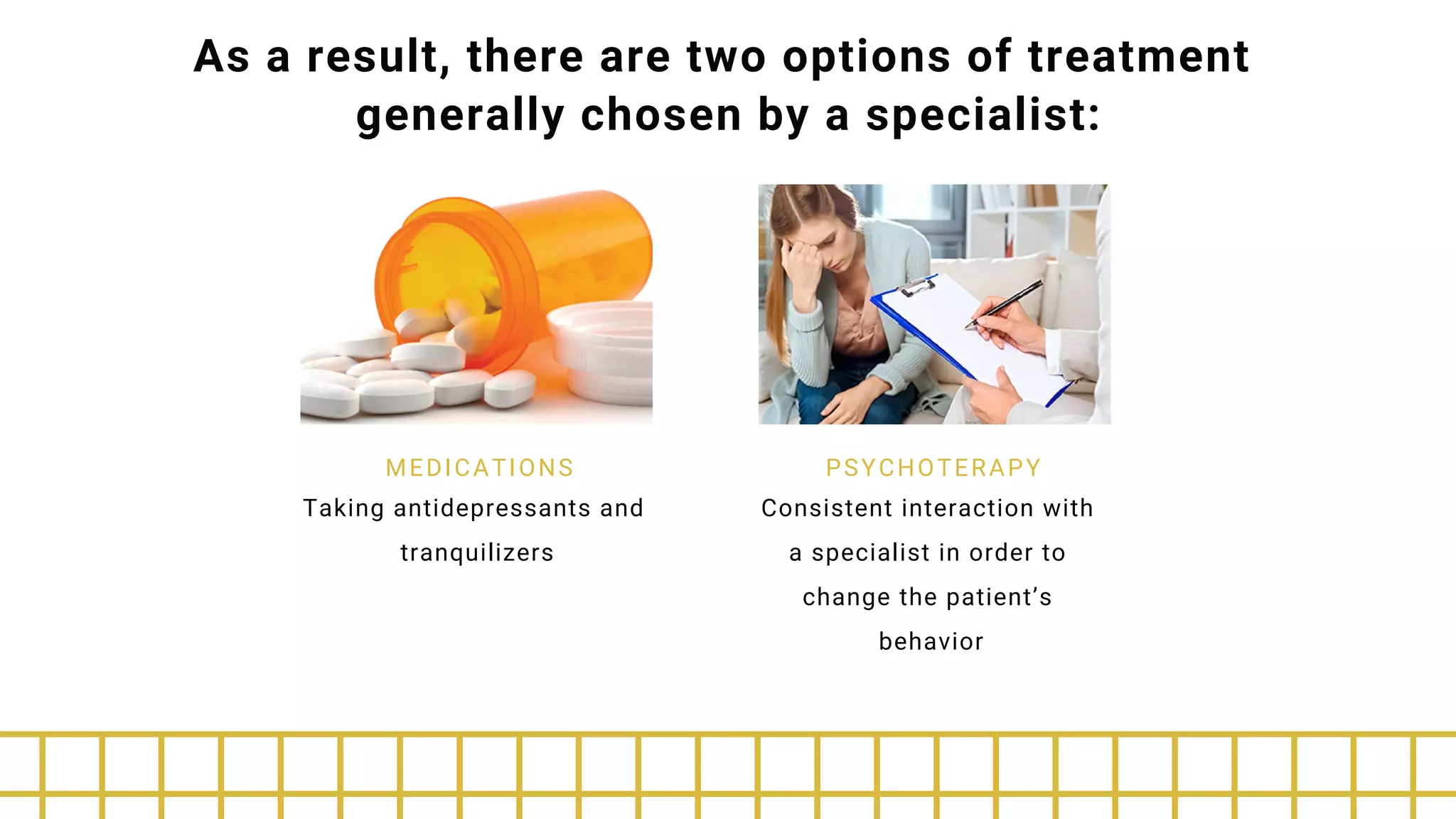
MEDICATIONS
Taking antidepressants and
tranquilizers
PSYCHOTERAPY
Consistent interaction with
a specialist in order to
change the patient’s
behavior
As a result, there are two options of treatment
generally chosen by a specialist:
DEPRESSION AS COMMERCIAL ISSUE:
THE USE OF MEDICATIONS
It is true to say that depression is
not always an understandable
mental illness, except for the
allowance of making profit from its
treatment.
As a result, there are no
instructions about the treatment of
depression that provide a doctor
with full control of the situation.
“Mental illness is the drug
industry’s golden goose: incurable,
common, long term, and involving
multiple medications” (Spence).
THE MOST COMMONLY
PRESCRIBED ANTIDEPRESSANTS
SSRIs are the most commonly prescribed class
of antidepressants. An imbalance of serotonin
may play a role in depression. These drugs
fight depression symptoms by decreasing
serotonin re-uptake in the brain. This effect
leaves more serotonin available to work in your
brain. Basically, SSRIs contain fluoxetine.
TCAs are often prescribed when SSRIs or other
antidepressants don’t work.
However, the way in which this drug works
remains unknown and poorly unexplained.
OTHER STATISTICS
“Prescriptions for antidepressants are skyrocketing in
the US, making it the third most commonly prescribed
class of drugs” (Landau).
In many cases, doctors do not delve into the problem,
choosing antidepressants as the easiest way to treat
mental illness.  
As a result, there are a lot of cases of people being 
over-diagnosed, misdiagnosed, or mistreated.
What is more important, there are specific criteria
according to which a person can be diagnosed with
depression. 
Unfortunately, antidepressants are often prescribed for
people who do not even reach the standards identified
in the Diagnostic and Statistical Manual of Mental
Disorders.
NEGATIVE EFFECTS OF
ANTIDEPRESSANTS
It is true to say that such strong drugs as
antidepressants can have a negative
influence on the general state of a person
both psychologically and physically, which
emphasizes the responsibility taken by
doctors in terms of their diagnoses and
prescriptions. 
THE MOST FREQUENT NEGATIVE EFFECTS OF ANTIDEPRESSANTS
TRIGGERING MANIA
Antidepressants can cause maniacal behavior
characterized by impulsive outbursts, increased energy,
irritability, annoyance, and constant mood changes.
ALLERGIC REACTIONS
Reactions of the body to inappropriate medications may
result. Such symptoms as swelling, itchy rash, hives, and
blisters are the most common.
SEIZURES
Antidepressants can influence the physical health of a
person, causing jerking movements and confusion.
Constant seizures may lead to the loss of
consciousness.
SEROTONIN SYNDROME
People can feel confusion, agitation, muscle twitching,
sweating, shivering, and diarrhea.
HYPONATREMIA
This is characterized by feeling ill, headaches, muscle
pain, loss of appetite, and confusion.
SUICIDE THOUGHTS.
In this case, people seem to lose a sense of life,
expressing no desire for communication or interaction
with others. Depressive thoughts and mood may lead to
negative actions.
CONCLUSIONS
Depression is a mental illness that influences a person both
psychologically and physically.
Diagnosing a person with depression should be based on an
accurate physical evaluation and interview in order to
examine both physical and psychological sides of the
problem.
Basically, there are two primary types of treatment:
psychotherapy as the interaction with a specialist in order to
change patient’s behavior, and taking antidepressants.
The number of antidepressant prescriptions grows every
year, which marks prescribing them a huge business on the
global market.
As a result, antidepressants can have negative effects on
people’s health (allergic reaction, seizures, Serotonin
Syndrome, Hyponatremia, mania, suicide thoughts).
WORKS CITED
Landau, Meryl D. "Doctors Are Too Quick to Give Women
Antidepressants." Tonic, 2017,
tonic.vice.com/en_us/article/43yjbj/doctors-are-too-quick-to-give-
women-antidepressants.
Parekh, Ranna. "What Is Depression?" Psychiatry.org, American
Psychiatric Association, 2017, www.psychiatry.org/patients-
families/depression/what-is-depression. 
Schimelpfening, Nancy. "Rare and Potentially Serious Side Effects of
Antidepressants." Verywell Mind, 2018,
https://www.verywellmind.com/negative-effects-of-antidepressants-
1067351.
Spence, Des. "Are Antidepressants Overprescribed?" BMJ, 2013,
www.bmj.com/bmj/section-pdf/187887?
path=/bmj/346/7907/Head_to_Head.full.pdf.

Are Antidepressants Overprescribed

  • 1.
  • 2.
    DEFINITION WHAT IS DEPRESSIONDepression is a common and serious medical illness that negatively affects how you feel, the way you think, and how you act (Parekh). On the one hand, depression is connected with the emotional state of a person causing sadness, loss of interest, and problems in relations with other people. However, it can influence both the psychological and physical state of a person triggering serious problems with health and an inability to function in an appropriate way.
  • 3.
    Depression can bediagnosed after symptoms are sustained for two weeks. Only in this case, a doctor can identify the problem and prescribe different kinds of treatment. THE SYMPTOMS OF DEPRESSION LOSS OF INTEREST DEPRESSED MOOD TROUBLES WITH SLEEPING LOSS OF ENERGY THOUGHTS ABOUT SUICIDE CHANGES IN APPETITE
  • 4.
    TREATMENT OF DEPRESSION Referringto the primary stage of identifying depression among other mental illnesses, the task of a doctor lies in accurate physical evaluation, which means the general assessment of the mental and physical health of a person. Alongside a physical evaluation, an interview is another way to discover the problem, and stands as an important component for defining the kind of treatment. Interviewing helps to find the root of the symptoms traditionally connected with medical and family history, cultural factors, environmental factors, and possible psychological problems.
  • 5.
    MEDICATIONS Taking antidepressants and tranquilizers PSYCHOTERAPY Consistentinteraction with a specialist in order to change the patient’s behavior As a result, there are two options of treatment generally chosen by a specialist:
  • 6.
    DEPRESSION AS COMMERCIALISSUE: THE USE OF MEDICATIONS It is true to say that depression is not always an understandable mental illness, except for the allowance of making profit from its treatment. As a result, there are no instructions about the treatment of depression that provide a doctor with full control of the situation. “Mental illness is the drug industry’s golden goose: incurable, common, long term, and involving multiple medications” (Spence).
  • 7.
    THE MOST COMMONLY PRESCRIBEDANTIDEPRESSANTS SSRIs are the most commonly prescribed class of antidepressants. An imbalance of serotonin may play a role in depression. These drugs fight depression symptoms by decreasing serotonin re-uptake in the brain. This effect leaves more serotonin available to work in your brain. Basically, SSRIs contain fluoxetine. TCAs are often prescribed when SSRIs or other antidepressants don’t work. However, the way in which this drug works remains unknown and poorly unexplained.
  • 8.
    OTHER STATISTICS “Prescriptions forantidepressants are skyrocketing in the US, making it the third most commonly prescribed class of drugs” (Landau). In many cases, doctors do not delve into the problem, choosing antidepressants as the easiest way to treat mental illness.   As a result, there are a lot of cases of people being  over-diagnosed, misdiagnosed, or mistreated. What is more important, there are specific criteria according to which a person can be diagnosed with depression.  Unfortunately, antidepressants are often prescribed for people who do not even reach the standards identified in the Diagnostic and Statistical Manual of Mental Disorders.
  • 9.
    NEGATIVE EFFECTS OF ANTIDEPRESSANTS Itis true to say that such strong drugs as antidepressants can have a negative influence on the general state of a person both psychologically and physically, which emphasizes the responsibility taken by doctors in terms of their diagnoses and prescriptions. 
  • 10.
    THE MOST FREQUENTNEGATIVE EFFECTS OF ANTIDEPRESSANTS TRIGGERING MANIA Antidepressants can cause maniacal behavior characterized by impulsive outbursts, increased energy, irritability, annoyance, and constant mood changes. ALLERGIC REACTIONS Reactions of the body to inappropriate medications may result. Such symptoms as swelling, itchy rash, hives, and blisters are the most common. SEIZURES Antidepressants can influence the physical health of a person, causing jerking movements and confusion. Constant seizures may lead to the loss of consciousness. SEROTONIN SYNDROME People can feel confusion, agitation, muscle twitching, sweating, shivering, and diarrhea. HYPONATREMIA This is characterized by feeling ill, headaches, muscle pain, loss of appetite, and confusion. SUICIDE THOUGHTS. In this case, people seem to lose a sense of life, expressing no desire for communication or interaction with others. Depressive thoughts and mood may lead to negative actions.
  • 11.
    CONCLUSIONS Depression is amental illness that influences a person both psychologically and physically. Diagnosing a person with depression should be based on an accurate physical evaluation and interview in order to examine both physical and psychological sides of the problem. Basically, there are two primary types of treatment: psychotherapy as the interaction with a specialist in order to change patient’s behavior, and taking antidepressants. The number of antidepressant prescriptions grows every year, which marks prescribing them a huge business on the global market. As a result, antidepressants can have negative effects on people’s health (allergic reaction, seizures, Serotonin Syndrome, Hyponatremia, mania, suicide thoughts).
  • 12.
    WORKS CITED Landau, MerylD. "Doctors Are Too Quick to Give Women Antidepressants." Tonic, 2017, tonic.vice.com/en_us/article/43yjbj/doctors-are-too-quick-to-give- women-antidepressants. Parekh, Ranna. "What Is Depression?" Psychiatry.org, American Psychiatric Association, 2017, www.psychiatry.org/patients- families/depression/what-is-depression.  Schimelpfening, Nancy. "Rare and Potentially Serious Side Effects of Antidepressants." Verywell Mind, 2018, https://www.verywellmind.com/negative-effects-of-antidepressants- 1067351. Spence, Des. "Are Antidepressants Overprescribed?" BMJ, 2013, www.bmj.com/bmj/section-pdf/187887? path=/bmj/346/7907/Head_to_Head.full.pdf.