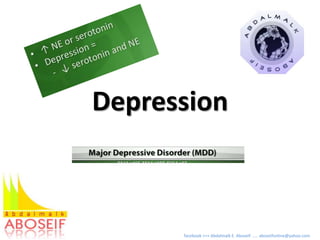
Depression
facebook >>> Abdalmalk E. Aboseif ….. aboseifonline@yahoo.com
Overview
Depression is a mood disorder that causes a
persistent feeling of sadness and loss of
interest. Also called major depressive disorder
or clinical depression, it affects how you feel,
think and behave and can lead to a variety of
emotional and physical problems. You may
have trouble doing normal day-to-day
activities, and sometimes you may feel as if
life isn't worth living.
facebook >>> Abdalmalk E. Aboseif ….. aboseifonline@yahoo.com
Symptoms
Although depression may occur only once during your life,
people typically have multiple episodes. During these
episodes, symptoms occur most of the day, nearly every
day and may include:
• Feelings of sadness, tearfulness, emptiness or hopelessness
• Angry outbursts, irritability or frustration, even over small
matters
• Loss of interest or pleasure in most or all normal activities,
such as sex, hobbies or sports
• Sleep disturbances, including insomnia or sleeping too
much
• Tiredness and lack of energy, so even small tasks take extra
effort
facebook >>> Abdalmalk E. Aboseif ….. aboseifonline@yahoo.com
• Reduced appetite and weight loss or increased cravings for
food and weight gain
• Anxiety, agitation or restlessness
• Slowed thinking, speaking or body movements
• Feelings of worthlessness or guilt, fixating on past failures
or self-blame
• Trouble thinking, concentrating, making decisions and
remembering things
• Frequent or recurrent thoughts of death, suicidal thoughts,
suicide attempts or suicide
• Unexplained physical problems, such as back pain or
headaches
For many people with depression, symptoms usually are severe enough to cause
noticeable problems in day-to-day activities, such as work, school, social activities
or relationships with others. Some people may feel generally miserable or unhappy
without really knowing why
facebook >>> Abdalmalk E. Aboseif ….. aboseifonline@yahoo.com
Depression symptoms in children and teens
Common signs and symptoms of depression in children and
teenagers are similar to those of adults, but there can be
some differences.
• In younger children, symptoms of depression may include
sadness, irritability, clinginess, worry, aches and pains,
refusing to go to school, or being underweight.
• In teens, symptoms may include sadness, irritability, feeling
negative and worthless, anger, poor performance or poor
attendance at school, feeling misunderstood and extremely
sensitive, using recreational drugs or alcohol, eating or
sleeping too much, self-harm, loss of interest in normal
activities, and avoidance of social interaction
facebook >>> Abdalmalk E. Aboseif ….. aboseifonline@yahoo.com
Depression symptoms in older adults
Symptoms of depression may be different or less obvious
in older adults, such as:
• Memory difficulties or personality changes
• Physical aches or pain
• Fatigue, loss of appetite, sleep problems or loss of
interest in sex — not caused by a medical condition or
medication
• Often wanting to stay at home, rather than going out
to socialize or doing new things
• Suicidal thinking or feelings, especially in older men
facebook >>> Abdalmalk E. Aboseif ….. aboseifonline@yahoo.com
Dx.
facebook >>> Abdalmalk E. Aboseif ….. aboseifonline@yahoo.com
Causes
It's not known exactly what causes depression.
As with many mental disorders, a variety of
factors may be involved, such as:
Biological differences. People with depression
appear to have physical changes in their
brains. The significance of these changes is
still uncertain, but may eventually help
pinpoint causes
facebook >>> Abdalmalk E. Aboseif ….. aboseifonline@yahoo.com
Brain chemistry. Neurotransmitters are naturally
occurring brain chemicals that likely play a
role in depression. Recent research indicates
that changes in the function and effect of
these neurotransmitters and how they
interact with neurocircuits involved in
maintaining mood stability may play a
significant role in depression and its
treatment.
facebook >>> Abdalmalk E. Aboseif ….. aboseifonline@yahoo.com
Hormones. Changes in the body's balance of
hormones may be involved in causing or
triggering depression. Hormone changes can
result with pregnancy and during the weeks or
months after delivery (postpartum) and from
thyroid problems, menopause or a number of
other conditions.
facebook >>> Abdalmalk E. Aboseif ….. aboseifonline@yahoo.com
Inherited traits. Depression is more common in
people whose blood relatives also have this
condition. Researchers are trying to find genes
that may be involved in causing depression.
facebook >>> Abdalmalk E. Aboseif ….. aboseifonline@yahoo.com
Risk factors
Factors that seem to increase the risk of
developing or triggering depression include
• Certain personality traits, such as low self-esteem and being too dependent, self-
critical or pessimistic
• Traumatic or stressful events, such as physical or sexual abuse, the death or loss of
a loved one, a difficult relationship, or financial problems
• Blood relatives with a history of depression, bipolar disorder, alcoholism or suicide
• History of other mental health disorders, such as anxiety disorder, eating disorders
or post-traumatic stress disorder
• Abuse of alcohol or recreational drugs
• Serious or chronic illness, including cancer, stroke, chronic pain or heart disease
• Certain medications, such as some high blood pressure medications or sleeping
pills (talk to your doctor before stopping any medication)
facebook >>> Abdalmalk E. Aboseif ….. aboseifonline@yahoo.com
Complications
Depression often gets worse if it isn't treated, resulting in emotional,
behavioral and health problems that affect every area of your life.
Examples of complications associated with depression include:
• Excess weight or obesity, which can lead to heart disease and
diabetes
• Pain or physical illness
• Alcohol or drug misuse
• Anxiety, panic disorder or social phobia
• Family conflicts, relationship difficulties, and work or school
problems
• Social isolation
• Suicidal feelings, suicide attempts or suicide
• Self-mutilation, such as cutting
• Premature death from medical conditions
facebook >>> Abdalmalk E. Aboseif ….. aboseifonline@yahoo.com
Prevention
There's no sure way to prevent depression. However,
these strategies may help.
• Take steps to control stress, to increase your resilience
and boost your self-esteem.
• Reach out to family and friends, especially in times of
crisis, to help you weather rough spells.
• Get treatment at the earliest sign of a problem to help
prevent depression from worsening.
• Consider getting long-term maintenance treatment to
help prevent a relapse of symptoms.
facebook >>> Abdalmalk E. Aboseif ….. aboseifonline@yahoo.com
Types of depression
• Symptoms caused by major depression can vary
from person to person. To clarify the type of
depression you have, your doctor may add one or
more specifiers. A specifier means that you have
depression with specific features, such as:
• Anxious distress — depression with unusual
restlessness or worry about possible events or
loss of control
• Mixed features — simultaneous depression and
mania, which includes elevated self-esteem,
talking too much and increased energy
facebook >>> Abdalmalk E. Aboseif ….. aboseifonline@yahoo.com
• Melancholic features — severe depression with lack
of response to something that used to bring pleasure
and associated with early morning awakening,
worsened mood in the morning, major changes in
appetite, and feelings of guilt, agitation or
sluggishness
• Atypical features — depression that includes the
ability to temporarily be cheered by happy events,
increased appetite, excessive need for sleep,
sensitivity to rejection, and a heavy feeling in the
arms or legs
• Psychotic features — depression accompanied by
delusions or hallucinations, which may involve
personal inadequacy or other negative themes
facebook >>> Abdalmalk E. Aboseif ….. aboseifonline@yahoo.com
• Catatonia — depression that includes motor
activity that involves either uncontrollable and
purposeless movement or fixed and inflexible
posture
• Peripartum onset — depression that occurs
during pregnancy or in the weeks or months after
delivery (postpartum)
• Seasonal pattern — depression related to
changes in seasons and reduced exposure to
sunlight
facebook >>> Abdalmalk E. Aboseif ….. aboseifonline@yahoo.com
Other disorders that cause depression symptoms
Several other disorders, such as those below,
include depression as a symptom. It's
important to get an accurate diagnosis, so you
can get appropriate treatment.
Bipolar I and II disorders
Cyclothymic disorder
Disruptive mood dysregulation disorder
Persistent depressive disorder
Premenstrual dysphoric disorder.
Other depression disorders.This includes depression that's
caused by the use of recreational drugs, some prescribed medications or another
medical condition.
facebook >>> Abdalmalk E. Aboseif ….. aboseifonline@yahoo.com
Treatment
Medications and psychotherapy are effective for
most people with depression. Your primary
care doctor or psychiatrist can prescribe
medications to relieve symptoms. However,
many people with depression also benefit
from seeing a psychiatrist, psychologist or
other mental health professional.
Medications
Psychotherapy
Other treatment options
 Electroconvulsive therapy (ECT).
 Transcranial magnetic stimulation (TMS
facebook >>> Abdalmalk E. Aboseif ….. aboseifonline@yahoo.com
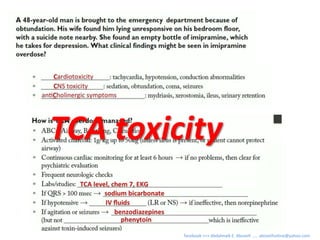
TCA toxicity
facebook >>> Abdalmalk E. Aboseif ….. aboseifonline@yahoo.com
SAD PERSON
facebook >>> Abdalmalk E. Aboseif ….. aboseifonline@yahoo.com

Depression

  • 1.
    Depression facebook >>> AbdalmalkE. Aboseif ….. aboseifonline@yahoo.com
  • 2.
    Overview Depression is amood disorder that causes a persistent feeling of sadness and loss of interest. Also called major depressive disorder or clinical depression, it affects how you feel, think and behave and can lead to a variety of emotional and physical problems. You may have trouble doing normal day-to-day activities, and sometimes you may feel as if life isn't worth living. facebook >>> Abdalmalk E. Aboseif ….. aboseifonline@yahoo.com
  • 3.
    Symptoms Although depression mayoccur only once during your life, people typically have multiple episodes. During these episodes, symptoms occur most of the day, nearly every day and may include: • Feelings of sadness, tearfulness, emptiness or hopelessness • Angry outbursts, irritability or frustration, even over small matters • Loss of interest or pleasure in most or all normal activities, such as sex, hobbies or sports • Sleep disturbances, including insomnia or sleeping too much • Tiredness and lack of energy, so even small tasks take extra effort facebook >>> Abdalmalk E. Aboseif ….. aboseifonline@yahoo.com
  • 4.
    facebook >>> AbdalmalkE. Aboseif ….. aboseifonline@yahoo.com
  • 5.
    • Reduced appetiteand weight loss or increased cravings for food and weight gain • Anxiety, agitation or restlessness • Slowed thinking, speaking or body movements • Feelings of worthlessness or guilt, fixating on past failures or self-blame • Trouble thinking, concentrating, making decisions and remembering things • Frequent or recurrent thoughts of death, suicidal thoughts, suicide attempts or suicide • Unexplained physical problems, such as back pain or headaches For many people with depression, symptoms usually are severe enough to cause noticeable problems in day-to-day activities, such as work, school, social activities or relationships with others. Some people may feel generally miserable or unhappy without really knowing why facebook >>> Abdalmalk E. Aboseif ….. aboseifonline@yahoo.com
  • 6.
    Depression symptoms inchildren and teens Common signs and symptoms of depression in children and teenagers are similar to those of adults, but there can be some differences. • In younger children, symptoms of depression may include sadness, irritability, clinginess, worry, aches and pains, refusing to go to school, or being underweight. • In teens, symptoms may include sadness, irritability, feeling negative and worthless, anger, poor performance or poor attendance at school, feeling misunderstood and extremely sensitive, using recreational drugs or alcohol, eating or sleeping too much, self-harm, loss of interest in normal activities, and avoidance of social interaction facebook >>> Abdalmalk E. Aboseif ….. aboseifonline@yahoo.com
  • 7.
    Depression symptoms inolder adults Symptoms of depression may be different or less obvious in older adults, such as: • Memory difficulties or personality changes • Physical aches or pain • Fatigue, loss of appetite, sleep problems or loss of interest in sex — not caused by a medical condition or medication • Often wanting to stay at home, rather than going out to socialize or doing new things • Suicidal thinking or feelings, especially in older men facebook >>> Abdalmalk E. Aboseif ….. aboseifonline@yahoo.com
  • 8.
    Dx. facebook >>> AbdalmalkE. Aboseif ….. aboseifonline@yahoo.com
  • 9.
    Causes It's not knownexactly what causes depression. As with many mental disorders, a variety of factors may be involved, such as: Biological differences. People with depression appear to have physical changes in their brains. The significance of these changes is still uncertain, but may eventually help pinpoint causes facebook >>> Abdalmalk E. Aboseif ….. aboseifonline@yahoo.com
  • 10.
    Brain chemistry. Neurotransmittersare naturally occurring brain chemicals that likely play a role in depression. Recent research indicates that changes in the function and effect of these neurotransmitters and how they interact with neurocircuits involved in maintaining mood stability may play a significant role in depression and its treatment. facebook >>> Abdalmalk E. Aboseif ….. aboseifonline@yahoo.com
  • 11.
    Hormones. Changes inthe body's balance of hormones may be involved in causing or triggering depression. Hormone changes can result with pregnancy and during the weeks or months after delivery (postpartum) and from thyroid problems, menopause or a number of other conditions. facebook >>> Abdalmalk E. Aboseif ….. aboseifonline@yahoo.com
  • 12.
    Inherited traits. Depressionis more common in people whose blood relatives also have this condition. Researchers are trying to find genes that may be involved in causing depression. facebook >>> Abdalmalk E. Aboseif ….. aboseifonline@yahoo.com
  • 13.
    facebook >>> AbdalmalkE. Aboseif ….. aboseifonline@yahoo.com
  • 14.
    Risk factors Factors thatseem to increase the risk of developing or triggering depression include • Certain personality traits, such as low self-esteem and being too dependent, self- critical or pessimistic • Traumatic or stressful events, such as physical or sexual abuse, the death or loss of a loved one, a difficult relationship, or financial problems • Blood relatives with a history of depression, bipolar disorder, alcoholism or suicide • History of other mental health disorders, such as anxiety disorder, eating disorders or post-traumatic stress disorder • Abuse of alcohol or recreational drugs • Serious or chronic illness, including cancer, stroke, chronic pain or heart disease • Certain medications, such as some high blood pressure medications or sleeping pills (talk to your doctor before stopping any medication) facebook >>> Abdalmalk E. Aboseif ….. aboseifonline@yahoo.com
  • 15.
    Complications Depression often getsworse if it isn't treated, resulting in emotional, behavioral and health problems that affect every area of your life. Examples of complications associated with depression include: • Excess weight or obesity, which can lead to heart disease and diabetes • Pain or physical illness • Alcohol or drug misuse • Anxiety, panic disorder or social phobia • Family conflicts, relationship difficulties, and work or school problems • Social isolation • Suicidal feelings, suicide attempts or suicide • Self-mutilation, such as cutting • Premature death from medical conditions facebook >>> Abdalmalk E. Aboseif ….. aboseifonline@yahoo.com
  • 16.
    Prevention There's no sureway to prevent depression. However, these strategies may help. • Take steps to control stress, to increase your resilience and boost your self-esteem. • Reach out to family and friends, especially in times of crisis, to help you weather rough spells. • Get treatment at the earliest sign of a problem to help prevent depression from worsening. • Consider getting long-term maintenance treatment to help prevent a relapse of symptoms. facebook >>> Abdalmalk E. Aboseif ….. aboseifonline@yahoo.com
  • 17.
    Types of depression •Symptoms caused by major depression can vary from person to person. To clarify the type of depression you have, your doctor may add one or more specifiers. A specifier means that you have depression with specific features, such as: • Anxious distress — depression with unusual restlessness or worry about possible events or loss of control • Mixed features — simultaneous depression and mania, which includes elevated self-esteem, talking too much and increased energy facebook >>> Abdalmalk E. Aboseif ….. aboseifonline@yahoo.com
  • 18.
    • Melancholic features— severe depression with lack of response to something that used to bring pleasure and associated with early morning awakening, worsened mood in the morning, major changes in appetite, and feelings of guilt, agitation or sluggishness • Atypical features — depression that includes the ability to temporarily be cheered by happy events, increased appetite, excessive need for sleep, sensitivity to rejection, and a heavy feeling in the arms or legs • Psychotic features — depression accompanied by delusions or hallucinations, which may involve personal inadequacy or other negative themes facebook >>> Abdalmalk E. Aboseif ….. aboseifonline@yahoo.com
  • 19.
    • Catatonia —depression that includes motor activity that involves either uncontrollable and purposeless movement or fixed and inflexible posture • Peripartum onset — depression that occurs during pregnancy or in the weeks or months after delivery (postpartum) • Seasonal pattern — depression related to changes in seasons and reduced exposure to sunlight facebook >>> Abdalmalk E. Aboseif ….. aboseifonline@yahoo.com
  • 20.
    Other disorders thatcause depression symptoms Several other disorders, such as those below, include depression as a symptom. It's important to get an accurate diagnosis, so you can get appropriate treatment. Bipolar I and II disorders Cyclothymic disorder Disruptive mood dysregulation disorder Persistent depressive disorder Premenstrual dysphoric disorder. Other depression disorders.This includes depression that's caused by the use of recreational drugs, some prescribed medications or another medical condition. facebook >>> Abdalmalk E. Aboseif ….. aboseifonline@yahoo.com
  • 21.
    Treatment Medications and psychotherapyare effective for most people with depression. Your primary care doctor or psychiatrist can prescribe medications to relieve symptoms. However, many people with depression also benefit from seeing a psychiatrist, psychologist or other mental health professional. Medications Psychotherapy Other treatment options  Electroconvulsive therapy (ECT).  Transcranial magnetic stimulation (TMS facebook >>> Abdalmalk E. Aboseif ….. aboseifonline@yahoo.com
  • 22.
    facebook >>> AbdalmalkE. Aboseif ….. aboseifonline@yahoo.com
  • 23.
    facebook >>> AbdalmalkE. Aboseif ….. aboseifonline@yahoo.com
  • 24.
    facebook >>> AbdalmalkE. Aboseif ….. aboseifonline@yahoo.com
  • 25.
    facebook >>> AbdalmalkE. Aboseif ….. aboseifonline@yahoo.com
  • 26.
    TCA toxicity facebook >>>Abdalmalk E. Aboseif ….. aboseifonline@yahoo.com
  • 27.
    SAD PERSON facebook >>>Abdalmalk E. Aboseif ….. aboseifonline@yahoo.com
  • 28.
    facebook >>> AbdalmalkE. Aboseif ….. aboseifonline@yahoo.com
  • 29.
    facebook >>> AbdalmalkE. Aboseif ….. aboseifonline@yahoo.com
  • 30.
    facebook >>> AbdalmalkE. Aboseif ….. aboseifonline@yahoo.com
  • 31.
    facebook >>> AbdalmalkE. Aboseif ….. aboseifonline@yahoo.com