ARCHITECTURAL DESIGN
OCCUPANCY CLASSIFICATION
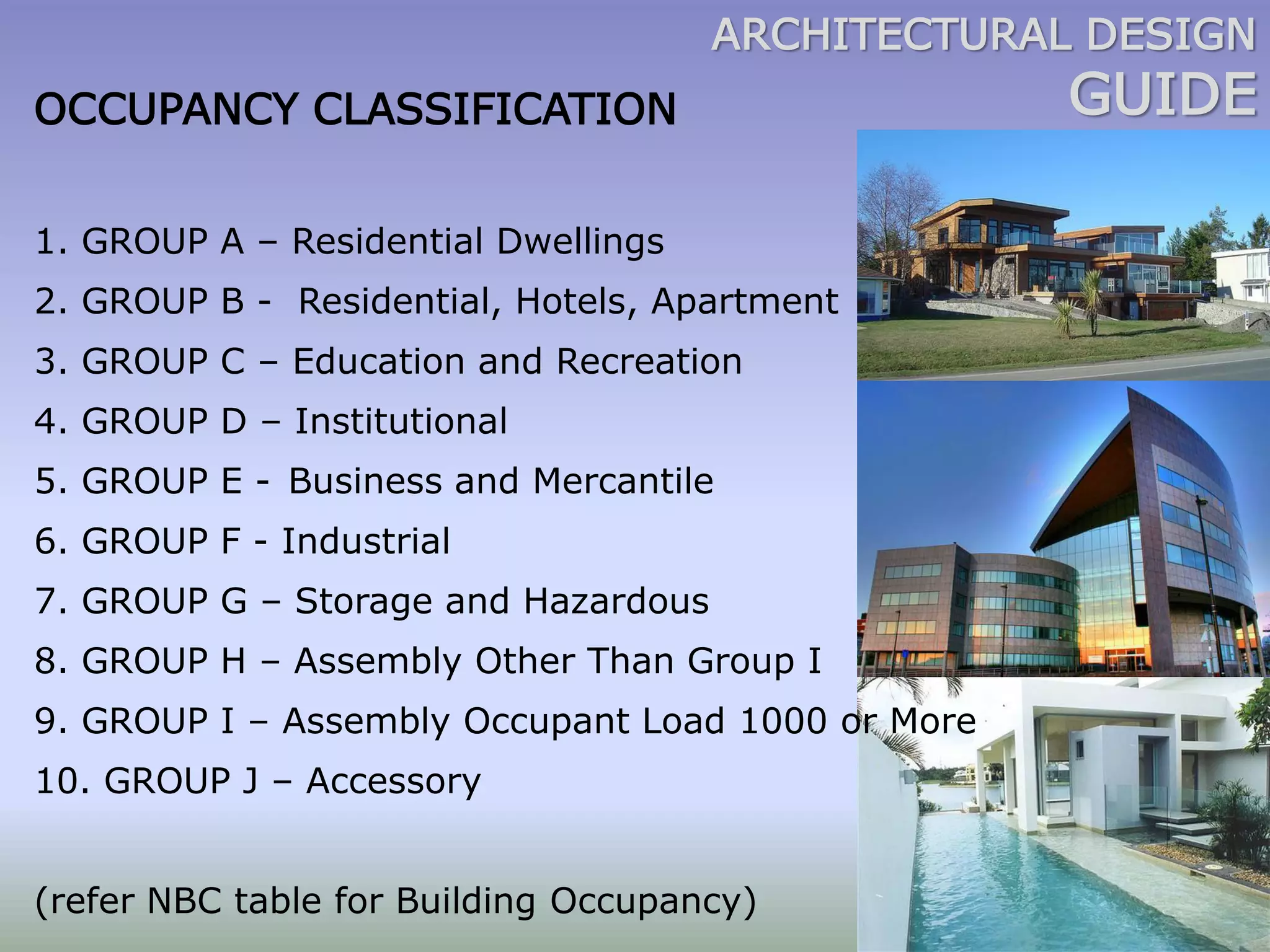
1. GROUP A – Residential Dwellings
2. GROUP B - Residential, Hotels, Apartment
3. GROUP C – Education and Recreation
4. GROUP D – Institutional
5. GROUP E - Business and Mercantile

6. GROUP F - Industrial
7. GROUP G – Storage and Hazardous
8. GROUP H – Assembly Other Than Group I
9. GROUP I – Assembly Occupant Load 1000 or More
10. GROUP J – Accessory
(refer NBC table for Building Occupancy)

GUIDE
ARCHITECTURAL DESIGN
LOT TYPES

GUIDE

1. Interior Lot
2. Inside Lot

3. Corner Lot
4. Through Lot
5. Corner-Through Lot

6. Corner Lot Abutting 3 or more Streets, Alleys,
Rivers
7. End Lot

(refer table for the Types of Lot of NBC)
LOT CONSIDERATIONS

ARCHITECTURAL DESIGN

GUIDE

1. Total Lot Area – TLA
2. Allowable Maximum Building Footprint – AMBF
3. Percentage of Site Occupancy – PSO

4. Impervious Surface Area – ISA
5. Maximum Allowable Construction Area – MACA
6. Unpaved Surface Area – USA
SETBACK REQUIREMENTS
1. Road Right-of-Way or RROW
2. Front, Sides, Rear
(refer table for the Setback Requirements of NBC)
ARCHITECTURAL DESIGN

GUIDE

PARKING REQUIREMENTS
1. Parking Slot
2.50m x 5.00m – perpendicular and diagonal

2.15m x 6.00m – parallel parking
3.00m x 9.00m – Jeepney parking
3.60m x 12.00m- Truck or Bus Parking

3.60m x 18.00m- Articulated truck
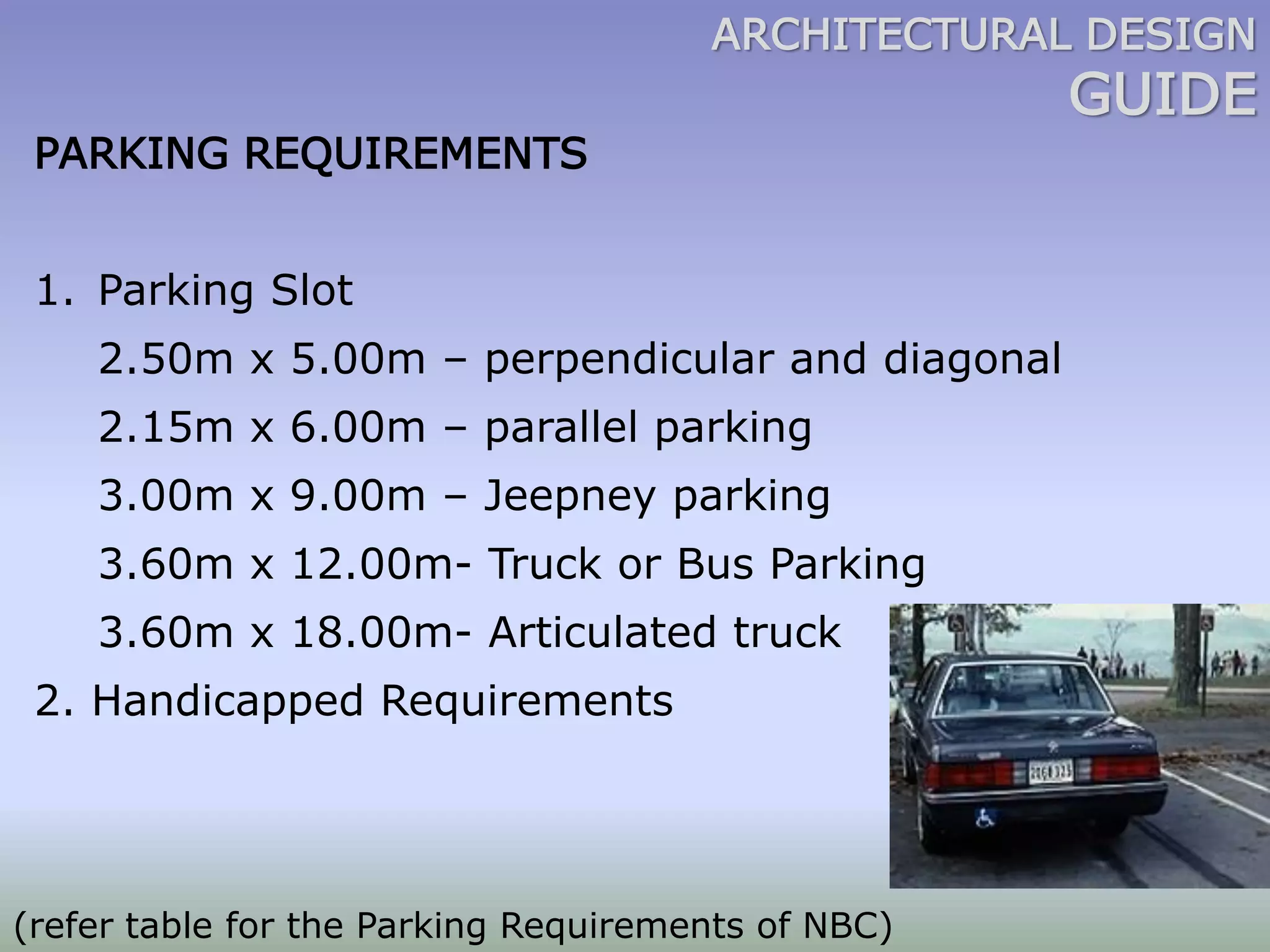
2. Handicapped Requirements

(refer table for the Parking Requirements of NBC)
ARCHITECTURAL DESIGN

GUIDE

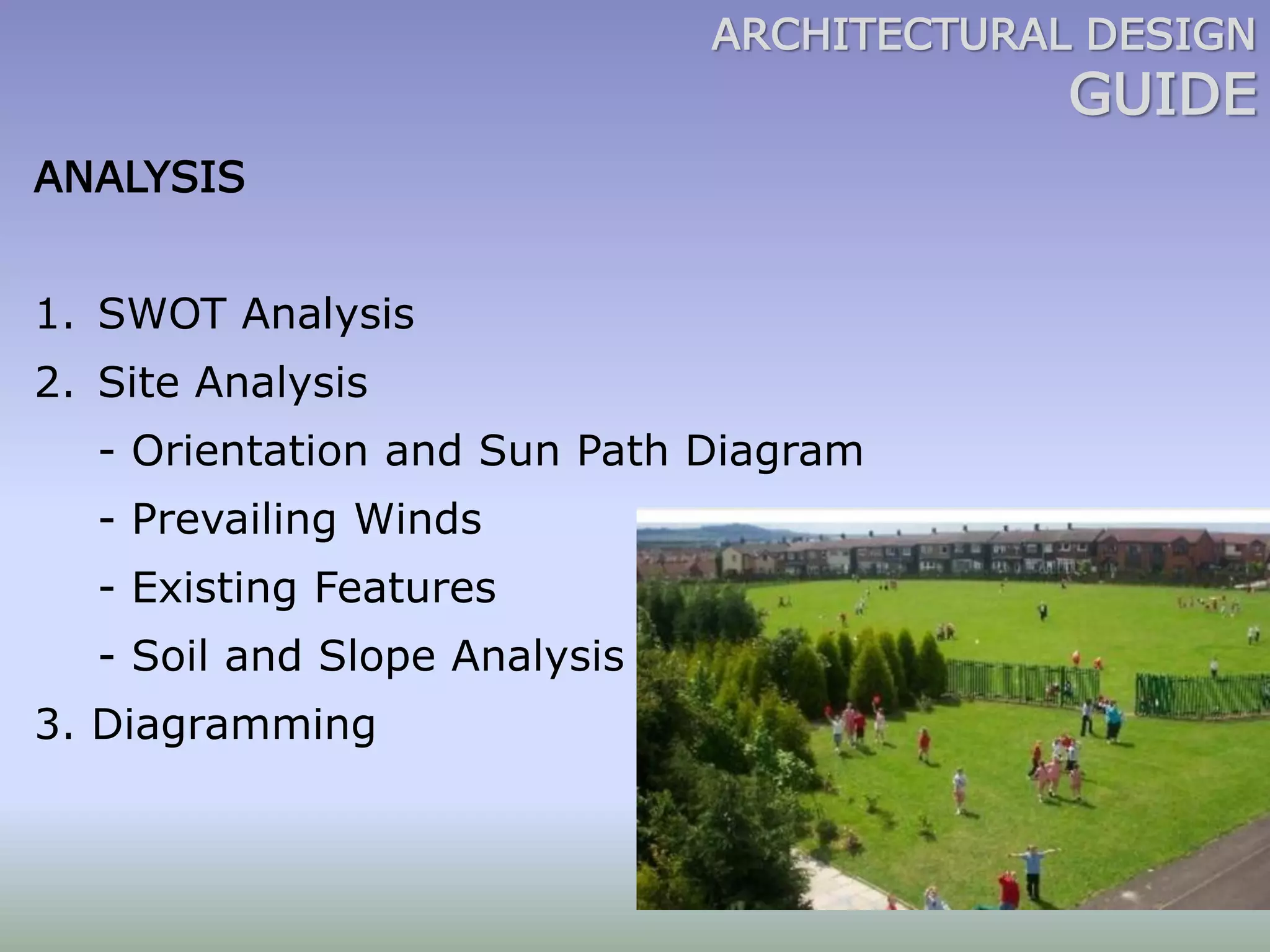
ANALYSIS
1. SWOT Analysis

2. Site Analysis
- Orientation and Sun Path Diagram
- Prevailing Winds
- Existing Features
- Soil and Slope Analysis
3. Diagramming
SWOT ANALYSIS

ARCHITECTURAL DESIGN

GUIDE

Evaluation of each character area or landscape zone

The aim in design and management is to:
a. Build on the strength
b. Minimize the weaknesses
c. Take up as many of the opportunities as possible
d. Avoid threats
Strength and Weakness
are the aspect of the site itself
Opportunities and Treats
those aspects that affect it from outside
ARCHITECTURAL DESIGN

GUIDE

STRENGHTS
Sample strengths:
1. Size of the area gives high carrying capacity.

2. Presence of water in various forms and sizes
3. Varied topography gives range of landscape
4. Road access
ARCHITECTURAL DESIGN

GUIDE

WEAKNESSES
Sample Weaknesses :
1. Core area is a long way from public access road
2. Terrain is rough and steep
3. Insects are plentiful
ARCHITECTURAL DESIGN

GUIDE

OPPORTUNITIES
Sample Opportunities :
1. To develop a range of recreational activities in
keeping with the landscape
2. To protect vulnerable habitats from development
3. To develop integral plan for management to ensure
minimal site degradation
4. To supply the demand for high quality facilities and
landscape settings
ARCHITECTURAL DESIGN

GUIDE

THREATS
Sample Threats :
1. Commercial exploitation of forested areas with good
access.

2. Forest fires
3. Uncontrolled access
ARCHITECTURAL DESIGN

GUIDE

SLOPE CLASSIFICATION
0-5%

excellent

5-10%

good/ fair

10-25%

poor

over 25%

unsuitable
ARCHITECTURAL DESIGN

SLOPE CLASSIFICATION

GUIDE

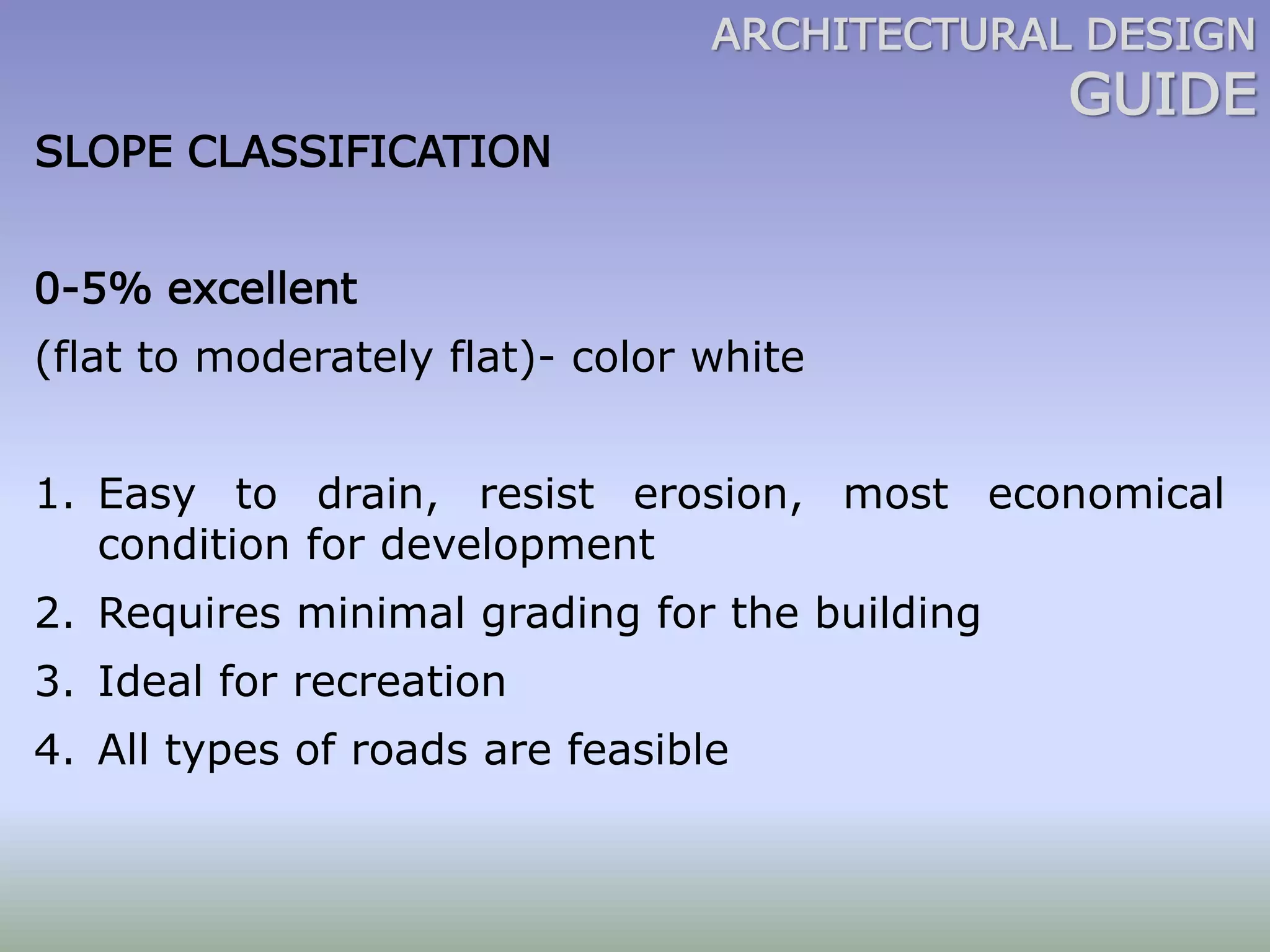
0-5% excellent

(flat to moderately flat)- color white
1. Easy to drain, resist erosion, most economical
condition for development
2. Requires minimal grading for the building
3. Ideal for recreation

4. All types of roads are feasible
ARCHITECTURAL DESIGN

GUIDE

SLOPE CLASSIFICATION
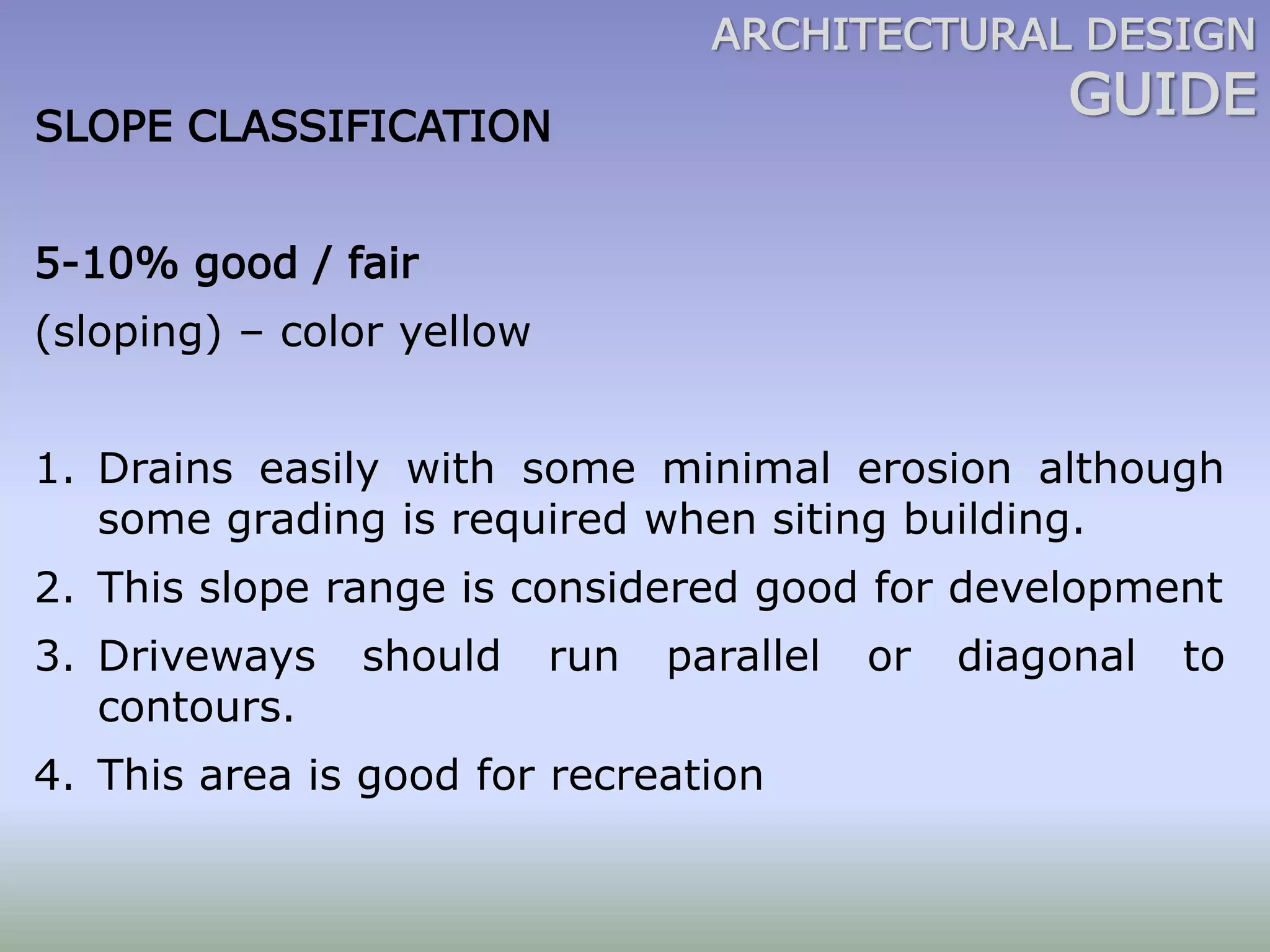
5-10% good / fair
(sloping) – color yellow

1. Drains easily with some minimal erosion although
some grading is required when siting building.
2. This slope range is considered good for development
3. Driveways
contours.

should

run

parallel

4. This area is good for recreation

or

diagonal

to
SLOPE CLASSIFICATION

ARCHITECTURAL DESIGN

GUIDE

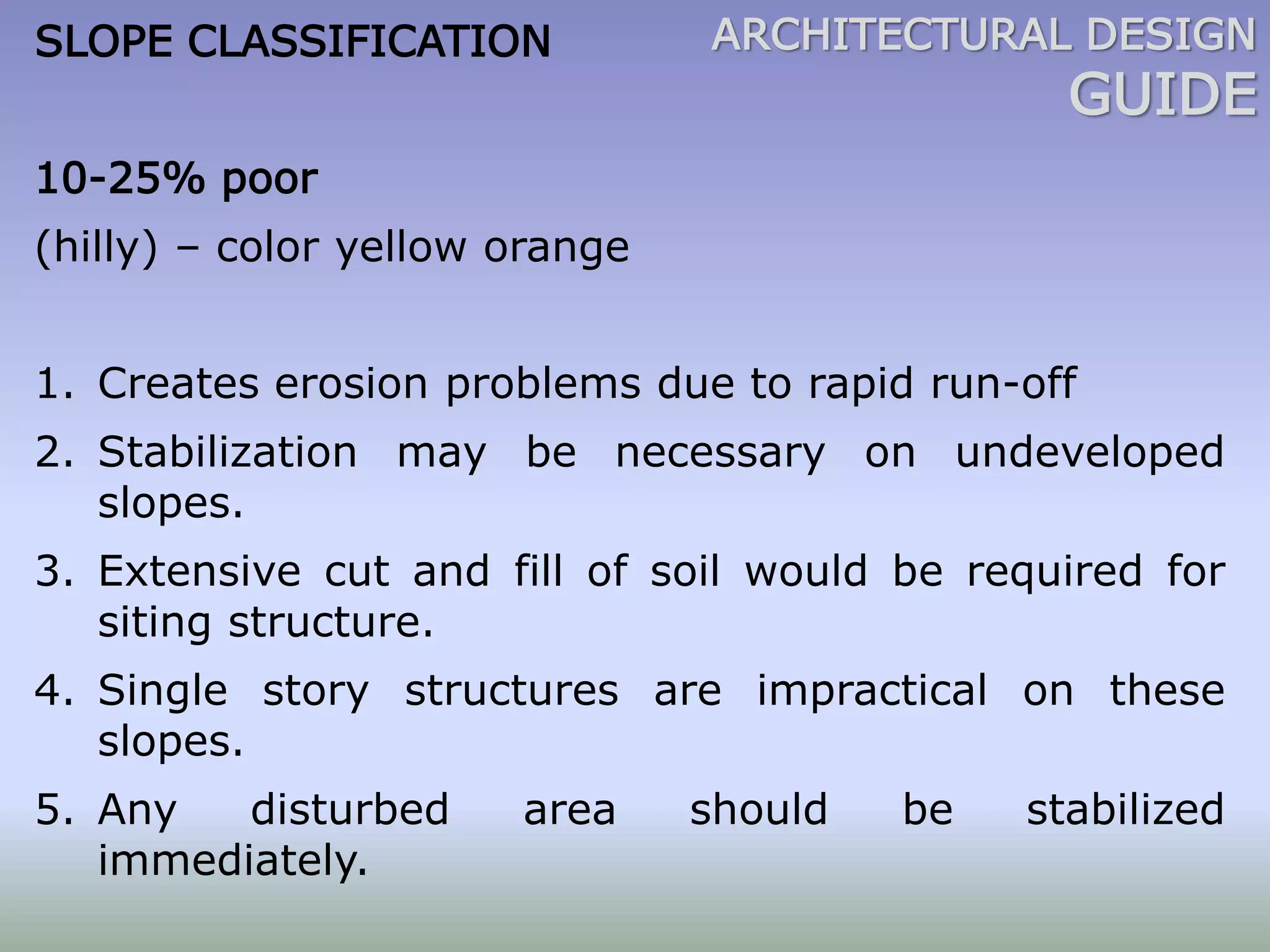
10-25% poor

(hilly) – color yellow orange
1. Creates erosion problems due to rapid run-off
2. Stabilization may be necessary on undeveloped
slopes.
3. Extensive cut and fill of soil would be required for
siting structure.
4. Single story structures are impractical on these
slopes.
5. Any
disturbed
immediately.

area

should

be

stabilized
ARCHITECTURAL DESIGN
SLOPE CLASSIFICATION

GUIDE

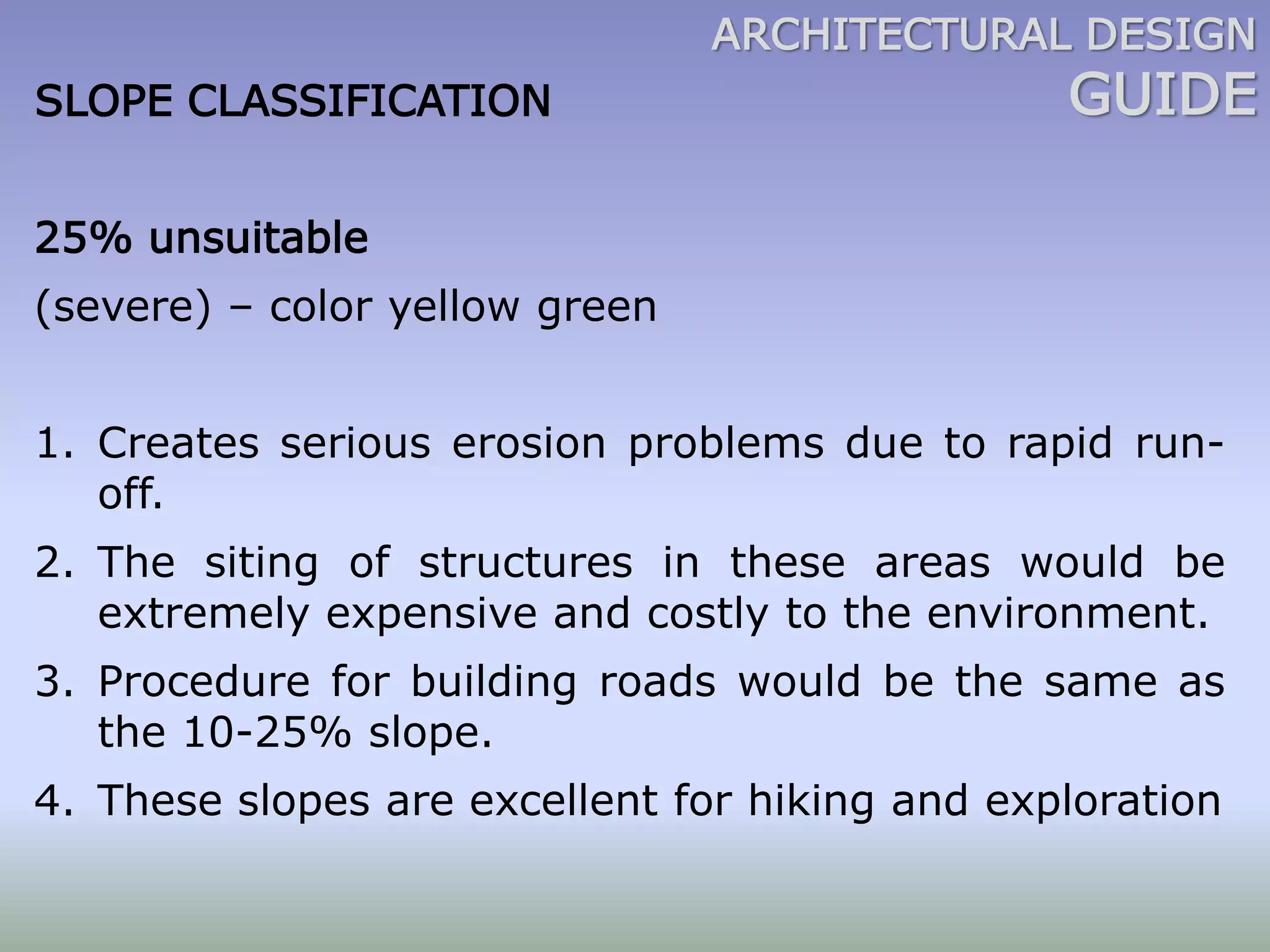
25% unsuitable
(severe) – color yellow green
1. Creates serious erosion problems due to rapid runoff.

2. The siting of structures in these areas would be
extremely expensive and costly to the environment.
3. Procedure for building roads would be the same as
the 10-25% slope.
4. These slopes are excellent for hiking and exploration
ARCHITECTURAL DESIGN

GUIDE

SPACE CONSIDERATIONS
(space programming)

1. Function and Proximity of Spaces
2. Nature and Number of Users
3. Type and Number of Furniture
4. Plumbing Fixtures Required
5. Provision for Handicapped
ARCHITECTURAL DESIGN

GUIDE

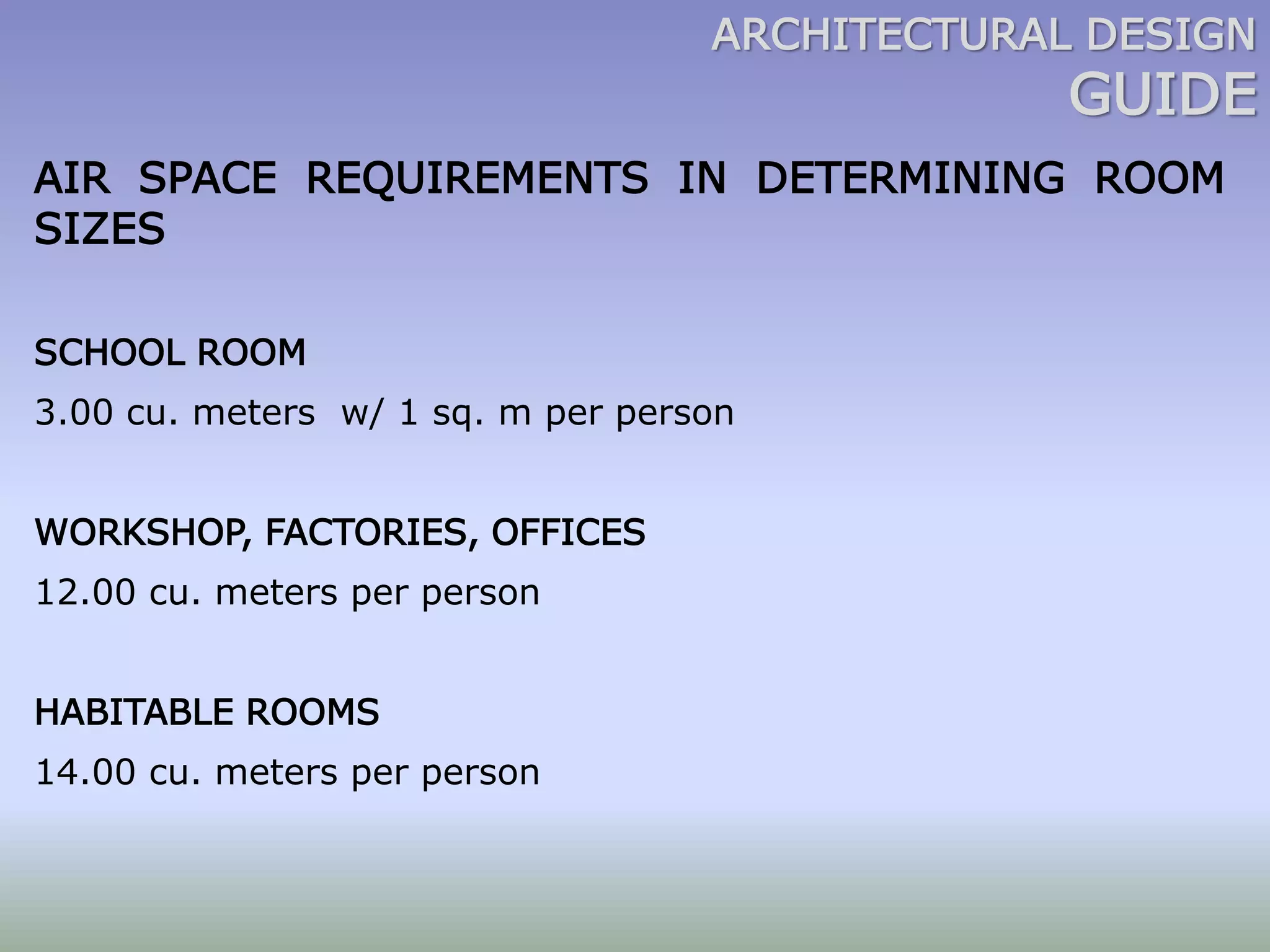
AIR SPACE REQUIREMENTS IN DETERMINING ROOM
SIZES
SCHOOL ROOM
3.00 cu. meters w/ 1 sq. m per person

WORKSHOP, FACTORIES, OFFICES
12.00 cu. meters per person
HABITABLE ROOMS
14.00 cu. meters per person
ARCHITECTURAL DESIGN
CEILING HEIGHT
ARTIFICIAL VENTILATION
2.40m or higher
2.70m- ground
2.40m- second
2.10m- above floors
NATURAL VENTILATION
2.70m or higher
MEZZANINE FLOOR
1.8m or higher above and below

GUIDE

Architectural Design Guide

  • 1.
    ARCHITECTURAL DESIGN OCCUPANCY CLASSIFICATION 1.GROUP A – Residential Dwellings 2. GROUP B - Residential, Hotels, Apartment 3. GROUP C – Education and Recreation 4. GROUP D – Institutional 5. GROUP E - Business and Mercantile 6. GROUP F - Industrial 7. GROUP G – Storage and Hazardous 8. GROUP H – Assembly Other Than Group I 9. GROUP I – Assembly Occupant Load 1000 or More 10. GROUP J – Accessory (refer NBC table for Building Occupancy) GUIDE
  • 2.
    ARCHITECTURAL DESIGN LOT TYPES GUIDE 1.Interior Lot 2. Inside Lot 3. Corner Lot 4. Through Lot 5. Corner-Through Lot 6. Corner Lot Abutting 3 or more Streets, Alleys, Rivers 7. End Lot (refer table for the Types of Lot of NBC)
  • 3.
    LOT CONSIDERATIONS ARCHITECTURAL DESIGN GUIDE 1.Total Lot Area – TLA 2. Allowable Maximum Building Footprint – AMBF 3. Percentage of Site Occupancy – PSO 4. Impervious Surface Area – ISA 5. Maximum Allowable Construction Area – MACA 6. Unpaved Surface Area – USA SETBACK REQUIREMENTS 1. Road Right-of-Way or RROW 2. Front, Sides, Rear (refer table for the Setback Requirements of NBC)
  • 4.
    ARCHITECTURAL DESIGN GUIDE PARKING REQUIREMENTS 1.Parking Slot 2.50m x 5.00m – perpendicular and diagonal 2.15m x 6.00m – parallel parking 3.00m x 9.00m – Jeepney parking 3.60m x 12.00m- Truck or Bus Parking 3.60m x 18.00m- Articulated truck 2. Handicapped Requirements (refer table for the Parking Requirements of NBC)
  • 5.
    ARCHITECTURAL DESIGN GUIDE ANALYSIS 1. SWOTAnalysis 2. Site Analysis - Orientation and Sun Path Diagram - Prevailing Winds - Existing Features - Soil and Slope Analysis 3. Diagramming
  • 6.
    SWOT ANALYSIS ARCHITECTURAL DESIGN GUIDE Evaluationof each character area or landscape zone The aim in design and management is to: a. Build on the strength b. Minimize the weaknesses c. Take up as many of the opportunities as possible d. Avoid threats Strength and Weakness are the aspect of the site itself Opportunities and Treats those aspects that affect it from outside
  • 7.
    ARCHITECTURAL DESIGN GUIDE STRENGHTS Sample strengths: 1.Size of the area gives high carrying capacity. 2. Presence of water in various forms and sizes 3. Varied topography gives range of landscape 4. Road access
  • 8.
    ARCHITECTURAL DESIGN GUIDE WEAKNESSES Sample Weaknesses: 1. Core area is a long way from public access road 2. Terrain is rough and steep 3. Insects are plentiful
  • 9.
    ARCHITECTURAL DESIGN GUIDE OPPORTUNITIES Sample Opportunities: 1. To develop a range of recreational activities in keeping with the landscape 2. To protect vulnerable habitats from development 3. To develop integral plan for management to ensure minimal site degradation 4. To supply the demand for high quality facilities and landscape settings
  • 10.
    ARCHITECTURAL DESIGN GUIDE THREATS Sample Threats: 1. Commercial exploitation of forested areas with good access. 2. Forest fires 3. Uncontrolled access
  • 11.
  • 12.
    ARCHITECTURAL DESIGN SLOPE CLASSIFICATION GUIDE 0-5%excellent (flat to moderately flat)- color white 1. Easy to drain, resist erosion, most economical condition for development 2. Requires minimal grading for the building 3. Ideal for recreation 4. All types of roads are feasible
  • 13.
    ARCHITECTURAL DESIGN GUIDE SLOPE CLASSIFICATION 5-10%good / fair (sloping) – color yellow 1. Drains easily with some minimal erosion although some grading is required when siting building. 2. This slope range is considered good for development 3. Driveways contours. should run parallel 4. This area is good for recreation or diagonal to
  • 14.
    SLOPE CLASSIFICATION ARCHITECTURAL DESIGN GUIDE 10-25%poor (hilly) – color yellow orange 1. Creates erosion problems due to rapid run-off 2. Stabilization may be necessary on undeveloped slopes. 3. Extensive cut and fill of soil would be required for siting structure. 4. Single story structures are impractical on these slopes. 5. Any disturbed immediately. area should be stabilized
  • 15.
    ARCHITECTURAL DESIGN SLOPE CLASSIFICATION GUIDE 25%unsuitable (severe) – color yellow green 1. Creates serious erosion problems due to rapid runoff. 2. The siting of structures in these areas would be extremely expensive and costly to the environment. 3. Procedure for building roads would be the same as the 10-25% slope. 4. These slopes are excellent for hiking and exploration
  • 16.
    ARCHITECTURAL DESIGN GUIDE SPACE CONSIDERATIONS (spaceprogramming) 1. Function and Proximity of Spaces 2. Nature and Number of Users 3. Type and Number of Furniture 4. Plumbing Fixtures Required 5. Provision for Handicapped
  • 17.
    ARCHITECTURAL DESIGN GUIDE AIR SPACEREQUIREMENTS IN DETERMINING ROOM SIZES SCHOOL ROOM 3.00 cu. meters w/ 1 sq. m per person WORKSHOP, FACTORIES, OFFICES 12.00 cu. meters per person HABITABLE ROOMS 14.00 cu. meters per person
  • 18.
    ARCHITECTURAL DESIGN CEILING HEIGHT ARTIFICIALVENTILATION 2.40m or higher 2.70m- ground 2.40m- second 2.10m- above floors NATURAL VENTILATION 2.70m or higher MEZZANINE FLOOR 1.8m or higher above and below GUIDE